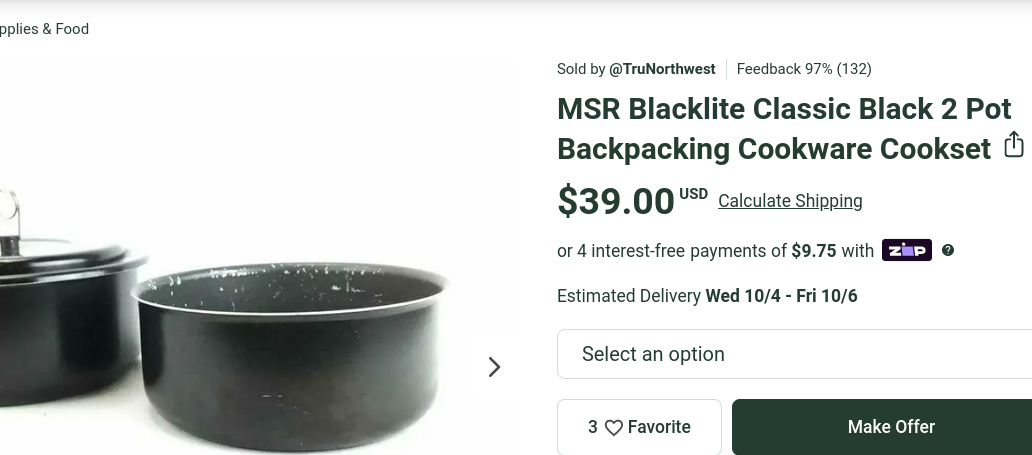
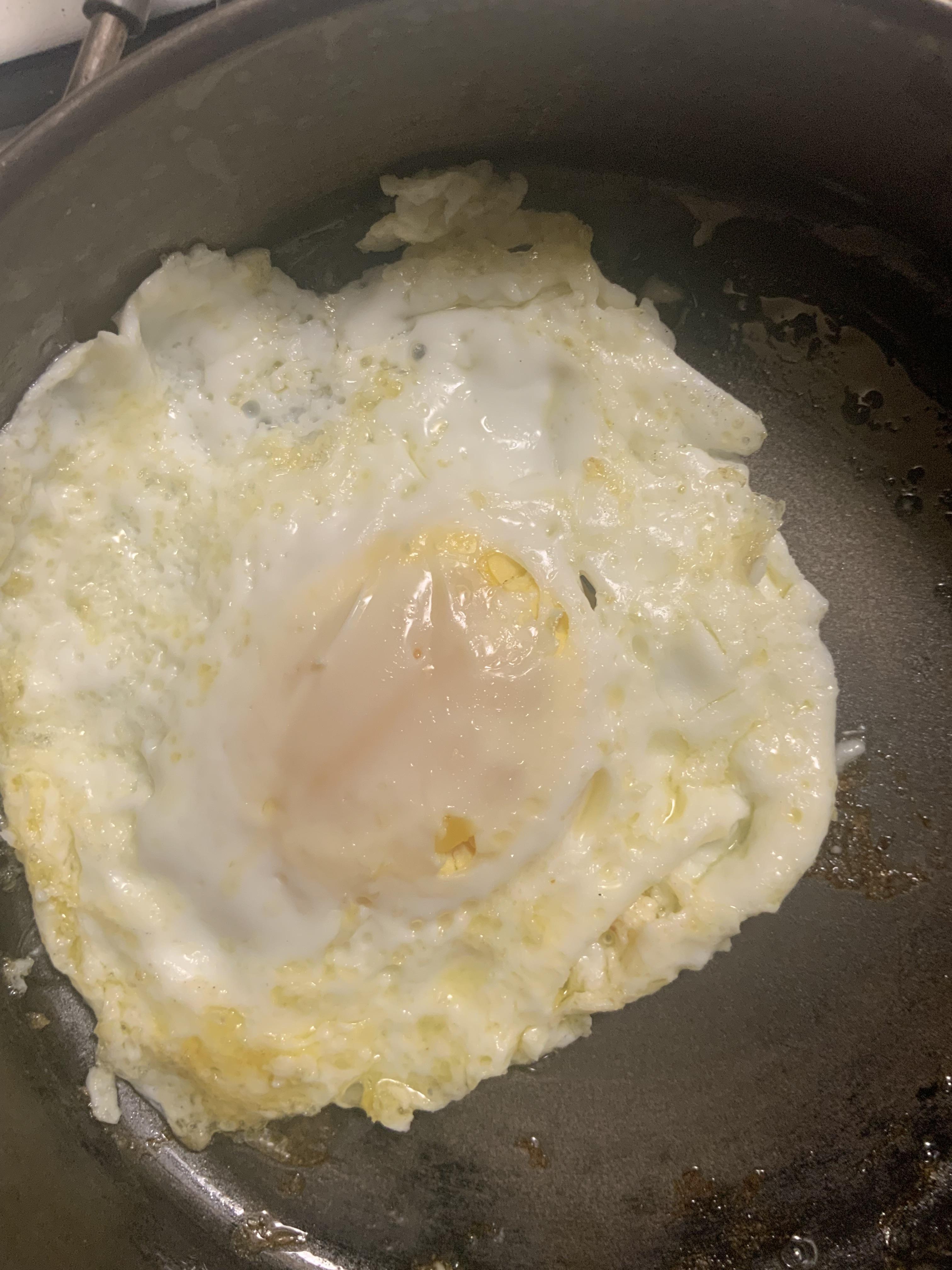
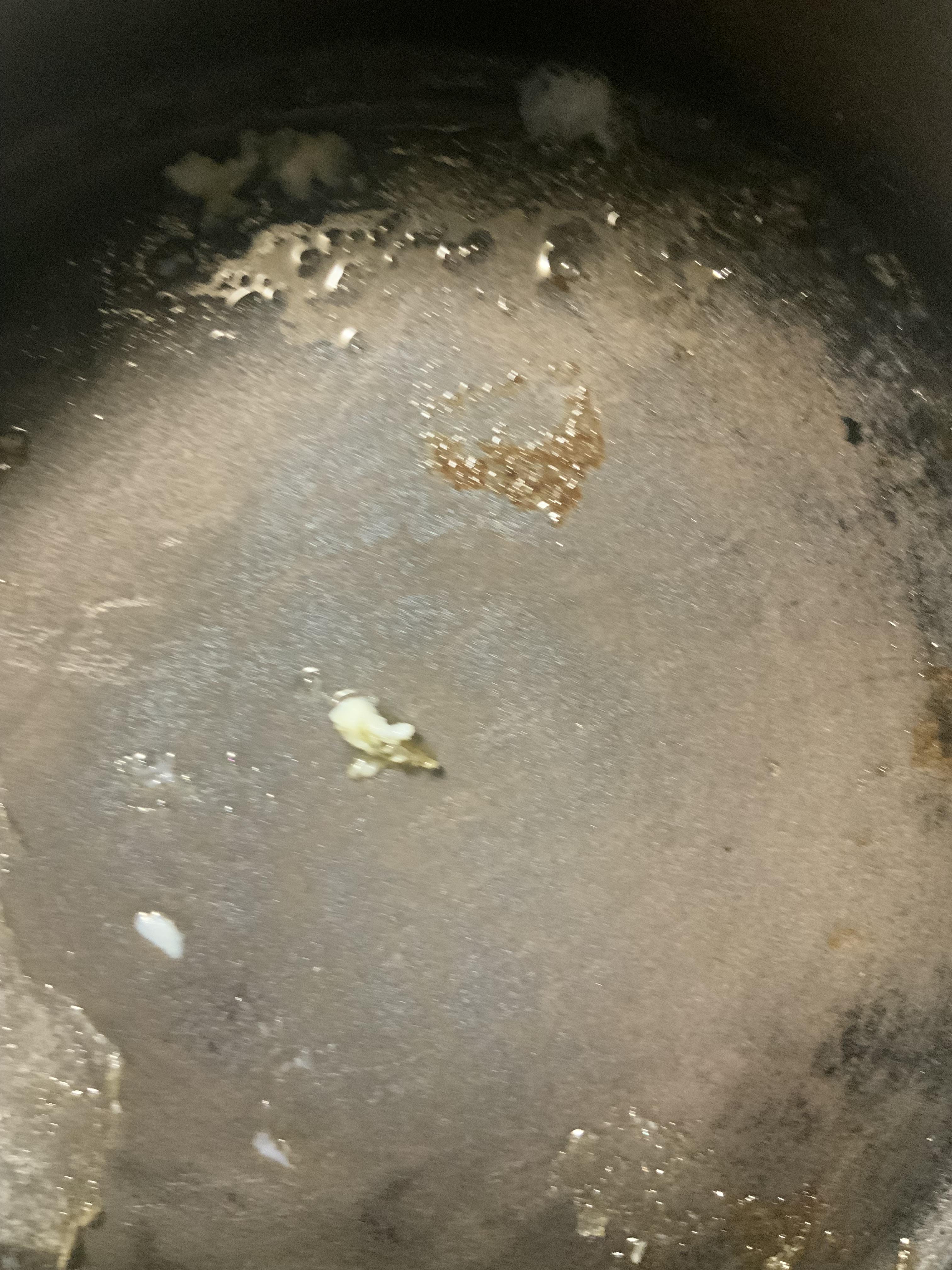
OK, I think that I am coming to a preliminary conclusion, and I am leaning towards using a thin-walled aluminum pan. Here is the gist of it all, the upper end temperature range of a Teflon or Ceramic coating it 500 F. The Maillard reaction “is many small, simultaneous chemical reactions that occur when proteins and sugars in and on your food are transformed by heat, producing new flavors, aromas, and colors.” This is when cooked foods start to brown and create a crust (pancakes) and that occurs starting at 300 F. If you do not care about browning, then you can always steam your food. In reality, you probably want to reach about 325 F to 350 F. On the low end, that gives you a 150 F range.
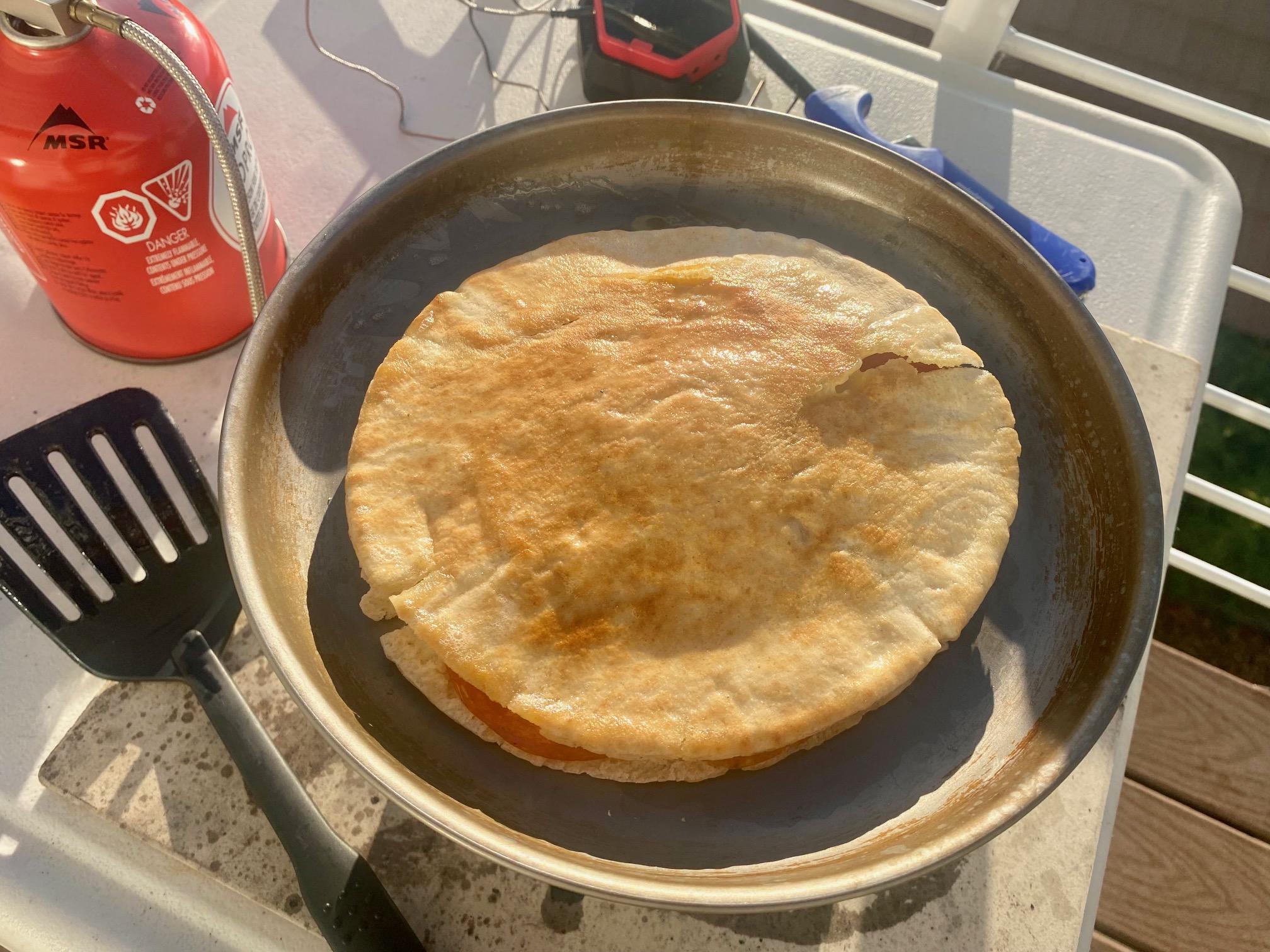
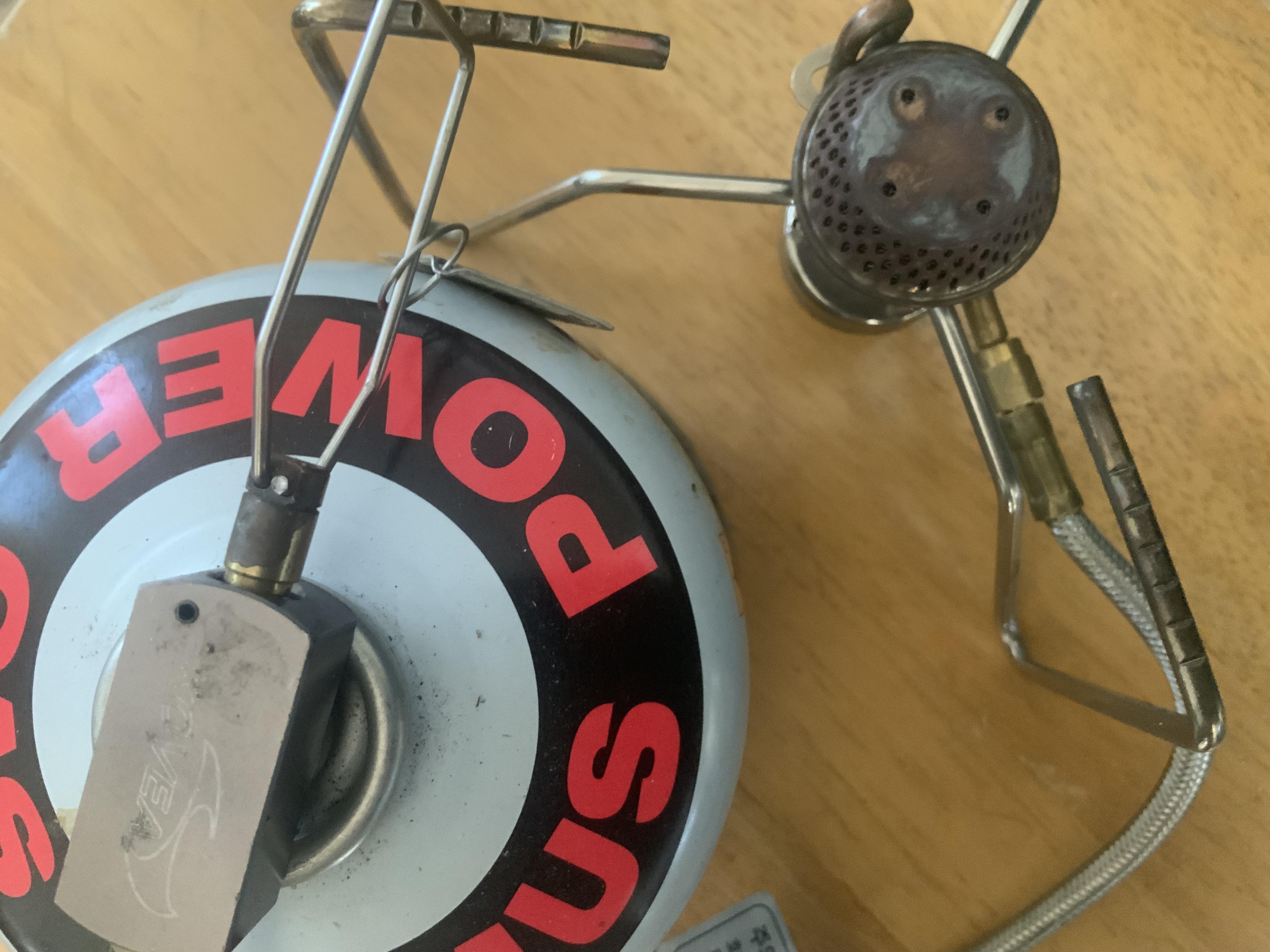
My test setup is to have the pan sitting on top of a windscreen and I am using the Kovea Spider remote stove. The pan sits 1.5” above the burner head. I measured the steady state temperature at the center and towards the edge of the pan [example 300 F / 250 F].

Regular 7” fry pan 300 F / 250 F [Control: note 15 oz]
MSR Quick Skillet 300 F / 220 F [pan by itself is 5.5 oz]
MSR Quick Skillet 300 F / 260 F [Simple diffuser}
MSR Quick Skillet 300 F / 275 F [ prototype frying plate]
What does this mean? A regular pan seems to work well, however; the MSR Quick Skillet is 1/3 the weight. If you look at the MSR Quick Skillet by itself the temperature differential is 80 F. What is the impact? Let’s say that you want to cook a pancake that is evenly brown (as possible) across the surface. Originally, the pan range was 150 F and due to the pan differential, that range is reduced by 80 F so the working range is 70F. Unless you carry a thermometer, you can only estimate the pan temperature. If you use a simple diffuser (a can lid can work), you reach the same temperature as the regular fry pan.
While you probably don’t bring a thermometer, you can bring some oil. It is possible to use the smoke point to provide an indicator of the upper end temperature. For example, refined peanut oil has a smoke point of 450 F so that could give you a 50 F margin to protect the non-stick coating.
Titanium. The temperature differential is significantly larger than aluminum. For even heating, the prototype Frying Plate works well to even the heat distribution. Of note, two things need to be understood. First, fuel consumption is significantly higher. I did not take detailed notes on fuel usage, but I would expect a 30% to 50% increase in fuel usage over using an aluminum pan. Secondly, an additional heat deflector is required between the burner head and the fuel line. The prototype Frying Plate is a stack of 2 diffuser plates and the bottom plate will reach temperatures over 1000 F. The convective / radiant heat increases the temperature inside the windscreen to several hundred degrees. The heat deflector will keep the temperature in the 205 F to 300 F range.
Care and maintenance of titanium pans have a steep learning curve, on par or more than using a stainless-steel pan. Seasoning is tricky and the care for the surface seems to be on par with coated surfaces. In addition, there doesn’t seem to be a significant weight advantage over an aluminum pan. The biggest advantage is if you have the skills, you can achieve good results and the titanium fry pan will last forever. So in conclusion, the code can be cracked. The overhead is higher than using a non-stick aluminum pan. My 2 cents.