Many, if not the majority of trailheads for NPS, USFS, and state agencies direct hikers to abide by LNT principles, which as some have pointed out, are researched, studied, and supported by our land management agencies, and thus are not just someone’s opinion tossed up on the internet. I would argue that the directive to avoid impairing the viewshed is supported by regulations, including those that prohibit camping within a certain distance of trails and roads (which can be enforced by the law).
I would also argue that, in many ways, “stuff not to do because it’s temporarily annoying to other humans” is actually the primary focus of LNT, not “stuff not to do because it hurts the environment, native plants, and native animals” (*although when traveling around threatened or endangered species habitat, environmental protection may certainly take priority).
Consider…
Why do we travel on durable surfaces? Because a twenty foot wide herd trail will compact the soil? Cause erosion? Damage vegetation? Sort of…but in the grand scheme of things, these impacts are pretty inconsequential to environmental health. Wild game rarely consult sustainable trail building manuals in laying out their herd routes. Soil being washed into a stream from a steep trail? Have you never seen a “naturally” eroded gully dumping silty run off? But, does standing at an overlook and seeing that 20 foot wide trail crossing an open plain remind us of “good times with all our other hiking buddies out there”, or does it make us wish that we hadn’t left such a visual mess?
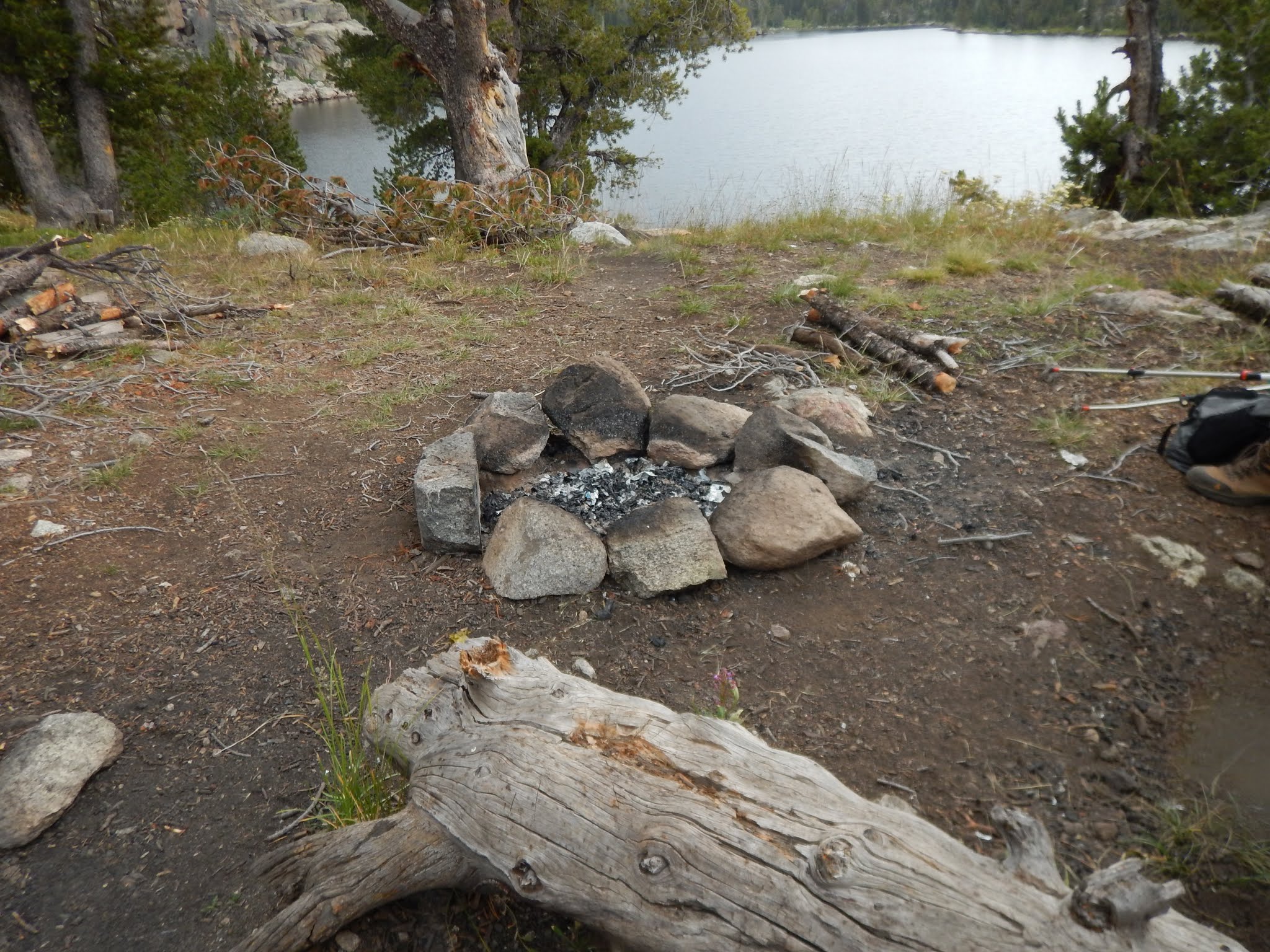
How about minimizing campfire impacts? Do we do it because five campfire rings will cause irreparable damage to the environmental system? Sure, there are minor negatives to a small amount of soil from concentrating fire in a single location, but all in all, fire is a good thing for natural systems. Even poorly practiced campfires at least benefit their surroundings by reducing fuel loadings and thus the risk of catastrophic wildfires. Minimizing campfire impacts is much more about leaving a clean slate- both visually and as a sleeping surface- so that campers can enjoy a location for its beauty instead of looking at pile after pile of ashes.
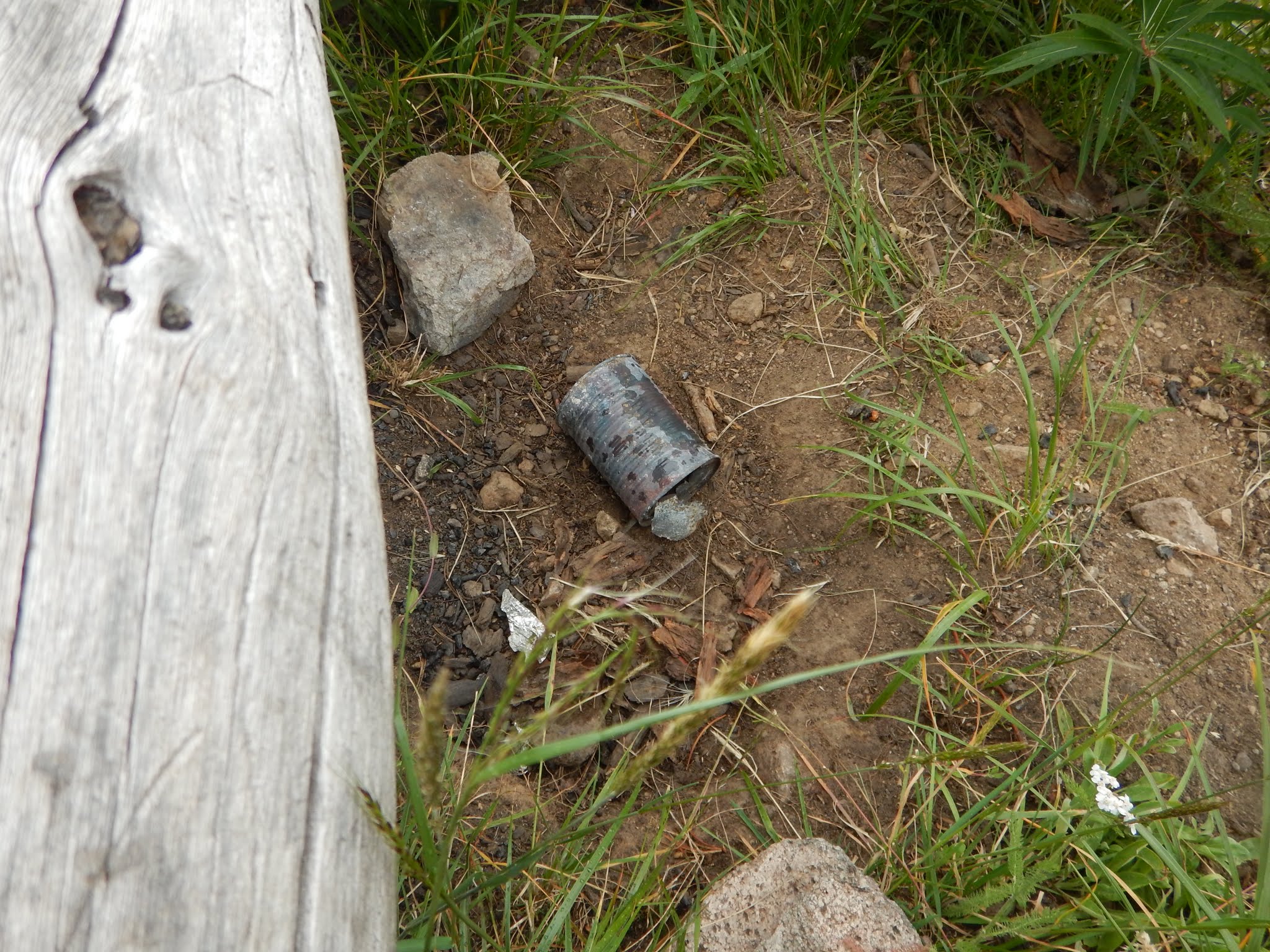
Why do we pack out trash? Sure, there is benefit in protecting wildlife by not leaving food waste, but what about non-food trash, or little odds and ends like twist ties or tabs of wrappers? A bear probably isn’t going to chock to death on a twist tie or get strangled in a piece of nylon cordage, so why not just leave it behind? After all, someone might like the comfort of knowing that others were here by the odds and ends of plastic, fabric, and cardboard scattered around a campsite. Kind of like a trail register that you don’t have to open, and hey, someone may find some of that “trash” handy in the future, even if it’s 500 years from now. Think of them as little visual mementos from one hiker to another.
If we want to minimize the environmental impacts of our outdoor adventures, our efforts are much better spent focusing on reducing the environmental footprint of our transportation to the trailhead. Unless we start leading Woodstock size groups on month long backpacking trips through Acadia NP, the environment is going to absorb most of the impacts of our travel, just like it does for the thousands of other mammals out there that travel, eat, and poop in the woods, all without digging a 6-inch cat hole.
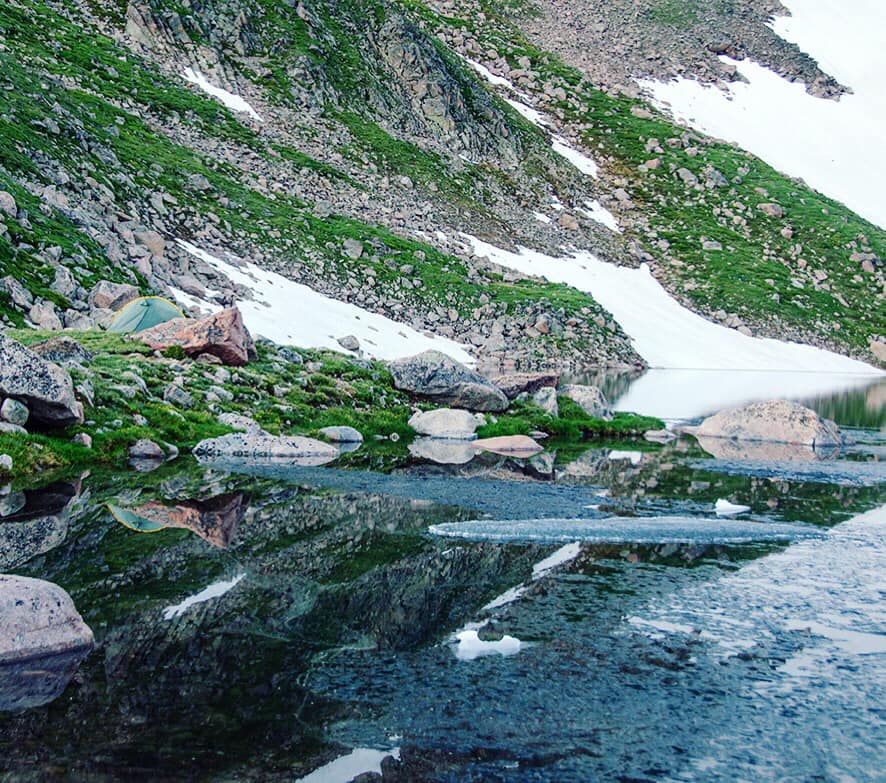
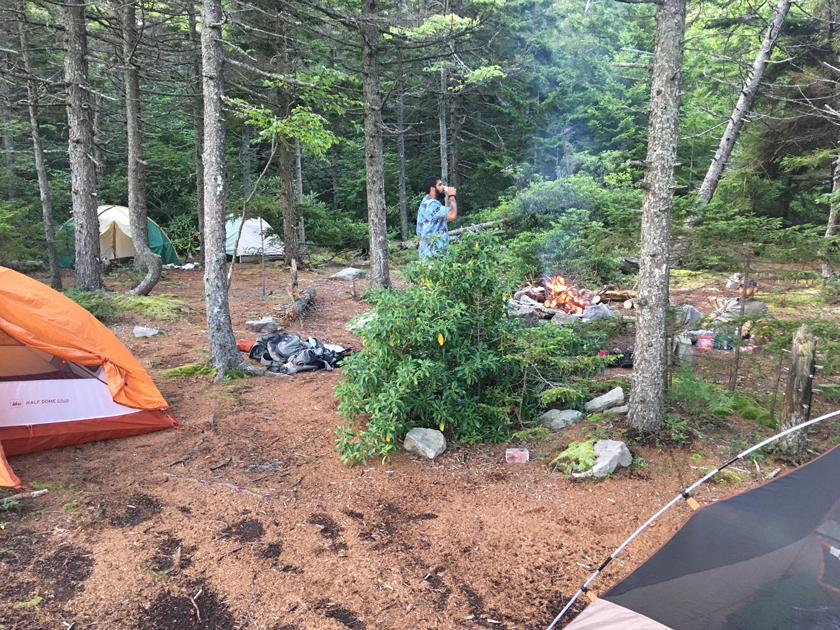
What our travel does result in is mostly surface level visual impacts, signs that show that “Hey, another person was here!” I’ll be honest, sometimes that’s really comforting. When I’ve been hiking for several days without seeing another human being, I get excited when I come across an abandoned fire ring or a bit of trash with an expiration date on it, let alone a bright tent with a real live person standing next to it! (I also find things like powerline and pipeline crossings really interesting, but I suspect I might be a minority in that.) However, most of the spectacular places that I go to are heavily frequented because, well, there’s a limited number of places to go around here. Is seeing one bright tent going to change the quality of my experience? Of course not. But, rows of flashy tents, mile after mile, week after week, as is becoming common on places like the Appalachian Trail? At that point, I might as well just do a day hike and stay in the state park campground. But for many of us, the reason we go into the backcountry is so that we can experience a sliver of wilderness, that solitude that humans have benefited from for so many generations but that is becoming increasingly hard to find in our ever connected world.
In order to preserve the opportunities at experiencing “wilderness”, many land management agencies have begun limiting access to areas based on quotas. Sure, some of this is to keep trails from eroding off hillsides due to too much foot traffic, but if that were the only or the primary issue, we could just build wider, more robust trails and line up tent pad after tent pad. One of the main reasons for limiting access has been to allow for that “wilderness experience”, the chance to see a place without feeling like you’re just in a more scenic version of the ‘burbs.
Of course, none of us really want to limit access. It sucks to not be able to experience a place because the quota is already full. But what if we could increase the quota without diminishing anyone’s experience- what if more people could share the same piece of wildland without realizing that there were more people around them? Well, this is quite possible. Some of it takes institutional effort: more trails, better built, and more thoughtfully laid out. Carefully selected campsites that are durable and secluded from each other, from trails, and from viewpoints. Other steps require our own individual effort and commitment: Travel during off-seasons. Adjust routes, such as with flip-flop hikes on our long-distance trails. Camp outside of viewsheds. And, consider the color of your clothing and gear so that others don’t even realize you’re there.
Let’s say that studies determine that an area can accommodate X number of campers with bright, highly visible gear before feeling crowded and similar to that KOA campground near the trailhead. How many more campers could that same area fit if they were all practicing LNT and were relatively hidden from each other? Also consider: how far does a camper have to go from a trail to be hidden from the trail’s viewshed? Maybe 50 feet for someone in a muted tarp, 250 feet for another in a neon yellow tent? How many more muted shelters can be clustered before there’s a visual impact, versus bold, loud colors?
I thought about this for a while when I was choosing my shelter several years ago. It’s true- bright colors do elevate our moods, especially on cloudy days, and they “pop” in pictures and give that reassurance that “civilization” is near. However, I like having the ability to stealth camp when needed, I am safer if human predators don’t even realize I’m around, and I try to think about my impact on other hikers’ experiences. What I settled on was MLD cuben green. It’s bright and provides an emotionally uplifting interior, but its hue is almost exactly the same as an American Beech leaf as it unfolds in the spring, so it blends in nicely with many environments. I’m sure there are some other colors out there too that accomplish the same goals.
At the end of the day, the color of your gear and clothing is largely up to yourself. However, we must realize that wilderness has a visual carrying capacity that is much lower than its environmental carrying capacity. If we want to be able to continue having and sharing these “wild” experiences, it would certainly be helpful to start considering our visual impacts.