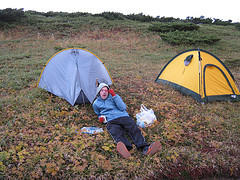
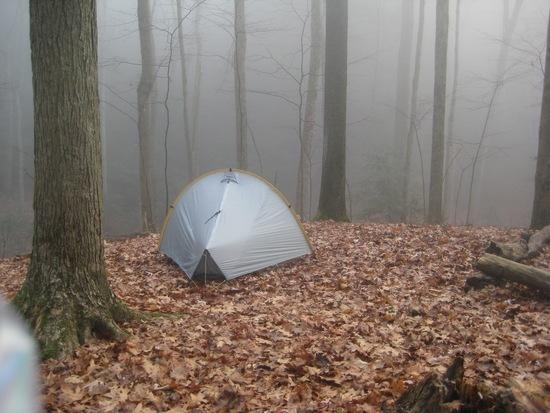
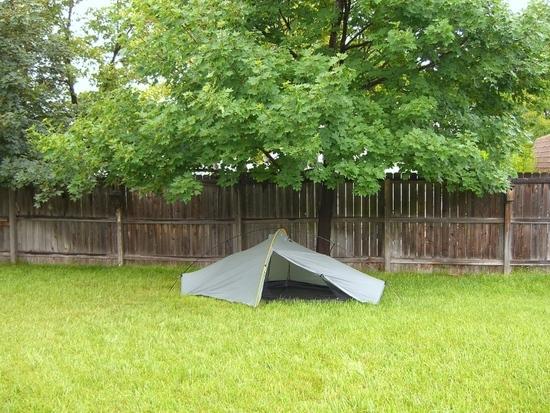
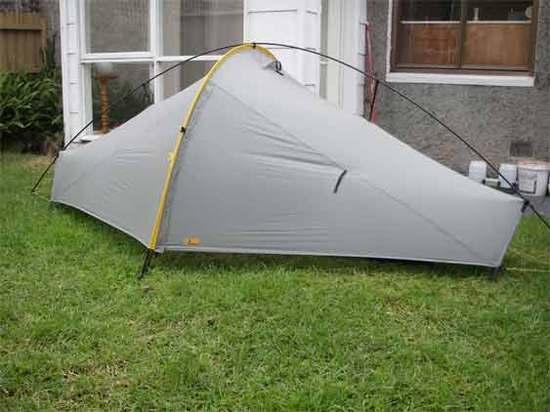
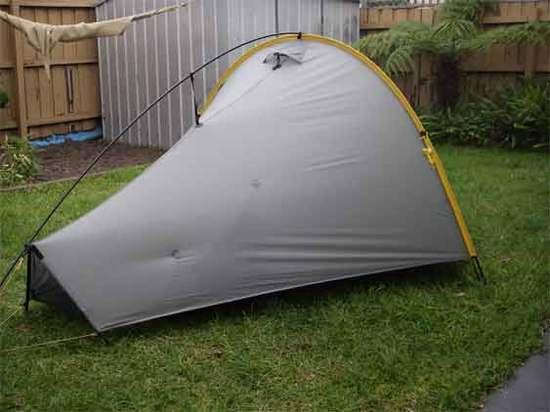
I took the Moment out for two nights this past weekend in the Sierras near Lake Tahoe, at about 7500'. The first night we had about 12" + of fairly wet, heavy snow. Setup went quickly despite the falling snow, and the interior of the tent stayed completely dry. Temperatures during the night dropped into the low 20's. A thin layer of frost/rime formed on the inner walls during the night, but disappeared as the sun came up, without dripping, even though most of the perimeter venting was by that time blocked by accumulating snow, and the end vents had lost some of their open cross-section.
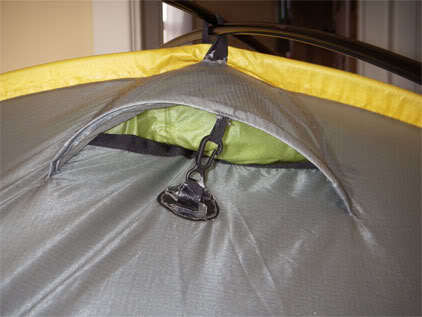
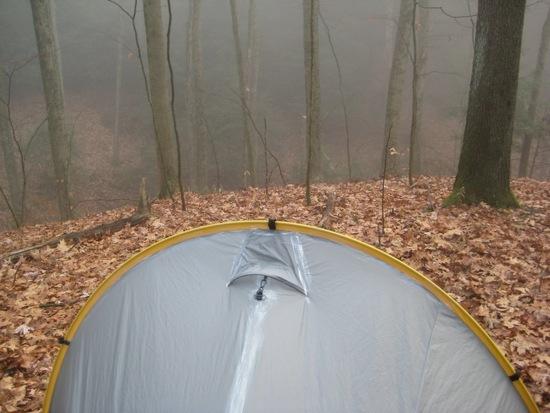
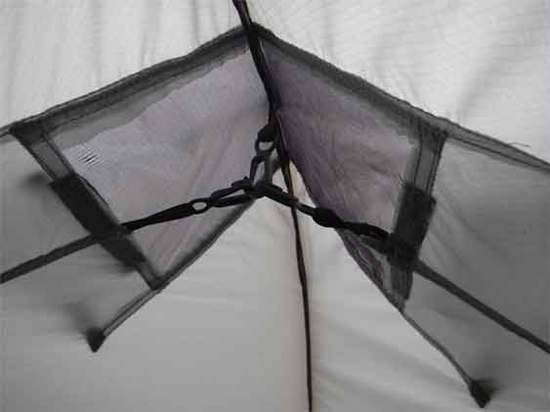
Occasional gusts, and accumulating snow, which I banged off from inside the tent, never seriously affected the tent geometry or threatened its stability. (I was using an improvised crossing pole which didn't completely stretch from end to end of the tent.) At the worst, there was occasionally a kind of inward bulge in some areas where snow collected against the tent perimeter, but I was usually able to push that away, again without going outside. (It would have taken a lot to get me to go outside.) The end vents were sufficient–they had to be, as the perimeter vents were clogged with snow–to keep air flowing through the tent, even though I didn't have the peak vents optimally arranged. (To do which I would have had to go outside, and …)
The following night, temperatures dropped into the low teens, with no snow, but there was less condensation as none of the perimeter venting was blocked. Large double wall tents nearby had much more condensation.
Cooking in the tent, and general gear management, was fine, and there was plenty of room for a down air mat and sleeping bag. There was always enough vertical space above head and feet, and in general it was easy to stay away from the walls of the tent. I hadn't sealed the seams, but there was never any apparent leakage or misting. This might be different in a heavy rain, so I will seam-seal.
While I was lying down, everything was quite stable, but if I tried moving around, the mat squirmed around a bit on the tent floor, a problem I'll try to correct by painting some stripes of seamsealer/silicon there.
For a single person, I'd continue to use this tent in winter, (it's not sold as a 4-season tent) unless I was in an area with dry, invasive snow in the form of spindrift. For the western Sierras, where I do most of my camping, this isn't a problem. I'd rather spend the extra weight a double wall tent would require on a warmer sleeping bag and clothes. I could probably carry a -25 degree bag–gross overkill, but tempting–and still have a lighter total load.
My overall impression is that this tent is immensely likeable. The interior space is very well laid out, there are many very clever small adjustments possible, getting a taut pitch is a complete no-brainer (important at altitude, in a snow-storm, with fingers freezing, when I was starting to feel like a no-brainer). With the proper crossing pole–in non-snow situations, without it–the tent seems extremely stable, and sheds wind nicely.
3 thumbs up.



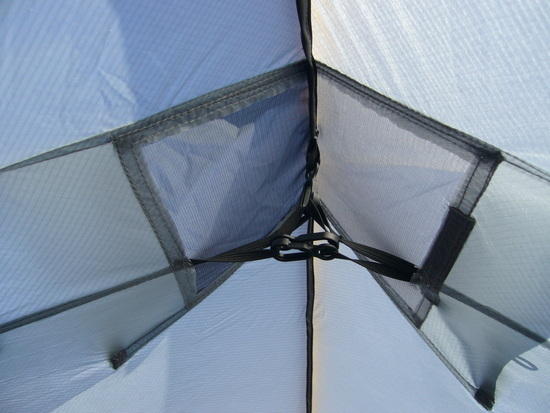
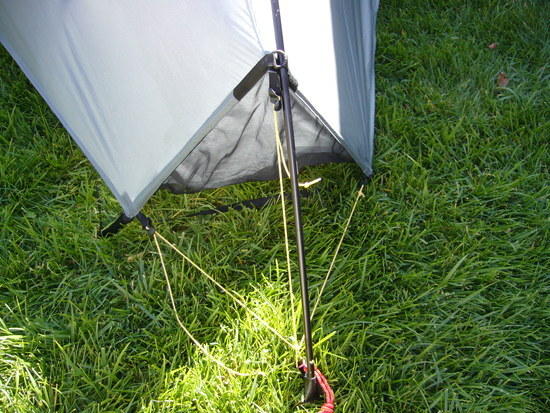
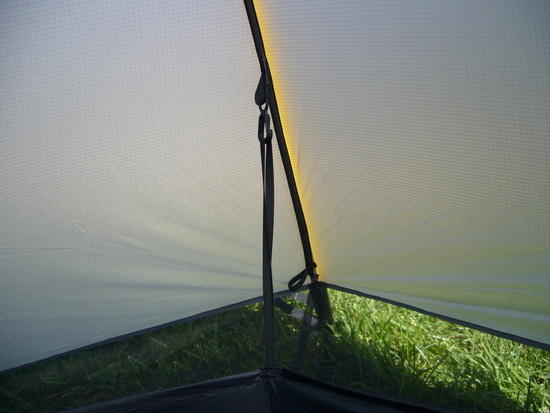
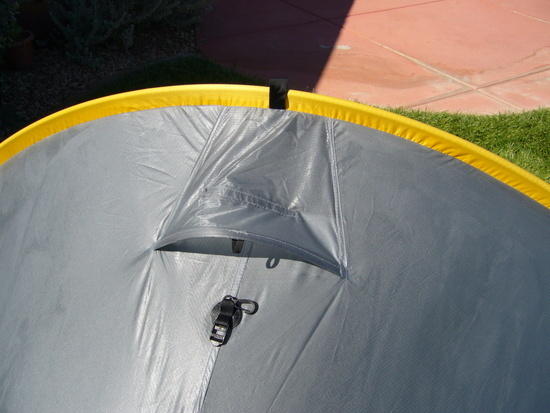 Great tent with LOTS of details that shows how much thought and refining the design went into this tent.