


Thanks for responding.
As a journalist, I am sure you know about observing "unusual events" and then getting all excited, wanting to sniff out the story. Dang. No story this time.
But anyway, OP can mean either original post or poster.
Topic
Become a member to post in the forums.
Thanks for responding.
As a journalist, I am sure you know about observing "unusual events" and then getting all excited, wanting to sniff out the story. Dang. No story this time.
But anyway, OP can mean either original post or poster.
"…observing "unusual events" and then getting all excited, wanting to sniff out the story…"
True. And admirable, I think.
"OP can mean either original post or poster"
Yet another thing I didn't know.
Thanks.
Phew, thanks for the calm responses. I guess I was worried that this was going to be another one of those angry threads with people from different places jumping all over each other. I'm glad the reasons behind the thread had more to do with wanting to find out buying habits than with nationalism.
I think it is a good thing supporting local businesses wherever people live. I think the jobs are important and I think the personalized interaction between customers and those selling products is also vital to preserving community. The only thing I don't like is when someone starts denigrating the abilities of people in another society based purely on the whole "us" versus "them" mentality. In my experience living around the world and knowing many people from many cultures I have never seen one place holding a monopoly on skill or the ability to improve or do good work. I've seen great stuff made in the States and in India and in Bolivia. I've seen crap from the States, India, and Bolivia. And I've seen fantastic ideas come from every place I know. I even love to scour for information on ways of designing gear from different parts of the world because there are often ingenious solutions that people in one region may not have thought of.
So, thank goodness for the open-mindedness of people here. That makes all the difference!
I believe you have mentioned something extremely important and sad about us. We are encouraged, by example and by instruction, to adopt the "us vs them" mindset.
Translated, it often means "We're the good people and they're the bad people." We see it in regards to everything – race, ethnicity, politics, religion, education, wealth, clothing, car, profession, who or what is "cool" this week, type of gear we use…
"If you ain't a (fill in the blank) you ain't nothin'."
Europeans and Asians called (still call?) each other "barbarians." Christans called Muslims pagans and Muslims called Christians infidels.
Great way to get power and make money. Demonize some group, say your people are the good ones, claim only you, the leader, can protect against the bad people, and you can get rich and powerful.
A wonderful, kind, generous woman I know once said we should take all the Iraqies who want "to do things the right way, our way" and remove them from Iraq, kill the rest, and let the "good ones" return home.
"Our way" is the "right way."
My ex-wife's family argued that it was okay to imprison American-Japanese during WWII without due process – denying them their constitutional rights since they were US citizens – because "they're different from us." They talked to me like I was simple minded. It seemed so obvious to them.
It's really sad.
Doesn't seem to me anyone in this thread has stopped to ask whether or not the raw materials used by US cottage industries is made in the US. Much of it is imported. To me, the important questions are 1) Is the quality of materials AND contruction good?; 2) Is the price reasonable or competitive?, and 3) How far do the raw materials and finished product have to travel to get to me. By these criteria I would buy NZ made with NZ materials, all other things being equal, followed by NZ made but non-NZ materials, followed by Australia or Fiji made/materials, etc…of course in the real world, all other things are not always equal, and some of the leading edge UL gear comes from the US or UK. BPL stuff is made all over the place from all sorts of material source. It's my biggest complaint with BPL products-that they don't mention country of manufacture, and often don't bother to mention the often instrusive (IMHO) BPL branding which is usually unremoveable.
I personally boycott stuff made in China, but that's not because of the quality, it's because of the human rights issues. The chinese otherwise make good quality and competitively price goods.
"Doesn't seem to me anyone in this thread has stopped to ask whether or not the raw materials used by US cottage industries is made in the US"
Good point. More to consider.
Some people might be surprised to learn just how many of the textiles used to make today's lightweight backpacking gear can be obtained directly from US manufacturers. I know I was.
As one example, the Inner Peace bug shelter, available on this site, uses netting manufactured in New Jersey, and elastic cordage made in Rhode Island. The UnSlack Pack uses fabric made in Connecticut. A certain brand of spinnaker fabric – an SUL staple – is also produced in Connecticut.
The list goes on.
Foreign companies make stuff for US consumers who pay foreign companies who invest in US debt so foreign companies can continue to make stuff for US consumers to buy.
US companies make stuff for consumers who pay US companies who send it to the IRS who feeds the US government who blames foreign countries during election years.
To clarify, some of the foreign companies are US companies, and some of the US companies are foreign companies.
Everyone got it?
Allison wrote:
"I personally boycott stuff made in China, but that's not because of the quality, it's because of the human rights issues. The chinese otherwise make good quality and competitively price goods."
I grew up in Taiwan (60s-70s) — and all that time it was under martial law. Everything, and I mean everything was censored. I kid you not when I tell you that even the Readers Digest got hit a few times!
I hope you don't mind if I share with you some perspective from growing up on "the other side".
My dad's expertise was in textiles, and he built his own sweater factory in late 1960's — after pooling together capital from extended family members (uncles, cousins, etc.). All the sweaters they made were exported — to US, Europe, S. Africa, Australia…
If well-meaning Westerners (companies, consumers) back then had opted not to do business with Taiwan until after it had reformed, do you really think the government would care one hoot? No, all it meant would be factories closing down, and people thrown back into the countryside — back to subsistence farming. If my dad lost his foreign customers, then obviously his factory would be shut down and its workers laid off. We would have lost our house… and unless my parents found other jobs (not likely) — we couldn't remain in school…
As well, if Time Magazine, Readers Digest and other media had stood their ground against rampant censorship and refused to sell their magazines, newspapers, etc. to Taiwan — that wouldn't hurt the government either. That would just keep the people totally shut out — instead of just partially shut out.
But foreign governments, companies, and peoples continued to engage Taiwan — whose own people became ever more educated and prosperous — and it is this slow evolution that brought about the most deep-rooted and sustained reforms. Taiwan became fully democratic in 1990's — so it's been a journey of some 40 years. Ditto for Korea as well — which arguably had an even more ruthless past.
Not dealing with a country until it has reformed itself is like putting the cart before the horse.
Western culture places much value on the 'individual'. But a boycott (formal or informal) is actually a form of collective punishment! So not only is it almost always ineffective, it is also incredibly blunt and inhumane! You can easily imagine how a simple refusal to buy Taiwanese sweaters could have a very real and serious impact on thousands of families.
Look at the abject misery of Burma and Cuba. 40-50 years of stalemate between intransigent domestic dictatorships and relentless foreign boycotts have only served to bring the people to their knees! Compare them to the totally energized Chinese citizenry! Nothing is certain in life, but I am fairly confident that China too will achieve what Japan, Taiwan and Korea have achieved. It is moving the right direction — and its citizens are crazy about the western world!
For me, I don't see how shutting out Chinese products — the good quality ones — and causing factories to shut down and workers to become peasants again — how any of this is supposed to help? If folks are thinking that boycotts can help by putting pressure on the government — think again. Do we really want to see 1.3 billion people brought down so low — like the Burmese or Cubans???
Everyone has to make his or her own "buy" decisions. I just want to share what it can be like living on the other side of a boycott. It could easily have happened to me living in Taiwan, but I am eternally thankful that it didn't.
I always find it interesting how responses to a thread like this are all over the map (pun intended). This is a complex question. For some, the statement "Made in the USA" is a prideful and patriotic statement. I think that viewpoint is becoming less and less of the knee jerk response it has been in the past (I'm from California so maybe I'm wrong).
Before exploring this topic further we all know, on a per capita basis, backpacking gear has a comparatively small economic and environmental impact. The level of consumption, and the location of production, of food, fuel, and other consumables have a far greater impact.
As lightweight backpackers weight and function are usually the top of the list when it comes to gear. Longevity and durability of a product do often come secondary. Contrary to the rest of the public we tend to pay more for a less durable item in the name of lowering pack weight. This leaves us in an interesting position. Maybe we can pay less while supporting a local business and getting a more durable item by carrying a slightly heavier product. Cottage industries in the USA can fulfill all these requirements.
I am willing to pay a bit more to support local communities and to promote a more sustainable way of manufacturing and doing business. The price of energy, and the status of long term enery supply, must also be taken into account. Buying strictly on price or saying "I can buy 3 of these for every 1 of those and still save money" should come to an end. How much are we paying in the long run through higher prices for energy and other resources? The materials used, and their source, could also be analyzed. This is a foreign way of thinking for most.
Going a step further, I think the really important question should be, what is the effect on the poor in all the world when the consumption of the comparatively wealthy drives up the cost of energy and other resources. The most immediate effect is the increased price of food the world is seeing now.
We in the USA talk a lot about the price of a gallon of gasoline. The price of a gallon of cooking oil, or a bag of rice or grain, is a far more important question of survival for millions upon millions of people right now. The use of corn produced in the USA being converted to ethanol for use as an automotive fuel is one example with far reaching effects.
Ben,
Thanks for sharing your story with us. A personal experience is so much more meaningful than the unending 24 hour sound bites and ratings-inspired rants we get from the "news".
I agree Benjamin that a boycott is a blunt instrument, but I have no other way of protesting as even my own government has now signed a free-trade agreement with China. The thing is, by the time Chinese goverment 'sorts itself out', more ethnicities, religions and cultures will be lost forever, as will much of the natural resources accompanying those cultures. I am frustrated not knowing how eles to 'protest', but our esteemed leaders do not have the integrity to take China on over these issues. I am not anti-chinese, and NZ has one of the fastest growing populations of chinese immigrants on the planet. I get to hear 'their side of the story' which is naturally very different to what gets reported here.
Anyway, my lonely boycott is not going to have any measurable impact on China's GDP….
If the US Dollar is devalued any further, we won't have any choice but to buy from the USA – we won't be able to afford the stuff from Europe or Japan no matter how much better it may be. China is another story perhaps, as their currency value is a little more manipulated.
American Made:
Western Mountaineering & Feathered Friends down products, Vargo Outdoors Ti stoves, etc.
SOME of Coleman's stuff
most good (pricey) knife companies
And then there's the Canadian and European companies that actually make (most of)their stuff in-country if buying Chinese good gags you as much as it does me these days.
Eric
Yeah, I have donated to The Campaign for a Free Tibet for years. Least I can do.
Trader Joes just got rid of every product from China. Found that out yesterday…
Is that really true? Sounds pretty drastic…
> American Made:
> Vargo Outdoors Ti stoves
Ah … I rather suspect the Vargo Jet-Ti stove is made by Kovea in Korea.
A bunch of you guys kill me. If you were truly willing to pay a little bit more for goods made in the US, we wouldn't be outsourcing overseas like we are now. Americans are cheap bastards by nature. By a cheap one and then throw it out. I worked in the autoparts industry for over 15 years. If I had a nickle for every time someone said I want those cheap…I be a millionaire. And with a global economy like we have now, just concentrate on finding the best value for your ever shrinking dollar. Reward the companies that produce quality goods out of a quality enviroment. Like part of a joke I remember. "Yeah, I got Cuban cigars made in Miami made by Puerto Ricans out of Jamaican tobacco . So who really makes our stuff anyway?
This might not get coverage during today’s US primary…
Indiana’s sixth district, home to the city of Anderson saw its exports to China grow over 300% between 2000 and 2007. $118 million last year. Their exports are mostly manufactured goods.
The city’s official Web site includes sections in Chinese and other foreign languages.
Everybody get it now?

You know this is nothing new. This debate has been going on locally for several hundred years. In the early 1800s the tariff people wanted to keep out foreign made goods to allow time to establish our own manufacturing base here in the USA and, of course, the south wanted free trade so they could export freely to England and thus keep the price of raw goods high. That is not to say that special interest groups existed even then who had profit motives (this is good) for supporting their side of the issue. This issue, as you recall from our American History courses, formed the center of much of the headline news back then. Just an interesting observation in light of this thread.
.
"Doesn't seem to me anyone in this thread has stopped to ask whether or not the raw materials used by US cottage industries is made in the US."
I don't speak for anyone else, for my business around 90% of my raw material (fabric) is made in the US. My insulating fabric is made roughly 90 miles from my house in a small factory on the Olympic Peninsula. I try to buy only American made fabrics – though at times that can be an issue, but as I said, it is a rarity it isn't. There are still decent fabric producers in the US. At worst it comes from India if it isn't US.
America has been losing manufacturing jobs every single year for 40 years now — ever since the 1970's. That's longer than the lifetimes of some of the posters here.
Ever wonder then, why our nation's standard of living / income per capita has been rising steadily every single decade since the 1950's?
It's American innovation — and trade! The US has been the biggest benefector of world trade. While losing shoes and textiles, America invented entirely new industries — like semiconductors. Seriously, imagine if folks in the South are still devoting their time mostly to making shoes and textiles — you think they would be as prosperous as they are today? Heck, the cheapest jackets will probably cost as much as a good Arc'teryx today! And people will be buying a lot less.
Patriotism is a fine concept. But when some folks living in the richest nation on Earth that has reaped gargantuan benefits from world trade — whine about keeping all jobs inside the US — high tech, low tech, and agriculture… it's almost obscene. But that aside, cuddling domestic industries has never worked anyway.
Finally, a sober thought. I don't lose sleep over losing what remains of our textile and other labor intensive jobs. My biggest concern is the erosion of our education system — while other countries are improving theirs. We've grown ever richer because of our innovations (making stuff that other people can't is where the real money is!). Today's high tech jobs will become tomorrow's cookie-cutter jobs. Are our kids acquiring the knowledge and work ethic to invent yet more industries to compete in the decades ahead? The moment we lose out on technology and innovation — we will be in for a very long and sad ride down…
Agreed – 90% of engineers are outside the US. Our educational system is falling well behind those in many other countries. While we argue over creationism, other countries are educating their kids in science, engineering, evolutionary biology and other subjects that will help them increase their standards of living and become more and more self-sufficient.
We're in a global economy – we can cooperate and work toward the broader good, or we can pretend to be above it all. The latter won't last much longer…
(And this has nothing to do with US manufacturers versus overseas – good products come from both.)
>>> Our educational system is falling well behind those in many other countries
By keeping us dumbed down, politicians can win elections by embracing and rejecting free trade on the same day while moving among different US states. Many voters do not know how much they benefit from free trade (e.g., IN and NC), but will cheer when politicians berate free trade.
People scream about China or OPEC like snot-nosed, crying kids running to Mommie to complain that life ain't fair when they should get over it, get smart and do something of value with their lives instead. It's there – just have them blow their nose and they will see it.
We need to quit getting our educations from TV talk shows and DVD movies. If you have kids, then encourage them to learn.
Thomas L. Friedman, author of 'The World Is Flat' said,
"When we were kids, our parents used to tell us to eat all of our supper because there are foreign kids who were starving. Now I tell my kids to do all their homework because there are foreign kids starving for their jobs."
Become a member to post in the forums.
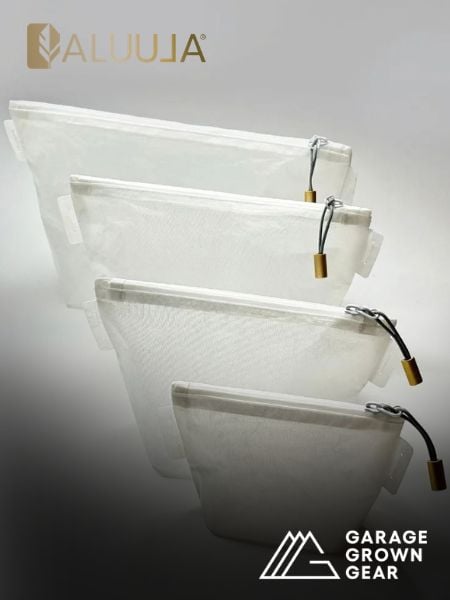 New Gear with Aluula FabricsLighter, stronger, more abrasion-resistant, and highly water-resistant - explore ultralight backpacking gear made with ALUULA Graflyte fabrics. Engineered for exceptional strength, durability, and lightweight performance, ALUULA Graflyte helps reduce pack weight without sacrificing reliability, making it ideal for demanding backcountry adventures.
 © Beartooth Media Group Inc.
 Loading...