Dan: One key value of long-lasting threads like this, and BPL gear threads in general, is that they give the opportunity for BPLers to collectively refine designs for basic hiking gear – stove, tent, tarp, poles, rain gear, etc. Over time, there is the opportunity for (a few) very refined designs to be evolved – to one day maybe become classic designs, like (in my opinion) the Chouinard Pyramid, Bibler I-tent, MLD DuoMid, and Locus Khufu. Even the Ti shepherd hook, or MSR Carbon Core or Groundhog stakes. This design refinement can be a community effort – for those interested enough to participate – and that is the kind of admirable spirit and openness to ideas that I think you encourage in your threads. In such an effort, some might start specific designs, others develop and test them and maybe radically transform them, still others finalize them, yet others may one day commercially produce and market them. This could be considered to be akin to tradition art, where objects may evolve even over thousands of years, into highly refined artifacts that satisfy both physical (utilitarian) and metaphysical (symbolic, meaning, and aesthetic) demands (e.g, the prehistoric adz, which was developed into beautiful ceremonial artifacts in greenstone).
Quite by chance, I’ve just edited a paper on the radio-frequency inductively coupled plasma spheroidization of titanium metal powder. I had naively thought that titanium processing would be confined to working with commercially-provided sheet, rod, tube, etc. But the article pointed out that because of their high specific strength, titanium and titanium alloy metals present difficulty in machining products with complicated shape – which might well be required for aerospace and biomedical applications. A novel approach to avoid this problem is three-dimensional printing techniques, such as selective laser melting (SLM), which has apparently attracted considerable attention in producing titanium-based products of complicated shape. SLM can manufacture three-dimensional products with complex shapes directly, by melting metal powders, and forming new layers of the products.
It therefore occurs to me that a titanium folding tripod based on the form of the traditional African tripod carved from one piece of wood (previously illustrated) could be realized by such 3-D laser printing of Ti powders, and might even one day be commercially viable. That would avoid the difficulty in assembling it from three discrete pieces that intertwine, with all the compromises and hassles that would involve. A developed version of the one-piece shield-stove prototype suggested above could also one day be realized through 3-D Ti printing. And thanks for your kind words.

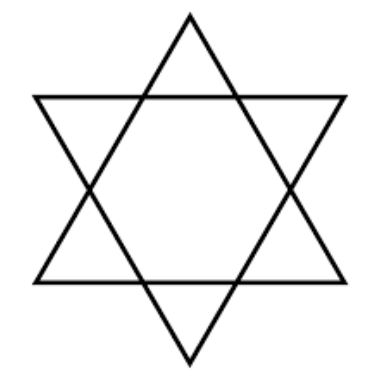
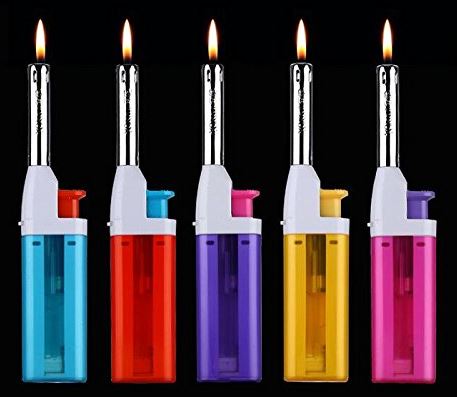

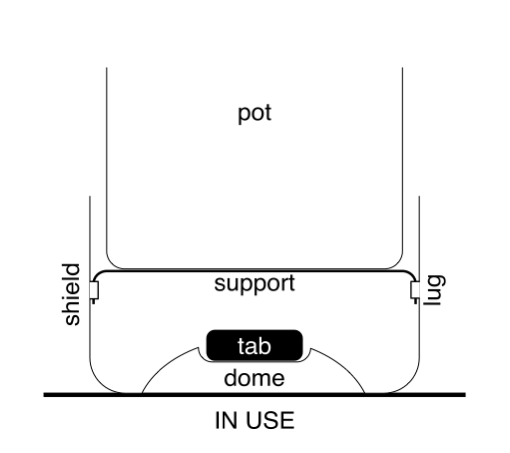
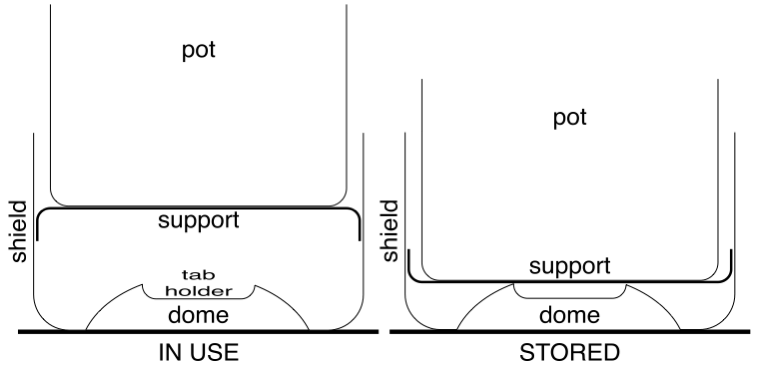 Roger above figures don’t show internal protrusions to hold pot support. learning to use new drawing software on iPad. Left is assembled for use, right is disassembled for storage. Below figure shows lugs to hold support. Not to scale.