


Of course you did Anna, lol. There is another one, but I can't find it just yet.
Topic
Become a member to post in the forums.
.
Of course you did Anna, lol. There is another one, but I can't find it just yet.
Is it the other one I posted in my links on the 1st page ? If not maybe I can help you ;)

Lots of good tips and discussion above. I'll just list the stuff I like to take in cold, wet conditions around freezing:
– Rocky GoreTex socks with wool socks and thin liners
– Certain-Dri antiperspirant treating the soles of the feet for a few days before and at night during the trip
– eVent gaiters
– thin softshell pants
– eVent Packa
– thin synthetic jacket (
– synthetic quilt (1 or 2 night trips might work with a down bag/quilt)
– base layer pants, underwear, shirt for sleeping
– fleece hat for sleeping
The jacket plus the fleece and shell are plenty warm down to freezing around camp.
I probably don't need anything other than a shell layer if I'm hiking around freezing, but I have a 100 or 200 weight fleece layer with me.
I've spent literally months out in those conditions. If you find the secret to it not sucking please let us all know.
My trick now days is to stay home when the weather looks that bad.
But… instead of just being a smartass I'll give my $0.02
Carry lots of extra dry clothing. Keep one set for camp and one for when you are moving. DO NOT MIX THE TWO. In the morning it will really suck putting on wet socks and wet shoes and you will be cold early. Put some mojo in your step and get moving. Eat warm meals and do whatever you need to keep morale up. It is psychological as well as physical challenge and don't underestimate the power of the first.

You want to minimize contact between skin and cold, wet fabrics, you want to increase breathablity but have some wind blocking, and you want quickly drying fabrics.
Some general suggestions along those lines:
Inner/baselayers: Cap 4/similar type PPHE grid fleece, Fishnet (polypropylene, nylon, doesn't matter too much). Merino-synthetic blend is acceptable but not ideal.
Mid layer: If using Fishnet for baselayer then something like Cap 1 or reversed Cap 4, if using Paramo type system outerwear then the Nikwax analogy pump liner, if Cap 4 is baselayer then Fishnet over same. Non wicking Supplex nylon is acceptable provided it's not too tightly woven.
Outer layer: WPB poncho, or Paramo type system (i prefer a modular system of windshirt combined with a pump liner). Neoshell and eVent jackets are acceptable but not ideal.
Lower half–Baselayer: Fishnet or Cap 4. Outer EPIC lower (legs) and regular, breathable nylon upper (crotch), and a rain skirt/kilt (silnylon, cuben, homewrap, etc).
Insulation: Most will do, down or synthetic.
Still haven't figured out best footwear. It all seems to suck in cold, wet and damp conditions. Have some ideas about thin Alpaca and polygiene treated wicking polyester blended socks, with long eVent socks over same, and mid weight polypropylene socks over that with some sort of half hiking sandal. Goretex socks acceptable, if not ideal.
And yes, definitely some backup, dry and light clothes. Thin nylon stuff is good for that.
Check out possum/merino blend socks and gloves. Possum fur is hollow and traps warm air very effectively, making it amazingly warm when wet. It is slower to dry than synthetics, but far, far warmer when wet. The gloves are not very durable and need to be worn with shells for any hard use. I also like sterile surgical gloves as a VB layer. They are thin, very light, very resistant to tearing, grip poles well, and they're cheap or free if you know someone on staff at a hospital. They also come in a range of sizes. Those and sleeves and often enough if the rest of me is warm enough.
I like a breathable shoe with a VB sock option, more versatile, and it will dry out quicker if the wet lets up.

Has anyone tried using a small wood stove in a mid for these conditions? Not light, but ti goat makes as stove that is 1 pound 10 ounces. The weight of 1 day's food. Worth it?
Hi Edward, i've heard good things about possum fur, except that it's not durable at all. It's a combination of fine, hollow fibers and low conductive material that makes it warm for the weight. There is also some hollow fiber micro fleece out there, which will have a similar warmth if the fibers are similar sized, but be a lot more durable and dry faster. Combining a hollow fiber micro fleece with a grid fleece like Cap 4 and a wind blocking shell, could make one pretty warm, fairly durable, and relatively light system for hands or whatever, excellent for cold, wet conditions.
I just read Skurka's article and I agree with much of it although I never spent all that much time with any kind of salve and I use thicker socks.
What works for me is the really thick Ragg wool socks along with NON-waterproof shoes/boots that will dry quickly. The thick wool would hold more water than thinner wool but I found that the action of walking on them effectively wrings them out and they don't matt down like thinner wool. They develop air space next to your skin even when wet and I've never had to deal with skin peeling or other ill effects of prolonged water exposure. I'm sure there is a condition where you can get there but I've not.
That won't stop socks and boots (I still wear boots, although non-water proof ones that drain) from freezing overnight and putting on frozen boots/socks is no fun. In fact, I'd probably go with a warm dry pair and try to dry out my wet socks by putting them inside my shirt while hiking to attempt to dry them. Carry more than two pair of socks if you know you are going to live in those conditions. Frozen boots are not that bad if you have really thick toasty wool socks to go in them and you start generating heat by hiking/moving.
REI used to sell the best Ragg Wool socks. I hiked 1200 miles in ONE pair and they still had miles left on them (this was back in the early 90s). Now days all the thick Ragg Wools socks are inferior to those old heavy ones but they still beat out all the new-fangled high-dollar thin merino wool ones for me.
I use to hike in the Adirondacks in upstate new York during the shoulder season a lot.
It rained 16+ hours per day at least 8 out of every 10 days.
I found that traditional gear worked GREAT in those conditions.
Ie:
Thick synthetic socks + waterproof boots. (Note that you don't have to wade across streams in the Adirondacks).
Liner gloves, + fleece mittens, + waterproof shell + mid wt fleece hat.
WPB rain gear with pit zips + a 100 mid layer top + a silk wt polypropylene base layer top & bottom.
Mid wt fleece jacket for cold or lunch stops.
Mid wt fleece long johns + hard shell pants.
Expedition wt base layer top+bottoms + thick wool socks + fleece gloves + thick wool watch cap + thick fleece jacket for camp.
The synthetic socks and base layers don't absorb any moisture (unlike wool) – and although nothing drys in 100% humidity and cold temperatures – if you keep your hiking layers in the bottom of your synthetic 10 degree sleeping bag, they will only feel a little damp when you put them on in the morning :)
Justin and others,
Does Cap 4 stay warm when wet? I have limited experience with grid fleece but just got the hoodie and will try it in inclement weather. Any examples of a hollow fiber microfleece? Sounds intriguing….
I've been thinking along similar lines of using a wind shell with a wicking layer and limited insulation, something like a UL variant of the Paramo style. I'm also wondering if I can find a fabric with a higher hydrostatic head than most calendared nylon, say 600-1000mm, while retaining air permeability of 5 CFM or more. Most of the fabrics I've found that fit this bill are no longer produced – M90 taffeta, Epic Malibu/Alpine, etc.
Anyone know of current versions?
Also no one has mentioned the newer breathable synthetic insulations… Any experience there? I wore just a Rab strata hoodie in a sleet/snow mix the other day without a pack, and it worked well for a mix of walking and running, but it was on the warm side especially toward the beginning of the day, and venting options are lacking. I wasn't out long enough for it to really soak through at all either, and the precip was only moderate.
Perhaps a thinner version of such insulation, with a windproof shell and a wicking interior, would work well as a one-piece solution. As it stands, I imagine the garments made now with either are too warm for moving with a pack above freezing, but perhaps not once they are see significant precip?
"Does Cap 4 stay warm when wet? I have limited experience with grid fleece but just got the hoodie and will try it in inclement weather."
It will need something over it. Powerstretch, grid fleece, fleece in general…they're warm when wet under a shell, but grid fleece in particular has practically no wind resistance on its own.
The grid fleece feels a little less clammy against bare skin (since only part of the texture touches your skin). The grid fleece breathes better (since its thinner where the grid indents are). Regular fleece is noticeably warmer for a given thickness. Denser fleece is noticeably warmer (and less breathable) per thickness.
A fleece that's "wet" (as in "full of water because it's downpouring out") is warmer than a windshirt – but not "warm". However, you can wring fleece out, shake it vigorously to flick more water out – and get it to be "damp" instead of "wet". Damp fleece is approximately 65% as warm as dry fleece. Ie: A damp fleece is a little warmer than a dry fleece that is one step thinner. But it drys with body heat to the level of the humidity in the air in an hour or two :)
"The synthetic socks and base layers don't absorb any moisture (unlike wool) – and although nothing drys in 100% humidity and cold temperatures"
Isn't 100% humidity and cold temperatures somewhat mutually exclusive? I've always heard that the warmer air is, the more water vapor it can hold. The colder the temp, the less water vapor it can hold. This is why really, really cold temps will always also be bone dry.
So if the temps are around 32 to 39 *F, shouldn't the uppermost humidity typically be something like no more than 65% to 70% or around there? Or am i missing/misunderstanding something?
"Does Cap 4 stay warm when wet? I have limited experience with grid fleece but just got the hoodie and will try it in inclement weather."
In combo with a windshirt, more than any other type of fleece if you are wearing it with the fleecy part against your skin. The idea is that that small air space will continue to insulate even if your skin and the above fabric gets damp since it's the stilled air which is providing the insulation to begin with. It's also the same principle with Fishnet, except the fishnet doesn't wick whereas the Cap 4 will to some extent.
All solid materials are much more conductive than air, and especially so when they are wet. The less material you have against your skin, the better in such conditions, at least as comfort goes.
"Any examples of a hollow fiber microfleece?"
Not sure if it's being made currently, but Polartec use to make a hollow core micro fleece for Land's End which they called AirCore fleece. Polartec claimed that their testing indicated a 20% increase in thermal insulation in comparison to their regular micro fleece. 20% is not a huge increase, but perhaps just enough to notice the difference? It might be similar between Merino and the more air pockected Alpaca fibers if both are similar sized.
"I've been thinking along similar lines of using a wind shell with a wicking layer and limited insulation, something like a UL variant of the Paramo style."
The secret to Paramo is a combo of an outer windshirt type material with sufficient windblocking and HH to slow down the force of the rain, a semi specialized fleece right next to same that's treated with a DWR all the way through, and a typical, highly wicking baselayer.
By specialized fleece, i mean it's a fleece that is smooth on one side, brushed on the other, microfiber or near micro fiber, and similar weight/thickness to 100 wt regular fleece. Slightly thinner. You wear the smooth side towards the skin, over the baselayer. As mentioned, the entire fleece is treated with a DWR.
Can't help you with the other stuff. You might want to experiment with applying silicone adhesive as a DWR to a lightweight, non DWR treated fabric, if you can't find something good enough. Just make sure you either use a fabric with no pre-existing DWR, or sufficiently wash out the DWR that's already there before applying the silicone.
I had treated some fabric (Maxima ESD) that i wasn't aware had a preexisting DWR on it, and Richard Nisley's tests indicated the silicone treatment did not improve the HH at all. Most likely because the silicone was getting blasted off of the fabric, having not properly adhered to it because of the DWR already on same. Hence, a waste of time and effort on my part. I'm fairly certain that if i had taken steps to wash out the preexisting DWR, it would have improved the HH some. Basically i was replicating, if a bit crudely, an EPIC like silicone coating which still allowed some noticeable porosity (i think Richard said the new CFM was 1 vs the original near 10), but would have added a more truly "durable"WR (if there hadn't been the preexisting stuff).
Btw a HH of 1000mm and a CFM of 5 will be hard to achieve with single layer fabric. "Kite" Tyvek comes close, but it's not all that strong and durable as a windshirt type material.
Air holds less vapor as it becomes colder, yes, but at any given temperature, as the air grows closer to its carrying capacity for vapor, it will increasingly prevent water from evaporating out of clothing, or off of skin. Relative humidity, the relationship between how much vapor the air can hold and current conditions, is the more pertinent concept then. If the relative humidity is 100% at 32 degrees, you will have just as difficult a time drying out as you would at the same relative humidity at 80 degrees, despite the fact that there is more water in the air at 80…
Have you tried again with a non-DWR fabric?
I imagine you could just do a water column test of your own and compare fabrics that way, or a coffee-filter type test in lieu of something more sophisticated for air permeability.
Some time back, Richard tested Momentum 90 taffeta to 950mm and 4.7CFM, which is pretty startling I agree. Nothing else seems to come close, and I can't help but wonder how they achieved this with 1.1oz DWR nylon.

yes, the warmer it is the more water vapor air can hold
no, cold air doesn't have an uppermost relative humidity less than 100%, that is, any temperature air can have humidity 0% to 100%
if air has 100% humidity, stuff will never dry out. the lower the humidity, the faster it will dry. The warmer it is at the same humidity, the faster it will dry
if air has a particular humidity, and the temperature is lowered, the relative humidity will go up. If the humidity wants to go above 100%, it can't, so the extra water condenses and falls as rain. This is what happens when clouds go up over mountains – as the air goes up in elevation, the temperature drops, another principal.
one thing that helps dry socks, is your body warms up the air right next to you, so the humidity drops, so your socks will dry faster
I've been pretty impressed with kite tyvek, though I haven't used it in the field for any real duration yet and I've heard the reports about durability, pilling, etc.
Epic is another option, but the only place I've seen it these days is as an option for Nunatak stuff. Otherwise, I'm not sure where I could lay my hands on some.
The DIY siliconization idea is interesting. Let us know if you can get some better results with a non-DWR fabric.
Quite a few years ago I made rain jacket out of epic. Seemed water-proof but maybe i didn't test this good and it never was very water-proof. Anyway, after using it for a while it rained once and it wasn't at all water-proof.
I think maybe it was Roger that said something about how dirt can get into the fabric and way reduce water-proofness.
Of course epic you buy now may be a lot different than a few years ago.
So with the paramo system, as vapor is wicked to the middle of the jacket, its temperature decreases, and, like the cloud rising over the mtn, it increasingly turns to liquid and is pushed through the hydrophobic middle and shell to the outside?
The problem is maybe that the system requires enough insulation to create a sufficient temperature gradient, making it unsuitable for warmer/lighter applications?
I wonder if a less insulating, lighter middle layer could be used – maybe Fullrange or Alpha. Either would certainly be lighter….60-80g/m2 vs maybe 150g or more for the dwr fleece pump liner, and perhaps more air permeable/cooler. Not sure if they would still prove too warm though? I suppose Fullrange is still warmer than 100 wt fleece anyway…
"Isn't 100% humidity and cold temperatures somewhat mutually exclusive?"
No. To add a little detail to what's already been posted, the ratio remains the same, but the total amount of moisture in the air will be less at lower temps.
Even though the difference in the amount of moisture is therefore much smaller, the perceived difference in temperature/how it feels can be huge.
30s and 100% humidity is not uncommon here in the South when the temp is the overnight low. It's rare to see those numbers during daytime hours when humidity is typically lower, but can and does happen with overcast conditions.
Become a member to post in the forums.
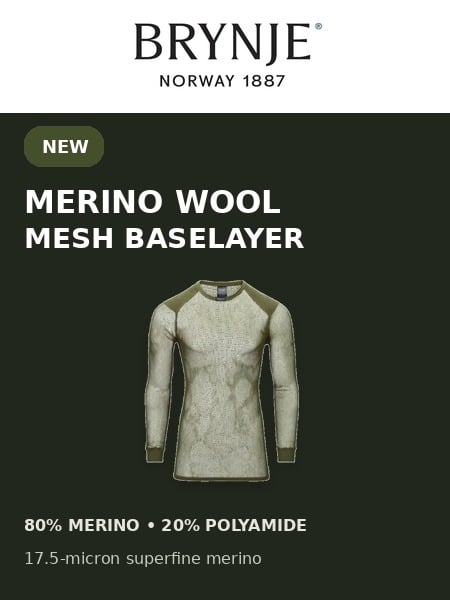 Tactical Wool Thermo ShirtSuperfine merino wool-blend mesh baselayer with a slim unisex fit and densely knitted shoulder panels for pack-carrying comfort. Weighs 4.9oz | 140g
 © Beartooth Media Group Inc.
 Loading...