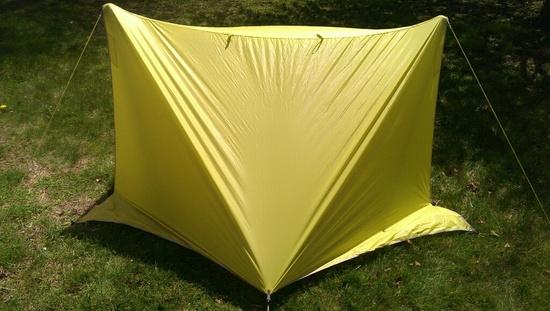
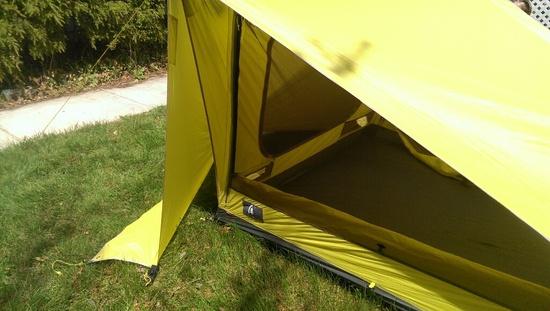
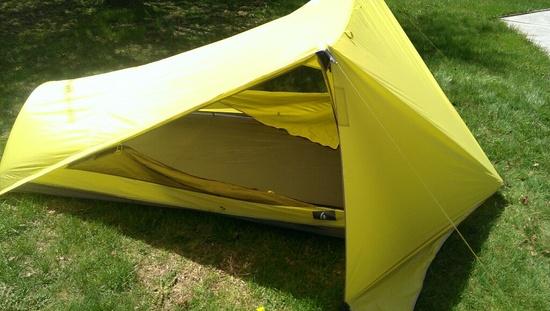
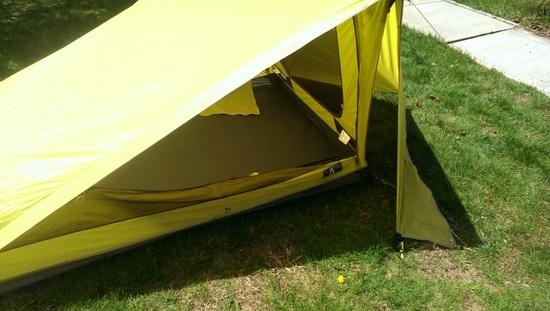
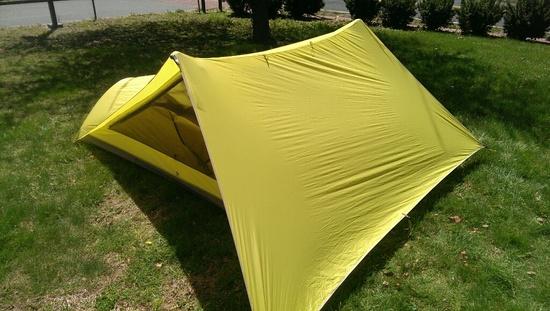
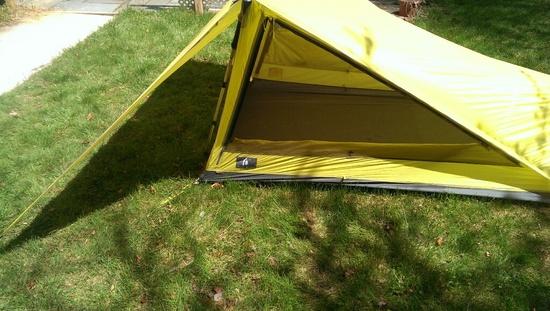
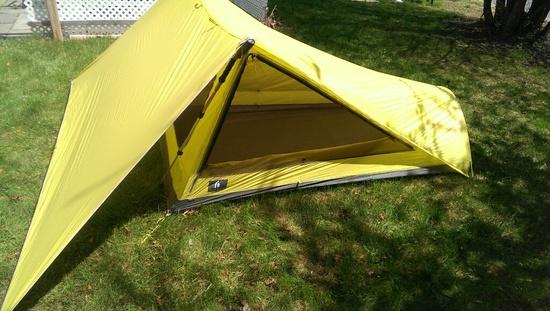
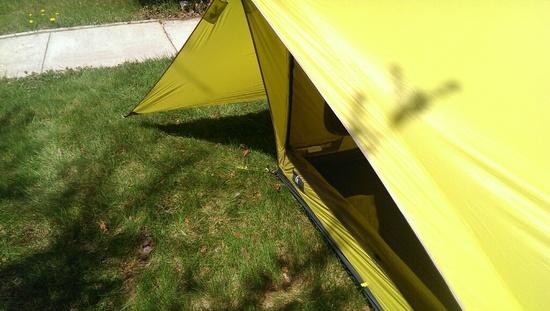
I had a chance to test out my Tensegrity this weekend. I went backpacking in Rocky Mountain National Park, and the weather forecast at 10,000 feet was a low of 27, rain and snow with up to an inch of snow accumulation and 5mph wind becoming calm. It's never calm at 10,000 feet, so I was surprised to read that in the forecast. But it sounded like reasonable conditions for the tent, with no heavy snow or heavy wind.
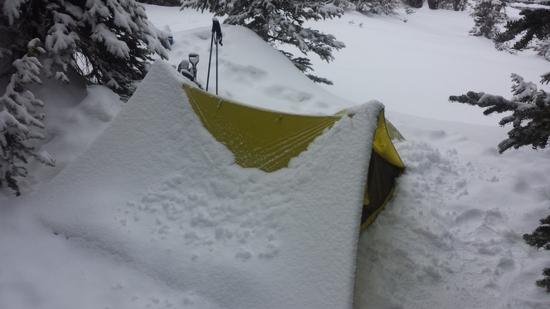
The forecast turned out to be reasonable accurate. All night there was a mix of rain, icy pellets, and heavy wet snow. By morning there was about two inches of new sticky snow on the ground. The forecast also said 100% humidity, and although I don't understand how humidity works below freezing, that seemed about right.
The old snowpack was at least 5 feet deep at the campsite (I know because I dug a hole to warm up, and I never reached the bottom), so I packed down a flat spot with my snowshoes and leveled it with my shovel. The nice thing about winter camping is that you can make any site perfectly level if you want to take the time.
I put the stakes in deadman style. I cut a slot in the snow with my shovel, looped the tent cord around the center of the stake, buried that about as deep as I could, maybe 4-6 inches, and packed the snow on top. The anchors were strong, and I couldn't pull them out by hand. But snow under pressure tends to deform slowly, so I had to retighten the line locks a couple times. It was difficult to get the tent pitched taught because there wasn't enough cord to bury it and to take up the slack. If I use it on snow again I'll tie on some extra length of cord. Longer sticks or proper snow anchors would have helped prevent them from shifting under load.
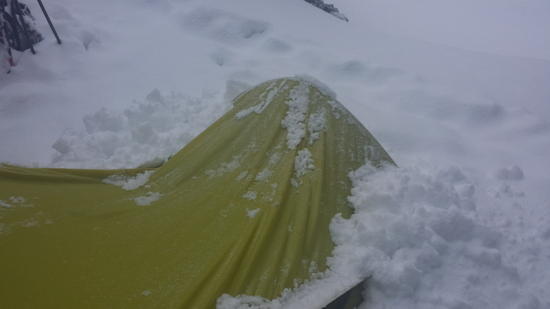
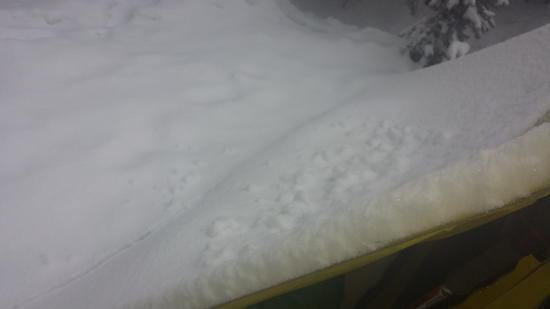
Since the pitch wasn't that taught, snow tended to accumulate on the roof. Several times during the night I woke up and pushed the snow off from the inside, and twice I had to reach down to the foot of the tent and push off the large piles that accumulated near the bottom that were resting on my feet through the sagging roof.
There was tons of condensation on the roof, huge droplets of water that would fall off at the slightest touch. By morning snow had completely blocked the foot vent, but the garage vent is always open, and I left the side windows open about 6-8 inches. But even before the foot vent was blocked condensation accumulated quickly, and that may be because of the calm winds and 100% humidity. In the morning I took a pack towel and wiped off the roof, but my sleeping bag still got quite wet. It wasn't wet enough to soak through my sleeping bag, but if i was on a multi day trip the next night would have been less comfortable. Almost all my gear got wet either from sweat or rain or melting snow.
Despite these problems I'm happy with the tent so far. Any single wall tent will have condensation in those conditions, and the only reason I bought a single wall tent is that Colorado is really dry most of the time. If I lived somewhere rainy and humid I would have looked for a double wall tent. The difficulty pitching it on snow was mainly due to my inexperience with pitching this tent, and my inexperience with making anchors in snow. It was my third time setting up this tent, and first time pitching a tent in the snow. It definitely takes some practice to set this tent up well. It's not a four season tent, so it's not designed to handle snow loading, but I would expect any tent to be able to handle some snow. With a tighter pitch and/or better snow anchors it would have been fine.