



Introduction
In this test report, I investigate the effectiveness of backflushing and storage protocols to evaluate the relative differences in maintaining the performance of the Platypus Quickdraw, Sawyer Squeeze, and Katadyn Befree hollow-fiber membrane filters.
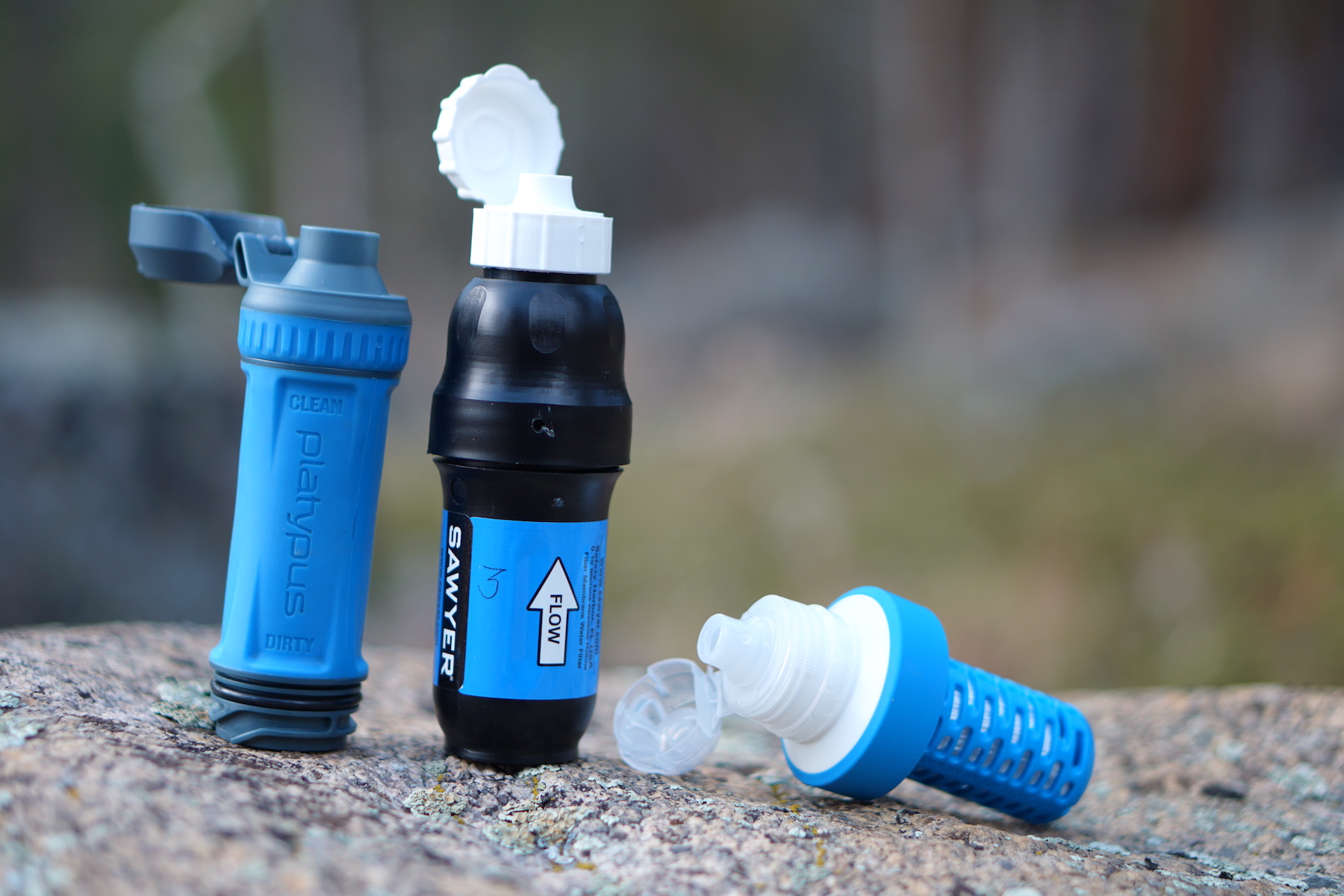
A variety of tests and protocols were performed, including filtration of dirty water with a moderate level of turbidity and backflushing efficacy. In addition, I look at how integrating a long-term storage protocol using citric acid and chlorine dioxide might affect filter lifespan. Finally, several filters were subjected to a six-month field study and evaluated at the end based on backflushing and storage protocols used to maintain their flow rates.
Because flow rate is also proportional to the transmembrane pressure of water across the hollow-fiber membrane, the rate of water flow through a squeeze filter is highly variable and depends on how hard a user squeezes the water bottle. More squeeze pressure equates to a higher flow rate. Because of this, evaluating maximum flow rates through a squeeze filter is challenging and would require a constant-pressure delivery of water that mimics the pressure exerted by a user’s hands squeezing the bottle attached to the filter. Therefore, to maintain a controllable and repeatable test, flow rates here are measured by passive flow provided by the gravitational forces of the hydrostatic head above the filter in the absence of a vacuum in the feed bottle. We use the technique presented previously by Jon Fong to determine the current state of a filter’s capacity, i.e., the effective filtration media surface area available (and not clogged), which is directly proportional to the flow rate of water through a hollow-fiber membrane filter.
Technology Overview
The water filtration technology used in the Platypus Quickdraw, Sawyer Squeeze, and Katadyn Befree is based on hollow-fiber membrane filtration. Hollow fibers are made when a molten polymer is pulled through an extruder, forming a very thin, hollow tube. The walls of the tube are porous. Contaminants are filtered from the water when dirty water is injected into the center of the tube (the hollow part of the fiber), and clean water percolates through the fiber walls to the outside of the tube (inside-out filtration) under pressure. Conversely, hollow-fiber filtration systems can be operated as outside-in systems. All filters discussed in this test report operate as outside-in systems.
Various combinations of wrapping, sealing (gluing), and fusing one end or the other of the fibers and/or interstitial voids (the spaces between the walls of the fibers) result in the mode of filtration (outside-in vs. inside-out) and govern how water flows through the filter.
In the filters tested here, a parallel bundle of individual hollow fibers is arranged in a “U”-shaped configuration and bound in a non-porous resin matrix at the outflow where the ends of the fibers terminate.
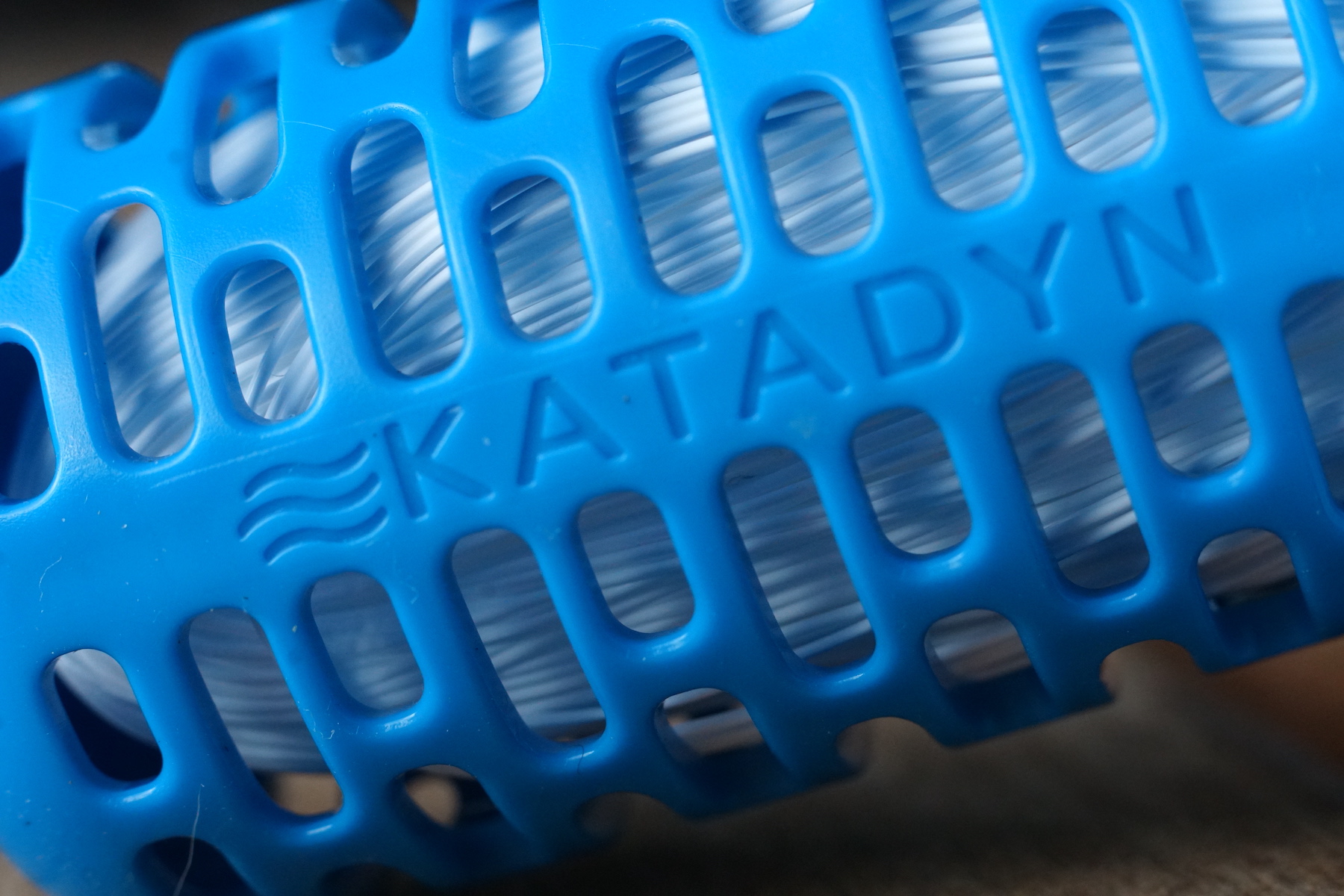
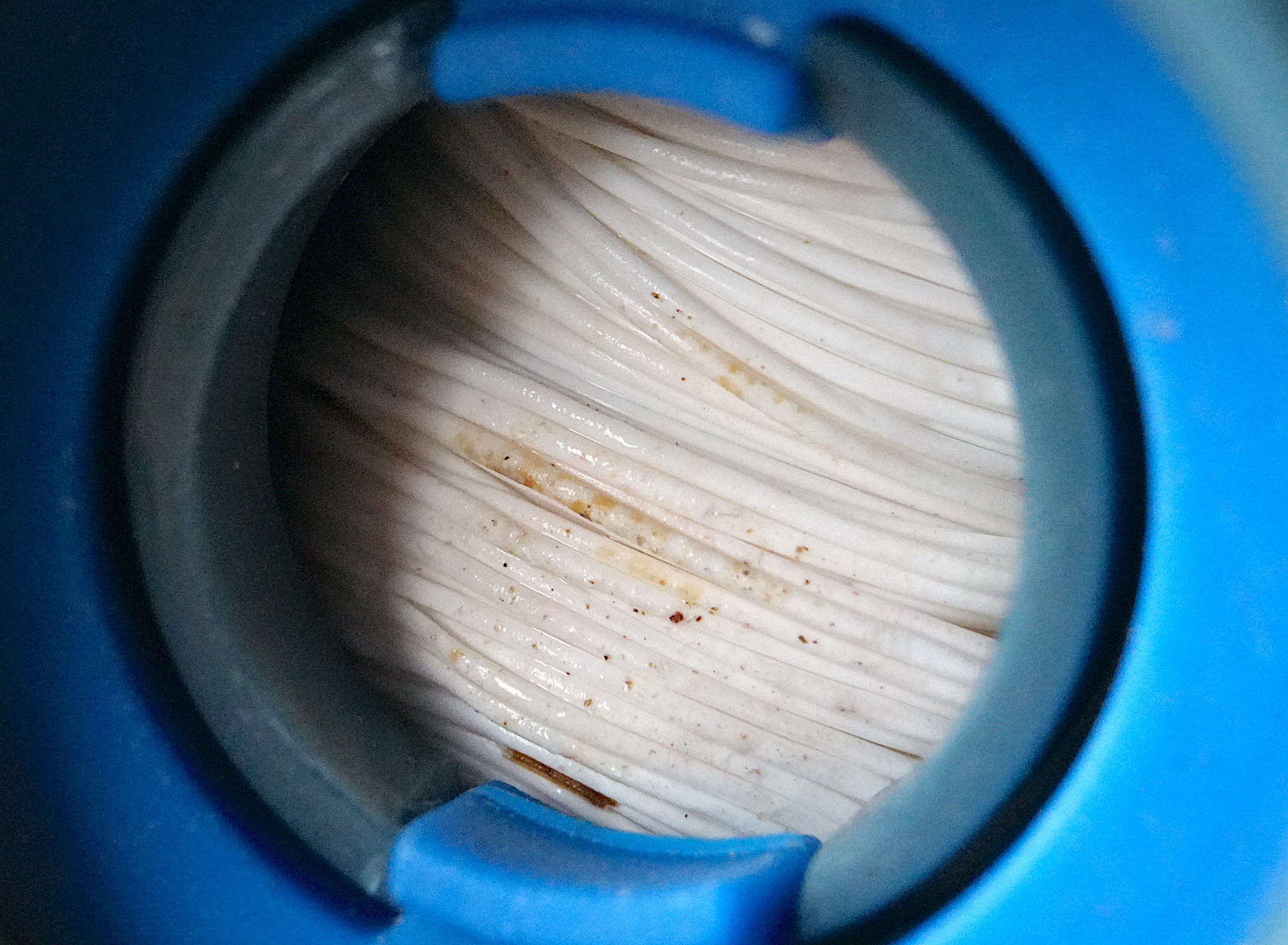
The resin is then machined at the outflow end to expose the openings of the fibers. This assembly is surrounded by the filter housing, which provides a seal between the inner wall of the housing and the resin. In these outside-in configurations, water is squeezed into the void space that exists outside the fibers, percolates through the fiber walls into the inner tube of the fibers, and exits out the tubes bound by the resin-end as clean water.

As with any water filter, undissolved solids in raw water can absorb or accumulate in the filter medium and result in slow flow rates. In hollow-fiber membranes, debris adsorbs onto the outer surfaces of the hollow fibers (since it employs an outside-in flow configuration). That makes it quite easy to clean and allows backflushing to be an effective method of restoring flow. Hollow-fiber filters that are based on inside-out flow patterns clog easily and are very difficult to clean because particles fill up the inner tubes of the fibers and are very difficult to flush out. An inside-out configuration would be totally inappropriate for backcountry use.
There are three primary mechanisms by which a filter clogs:
- sediment and other undissolved solids adsorb to the filter membrane;
- bacteria grow on the surface of the filter membrane into slimes (biofilms) that are very difficult to remove;
- dissolved solids create calcification-type deposits on the surface of the filter membrane that are resistant to dissolution after the filter medium dries.
Shaking and backflushing frequently can mitigate all three of these factors to some extent because the more sediment you can remove from a filter, the less surface area there is for bacteria to adhere to, and dissolved sediments to calcify upon.
All that to say: backflush regularly and frequently as a prophylactic measure, not just as a reactive measure.
Test Description
Three squeeze-style hollow-fiber membrane filters were selected for this study: Platypus Quickdraw, Sawyer Squeeze, and Katadyn Befree. Their specifications are outlined in the following table.
| field weight | flow rate* | cartridge life* | |
|---|---|---|---|
| Platypus Quickdraw | 2.4 oz (68 g) | 3.0 liters/minute | 1,000 liters |
| Sawyer Squeeze | 3.4 oz (96 g) | 1.7 liters/minute | 100,000 liters |
| Katadyn Befree | 1.6 oz (45 g) | 2.0 liters/minute | 1,000 liters |
Table Notes:
- Flow rate and cartridge life are specifications provided by the manufacturer and represent maximum values under ideal conditions.
- Weights denoted are “field weights” measured by the author for cartridges that have been fully wetted, and then shaken dry. Weights include the filter cartridge/housing and spout caps but no other filter accessories.
Two series of side-by-side tests were performed: a bench study and a field study. They are described below.
Bench Study
This study was performed indoors at room temperature with cold tap water unless otherwise noted. All filtration was performed passively (no squeezing). The following treatments and tests were performed in series:
- A filter was primed by filtering 4 liters of water and then submerged overnight to fully wet the filter medium.
- The flow rate of the filter (Q_new) was measured using the procedure described by Fong.
- Two liters of dirty water collected from the field were passed through the filter. The dirty water was collected from a silty stream containing a mixture of coarse inorganic sediments (generally 50 to 200 microns in diameter) and fine inorganic and organic sediments (generally 5 to 50 microns in diameter) that remained in suspension after 10 minutes of settling.
- The flow rate of the filter (Q_dirty) was measured again.
- The filter was backflushed with 2 liters of cold tap water using a soft bottle with hand-squeeze pressures as high as possible.
- The flow rate of the filter (Q_backflushed) was measured again.
In the bench study, two replicate filters were used from each brand. Reported results represent the averages of measured values. The coefficient of variation (CV) in all measurements between replicates was less than 6% unless otherwise noted.
Field Study
Six filters were tested side-by-side over 90+ use-days. Backcountry use included day hikes, overnight, and multi-day (up to 8 days) backpacking trips in the Snowy, Laramie, and Bighorn Mountains of Wyoming, and Rocky Mountain National Park in Colorado.
One replicate of each filter type was subjected to the exact same filtration conditions, backflushing protocols, and storage treatments (citric acid and chlorine dioxide, described below). In addition, additional replicate filters were subjected to the exact same filtration conditions as the others, but were only backflushed between trips, not during trips, and were stored without the citric acid and chlorine dioxide storage treatments.
Water sources included both clear and turbid natural sources (stream and lake water). I carried a calibrated turbidity meter and a pocket microscope with me and was able to categorize these water sources as follows:
1. Clear stream water above the treeline, low concentrations of primarily inorganic sediments (< 5 NTU).
2. Turbid stream water above the treeline with moderate concentrations of primarily inorganic (granitic) sediments resulting from spring snowmelt (10 to 100 NTU).
3. Clear stream water below the treeline, low to moderate concentrations of primarily organic sediments containing debris from the decay of forest litter (< 20 NTU).
4. Turbid lake water below the treeline, low to moderate concentrations of primarily organic sediments and suspended solids containing algae and debris from the decay of organic plants (20 to 50 NTU).
5. Turbid stream water below the treeline in a recent wildfire burn area, moderate to high concentrations of primarily inorganic fine sediments and suspended solids containing fine clays resulting from debris slides (200 to 500 NTU).
No prefiltering was performed, but all water sources were allowed to settle for a few minutes prior to filtering to improve the clarity of the decant and minimize the risk of fouling the filter with large-diameter sediments.
After each filtration session (defined as a single point in time where water was actively filtered, e.g., a water break at a stream during a hike or collecting water in camp for dinner), all filters were backflushed with 0.5 liters of clean (filtered) water at high (squeeze) pressures, shaken dry, and stored out of direct sunlight (to minimize heating and biofilm growth).
At the end of each trip, filters were subjected to a cleaning and storage protocol as follows:
- Filters were backflushed at a high squeeze pressure with 2 liters of cold tap water.
- Filters were forward-flushed with 0.25 liters of a 5% citric acid solution and rested for 30 minutes, then flushed with 0.5 liters of cold water. This treatment removes calcified organic deposits such as magnesium and calcium salts that may form when filtering hard waters normally found in the Mountain West.
- Filters were forward flushed with 0.25 liters of a double-concentrated solution of Aquamira, rested for two to four hours, and then flushed with 0.5 liters of cold water. This treatment is designed to disinfect bacterial biofilms which may foul the filter membranes. The cold water flushing after the Aquamira is designed to remove traces of chlorine-based oxidizers which are known to accelerate aging of polymeric filter media.
- Filters were stored in cool, dark environments and never subjected to freezing temperatures or high shock loads due to dropping, etc.
- At both the beginning and end of the field study, flow rates were measured as described in steps 1 and 2 of the Bench Study above. These flow rates are reported as Q_new and Q_used respectively. The values represent the averages of three successive flow rate measurements.
Test Results
Measured Flow Rates of New Filters
The following table reports the average passive (gravity-only) and active (maximum squeeze pressure by me) flow rates measured on a minimum of three brand new filters. The reported rates represent the averages for each filter (CV < 6% for passive flow measurements and < 10% for active flow measurements).
| Q_new | passive flow (L/min) | active flow (L/min) |
|---|---|---|
| Platypus Quickdraw | 0.82 | 2.55 |
| Sawyer Squeeze | 0.58 | 2.41 |
| Katadyn Befree | 0.94 | 3.04 |
Measured Flow Rates of Filters Used in the Field
Member Exclusive
A Premium or Unlimited Membership* is required to view the rest of this article.
* A Basic Membership is required to view Member Q&A events


Discussion
Become a member to post in the forums.
Currently have 5 filters in house, partly for different use cases
– Quickdraw (+backup) for most trips
– Gravityworks (+backup filter) for 3+ people trips
– Trailshot (a carpal tunnel syndrome generator), great for sneaking water out of small clean-water pockets in lakes heavy with decomposed veg late season
Use them all, but ya, a bit of a PITA
I use an aquarium air pump to dry out my filters and hydration bladders.
My filter life got much better when I started using distilled water for final rinse. In AZ, the typical tap water has about 450ppm dissolved solids. Springs similar. For reference, many CO streams on the front range are about 40-50ppm. Distilled water from the grocery store has about 5ppm.
Ditto. Just be sure to buy actual distilled water, not something labeled “purified water.”
Cascade Designs provided a helpful response. Probably minerals, with vinegar solution soak to clear.
In future I’ll be disinfecting with bleach solution followed by distilled back flush, followed by accelerated drying like always
from some other thread, CLR is another product to clear a filter. It has stuff in addition to acid. It’s designed to dissolve mineral buildup.
Jerry, I’d avoid that stuff for a filter. Nasty side effects if you then disinfect with bleach: “Calcium, Lime and Rust Remover should never come into contact with chlorine (or any other household chemical). It can create a poisonous gas and is not safe. “
That makes sense.
You’d definitely want to rinse it out well afterwards. Maybe this would be a good treatment for a badly calcified filter which could happen with bleach and hard water.
Turns out that vinegar and bleach mixed also create chlorine gas.
I asked Cascade Designs and they advised to rinse with 5-6L of water after the vinegar treatment, before using a bleach solution to store.
So: vinegar soak to demineralize, followed by 5-6L of distilled to rinse, then bleach treatment, followed by distilled rinse to avoid bleach deposits that can block the filter and finally fully dry (fan etc) before storing.
Its crazy that this sort of information isn’t just readily available.
Getting a bit complex.
Or just use a Steripen UV wand?
Cheers
Yup, complex, but puzzling that this process end to end is a mystery requiring self-discovery.
Water out here is often turbid after July. And my plans are to go deeper and deeper into bushwhacking areas most others would eschew. Steripen is too risky
I am curious: why is a Steripen too risky?
Given that UV treatment is used by many city water boards and by the US military.
Granted, turbid water can be a problem for UV, but surely a walker would try to filter the mud out first? One or two coffee filters would work great. One would not want to drink mud after ll.
Cheers
It’s the turbidity. I’d consider a Steripen if pre-filtering didn’t add so much delay. I often need to filter 5-6L in a day, solo so the time hit isn’t minor.
It’s much quicker and simpler to use a squeeze filter and back flush often but still have to pre-filter late season when lake weeds are dying off.
I’ve tried coffee filters & bandanas but the best pre filter I’ve found (quickest, effective, durable, fast drying) is a baby wipe over a wide mouth Nalgene. It’s still more hassle, weight and wait than I like to deal with when covering a lot of ground.
Letting suspended goodies settle at the bottom of a 6L Gravity Works is a good compromise for mellow group trips but those happen only once or twice a year
Consider me ignorant (or just a long way past babies).
Is a baby wipe wet or dry?
Either way, what chemicals are on a baby wipe?
Cheers
Initially dry, 2g each
Chemical breakdown is shown here, pretty safe but the prefiltered water is also being run through a Quickdraw filter afterwards
Hi David
Thank you for that. That web sites lists the following ingredients in one line of wipes:
Polypropylene, wood pulp (cloth material)
Water
Caprylyl Glycol
Sodium Benzoate
Coco-Betaine
Polysorbate 20
Butoxy PEG-4 PG-Amodimethicone
Malic Acid
Sodium Citrate
Tocopheryl Acetate
Glycerin
Fragrance
Aloe Barbadensis Leaf Extract
Cucumis Sativus (Cucumber) Fruit Extract
Calendula Officinalis Flower Extract
Camellia Sinensis Leaf Extract
I am sure some of that is ‘mostly harmless ‘, but why would a mother want to put all of that on her baby? I am boggled!
Not sure I want to drink water which has been through all that either. To be sure, I may be paranoid, but why take the risk? After all, we have been assured in the past most earnestly that XYZ chemicals are perfectly safe – things like asbestos and thalidomide for instance. And the lead in petrol.
Yeah, paranoid.
Cheers
Hi Roger, you’re welcome. I think this is pretty safe for a few reasons.
First, the way I prefilter is to wrap the material around the mouth of the dirty bottle, submerge it all and then burp the bottle under water to fill it. It fills pretty quickly. The water passes through less than a square inch of material with very little contact area and under low pressure.
Secondly, the article grades the toxicity of each ingredient and by far the most “toxic” is polypropylene, “the safest of all plastics”. We drink from plastic on trail
Third, the quickdraw will filter chemicals which a steripen can’t do. In some waters with public use, farms or cottages there can be fertilizer run off, gas, oil etc. in the water
So water run through one square inch of diaper wipe with no known toxicity under low pressure & then filtered through a quickdraw is probably lower risk than filtered through a coffee filter which only removes chunks and then sterlizied with a steripen which can’t remove chemicals and in turbid water will not sterilize to the # of 9’s the hollow tube filter will
What is the advantage of using a baby wipe over using a bandana to pre-filter?
Baby wipe absorbs a lot less water than a bandana and dry much more quickly. You can tear off a small piece and get a lot of use from one. They have dual use later for really dirty stuff clean up. They weigh 2g each when dry.
Baby wipes and a Buff cover more needs and better than a bandana in my experience. The wipes are better for filtering and cleaning and a the buff for wearing, with no weight penalty. And cleaning pots, filtering or cleaning dirt off your tent doesn’t mean you have to choose between wearing a wet bandana or nothing
The wipe doesn’t last for ever but I can get a week out of 3 (6g) and still have the Buff for back up. Exhausted wipes go in my garbage bag to carry out but they dry fast so there’s little dead weight to carry.
They work for me and I personally find this method much more pleasant and functional than a bandana
Another option for pre-filter. This one by CAMCO meant for water filters so the mesh is fine pitched. 2g. Fits Quickdraw+Smart bottle. Will be giving it a spin all next week
David – The Platypus QuickDraw does NOT filter chemicals and toxins.
Says so right on their webpage: https://www.platy.com/filtration/quickdraw-filter/quickdraw-filter.html
It’s a hollow fiber filter similar to a Sawyer Squeeze.
Jeff, thanks for the catch. I try to be careful to have facts correct especially when discussing safety items, so sorry to have missed that, it’s important.
To filter chemicals in a hollow tube filter, one needs to move up at least to the 6 oz Versaflow with activated carbon:
https://hydroblu.com/versaflow-with-activated-carbon-filter/
“Activated carbon adsorbs chemicals and heavy metals… removing pollution, poisonous, and heavy metal iron from the water…will remove unhealthy organic compounds such as chlorine, pesticides, herbicides, gasoline, and diesel”
The “N” 9’s benefit of hollow tube still remains over a steripen in turbid water though
“Activated carbon adsorbs chemicals and heavy metals… removing pollution, poisonous, and heavy metal iron from the water…will remove unhealthy organic compounds such as chlorine, pesticides, herbicides, gasoline, and diesel”
I think that should read “Activated carbon adsorbs a percentage of the chemicals and heavy metals… “., and so on.
Nothing absorbs 100%. So there can still be a risk, especially with small hand-held units.
Actually, I don’t think any of our portable field units, be they filters, chemicals or UV, can completely remove dissolved chemicals. Industrial and agricultural chemicals are generally bad news. Find another water source.
Cheers
I’m thinking when you have to work with the water sources you’ve been dealt (parts of the CDT for example with it’s sketchy green water sources), this hydroblu with activated carbon looks like a big step up over the usual sawyer. I’m surprised we don’t hear more about it
I have no personal experience with it, but the Hydroblu carbon filter is reported to be very slow, so much so that it doesn’t really work as a squeeze filter and it’s better to hang it.
Become a member to post in the forums.