

Introduction
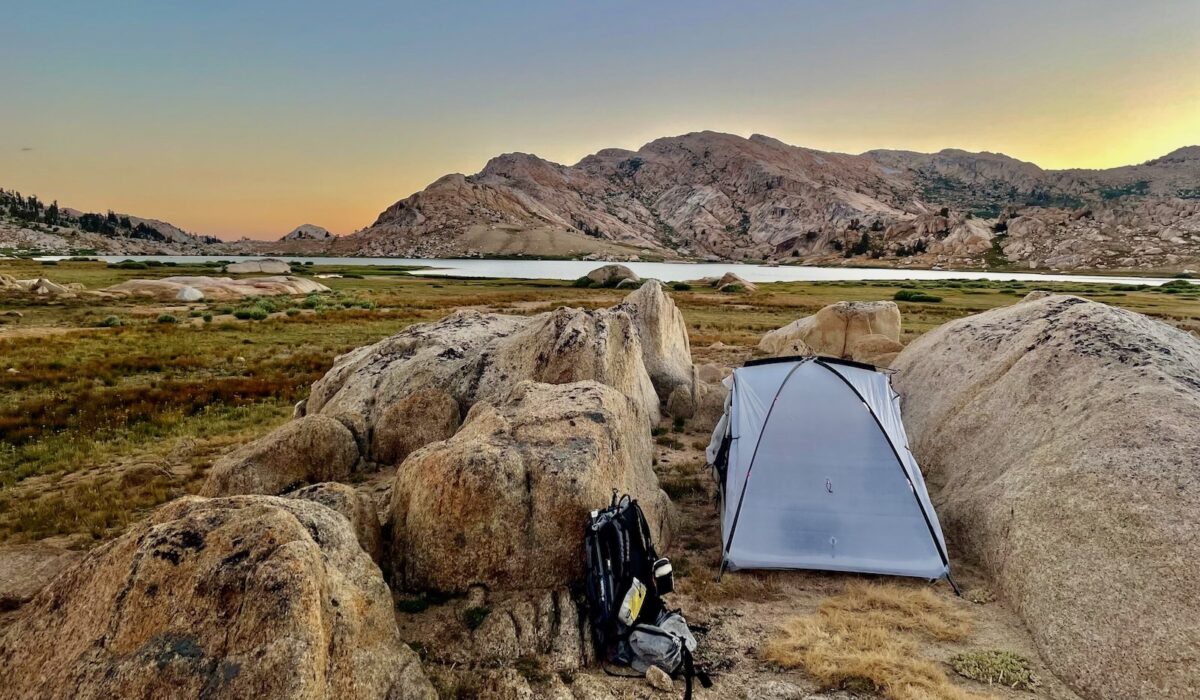
Among long-distance hikers, the phrase stealth camping is often used colloquially to describe camping outside of designated sites – usually without a permit, or just off-trail to avoid campground fees, rangers, or crowds. In this sense, “stealth” implies informality or discretion in site selection rather than genuine concealment. Most of these sites are not hidden at all; they are frequently visible from trails and close to water sources and other high-use corridors. On heavily traveled long-distance routes, such as the Appalachian Trail or the John Muir Trail, this practice has contributed to the proliferation of unofficial campsites. The effect has been amplified by GPS-based navigation platforms (e.g., FarOut) and social information-sharing, which catalogue and distribute the locations of these informal sites. The result is increasing ecological pressure on narrow trail corridors where soils, vegetation, and water resources were never intended to absorb concentrated, repeated camping use.
Such impact is easily noticeable in my local hiking areas. Along the Continental Divide Trail in the Never Summer Wilderness near Grand Lake, Colorado, I counted more than forty individual campsites impacted by shelter pitches and trampling in a single five-mile trail corridor. All campsites were within twenty yards of the trail, and all of them were easily visible by a passing hiker.
In this article, I describe a different type of stealth camping, with the aim of increasing awareness about the problematic practice of stealth camping as it is often practiced by long-distance hikers, versus stealth camping as a practice that minimizes ecological and social impact. Here, stealth camping is not about skirting regulations or saving money; it is about the technical discipline of becoming invisible in a landscape. This version of stealth is rooted in fieldcraft: the deliberate use of terrain, light, sound, and behavioral discipline to reduce detection probability to near zero. The differences here are notable: one is convenience camping under a euphemism; the other is a practiced skill with roots in scouting, military reconnaissance, and minimalist wilderness travel.
This article is about the latter – the art of not being seen.
Terrain and Site Selection
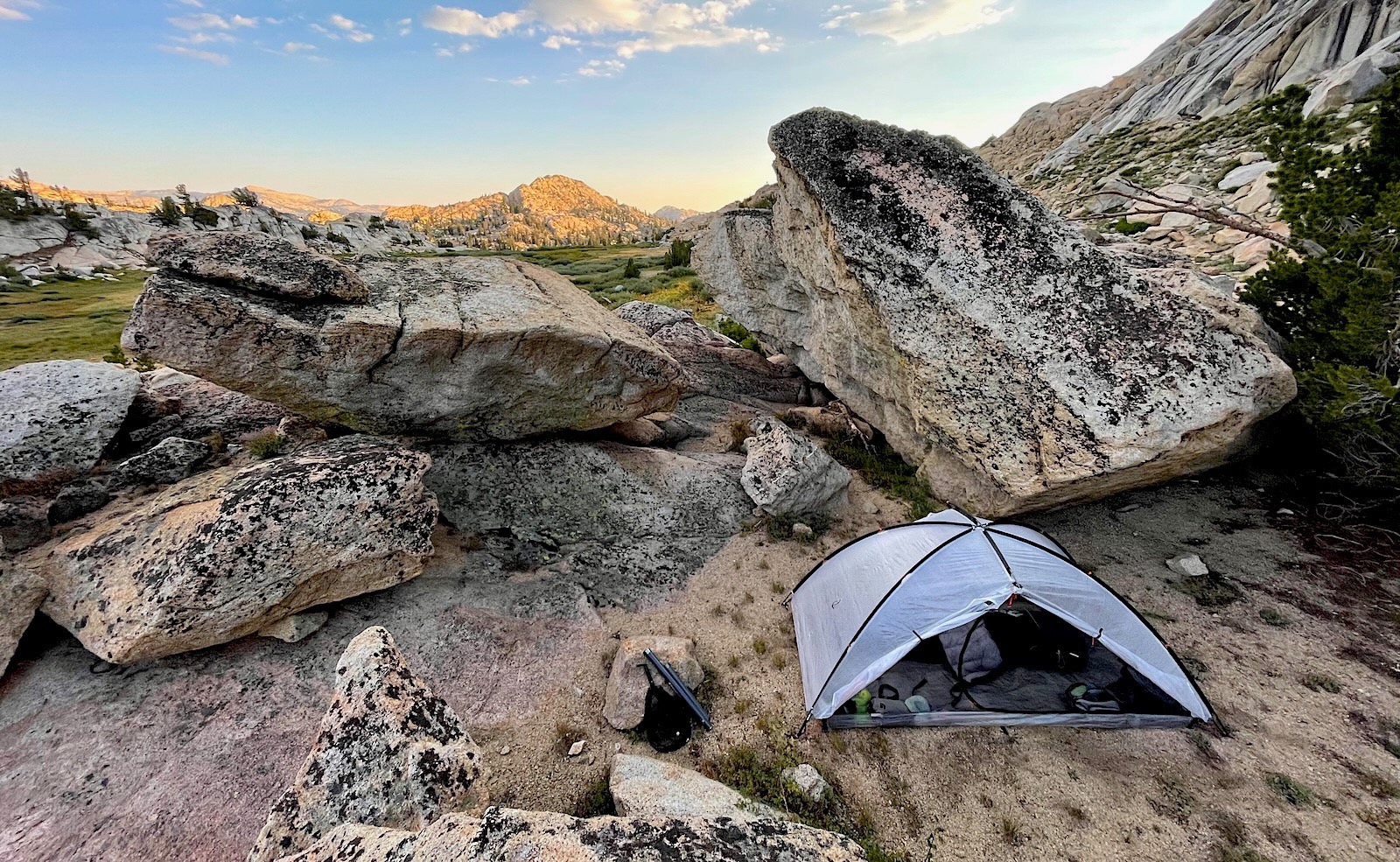
The foundation of concealment lies in terrain analysis. Landscape morphology determines whether a shelter blends seamlessly into its surroundings or stands out as an anomaly. Flat, open, or linear features (e.g., trails, meadows, ridgelines, and shorelines) are intrinsically high-visibility environments. These locations channel human movement, concentrate sightlines, and offer little background disruption. A tent pitched in such a setting becomes a landmark!
Member Exclusive
A Premium or Unlimited Membership* is required to view the rest of this article.
* A Basic Membership is required to view Member Q&A events


Discussion
Become a member to post in the forums.
Companion forum thread to: Stealth Camping
Learn how to stealth camp through minimizing your impact, concealing your camp and preserving solitude.
Thank-You Ryan! I love reading your threads.
Great read, lots of good information. One other consideration for remaining stealth after dark is the use of reflective guylines, fabrics, etc. Consider the beam path of hiker’s headlamps/flashlights as they walk in either direction along the trail. Guylines in particular are highly visible when illuminated and can actually attract unwanted attention/closer inspection from curious hikers.
Sam
Our problem with reflective line is that sometimes we need it for safety, but it can be a giveaway when we’re trying to be stealthy. So what to do?
For me, stealth is a much more common requirement so I prefer to use non-reflective line and rig something reflective on the rare occasions it’s needed.
I’ve been tying on short lengths of reflective line, but would welcome any better suggestions.
Thank you for this information! I am relatively new to some of these different concepts of backpacking. I have been backpacking for decades with LNT really being the only guiding principle. Ultralight and stealth are two focuses I am really enjoying diving into. Do you know of any specific books you like on these topics?
I have a look that sort of resembles the old actor Jack Elam. Being stealth on a popular trail brings forth screams from the women and cries from the kids. In the backcountry, I dress like a hunter. I blend in. On popular trails, I try to look a little less creepy.
Needless to say, color of shelter, pack and clothing are hugely important. In a woodland environment I prefer solid OD green shirts/jackets and brown pants. I avoid camo clothing because it has a paramilitary connotation that can make some people feel uneasy. The goal is to draw as little attention as possible. Camo apparel also makes it look as if someone might be trying to hide.
Small footprint is paramount for stealth because it opens up infinitely more possibilities on where you can camp. The best stealth spots probably won’t be big enough for your X-Mid 1 (or other tent), however some freestanding models suh as BA Copper Spur 1 take up very little real estate. I personally like a 6′ wide tarp and inner camo or a green color that blends in well.
Of course a low profile shelter is very important. Anything over about 38″ tall is going to be visible. I also try to utilize vegetation for cover as much as possible and get at least 40 yards off the trail. Dogs can give you away quicker than anything so the less noise and cooking smell the better. Canister stoves are too loud and dogs can pick up on it better than you might think. I go for alcohol or esbit. Even a human might hear a canister stove if close enough.
For illumination at night only a dim red light to avoid detection. Also have to think about lighters after dark.
I figure if I practice total LNT and have no fires, leave no trash, practice no bushcraft or altering of vegetation, and it just looks like a large deer has bedded down for the night after I leave, then my conscience is clear. Any patch of woods is fair game.
A 6′ wide camo tarp with XL bivy or net tent is my go to stealth set up.
I’m not overly worried about hunters as I find most of them careful. But I’m also aware that a Pennsylvania deer hunter has put a bullet into an occupied house. There are gun shots in the distance and I’m not very good at getting up with the sun. In the fall I’m worried about a deer hunter not seeing my camp. I usually put something orange (my hat, a high-vis vest) on or near my tarp. Also, I hike wearing an orange hat and (in the fall) a high-vis vest.
Good points. It annoys me, too, seeing people intentionally marking every place they visit. Had some military training, and therefore, our “rhythm” is strictly stealth. “Camouflaging and deceiving saves lives”. Also because it is basically illegal to camp where I live unless you get the permit of the land-owner. But as I rarely know where I will end up spending the night…
So: we do not camp. We “bivouac”. Our sleeping system is simple simple (Ray Jardine tarps, with inner tents for warmth), and we are able to set it up in vaning daylight without any artifical light. Takes a training session in our backyard before setting out for real. Colors are grey, as black or white stand out at night. Also, no conversation at and around the sleeping site. We go silent a hundred yards from the sleeping site. No lamps, no fires, no smoke, no nothing. No lamps allowed for nighttime outings, either. Leave in the morning at dawn – catch up on rest if required with a nice long nap in the sun around noon…
Try it – we consider it fun and a special challenge to just disappear with sunset and reappear when the night is over. We also consider it safer than making your presence known to anyone around, especially in our densely populated area…
Cooking and eating are completely separated activities and they do not take place at the sleeping site. So you can concentrate on the essentials for a good sleeping site (“shoulder”, e.g. no ridgeline (wind) and no shallow (cold-air pool), tree coverage if available for warmth). No caring about water for example. Breakfast will take place minutes or hours after leaving the sleeping site, when you reach water and a good place for cooking and eating. Cooking and eating on the fly here is usually not considered “trespassing” if its close to a trail. Sometimes, there are even predestined cooking and eating places near a trail.
So much for my personal experience…
For years I have been replacing stock reflective guyline with MLD 2.7 pro OD green guyline for just this reason. Especially after some disquieting experiences on trail, I sleep better knowing someone cant easily shine for my location. I wish that stealth camping was a more accepted aspect of LNT. I don’t like seeing obvious signs of camping and I don’t like brightly colored tents.
Reflective guylines vs. stealth, it’s a dilemma. I hammock camp, so my guylines are high and harder to disguise, but are also easier to trip on in those early am answers to the call of nature. I try to place my campsite where it is not visible at all to the trail, but I rarely look at my map to see exactly where the trail leads beyond my site, so I have camped closer than I expected to the trail. I was awakened once by voices, followed by a beam of light on my tarp, something I’d like to avoid.
I do have loops of reflective line on my food bag, my knife, spoon, and anything else I might drop into the leaves at night. The stuff is amazing, even under red light.
Fascinating thread. I have no idea why I’d even want to stealth camp, as defined here. Even less idea why I’d want to stealth camp as defined by an illegal camp. I know that I have pitched where no one sees me, because I have seen people pass by and not even notice me or my camp. Most people who are hiking are looking at the trail and what’s up ahead, not to the side. I suppose I’ve learned something from this thread should being on the lam become necessary; you never know.
I hike on the east coast and mostly solo; and when I’m on the AT and not in the thru hiker bubble, I like to camp near shelters/with other people; if I hear a noise/voices in the night, I figure everyone is friendly and it doesn’t worry me. If the shelter areas are crowded or I’m elsewhere, I camp by myself, and if I’m awakened by voices or footsteps at night, my mind can conjure up all kinds of villains. Then I like feeling invisible.
There’s also the LNT thing, although I personally don’t mind seeing other’s camps while I’m hiking.
I try to camp unobtrusively but don’t worry too much about being seen by other hikers. As AK said, they mostly aren’t paying attention anyway.
The one scenario where I do find myself trying to be stealthy is when I have to camp near backcountry roads. CO is shot through with old mining roads that are used by OHVers. The folks out on these roads at night are generally (1) armed, (2) drunk or high, (3) and often mean-spirited. I really don’t want any interaction whatsoever with them.
Staying away from roads obviously is best, but sometimes it gets late and it’s the first flat spot seen for miles. Definitely don’t want any reflective material catching a headlight and sparking unwanted interest.
old mining roads that are used by OHVers
Ever heard of caltrops? Even commercially available!
Cheers
The biggest creeps will be stealth camping right next to you, but you won’t see them. I go stealth not to hide, but to blend in. Spending nights in questionable spots, I don’t want to appear to be hiding. If I get caught, I want to hear conversation, not gun shots.
On many long distance trails you may find yourself walking for miles along unimproved roads through private lands. Imagine the sun is going down and you have to find a spot to bed down. You’re miles from any “legal” public lands so you look for a patch of woods or bush to just lay out a bivy and perhaps a small tarp. Take the Floridia Trail for example. I’ve done it more than once and I prayed I wouldn’t be detected. If seen there is a slight chance of going to jail but far worse is some redneck pointing a weapon at you and yelling threats. They’ll probably have an aggressive dog or two as well. Chances of being hurt aren’t great but the trauma can last a lifetime.
I know some people shame evasive stealth campers and I get it, but it doesn’t bother me because if no one knows I’m around then there is a 0.00% chance they can bring me any hassle. For those who mainly backpack in National Parks or the nicer areas of National Forests/Wilderness I can see where the need for evasive stealth might not exist. But remember there are thousands of miles of trails in the less talked about areas of the US which aren’t like Disneyland, places where you are more likely to encounter less savory type characters, most of whom aren’t backpackers. This is especially true in the Eastern US where population density is generally much greater. And if you hitchhike to trailheads the need for stealth is enhanced even more.
I have no animosity against any group. I’ve had that rifle pointed at me while supporting a run from Bakersfield to Sacramento following the railroad right of way. I found it much easier to explain by being out in plain sight. I camp semi stealth along the road going cross country. Inconspicuous, but I don’t hide. Landowners know their fields. They’ll see you regardless. Sheriffs and rangers know their territories. I’d rather they didn’t see me as a threat.
Stealth is not the issue for me, I want to be legitimately far away from other people, so I seek out true solitude. That’s half the point of being in the wilderness. If I see or hear anyone anywhere near my campsite, I’ve failed.
In the backcountry, I try not to make trails or campsites. Try to find my way through sand washes without leaving prints. Walk quietly and blend in as not to frighten away the wildlife. Trekking poles can make a lot of noise.
Being stealth on trail (Disneyland) consists mainly of trying not to be obnoxious and trying not to appear be a billboard or a threat in order to enhance the experience for others.
^^^
This. Leave no trace. For me, that includes making new trails, even from a campsite to water. I choose a different path each time to avoid creating use trails.
And on a similar note, camping out on the pint overlooking the lake in a flame orange tent? Get back in the woods and leave the landscape clear…
That lady biologist for the forest service said that if people camp at a site more than about once a year, it won’t recover very well
In unpopular areas then its best to disperse – leave no sign of humans – as long as there aren’t so many people that keep re-using the same place
In popular areas it’s better to have a few developed campsites, with an established site, side trail to it, one trail to drinking water,…
Better than having a braid of side trails
You don’t want everyone to walk all over looking for a campsite, trampling on things
I’m just throwing out another idea, not disagreeing with anyone : )
If you build it, they (he) will come. It’s a fine line between improving a trail and trying to disguise it. Various equestrian and conservation clubs , even jeep clubs have established trails over the years. I’ll leave the decision to keep them or improve them up to the experts and trained volunteers. That might make an interesting article by itself.
Yeah, in general that’s a bad idea for an individual to decide to build a trail or campsite
Forest service or some group like the PCTA would be better
That lady biologist for the forest service said that if people camp at a site more than about once a year, it won’t recover very well
A sweeping generality that would be entirely dependent on the area. Some areas, maybe, but other areas – no way.
Most of our off-trail campsites show little trace of our stay next morning when I have removed our tent, let alone a week later. I HAVE checked.
Cheers
Become a member to post in the forums.