

Episode 119 | Sleep Warmer: Evening Routines
Listen Now
together with Brynje USA

Today’s episode of the Backpacking Light Podcast is sponsored by Brynje, home to the most sophisticated and effective baselayers available - modern fishnet fabrics made with polypropylene or merino wool.
Show Notes:
What’s New at Backpacking Light?
- Webinar: Winter Backpacking: Strategies for Staying Warm, Dry, and Comfortable
- Webinar: Avalanche Awareness & Safety for Hikers and Backpackers
- Webinar: Lightweight Footwear and Traction Systems for Snow Travel
- Event: Trail Days Online! 2025 – February 27, 28, & March 1, 2025
- Online Course: Basecamp Spring 2025 Cohort – Enrollment Opens for Unlimited Members March 2, 2025
- Newsletter: Sleeping pads as systems: how to save weight on a good night’s sleep – February 2, 2025
- Find information about all of our upcoming Member Q&A’s, Webinars, Live Courses, other live events, and more on our Events Calendar Page.

Featured Brands and Products
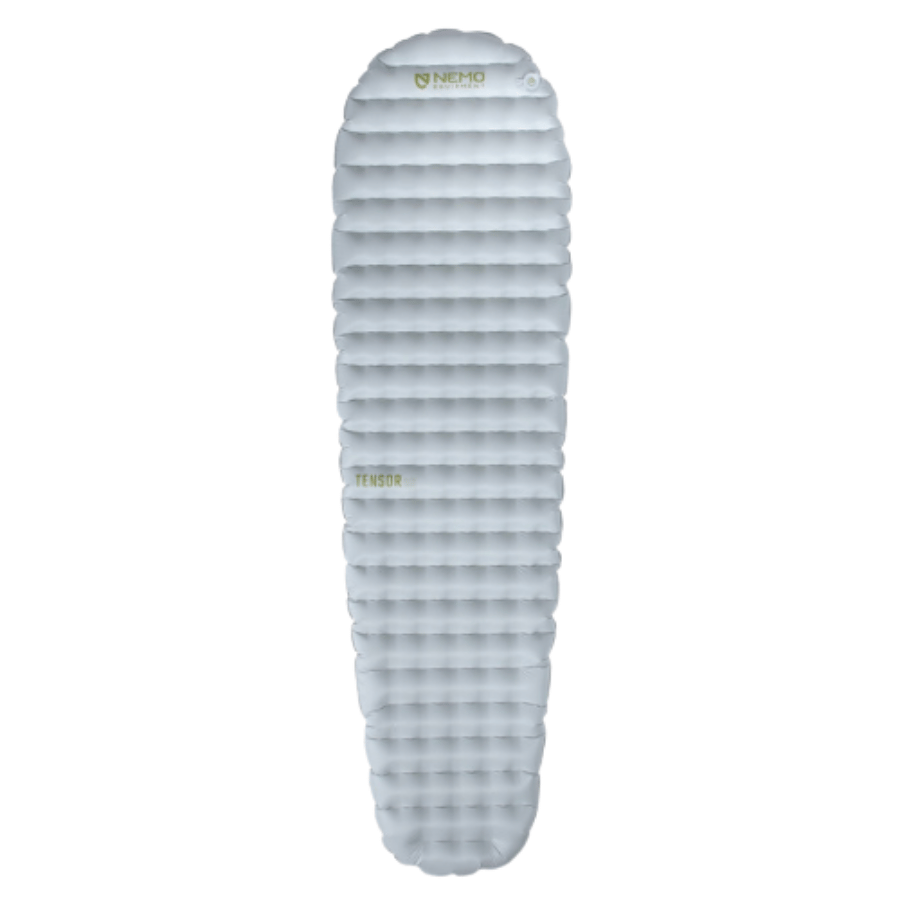
Nemo Tensor Elite Sleeping Pad
See it at REI
See it at Garage Grown Gear
The NEMO Tensor Elite Mummy Sleeping Pad is an insulated mummy air pad with Apex baffle construction, 10D Cordura nylon ripstop fabric, single-layer Thermal Mirror film insulation, 3 in. thickness, 2.4 R-value, Laylow valve, and 8.5 oz / 240 g Regular Mummy minimum weight.
- Brand: Brynje Fishnet Base Layers
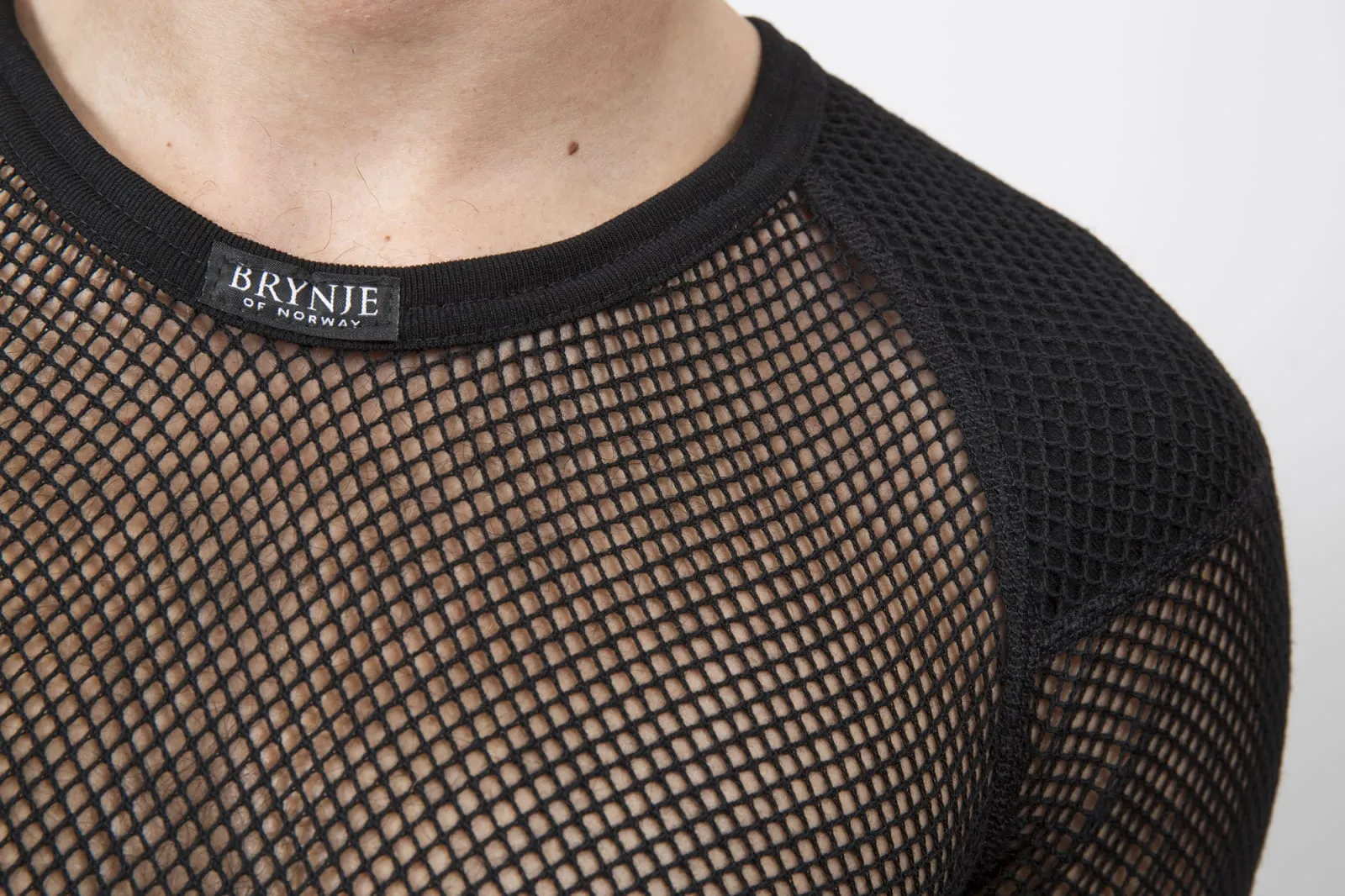
Brynje Fishnet Base Layers
See it at Brynje USA
Brynje of Norway makes both synthetic and merino wool fiber fishnet base layer apparel for outdoor adventures. Fishnet construction is more breathable, lighter, and faster-drying than conventional knits.
Practices for Sleeping Warm in the Backcountry
- Fueling your Body the Right Way – Eating before bed helps you stay warm and Magnesium and hot drinks for relaxation and warmth,
- Balancing Hydration without Nighttime Wakeups – Hydration Cutoff Time, Electrolytes, Dehydration and cold extremities, and using a pee bottle,
- Warming up Before Sleep – Movement and Aerobic vs. Strength exercises
Links, Mentions, and Related Content
- Gear Guide: Avalanche and Winter Safety Tools
- Gear Guide: Traction Spikes
- Webinar: Winter Backpacking: Strategies for Staying Warm, Dry, and Comfortable
- Wilderness Skill: How to Make Coffee in the Backcountry: Gear and Methods


Discussion
Become a member to post in the forums.
Companion forum thread to: Podcast 119 | Sleep Warmer: Evening Routines | Brynje
In episode 119 of the Backpacking Light podcast we’re going to learn about bedtime routines and practices for sleeping warm in the backcountry.
The biggest change I’ve made in recent years, especially after intense effort days – is by combining a fatty snack with a little satiating carbs at night. I used to just eat fat – like peanut butter – but this would make me wake up hungry a few hours later. Now I like a carby fatty snack before bed, which seems to resolve that.
I have theories about why this may be, but would love to hear others experience or maybe from someone who is a metabolic expert.
1. A little carbs help further replenish glycogen stores, taking some of the strain off fat metabolism, slowing down the fat burn from my dollop of peanut butter?
2. Maybe the fat alone isn’t enough to replenish glycogen stores fast enough, and after a hard day, metabolism is cranking, and glycogen gets depleted after a few hours of sleep, so I wake up hungry?
These effects are noticeable on fastpacking trips (where there’s no big carb dinner, and just a series of snacks) rather than backpacking trips where I’m carb-loading in the evening meal.
Eat carbs to help prevent a sugar spike. They digest slower.
If you have a KitchenAid make your own butter.
I use mainly pistachios. While peanuts are slightly higher in protein, pistachios are a complete protein. All 9 essential amino acid. A few Brazil nuts will boost them a bit.
Red palm oil from this source.
Avocado oil to thin it out.
Date syrup with brown sugar.
Dark chocolate.
Oat bran and a little chia.
I don’t measure. It’s always different.
Let it set a few hours. The chia with gel up and solidify it a bit.
Regarding the recommendation to take a magnesium citrate drink before sleep, sounds “risky”
“Magnesium citrate is a saline laxative that is thought to work by increasing fluid in the small intestine. It usually results in a bowel movement within 30 minutes to 3 hours.”
https://www.webmd.com/drugs/2/drug-522-2202/magnesium-citrate-oral/magnesium-citrate-oral/details
I’m personally familiar with and quite sensitive to the acute effects of large doses of Mg-sulfate (Epsom) and Mg-citrate to clear colon blockages and to prep for a colonoscopy, respectively. I am so glad gentler remedies are now the norm.
That said, I take a daily, Dr recommended capsule of 240 mg of Mg-glycinate to “calm” the twitching, jerking, and even cramping that sometimes arise for me in legs at end of long & strenuous activity, whether yard, gym or trail.
I haven’t adopted the warm Mg drinks used by many for direct calming of evening mood, but I do go to sleep more easily and deeply when the muscles and nerves in my legs are quieter.
YMMV.
Alan is there an upper dose limit with Mg citrate where you’re relaxed but not, you know, “fully relaxed”?
Sorry, I’ve no idea on typical or max Mg-citrate amounts for mood calming only. I’m aware there are commercial drink mixes for calming that surely state typical, though every body is a different body.
For me, the 240 mg capsule of Mg-glycinate greatly reduces leg twitching and cramping. It is just a tasteless capsule, and I’ve not noticed mood effects.
As with anything gut-related, it’s more about “what you’re accustomed to” than any kind of upper limit. Titrate over time — same as adjusting to changes in fiber intake.
The type (taurate, threonate, citrate, glycinate, or even carbonate) matters less. There are differences in uptake and where the salts get broken up (which is why some people take a mix). Mostly, though, the salts will be broken up and reused elsewhere. Taurine is maybe another thing worth considering in your stack, so magnesium taurate is one way to get both.
Some (knowledgeable) people (Peter Attia) take a gram a day of magnesium (in the form of several grams of mixed supplements). If you do that all at once, on your first attempt, then you’re gonna spend some time on the throne(!).
Four hundred grams per day is closer to your requirement, although there are varying degrees of uptake (which is why some people take more). You’ll get some in your food, as well, especially green leafy plants with chlorophyll. That’s why some people take less. Most people don’t die if they take none, but they may have a wide variety of other mysterious issues that they cannot trace to anything else.
If you investigate this stuff you’ll see that a common estimate is that most North Americans are deficient in magnesium due to soil depletion, but recommendations for replacement amounts vary due to problems with measuring and differences in uptake. Routine blood plasma tests are very nearly useless because your body stores and retrieves magnesium to/from your bones, which keeps your blood levels pretty steady unless you’re seriously dysfunctional.
That doesn’t mean that you don’t need to supplement to stay healthy for your lifetime — it only means that you’re not going to die if you don’t.
BTW, it isn’t necessary to take magnesium or calcium in your electrolyte mix. Daily intake is more important, and in much greater than amounts than you sweat out. Sodium and potassium are the main things that you deplete by sweating. Gear Skeptic isn’t wrong about the makeup of sweat, but he didn’t consider overall daily requirements in his discussion of electrolytes.
TLDR: Ryan’s (and Alan’s) tip(s) for a single tablet/capsule/dose for sleep is about right as a starting ballpark, but it is worthwhile to try it at home for a few days before testing it in the field.
I take magnesium daily to help with vitamin D uptake.
As a sleep aid, melatonin is my go to in camp on those rare occasions I need it. No risk of bum rushing the thunder box.
Peak Nutrition
Maria Hines and Mercedes Pollmeier
Mountaineer Books
That’s beyond a lethal dose. I assume you meant MG.
<facepalm>
Yes, of course! :)
Oh. So that’s why my stomach hurts…😀
Become a member to post in the forums.