

Introduction
I am someone who primarily backpacks for the soul-stirring scenery. The moments of synchronicity, the thrill of reaching new places scouted out on a map for months before the trip, the numerous other intangible aspects and benefits of spending time outdoors.
So it pains me a bit to acknowledge that being successful at backpacking involves a significant degree of systems management. While that banal term seems more suited to boardrooms than the backcountry, it is one that backpackers ignore at their peril – or at least their repeated frustration.
Sleep systems, insulation systems, shelter systems, cook systems – backpackers rightfully pay close attention to these and there is abundant information about how to make them right. Pairing the right R-value sleeping pad with an appropriately rated sleeping bag, for example, or using a bivy sack and tarp combination as a shelter.
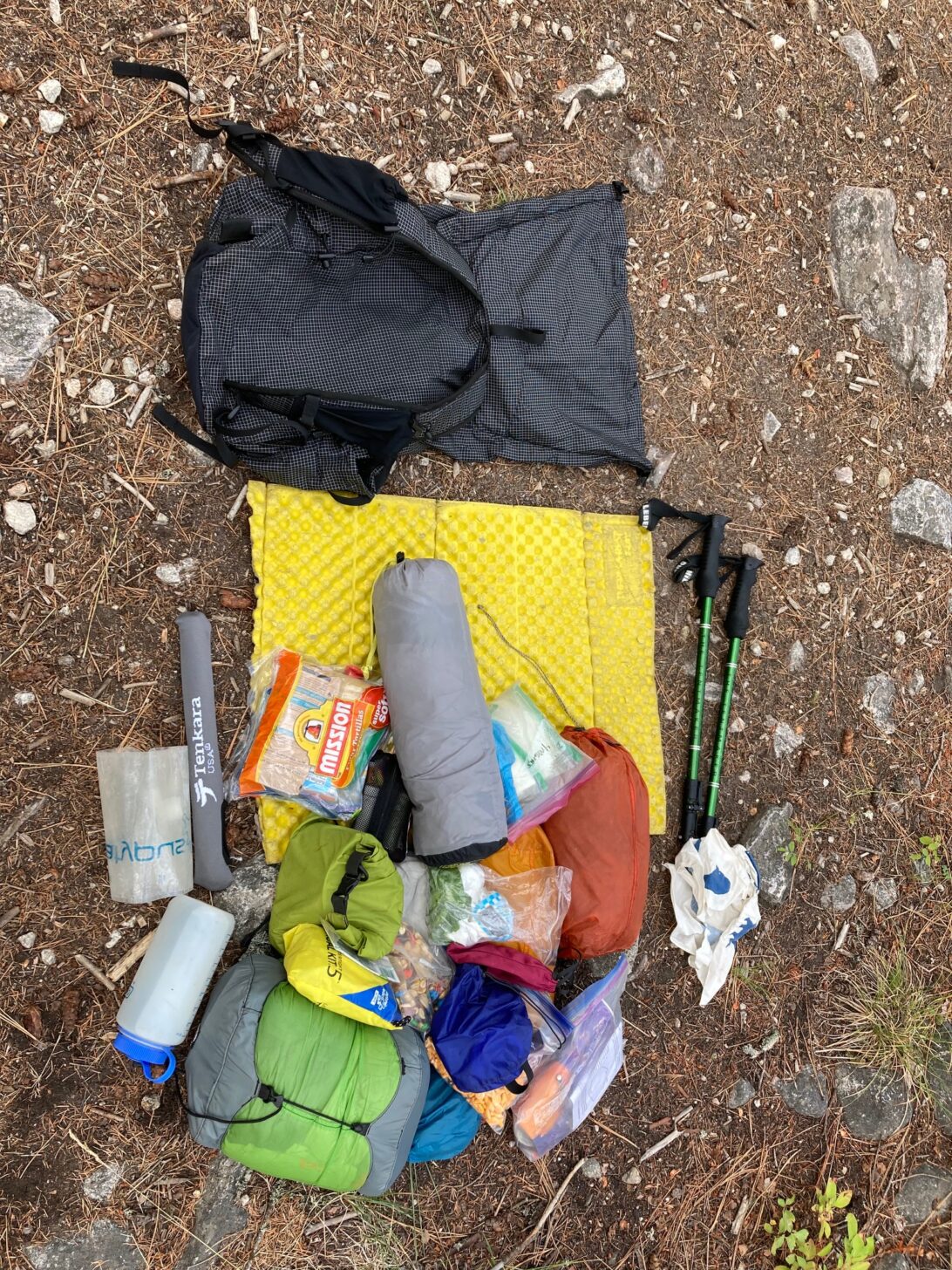
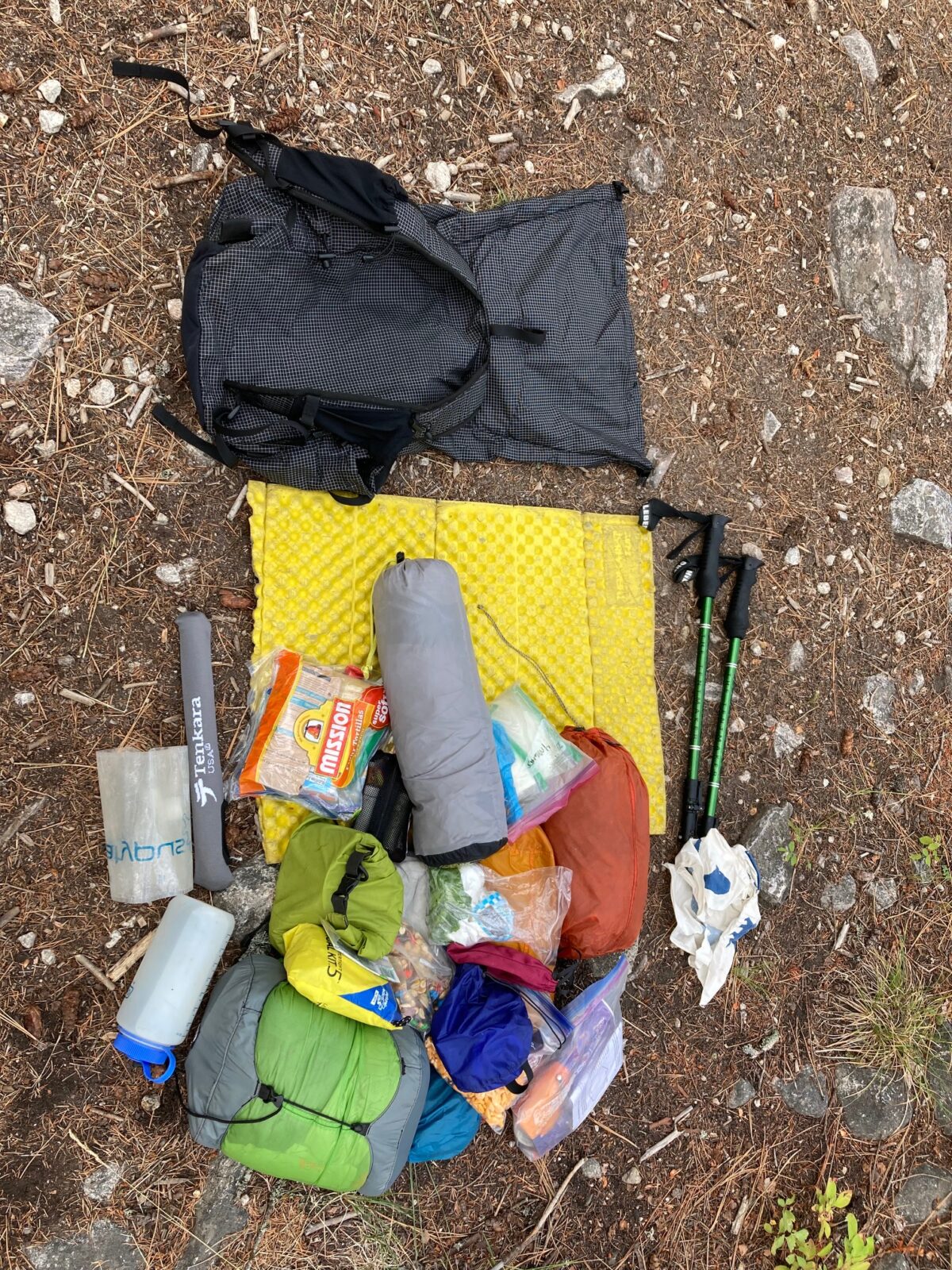
Before we dive into the philosophy and techniques of having a consistent and logical system for packing your gear, there’s an important and fairly obvious truism that is worth mentioning and which relates to the overall ethos of lightweight backpacking.
It’s this: the fewer things you bring, the easier it is to manage them.
But once you do narrow your kit down, packing it up with some intention and forethought can make your trips go smoother – and allow you to spend more time soaking up the landscape and less time looking for an errant lighter or headlamp.
While the topic of where to put items receives a fraction of the attention in discussions about backpacking as compared to what to buy, it is a skill set that is worth investing in. And it is a skill that Ryan Jordan, Backpacking Light publisher/founder – and backpacking guide – emphasizes in his courses. “When I train hikers…one of my favorite exercises is to have them pack their packs, then turn off the lights and have them find the item I ask for ASAP – without the assistance of a light,” notes Jordan. “After doing this with a few pieces of gear, I ask them to repack their packs, and then we go outside, in the dark, with no lights, and they have to set up their shelter and bed, make a meal, and then they get their headlight privileges back :)”
Having an effective system in place for storing items in your pack means you can more easily avoid playing the game of “Where’s my [headlamp, bandana, lighter, spork, Clif bar, etc.]?” that often plagues backpackers who have yet developed a good system or in a moment of haste forsook their tried and true system. Amusingly, literary heavyweight Jack London vividly but succinctly described an early version of this game in his short story “In a Far Country.” London described it thusly, “…a search to be made through the outfit for some suddenly indispensable article.”
That sounds about right to me!
So now let’s dig into what things to keep in mind when packing your backpack:
- Consistency
- Efficiency
- Simplicity
Member Exclusive
A Premium or Unlimited Membership* is required to view the rest of this article.
* A Basic Membership is required to view Member Q&A events


Discussion
Become a member to post in the forums.
Pack: Mariposa 60. Cut down GG pack liner.
First in the pack liner at the bottom: Sleeping bag in a roll top dry sack; 1 set extra socks and underpants; ziplock with power pack, charger and cords; Marmot inflatable pillow; air pad (if bringing one) REI Flash 3s folded-flat not rolled-on top of this group. Twist and close liner over that stuff.
Bearikade Weekender next, vertically so easy to access during the day without removing from pack. Water kit (currently Quickdraw, 2 extra platy 2L, Micropur) in ziplock next to BW on long pocket side. FAK/repair kit in ziplock next to BW on the other side.
Atop BW: Cook kit (BPL 1300, BPL 500, stove, canister, fire kit, cooking bandanna, long handle spoon), laid more outboard because less dense; roll top dry sack with most clothing not currently being worn (puffy, wool shirt/hoodie and leggings, the other pair of socks, spare hankies, fleece beanie, wind pants) inboard b/c denser.
Close pack bag and cinch lid.
Lid pocket: Personal care kit, compass, headlamp.
Long pocket: Stratospire Li–just barely squeezes in. (2 person tent with me b/c husband can’t carry as much)
Upper short pocket: Windshirt, buff, headnet, gloves, mask
Lower short pocket: Smartwater bottle, small snack ziplock.
Hip pockets: inReach, chapstick.
Mesh pocket: Rain jacket and pants, FAK/repair, Ultrasil day pack if bringing, gallon ziplock with maps and guide books depending on trip, and journal.
Shock cord outside of mesh pocket: Ridgerest if bringing instead of air pad.
Minibiner with trowel on one of the small shock cord retaining loops.
Skirt pockets ie worn: snack ziplock “wallet,” SAK Classic, whistle, phone, today’s map page, hanky, small trash picked up from trail.
Bandana tucked into hip belt.
Bear spray if needed in holster on hip belt.
If we have a long water carry and need to fill up those extra platys, they will fit across the top inside the pack. Mariposa is pretty big.
Karen: Understood, you are hiking in Alaska. You are right I haven’t had to deal with that kind of extended wet and cold. Might in the future, and should consider extras. Have already in past, on this forum, been taken to task for bringing those woolens I do have. Supposed to be too heavy. Other backpackers are fine with shorts and a windshirt but not me. My shoulder season and summer mountain base weight already is 15-16 lbs. with the Bearikade and the air pad. All that and a week’s provisions puts me at about 30 total packed/carried.
@Karen- well it’s 0nly two small chores- roll the pad and stuff the sleeping bag back into it’s dry bag, but it helps get out of camp a wee bit quicker :).
I’ll usually get another small chore or two done as the coffee is usually too hot to drink right off the bat.
NM – double post
@Paul G: “Better protection, but harder to tell them apart without looking.”
If telling them apart without looking is important to you, you could just put a small piece of gorilla tape on one bag to aid in telling it apart from the other. If you use more than two ziplocs, then a small piece of gorilla tape in a different spot on different bags should work.
For me lately it’s been about waking up early and quickly packing to make more distance before the heat.
Waking up (alarm) and coffee-wise for “summer”, I’ve just gone to shaking a Via inside a nearby waiting bottle of cold water adding some creamer. I’ll drink that while scooting around in my warm quilt and have a food bar handy for breakfast #1. I’m not worried about rodents getting to my food bag in Southern California … probably due to all the damn rattlers keeping those populations down. In other deserts, a shrub hang or Ursack with a “rodent proof” twist would be recommended. Going elsewhere there’s dealing with a hang or bear canister, so I deal with that (hopefully post caffeine). It’ll be twilight when I start moving (I write twilight and sunrise times on my phone @notes”). When it’s hot, again, it’s getting miles in before lunch and maybe a siesta.
Anyways, I just put the quilt in the dry sack in the pack bottom, put away the pad on top, wedge in the stove/fuel can (cold since it was used last night) and then switch clothes again. Then I get out to fold up the shelter and put away the food bag. With one of those snack pockets I’ll put the days energy and fig bars in (including lunch) as to minimize opening and closing the pack (creases forming around the opening being one of the complaints from long distance hikers .. think this may help and it simplifies my day anyway).
If the forecast calls for rain, I’ll place the jacket toward the top if needed. Some stuff is “out” like my synthetic towel. Everything else is in its pocket .. except I keep forgetting my headlamp (now I keep it in a shoulder pouch do not that bad).
I’ve really pared my list down so things are simple. In the late afternoon, I’ll wash myself and my old socks, exchanging them for “fresh” in my front pocket. I’ll also wash myself before dinner, putting my towel out to dry.
If getting back to colder and wetter climates, I’d probably need to add some steps like hot coffee. Maybe wear the insulating hoody to sleep so it’s warm for grabbing the food bag, cooking etc..
Just to add, I had a simple set up almost 20 years ago based on the OR Advanced Bivy sack (GoreTex, frame). One time I went up the mountains next to Santa Fe, NM encountering about 3 ft of pack snow I hadn’t planned on (was estimating maybe 6 in to 1 foot). I barreled through about 3 miles of snow, then set my bivy up on top of packed snow and a ground cloth. Slept well keeping my canister warm in my sleeping bag. <add a group of women backpackers from Colorado followed me and my “bulldozed” trail .. camping nearby so wasn’t really “alone” safety wise>
In the morning, just unzipped the bivy fired up the stove to get the water boiling, and make coffee “in bed” so to speak. It would now be a heavy set-up and I’m almost 20 years older.
Could do that with my eVent bivy (MLD) and a Ridgerest foam. Hmmm.
Slept well keeping my canister warm in my sleeping bag.
So simple.
So effective.
Cheers
I’m with Monte. Your spine is the center of your torso rotation. Not only is a balanced load (as practical) of benefit, but the best place for your heaviest gear and yes water. Outside pockets should be used for your lightest gear. Inside your pack the lightest gear should be at the sides. Pack swinging occurs by ignoring the two issues and leads to discomfort, fatigue, lower speed and lower endurance. Swift access to gear is agreeably preferential. My pack is designed for the majority of my essential gear to be located inside at the front of my pack for immediate zippered access. Also in front I have single ladder webbing for string and cord lock support for beanie, gloves and eye wear for changing weather conditions or to be placed within my pack. My one or 1.5 liter water bottle is sacked at the center of my upper back with tubing and bite valve in front for on the go hydration. Obviously, how you pack your gear is your choice.
I like to keep my like things grouped together. I keep electronics, hygiene stuff, fire, 1st aid, water purification in their own little bags. I then put those in a single bag which goes for easy access, even if it means taking off the pack, but not opening it.
1 dry bag for quilt, and sleeping clothes stuffed in bottom of pack, sometimes I’ll put pad in the bag too.
2nd dry bag if needed depending on season will have extra clothes, like cold weather will have insulation, gloves, ect
All food in one bag, but for the day I’ll take out my snacks and easy reach to eat on the go. Sometimes lunch is just snacks so I never really stop, otherwise that days lunch and dinner on top of food bag.
Depending on pack, I like food or extra clothes on top. Shelter below or outside pocket, stick in there is pot and stove.
My whole thinking is, stop and get shelter up, then if im starving, eat, if not set up inside shelter with pad, quilt ect.
I might be changing my organization with zippered ditty bags, haven’t come across them before and really intrigued by them. Along with compression sacks.
Yeah, a fairly standard place for everything is what I do. I KNOW where everything is, usually by touch…provided I can find my black backpack. Hey, it never occurred to me to buy the white one. Everything odd, goes in my pot at night which sits on my map. All my other gear is in my rock-sack/ditty bag. My compression bag is my pillow. My food bag(dry bag) is up a tree. Chances are, after my eyes adjust to the forest, I can find my way to the food bag if needed (so rare I can only think of a time or two in the last twenty or thirty years.) Mostly, everything is divided into wet and non-wet gear. Everything that MUST be dry stays in the compression bag (sleeping gear, long johns, etc,) food (already double wrapped) and ditty bag stuff (mostly water proof or “water does not effect function” stuff, even if it can get a bit annoying.)
Anyway, pods, zippered bags, etc are excess weight. Even Ryan admits pods are heavier than actually needed and are not totally water proof. After 20+ years, I have still not found any more effective or light weight system than the three bags mentioned. I have dumped my canoe and not been wet at camp. That says a lot.
James,
I’m curious so 3 bags even in winter?
I personally find it annoying to dig through one bag for my TP, hand sanitizer/soap when the urge arrives or my tooth brush and toothpaste amongst everything else loose that’s in one bag. I’d rather have items like tooth brush and tooth paste in a small bag like a zip lock so i can see what’s in it and easily grab everything at once.
TP, toothpaste/brush, stuff like that are in a small ziplock. they fit easily into my ditty bag…usually. I don’t get out much in the winter months. Early spring and late fall are about it for me. I have diabetes and cannot afford to loose my toes.
yeah you have to keep the toes!!!
gotcha, makes sense, i assumed but wasn’t sure and you know what they say about assuming :)
Become a member to post in the forums.