Topic

Youtube creator tests tents under high winds (behind an airplane)

Viewing 25 posts - 1 through 25 (of 32 total)
PostedOct 27, 2025 at 8:35 am

Youtube video

I loved watching the carnage of the 3-season tents.  I wouldn’t want to ride out a windstorm in any of the 3-season tents with winds above say 30mph or so.  Having the tent flattened against me would be pretty miserable.  I  was impressed by how well the Samaya tent performed for the weight, but it is a 1P tent, and so it’s gonna have a much smaller wind profile than the bigger tents.  However, the ZPacks tent was also a 1P tent but it seemed miserable even at relatively low wind speeds (side crushed flat, tons of flapping material).  Too bad he didn’t have a slightly larger 2 person or 3 person Samaya to also test, in order to have a more apples-to-apples comparison of a big Samaya tent versus the big TNF and Hillebergs.

In the past, people have highly criticized this content creator for his testing methodology.  I’d welcome anyone who thinks they can do better, to get out their pile of $1,000 tents and go to an airport or to a wind tunnel to produce a better video.


Bob Shuff BPL Member
PostedOct 27, 2025 at 10:25 am

I watched this last night and was reminded of a night on a Sierra Club Wilderness Basics overnight at Bow Willow canyon in Anza Borrego. The wind gusts sounded like a train approaching down the canyon and the violence of the tent when it hit kept our group up half the night.  I had a cheap (by today’s standards) 4 season tent – maybe a Kelty?). It was at least 20 years ago.  I attribute the large rocks I gathered to put over the stakes to my tent’s survival. I didn’t even consider that the wind could break the poles or rip the fabric.  One couple in our group had a larger tent with a small rainfly “cap” like the first tent in this video. The mother and son joined the group leader in his small backpacking tent and their tent was gone soon after. We looked the next day but found no signs of it in the ~2 mile hike downwind back to the trailhead.

Maybe MyLifeOutdoors should have moved the wind meter to the side; a wind tunnel would have been cool too!  That being said, I thought the video was good, and his content overall is better than most.


Dan BPL Member
PostedOct 27, 2025 at 10:59 am

As usual with influencer videos, I couldn’t get through the first minute. But I clicked on it, so I guess he made his money.

PostedOct 27, 2025 at 12:12 pm

Dan,

Huh.  If only Youtube had a slider control that allowed you to skip ahead, eh?  🙄

PostedOct 27, 2025 at 12:16 pm

Bob,

I wonder if putting the anemometer to the side would have also been inaccurate due to the air movement being focused in a narrow region directly behind the plane?

I was thinking that they could have “calibrated” things by measuring wind speeds with no tent behind the plane.  e.g. “At 25% throttle, we measure ww MPH.  At 50% throttle, we measure xx MPH, 75%=yy MPH and at 100% we measure zz MPH.”


Robert Spencer BPL Member
PostedOct 27, 2025 at 3:09 pm

Obviously, real world conditions would have the wind coming in various directions and often whipping between super strong and gentle as opposed to a steady speed from one direction. I would think a whipping wind that causes the tent to snap and return to resting puts more stress on everything over the course of exposure.

Love the innovative approach to testing and happy to click and support someone bringing me something different and educational (not to mention entertaining).

Very impressed with the simple crisscrossing 1P tent. I wish more tents stayed with this classic structure over hub pole sets to save weight.

PostedOct 27, 2025 at 3:22 pm

Robert,

My first legit backpacking tent was a 2007 REI QuarterDome 2. It used the simple crossing pole design with full pole sleeves.  I never had it in harsh conditions but I suspect it would perform better than average in strong winds. The industry moved to a crossing ‘brow pole” design for most 3 season tents to provide more shoulder and head room.I imagine they moved from pole sleeves to clips to make the tents easier to set up and to allow fly first pitching in the rain. Not sure why they moved from the “><” pole design to the “>–<” pole layout.  To also save weight? *Shrug*


Sadly the seam sealing tape on my REI tent failed and began flaking/peeling off a long time ago.


Jerry Adams BPL Member
PostedOct 27, 2025 at 3:33 pm

MSR tested tents by setting them up on a platform on top of a car, and then driving down the highway.  Rotate the platform so you can get the wind coming from any direction.

Ross Bleakney BPL Member
PostedOct 27, 2025 at 7:03 pm

@Jerry. Yeah, I was thinking that would be a good approach. The guy making the video did the same sort of thing except without the rotation.

David D BPL Member
PostedOct 27, 2025 at 7:45 pm

Steven is a classic big picture thinker that comes up with great ideas and provides inspiration but is the last type you’d call “detail oriented” or a “closer”.  This type is really common and orgs usually have them in architecture or product planning and then leave the details to a designer to get right (I’ve been in R&D 35 yrs and held or managed almost every type of role, and that’s been my experience)

He could go a long way having someone review his crazy stunts for the details.  I’m sure there are people out there capable and interested.

I try and take it for what it’s worth, what did I learn from this?  Due to errors in his methods, firm conclusions are usually impossible but broad generalizations or trends may be uncovered.

Unfortunately for folks that aren’t that technical and are unable to assess his methods, false conclusions can be reached and that’s the problem.

Roger Caffin BPL Member
PostedOct 28, 2025 at 2:51 am

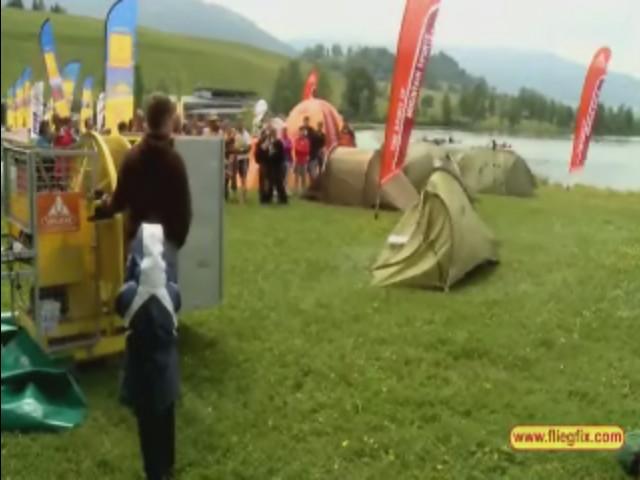
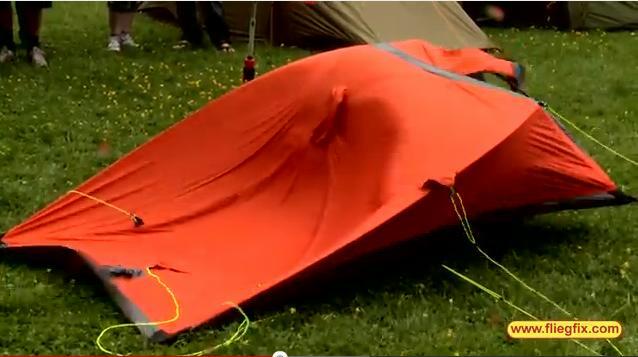
Not original: copied from a German company which tested many tents using a large wind machine.
If I could remember where I saved the photos from the web it would help, wouldn’t it?


Ah yes: fliegfix.com, in 2012
But today they seem to redirect. Sad

Cheers

PostedOct 28, 2025 at 5:25 am

Roger,

I’m aware that wind tunnels and wind machines have been used to test tents for years or even decades.  The fact that you had to dig into a 13 year old archive of photos suggests that the practice is extremely rare.   Here’s a youtube promotional video from Sierra Designs showing footage of them performing wind tunnel testing on some of their tents from 2009:  https://youtu.be/XMjSv_-jnmI

The presence of this video and your photo does not discount Steven’s efforts. It would be like dismissing Stephen Seeber’s HH and MVTR tests because those tests are not new and other people have performed HH and MVTR tests before. So what?  How many times in the past has Backpackinglight.com featured articles comparing the HH and breathability of a lineup of hard shells that represent the state of the industry at that point in time?

This type of wind testing isn’t new or novel, but more often than not, as is the case with the Sierra Designs video, the content is heavily edited and curated to put the vendor’s tents in the best light possible.  In other words, it’s as much marketing as anything else.

I appreciate that this content creator performed these tests on his own with no direct involvement from the manufacturers (that we are aware of).  He pitted multiple brands against each other and tried to test them to failure.   With a little fine tuning, it would be cool to see this sort of comparative test performed against the top 10 to 12 tents on the market every 2 or 3 years. Without this type of testing, all we get are marketing claims by tent makers (“Out tent is storm worthy!”) and anecdotal reports from users (“I was out in what FELT LIKE 40mph winds!”)

This testing is the type of thing I would have expected Backpacker magazine to do 20 years ago when they had a bigger budget and a bigger audience. Such an article would have run on the cover of that month’s issue.  Now all we have is a lone youtube creator with a friend who happens to be a pilot, who’s pulling gear out of her personal closet and test it.


Geoff Caplan BPL Member
PostedOct 28, 2025 at 7:28 am

Entertaining, for what is was worth.

But I suspect the result for the Samaya was flattering – those Bibler designs are strong end-on but look vulnerable from the side. Plus no vestibule and a door that opens over your sleeping area, so not very liveable – more of a bivvy shelter. Add a vestibule and you have a much heavier and more complex beast.

I’d love to have seen a more robust mid like the DuoMid/SilverTip/WikiUp. From what I can tell scanning YouTube for storm videos, these fare better from multiple directions than most bendy pole designs.

The real surprise was the collapse of the 4.7 kg North Face VE 25. Even with a heavy geodesic design it seems that bendy poles are vulnerable, and have to be double poled for extreme conditions. Thought-provoking!

PostedOct 28, 2025 at 7:50 am

Geoff – yeah, symmetrical pyramid designs would certainly be interesting, although technically that ZPacks tent is essentially a “half pyramid” and it was tested in the best case scenario wind direction, and it still did not do well.  Maybe the full pyramid shelters you mentioned, as well as the HMG Ultamid, would just collapse so much on the windward side that it wouldn’t fail per-se but would still provide a miserable experience.  There’s only one way to know for sure! The MLD Trailstar is another shelter that’s often claimed to be really robust in heavy winds, but it’s in a different class of shelters than most of the others in question.

Jerry Adams BPL Member
PostedOct 28, 2025 at 7:50 am

the video was designed to get more views – lots of spectacular flapping around

if the video was designed to scientifically characterize tents in real conditions it would be boring to most people so get fewer views

(generalization)

Arthur BPL Member
PostedOct 28, 2025 at 8:01 am

This demonstration reminds me to set up my tent in a protected area and especially not at an airport.

David D BPL Member
PostedOct 28, 2025 at 8:37 am

the video was designed to get more views – lots of spectacular flapping around”

It may have been intentional, who knows, but I hope not.

Obvious things he missed in set up that an experienced user would have done in the field:

  • setting up guylines correctly (on his own admission)
  • setting up all the guylines
  • setting up the tent so its smallest panel or most favourable side faced the wind
  • putting rocks over the pegs.  I couldn’t tell with the Durston if a peg let go first
  • adding weight in the tent to represent a user and pack to help stabilize it
  • set up trekking poles tip down and handle up and lash it so it doesn’t tear a hole in the tent

and in the test

  • setting up the anemometer so it read correctly
  • using a high speed camera so you could see the failure modes (did a peg let go causing a pole break or the pole break first?).

So general trends shown but no idea how high a wind speed I could actually set up an xdome in.  Dan’s comments to the video were more valuable

I agree with Jeff that I appreciate his efforts and some new info is brought to the table that’s not marketing.

But facts is facts and if going through this high effort why not get it right?

Stephen’s MVTR tests don’t exhibit this trait, they’re pretty careful with tight experimental controls.  They can’t be compared.

PostedOct 28, 2025 at 8:43 am

My takeaways.

In high winds when the tent is flapping around like that, I am not getting any sleep.

At some point, is it better to take the tent down and use it as a quasi bivy?

Should tents be designed to be stronger than the stakes / guylines?  It seems like pulling up a stake or snapping a guyline is preferable over a torn tent/busted pole.

Just a thought.

Roger Caffin BPL Member
PostedOct 28, 2025 at 3:27 pm

The fact that you had to dig into a 13 year old archive of photos suggests that the practice is extremely rare.
To be honest, I have no idea whether it is rare or not. I used that photo because I had it – that is all.
But I will add that Fliegfix were testing a whole range of tents in that event.

On the other hand, I DO agree with Jon’s comment about trying to sleep when the tent is flapping.

Cheers

Brad W BPL Member
PostedOct 28, 2025 at 4:43 pm

The wind speed, as Steven mentioned, seemed off-way off. I wish he had used that meter without any tent there. The 30mph on the meter looked like 50+ on the tents.

And yes, doing a burrito roll bivy with your tent in high wind is much better than shredding it.

Dan BPL Member
PostedOct 28, 2025 at 6:52 pm

Huh.  If only Youtube had a slider control that allowed you to skip ahead, eh?  🙄

Haha … let me rephrase. Within 30 seconds I knew that I wanted to stop the video immediately and block the creator on every platform in order to avoid accidentally clicking on any more of his videos. These goofball influencers are a huge turnoff for me personally. I don’t want to watch their content and I don’t want to support them.

To be fair, I probably spend more time blocking accounts than watching videos, in the hope that the algorithm will eventually catch on. Just my feelings, HYOH.

PostedOct 28, 2025 at 8:40 pm

“The wind speed, as Steven mentioned, seemed off-way off. I wish he had used that meter without any tent there. The 30mph on the meter looked like 50+ on the tents.”

If I understood correctly, they did test the wind without a tent there and came up with 3 positions on the hand throttle that roughly corresponded to 3 wind speeds of about 30, 50 and 75 mph.

It was interesting that the wind speed was different at the same throttle with the tent there, but I think only makes sense. If you imagine high wind hitting a brick wall, the wind speed could be an honest 60 mph – but still the strength of the brick wall would decelerate and deflect that wind down to near zero at the face of the wall (since the wall isn’t moving). A little further in front of the wall you’d have a zone of turbulent air where it is swirling and pillowing and it swirls to escape over the wall.

A tent is more aerodynamic than a brick wall, so the turbulent zone would smaller but still there would be some zone of slower turbulent air piling up in front of the tent. The size of this zone would likely depend on the size and aerodynamics of the tent, so a small aerodynamic tent like the Samaya might not affect the meter much, while the bigger and flatter tents would more.

You see this affect with several of the tents and he documents it best with the X-Dome 2, where the meter reads 39 mph when the corner releases, and then within 1 second of the tent collapsing the meter jumps to 54 mph and within about 2 seconds it’s at 62 mph. He was at the max throttle here that normally gave them about 75 mph, so it’s hard to say what the exact speed was, but likely around 60 mph because it very quickly jumps to that speed when the tent is removed from the equation.

“I couldn’t tell with the Durston if a peg let go first”
Interesting. I hadn’t looked closely at that because it happens so fast, but watching it in slow motion it definitely releases at the front left corner first (as opposed to the poles breaking or panel tearing). The stake might have pulled out, but also easily could have broken a cord or the plastic tensioner at wind speeds like that.

Robert Spencer BPL Member
PostedOct 30, 2025 at 11:05 am

Dan’s explanation of the zone of air turbulence makes sense. The Hilleberg test appears to have the fan farther away so this issue would be minimized. Man, those tents look solid, even sideways.

And here is The Tent Lab conducting wind tests for their MoonLight tents and offering another perspective and approach. No guy lines used, but the wall screen in the video shows increasing wind speeds and they do include multiple angles for testing. Seeing how a tent deals with wind from different angles is helpful, but you still don’t get the change in speed and swirling direction that really impacts performance. This video and his others are definitely a more professional (but less entertaining) endeavor than the original post.

https://www.youtube.com/watch?v=G4hLY3B9clk


Viewing 25 posts - 1 through 25 (of 32 total)
Loading...