Hi Roger & all:
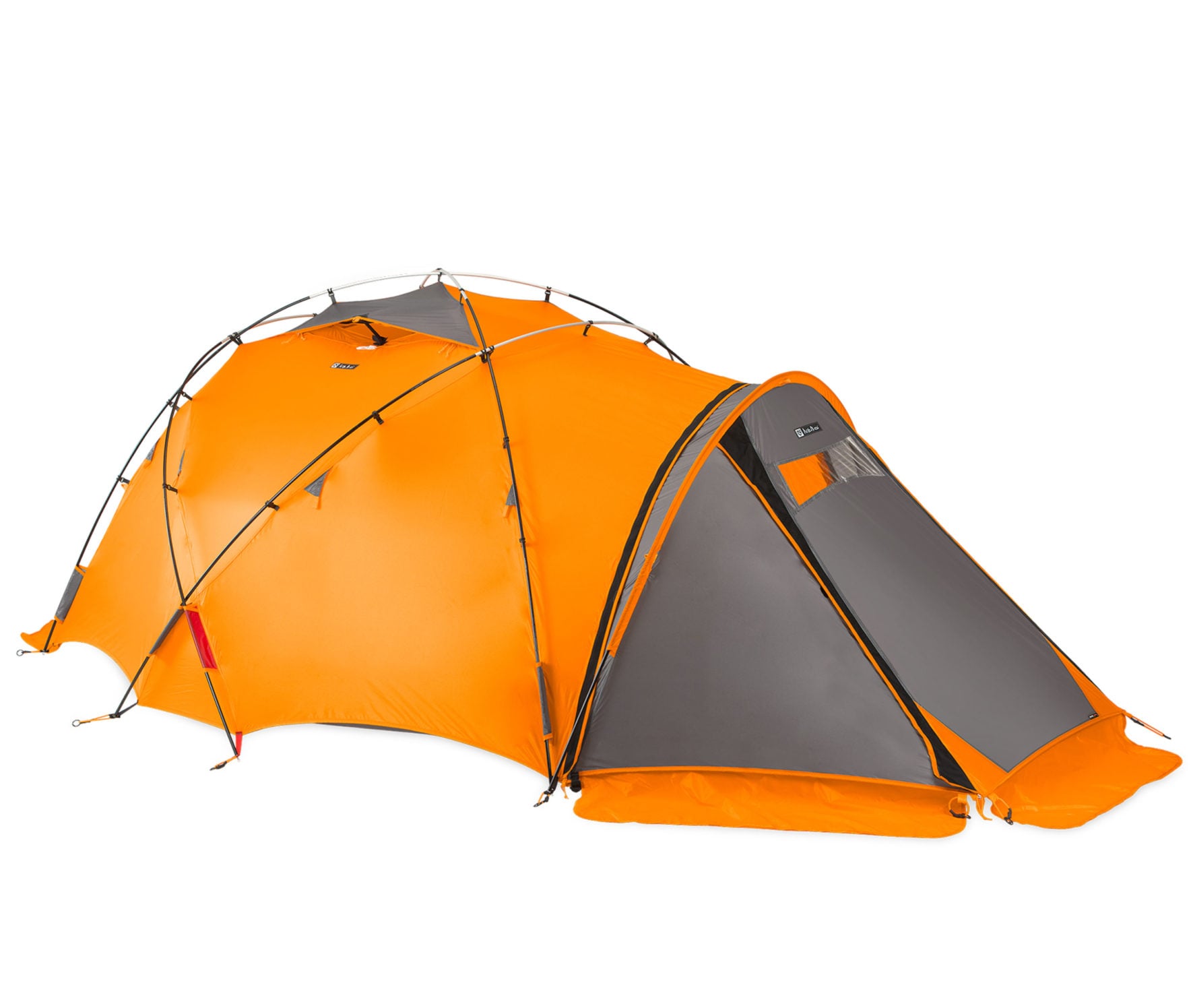
Think I’ll stick to the term ‘multiple crosspole tent,’ as a small one is obviously not a geodesic, however broadly defined. The word, ‘multiple’ is there only to signify that there are two or more places where the poles cross, not just one crossing as is so common on the simplest domes.
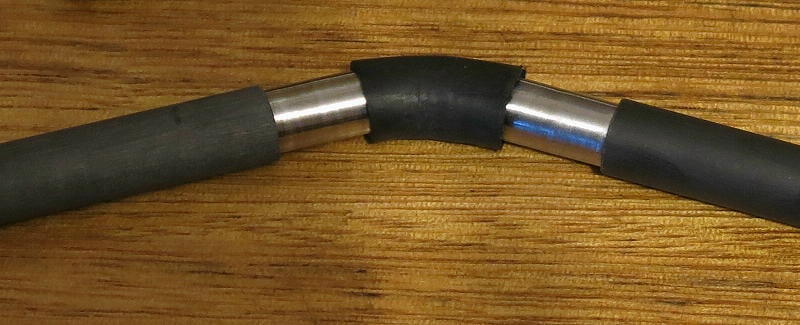
Agree with Roger that pole sleeves are best for a number of reasons, and that would be my only choice for a multiple crosspole tent. Also agree with Edward that using hooped poles, there will be too much horizontal surface on top of a double crosspole, and that is the reason why I always use elbows so the poles form a gothic arch that produces steeper tent walls than a hoop. There is also the possibility of placing a short ridge pole between the peaks, but with only three feet between the peaks, that may be overkill. At the risk of boring long term regulars at BPL, the mock-up I posted in 2011 is something like what I actually have in mind: https://backpackinglight.com/forums/topic/45631/
IMO, a frame such as this will present a stable surface under wind loads; something that the proprietor of Trekker Tent also expressed in his BPL posts to result from crossing poles in an X shape. The self-supporting design adds to that, as it reduces force directed at the ground stakes.
As Roger suggested back in 2011, the challenge is how to design the double-cross with pole sleeves, not clips or other types of attachment. (Note that the elbows on a gothic arch not only eliminate pooling overhead; but also allow shorter 6 foot poles to be inserted and attached to the elbows at the peaks, making handling and insertion of the poles much easier)
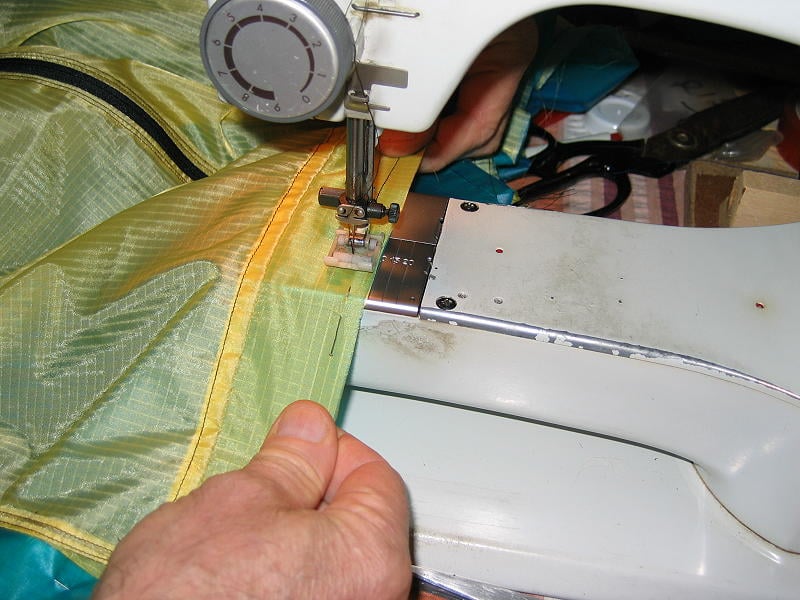
Not as arduous as searching for the Holy Grail, but it has been a long process at arriving at a solution. The double-cross design depends on using the bias stretch of fabric to create the convex wall surfaces out of ordinary rectangular flies, so pole sleeves cannot be just sewn on, as the seam would eliminate the bias stretch. However, a zig-zag stitch would not, particularly if the pole sleeve is short, and if it is the higher denier inner, not the outer fly, to which the sleeve is being sewn. As it happens, even with a gothic arch, the poles are more curved (parabolic) near the peaks, and are almost straight where they approach the ground, as may be visible in the photos in the 2011 post. So the pole sleeves need to run only from the elbows at the peaks down to the pole crossings, leaving the poles unsleeved below. I suppose clips might be nice below the crossing points, but am not sure they are worth the trouble.
As with the clamshell design recently proposed, the approach would be to sleeve the poles to the inner (as is common with US designs) so that an outer fly would be close to seamless, and could fully expand on the fabric bias to the shape shown in the 2011 post. However, the vestibules, needing no inner walls, would be attached directly to the inner, and would avoid the need for a large awkward fly as used on many US tents, and shown in videos posted by Roger of people chasing their tent flies over hill and dale in high winds.. As with the clamshell, the fly of course would have to lap over the vestibules considerably to insure that rain etc. does not enter between the inner and outer. Seems like a lot of extra fabric for the overlap, but having done the math, the weight penalty is very little with a 7-15 D fabric. The fly attachments at the peaks and ground corners, coupled with corded attachments running out to the vestibule stake points, would keep the fly solidly attached in high winds, IMO. One additional advantage of the double-cross is that the greater cant of the poles compared to the clamshell creates more space under the dome.
Some will say that putting up a tent with the inner exposed to the elements will not produce a dry pitch in the rain. However, a good DWR treatment is sufficient to protect an inner for the brief pitching time before a small fly is fully attached and tightened down.
Noted Roger’s comments about the over touting of tent designs that may in fact weaken, rather than enhance performance. This may not be deliberate. While Roger refers more than once to engineering, the designers may not be engineers at all, just people playing around with designs on paper or screen, and putting out what looks good, or to be accurate, getting people in Asia to put them out. The guy from Sierra Design who haunted these forums for a while typified this.
There are so many engineering issues that come up with a tent, and all must be considered. To take one, Roger noted that many multiple crosspole designs do not secure the poles together at the crossings. Do the poles need to be held together tightly at the crossings, or will loosely do. Not being an engineer, I find that music wire models provide pretty good guidance with such issues.
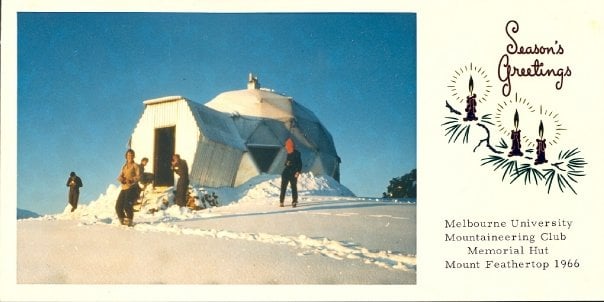
Roger, that is a super geodesic hut! Nothing like that on our Cohos Trail in NH, although there was a nearby chain of yurts once, but only a few remain now and they are accessible by vehicle for maintenance, etc. We have some pretty nice lean-tos though.