Early during the planning phase, three of our children – Daniel, Hannah and Natalie – showed an interest to come along. Once the dates were set, only Hannah, my 14-year-old, was able to make it. She could join for the first two weeks between two of her scheduled summer classes. With two days of travel at each end that left 10 days of backpacking for her and me together. Our plan was that she would go with me for the first 110 miles in those 10 days and I would backpack the remaining 330 miles in the next 14 days.
This trip report and its photos can only give you a brief glimpse into the fantastic adventure Hannah and I had. Only the smallest peek into Iceland’s breathtaking landscapes with its geysers & waterfalls, glaciers & volcanoes, mountains & valleys, deserts & hot springs, steep cliffs & black sandy beaches can be given by the following photos. Iceland has an incredible geology and is certainly worth a visit.
GETTING THERE
Hannah and I got on a cheap direct flight on WOW from San Francisco to Reykjavik. WOW was advertising tickets for as low as $99 which helped a lot with our vacation budget :). In Reykjavik we stayed at the City Campsite which is right next to a huge public pool. Hannah played all day in the different pools and hot tubs, while I went into the city to get fuel and ship re-supply packages. The next day we got at 7:15 am on the bus to Vik where our adventure would start. We immediately got a glimpse into how fast weather in Iceland can change. The bus trip started out like this when we stopped at Seljalandsfoss.

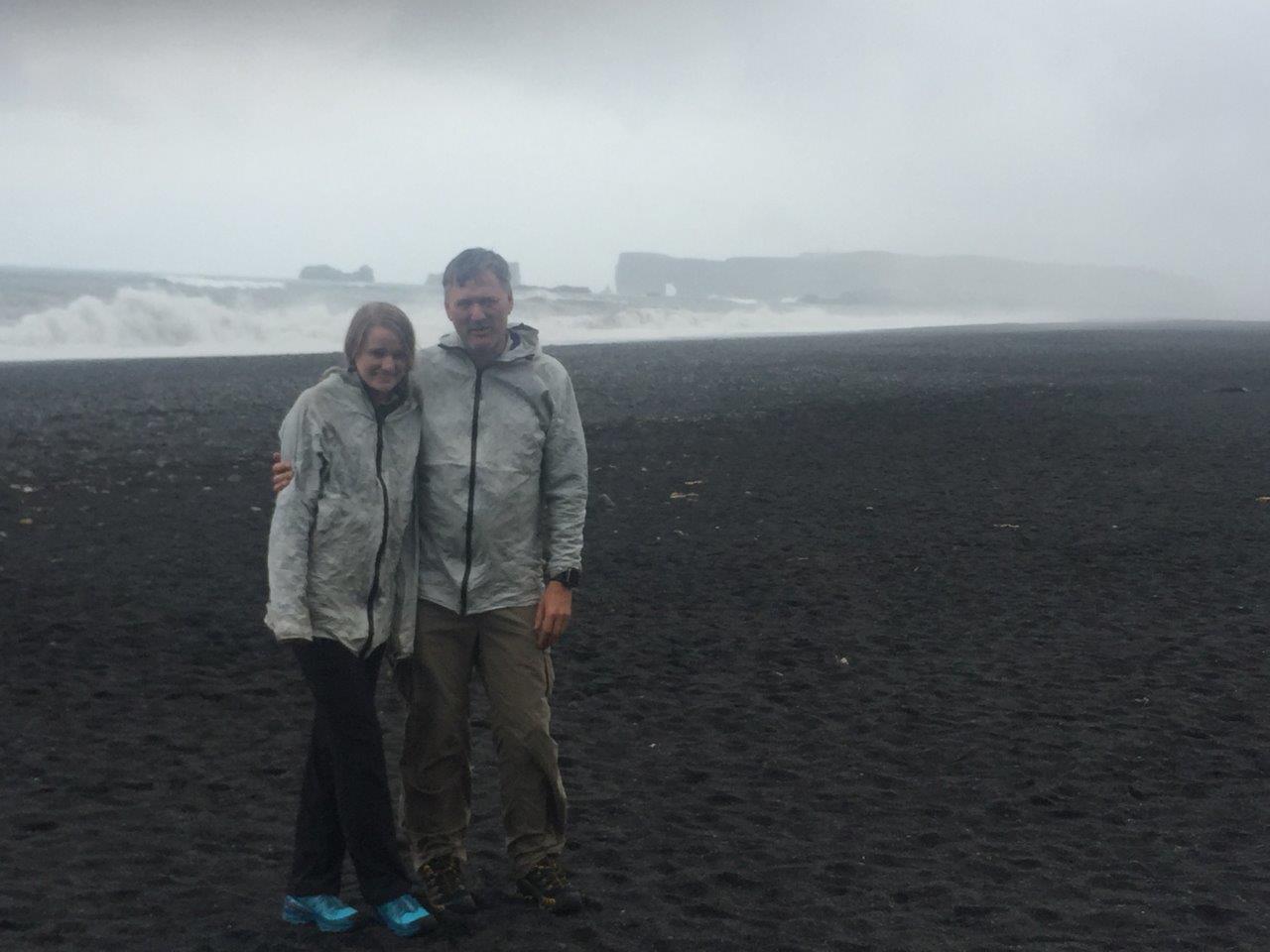
But it changed quickly into this when we reached our starting point at Reynisfjara Beach with its view on Dyrhólaey.
STARTING OUR JOURNEY – ON TO SKOGAFOSS
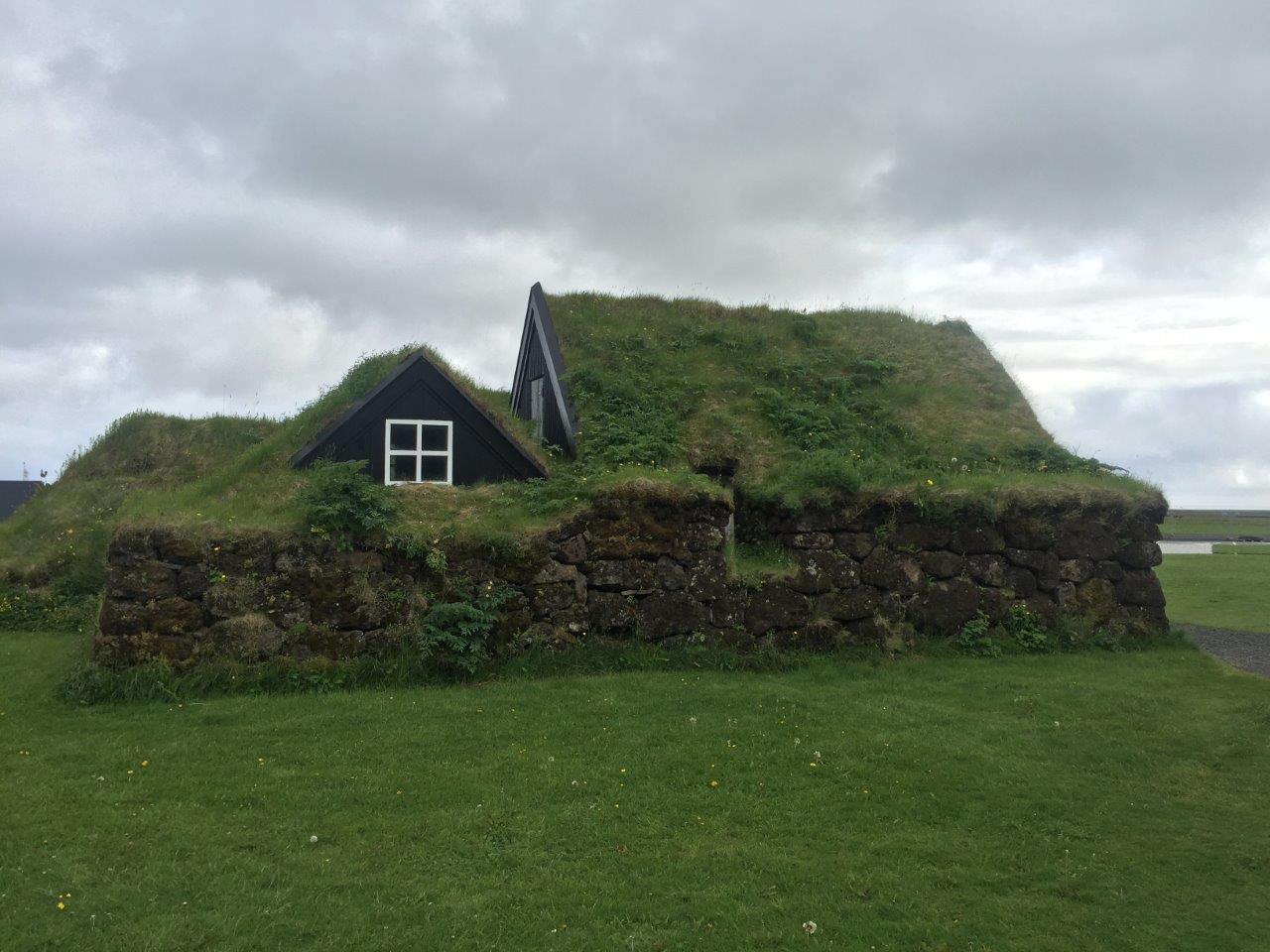
From Reynisfjara Beach we started hiking in the rain and made it eventually to Skógar with its beautiful folk museum
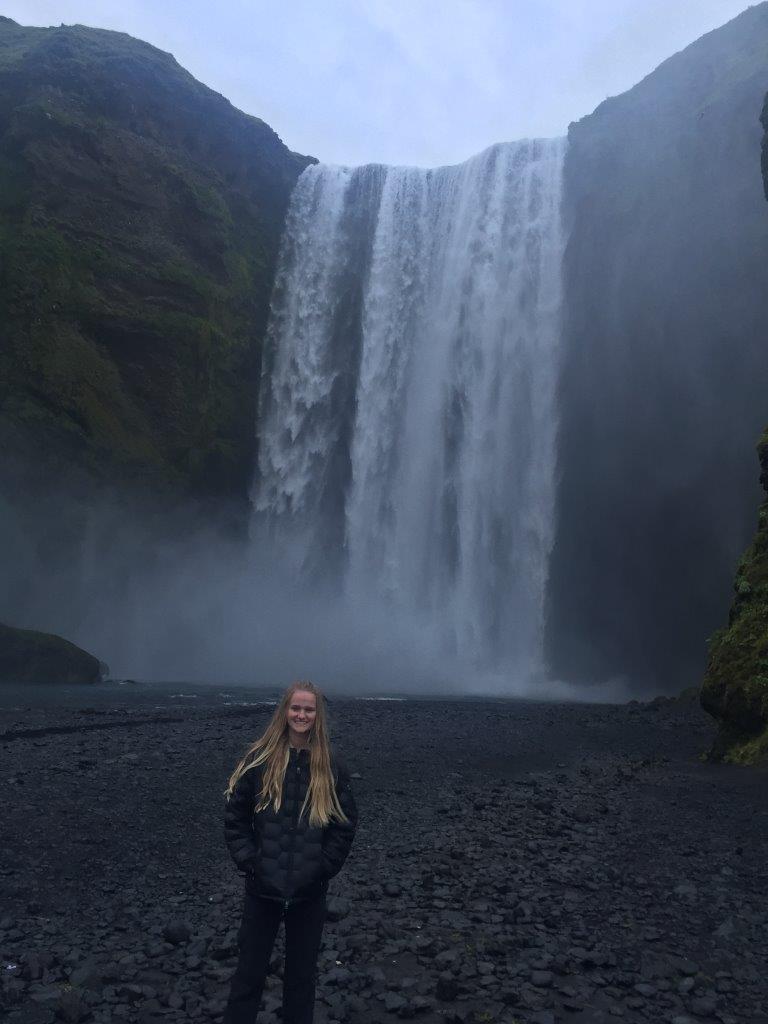
and its waterfall Skógafoss that is 82 feet wide and drops 200 feet.
FIMMVORDUHALS – CLIMBING UP BETWEEN GLACIERS
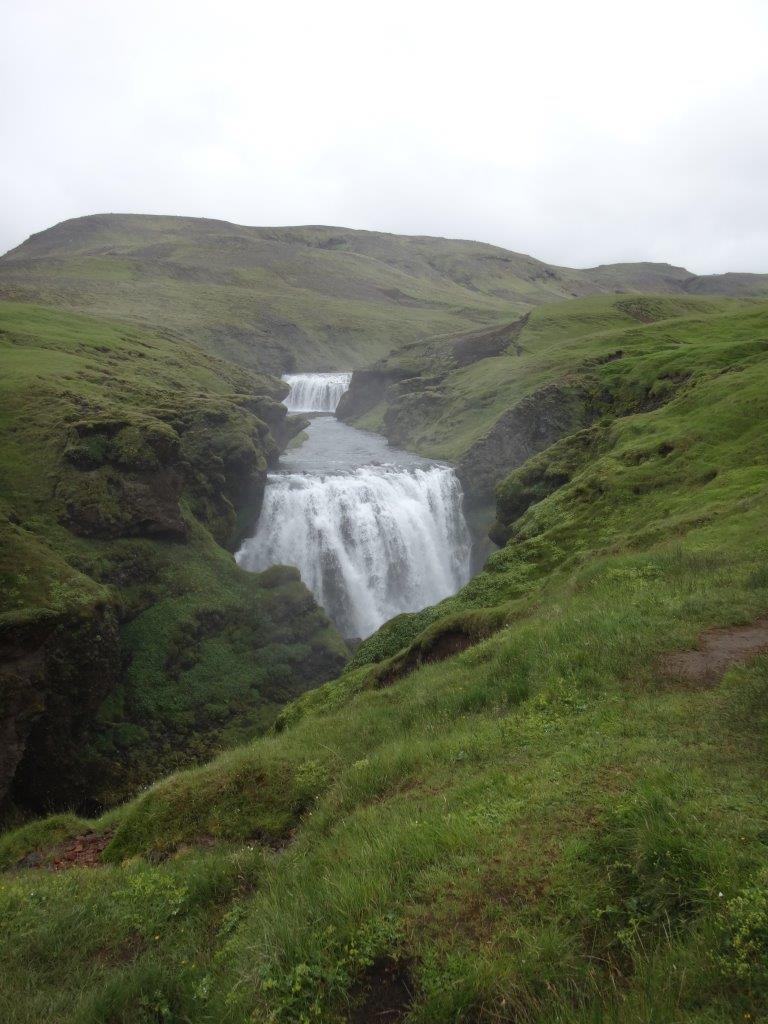
The Fimmvörðuháls (five-cairn trail) is about 15 miles long including 3,000 feet of climb and runs between the two glaciers Eyjafjallajökull and Mýrdalsjökull. We climbed through beautiful landscape with 20 cascading waterfalls within less than 7 miles
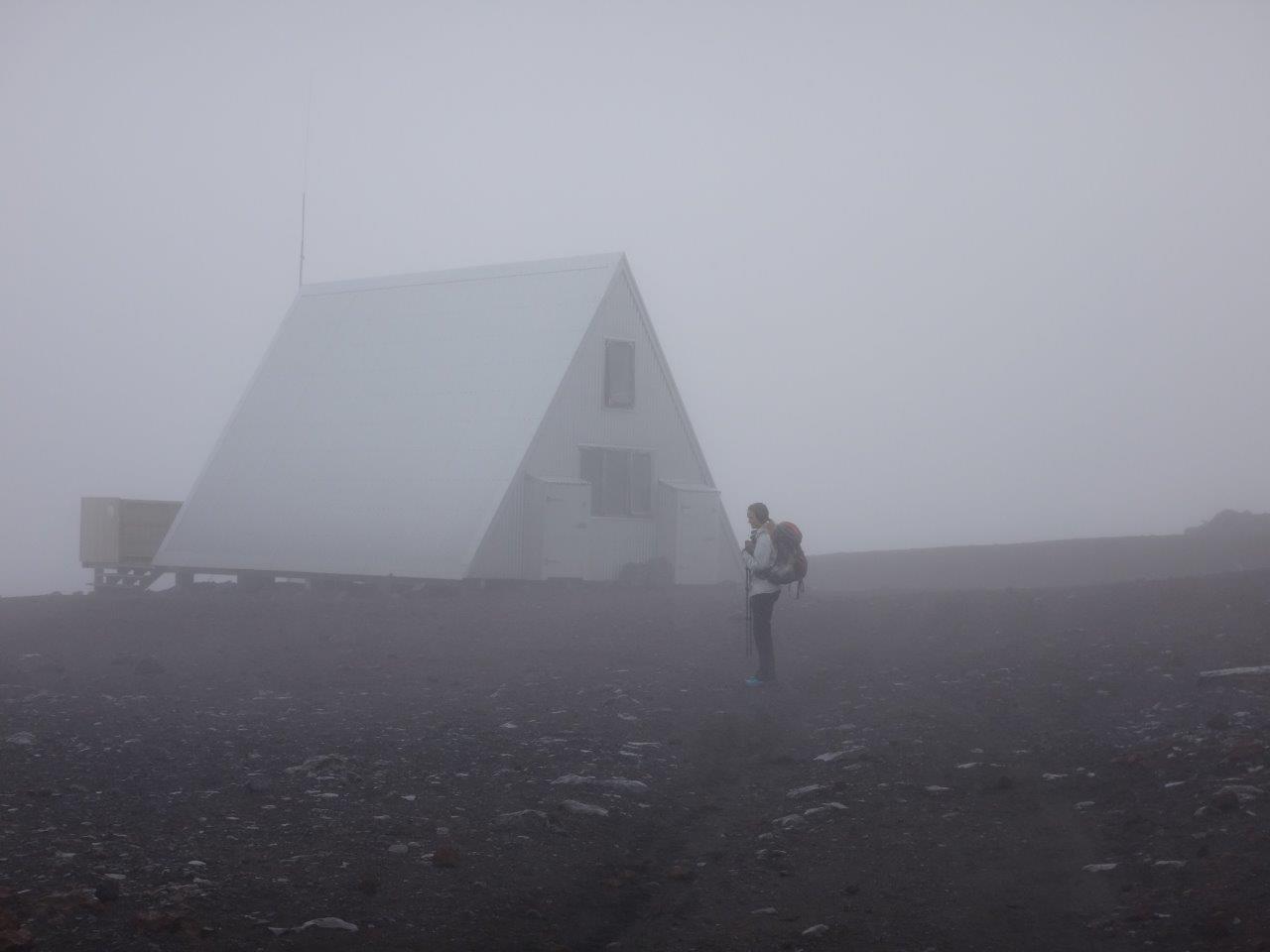
to reach Baldvinsskáli hut,
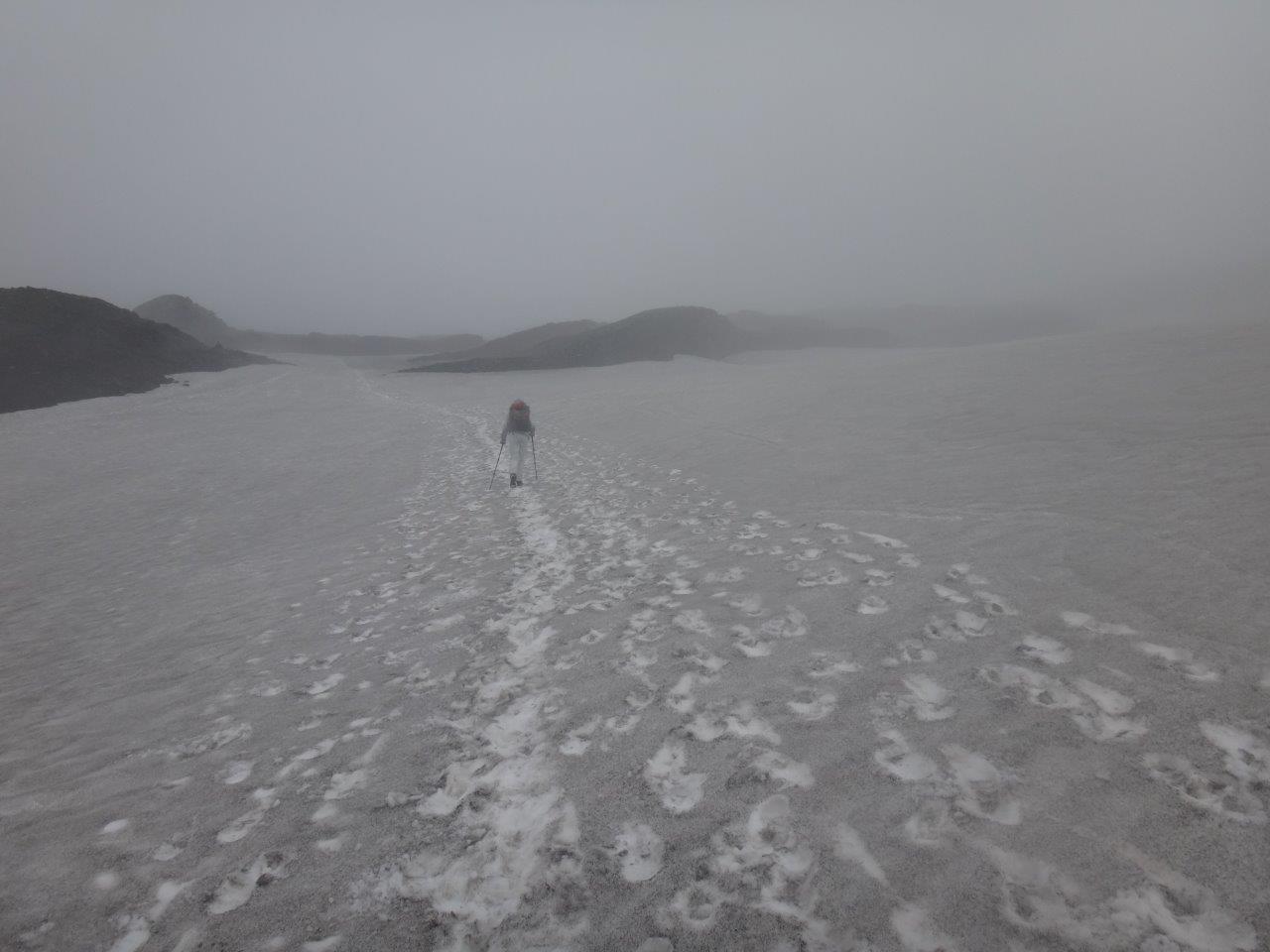
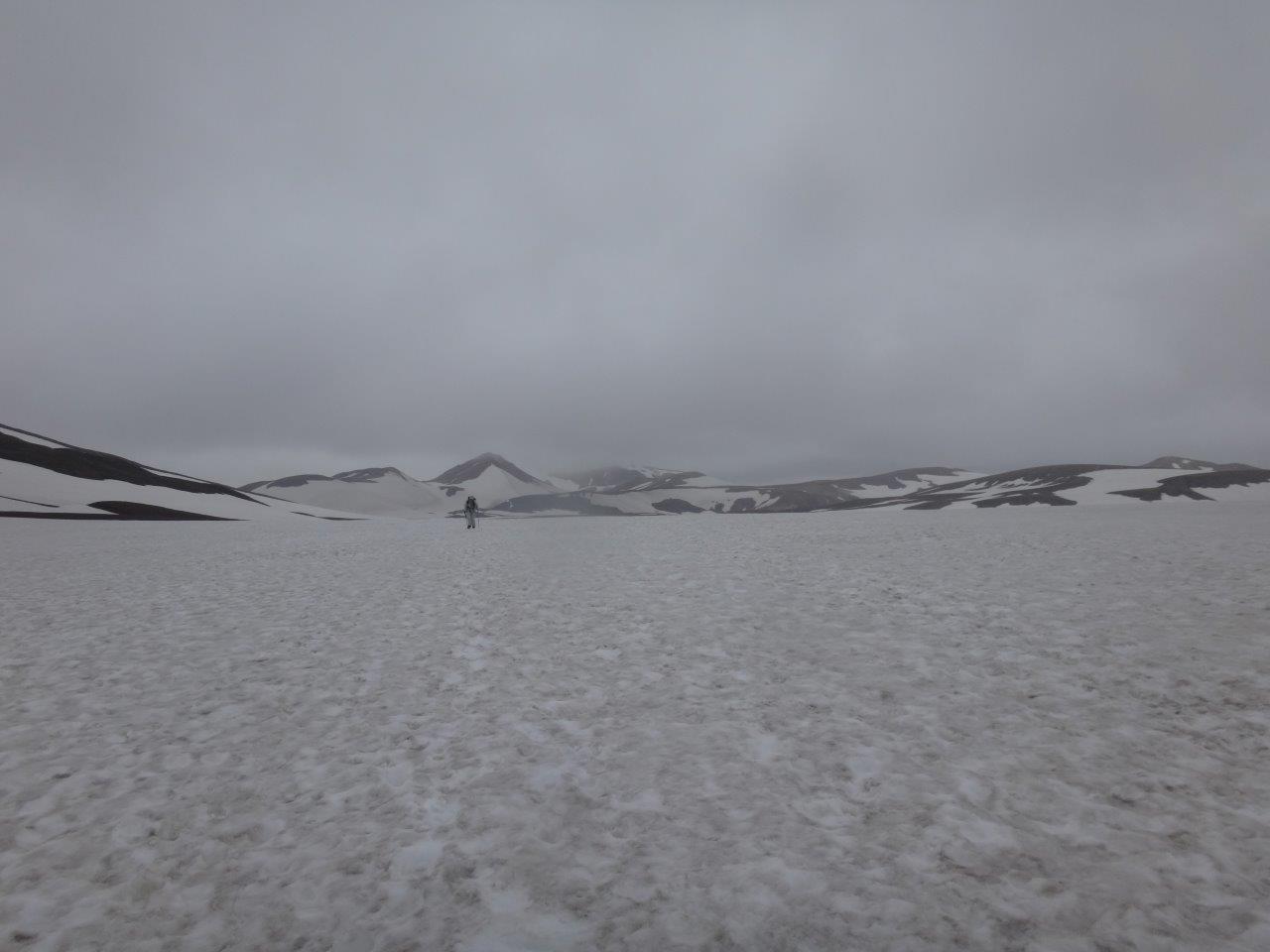
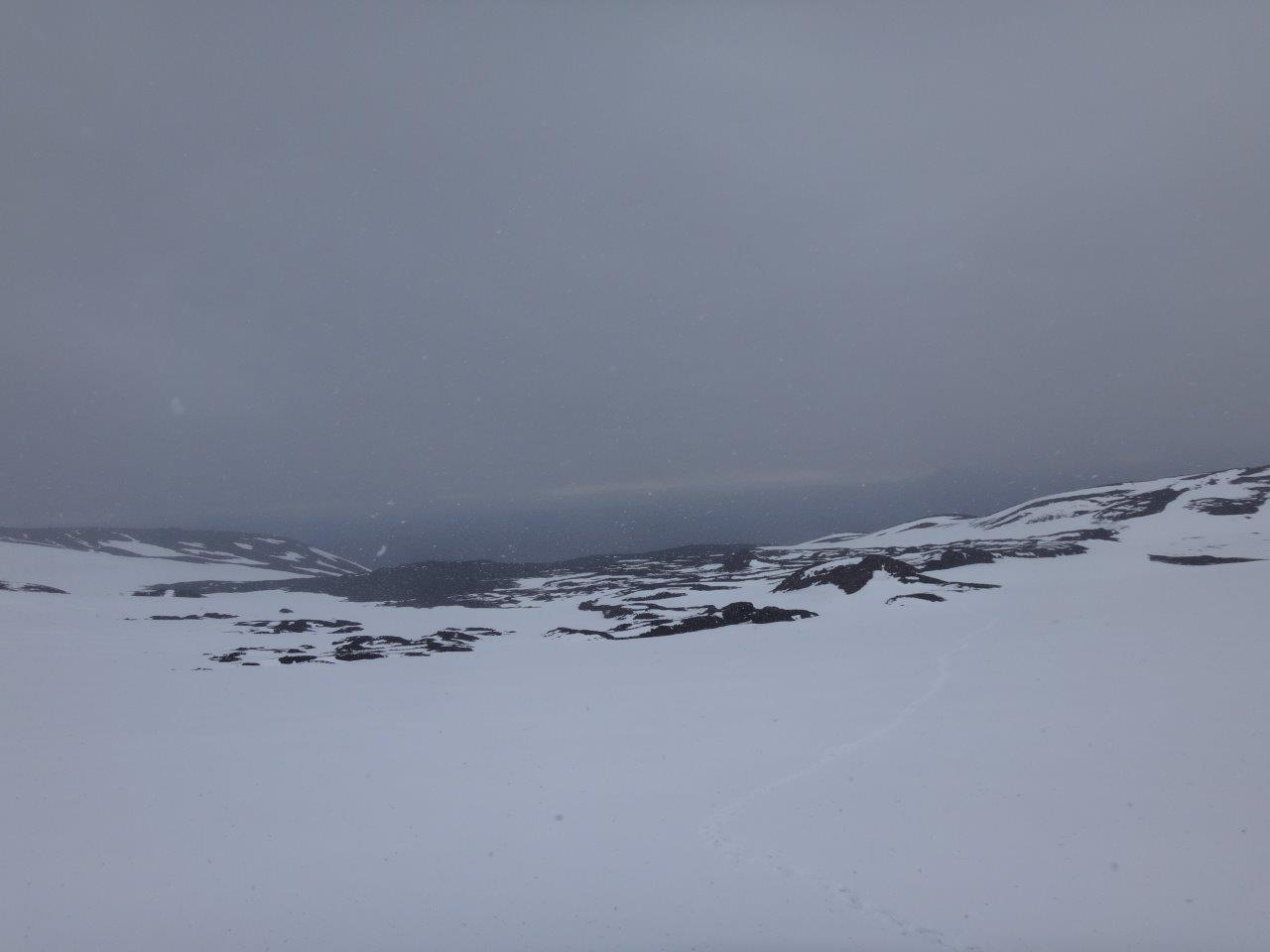
where we had an extended lunch. Hannah decided to keep going down towards Þórsmörk instead of staying for the night. Walking through snow
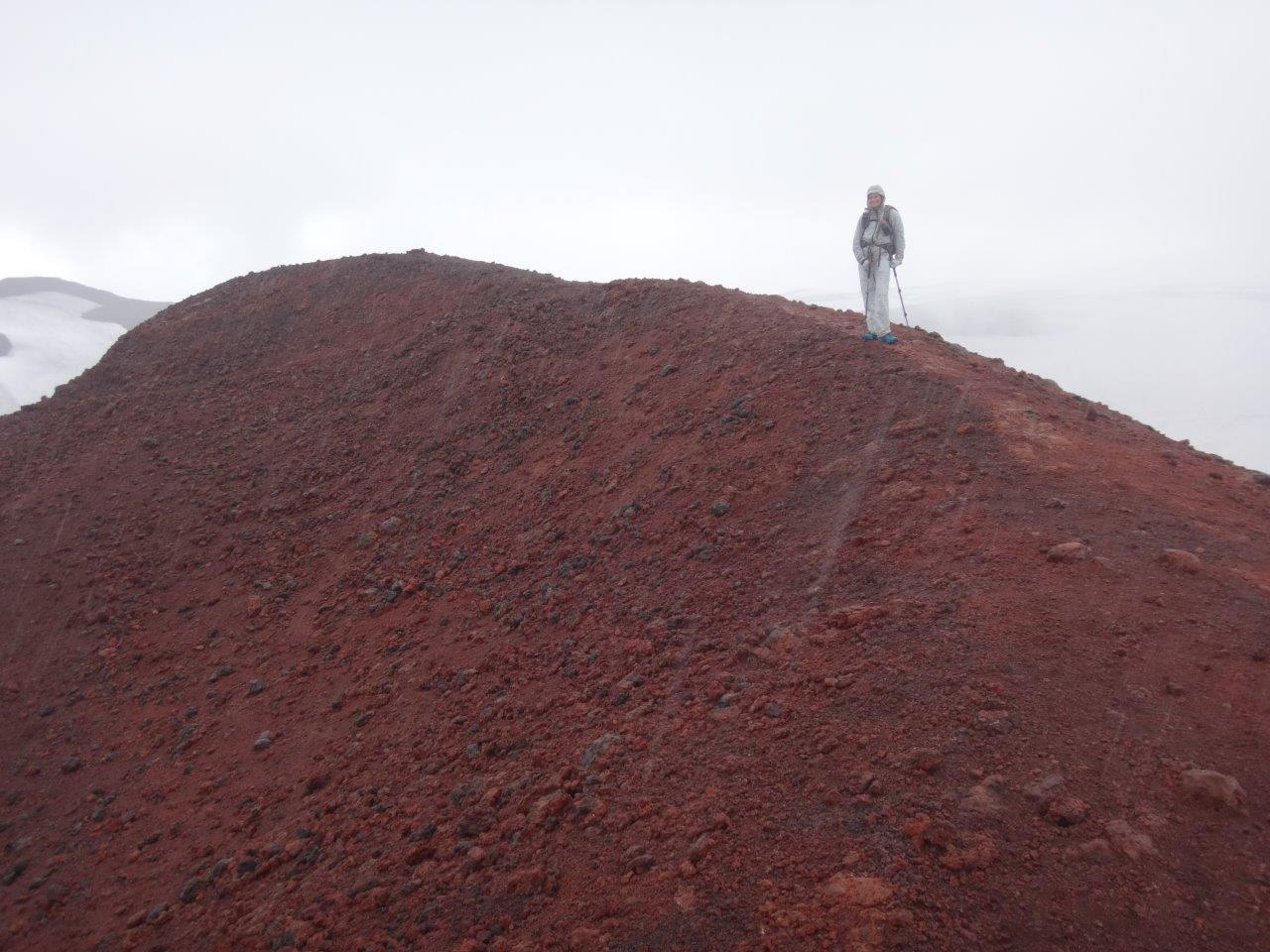
we made it to the top of the pass with its two craters Magni and Móði that were created in the 2010 eruption of Eyjafjallajökull that stopped air traffic in Northern Europe and affected 10 million travelers. We climbed on top of Magni
and glissaded down its backside.
Hannah had so much fun doing it, that she hiked back up and glissaded down again.
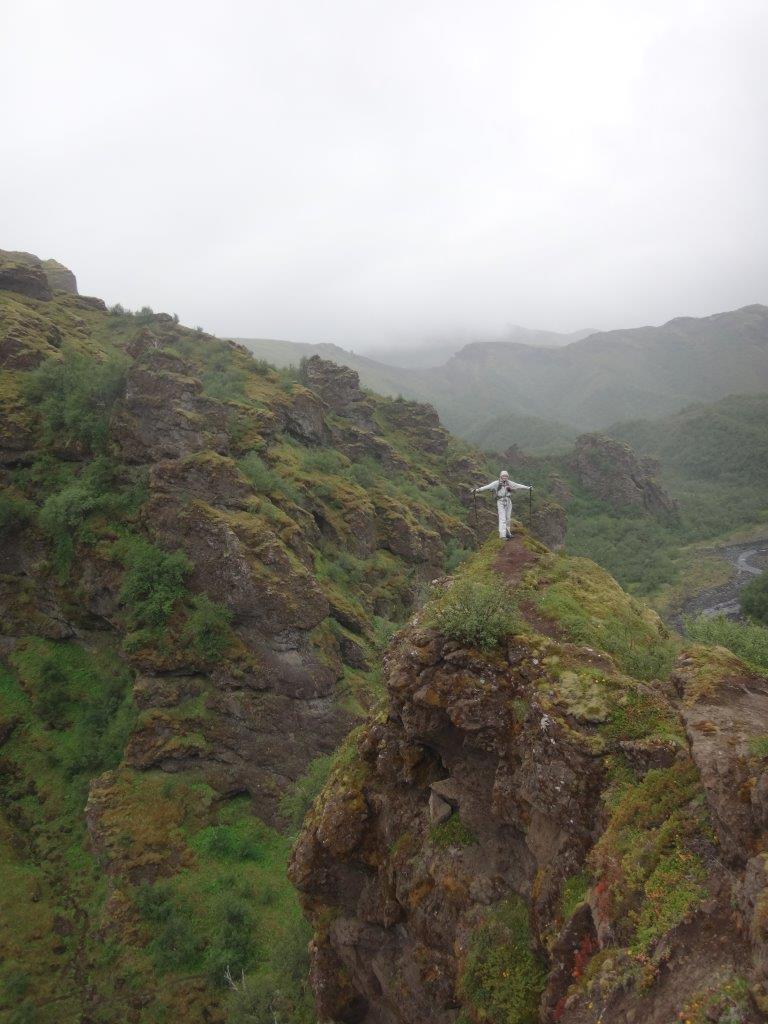
Eventually things became green again and we had to hike over some knife ridges
to get to the campsite at Basar which is one of the three sites at Þórsmörk.
LAUGAVEGUR – GOING FROM THORSMORK TO LANDMANNALAUGAR
The Laugavegur between Þórsmörk (Woods of Thor) and Landmannalaugar made it onto National Geographic’s list of 20 Dream Trails. It is indeed a dream. Only 34 miles long but showing the hiker an incredibly diverse landscape with glaciers, volcanoes, green valleys, brown rhyolite hills, black obsidian mountains, hot springs, lava fields, sand desert and more.
The next morning, we crossed the river Krossá
and visited the other two sites at Þórsmörk – Langidalur and Húsadalur where we spent several hours at the hot spring and sauna
before we continued through the beautiful landscape with its many fantastic viewpoints.
We forded the river Þröngá where a group of roughly 10 adult hikers was completely surprised when Hannah waded into the river without any hesitation about getting wet feet in her trail runners. The hikers were all in the process of taking off their heavy hiking boots and putting on their Tevas or Crocs.
We made fast progress and enjoyed the views of the landscape
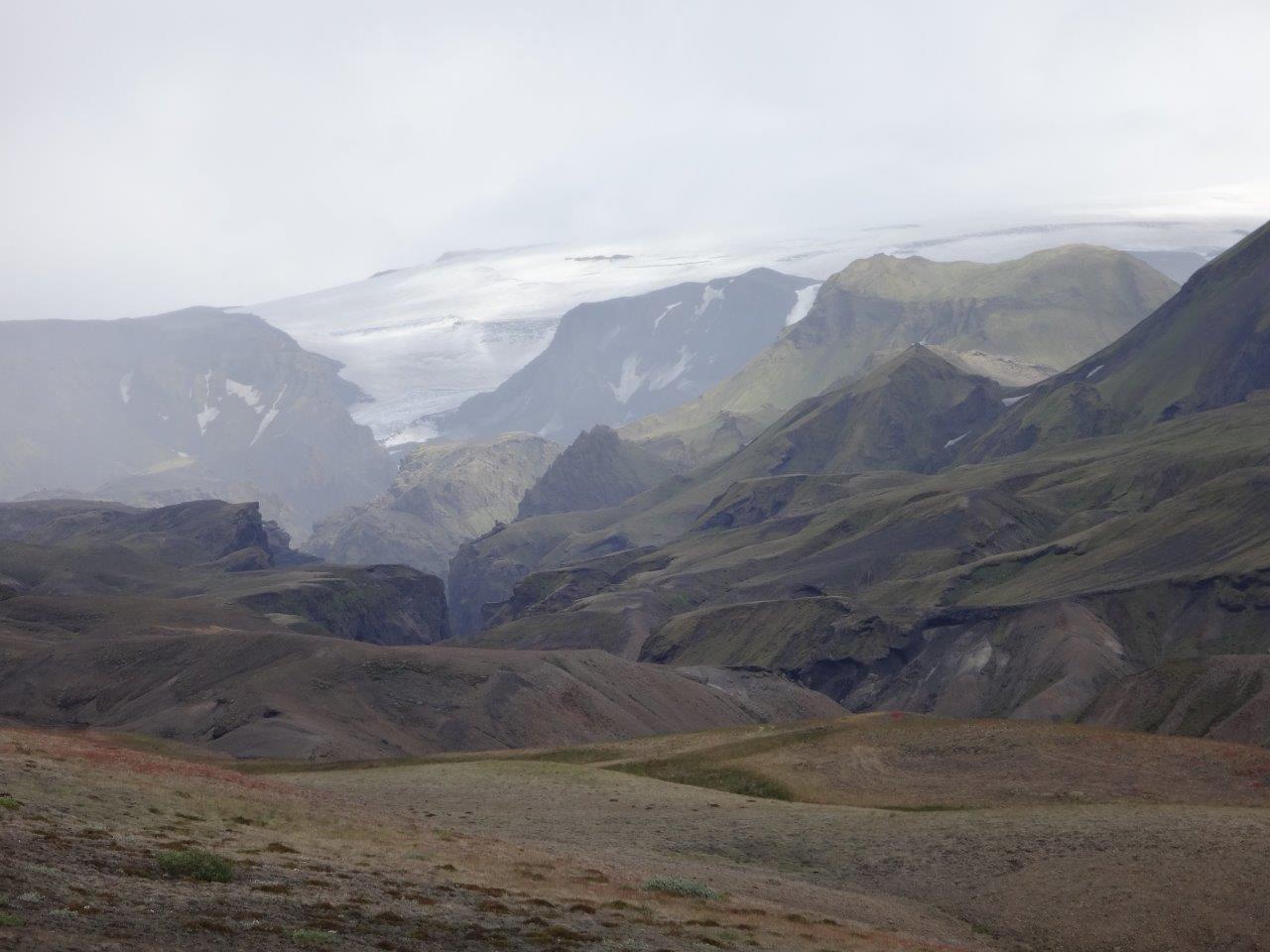
with its glaciers.
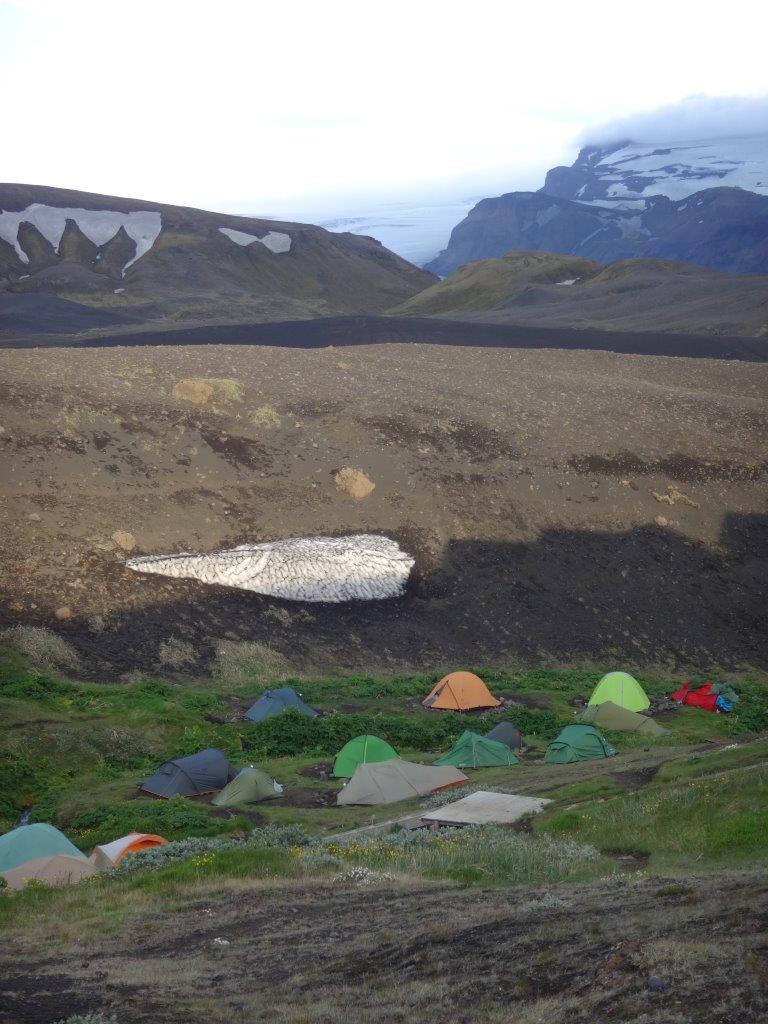
Our final destination was Emstrur, a little oasis, where we would pitch our tent with many others.
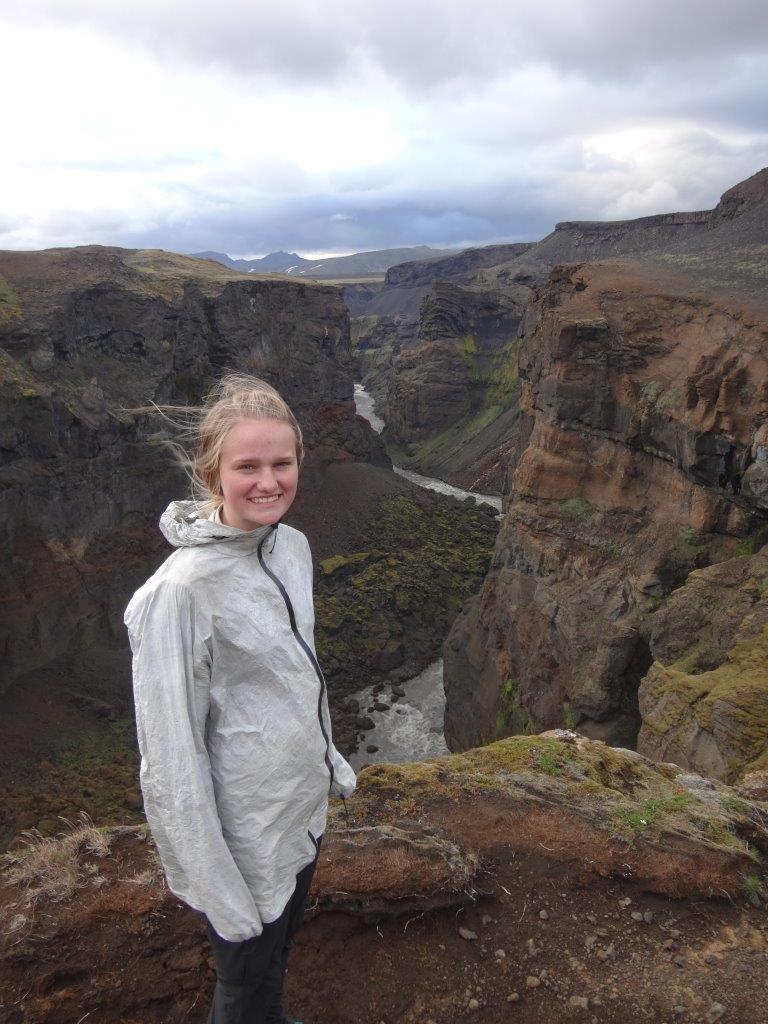
Really close to the campsite is a deep canyon where the Markarfljót runs. We added the 2-mile loop to our hike and wondered why most of the other 80+ people in the campsite would miss a view like this after coming this far and being this close.
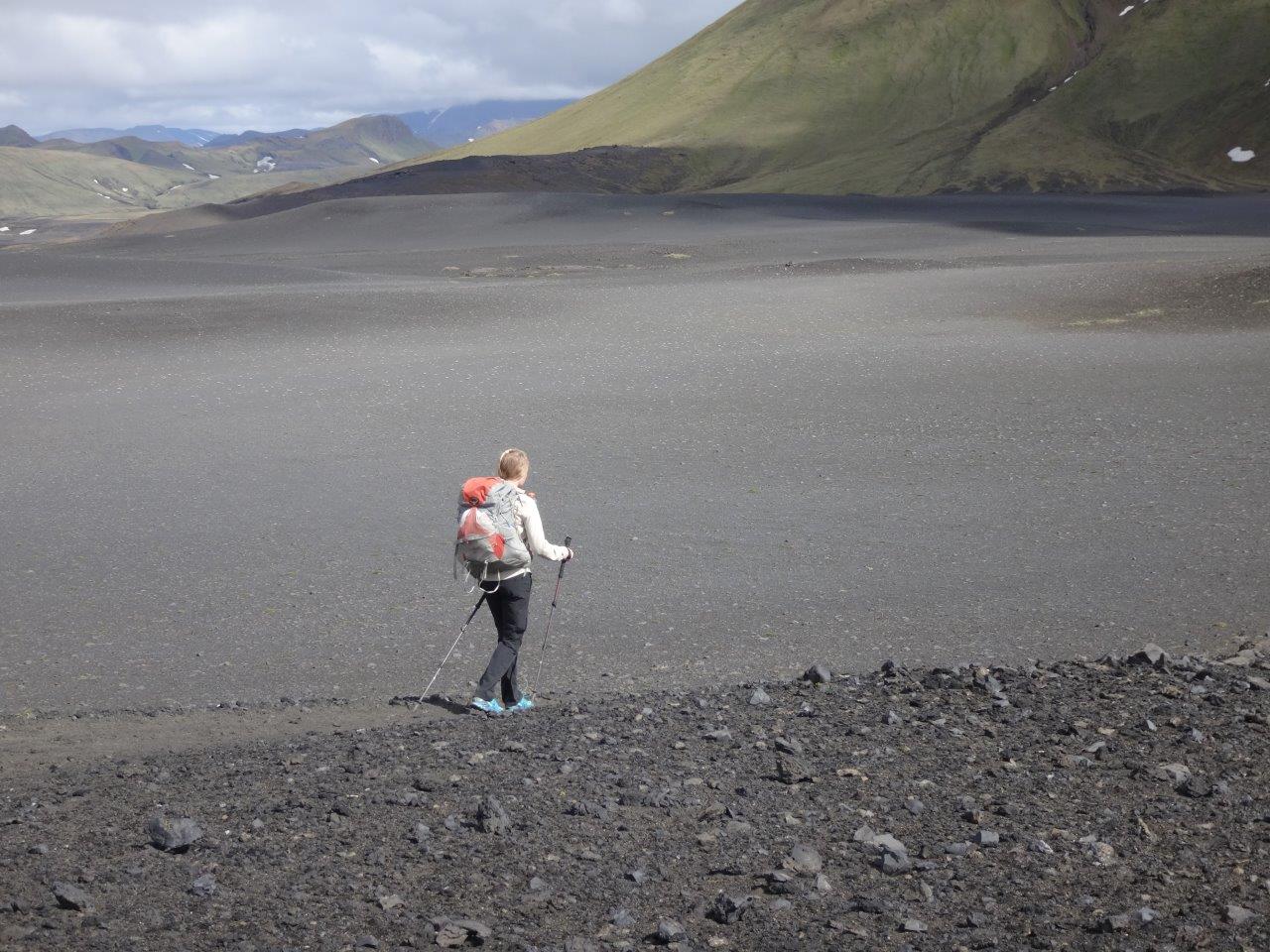
The next day we crossed sand,
water,
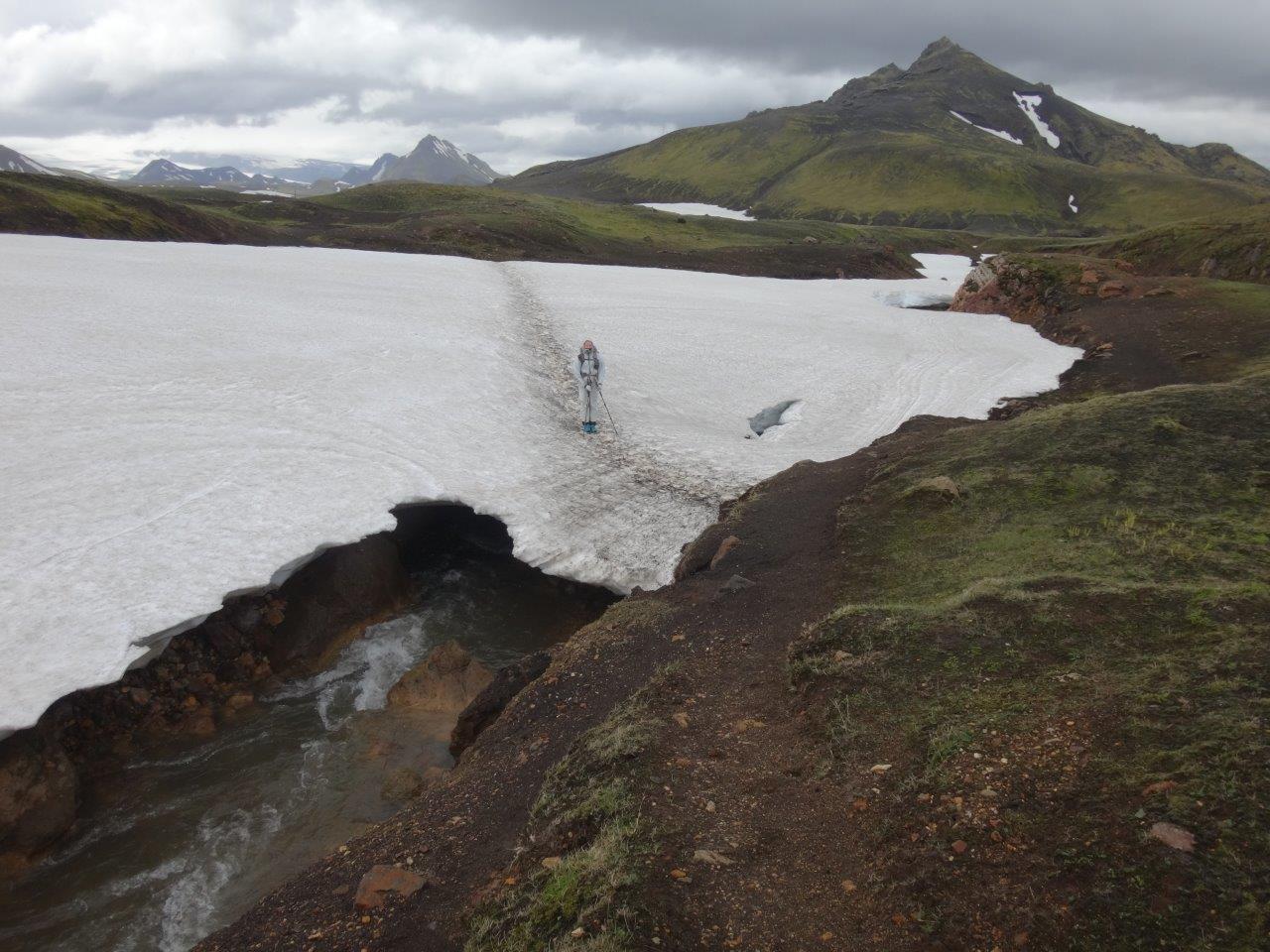
and snow
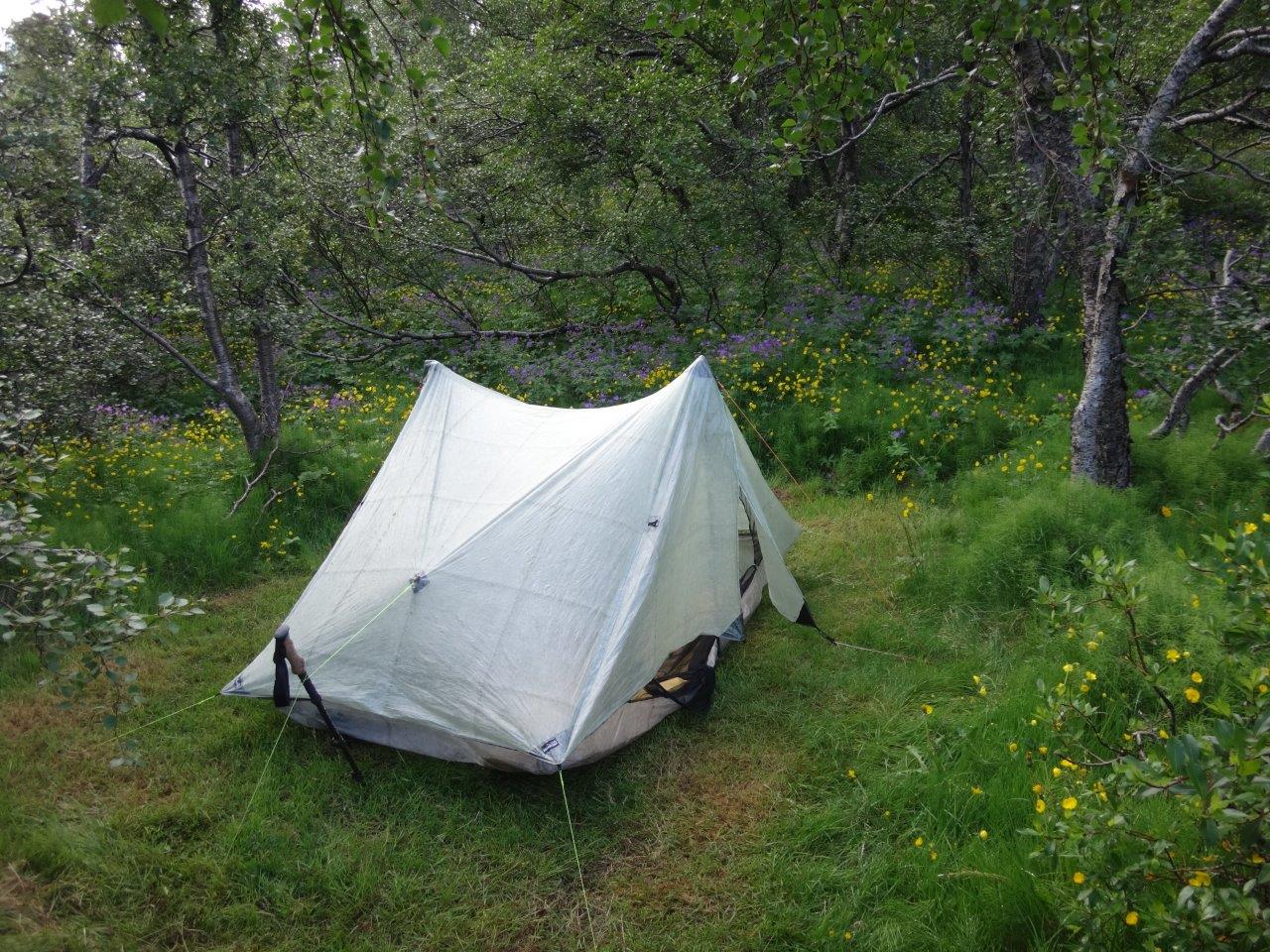
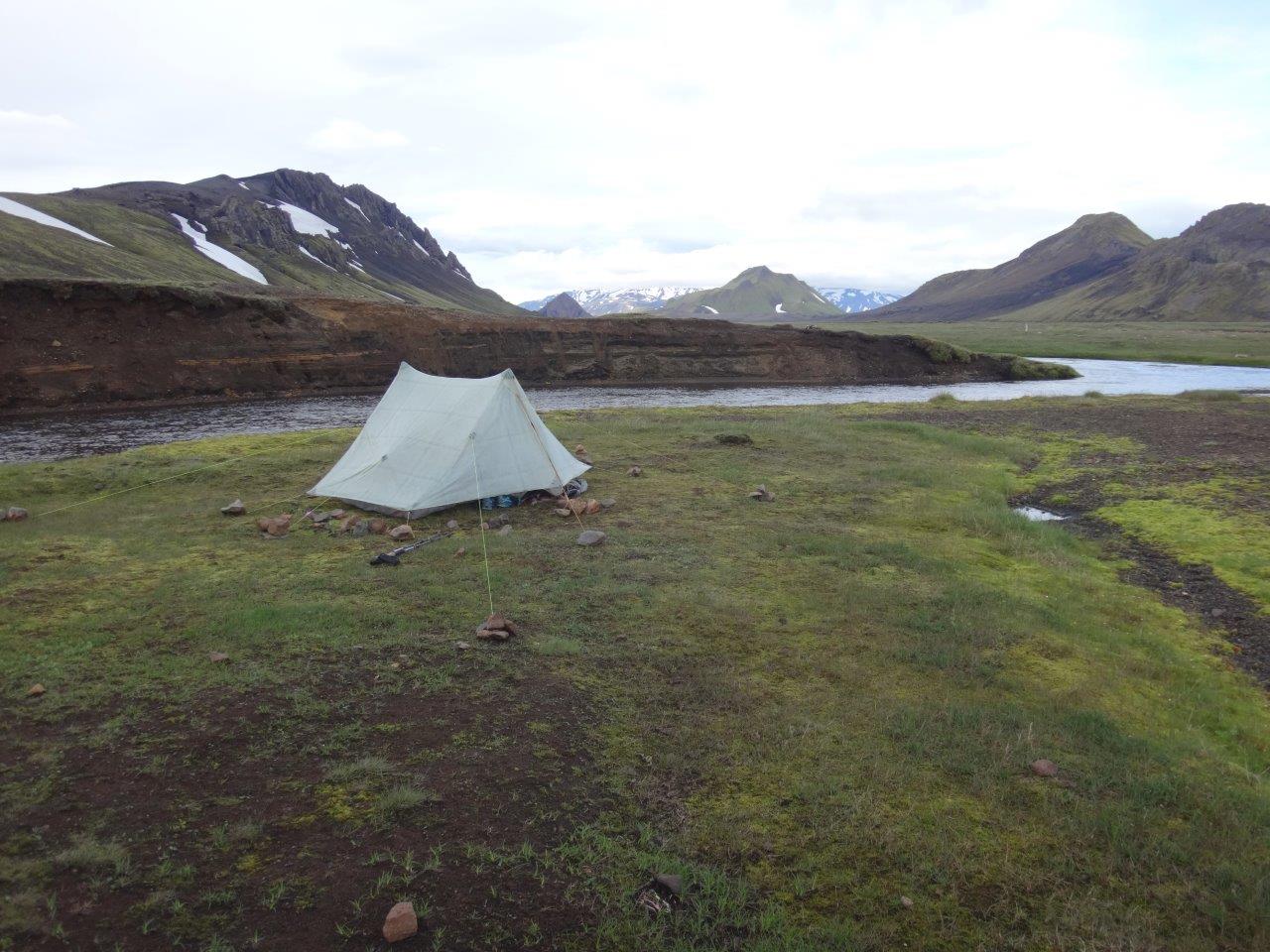
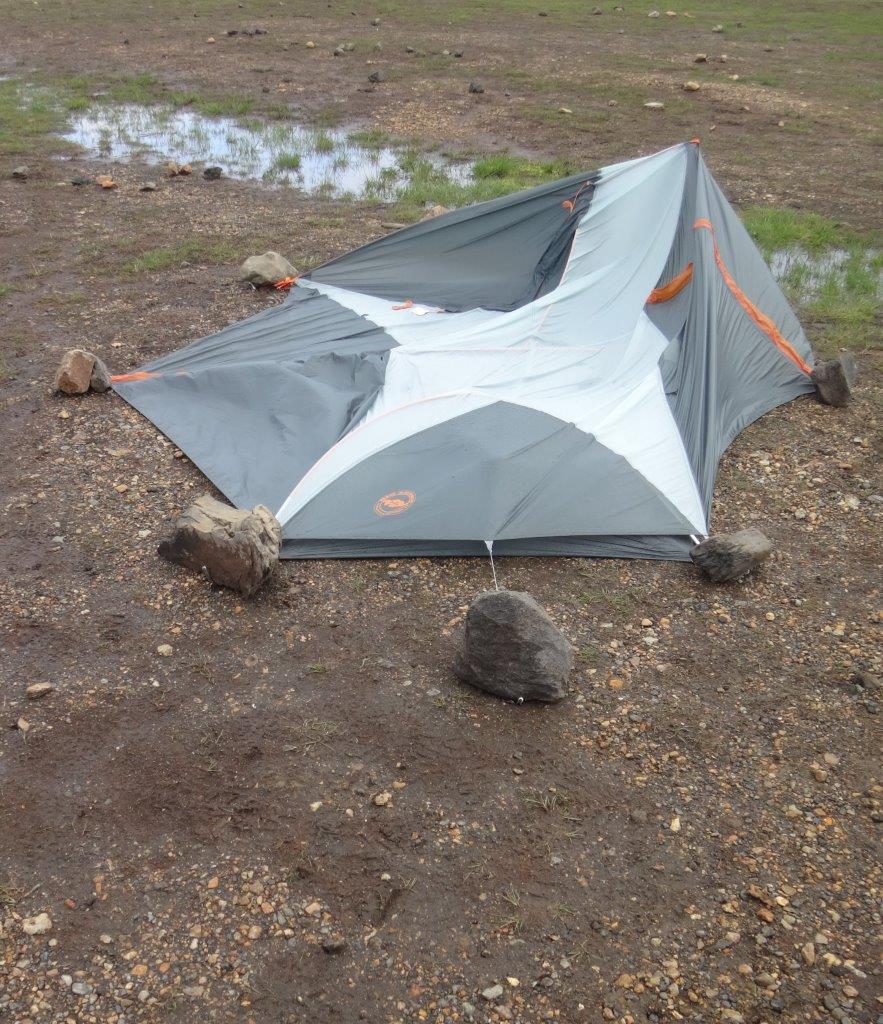
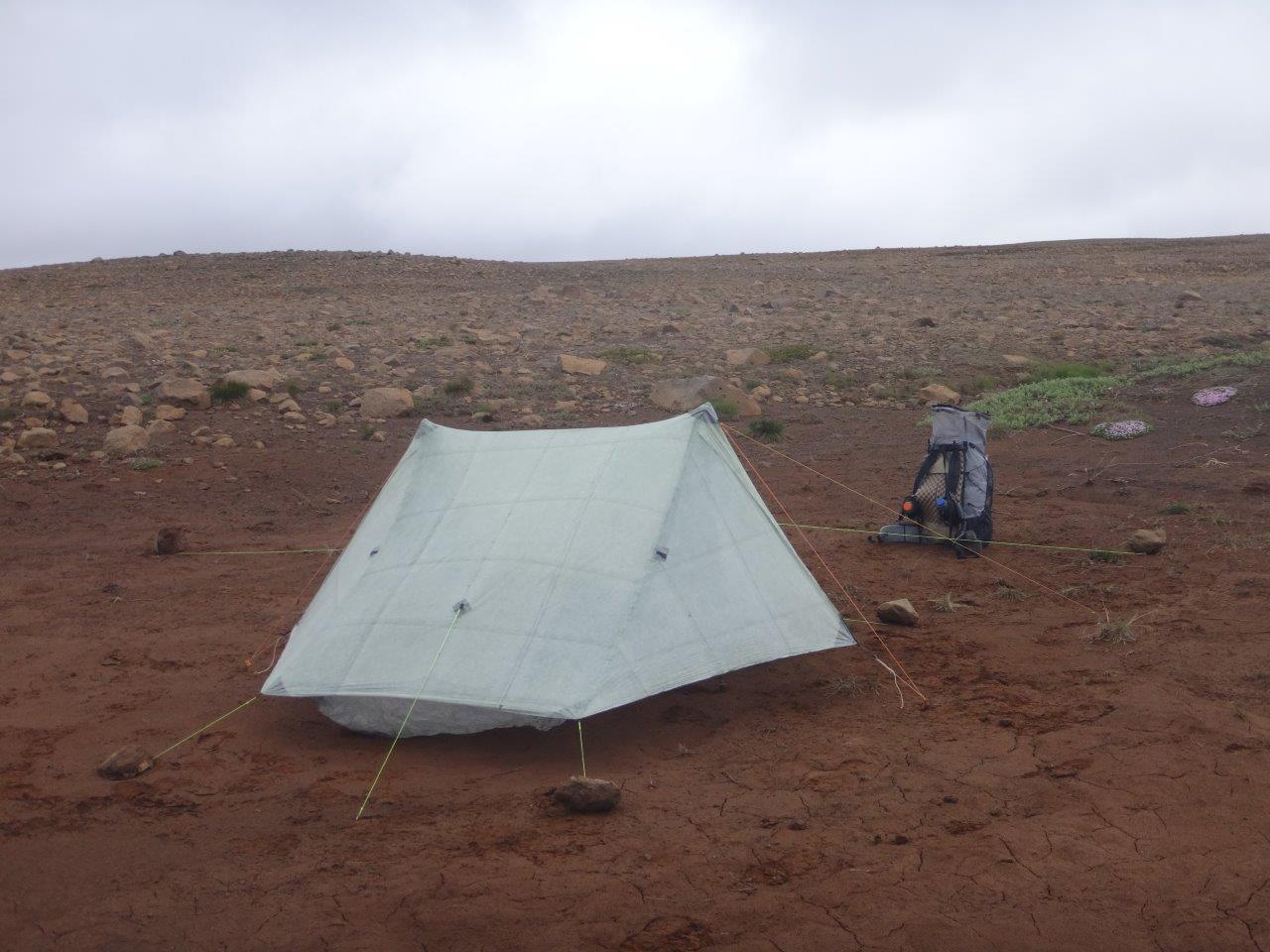
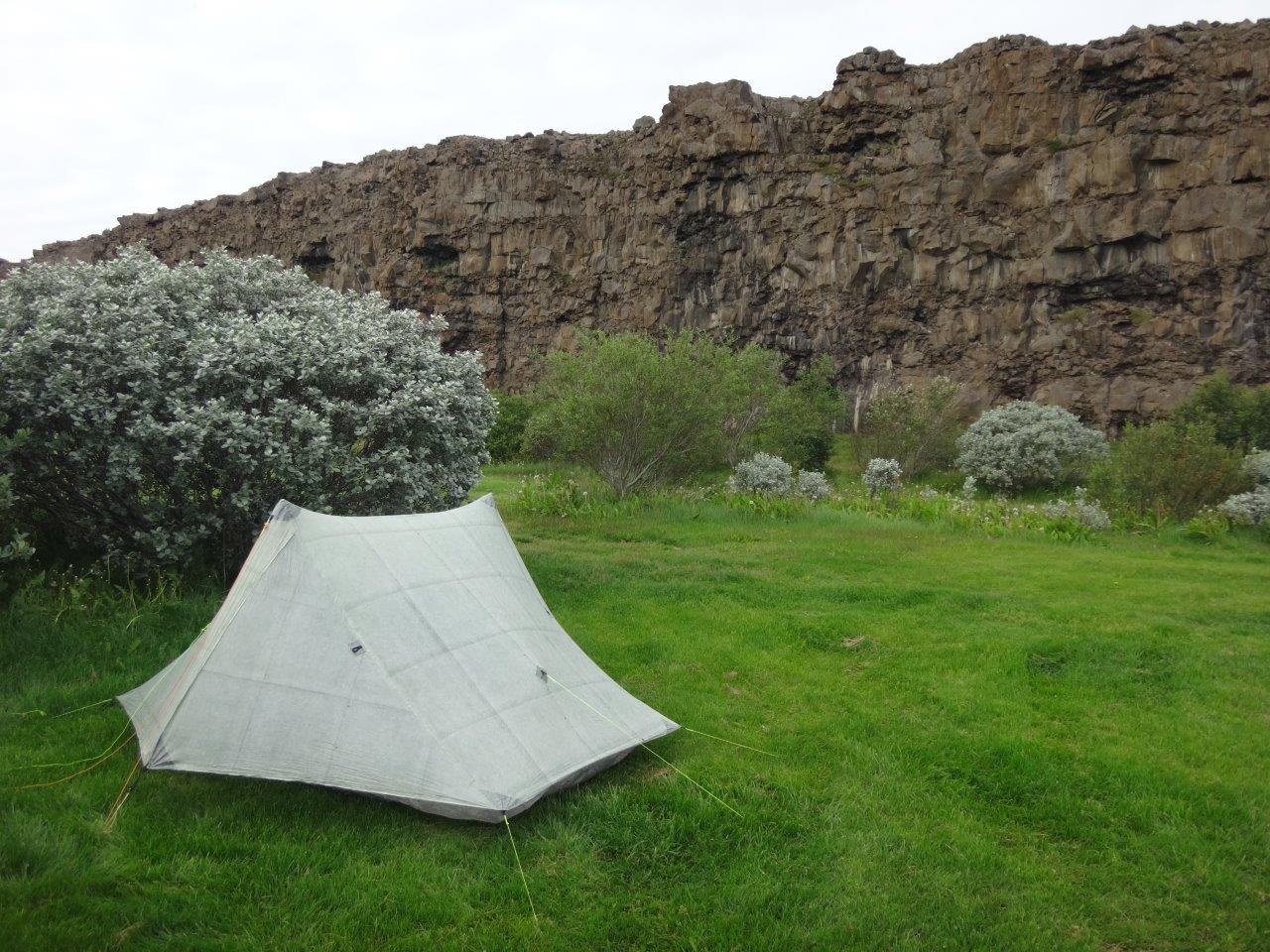
on our way to Álftavatn (Swan Lake) where we spent a night in 20+ mph winds with gust of 40+ mph. Our zPacks Duplex did just fine with a couple of extra guy lines, which cannot be said for all other tents in the camp ground.
Several people spent the night holding up their tent poles and trying to keep them from collapsing or breaking. These efforts were often futile and ended sometimes like this or even worse.
The next morning Hannah and I discussed whether to stay another day to wait for the wind to calm down. After getting detailed weather information from the warden, who gave us the expected wind speeds up at Hrafntinnusker, Hannah decided to go. The warden even offered us beds in the completely booked hut to entice us to stay, but Hannah made the decision to go. Once that happened the warden got her kids and they waved Hannah and me “Good Bye”. We had admired these kids the evening before, when they were playing for hours in the rain during the high wind in the creek and had a blast doing so. The warden seemed to feel similar about Hannah, when waving her good-bye with her kids.
This turned out to be the toughest day of the whole 440-mile trek. It took us 6 hours to hike 6 miles uphill against the strong winds to reach Hrafntinnusker. Twice I grabbed Hannah whose tiny body was pushed over by the wind. Hannah was absolutely amazing. The following photos don’t show the punishing wind, but it was brutal.
At the top we warmed up in the hut for 50 minutes before we had to leave to make room for booked parties. At first the warden didn’t even allow us in as we had missed the cut-off time by 10 minutes at which you could pay 500 ISK per person to stay for 60 minutes in the hut. I happily paid the full hour fee for the remaining 50 minutes.
From there we walked down to Landmannalaugar. First we had to get through more snow
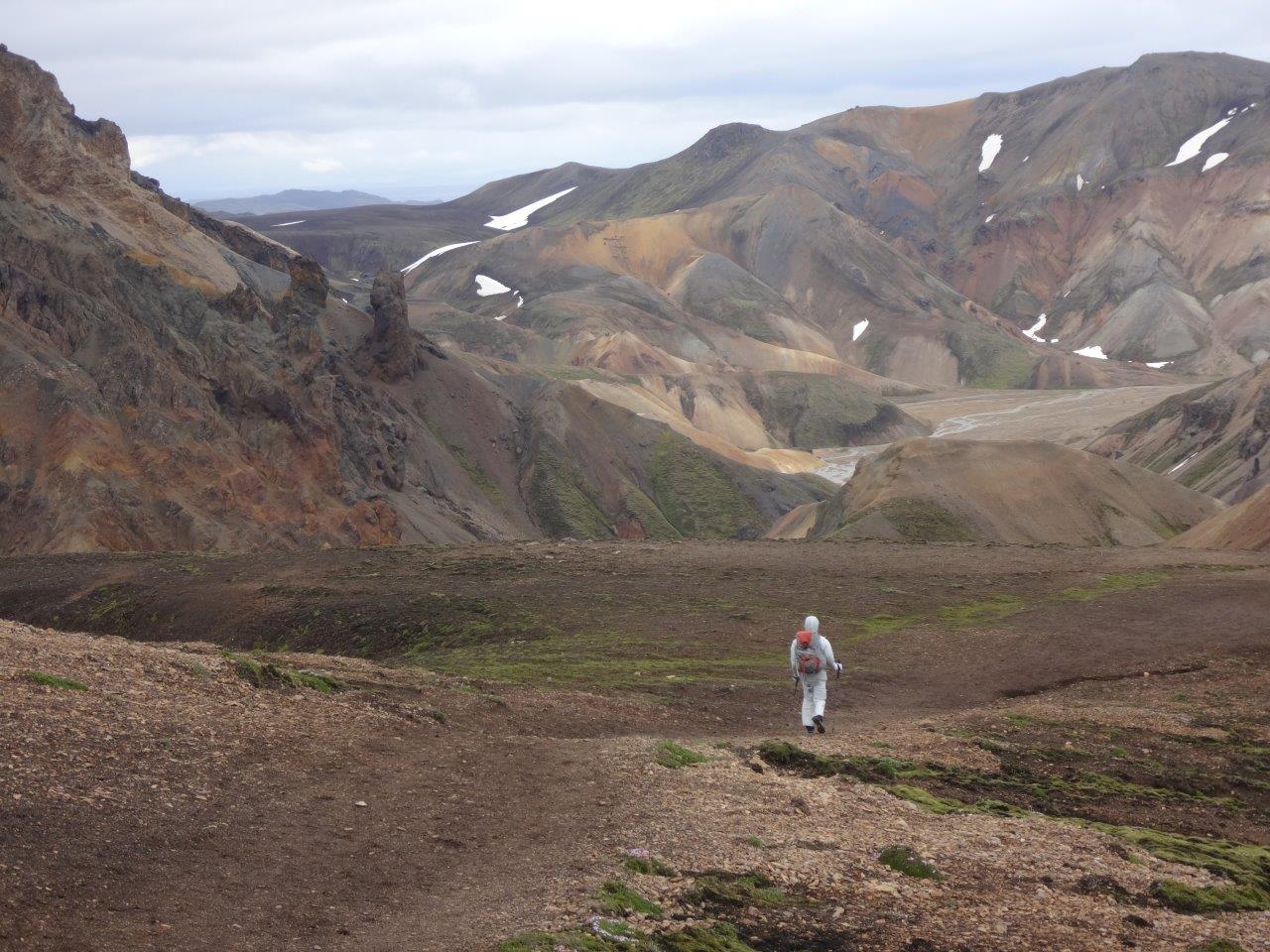
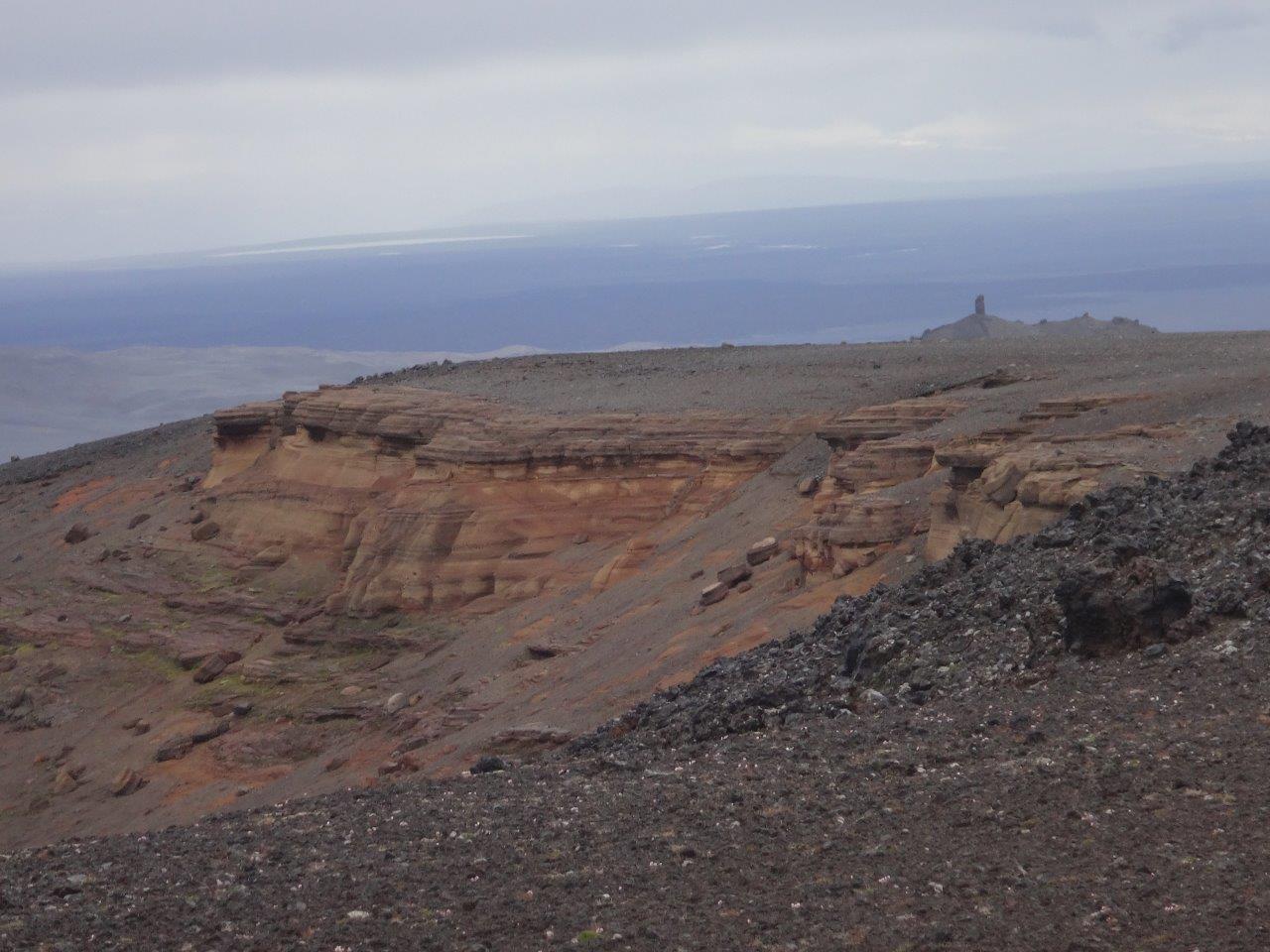
before seeing the Rhyolite Mountains with their incredible spectrum of colors.
Now we just needed to cross a lava field to make it to our final destination for the day – Landmannalaugar.
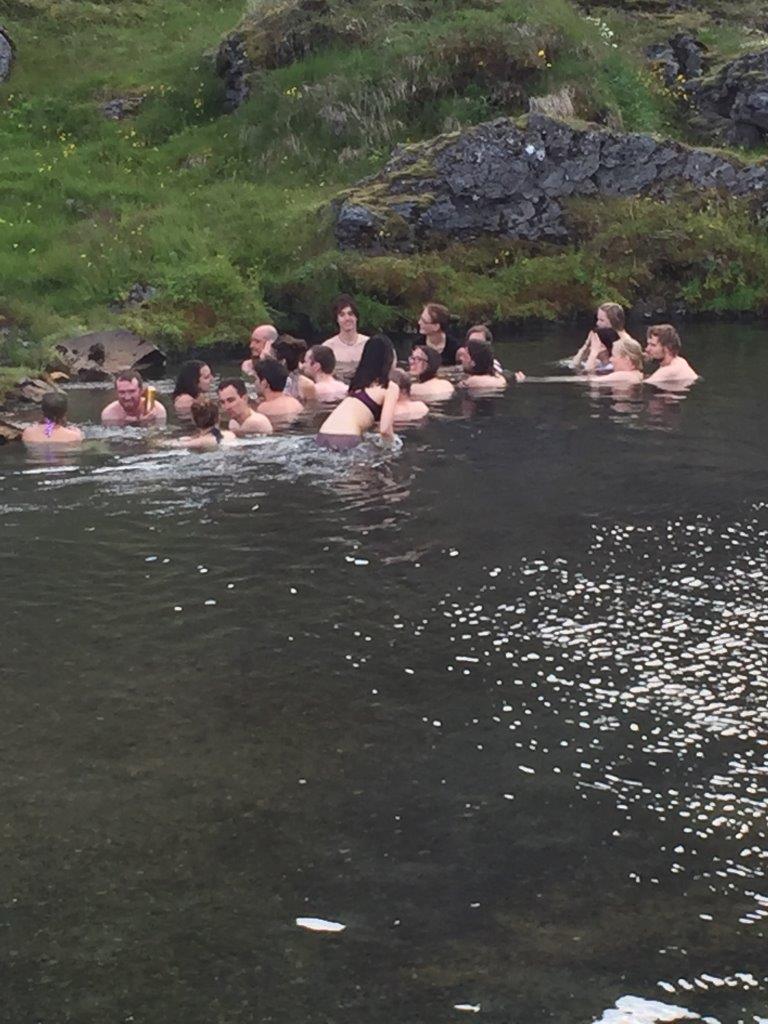
There Hannah joined the crowd in the hot spring and stayed in there until 10 pm.
She deserved it. This had been a really hard day – a day where we saw a group of adults who just stopped walking and hunkered down wrapping a tarp around themselves to be somewhat protected from the punishing wind, an adult who couldn’t carry her backpack any longer and required help, adults who lost gear (like rain covers flying away in the wind), adults shivering from being cold and wet in the wind because they didn’t have mitts and other essential gear. Hannah was well prepared, had the right gear and took this day on with self-confidence. I’m very proud of her. She could easily have sat out the day and even been in the hut at Álftavatn, but instead chose to tackle the elements and spend the next night in a tent – right after a very windy night with flattened tents around us.
INTO THE DESERT
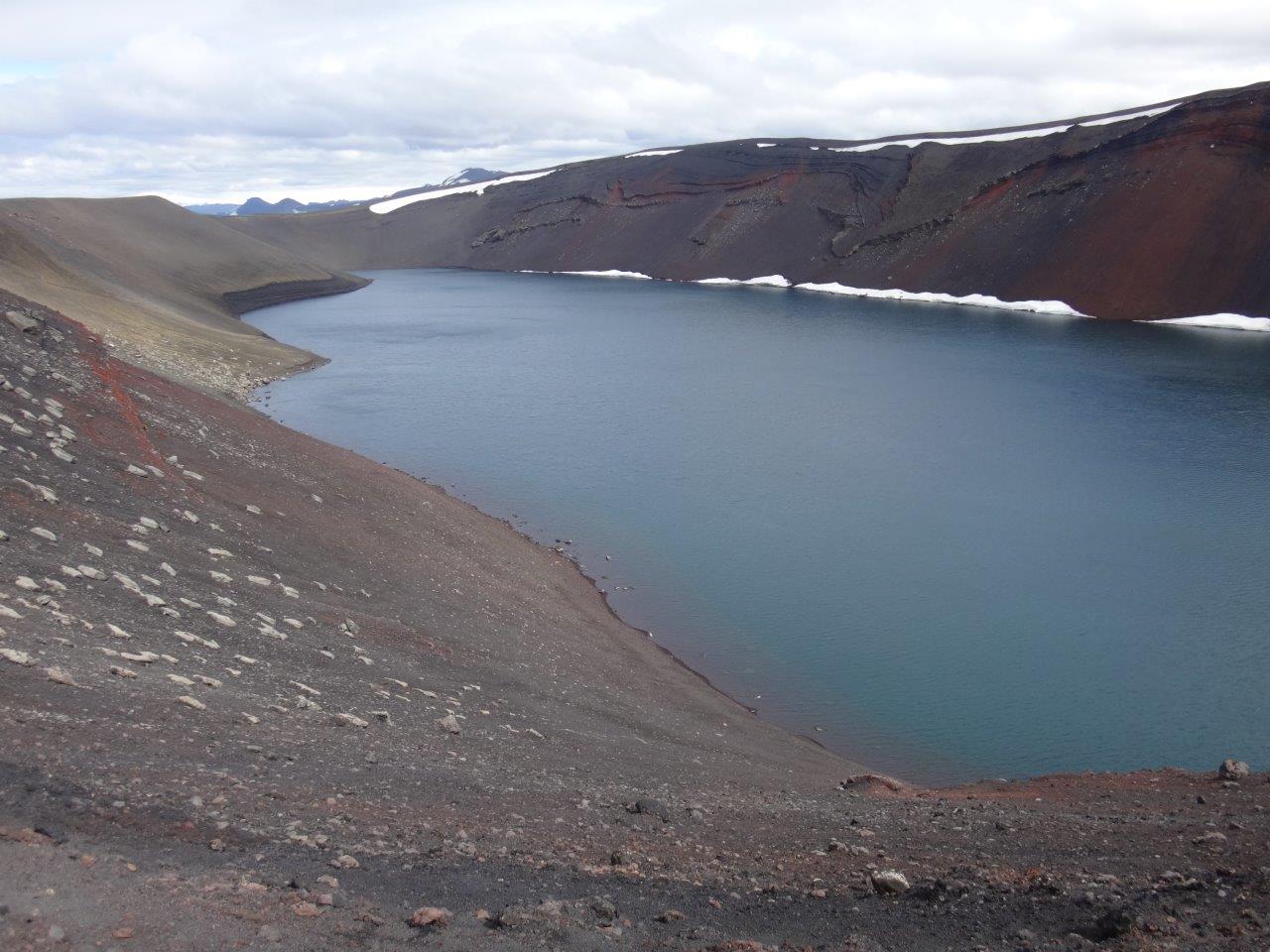
Hannah and I had now finished the two most popular hiking trails in Iceland, the Fimmvörðuháls trail and the Laugavegur trail. From here on we would venture into the sand desert. First we walked to the rim of Ljótipollur (ugly puddle) and admired this not at all ugly lake in a crater,
before we ventured into the sand.
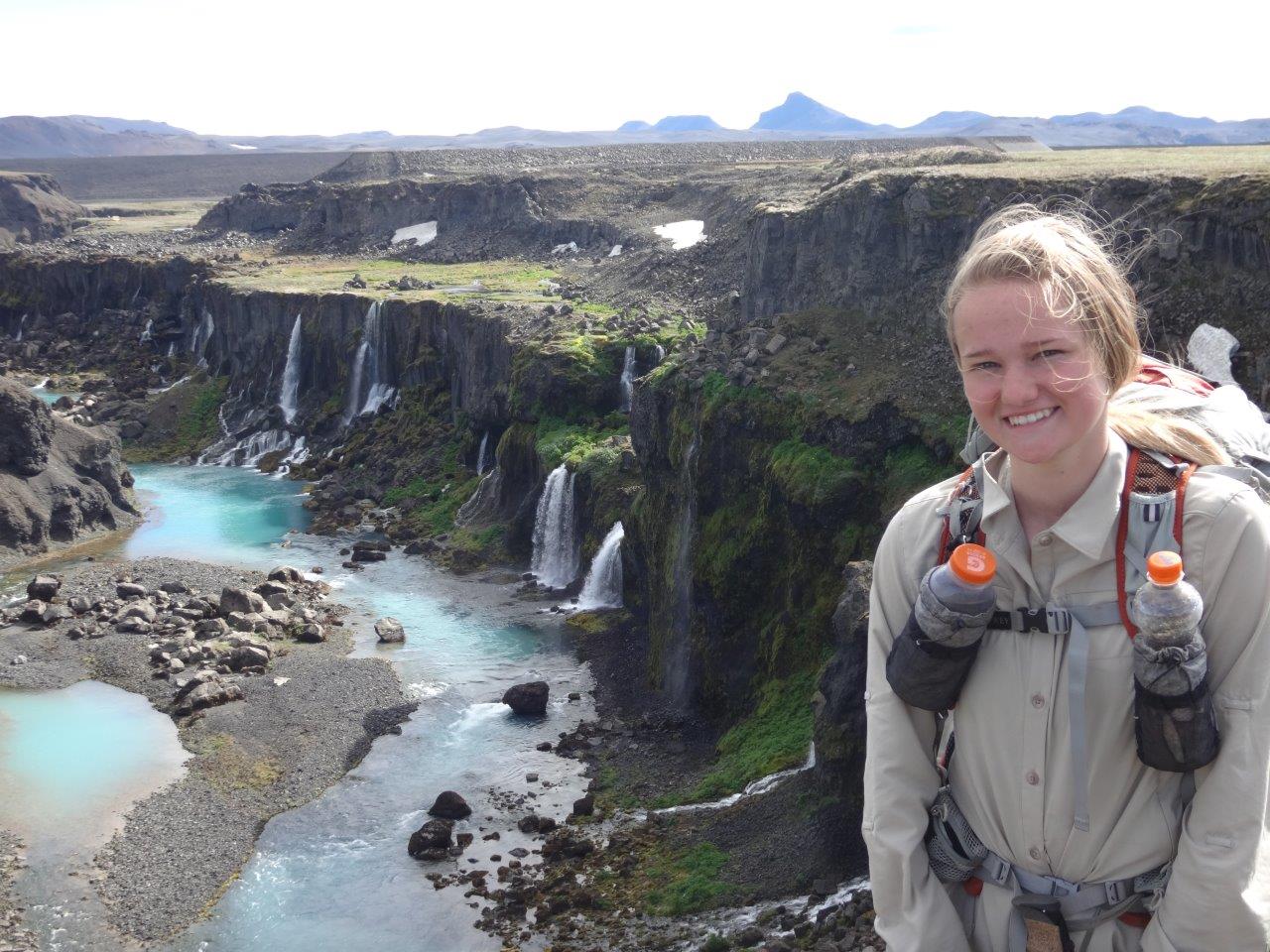
We camped that night right next to the amazing Sigöldugljúfur – hidden waterfalls.
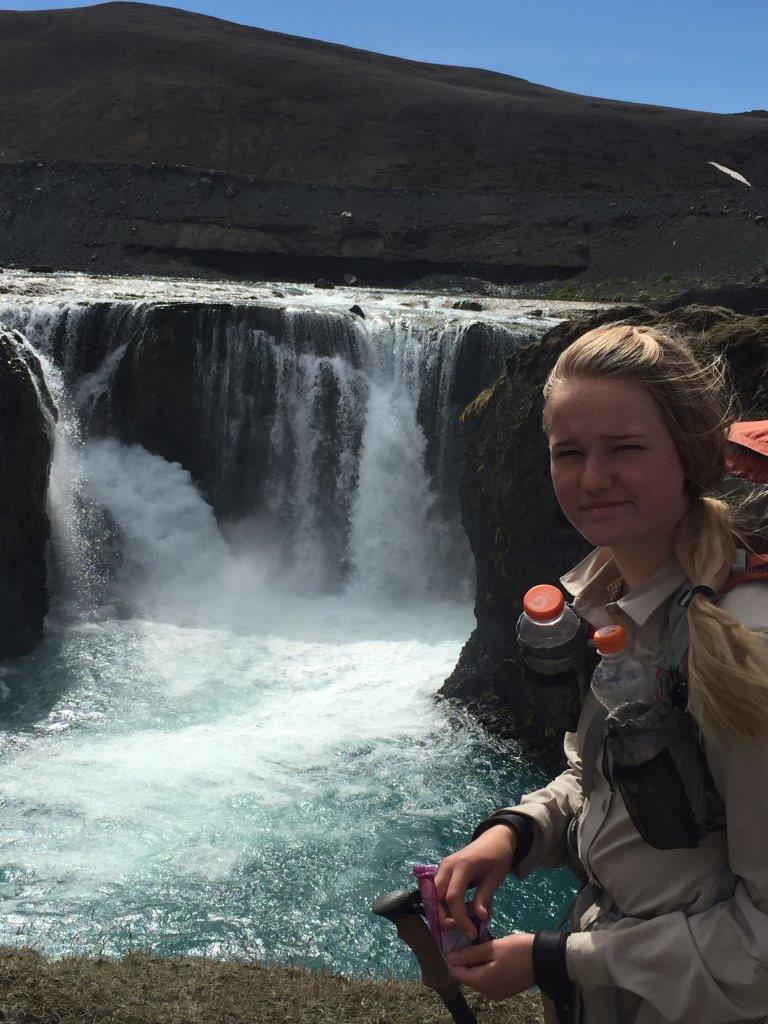
The next morning we visited Sigoldufoss (sinking hill waterfall) before making it to Hrauneyjar Guesthouse.
Here I would have to say good-bye to Hannah who had been such a fantastic backpacking partner during these first 110 miles. But first we had lunch together. Hannah obviously enjoyed eating something else than Mountain House freeze-dried food.
Hannah and I reached Hrauneyjar in 7 days instead of the 10 days we originally planned. The staff at the guesthouse was very nice and helpful and made calls to Reykjavik to arrange a stay in the Youth Hostel for her until her flight back to San Francisco would leave. I transferred some money into her checking account, so she could enjoy an activity every day. During those days she went to the Blue Lagoon, horseback riding and to the public pool next door to the Youth Hostel and City campsite. I’m very proud of how she handled not only the hike but also the days she spent by herself in Reykjavik. My little daughter who went as a 9-year-old with me on the JMT (and again as a 10-year-old) has grown into a young woman who carries herself with confidence. I’m glad she wanted to go with me on this trip and hope we will have many more adventures in our future.
SPRENGISANDUR – SAND, ROCKS, SAND AND MORE SAND
The Sprengisandur was used during the medieval Icelandic state from 930–1265 to attend the Althing (general assembly). Afterwards it fell out of use and was lost until the 19th century. For hundreds of miles there are no settlements and there is no fodder for horses to be had. This feature gave the area its name: it is derived from the Icelandic noun sandur “sand” and the verb sprengja that means “to ride a horse to death; to be on the point of bursting after running for too long”. One needed to ride as fast as possible, nearly driving the horses to death, to cross the mountain desert and reach the inhabited regions of the island again before one ran out of provisions.
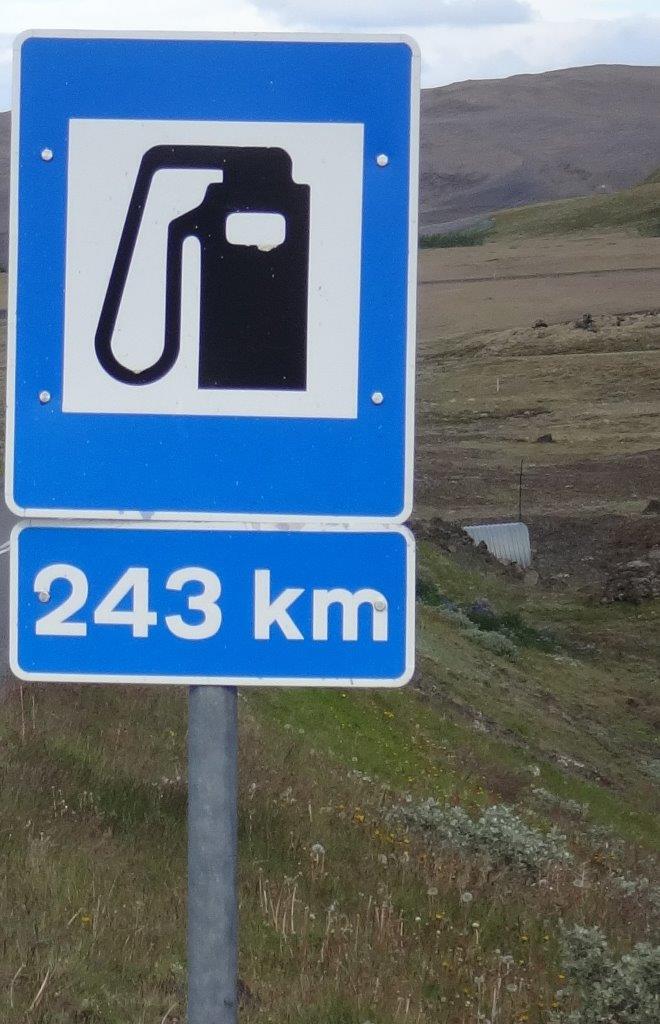
My plan was to use this old medieval route instead of the new modern gravel road that runs more or less parallel and a bit southeast of the ancient horse trail. Right when I was ready to start walking a backpacker came walking on the new gravel road. We started a conversation and it turned out his tent got destroyed in a sand storm. He had to walk 30 miles with no tent to get to a place where a car would pick him up. His story and this sign outside of where Hannah just boarded the bus to Reykjavik gave me some idea of how far away from everything I would be for the next couple of days.
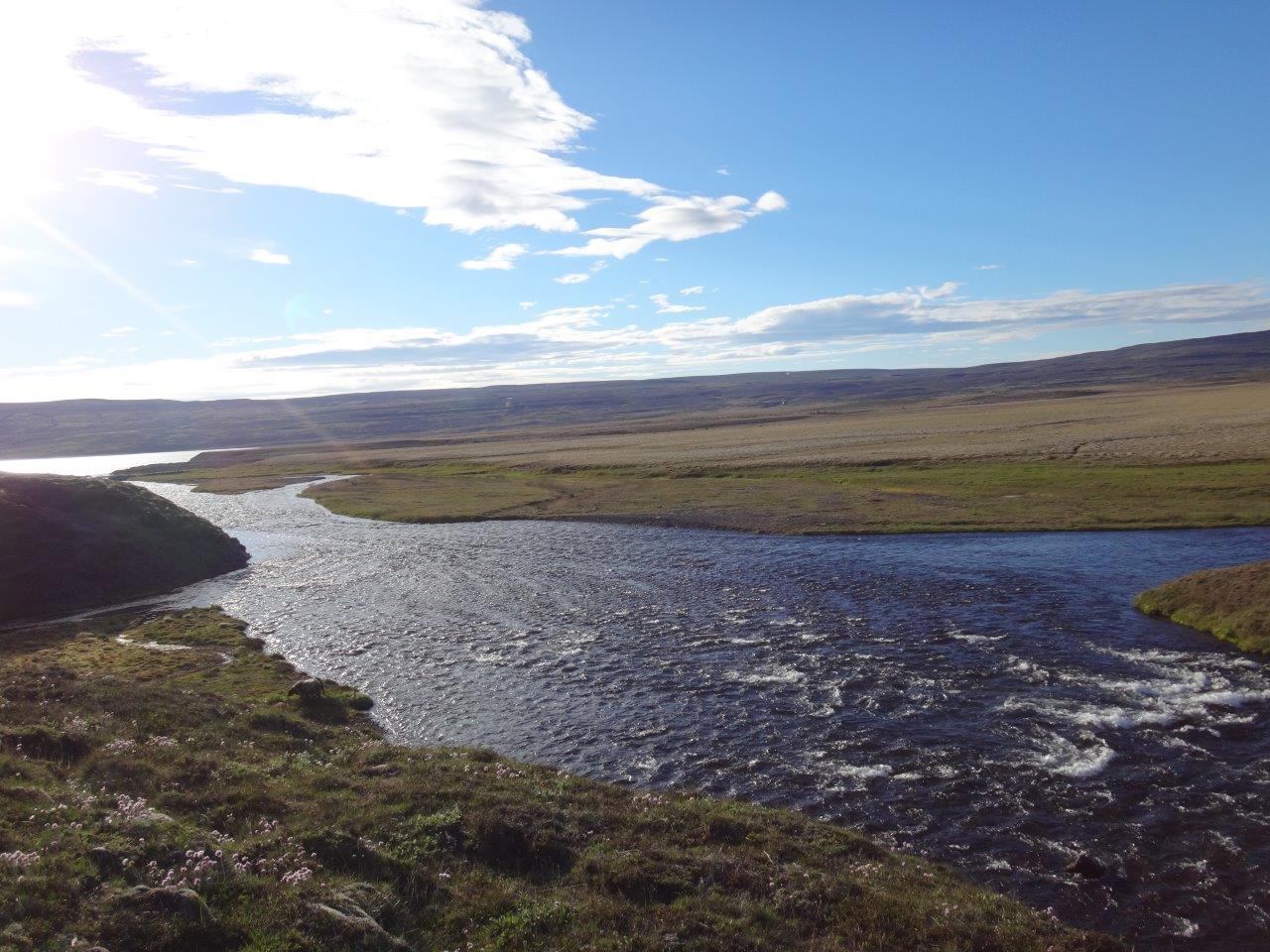
First I forded a side arm of the Tungnaa where it
flows into the lake Sultartangalón with Hekla (short hooded cloak, but called “Gateway to Hell” during medieval times due to its many eruptions) in background.
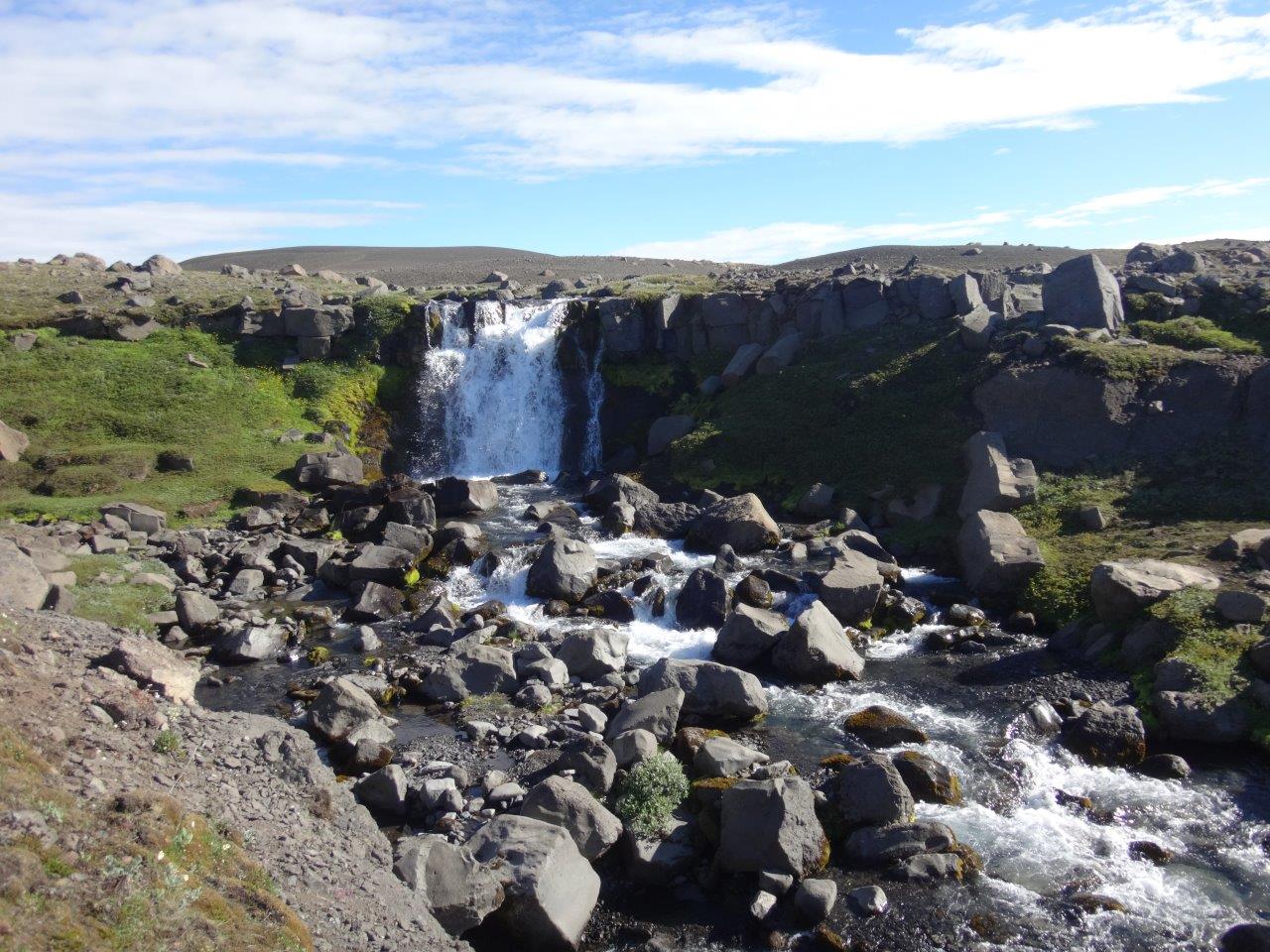
I saw my last waterfall for a while
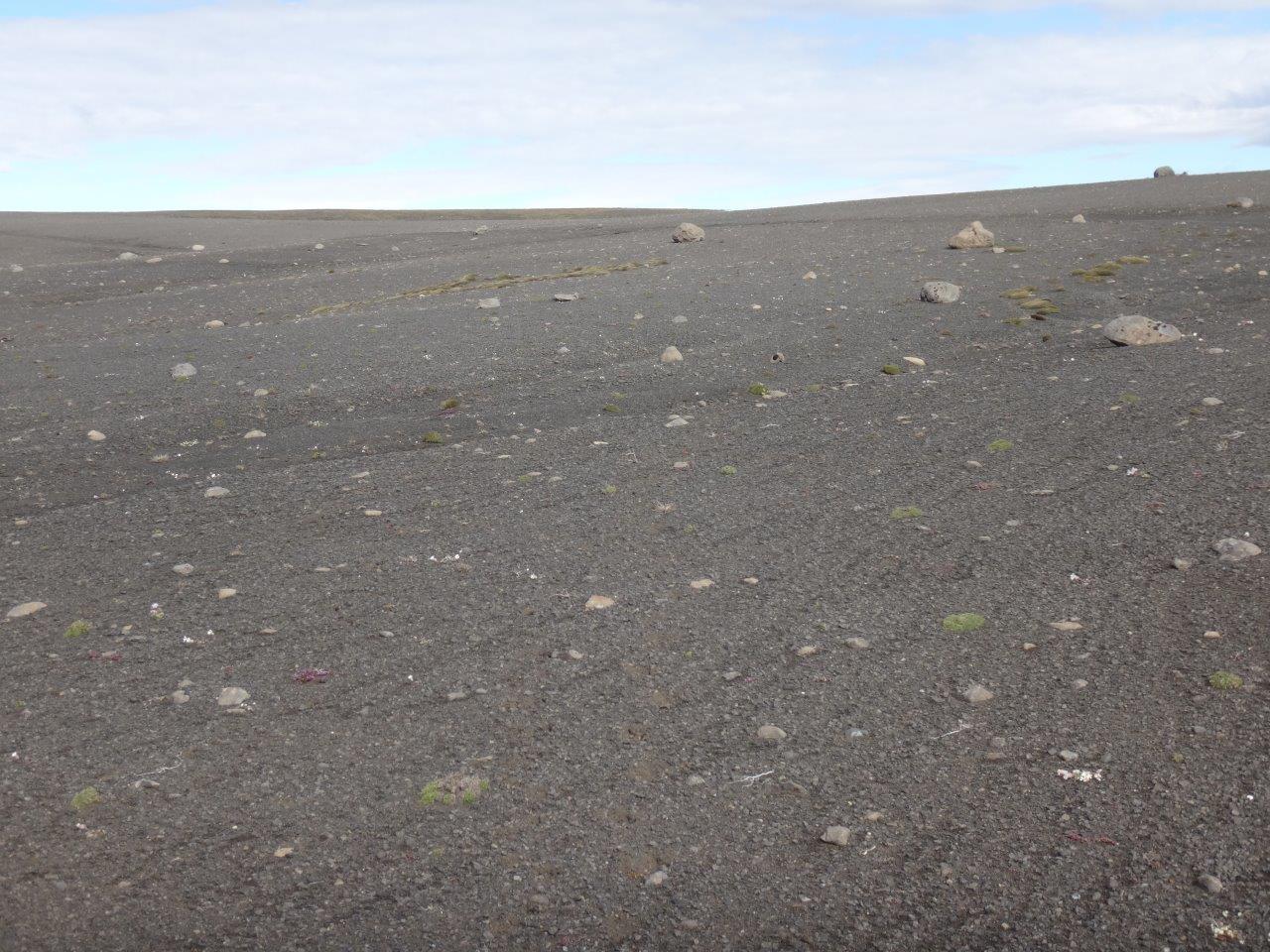
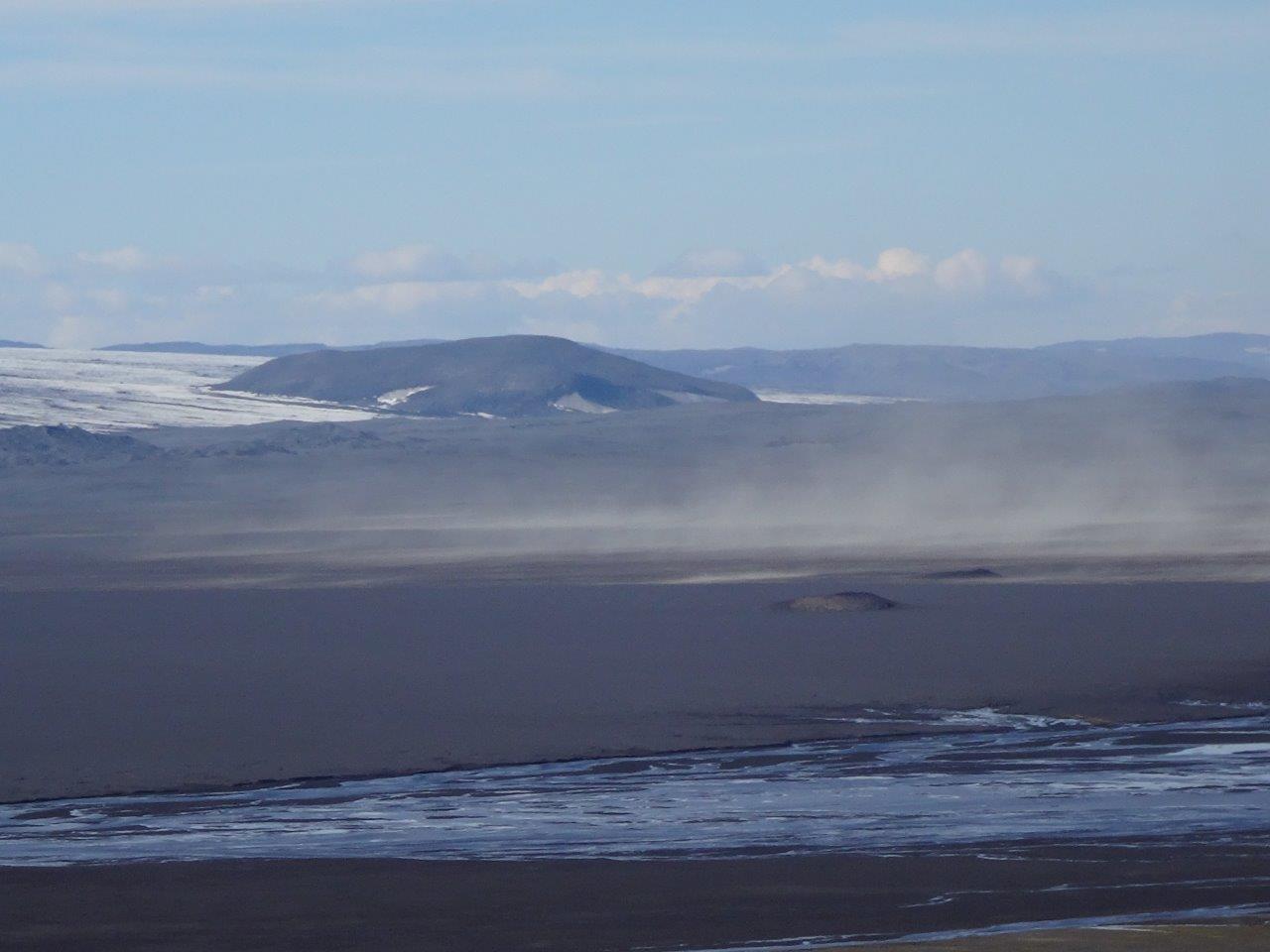
and walked into the endless sand
with a valley on one side
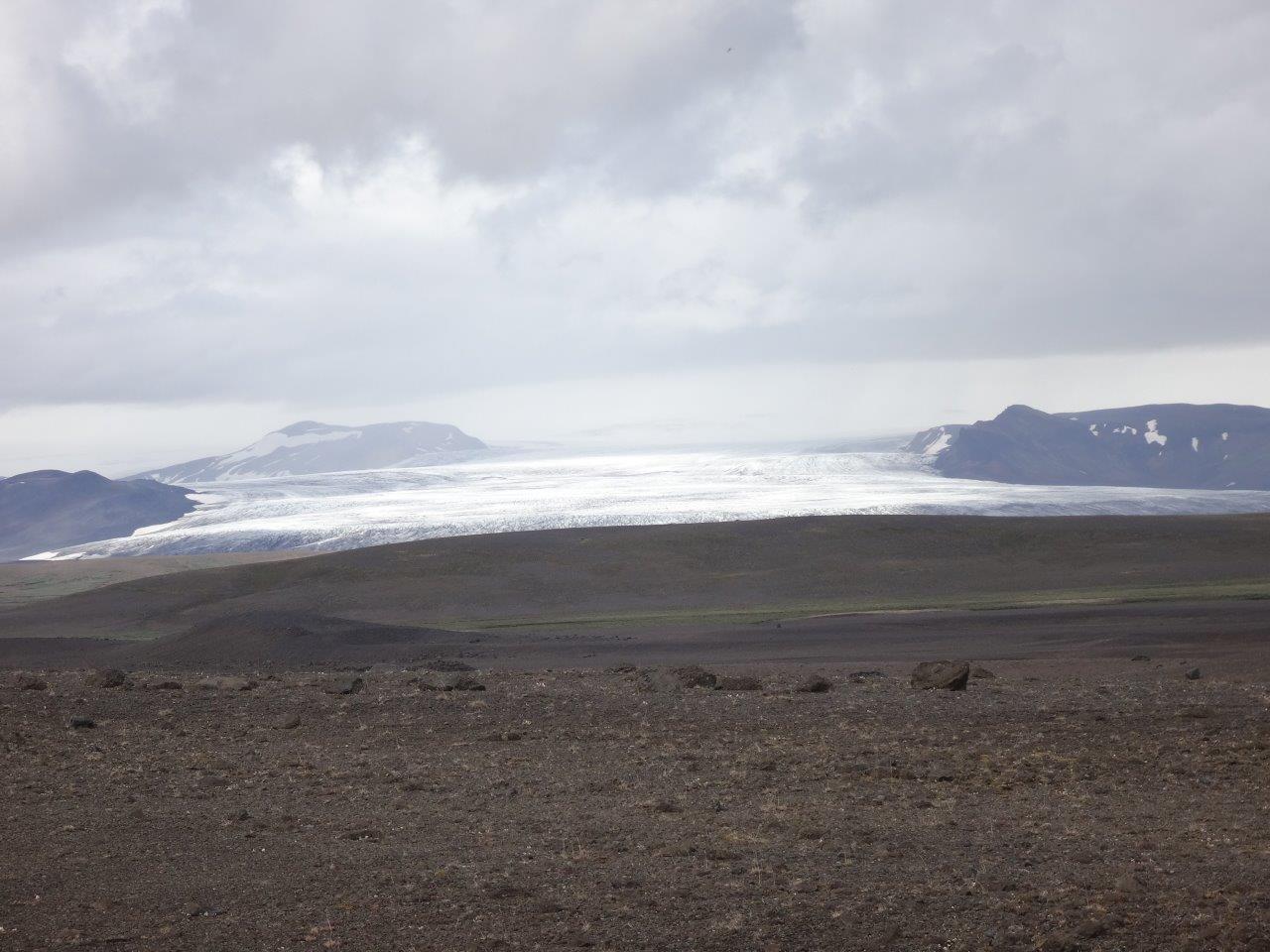
and the Hofsjökull (temple) glacier on the other side
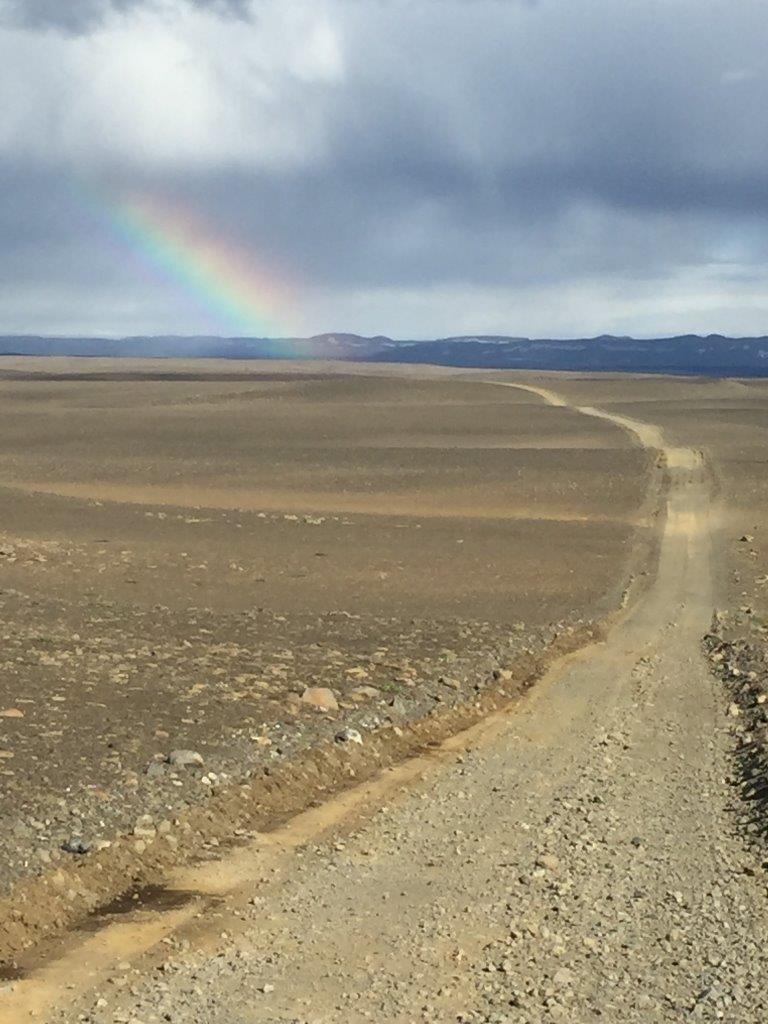
While walking my own yellow brick road I saw a rainbow. Where the road met the rainbow I found my treasure in the form of water and saw a river otter with a little fish it just caught. For the rest of my trek across Iceland the song “Somewhere over the Rainbow” from the Wizard of Oz was constantly in my head. However hard the going got, that song got me through.
The next day I kept walking along the glacier
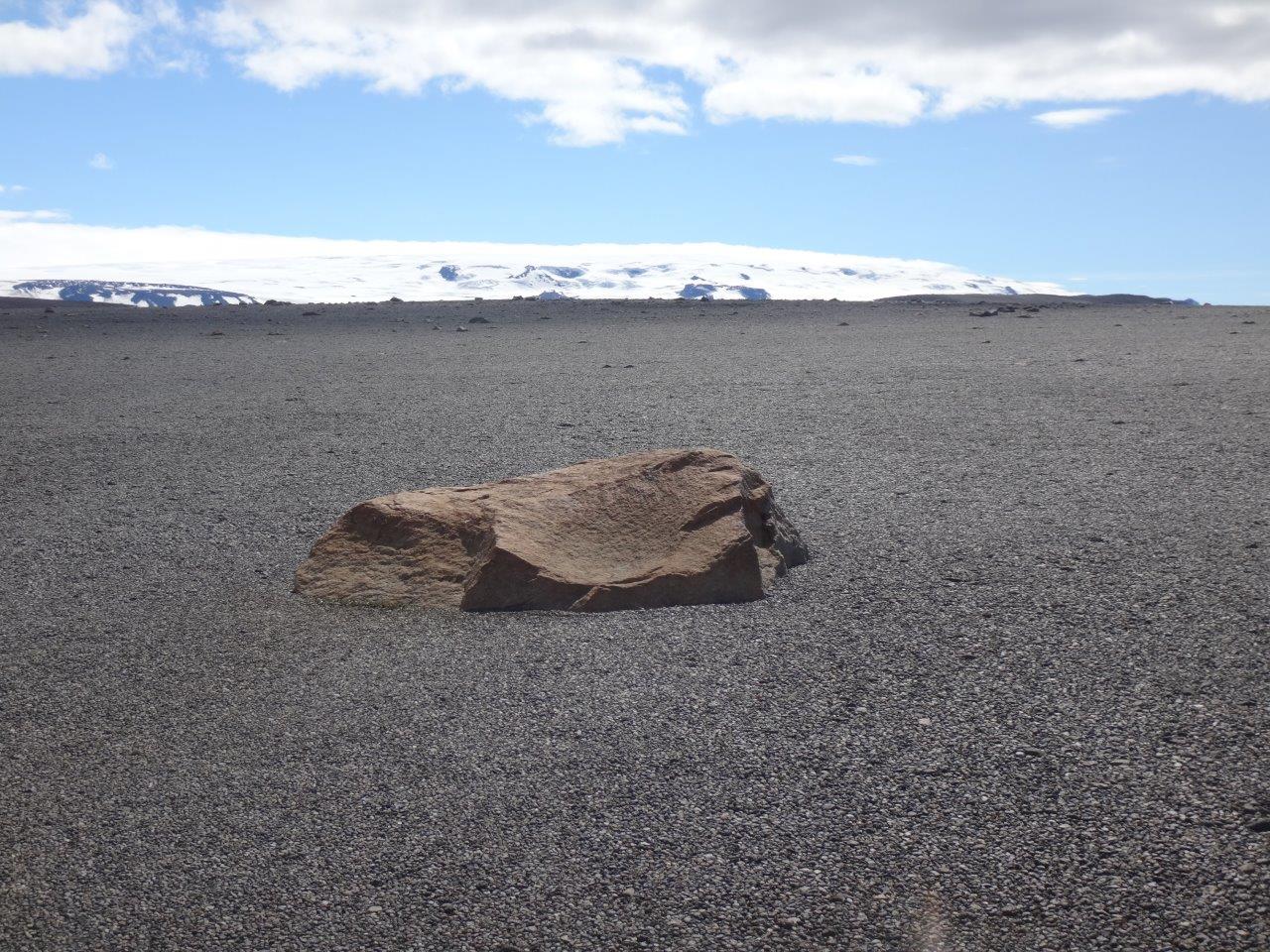
and used the occasional boulder as a windbreak for lunch.
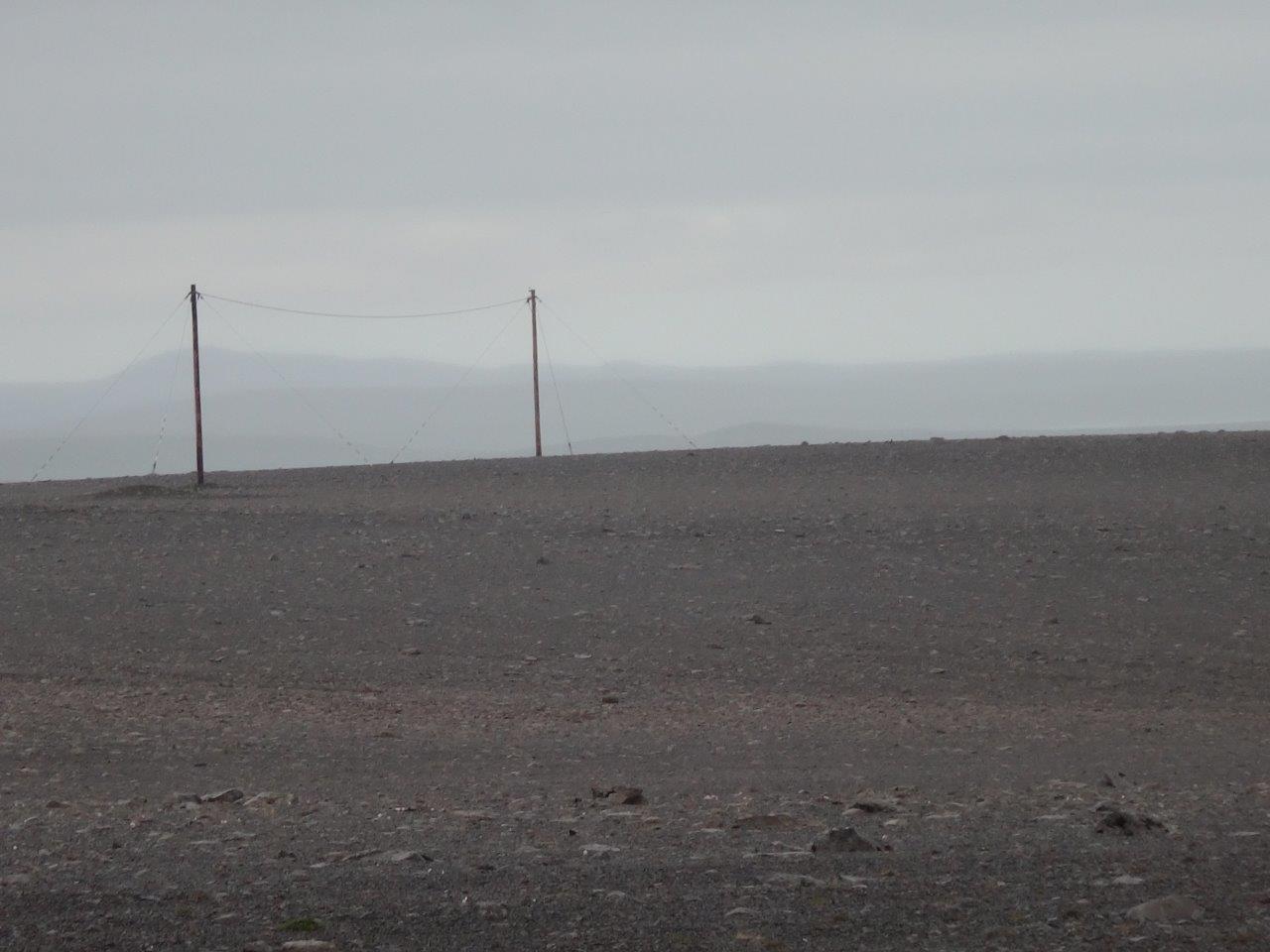
Along the way I found a volley ball field for trolls (does anyone know what these two 20 feet high metal posts in the middle of the desert might be for?)
and saw one car that had dared to venture out there.
Eventually I came by a little oasis with an emergency shelter and a stunning view of the glacier. I decided to stay in the hut instead of my tent.
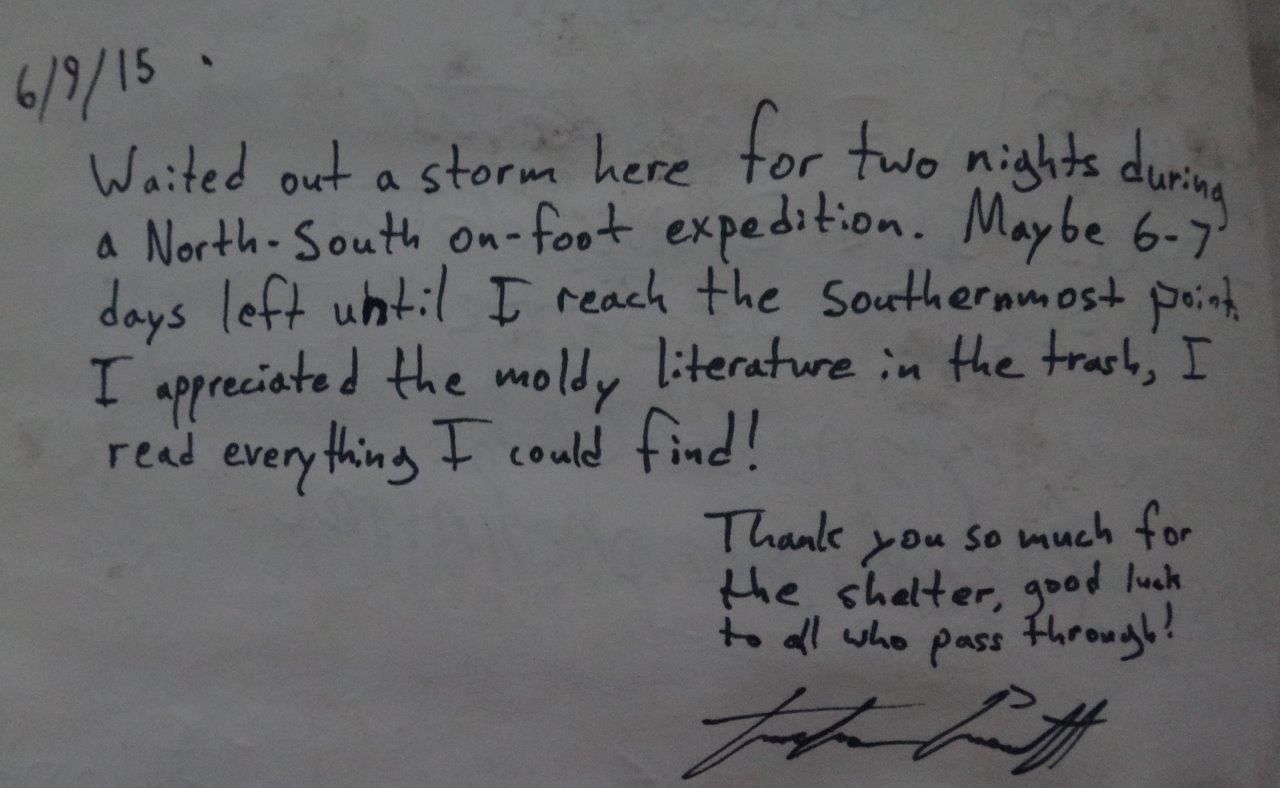
The guest book reached back until 1983 and I read the entries with interest. The last person before me visited roughly a year ago to wait out a storm for two days. I took a photo of the entry.
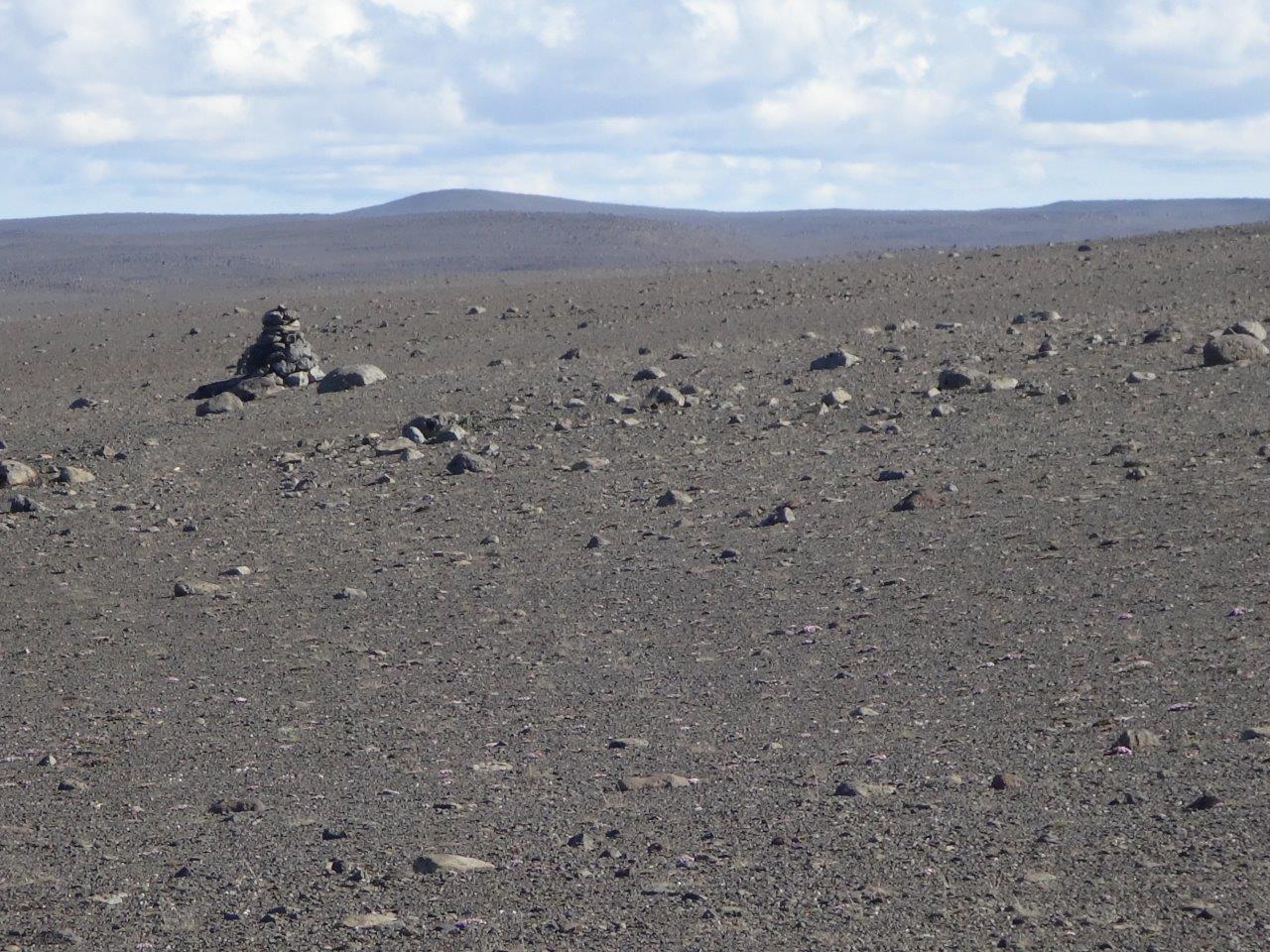
Following the cairns through the desert
with a constant view on the glacier
I made it after three days through the desert to Nyidalur (new valley) a little oasis in the desert with a hut.
The two wardens were a delight. They were friendly and very interested in my hike. Many other wardens I encountered were only interested to collect 500 ISK for using the restroom, 500 ISK for charging a phone, 500 ISK for using the kitchen, etc. These wardens set down with me, gave me a hot chocolate, looked at my photos and finally advised me to change my route. Their advice to leave the sand trail and go cross-country through the mountains over the Vonarskarð mountain pass that marks the watershed between North and South Iceland made for a fantastic evening and next day.
ON TO ASKJA
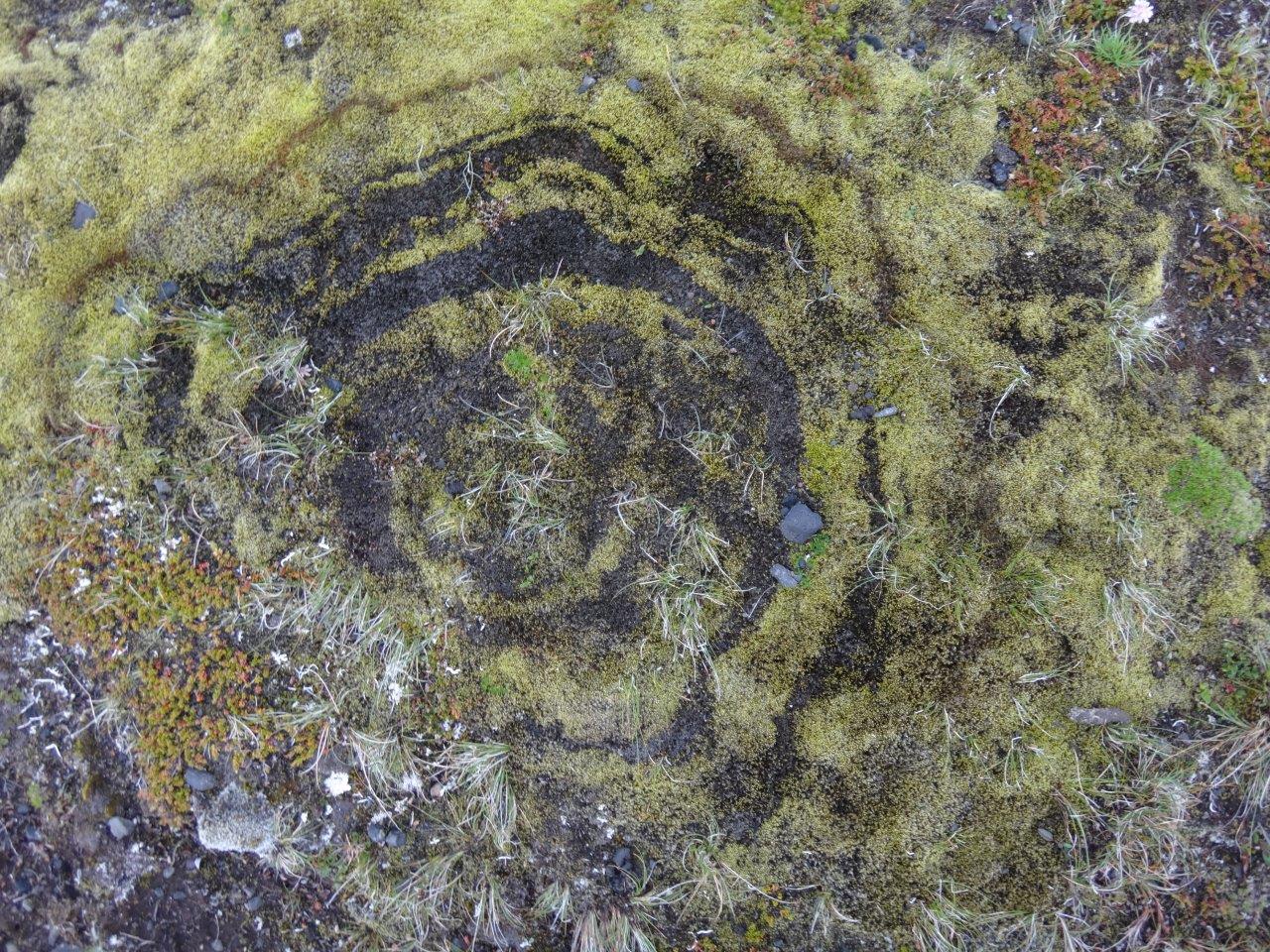
Right when leaving Nyidalur I saw a witch’s ring
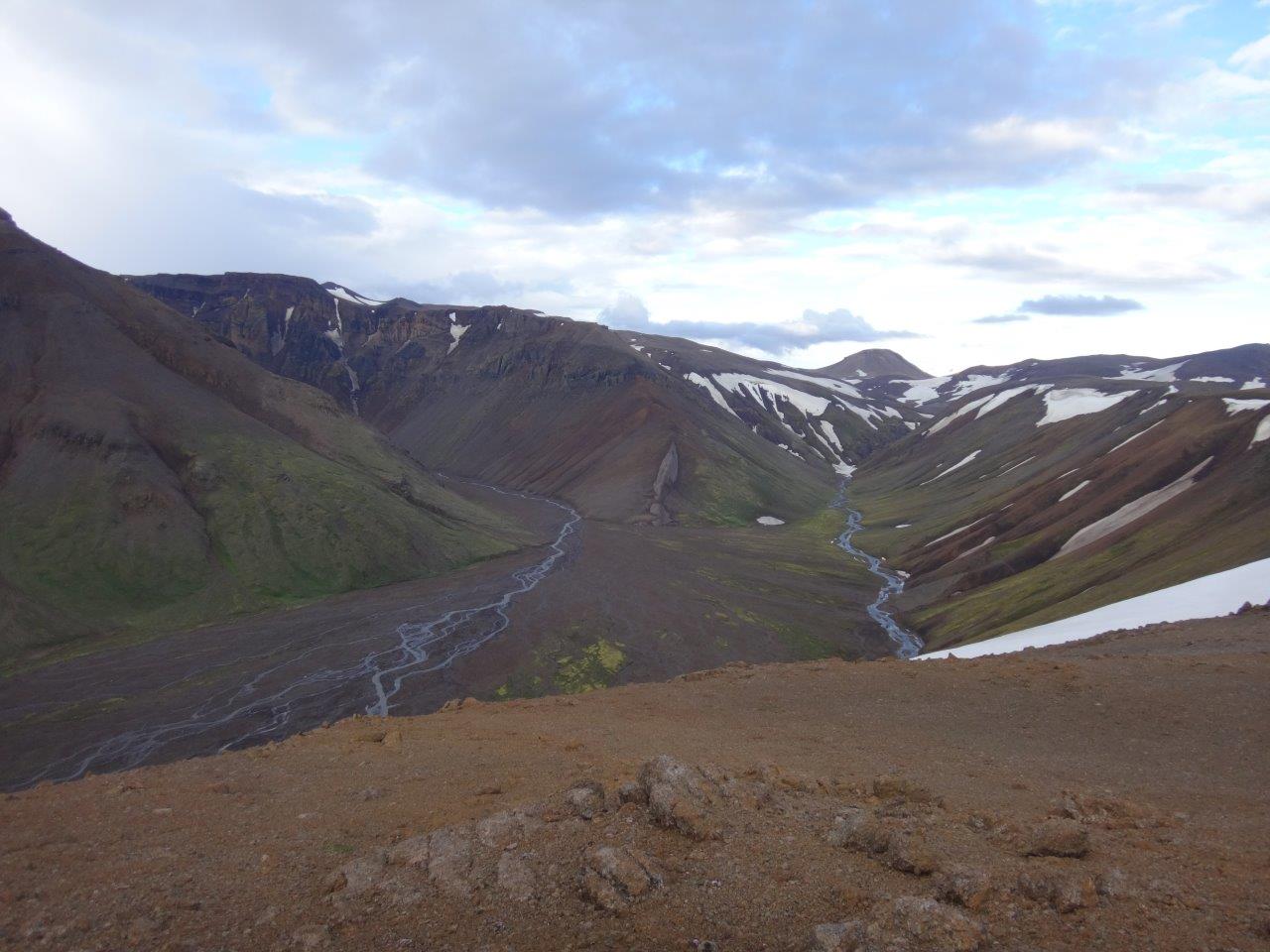
when I started climbing up into the hills
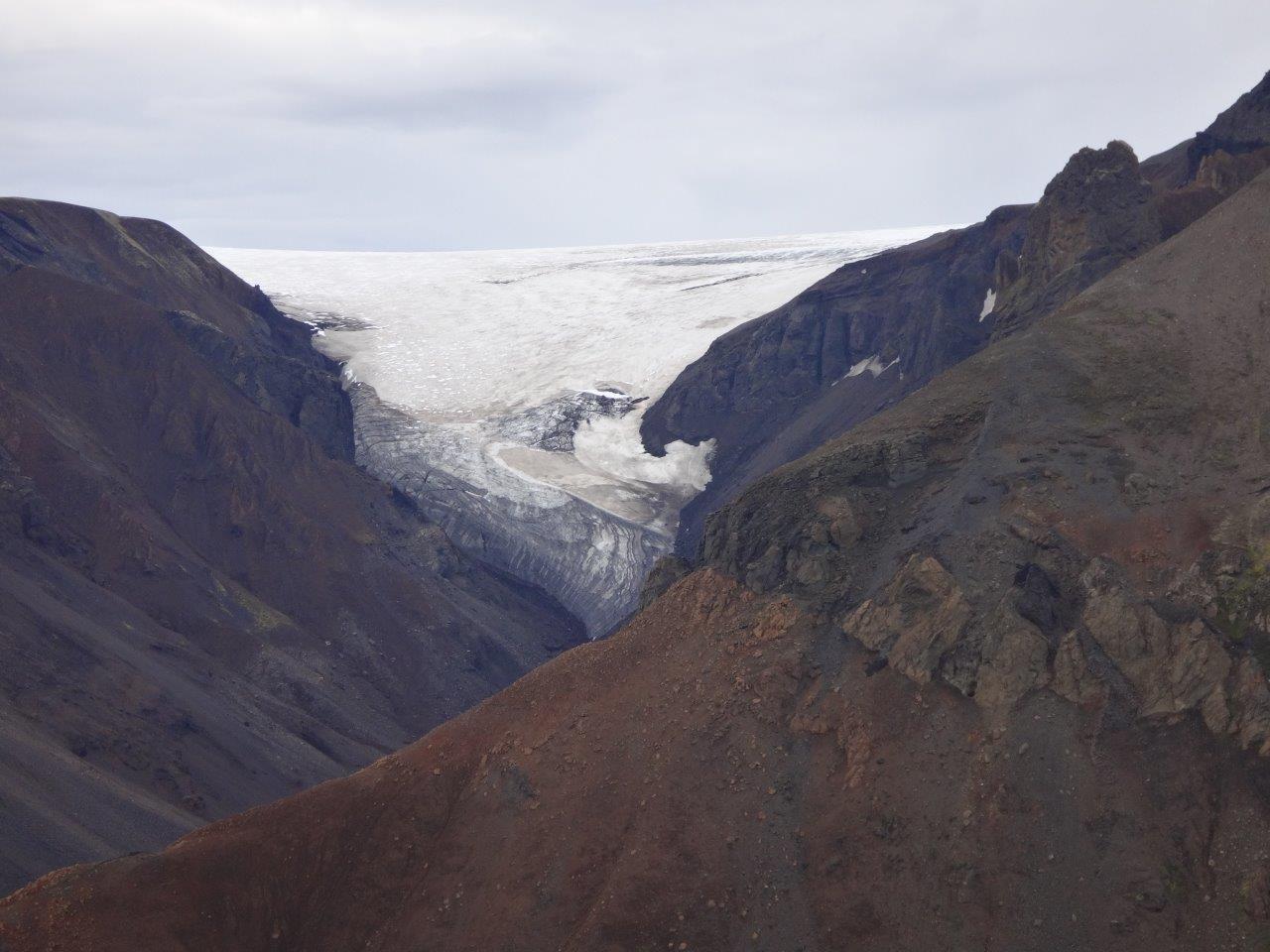
where I eventually saw the Tungnafellsjökull glacier.
At last I camped with a beautiful view of the Bárðarbunga which is part of the Vatnajökull (water glacier)
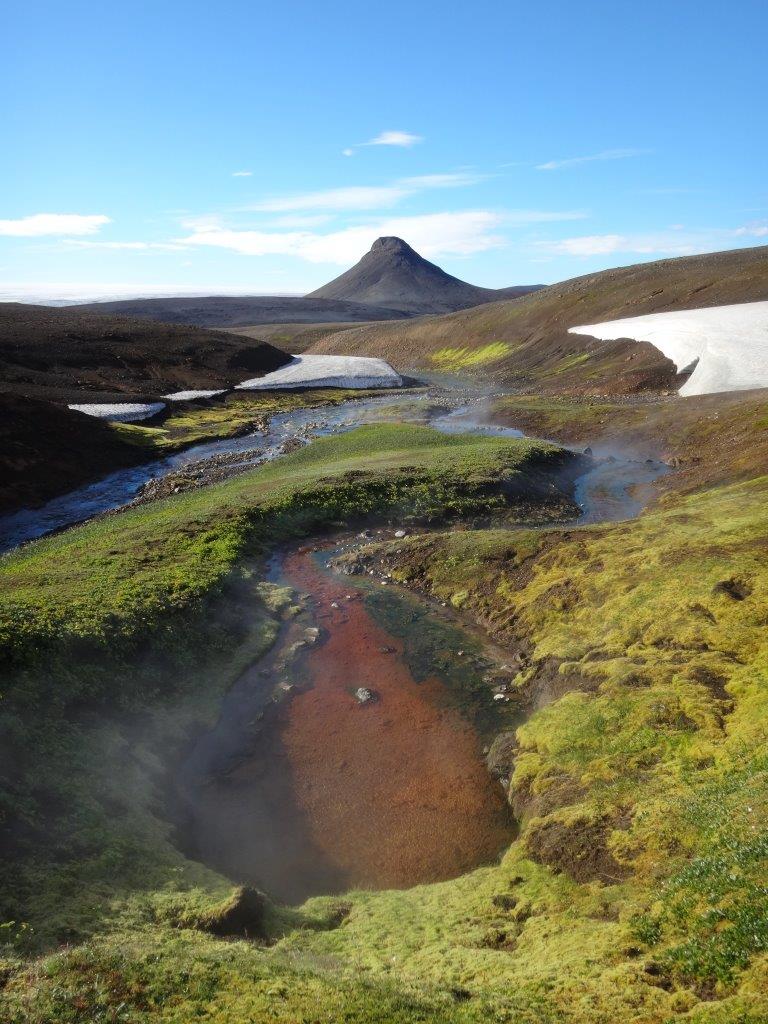
The next morning I had a splendid time at the Snapadalur hot springs that came in all kinds of temperatures.
Once I came off the mountain back into the desert blowing sand became again a constant companion.
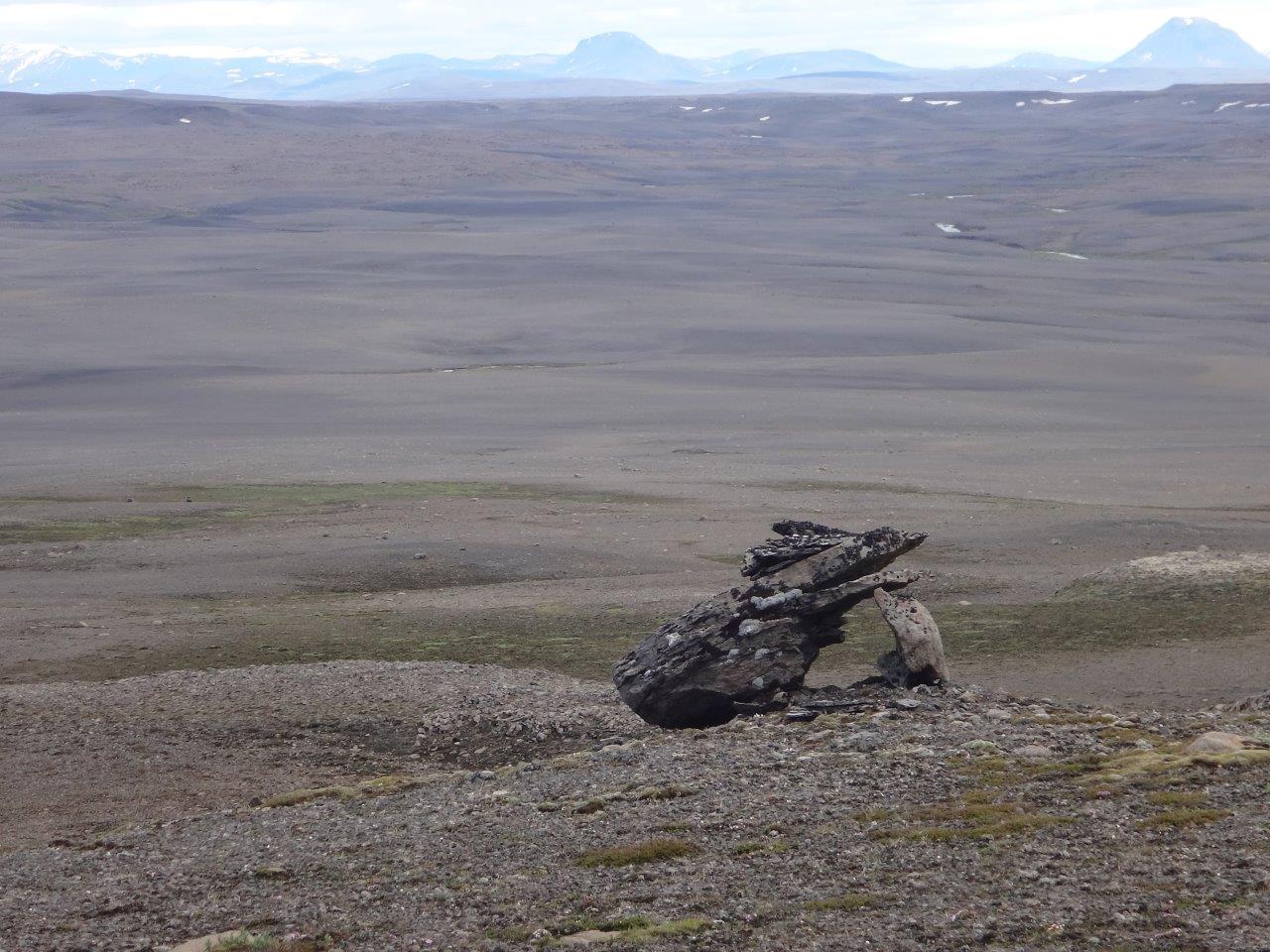
It’s amazing how exciting a single rock can be in otherwise pretty monotonous desert.
After crossing the River Skjálfandafljót near this waterfall
I had to load water for the next 39 miles without any water source. Here I pre-cooked my dinner for that night and decided to walk another 11 miles – for a total of 35 miles that day – to the Kistufell emergency shelter.
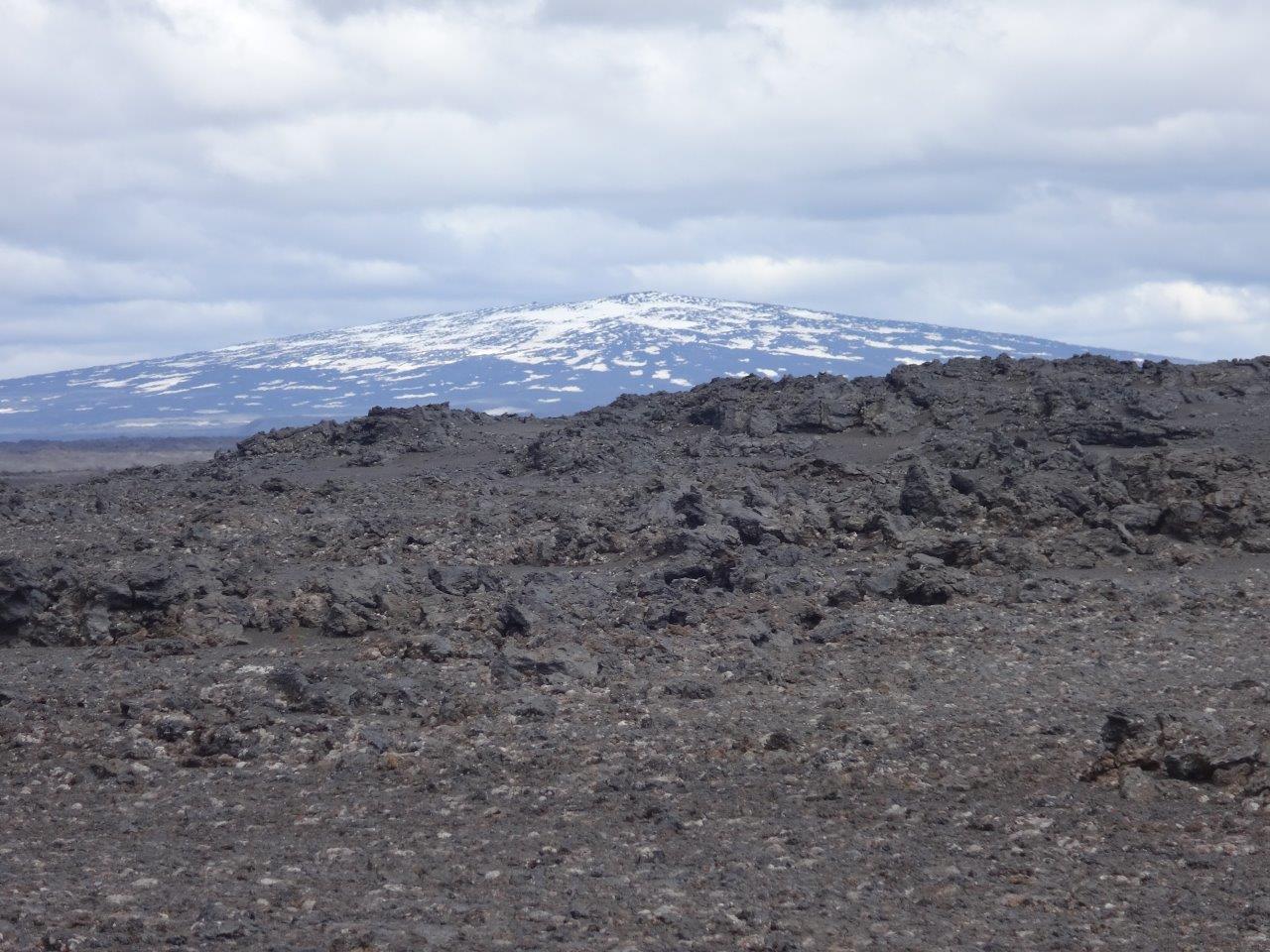
The walk went by lava fields,
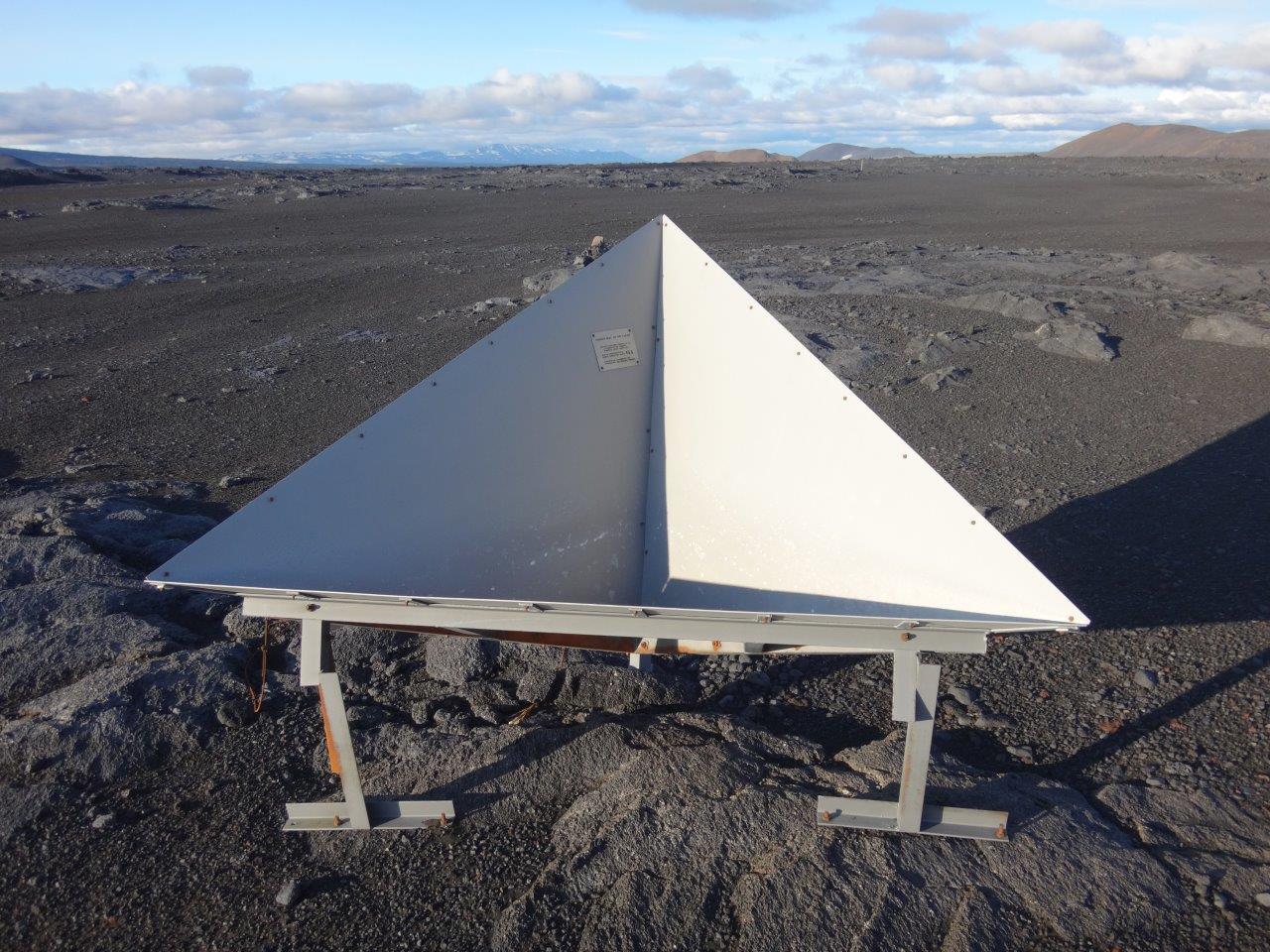
passed interesting radar reflection points for the ESA Envisat satellite,
and brought me through interesting terrain
to the Kistufell emergency shelter.
The next morning I was glad I made the decision to push to the emergency shelter as it had started to snow during the morning.
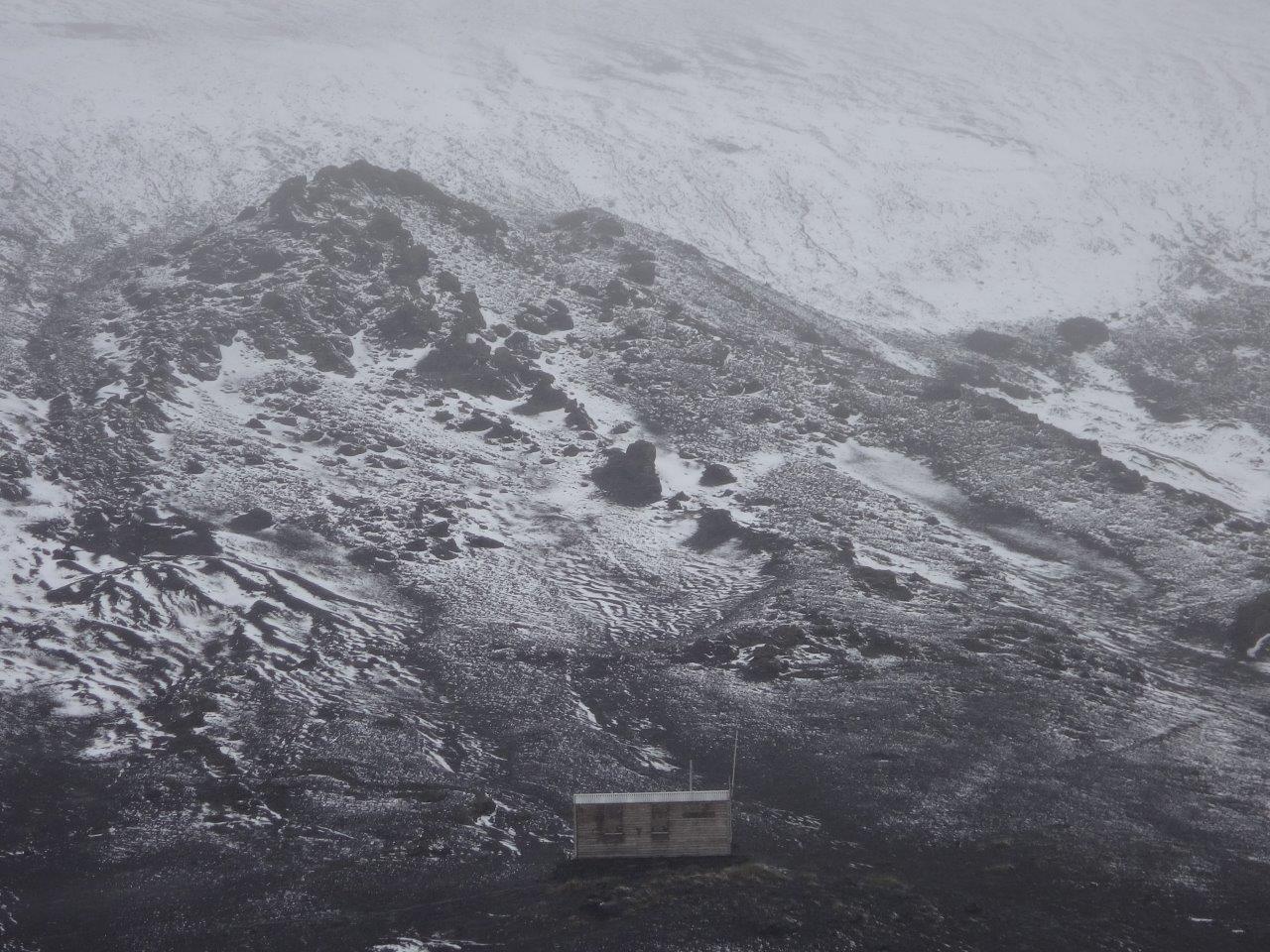
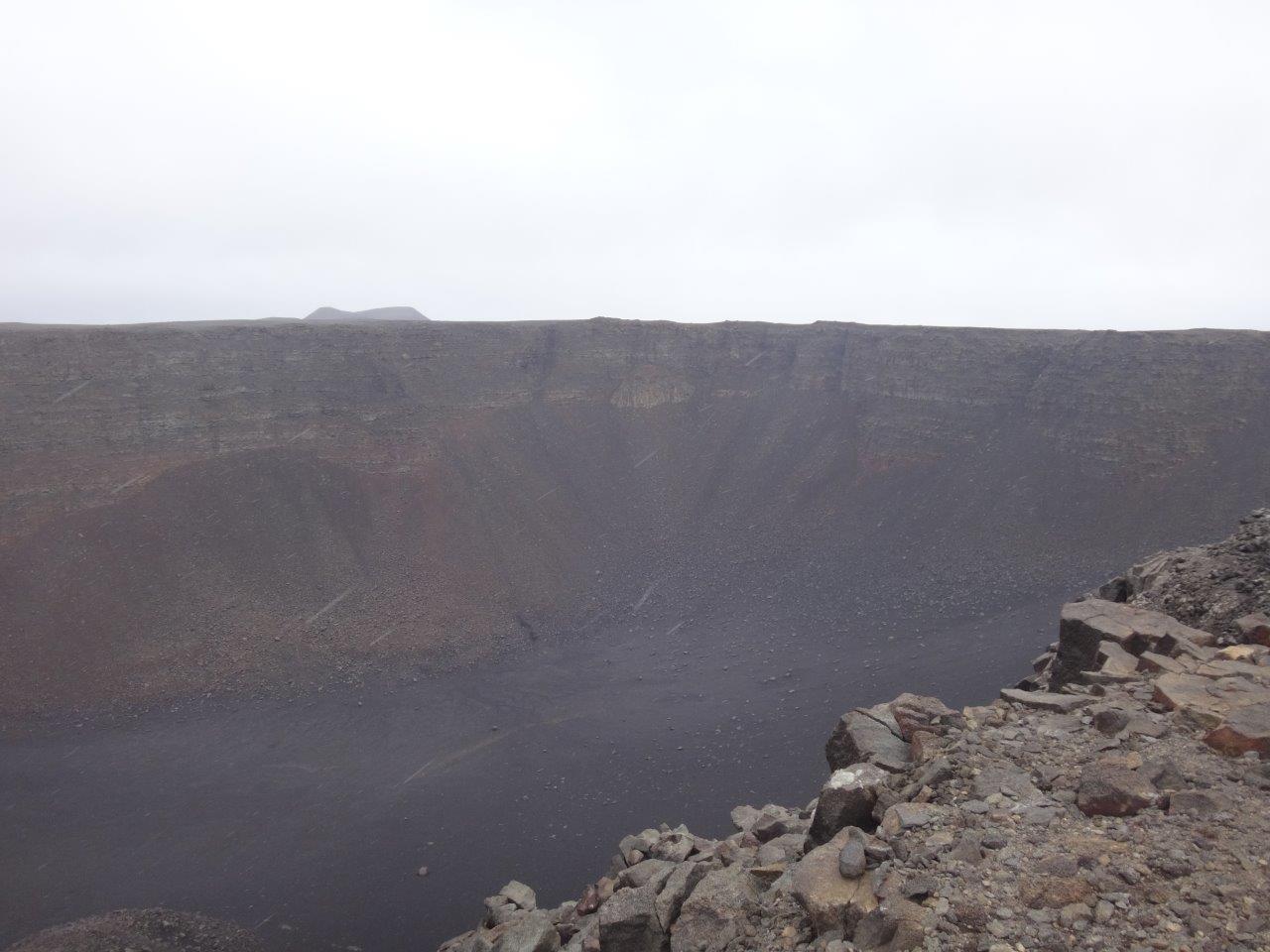
When I passed by Urdarhals I looked into its almost 300 feet deep cauldron.
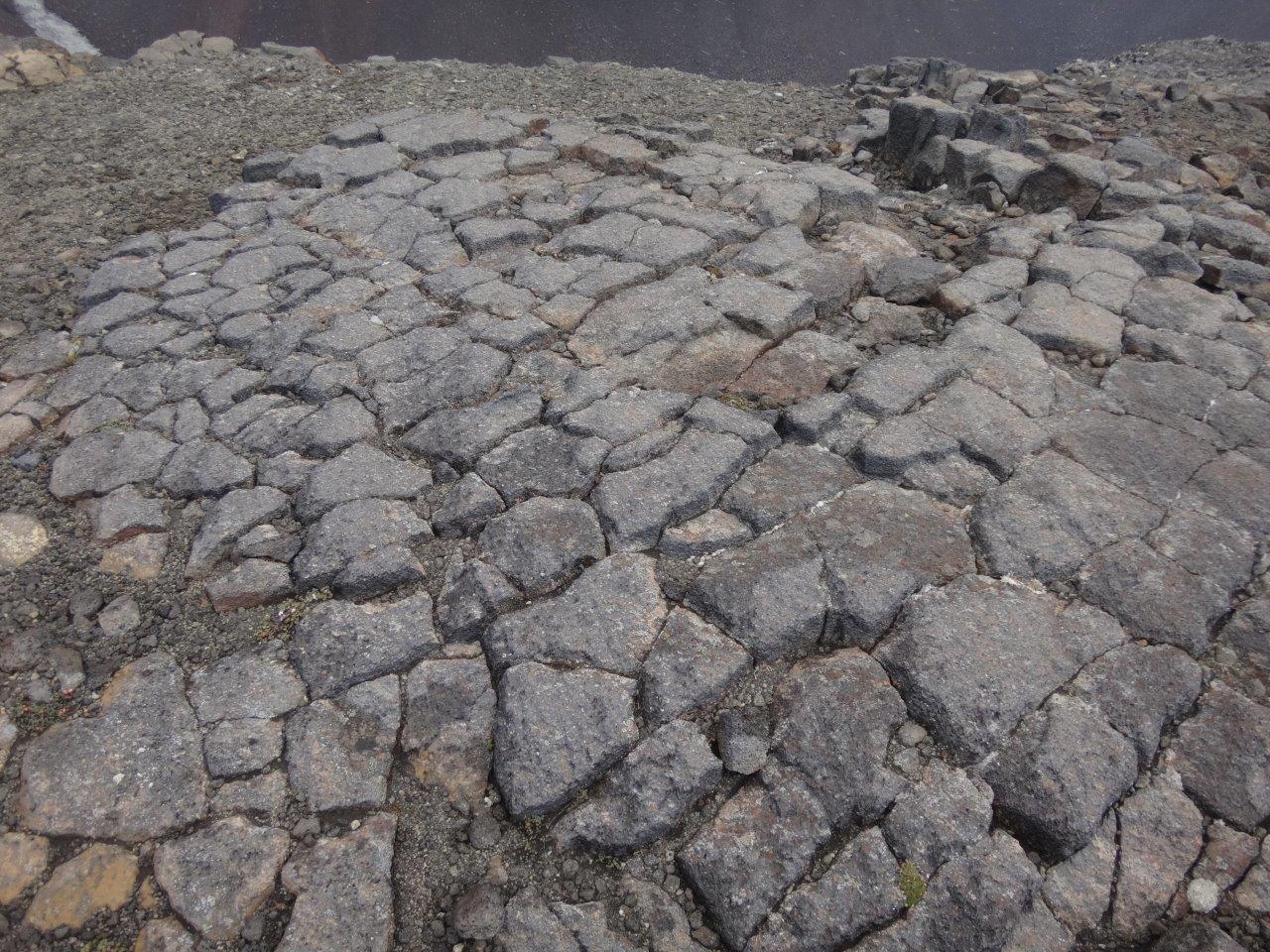
and continued on what appeared to be a cobble stone road
into the sand where sand and snow were driving across the plain.
That day I walked 28 miles through sand with lava rocks
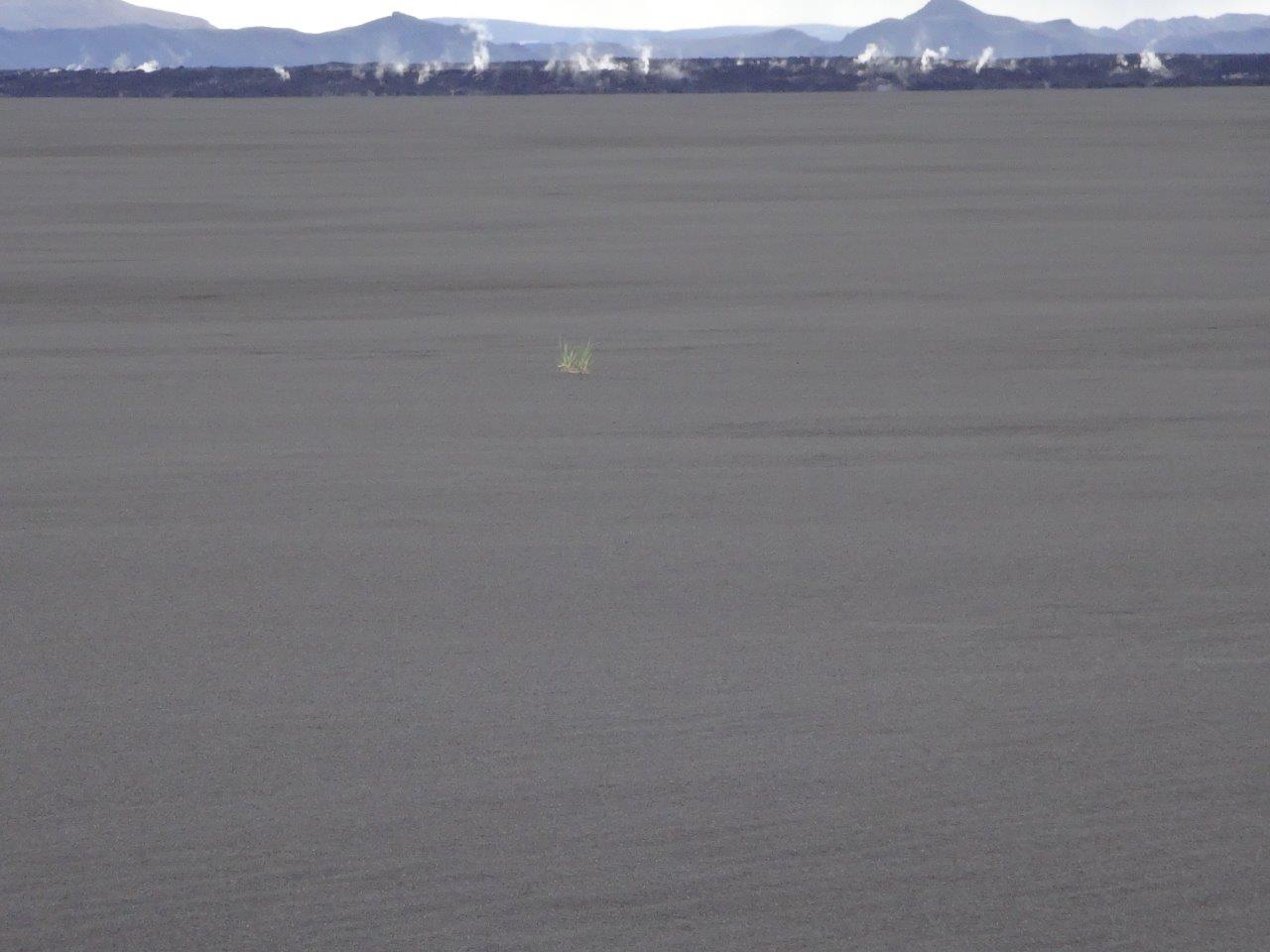
and followed mostly the outskirts of the 2014 Holuhraun eruption, which created a lava field the size of Manhattan Island. Can you guess what excited me more in this picture? The steaming lava or the single bushel of grass in the sand?
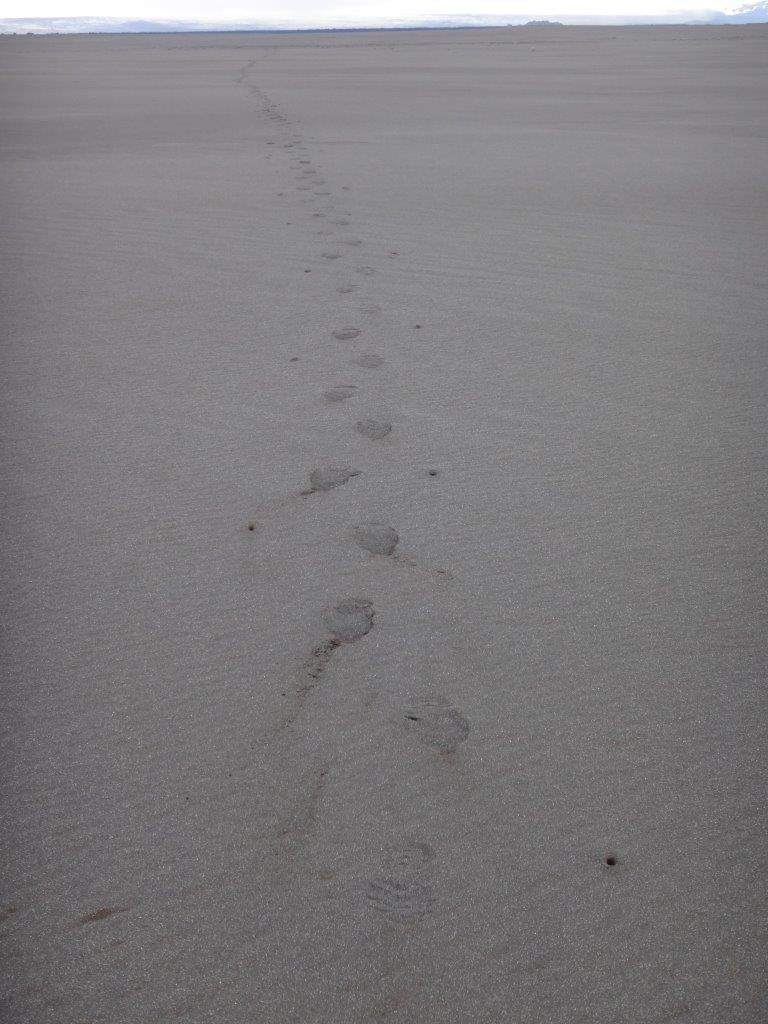
Looking back at my steps in the sand and you might get a better idea of what excited me.
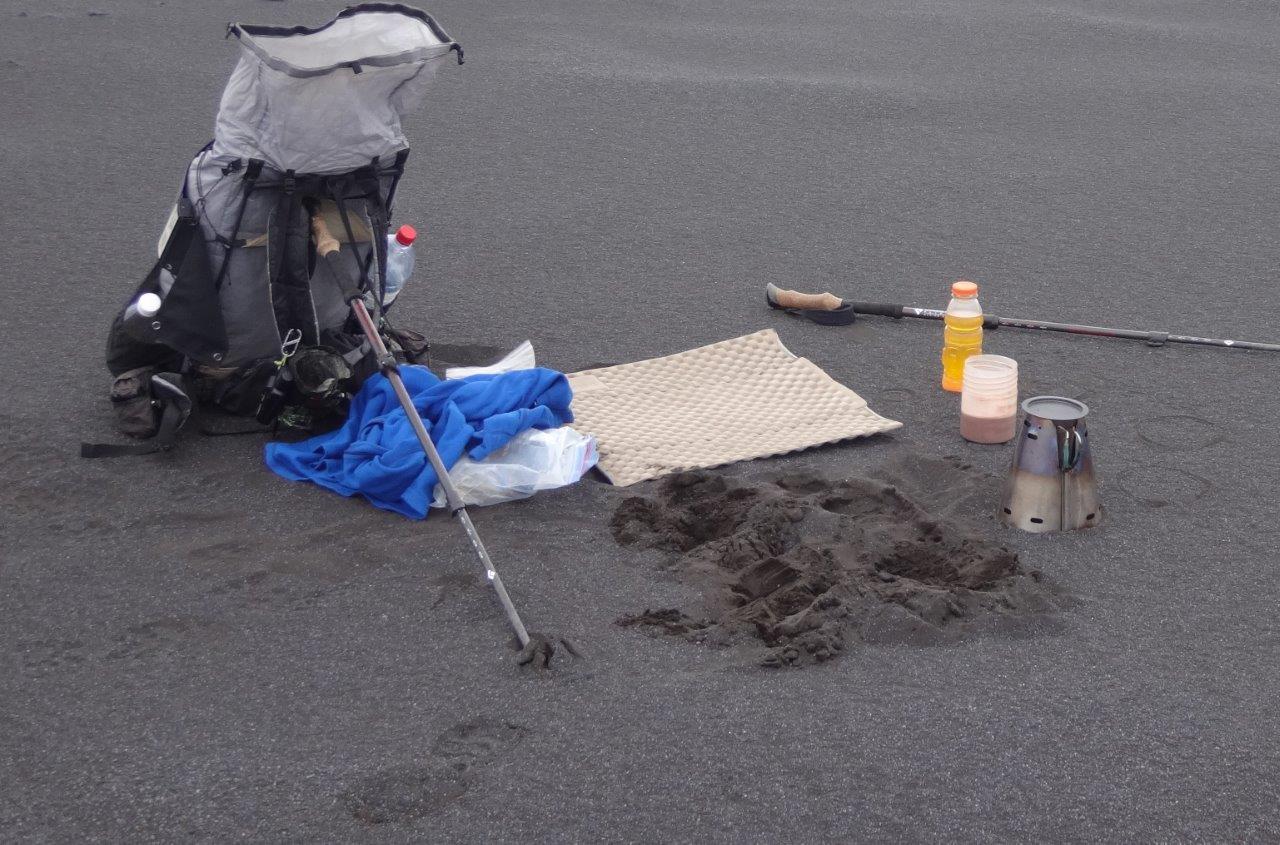
There was otherwise just sand and my lunch break looked like this
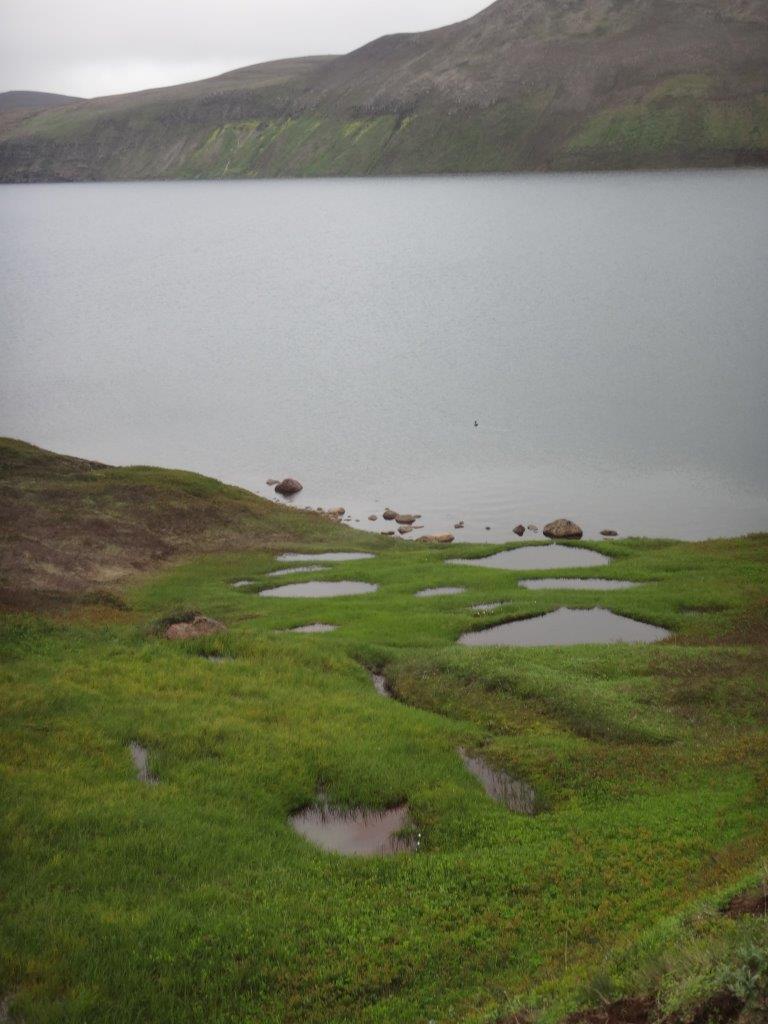
Finally I reached the next water source, the Lake Dyngjuvatn where my campsite looked like this
The next morning I visited Drekagil (Dragon Canyon)
and enjoyed great views of Herðubreið (broad shouldered)
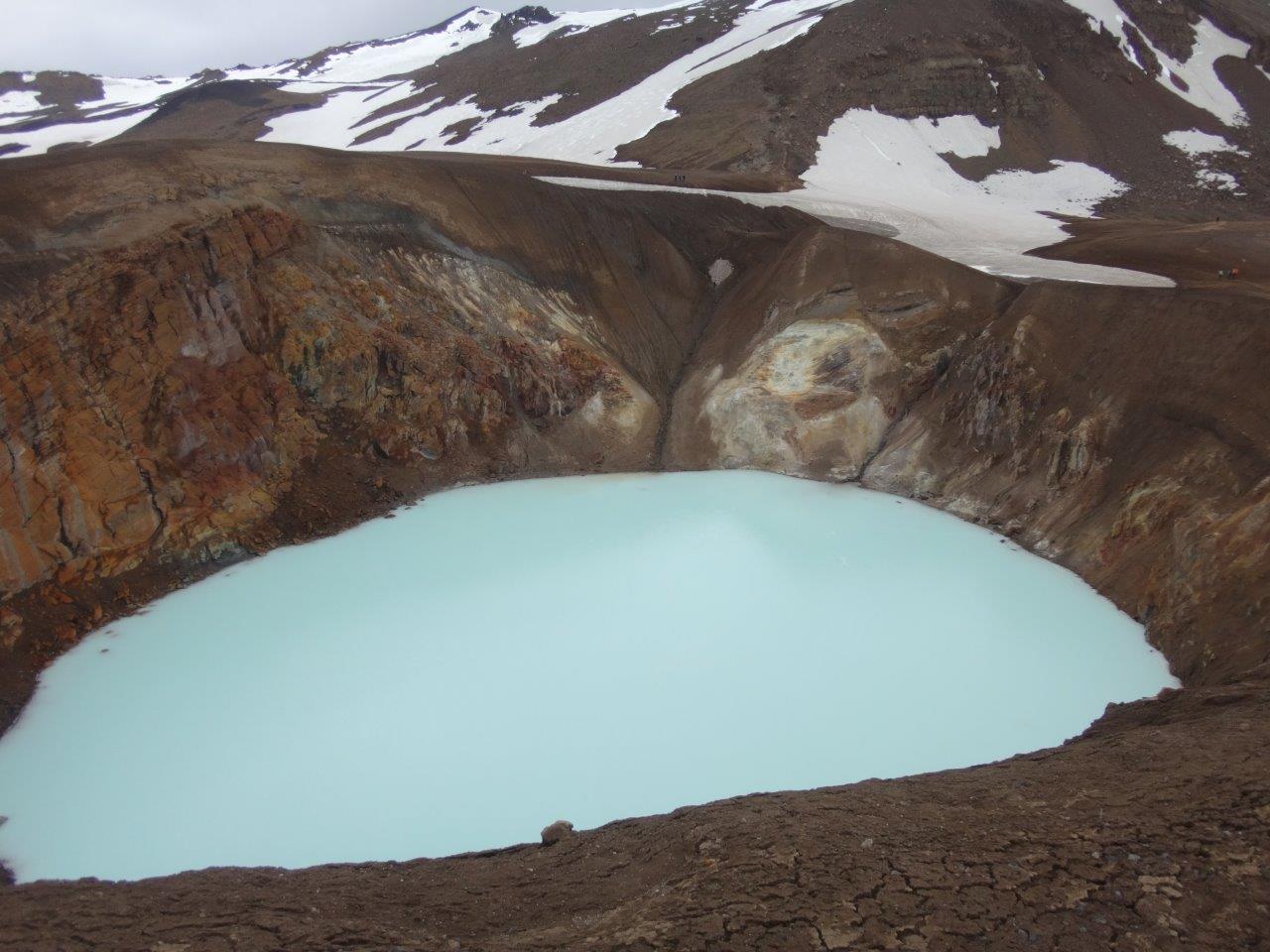
while hiking to Askja (caldera) a huge caldera with two lakes in it.
Öskjuvatn (Lake of Askja)
and Viti (hell)
ON TO MYVATN
I had now crossed most of the desert landscape. From here I wanted to go to Mývatn (lake of midges). That required me to cross the Dyngjufjöll mountains. The side I was on was covered in snow and it was snowing while I walked up the mountain
To my surprise and relief it was snow free on the other side and looked like this
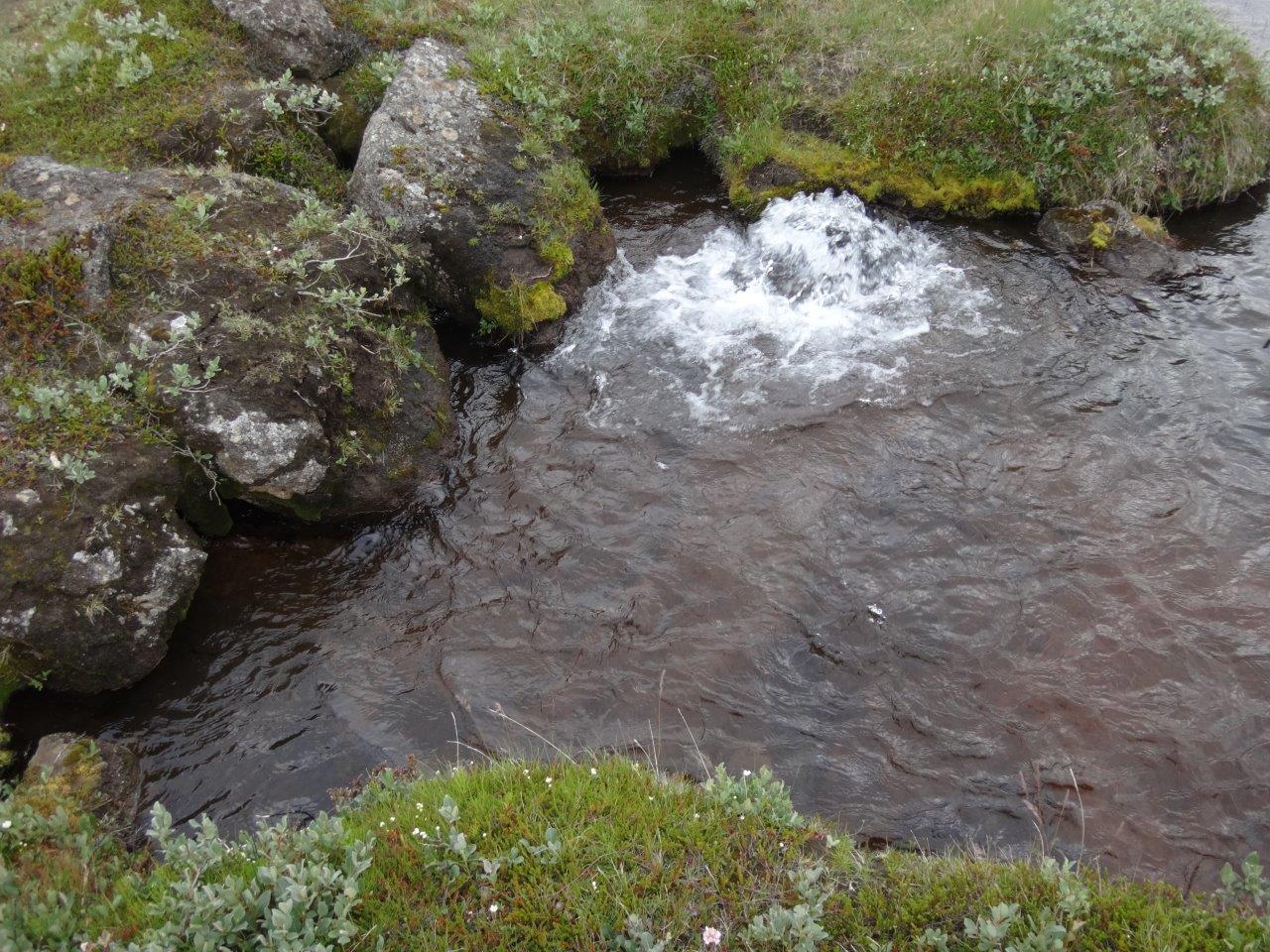
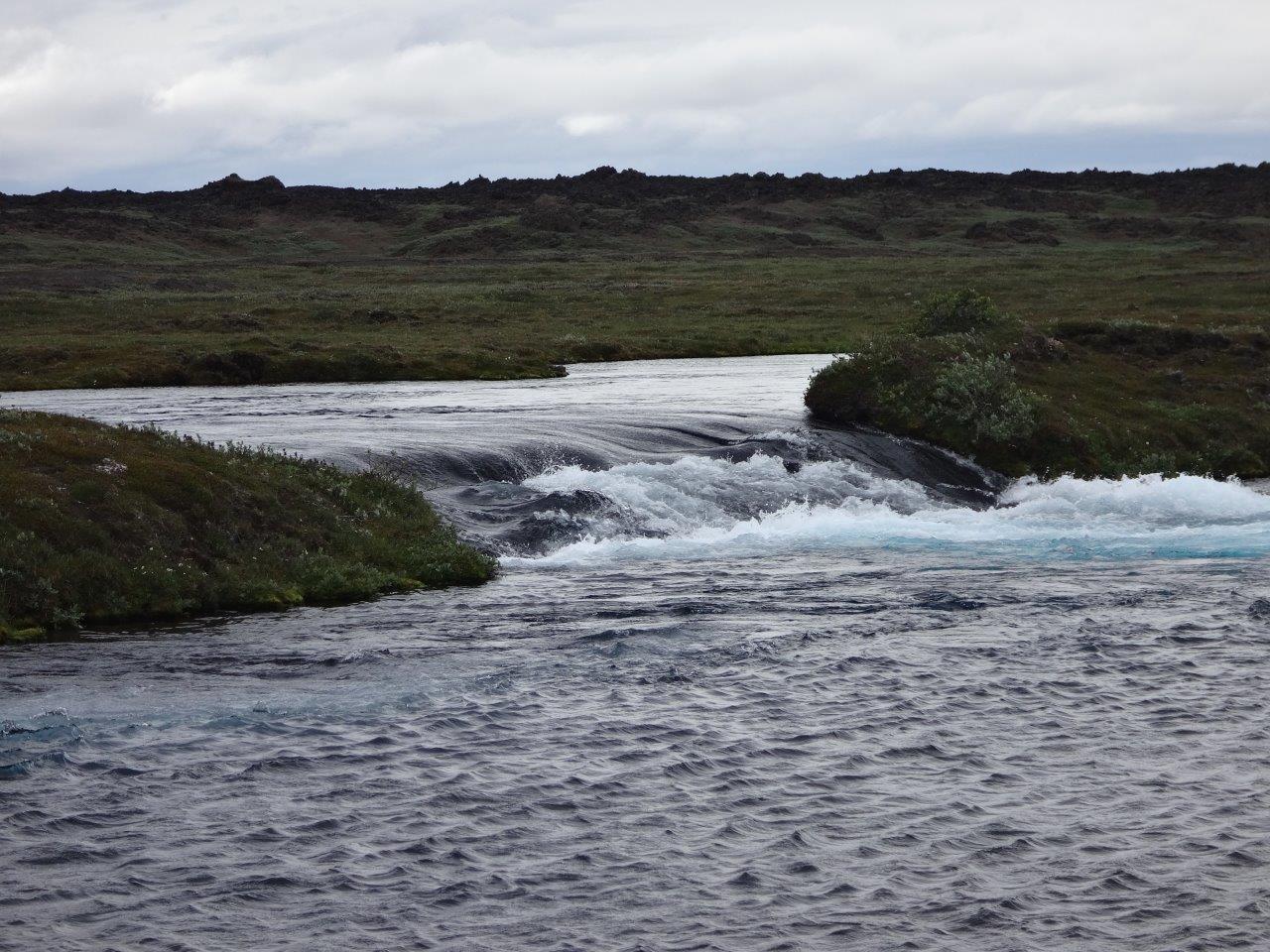
The next morning I passed the origin of the Suðurá river. It was impressive to see the water come out of the ground
and form right away an impressive river that was fed by multiple springs coming out of the ground everywhere
Once I reached Mývatn
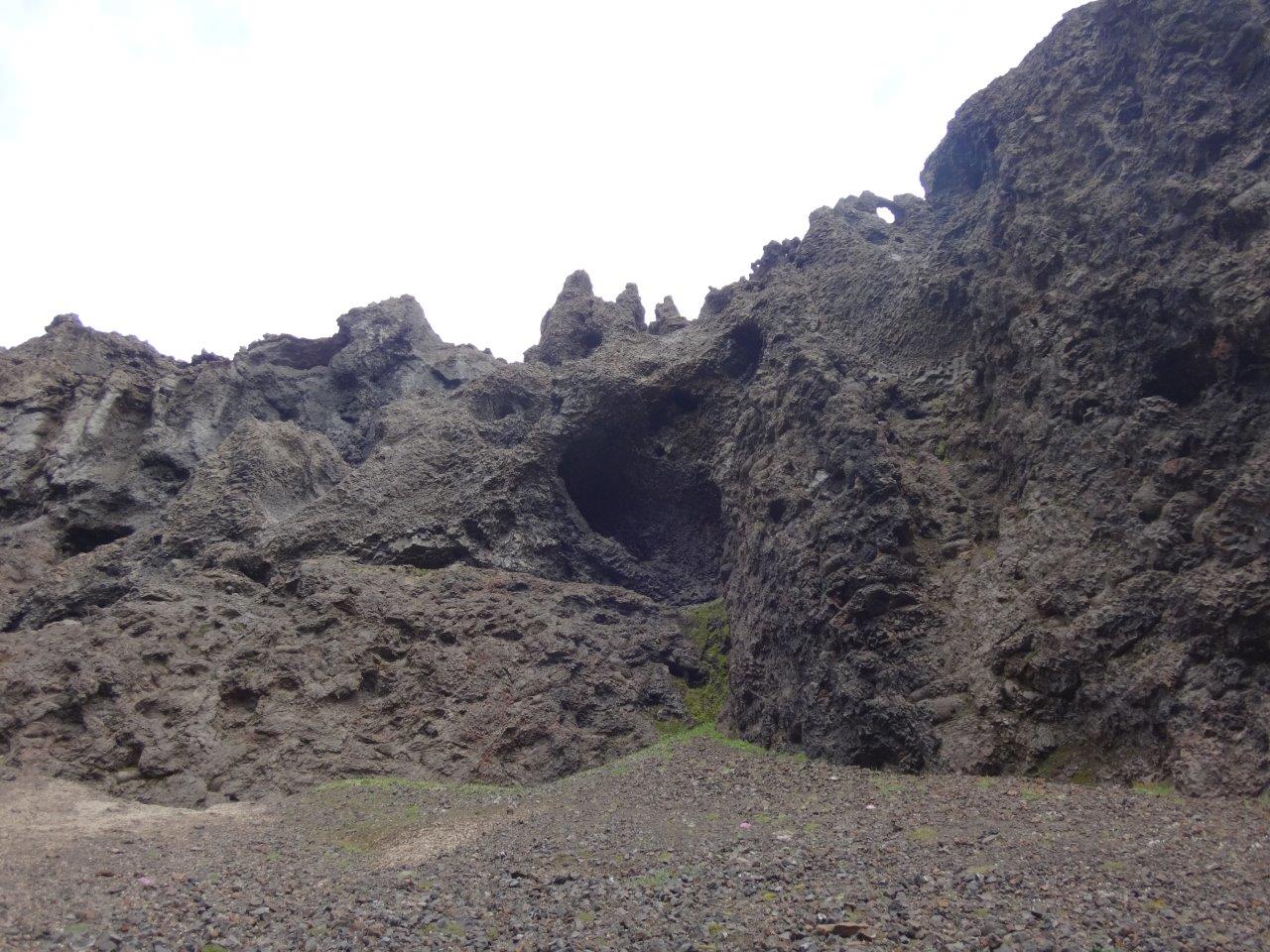
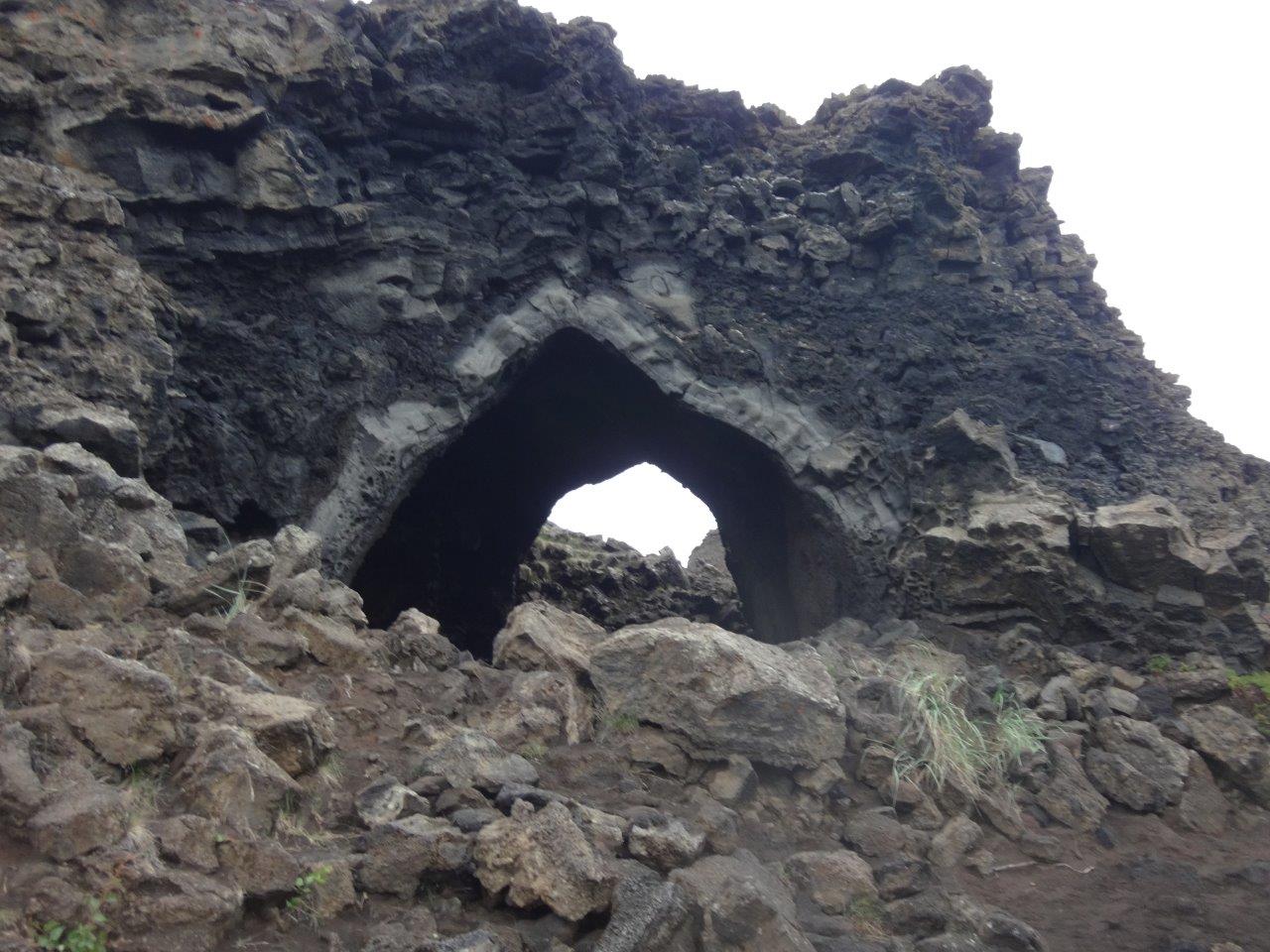
I wandered through Dimmuborgir (dark castles) an area with many lava tubes
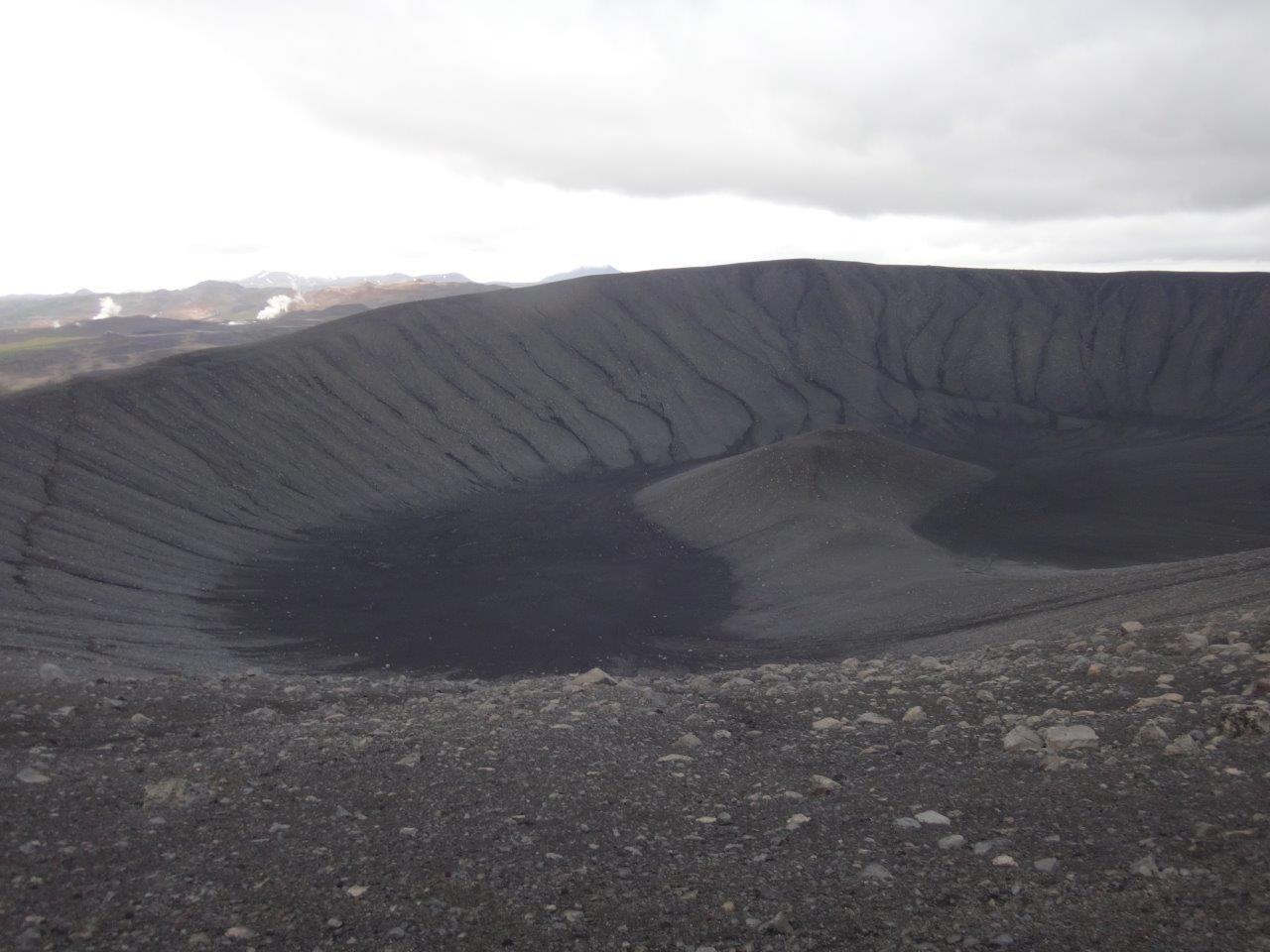
climbed Hverfjall
and visited the Grjótagjá cave with its hot spring inside that creates a pool of 110 F water inside the cave.
ON TO DETTIFOSS
Walking by the Leirhnjúkur (clay hill) lava fields
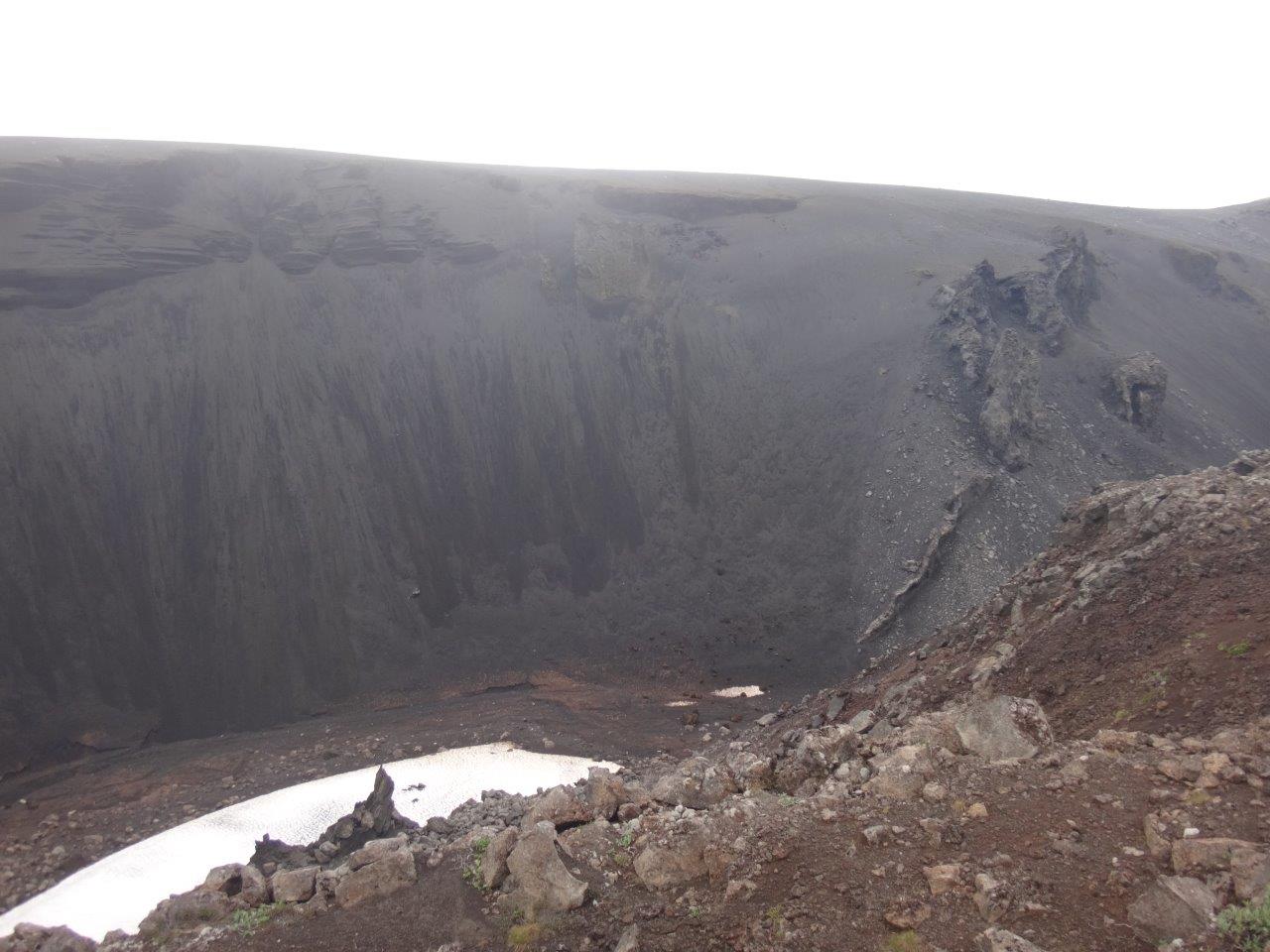
I visited the geothermal area and climbed on the rim and to the bottom of the 1984 volcano.
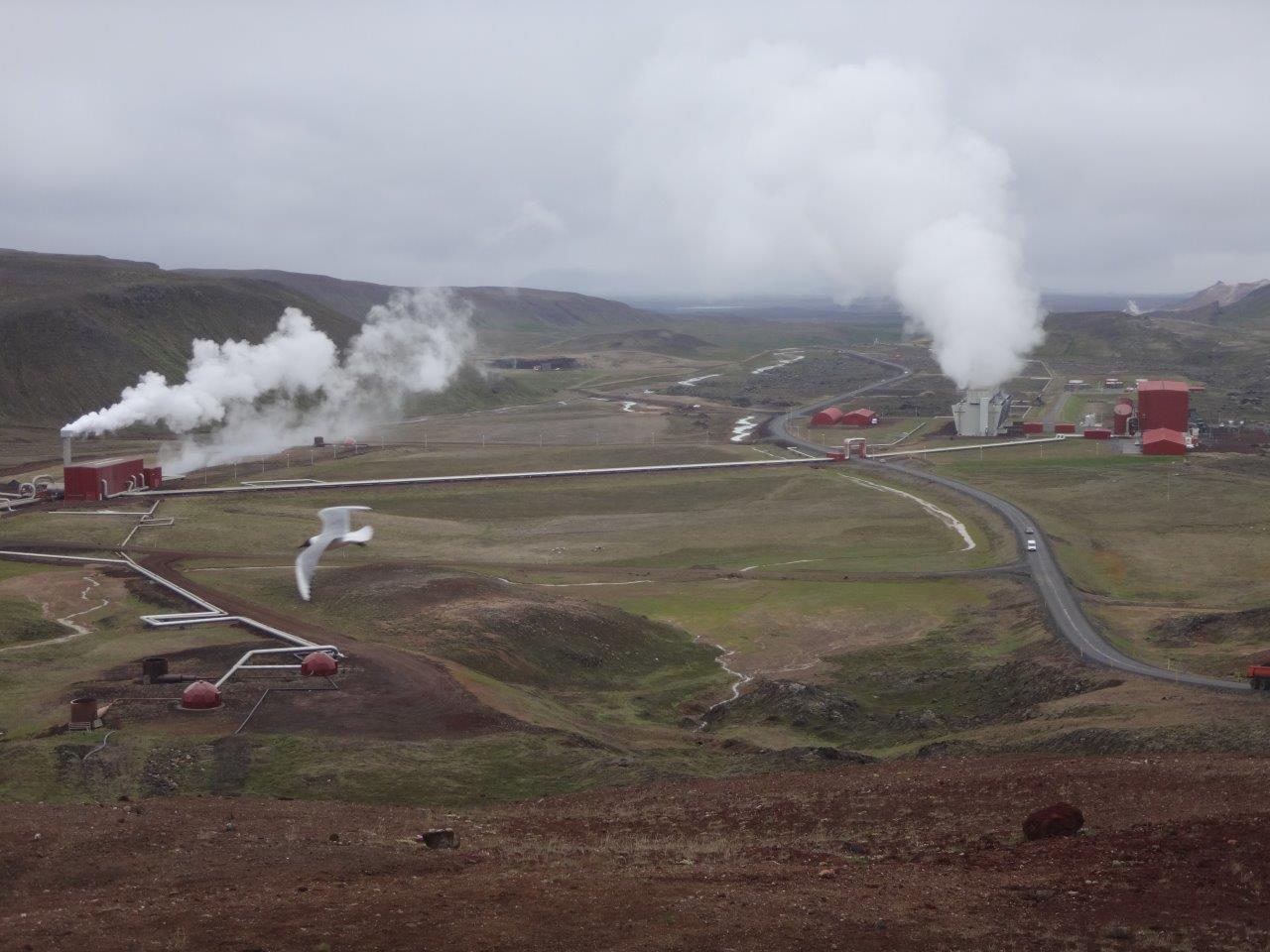
Later I passed the Krafla geothermal power plant which produces 500 GWh of electricity annually simply from the hot steam from the ground.
Krafla has the other well known Viti (hell) crater with a very similar water color to the one in Askja.
After passing Eilisvatn
I made camp in a flat spot before reaching Dettifoss.
On my way to Dettifoss I heard several cars coming for miles with a really deep loud sound. These four old Bentleys were quite the sight and sound when coming by.
The main attractions were of course the waterfalls of the Jökulsá á Fjöllum (glacial river in the mountains)
Selfoss,
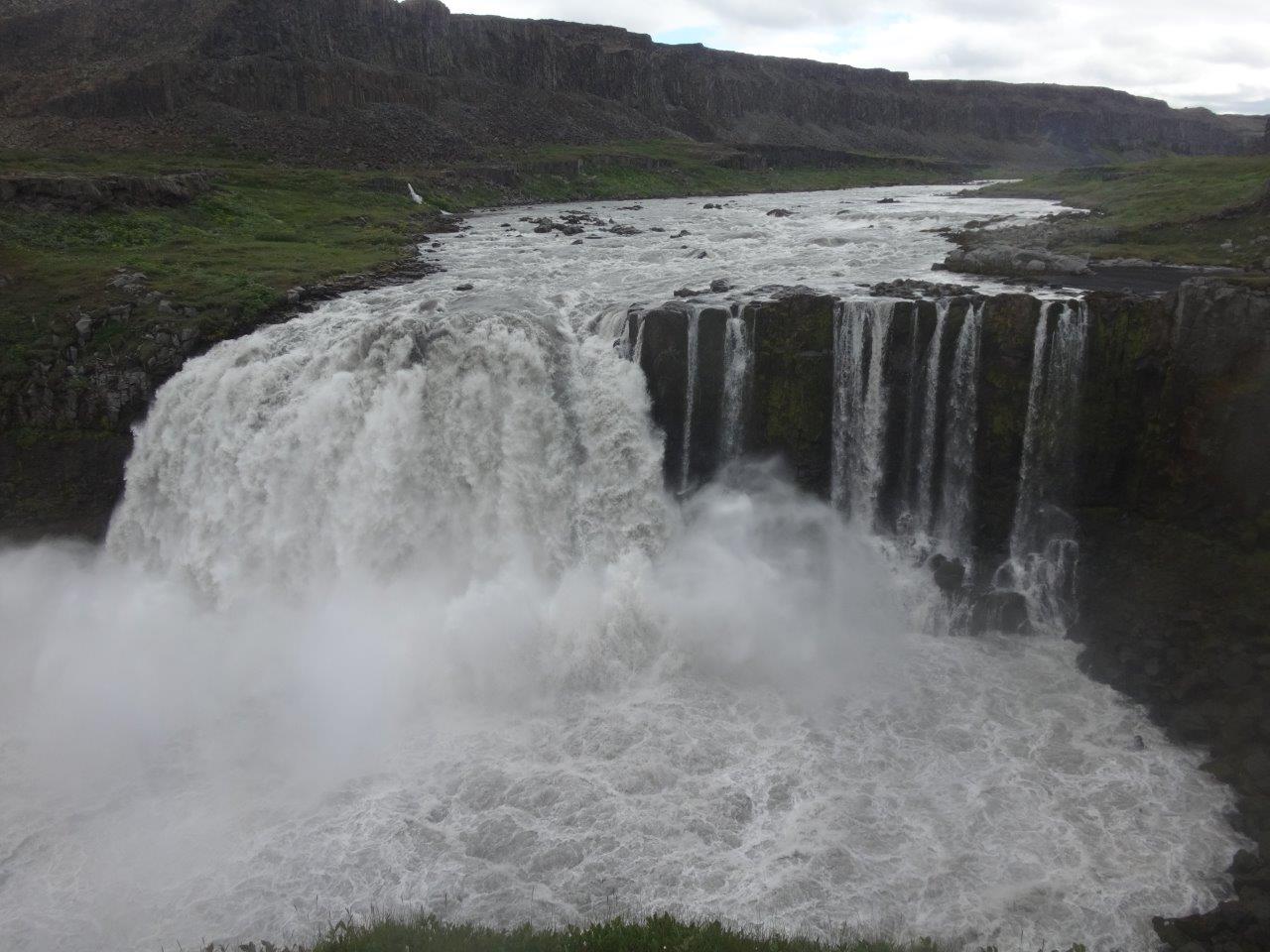
Dettifoss a 330 feet wide fall which drops 150 ft
and Hafragilsfoss.
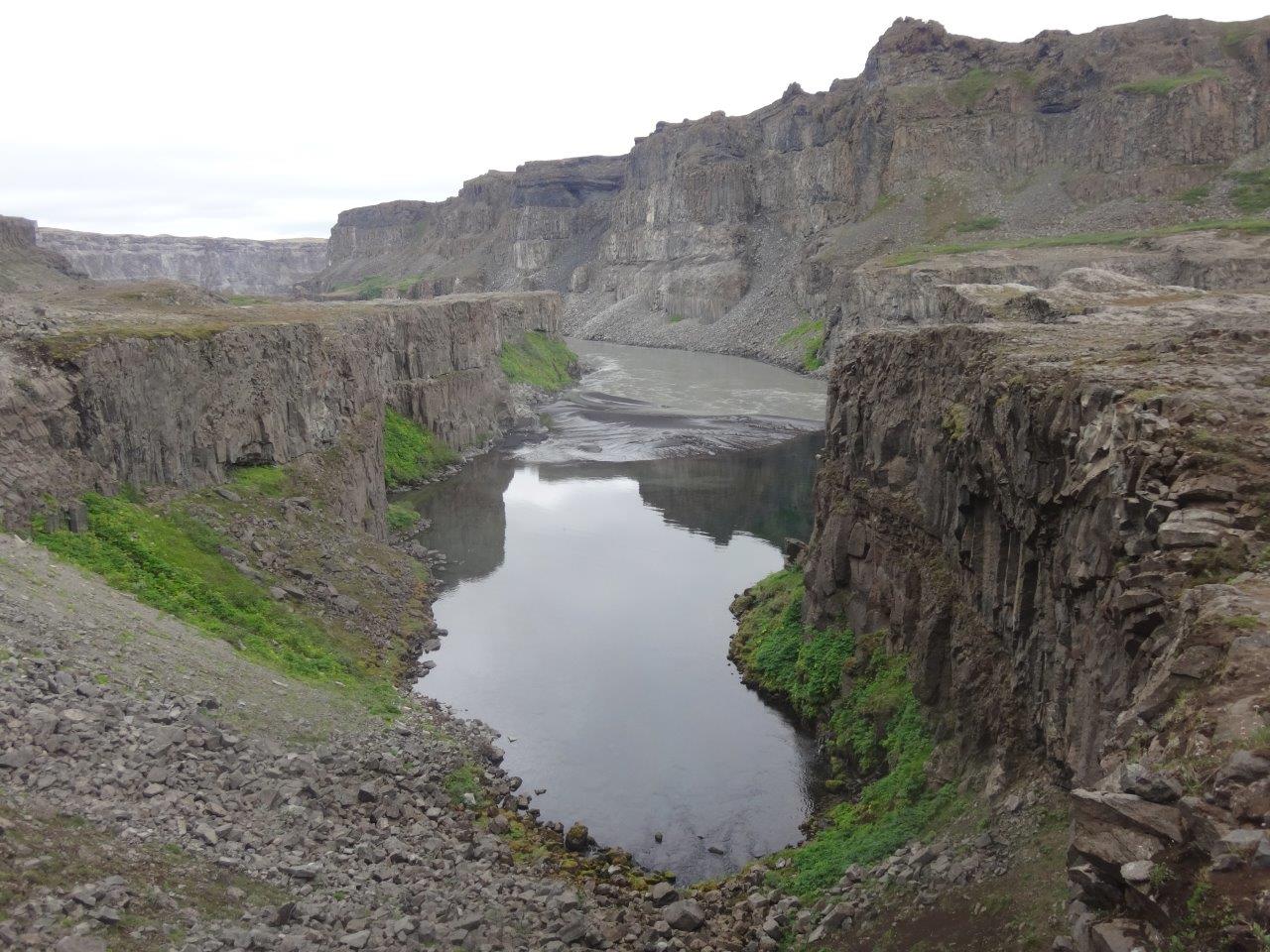
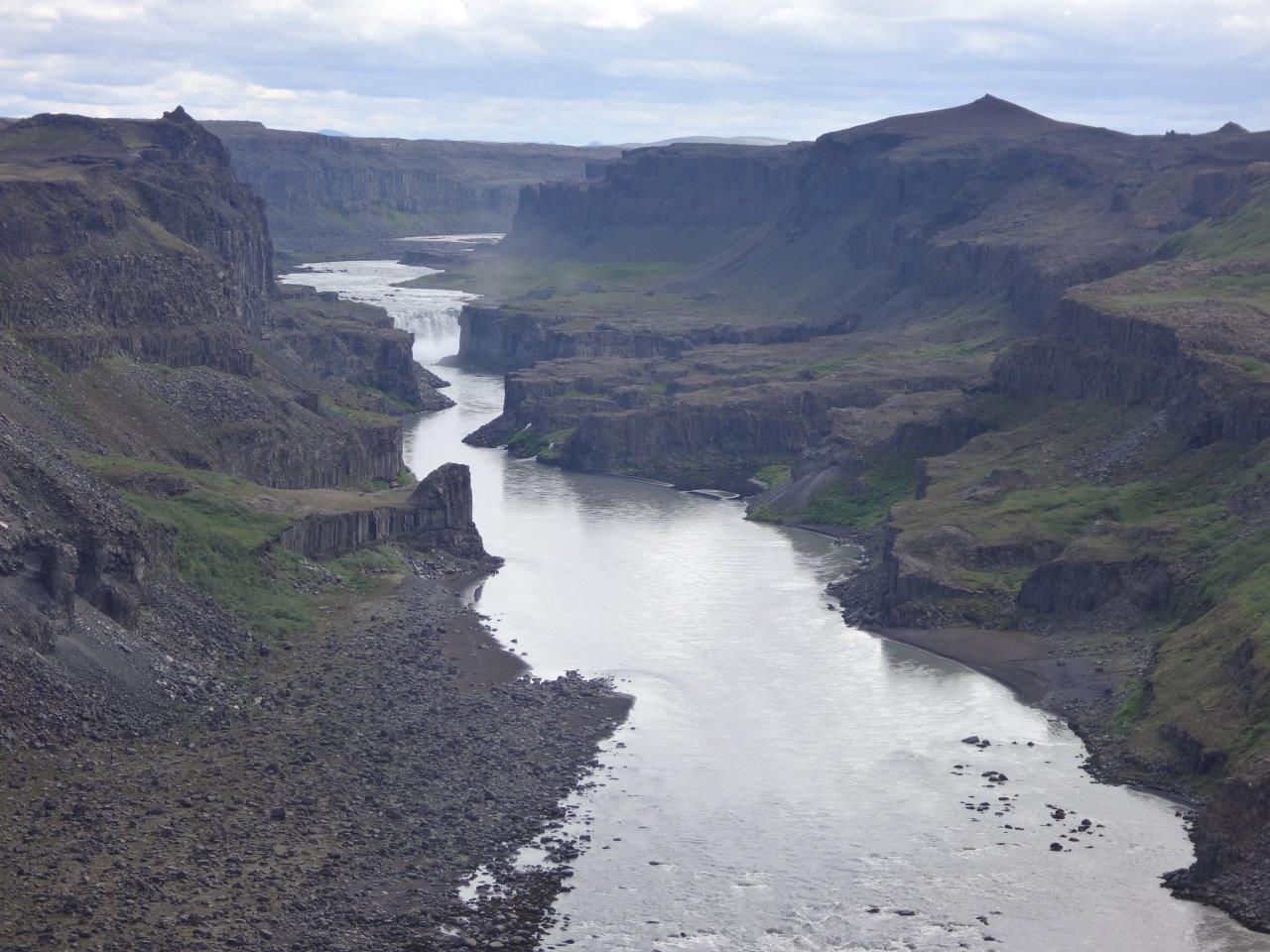
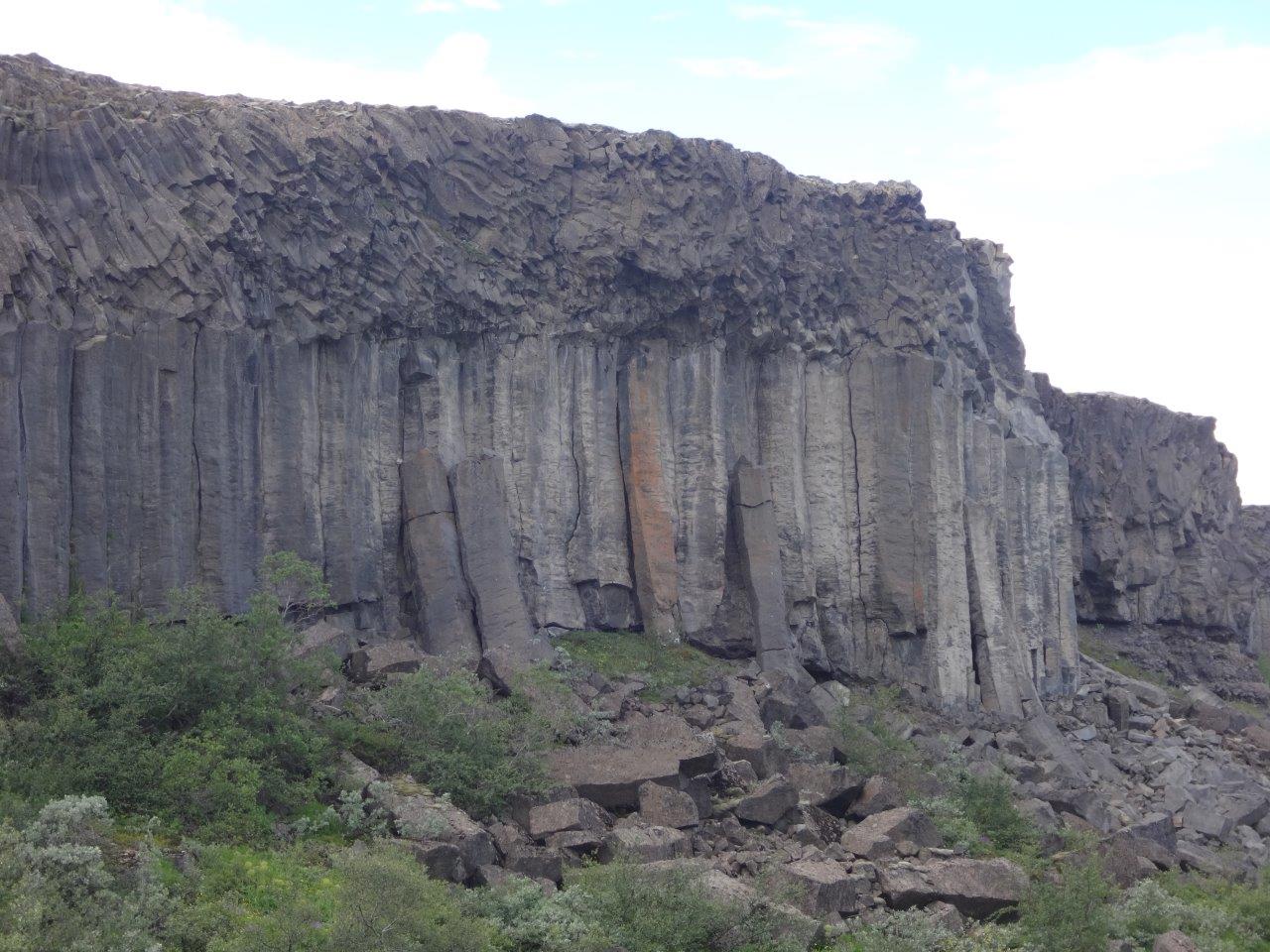
Walking roughly 20 miles through the gorge was absolutely fantastic with one great sight after the other. Here are just some examples
This walk through the Jökulsárgljúfur canyon was an amazing experience and photos from just this day with all the fascinating rock formations, waterfalls, volcanoes, plants and breathtaking viewpoints could fill its own trip report.
At the end of the day I pitched my tent at Ásbyrgi a horseshoe shaped canyon with up to 300 feet high walls that according to legend was formed when Odin’s eight-legged horse, Sleipnir, touched the ground there with one of its hoofs.
When reaching Ásbyrgi, I could see where the Jökulsá á Fjöllum was flowing into the Greenland Sea. Seeing the ocean got me absolutely excited. I had crossed Iceland on foot. Sure it was still almost 60 miles to the lighthouse at Hraunhafnartangi, but that was only two days of walking away. Laying in the tent I thought of the beauty of this day. Walking through the Jökulsárgljúfur canyon had been a sensory overload with a new sight around each corner and staying in Ásbyrgi canyon offered fantastic views.
ON TO THE COAST
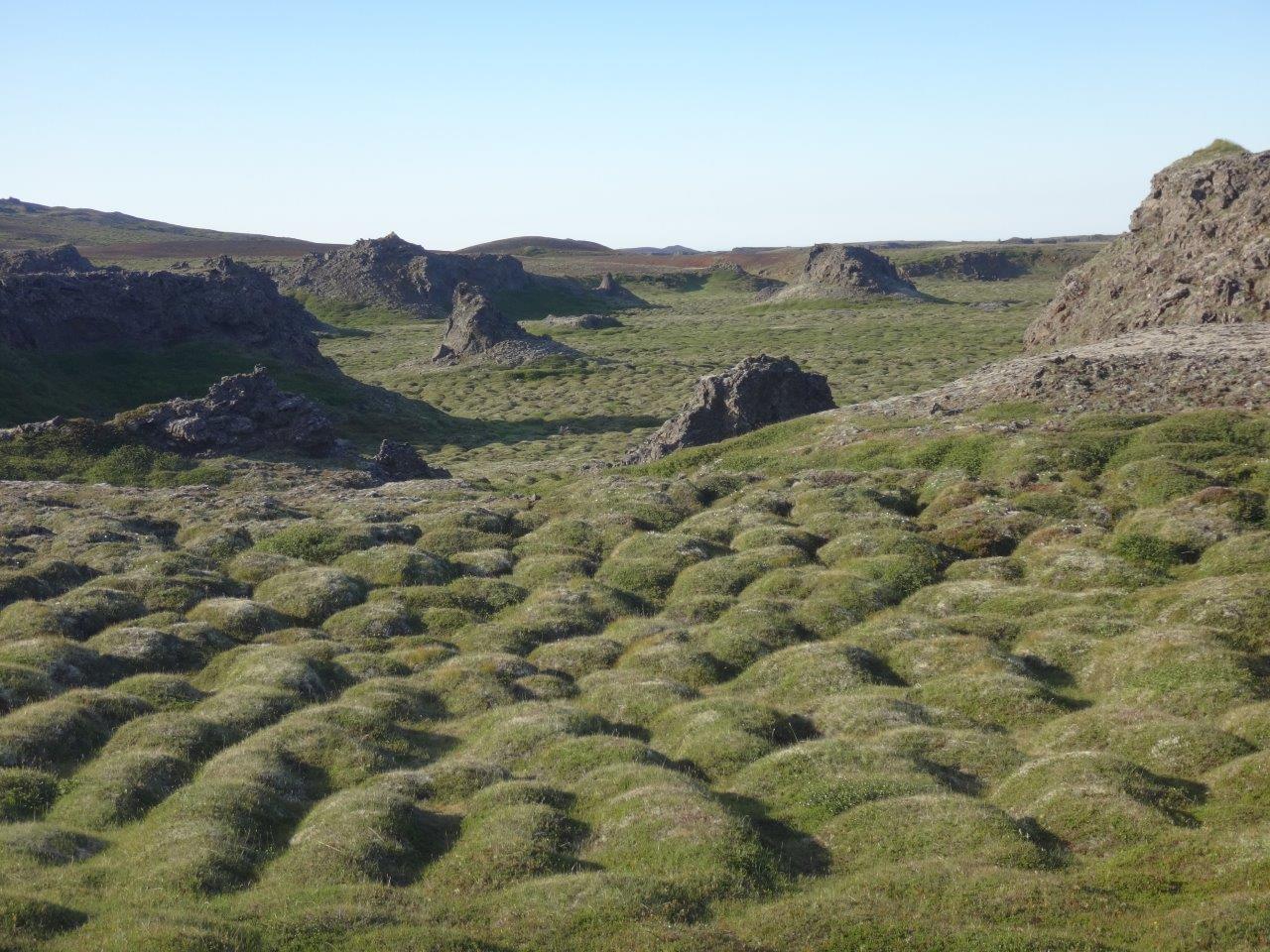
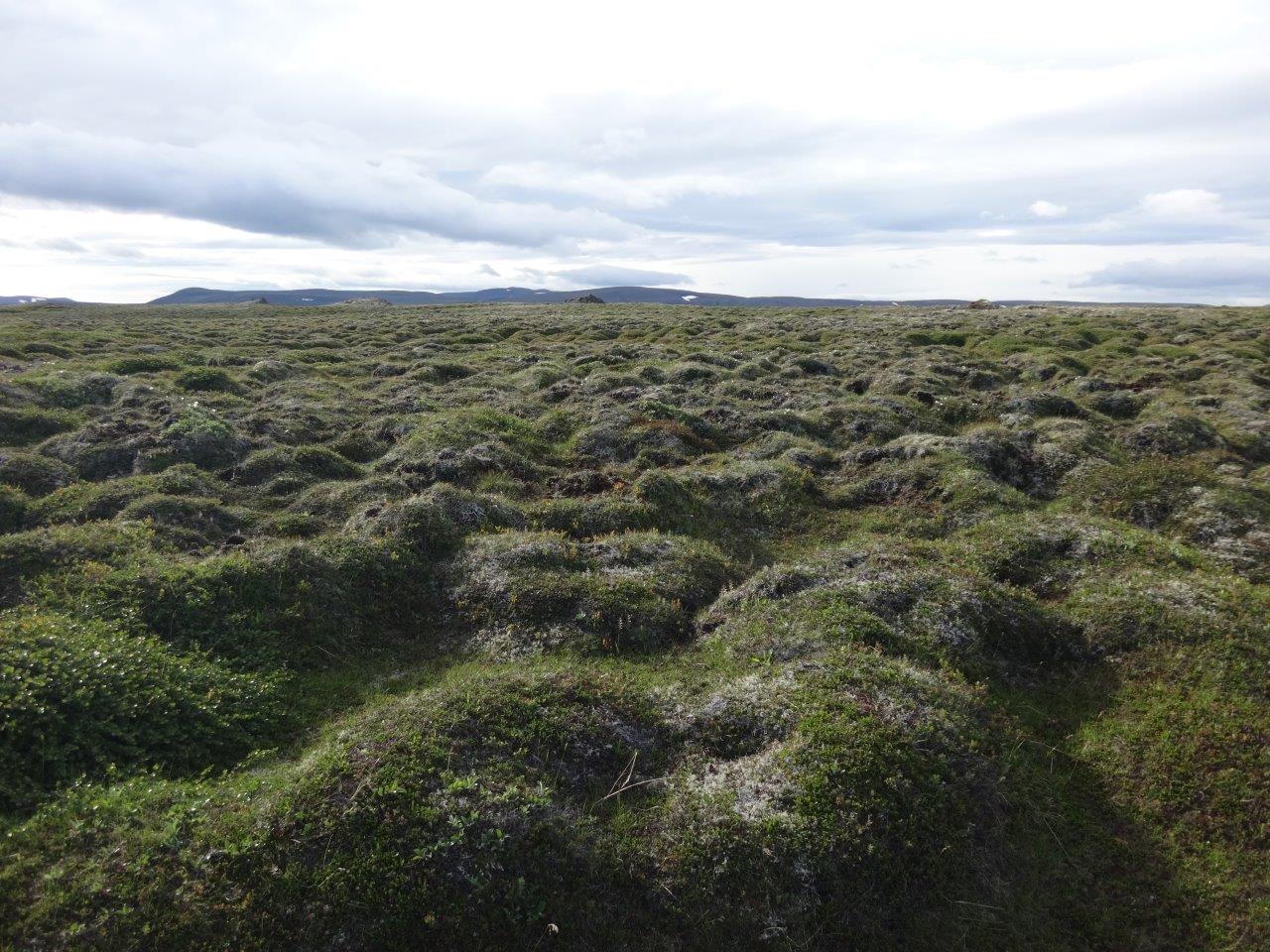
Hiking the next two days across the Melrakkasletta (plain of the arctic foxes) peninsula was characterized by walking against a 20+ mph wind through tussocks
It was almost impossible to find a big enough flat spot to camp in this kind of terrain
When I found one in the early evening, I took it.
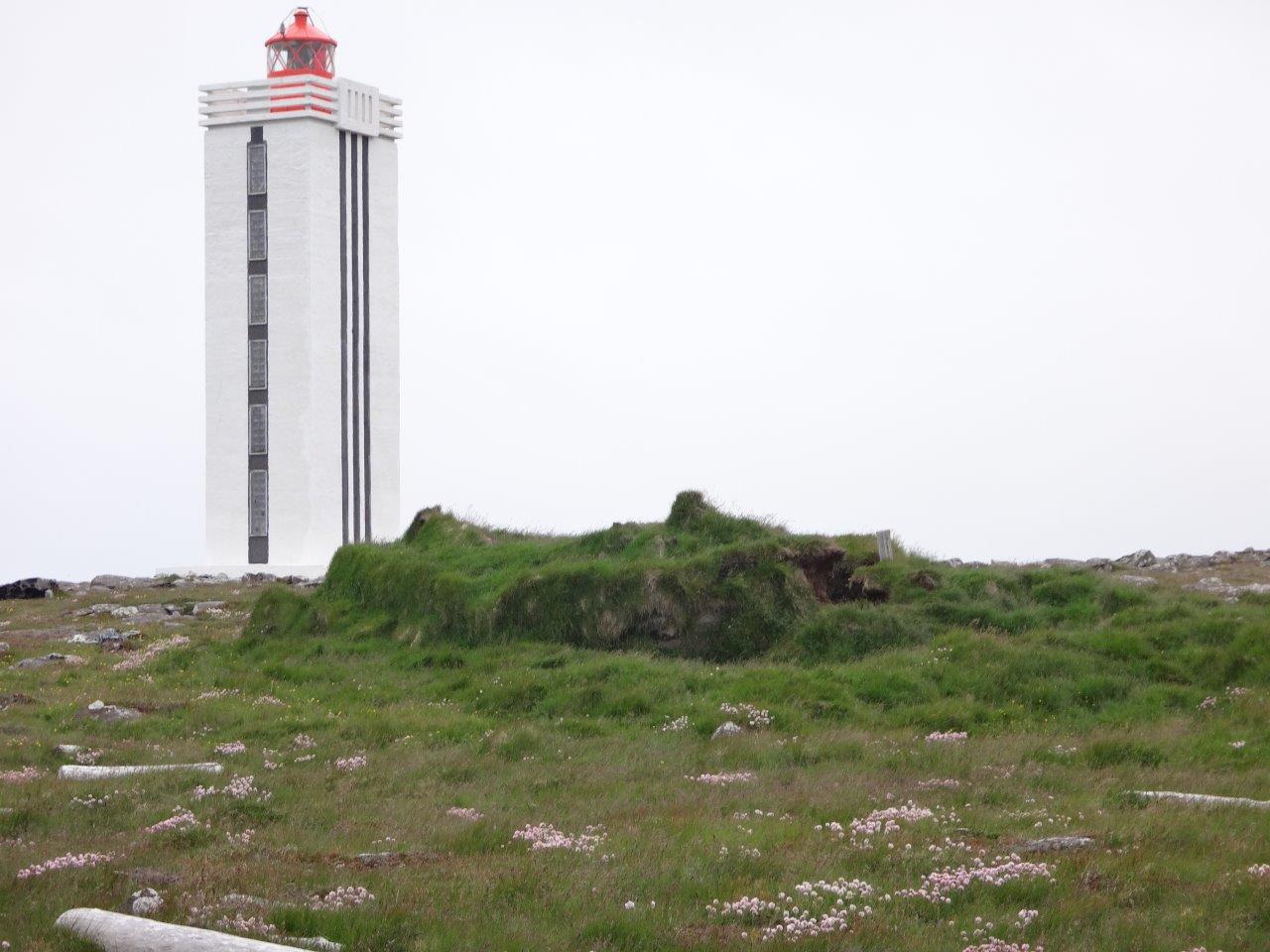
and was glad the next day as I didn’t see anything for the first 4 hours during the morning. The last day I walked over 35 miles to the lighthouse.
There I sat down in the windbreak of the lighthouse and reflected on the whole trip that had taken me 20 days. It had been an incredible trip with many fantastic highlights. Hiking the first 110 miles with my daughter Hannah, seeing all these incredible geological features Iceland has to offer, hiking solo for 330 miles in 13 days through a barren landscape, crossing a desert with a 39 mile stretch that didn’t have water sources, climbing on and into volcanoes, seeing several glaciers, seeing hot steam vents, hot springs, gushing fresh water springs and much more.
SUMMARY
It’s hard to summarize such an epic trip. It will take me most likely several weeks to digest all the different impressions.
Clearly the first 7 days with my daughter Hannah stood out as a very special father-daughter experience. Having her along on the Fimmvörðuháls & Laugavegur and beyond made it into one of these once-in-a-lifetime experiences. She was incredible when the going got tough and out-hiked the adults on the trail. She showed experience and understanding of her skills and limitations way beyond her age. With confidence in her skills and her gear she tackled the hardest day of the complete 440 mile trek when going from Álftavatn over Hrafntinnusker to Landmannalaugar in an admirable fashion. I’m proud of her and hope there will be many more joint adventures in our future. This one picture is clearly one of my favorite from hundreds of pictures from the Iceland trip.
The next 13 days were special in a different way. Now that I was alone and there was nothing else to do but walk during the 24 hours of daylight that Iceland offers during the summer my average mileage increased from 15 to 25 and went several times above 35. I just couldn’t stop walking and kept exploring the next sight, climbed the next volcano eager to see the view, crossed the next lava field, looked for the next waterfall and enjoyed all the flowers and other plants along the way as even the desert was alive during those summer weeks right after the snow melt. Walking across Iceland gave me a special perspective of its incredible beauty. Being slow and being on foot provided a fantastic experience when seeing all the different kinds of lava, the different kinds of deserts (sand, pebble, rock, lava, etc.), craters, canyons, etc. and experiencing them step by step.