Topic

Techniques for sleeping on the ground without a mat

Viewing 25 posts - 1 through 25 (of 41 total)
AK Granola BPL Member
PostedJan 28, 2021 at 10:28 am

Lately I’ve been using an Uberlite and I like it a lot. I’ve read a lot of complaints about deflation on this model but so far so good. It’s extremely comfortable, not noisy, and light. But, thinking about worst case scenario, if I’m out on a long trail and it deflates and I can’t find a fix, what are your suggestions for sleeping without a mat for a while? I could give in and carry my old Prolite, which seems to be bombproof, but 8 ounces heavier, just as warm but not as cushy. Or just find some ways to get comfortable without a mattress if I have a failure out there.

HkNewman BPL Member
PostedJan 28, 2021 at 10:39 am

Some older types (hunters) swear by a bed of fallen leaves (probably enough to provide insulation crushed under bodyweight), but they are recommending it while sitting next to a roaring fireplace.   Also their younger selves had a hotter running metabolism.

I’d say a thin foam “backup” pad (use a GG one under my XLite for comfort) and maybe a garbage bag to fill with dry leaves if insulation is needed underneath.  May not be comfortable but it’ll likely increase sleeptime (even survival) vs any bare ground.

Brad W BPL Member
PostedJan 28, 2021 at 10:52 am

I have seen numerous survival types carry 2 large black trash bags, fill with leaves, soft material and use that as a bed. Looks pretty comfortable.

Jerry Adams BPL Member
PostedJan 28, 2021 at 12:05 pm

or, just pile up leaves and needles and duff.  You can do it without a plastic bag

Dondo . BPL Member
PostedJan 28, 2021 at 12:07 pm

I’ve had inflatable pads fail on me several times, whether punctures I couldn’t fix, delamination, or valves going bad.  One time, I was in a pine forest, so I moved to a place where the pines needles made a pretty good bed. On top of that I placed my pack, which had a padded back and a foam sit pad I had brought along.  That night wasn’t bad and I managed to get decent sleep.  The other times, I was on higher rockier ground and the nights were cold and pretty miserable.

A two pad system is a good idea but the weight can add up.  The 1/8″ ccf pads are light but IMO are just marginally better than sleeping on the ground.  As the thickness increases, so does the weight and the R-value.  Recently, I’ve been experimenting with an X frame with a short SOLite laid on top.  It’s comfortable and seems durable but only has a R-value of 3.1.  We’ll see how it goes.

Steve M BPL Member
PostedJan 28, 2021 at 12:24 pm

Here’s another option–if you are into multi-use gear.

I recently stopped carrying fleece jackets–due to their very LONG drying time when they get soaked (3 season).  I now use 2 pieces of closed cell foam (1/2″ thick) cut into an isosceles trapezoid shape (about 18″ long).   These are ‘worn’ only in camp (one front & one back) under…2 or more UL windbreakers and give you some multi-use options:

* UL & fail proof warming ‘vest’ that doesn’t absorb much moisture

* Small sleeping mat (when they are placed end-to-end)

*Back padding & seat cushion for  an UL ground chair

*Partial floatation vest (?)…I haven’t tested this one yet  :o

Kattt BPL Member
PostedJan 28, 2021 at 12:41 pm

Sounds like we need a bushcraft thread again ;)

Dondo . BPL Member
PostedJan 28, 2021 at 12:45 pm

That’s really clever, Steve.  Do you use the ccf as your main sleeping pad or is it a backup if your primary pad fails?

Steve M BPL Member
PostedJan 28, 2021 at 12:57 pm

“Do you use the ccf as your main sleeping pad or is it a backup if your primary pad fails?”

Sometimes…when I go for a quick overnighter.  I also usually have 3 pads–the 2 trapezoids and one Z-seat with tiny velcro tabs added.  Thus it can be attached to one of the trapezoids–for a longer sleeping mat.

For longer trips I add an UL prolite short (?) thermorest (about 8 oz.) to the above.

PostedJan 28, 2021 at 1:11 pm

I’ve had many nights out without a pad due to failures. Also done some “primitive” backpacking with only a wool blanket. Never found it worth the time or trouble to go too far improvising bedding…When it was due to failure (longest was 4 nights on the JMT without a functional pad), I just used the deflated pad, with my pack and as much clothing or other material as I could muster underneath me. The most important comfort factor to me is a good butt/hip depression in the ground.

In cold weather a failure could become much more of a safety issue which is why I would never rely on an inflatable alone if temps are getting near freezing on a regular basis, bringing either a full length Z-Rest or Ridgerest Solar in combination with an inflatable of some sort.

Steve M BPL Member
PostedJan 28, 2021 at 2:27 pm

Jerry:   PM me if you are ever passing through Richland, WA.  & I’ll give you a free demo. :)


Elliott Wolin BPL Member
PostedJan 28, 2021 at 2:40 pm

We once camped in a pine forest in the Adirondacks where the duff/litter under the trees was so thick and soft you didn’t need a sleeping pad.  I recall taking a mid-day nap under our tarp and it was quite comfortable.  We pulled out our pads anyway for the night, since we had them, giving us an extra-soft and comfy bed to sleep on.

Luke Schmidt BPL Member
PostedJan 28, 2021 at 8:36 pm

The chance you’ll need to do this goes down considerably if you avoid the “to good to be true ” pads that try to be ultralight ultra comfortable at the same time. Foam or a traditional Thermarest is pretty safe.

Years ago I spent a very cold October night in the Gila. The next night I kicked together a pile of Ponderosa nettles and put my skimpy foam pad on that. It was amazing. Probably would have been okay without the pad.

Dondo . BPL Member
PostedJan 28, 2021 at 8:53 pm

Luke, which pads do you consider too good to be true?

Luke Schmidt BPL Member
PostedJan 28, 2021 at 9:43 pm

Dondo I view pretty much anything that is thicker then a traditional Thermarest while being the same weight or less as “to good to be true”

Its anacdotle but I know of multiple friends with more fragile pads who  sent failed pads back after major failures. I never had that with the multiple Thermarests I’ve used over the years and I can’t think of any friends who did either. And I abused my first Thermarest to death. It eventually began delamine after about 5 years. Good enough for me.

Dondo . BPL Member
PostedJan 28, 2021 at 11:31 pm

You make a good point,  Luke.  I have several anecdotes of my own about air pads gone bad.  Meanwhile, I have an old  3/4 length Thermarest “Ultralite”  sitting in a closet that I haven’t used in many years.  It may be time to dust it off and see if I can still sleep on it.

AK Granola BPL Member
PostedJan 28, 2021 at 11:58 pm

I do have old thermarests that are decades old and still going strong. Very heavy! The Prolite is pretty good too. But … weight. I’m willing to risk it with a backup plan of figuring out something to get me by if catastrophe strikes. Not going in super cold weather.

Dondo . BPL Member
PostedJan 29, 2021 at 10:12 am

You’re right, Karen.  That Thermarest I linked to weights 16.8 oz, almost twice the weight of your Uberlight.  On the other hand, I also have a Prolite short which weighs 11.3 oz, more in line with what you’re carrying now and with a similar R-value.

Having just tried out both of these pads in my backyard, I’m remembering why I switched to air pads about 10 years ago.  Comfort!  My first air pad, the POE Eco-Thermo was a revelation.   Back then, I wrote ” You can have this pad when you pry it from my cold, dead hands.”

It seems that most of the market has gone over to air pads of some sort or other.  So we’ve had to learn to baby our pads.  Personally, I don’t like to take too much time and care with my gear so 15d would be too light for me.  My next air pad will probably have a bottom of 40d.

Since a bed of pine needles or leaves or moss isn’t always available,  we’re left with scooping out depressions for hips if the ground is soft enough or learning to sleep on your back.  I’d also use all available gear to fashion some kind of padding.  It also might be worth the minor hit to your base weight to carry an 1/8 ” pad as mentioned by HkNewman above both to provide some protection for your Uberlite and folded in half to provide some at least some insulation and padding for your torso if your main pad pops.

PostedJan 29, 2021 at 2:45 pm

I have used just about every iteration of Thermarest pads ever made;  Occasionally I have had a pinhole leak, but a piece of Tenacious Tape (or in the olden days, silver duct tape) usually did the trick – at the very least I ended up with a very slow leak that usually held air most of the night.   To me, a good night’s sleep is essential to an enjoyable trip, so I don’t mind the weight penalty for the Prolite, especially a short used with my pack/clothes under my legs and feet.

btw, I have returned Thermarests with leaks and always received a free replacement which was usually an “irregular”.

PostedJan 29, 2021 at 5:18 pm

I ALWAYS carry these 2 multi-use items regardless of the trip. I can utililize each piece in many ways and what’s more they are my last line of defense against leaking inflatable pads.

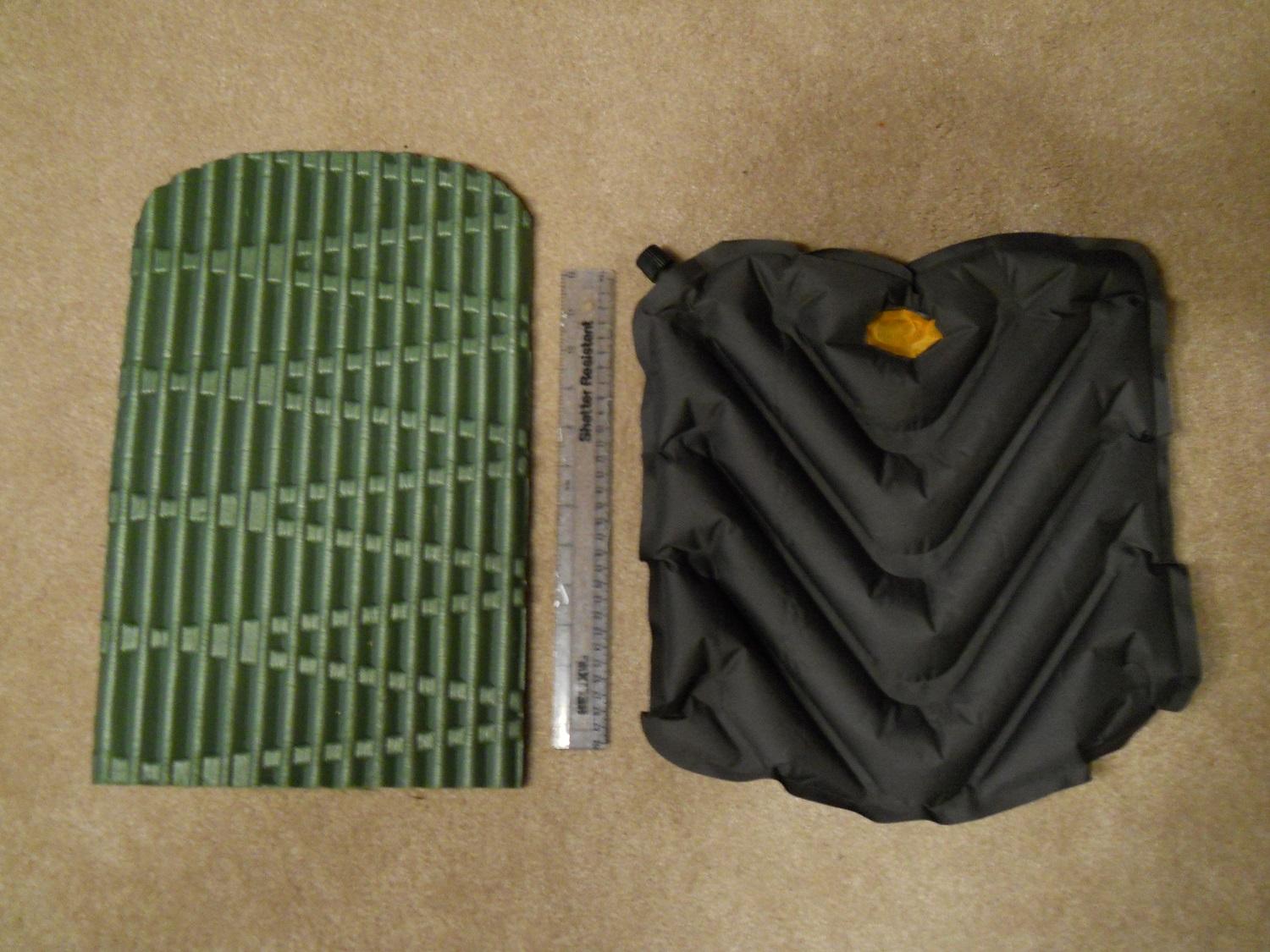
The 2.2 oz Klymit sit pad is also used as a  pillow when it’s slightly deflated and folded in half, then placed inside of a DIY silk pillow case. Next the pad is good for knelling outside of my shelter opening while arranging my sleep system inside. But what’s more if my NeoAir X-Lite deflates I can place the Klymit sit pad under my hips. I find that’s the part of the body which most needs cushion if I’m going to get any sleep. The tough 70d sit pad is smallish, but it’s a thousand times better than nothing.

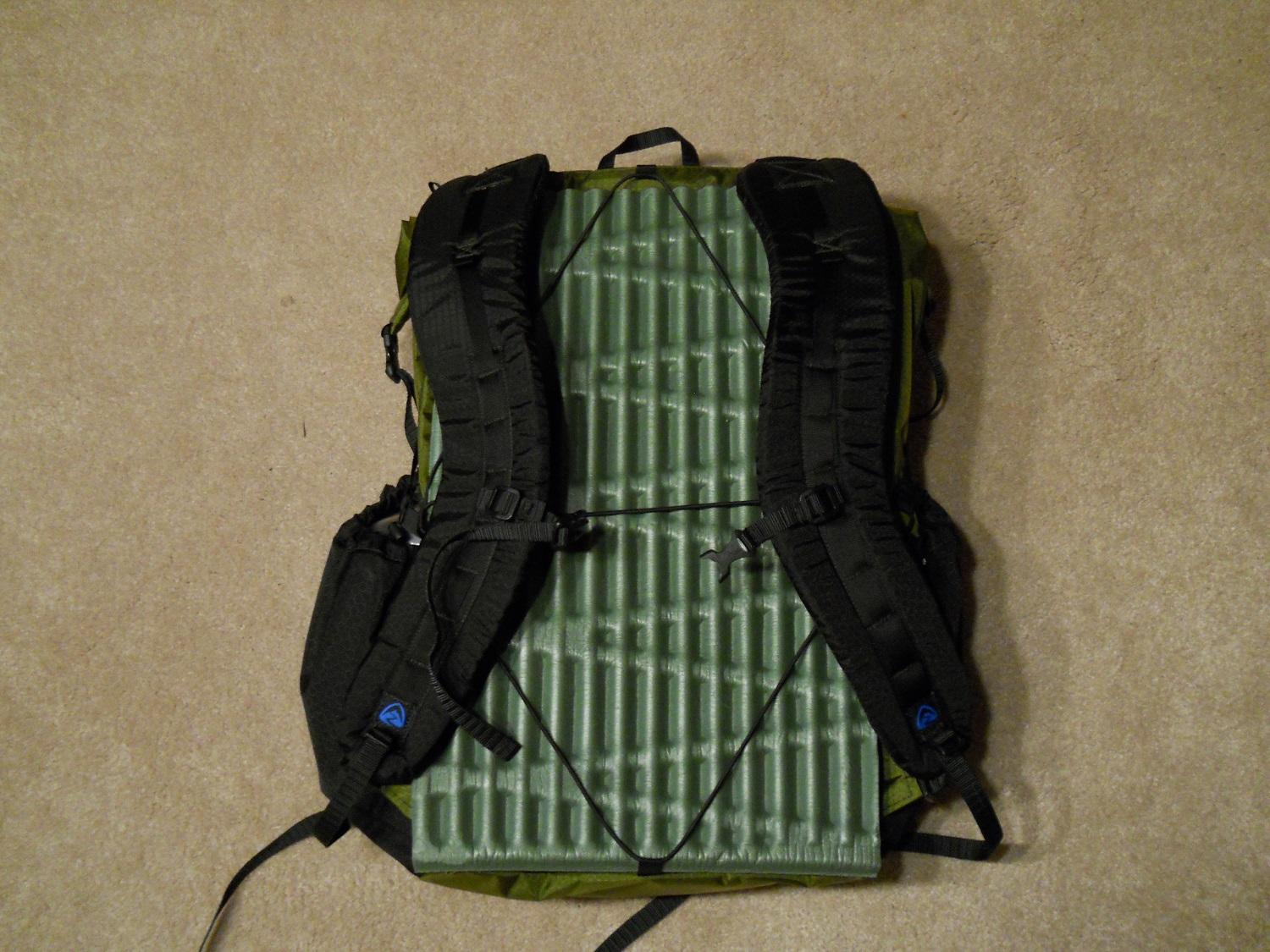
The 10.5″ X 17″ ccf piece of Ridgerest foam is worth it’s weight in gold in my opinion (1.7 oz). I use it to stiffen up a frameless pack by placing it either inside the pack or on the outside, like you see for example with my ZPacks Sub Nero below. I also place the pad between my back and a tree/rock to provide a cushioned back rest when sitting around camp. Another use is to place it under my feet or knees when bedding down with a torso length NeoAir.  But perhaps most importantly the piece of Ridgerest foam can be placed under my shoulders and on top of other items like a pack for example when bedding down (in the event of a NeoAir leak). If I have decent padding under my hips and shoulders (side sleeper) I can actually get some sleep. Without it I can’t. Trust me this has all been tested in the real world conditions. With the ridges placed vertically in or on the pack, the Thermarest Ridgerest is far superior to all other ccf foam in regards to stiffness and support.

Dondo . BPL Member
PostedJan 30, 2021 at 8:08 am

Monte,  just stole part of your idea and replaced the thin back pad that came with my Gossamer Gear pack with a scrap of Ridgerest foam.  If my air pad goes bad, I’d much rather have the insulation and padding of a piece of Ridgerest between me and the cold hard ground.

PostedJan 30, 2021 at 9:39 am

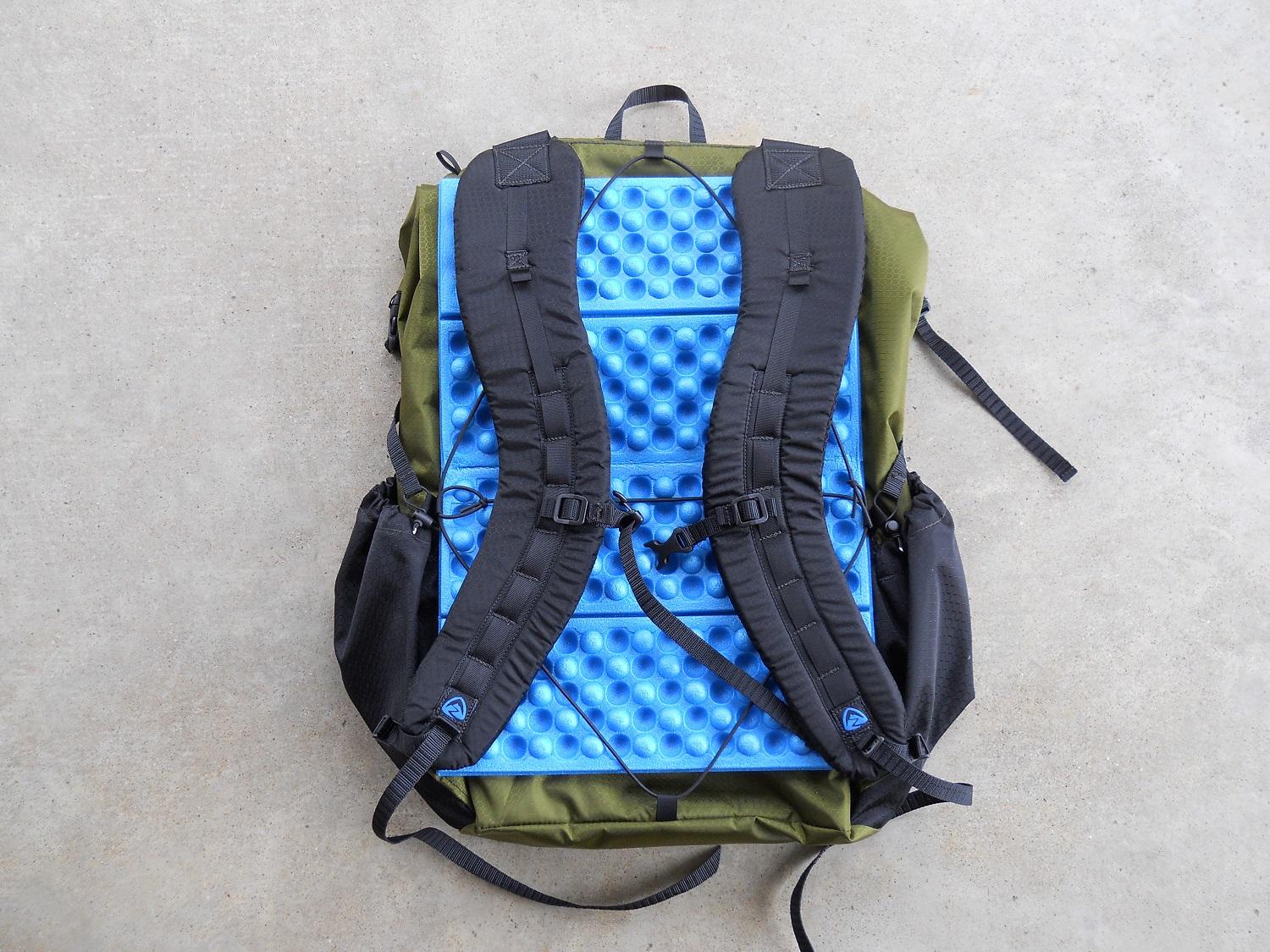
This is the folding blue pad that came with the Sub Nero. It took me about 2 seconds to see that it had to go and be replaced with a section of Ridgerest. Granted the blue pad weighs less at 1.0 oz, but as you can see it provides absolute zero rigidity and structure to the pack. The foldability of the blue pad has no utility in this application. And besides, Ridgerest ccf is darn near indestructible.

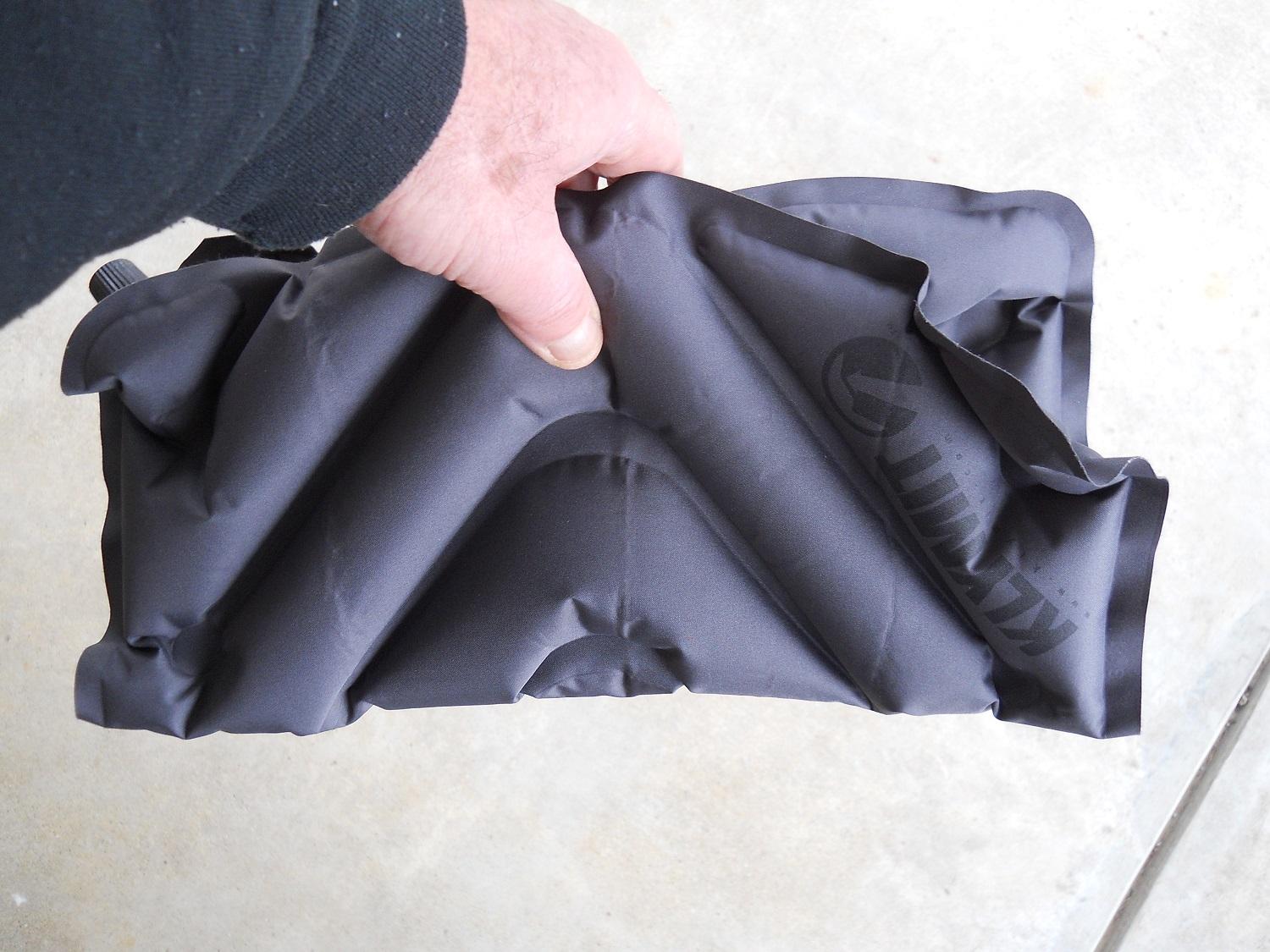
This is how I turn the Klymit sit pad into a pillow. I just fold it in half. Very simple yet quite effective. Almost as comfortable as a regular inflatable pillow, but it’s essentially weightless because I’m already using it extensively as a sit pad. Works great and since the pad is made of 70d it’s FAR less apt to fail than most ultralight pillows. And if my NeoAir goes flat the Klymit sit pad will go under my hips instead. I can find something else to use as a pillow.

I simply place the folded pad inside of a silk DIY pillow case with velro closure (0.7 oz).

Viewing 25 posts - 1 through 25 (of 41 total)
Loading...