Topic

Foam Vest

  • This topic is empty.
Viewing 25 posts - 1 through 25 (of 34 total)
PostedJan 26, 2011 at 7:38 pm

My clothes are usually wet from either rain or sweat when I’m backpacking. These wet clothes lose most of their insulating value. To combat this I have made some clothing out of closed cell foam. As you know, closed cell foam doesn’t lose its insulating value when it is wet. Here are some pictures of a closed cell foam vest that I have made:
VEST

This vest works best with a jacket over it. The jacket holds in the warmth that would otherwise just blow away with only the vest. I think you can see what I mean by the pictures.

This vest is made of two pieces so I could slope the shoulders. You can also make a vest by simply putting a hole in the center of a closed cell pad (think poncho). The shoulders are so boxy, however, that it is difficult to get a jacket over it.

I’ve used this vest down to freezing temps while moving. The heat generated by my body creates a warm microclimate underneath the vest. The vest stands a ways off my body so air can circulate under it.

The net weight of this vest is close to zero because it is also one of the pads that I sleep on.

Jerry Adams BPL Member
PostedJan 26, 2011 at 7:58 pm

very creative : )

I have thought about doing something similar with bubble wrap

PostedJan 26, 2011 at 8:07 pm

Bubble wrap would probably fit better than stiff foam but has less insulating value. Not sure which factor would win out. Bubble wrap might end up being warmer because the better fit might trap the heat better.

To keep your net weight gain to zero, however, you would have to use (or pretend you use) the bubble wrap for something else anyway.

PostedJan 26, 2011 at 8:07 pm

They did this in the 1970s! You make a good argument for it too by using it in your sleep system.

PostedJan 26, 2011 at 8:15 pm

I've thought about making a vest or jacket with foam in the back. My back always gets sweaty when I hike because it can't breathe with a pack on. With foam back there, I could wear insulation without compromising the insulation on my back. Maybe this and a flap in the back to use as a sit pad too…

Bob Gross BPL Member
PostedJan 26, 2011 at 8:51 pm

Plus, it has a multiple use as a personal floatation device.

–B.G.–

PostedJan 26, 2011 at 9:14 pm

Yes, personal floatation device isn't far from the mark. I've also used what they call a float coat. A float coat is a full coat made of foam sandwiched between two nylon jackets. It worked well for me but it weighs two pounds. I've taken one and stripped off the nylon but it is still pretty heavy because it is made of 1/2" thick ensolite. The vest is an effort to get some of the benefits of a float coat without the weight.

Even at two pounds the float coat might be justified because it replaces (1) an insulated coat (say 1 lb) and (2) a raincoat (say 12 ounces) and (3) you don't have to carry a dry spare to replace the float coat when it gets wet. These 3 items could easily add up to 2 lbs.

Dale Wambaugh BPL Member
PostedJan 26, 2011 at 9:28 pm

You wouldn't want the foam in the back only– if you pass out or are injured, you're going to float face down— Darwinian consequences.

An inflatable jacket would be interesting, especially with some insulation inside. hehehe– pull a ripcord on a CO2 catridge— instant puffy :)

I have a monster roll of 5mm blue EVA if you want to experiment….

James Marco BPL Member
PostedJan 27, 2011 at 2:14 am

This looks intersting. I have been doing this for many years with my PFD on canoe trips in Spring and Fall. My rain jacket fits easily over my life vest. The foam makes a good insulator.

However, I believe that you will find it hot and sticky next to your pack. It will act like a VB.

Adding a couple zippers down each side would help with the dual use as a sleeping pad.

Good Job!

Tim Marshall BPL Member
PostedJan 27, 2011 at 6:21 am

Another option for "foam" clothes is insultex or PEF http://www.uline.com/Product/Detail/S-1980/Foam/1-32-x-48-x-2000-Foam-Roll.

Both can be sewn and if you use 1 or 2 layers of 1/32" (insultex is thinner than 1/32" but has scrim on each side) it will drape nicer than closed cell foam and if made with a slight gap between the foam(a dif cut makes this happen, all you need is 1/32-1/16")it should be pretty warm. It also has flotation properties but you'd have to test to see how much.

I am actually planning to prototype a PEF 3/4 underquilt that converts to pants. they are warm, water proof, light, and multi-use. You need to cover the outside layer of the IX as it is very grabby and would get covered in dirt and what not and probably both layers of PEF as i am not sure of its durability.

For me these materials are the answer to foam insulated clothing.

-Tim

PostedJan 27, 2011 at 8:08 am

James,

Yes the foam back can get hot and sticky (like a wet raincoat sticky). I keep the heat under control by opening and closing the front zipper of my jacket. The wetness is no worse than wearing a raincoat for me. I'm almost always soaking wet all the way to the skin when hiking. I do sweat way more than the average person, however, and that's why I've been drawn to foam clothing. Most people don't need it as they do fine with layering and waterproof/breathable fabrics.

Were you suggesting zippers down the sides so, when unzipped, the pad would lay flat? I just leave the sides open for ventilation when I need it. They aren't sewn or taped in the model I've shown. Even with the sides open, however, the vest won't lay flat. The sloped shoulders prevent that. I have tried 3 ways of addressing this on previous vest models (I've been using these things for about 15 years).

(1)I put velcro on the shoulders so it could be opened up and layed flat.
(2)I used thinner foam for the vest so a double layer was equal to a single layer of 1/2 inch foam.
(3)I use the double layer of foam under my torso when I sleep. Turns out that takes some of the pressure off my hips when side sleeping.

PostedJan 27, 2011 at 8:10 am

Tim,

I like the looks of this insultex stuff. I went to their website and read up on the specs. Sounds great!

The stuff they show at Uline (your link) doesn't mention insultex or PEF. Is it a generic version of the stuff?

todd BPL Member
PostedJan 27, 2011 at 10:51 am

Daryl,

Go to hammockforums.net and search / ask about Insultex (IX).

Great stuff being done over there….

Todd

James Marco BPL Member
PostedJan 27, 2011 at 12:52 pm

Daryl,
Yeah, we have been hiking, fishing, canoing in the ADKs for the last 30-40 years. This looks very interesting to eliminate the our PFD's, turning them to real tripple duty gear: vest, PFD, sleeping pad.

I didn't notice the lack of zippers, sorry.
I think I would have to keep the standarard 1/2" foam to reach the minimum required for a PFD. Though, the thinner stuff is certainly a better option for a vest.
Yeah, I toss and turn a lot. Usually ending on my side or stomach for up to hour.

PostedJan 27, 2011 at 1:06 pm

Todd,

Went to Hammock forums per your suggestion. Now I'm motivated to try it. Hopefully I'll be able to buy less than a 8000 square foot roll. Got one reference from the forum.

Thanks,

Daryl

todd BPL Member
PostedJan 27, 2011 at 1:18 pm

Daryl,

One vendor there sells it by the yd (forget the name). I can't access that site from work so I'm of no help.

Lots of quilts made from IX.

Keep us posted on your efforts!!!!

Todd

Tim Marshall BPL Member
PostedJan 28, 2011 at 5:53 pm

the link is for packing foam which i believe is PolyethyleneFoam (PEF). I could be wrong but PEF is generic by nature. IX is PEF with scrim added and marked up 100%(or is it 200%?)

-Tim

PostedJan 28, 2011 at 6:21 pm

Interesting stuff, this insultex. I went to the tttrailgear site, and saw the underquilts and top quilts, but no temp ratings. Any idea what the ratings on this stuff would be?

todd BPL Member
PostedJan 28, 2011 at 6:59 pm

Douglas,

Temp ratings vary a great deal for folks. It depends on construction method (ie: darting/pleating or not) shell material or not, end channels' design on undercquilts, etc.

On hammockforums.net, TeeDee was comfy @ 11F w/ 3layers and a ripstop inner & outer shell. Others have taken this to the 30's or 40's. 2 layers seem to be good for most to around 40ish.

I feel this insulation has far more potential. Since you hang, too, you need to check out the underquilts!!! Very light, and you can go without a shell if desired!

Todd

PostedJan 31, 2011 at 11:06 am

Mark Twight talks about the vest idea in his book and 40bellow makes a fleece vest w/ neoprene back – exactly the product some of you guys are taking about.
I have an old Golite windvest w/ silinylon back, great for very cold weather, but gets used only rarely.

PostedMay 13, 2011 at 11:50 am

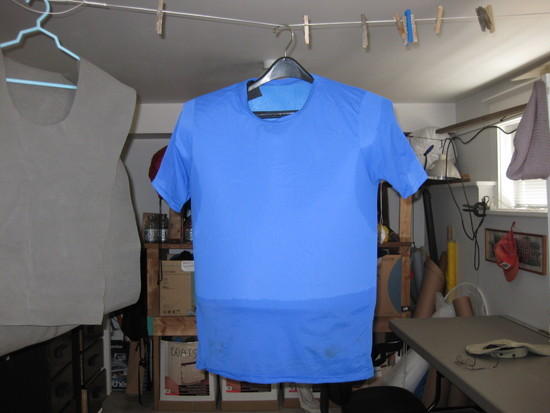
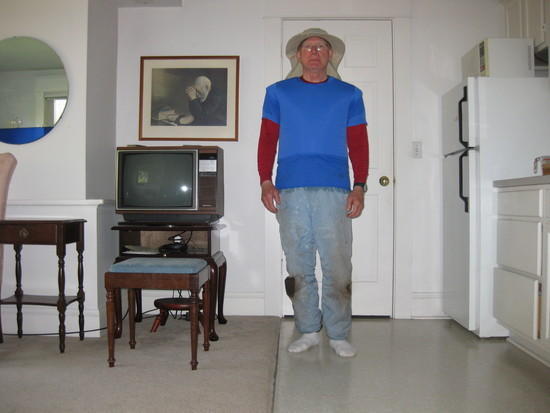
I recently tried a stretchy nylon T shirt over my foam vest. It adds warmth because it greatly reduces the amount of heat lost (through convection) through the open design of the foam vest (around shoulders, arms, neck and sides). Here are some photos:

Vest

Vest

Vest

I continue to work with closed cell foam for clothing because I sweat heavily, wet out all my clothing and get cold…..even when others areound me are not cold. The closed cell foam retains its insulating value when wet.

I like this latest experiment with the foam vest and stretchy nylon T shirt combo. I wear a windbreaker or a raincoat over everything for additional reduction in air movement and heat loss.

The combo is a little hard to get on and off, however. Will look for improvements there. The foam doesn't slide against clothing very well.

Viewing 25 posts - 1 through 25 (of 34 total)
Loading...