Hi all,
Firstly, I’ve read through these threads here
https://backpackinglight.com/forums/topic/scientific-way-to-compare-r-value-to-down-insulation/
https://backpackinglight.com/forums/topic/73153/
… and plenty elsewhere. Let’s just say, this issue has been bothering me for some time.
So, here’s an interesting sentence:
“Every construction / design architect / engineer (A/E) knows a material’s R-value is an important factor when specifying insulation products, with many regulations requiring minimum values for wall, ceiling, and roof assemblies.”
(Source: https://www.greenbuildingsolutions.org/blog/structural-insulated-panels-sips-r-values/ )
Let’s hear that again: “a material’s R-value is an important factor when specifying insulation products“. Unless of course you’re selling jackets to people who rely on them for their survival. Then, it would appear, it’s not so important.
By way of illustration, let’s take 3 similar weight synthetic insulation jackets:
Mountain Equipment’s old Compressor:
Item Weight = 380g (L) / 60 g/sqm Primaloft Gold Insulation
Mountain Equipment’s Rampart:
Item Weight = 395g (L) / 80 g/sqm of POLARLOFT Micro Insulation
Montane Icarus Lite Jacket
Item Weight 430g (size unstated) / 160 g (M) of PrimaLoft Silver ThermoPlume (blown into baffles like down) Insulation
Let’s for the sake of simplicity assume they all have the same face fabric.
Which will be warmer? I’m guessing, like me, no one here will have a clue (perhaps I’m wrong).
And I’m also guessing the manufacturers like it this way.
For example, it allows Rab to drop (the presumably expensive) 60 g/sqm of Primaloft Gold for their own 60 g/sqm Stratus recycled insulation in their new Xenon Jacket and claim, that even though the jacket (326g L) is 16% lighter than its previous incarnation (Rab Xenon X Hoodie, 390g) it’s just as warm. They offer no proof, they just state it, so it must be so.
If I buy an integrated amplifier, I’m not expected to wait until I get home to find out whether it can power my speakers. We have a specification which will tell me exactly the max load into x ohm speakers. Yet, when it comes to outdoor insulated clothing, I have to wait until I’m dying from exposure until I know that the jacket was not up to the task. Hmmm.
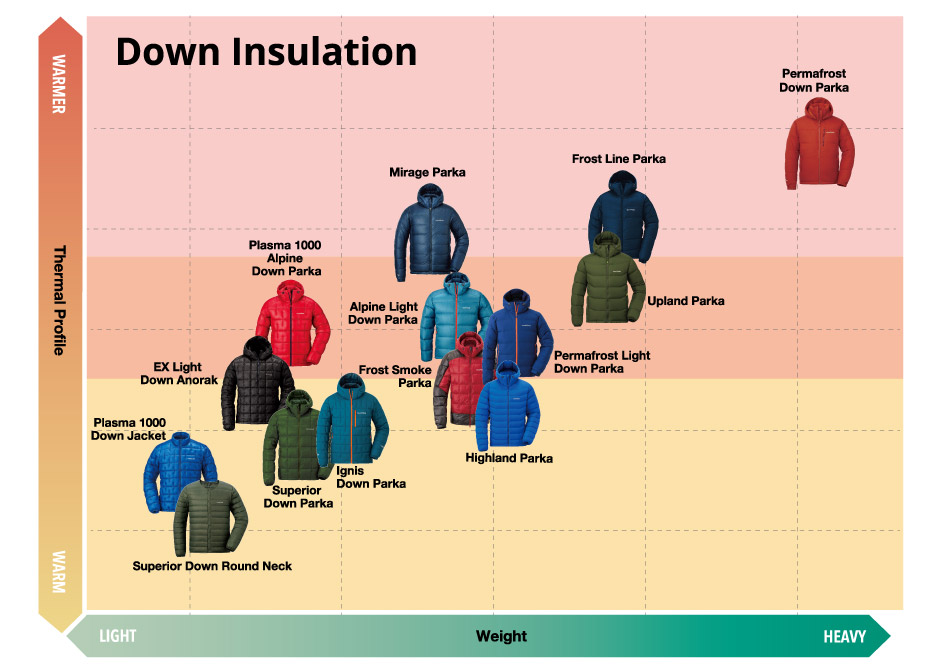
I realise that R-Values for clothing items are tricky in the sense that with down, you’ve got fill power (quality) versus total fill weight (quantity) over a certain area etc … but this is the 21st century and surely there has to be a way to come up with a standardised benchmark so customers can make informed decisions when buying insulated clothing across formats (down / synthetic).
What is wrong with this:
- Crash-test dummy with a 40″ chest and a heated core (say 20°C (68°F).
- Sat in a room that is say -20°C (-4°F). [ + wind (20mph) machine if we would want that as part of the standard ]
- The manufacturer provides the correct jacket for the standardised dummy.
- How long does it take for the dummy’s core to drop to 0°C (32°F)?
- That time is your benchmark.
This method helps get away from the age old problem of isolating the insulation, which leads to: “yes, but what about the face fabric, what about the stitch-through baffles, elasticated wrists, storm flaps on the zips etc..”
Yes, we’re still left with, “well what about the relative humidity and the compression of the down”. But in my mind these are things that people can factor in themselves. Everyone know that compressing down reduces its effectiveness and likewise soaking wet clumps of down suck at keeping you warm. But this is like saying, “the amplifier is not loud enough when I turn my speaker to face the wall”.
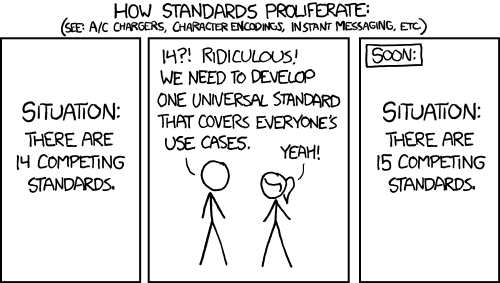
What we need is a standardised benchmarking system for insulated jackets. The time to zero may not be a wonderful real-world test. But it would provide a like for like measure at how well warm air is trapped in a real-world product.
I’d love to hear some thoughts as to why this approach may or may not work. And why the industry seems so reluctant to offer a meaningful measure of their insulated products.
Cheers,
Andy