Roger Caffin’s post of 8-3-18 amply demonstrates that of the various ways to add wind resistance to a tunnel tent, side guylines with securely placed stakes trump them all. I think this might apply to most rectangle-shaped tents with front entries; that is, entries on the shorter side of the rectangle.
But side guylines can be a lot or work, especially on ground that is either too loose or too rocky to securely hold a stake. And why go to the bother, if the tent, anchored at its corners, provides enough wind resistance to meet anticipated weather, as is very often the case.
So there remains the question of whether without side guys, the Quadratic tent improves wind resistance over other designs. In a recent thread begun by Eric B. entitled, AN OUTDATED TENT DESIGN, Geoff C. posted an image of a ‘geodesic’ tent:
https://backpackinglight.com/forums/topic/an-outdated-tent-design/

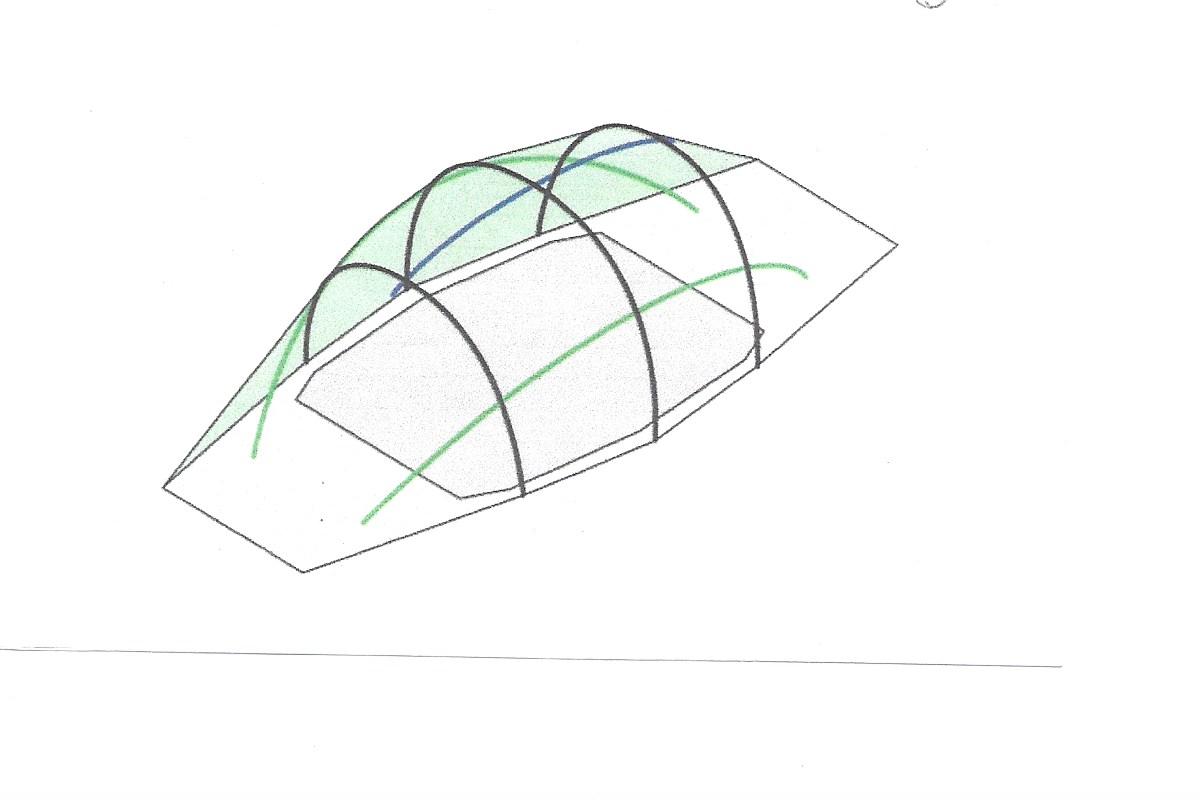
I think the image is clear enough to provide a clear idea of the tent’s pole structure. The pole structure of the Quadratic tent is more complex, but a fairly clear diagram is provided on that tent’s website:
I spent some time comparing the pole structures of the two tents, looking particularly at the pole crossings, and evaluating whether compared to a tunnel tent without pole crossings, how much resistance the crossings add against winds striking the tent from either side. It seemed readily apparent from the above diagram that pole crossings on the side hoops of the Quadratic tent would add little resistance, as not much force is needed to prevent the hoops from being pushed outward should high winds threaten to blow the tent sideways, possibly fracture one or more of the three main hoop poles of the tunnel, and produce a flattened tent. And while the side hoops appear anchored somehow to the tent at the floor, when they are forced outward, there is little that appears to prevent their ends from pulling upward and allowing the side hoops to be pushed out even further.
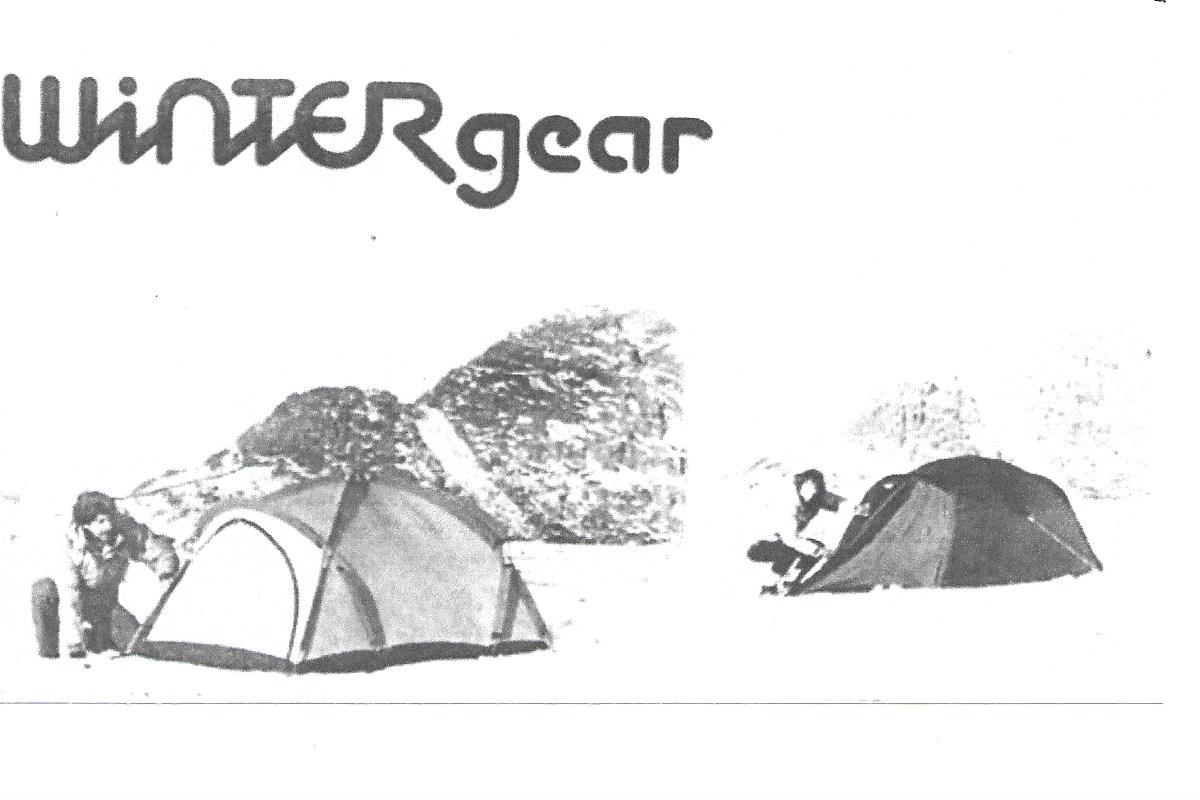
The Winter Gear tent, on the other hand uses less poles thus less weight and less pole crossings, and all the poles that cross are hoops running over the tent’s entire width, and thus reinforce each other against lateral wind forces.
I don’t think it is enough to say that the Quadratic’s poles are anchored against movement at the points where they cross, as that will be the case with any tent that is designed to effectively use pole crossings to increase wind resistance.
While the Winter Gear design may not be a true ‘geodesic,’ some might call it that in order to place it in a different category; but it uses less poles than the Quadratic, and along with its increased wind resistance, can be built lighter. Compared to a Quadratic, I would be much more comfortable taking a 4 hoop Winter Gear tent into high open terrain, and would still have the option to use sideguys if surprised by hurricane-like winds. And I don’t think it would be that much more difficult than a tunnel to pitch in high winds, especially if the poles can be inserted in their sleeves and anchored while the tent is still on the ground, and then like a tunnel, can be staked at one end and raised with one motion.
It was not easy trying to find a current version of the Winter Gear tent. On most of the offerings, the front and rear hoops are completely separate from the center hoops that cross on top, and do not cross any portion of the center poles. Something remotely like it is sold by REI:
https://www.rei.com/product/136247/rei-co-op-arete-asl-2-tent
But it is a six lb. tent, and incorporates pole crossings to reinforce the sides only on the front end of the tent, but not at the rear, which looks like the designer left the tent on the drawing board and forgot to come back and complete it. Perhaps someone will be able to find something like the Winter Gear on the current market that is light enough to consider for BPL. Otherwise, it would be quite a challenging MYOG project to reproduce it in lightened form. And if the tent is to be intended to withstand high winds, and Roger’s guidance is followed, it would be necessary to make the Winter Gear inner become a waterproof outer, and construct a breathable inner to clip inside.
Looking for an ideal tent on the current market reminds me of an old story in New England of travelers seeking directions being told, “You can’t there from here.” Hope to get around to building something that can readily be duplicated by packers with basic sewing and construction skills.