


Companion forum thread to: Nemo Equipment Hornet OSMO Elite 1P Review
A review of the Nemo Equipment Hornet Elite 1P ultralight tent, evaluating its design, setup, weather resistance, and durability for backpacking.
Topic
Become a member to post in the forums.
 .
.
Companion forum thread to: Nemo Equipment Hornet OSMO Elite 1P Review
A review of the Nemo Equipment Hornet Elite 1P ultralight tent, evaluating its design, setup, weather resistance, and durability for backpacking.
My older Nemo Hornet 1P is from about 2016 and it was a model before the flybar was added. The 1P doesn’t need a flybar imo. My seam tape is now coming off and a zipper slider is not working well, but I do love the tent.
Thanks for the review. I purchased my Nemo Equipment Hornet Elite 1P ultralight tent a year ago, sadly I had to replace my much loved 15 yo first generation ZPacks Hexamid, which was no longer usable, I really like my Nemo Equipment Hornet Elite 1P ultralight tent, it is easy to put up and pack up and it is very quiet in wind.
I’ve used. 2p for @ 6 years and love it. As a tent used by 1 person, it’s a mansion.. Have used it rain and wind with no problem.. Always in the market for a new tent, however despite some very good new comers to the market, my 2p is still my choice

I wanted to add some context here for the new gen Nemo Hornet Osmo Elite 2P as well, as a point of contrast to the 1P in Emylene’s review.
First, we have a review on the Hornet Elite 2P, but that’s not the current-gen Osmo version, and they are indeed different animals. The Osmo fabric is thinner, lighter, stretchier, and perhaps a little less dimensionally stable.
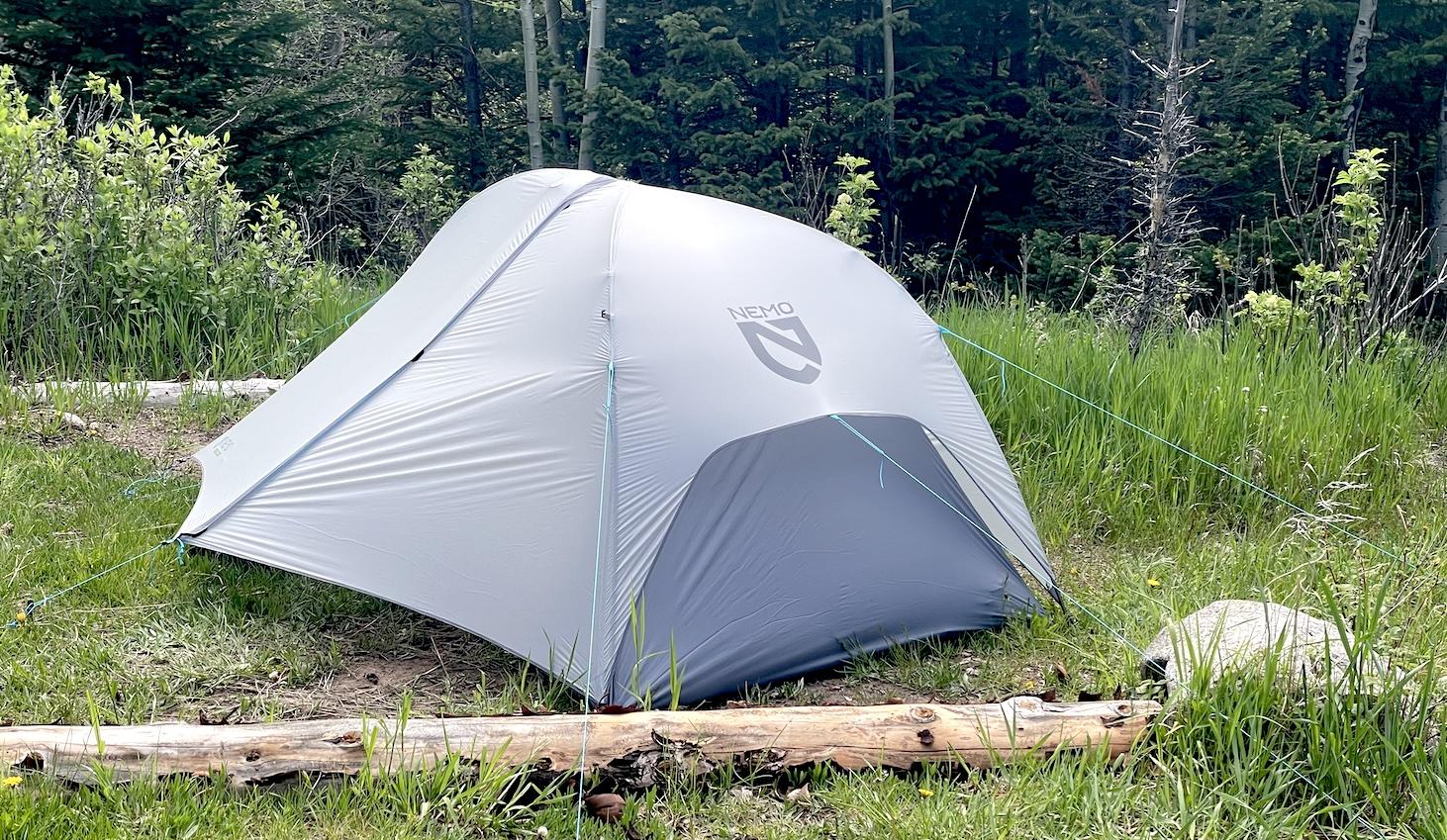
My primary issue with the Osmo fabric is that if it is not under tension, it’s prone to sagging in cold/humid/wet conditions. If you are using this shelter for wet conditions, or windy weather, more stakes and guylines should be considered mandatory. It’s a semi-freestanding shelter, but with its minimum number of stakes, it’s just not enough. You can find a lot of photos of these tents looking kind of saggy, and this is why. It’s not user error or an inherent “problem” with the product, it’s just something to be aware of and it’s common among many hub-and-pole tents on the market. Hub-and-pole curved pole structures just aren’t very good at maintaining panel tension.
Photo of my 2p Osmo Hornet Elite, with extra stakes and guylines:
A few caveats:
Not a 2 person tent. With two people, this is a really tight fit. You better be really good pals and not expect to stow a lot of gear in there with you. Solo, or with a dog, the 2P is just about right. The 1P was way too small and cramped for me for a tent. And I like bivy sack camping, so I can do small and cramped pretty well.
If you crank down the guylines too tight, you’ll easily disrupt the tent structure because the poles are just too light, and the hub-and-pole structure too wobbly – to create serious structure that will resist really high winds or snow loads, etc. Again, not a unique issue with this shelter per se, but something to consider when you lighten up poles and fabrics of hub-and-pole designs in the ‘ultralight’ category.

I was considering a 1P but after seeing so much sag, I will hold off.
I picked up one of these on sale to have to for very light and compact solo-trips.
I don’t do a lot of those trips in a year, so this was the first time I came across a tent that was significantly lighter than my other setups, at a price I could justify for a rather narrow use case.
For what it was intended, I can’t really say anything bad about it.
Actually wish there were more opportunities to use it, but most of my trips I do together with one or both of my kids (almost grown up size at this point) and/or in conditions where I wouldn’t trust this design (high elevation, winter etc.).
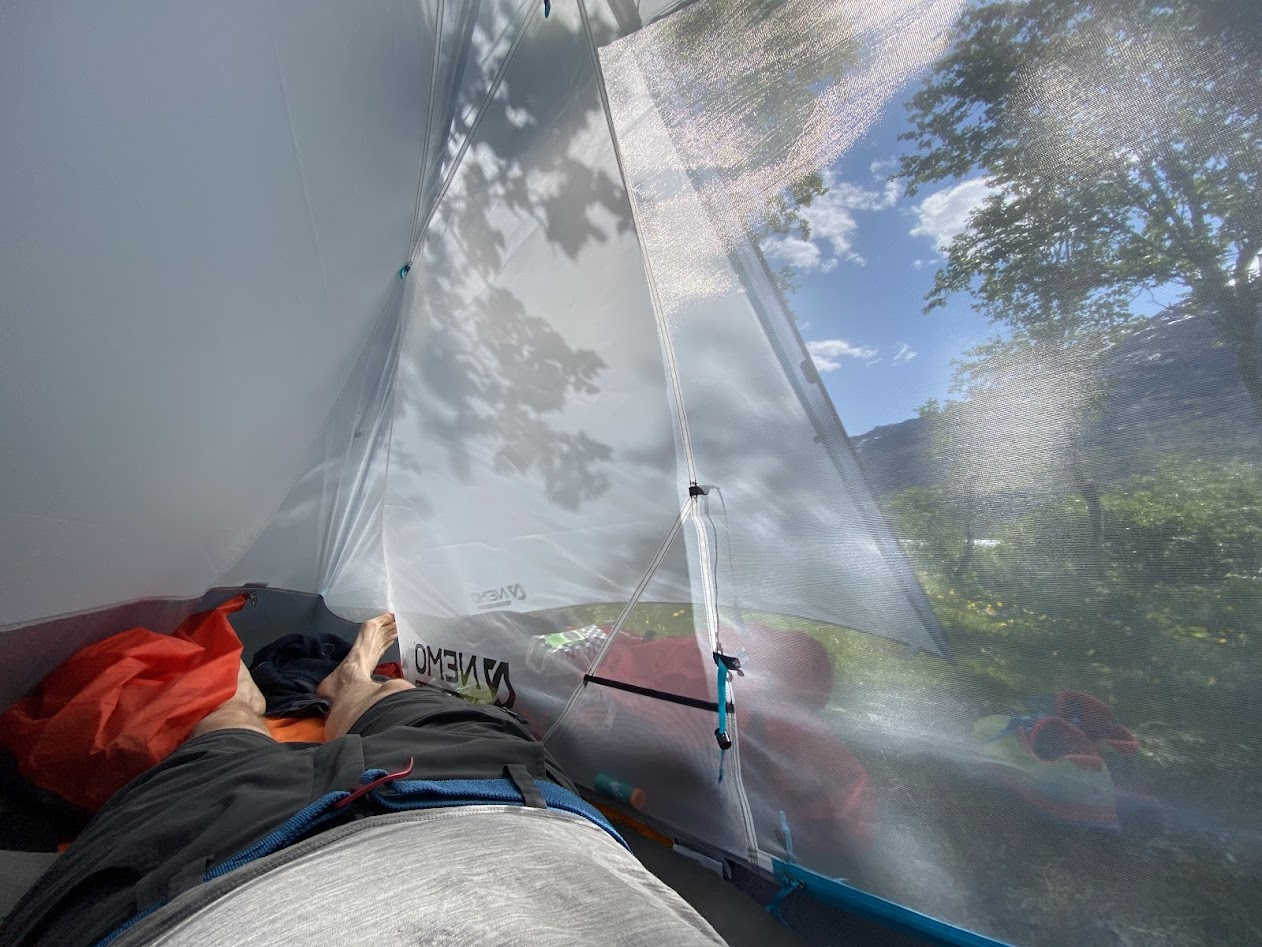
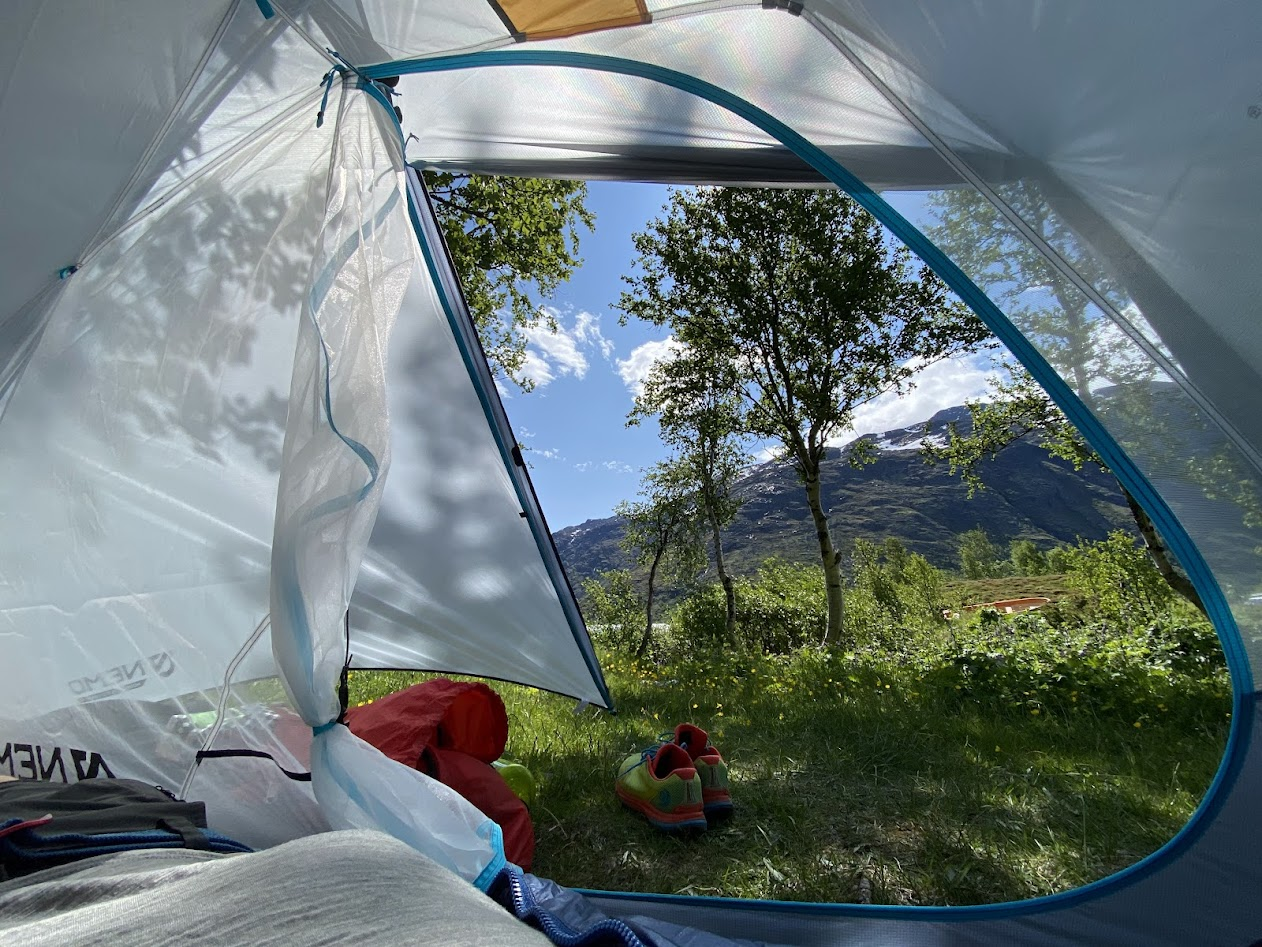
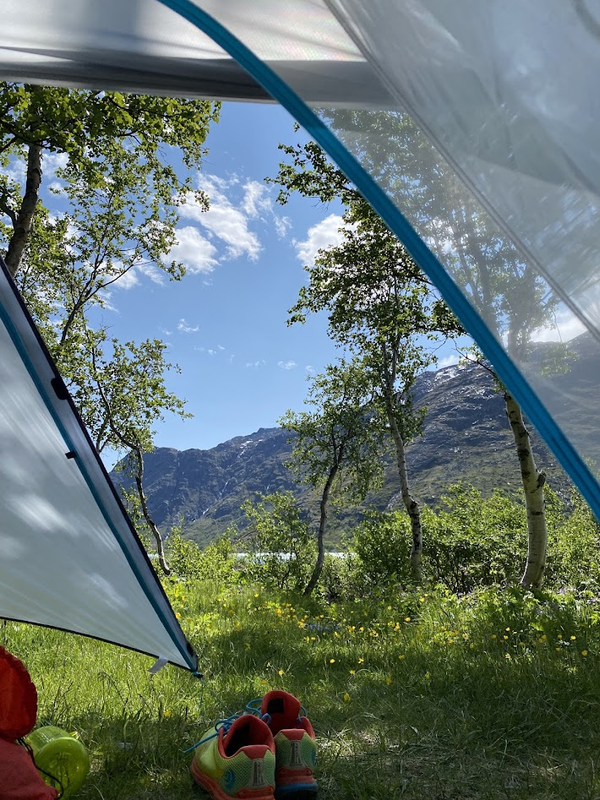

In the review I especially noted the photo of the plastic mitten hooks used to connect the inner to the outer to increase volume. I have other tents with mitten hooks used similarly to connect the inner to the outer. They’re a pet peeve of mine, because I find them difficult to clip, especially when fingers are cold and stiff. A number of cottage makers sell metal mitten hooks and I’ve used them to replace the plastic ones on at least one of my current tents. They’re fantastic. They’re much easier to clip and unclip, and they don’t deform under tension.
Nemo seems to have improved the corners with metal keylock style pole sockets. I wish they would similarly switch to metal mitten hooks.
Both the Hornet and the Dragonfly (older versions) have a deep cutout in the rainfly on at least one end of the tent.
Case in point:
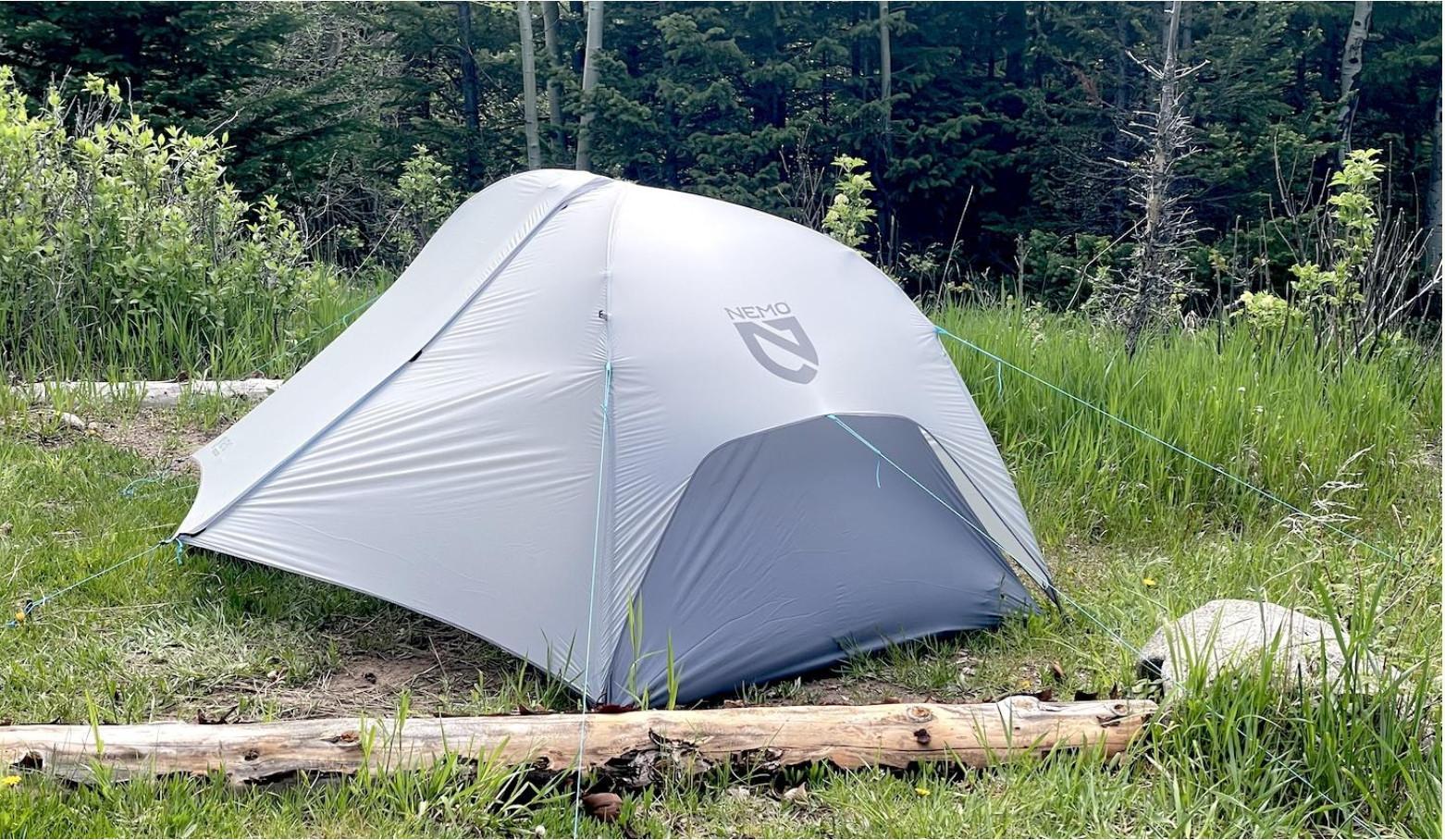
This design detail seems to be fairly unique to Nemo. I haven’t seen anything similar on lightweight freestanding tents from e.g. Big Agnes (Copper Spur, Tiger Wall).
Our outdoors club has a Hornet 1P and a DragonFly 1P. Members with beginner level backpacking experience have borrowed these tents and complained that they leaked and their sleeping bag got wet. I tested them both with a garden hose and they’re completely water tight, leading me to conclude they were suffering from condensation on the waterproof inner fabric where it’s been exposed with these deep cutouts.
I noticed that for the 2026 model year, Nemo changed the design of the Dragonfly. The rainfly no longer has this deep cutout. It comes down to within inches of the ground similar to other tents from BA, REI, MSR, etc.
So for those of you who own these Nemo Hornet tents (Emylene, Ryan, Haakon) how has your experience been with condensation? This effectively makes the tent a single wall at the foot end. Do you find this problematic in condensation prone conditions or do you compensate with better site selection?
@Haakon R How tall are you?
186cm /6.1′
Become a member to post in the forums.
 Brynje Mesh BaselayersBrynje baselayers use open mesh construction to move moisture away from the skin, create insulating air pockets, and help regulate body temperature across changing conditions and activity levels.
 © Beartooth Media Group Inc.
 Loading...