Topic

How critical is AWD for getting to trailheads and dispersed campsites?

Viewing 25 posts - 1 through 25 (of 96 total)
lisa r BPL Member
PostedJan 2, 2021 at 2:18 pm

I’ve been mulling a kind of wacky idea for the last few months and I’m curious if any of you have useful insights that might help inform my decision. I’m considering trading in my Subaru Forester for a minivan (likely Toyota Sienna) to serve as my daily driver and adventure rig.

My primary goal is having more space for camping in the car with gear (me + bike, skis, etc.) during fall/winter/spring when I’m less interested in backpacking or sleeping in a tent. I’d like the minivan to be able to go the same places as the Subie, so the plan involves having the van lifted about 2 inches to get comparable ground clearance. The thing I’m hung up on is the all wheel drive.

Siennas are available AWD but it will increase the price significantly and probably beyond my price range. My research suggests good tires may suffice in lieu of AWD and that AWD really only helps you get rolling in slippery conditions. I rarely drive on snowy roads, so I’m not concerned about that. I’m more concerned about driving on really rough and rocky roads (the kind where you have to pick and crawl your way through, though not so rough you need a 4×4) and whether FWD will do the trick. All my cars over the last 15 years have been AWD so I don’t have much frame of reference anymore.

I’ve also lightly considered sizing up but sticking with SUV, like a 4Runner or Subaru Ascent. They only add about 10cu ft of cargo space over the Forester and they’re much more expensive (into the range of the AWD Sienna) so probably not worth it.

Thanks!

PostedJan 2, 2021 at 2:40 pm

For your intended purposes, FWD is all you need. AWD is vastly overrated for most people and most scenarios.

Jeff Y BPL Member
PostedJan 2, 2021 at 2:42 pm

Not really very useful, in my experience. Great for peace of mind. I do get to enjoy some areas that are more remote because of having an off road SUV, but I enjoy off roading and exploring trails in my car, and have lots of recovery equipment (winch, tow straps, pulleys, etc.) and know how to use it. I only say this because I tend to seek out more difficult trails and roads because of it. However, there are soooo many amazing hikes and campsites that are accessible by 2WD. My mentality is that I’d rather get a normal campsite as most people, reserved or at an easily accessible location, then hike deep into the woods to enjoy my experience. You can drive there, too; but it really adds to the expense and complexity.

PostedJan 2, 2021 at 2:59 pm

I built a pretty comfortable sleeping rig in my Rav a couple of years ago, I’d think you could pretty easily do so with your Forester, unless you’re really tall. Gear would be on top of the vehicle. I actually had mine set up so I could sit in a camp chair inside the vehicle and watch a movie with a pico projector and some cloth hung up at the rear hatch. I use an Exped Megamat for my mattress.

To answer your thread title question though, as others have said, AWD is a nice to have, not a need to have, to access most trailheads, you just might have to go pretty slow.

Jerry Adams BPL Member
PostedJan 2, 2021 at 3:09 pm

another factor is ground clearance

with potholes and water channels that can be more important than 4WD

SIMULACRA BPL Member
PostedJan 2, 2021 at 3:20 pm

another factor is ground clearance

+1

So many Fbomb potholes where I go. My AWD does great for traction on the backroads but I lack in clearance. The 2″ lift is a good idea if you go that route

Luke Schmidt BPL Member
PostedJan 2, 2021 at 3:21 pm

I think you’d run out of ground clearance before you needed AWD. I think your plan is solid. More space and a place to sleep are always nice.

Do you have kids? If not I would think a small truck with a topper would be great.  I have a Chevy S10 and it’s just big enough to sleep in the back. Its great being able to throw wet or muddy stuff in the back.

Bonzo BPL Member
PostedJan 2, 2021 at 3:39 pm

The usefulness of any drive system depends on the application and the current terrain more than anything else; both AWD and FWD have just as many benefits and just as many drawbacks, each compared to the other.  There’s no blanket answer, there.

My research suggests good tires may suffice in lieu of AWD and that AWD really only helps you get rolling in slippery conditions.

A better way of understanding most AWD systems is that they apply traction where needed in low-traction situations, regardless of your velocity; by applying power to anywhere between one and four wheels, selectively, you increase your chances of gaining traction at any time.  Correct tire choice always helps, but good tires are absolutely not a substitute for an AWD system (or any other traction-adder that’s inside the drivetrain).

I’m more concerned about driving on really rough and rocky roads (the kind where you have to pick and crawl your way through, though not so rough you need a 4×4) and whether FWD will do the trick.

Crawling is 4WD territory, but picking your lines and using the correct tire pressure is smart regardless of what vehicle you’re in.  That said, off-road isn’t where FWD vehicles shine; gravel, sand and loose dirt can stall your progress just as quickly as snow and ice.  You’re going to gain a bit of clearance with a lift, but you’ll still have to deal with only two (or often, at the worst times, ONE) driven wheels, and that’s the real danger on loose stuff: you hit a pocket or a ledge with the driven wheel/s and you just don’t have enough traction to either dig out or bump over, and you have no other tires helping you along.  AWD/4WD helps by (usually) not leaving you in that kind of situation in the first place, because you (almost) always have another tire on the other end of the vehicle pushing or pulling you along.

This being the case: if you do want to swap to FWD, the best thing you can do – aside from proper tires – is to carry some basic recovery equipment.  You’d be surprised by how much you can do with a folding shovel and a traction board; likewise, learn how to stack rocks under tires, and how to spot problems before you hit them (usually with an oil pan).  Piloting off-road rigs is the same as hiking, after all: if you don’t know what you’re doing, all the gear in the world won’t help you…so a bit of knowledge goes a long way.

Iago Vazquez BPL Member
PostedJan 2, 2021 at 4:19 pm

Lisa, perhaps you could tell us where you typically recreate, which would allow local members to give more personal experiences. When you get to your parking spots, do you typically see minivans there?

I may have missed it, but I don’t recall reading concerns about mud… Again, telling us the region may help.

Also, I am sure you have done some research, but I doubt that a 2 inch lift on a Sienna will allow for similar approach, departure and wheelbase angles as a Forester… But I really don’t know what I am talking about… Just my guestimation, which could be totally wrong.

Also, I have some concerns about what the 2 inch lift will do to the Sienna driving dynamics…

Like Doug, I would probably keep the Forester if you fit inside. You should still have room for skis I would think. Perhaps bungie corded to the hand holds at the top of the doors if you need more floor space… Wrapped in some fabric if worried about scuffs in vehicle trim. And lock my bike outside the vehicle. If security is a significant concern, then a fat chain from the hardware store and nice lock would probably deter most bike thieves. If you are worried about the weather, a small tarp and cordage/bungies should do it for short money.

Bonzo BPL Member
PostedJan 2, 2021 at 4:27 pm

Also, I have some concerns about what the 2 inch lift will do to the Sienna driving dynamics…

It’s not going to be good, I can tell you that.  Approach and departure aren’t good on the Forester, but a Sienna will likely still be worse even with a lift…but it doesn’t sound like there are going to be that many ledges and holes, regardless.  That, however, is a total assumption on my part.

David Hartley BPL Member
PostedJan 2, 2021 at 7:01 pm

2 inches of lift on something like a minivan is likely going to mess up the steering geometry. Alignment will be anybody’s guess. It will likely reduce the castor and make that vehicle nervous and twitchy on the highway in normal driving. More off-road style 4WD vehicles, like Wranglers and 4Runners, have specialty parts available to deal with some of this.

I see plenty of small front-wheel drive cars at some pretty remote trail-heads. While there are often pot-holes and rocks on dirt and gravel trail-head access roads, it is often possible to navigate around these if careful. I have found that mud is the real problem. Rain can create huge mud wallows on these roads. I would stick with AWD if possible (and be sure and disable the Automatic Traction Control and lock the center differential (if possible) when navigating mud – otherwise the ATC will kill the throttle and your forward momentum to prevent wheel slip.

Todd T BPL Member
PostedJan 2, 2021 at 8:49 pm

For me, 4WD/AWD is not very often necessary, but when it is, it makes a huge difference.  I hit the need most often in the early season when there’s lingering snow here and there.  I may not put the truck in 4WD but for 30 yards, but without it, I’d be turning around and going somewhere else (or home).  I also use it a lot on steepish washboarded loose roads–less spinning and bouncing around.

+1 on ground clearance.

Bonzo BPL Member
PostedJan 2, 2021 at 8:51 pm

2 inches of lift on something like a minivan is likely going to mess up the steering geometry. Alignment will be anybody’s guess. It will likely reduce the castor and make that vehicle nervous and twitchy on the highway in normal driving. More off-road style 4WD vehicles, like Wranglers and 4Runners, have specialty parts available to deal with some of this.

Just to be clear: steering (and other things) will be altered, yes, but at 2″ of increased loaded spring height, you may or may not need to change out parts to regain factory-esque steering.  Depending on the front suspension and steering design, the increased spring height may or may not be within the adjustment range of factory parts.

PostedJan 2, 2021 at 9:05 pm

I know of a Toyota dealership that installed a lift kit on a Sienna. Seems like they wouldn’t have done that if it was going to mess the vehicle up.

Jeff Y BPL Member
PostedJan 2, 2021 at 10:42 pm

If your thinking of lifting a Sienna, time to hit the Toyota forums! Good luck. Seems like more work than it’s worth, but to each his own.

David Thomas BPL Member
PostedJan 3, 2021 at 12:57 am

I got to an awful lot of hiking and caving trailheads in a FWD 1988 Chevy Nova (Toyota Corolla).  The weight was on the drive wheels, it was light enough to not bog down, and I kept a few 4-foot 2x8s in the trunk and would use those to get across deep ruts (like 4WD pickups that had dug a muddy rut after the last rain which had hardened in place).  And, it if got stuck, any other vehicle or just a few people could push or pull it out.

It was a “working car” from the start (went to an oil spill when it 4 days old), had up to 9 college students in it to get to local hikes, barreled down lots of dirt roads at high speed, went to all my toxic waste sites, hauled three 55-gallons drums in the roof (empty), and once transported about 1600 pounds from Anchorage (a full-sized fridge/freezer on the roof, me, and 700 pounds of ceramic tiles).  That definitely  effected the handling.  Got to 1.6 light seconds (500,000 km) with only two $100 repairs but my wife made it give it up because it was pretty doggy at that point.  Never got inside the engine (except for scheduled timing belts) and did it all on the original clutch.    Someone else drove it around town for a few more years.

Paul Wagner BPL Member
PostedJan 3, 2021 at 7:41 am

Sounds like a great deal, Dave!  How much did you sell it for?  ;>)

Meanwhile, I’ll add my voice to the suggestion that ground clearance is more critical that AWD/4WD for most of the USFS roads in California…We make do with an e-350 Ford van…with tons of clearance. Here’s a photo of it in Death Valley on Titus Canyon Road (described as 4WD by the park service…it’s not)

https://photos.app.goo.gl/iXyP48JX7F6djVjK8

PostedJan 3, 2021 at 8:48 am

It really depends on where you’re going. As others have pointed out, ground clearance can be more important than AWD. Don’t dismiss AWD if you’re in mud.

There are plenty of SUVs out there that can give you the space, clearance and traction you need.  Vans will have more usable space, but do you need it?

PaulW BPL Member
PostedJan 3, 2021 at 9:32 am

+1 more for ground clearance. This can be especially important on longer wheelbase vehicles. Something else to consider if AWD or 4WD are not in your budget is a locking, or limited slip differential. I had a 2WD pickup years ago that I installed a limited slip diff in and it made all the difference in the world for traction. These are not available for all vehicles, but it could be something to consider if you buy a new vehicle. Personally, I’d keep the Forester. I’ve seen Foresters and Outbacks in places where I’d be hesitant to take my 4WD pickup. Check out Youtube for some interesting videos.

Dan BPL Member
PostedJan 3, 2021 at 9:32 am

For me, the most relevant difference is between AWD and true 4WD capability, not between AWD and FWD.

The vast majority of the places I go could be accessed with decent clearance and FWD, and I don’t think that AWD offers much of an additional benefit on those roads. However, each year I go to a few trailheads where I absolutely need 4WD with clearance, a climbing gear, and preferably a locking differential. The Subarus are parked miles from the trailhead. The problem is that you rarely know in advance whether you will need those capabilities.

PostedJan 3, 2021 at 10:41 am

I drove to Big Sandy from Pinedale (Wyoming – the Winds) and then from Green River Lake to Pinedale in a 2wd, 4-cyl Ford Ranger. I’ve also driven the Ford Ranger to the trailhead for White Mountain Peak in California. Both of those drives were the most difficult things I ever did in that truck. To get up one tricky hill to Big Sandy I got a really fast running start on the downhill section before it and burned the clutch in spurts to get up. On the way back from Green River Lake the back would slide out on all the mud all the time but I just kept my speed up so I wouldn’t get stuck. For the drive to White Mountain, after a few failed attempts up this one hill, I loaded a bunch of heavy rocks in the back and then burned the clutch up to the top. I don’t recommend anybody use such a weak and under-powered vehicle as that to get to difficult trailheads that’s for sure. Or to drive I15 through Utah. Speed limit 85 and all I could do was get in the slow truck lane and grind my way up at 35mph in third gear.

Bruce Tolley BPL Member
PostedJan 3, 2021 at 10:58 am

@ Lisa

As others have said, it depends on the road. I would say in summer in the West you would be just fine in an FWD medium to high clearance vehicle that the USFS has classified as maintained.

@ Diane

“For the drive to White Mountain, after a few failed attempts up this one hill, I loaded a bunch of heavy rocks in the back and then burned the clutch up to the top.”

I do not recall the drive being that difficult. Was this during the time of the year then the gate is open and you can drive further in?

Lowell Mills BPL Member
PostedJan 3, 2021 at 1:05 pm

As noted above, I’d worry a little about the handing dynamics of a lifted unibody van; you just don’t see many of those.

I don’t have the experience of many here but, having driven a stock 4WD 4Runner and Tacoma since 1987, I’m a big proponent of, with a few exceptions, staying in 2WD off-road and, if I get stuck, using 4WD to get back out and taking it as a sign from the gods that I’ve gone far enough.

In comparing AWD vs 4WD; besides the aforementioned locking rear differential, 4WD also comes with a low-range transfer case.  I used this on the old Moffet Trail over the CO continental divide and it was truly handy to just idle along in first gear low range, plus I could sleep in it.

With the Sienna’s independent front suspension, I’m not sure how difficult it is to add a locking differential.  FWD with traction control might be the next best thing.

Kattt BPL Member
PostedJan 3, 2021 at 1:17 pm

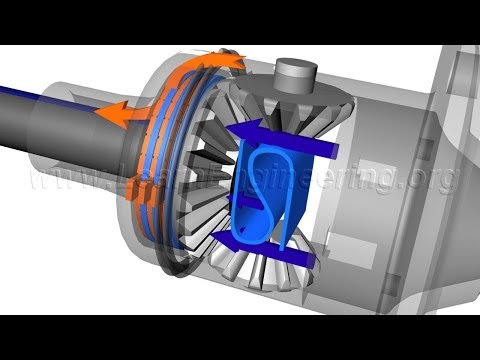
Related to the thread….this video on how differentials work and the following one on limited slip differentials are both worth watching. “Learn Engineering” YouTube channel has been a great tool for me.

Youtube video

Youtube video

Kattt BPL Member
PostedJan 3, 2021 at 1:55 pm

Mud. Even if they roads that get you to a trailhead are not a challenge in dry weather that can change drastically after rain. Friday and Saturday we took two trucks and a high clearance van to clear out someone’s cabin in the woods; the road was dry on Friday and no one had any problems. Yesterday the van got stuck repeatedly and we had to lock the hubs on our trucks to make it trough the mud ( and pull the van out). AWD and 4WD seem overkill most of the year but the few times you need them, it sure pays off.

Viewing 25 posts - 1 through 25 (of 96 total)
Loading...