Topic

Hiking Pants state of the market in 2019

Viewing 25 posts - 51 through 75 (of 101 total)
PostedMar 21, 2019 at 10:40 pm

My first issue is finding good pants in 38×36. A lot of manufacturers seem to think inseams should be 34 or less. When I started hiking, I just wore my 5.11 Apex pants (21.8 ounces) that I use at work. They are an extremely comfortable pant that I don’t really get hot or cold in and have the extra pockets I like for traveling and for carrying some items. The Apex pants have a bunch of stretch and give, including in the waist, making them very comfortable. I got a pair of Prana Brion pants (about 7.6 ounces) and really like them as they are a little lighter than the 5.11s but are baggie at the feet and have no side pockets. I got a pair of Prana Stretch Zion pants (about 13.6 ounces) and am still trying to decide how much I like them. I got a pair of Columbia Silver Ridge pants (unknown weight) cheap on Amazon and after trying them on, threw them in a drawer. They feel like disposable pants to me. The newest pair I bought is the Kuhl Konfidant Air pants (unknown weight) and have found I really love these except for the snap on the waist (wish it was a button). Going forward, I will continue to buy the Kuhl pants and use them for one bag travel and hiking but I have many pair of the Apex pants and will continue to hike in these as well. I’ll use my Prana here and there and as a “nicer” travel pant. Yep, i like pants too!!

Jim Marshall BPL Member
PostedMar 25, 2019 at 4:34 am

So I know this is a little unusual, but I just wanted to provide an alternative that I have not seen mentioned here yet:

I just used my REI dividend (and 20%-off coupon) to purchase the Patagonia Terrebonne joggers after trying them on multiple times in store and I am STOKED to give them a try! Every review I have read on every site I have visited (REI, Patagonia, Moosejaw, Backcountry, etc.) is extremely positive, and I think they are going to be a major win for my combination of sun-sensitivity and easy over-heating in the California alpine sun. Again, I know this is a little unusual, since I haven’t actually tried them out in the backcountry yet (they arrive on Thursday), but I have struggled for a few years now finding convertible pants that would work for me, and I think the ultra-lightweight nature of the terrebonne’s is going to be perfect. Add to that the fact that I have meaty thighs making it near-impossible to find pants that fit, but the Terrebonne’s have plenty of room in the rear and thigh without looking like MC Hammer (read: Rail Riders). These are somewhat unconventional in their simplicity, but they may be your magic bullet. I sure hope they’re mine!

Happy Trails,

Jim

Axel J BPL Member
PostedMar 25, 2019 at 2:57 pm

Jim, Thanks for sharing the link to the Pat Terrabonne pants. I really appreciate the waist using elastic and draw string as opposed to belt loops. My go to pant of late are the prAna Super Mojos. 

They are conceptually similar in design except the Terrabonnes are much tighter at the ankle.


Paul S. BPL Member
PostedMar 25, 2019 at 6:08 pm

I think they are going to be a major win for my combination of sun-sensitivity and easy over-heating in the California alpine sun.

My experience in the Sequoias last May was that the Terrebonne pants were much too hot in the afternoon sun.  They have decent breathability, maybe around 40-60 CFM but the tapered design means they are very effectively in trapping in heat.  A baggy pair of pants with open ankles would do much better in the heat, especially with a light color.

I’ve kept the pants for shoulder season and they do surprisingly well in the rain due to no spandex and good DWR but I don’t take them out in the heat anymore.

Brad Rogers BPL Member
PostedMar 25, 2019 at 6:15 pm

“A baggy pair of pants with open ankles would do much better in the heat, especially with a light color.”

Exactly why I like the MC Hammer-ish RR Echo Mesh pants. The mesh side vents, light color, and baggy fit make them king among pants for keeping you cool.  When it cools off in the evenings, you can at least zip up the vents to make them, “regular” supplex nylon pants.

Just don’t wear them to try and pick up trail chicks :)

Brett Peugh BPL Member
PostedMar 25, 2019 at 9:13 pm

It is fun to read this but I still wear the old REI Sahara pants with the built in belt from over 10 years ago.  If there is a really big turn in tech, please let me know.

Brad Rogers BPL Member
PostedMar 25, 2019 at 10:16 pm

Nothing new in tech for pants – My RR pants are 8 years old.

I think there have been some advancements in baselayer technology, but supplx nylon is still king of pants.

PostedMar 28, 2019 at 6:31 pm

Brad and Brett

You guys are correct on the “no new tech” on hiking pants. Still the same blends of various threads.

Brad, your RailRiders pants are great and top quality but I’ve been buying Duluth Trading pants that are very similar to RR pants for about 25% lower price. Ex. my fleece lined nylon Dry on the Fly cargo pants are only $89. and the unlined version is $79. Great quality in materials, design and construction.

PostedMar 28, 2019 at 8:09 pm

I hope this question isn’t to far off this subject. What do ul folk use for belts? I read about suspenders using plastic clips but I’ve never seen such a product. Thanks

Brad Rogers BPL Member
PostedMar 28, 2019 at 10:34 pm

The RailRiders pants comes with an UL belt that has a plastic buckle.   I forgot it for a trip in WRR so I bought a belt in Pinedale- not as light (Bison Designs maybe?) but got the job done.

Gumbo BPL Member
PostedMar 30, 2019 at 12:44 am

I have light skin that burns easily. I save a lot of weight wearing long pants instead of carrying a ton of extra sunscreen on multi-day hikes. Often hiking in summer, I’d like to find a lighter, more breathable pant.

Based on @idester’s recommendation, I grabbed a pair of ExOfficio Sandfly pants on closeout. I was able to compare them to my RR Zion Zip-Off and OR Ferrosi pants. (I’ve never been able to bring myself to wear the baggy RR EcoMesh.)

I was surprised to find that the Ferrosi fabric is by far the most breathable of the three. Coffee filter test: Ferrosi <1 filter; Zion ~1½ filters; Sandfly ~2 filters. Of course, the Sandfly compensates with the mesh panel in the inner thigh, but I was really surprised the fabric was so much less breathable.

The Sandfly fabric was delightfully soft, though I’m not fond of the press-studs on the legs. The ones I received were too short, and will be going back. I’ll be sticking with the Ferrosi‘s for now. They fit weird, but are amazingly comfortable with a ton of stretch. If I’m feeling adventurous, perhaps I’ll try stitching in my own mesh panels :-).

PostedApr 20, 2019 at 2:21 pm

Probably the coolest combination for legs that I have tried that was still inhernently sun protective, was a combination of wicking nylon mesh “gym” shorts with the liner cut out, and all Dyneema fabric (white), large arm sleeves (my legs are skinny).  The latter are sold as protective wear for work and industry for primarily cut protection. They aren’t that expensive considering the material. I think I paid around 20 dollars for a pair.

Dyneema fabric’s thermal conductivity is not far from water’s. It feels noticeably cool to the skin. Also the weave is very breathable.

Not 100% ideal, as the dyneema sleeves would periodically fall down. But a velcro type tab from shorts to sleeve would solve that easily and completely.  It was just an impromptu experiment at the time. I suspect that like polypropylene fabric, this would get very stinky fairly fast, which is another potential downside.

Obviously wouldn’t work for folks with either very long, or very thick legs. I have somewhere between 31 to 31.5 inseam, and as mentioned fairly skinny legs.

Neither the top nor bottom of this ensemble is particularly bug protective, but imo/e, that’s what wind pants are for if it gets bad enough.

It’s reasonable to assume that the Dyneema sleeves will pretty much last quite a long time, and be able to handle a lot of abuse.


Dena Kelley BPL Member
PostedApr 22, 2019 at 2:09 am

So I have some new favorite hiking pants. I’ve been a fan of Duluth Trading Company for some time, and in all honesty most of my clothing is now from them. For hiking I’ve liked both their “Flexpedition” (summer) and their “Black Hills” (winter) pants. But I just discovered their “Heirloom Gardening Pants” and I love them. They’re fairly lightweight, they are rip-stop, they have all kinds of pockets, They’re double layer on the front AND they have pockets for knee-pads, they’re gusseted for easy movement, they have belt loops (you’d be surprised how many women’s pants don’t) and they are designed to be rolled up if you like. I’m sure they make fine gardening pants, but I immediately saw potential for using them for regular hiking and in search-and-rescue where I am a volunteer (one of the reasons I liked that they have pockets for knee pads is in SAR there’s a good chance I’ll be kneeling next to gear or a patient). For my purposes they’re pretty much perfect. And no, I don’t work for Duluth Trading. :) There’s a couple of models in the men’s selection that have similar construction.

PostedMay 5, 2019 at 4:28 pm

Fascinating research somewhat related to my earlier post.  It has been shown that manipulated UHMW PE material, which is the material that Spectra and Dyneema fibers are made of, can attain thermal conductivity levels between metals like stainless steel and nickel!

That is pretty dang amazing, and if applied to clothing, could be used to create true and more efficient cooling clothing. Putting it in perspective, air has thermal conductivity of about .024 W/(m/k), water is about .60, stainless steel is about 14.4, and nickel is about 90.

https://www.sciencedirect.com/science/article/pii/S0032386117306869

But imo, Dyneema fabric the way it already is, already feels noticeably cool on the skin. For any interested, these are the Dyneema sleeves that I bought and have experimented as combining with shorts to create the coolest Sun protective leg conditions that I have ever experienced.

Now, industry could also plasma treat the surface of manipulated fibers (as they do already in Dyneema composite fabrics), and then bond silver chloride to the surface also taking care of the odor factor that is likely with such a hydrophobic material.  Or it could potentially be bonded with graphene, which would further increase the thermal conductivity, as well as likely deal with the odor issue.

An extra note/edit:  Since Dyneema and Spectra fibers are already highly oriented, then it’s quite likely that their thermal conductivity is already higher than waters.  Haven’t looked into that yet.


PostedMay 6, 2019 at 11:46 pm

“An extra note/edit:  Since Dyneema and Spectra fibers are already highly oriented, then it’s quite likely that their thermal conductivity is already higher than waters.  Haven’t looked into that yet.”

Turns out my hunch was correct and then some. Just looked into it. Sourced from:
http://www.dyneforce.com/pictures_org/Dozens.pdf

“Heat conductive
Like steel, Dyneema® conducts heat very well in the direction of the fiber.
High-endurance sports underwear is clearly a potential application.*
Thermal conductivity along fiber axis: 20 W/mK*.”

*My use of bold and italics.  Remember, water is about .6, or in other words, at least along the fiber axis, Dyneema fabric is more than 33 times more thermally conductive than water.

While it would be nice to know the overall conductivity of the material, needless to say, it is much, much more thermally conductive than all other fibers/fabrics made out of polymers. Most other polymers range from about .1 to about .26 or so. Granted, some of that doesn’t matter too much, since all fabrics will still some air, giving some insulation from that.  But the Dyneema fabric is also superior in that in that it’s very breathable, and uses large, round, very smooth fibers that aren’t that good at stilling/trapping air as compared to many other fibers, and Sun wise, it’s very white and reflective.

And I can’t stress enough, how much cool this particular combo of wicking, nylon mesh gym shorts plus large dyneema sleeves was compared to every pant that I’ve ever tried. After I add a couple velcro tabs to my shorts and top of the sleeve, I think this will become my norm for summer hiking when I rarely do it (usually hot and very humid around here, even in the hills and small mountains).

PostedMay 7, 2019 at 11:20 pm

Duluth Trading Dry on the Fly nylon cargo pants ->  light weight, medium weight and fleece lined medium weight (for most winter conditions).

Every bit as good as RailRiders but about 30% less.

DT also has a large selection of long and short legged briefs of several synthetic blends.

PostedMay 10, 2019 at 8:13 am

I’ll get some weights on the nylon mesh shorts + Dyneema fabric sleeves tomorrow sometime.

Think I paid around 3 or 4 dollars for the shorts on a clearance at Epic Sports online (awhile back), and two large Dyneema arm sleeves was about 22 dollars, or at least that is the current price last I checked.

Och, I’m just too bloody Scottish for me own good.

After I add some velcro tabs, I may take some pics and share here.

PostedMay 10, 2019 at 8:07 pm

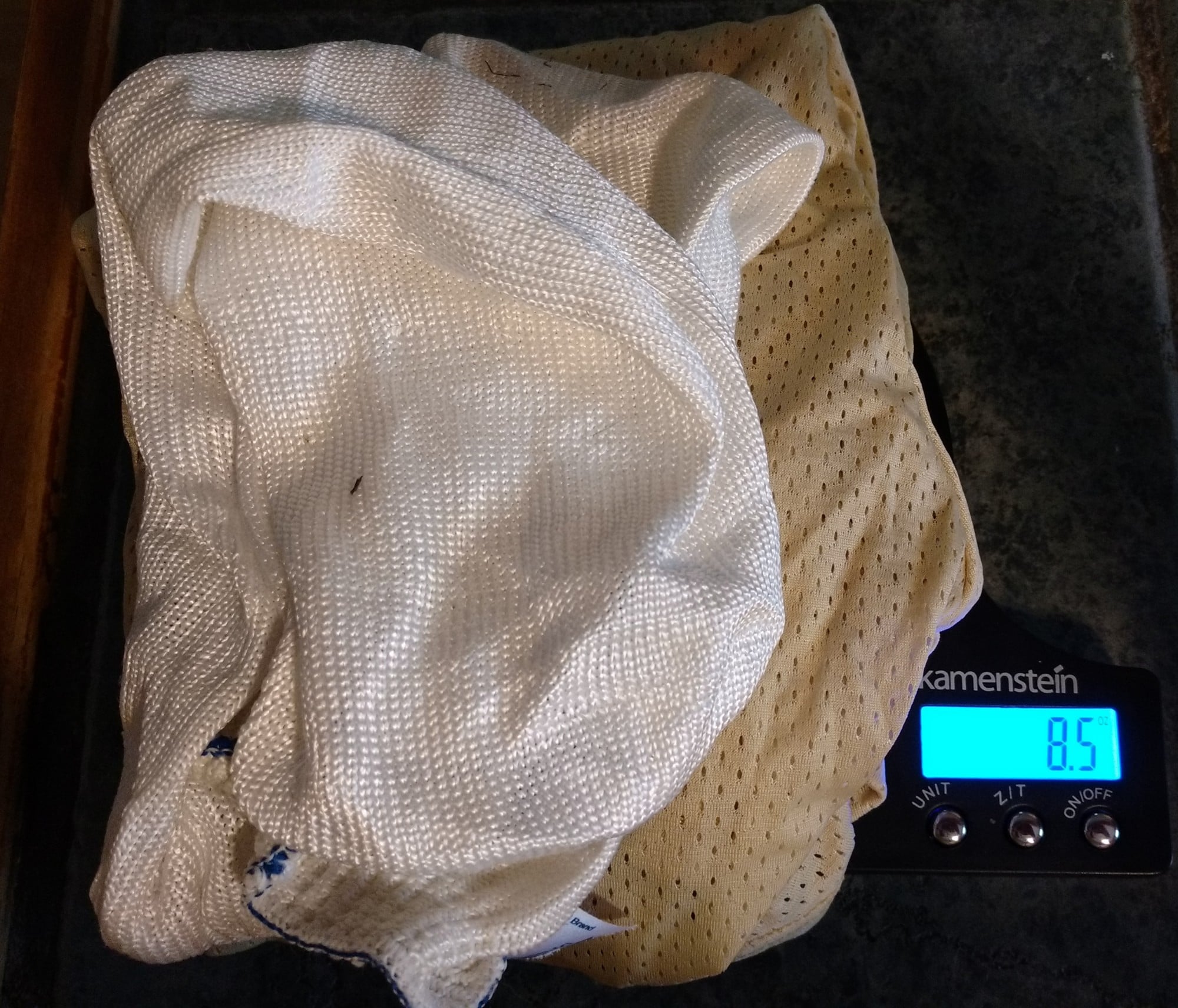
Odd, this is BPL and so many posts without weights.  Not like the old days. Not a judgement, just an observation (kind of like the new and more laid back approach).  Below measurement is in ounces (8.5 oz).  The shorts are mediums and sleeves large. They are actually a little heavier than they normally would be, because I put some light linen fabric on part of the inside of the front, as they are bit see through without the original liner. May share pics later of set up being worn. Haven’t added velcro tabs yet, probably would add like .1 or less oz to the set up  These only would be for a late spring to early fall set up, and most applicable to the usually hot and humid weather in these parts.


PostedMay 24, 2019 at 2:49 am

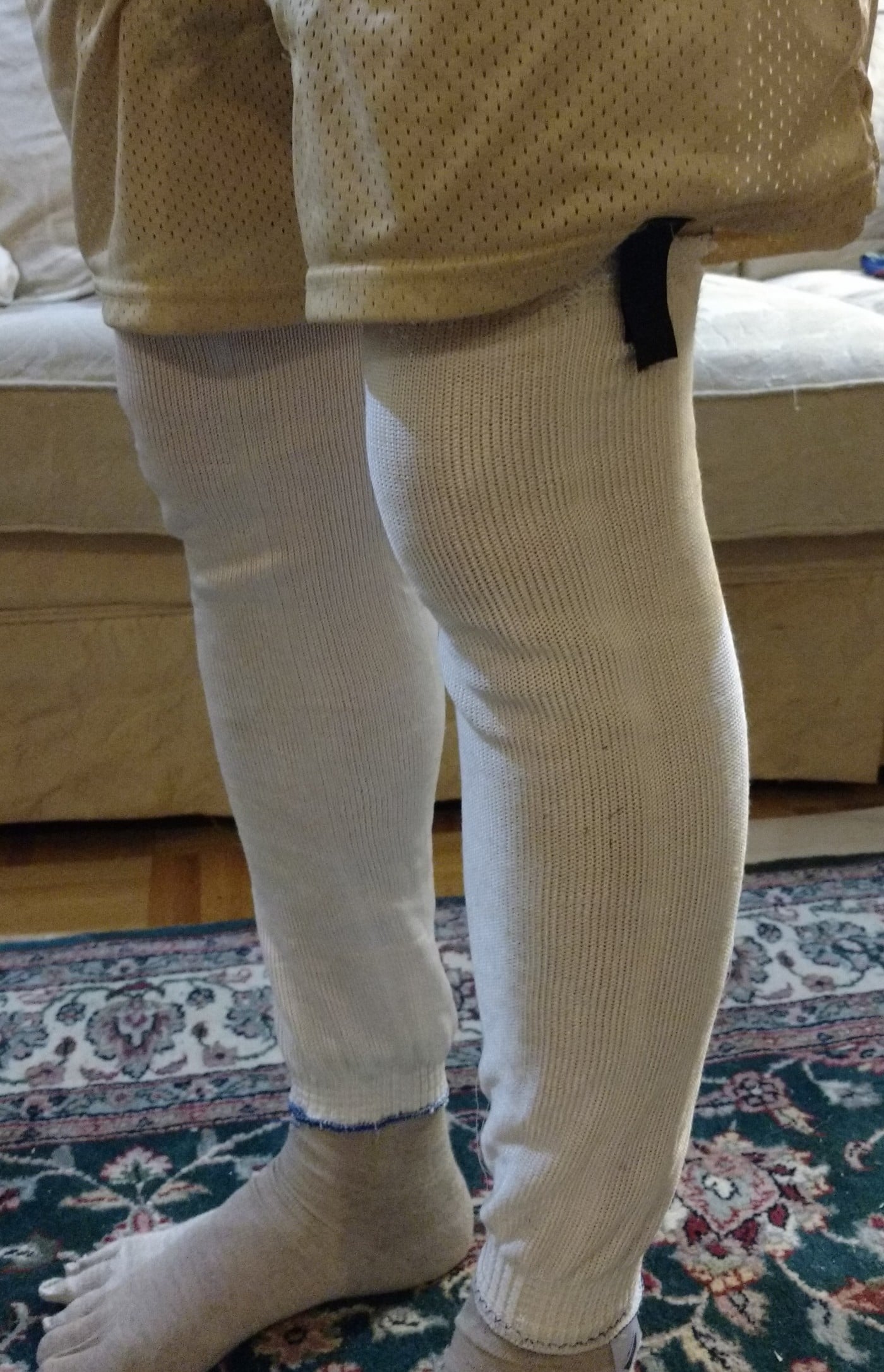
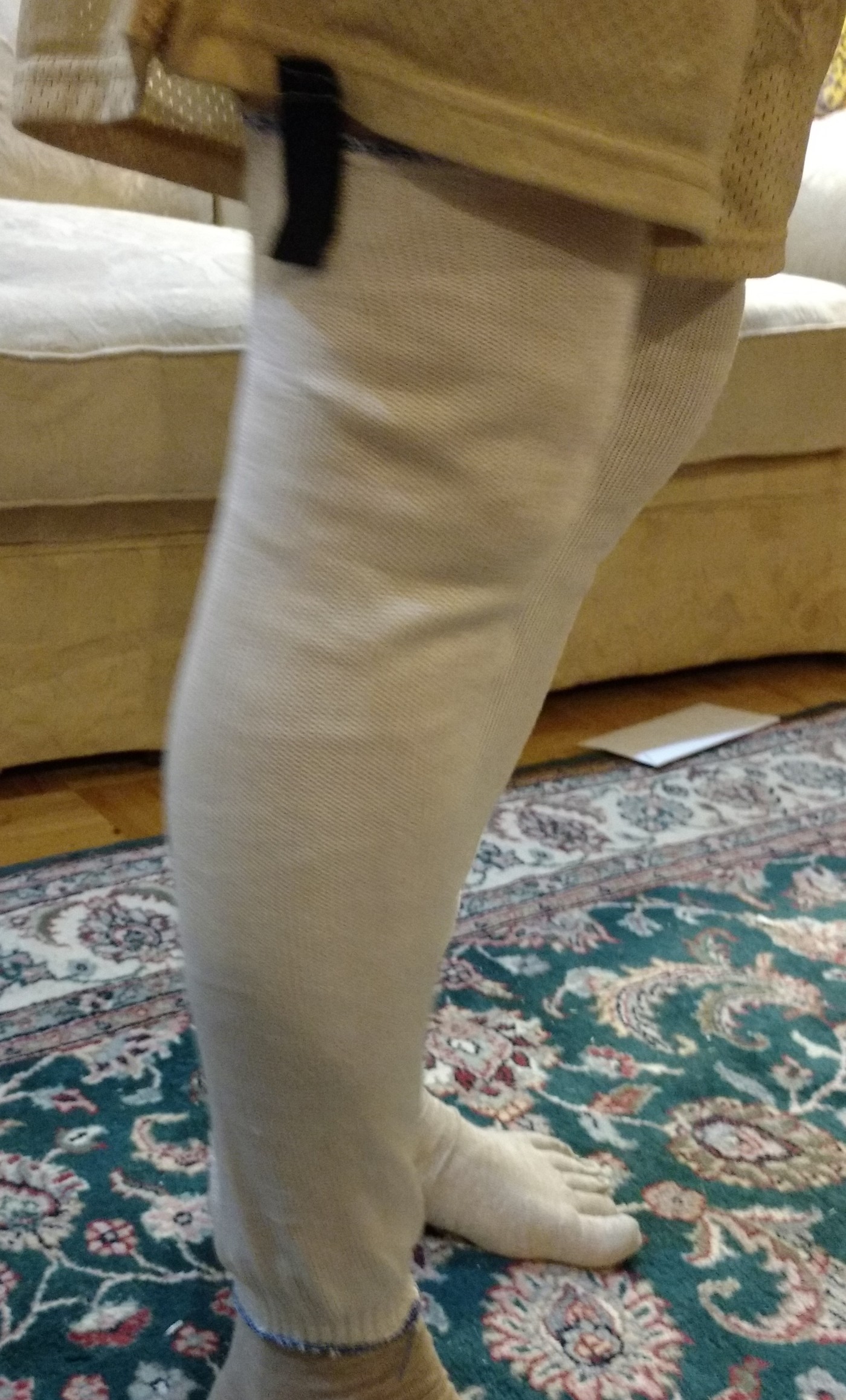
I sewed the tabs on and here are a couple pics of the set up being worn. Jah, mein veird lederhosen:


Earlier when I said that they periodically fell down–that might have given a false impression or idea–once in a great while would be more accurate, but with these little tabs, won’t happen at all. Not sure what I was thinking about the weight, doesn’t even add .1 oz to it.

Anyways, I pity the fool who won’t stay cool by looking a little dorky on the trail.

Kevin R BPL Member
PostedMay 24, 2019 at 3:26 am

I did a bunch of research on hiking pants last year, looking for something that was comfortable, durable, looked good, and preferably American made.  I ended up settling on GoRuck simple pants and have been thoroughly impressed with them.  The fit is great- makes sense on the trail, looks good in town, has enough stretch to allow you to move however you need to. They now have two weights, the lightest of which is 125 gsm (very thin, very breathable).  Would something baggier with the same weight fabric be more comfortable in extreme heat? Yes. I guess it just depends on your priorities.  I personally still wear shorts in the summer, but I’ve been finding myself willing to wear my lightweight simple pants in warmer weather. They can be pricey, although you can sometimes find them on sale, and there is always a 25% discount available for service members, teachers, and students.  All in all, great pants, very durable, backed by lifetime repair, good looking, light, and functional. They also make a challenge pant that has a couple more pockets, but I personally preferred the fit and streamlined look of the simple pant.

PostedMay 24, 2019 at 4:07 am

They look like nice pants, but holy guacamole, 165 dollars! For that price, they should be made out of pure, knitted or woven Dyneema or Spectra fabric ala a McHale pack, or the cut protective sleeves I use above.

Somebody earlier asked if there was anything new in the market for hiking pants, and people replied no. They are correct if the market only means a pre packaged article of clothing, or thinking solely in the box.

But it bears repeating, the fabric material that these highly cut resistant sleeves are made out of, is literally more than 33X more thermally conductive than water, and on par with some metals.  There is nothing in the market that would compare to this above system as far as keeping you as cool as is possible in hot, sun beaten weather.  Also, they absorb practically no moisture in the actual material. And they are super air porous.

Not to mention, someone could literally slash your leg with a knife, and not cut through the fabric. The material will last a very long time, and be able to take extreme abuse.

And price. The complete system cost about 25 or 26 dollars total, ok, about 28 if you include the hook and loop and sewing thread..

So the answer is a definite yes, there is certainly some new and amazing things in the market if one thinks outside the box and uses a systems approach.

David P BPL Member
PostedMay 24, 2019 at 11:18 am

Yeah justin-

bringin back 90s Seattle fashion on trail! Eddie Vedder would be on board with that! I actually bought one of your sleeves after reading your post, I didn’t realize it’s only 1 sleeve per order… I ASSumed it would be a pair because… I have two arms, should have read the description better. I will probably purchase another one soon. I also hike with leg sleeves in hot weather, oddly with the leg sleeves my legs feel a little cooler than without… must be some evaporative cooling effect. I use the OR sun legs which weigh 5.5ozs and have a little ankle zip to make them a breeze to don and doff without removing shoes. In Maine I’m often in the trees without much sun exposure but when I get above tree line or if I’m on the granite coastal mountains the leg sleeves come out to play… They fit right in my hip belt pocket. I’m excited to try out the dyneema sleeves once I get the other one! It looks promising and will weigh less than half of the OR ones I use currently and the bright white color should help with tick spotting… thanks for the tip bro! Happy hiking

JP BPL Member
PostedMay 24, 2019 at 12:13 pm

Justin, those remind me of hockey socks.

PostedMay 24, 2019 at 1:56 pm

Hi David, also be aware that sometimes the little dyneema tag on them, are sewn to opposite ends from each other.  Meaning, I have one sleeve tube where the tag is sewn to the smaller opening, and another tube where it is sewn to the larger end. That was also a bit confusing for a brief moment (“why does this one feel so much tighter?!”).  I kind of assumed they would have tags on the same end, silly me.

I hope they work out for you. If you have rather thick legs, they might not fit that well, or very long legs. I would imagine that they should fit about 33/32 length leg and shorter. I put them just past my knee cap to within 2″ or so.

Btw, I was a bit surprised that the hard part of the velcro (which is sewn onto the sleeves), does grab at the fabric a bit (probably because it’s knitted and thus fairly open interstice pattern). Not extremely so, but enough to be mindful of. After realizing this, I cut down the length of the hard velcro part some to minimize that. I cut out a matching strip of soft velcro, to keep on it when it’s not being used, or when washing it.

PostedMay 24, 2019 at 2:09 pm

Makes sense JP, as both were made for the same purpose, to prevent cuts.

Never thought about using hockey socks/leg protection, but these might be a good alternative for people with unusually thick or long legs, vs using the dyneema cut protection sleeves.  And they are similarly priced from what I saw.

So far, I haven’t seen a 100% all Dyneema or Spectra based hockey sock/sleeve yet though–the ones I’ve seen are a blend.  Hence, unless you can find one that is a 100% Dyneema or Spectra like the cut protection sleeves, they won’t be quite as cooling. But that doesn’t mean that they won’t work decently in general though.

Viewing 25 posts - 51 through 75 (of 101 total)
Loading...