


Topic
Become a member to post in the forums.
.

I am positive that this is not a pressure cooker. A steamer yes, a pressure cooker , no. The lid/seal could take that much pressure and besides, there are vents in the lid. My 2 cents.
They call it a micro pressure cooker. Maybe they meant a micropressure cooker.
From a Google AI response
A pressure cooker works by trapping steam, which increases the internal pressure, raising water’s boiling point from 212°F (100°C) to around 250°F (121°C) at 15 psi
Even a few psi would blow the lid off, this is marketing spin. My 2 cents.
I was looking for your 2 cents. Thank you. I didn’t realize that it was just a pot insert.
People have been interested in backpacking pressure cookers for years. I never really understood the reason why. Pressure cookers are great for rapidly cooking foods that need a long time to become palatable, I get that. But what would you bring backpacking? Stew Meat? Probably not. Beans? Dehydrated ones are pretty good. Let’s say that someone manufactures a real pressure cooker that was UL friendly (less than 16 oz). What would you cook out in the field? I am truly curious.
Not something that I’d really use. I did find the idea interesting.
I did acquire a Ramen pot. I discovered that I could bend the bottom to cover my burner head. I haven’t seen that done on any of the boil tests.
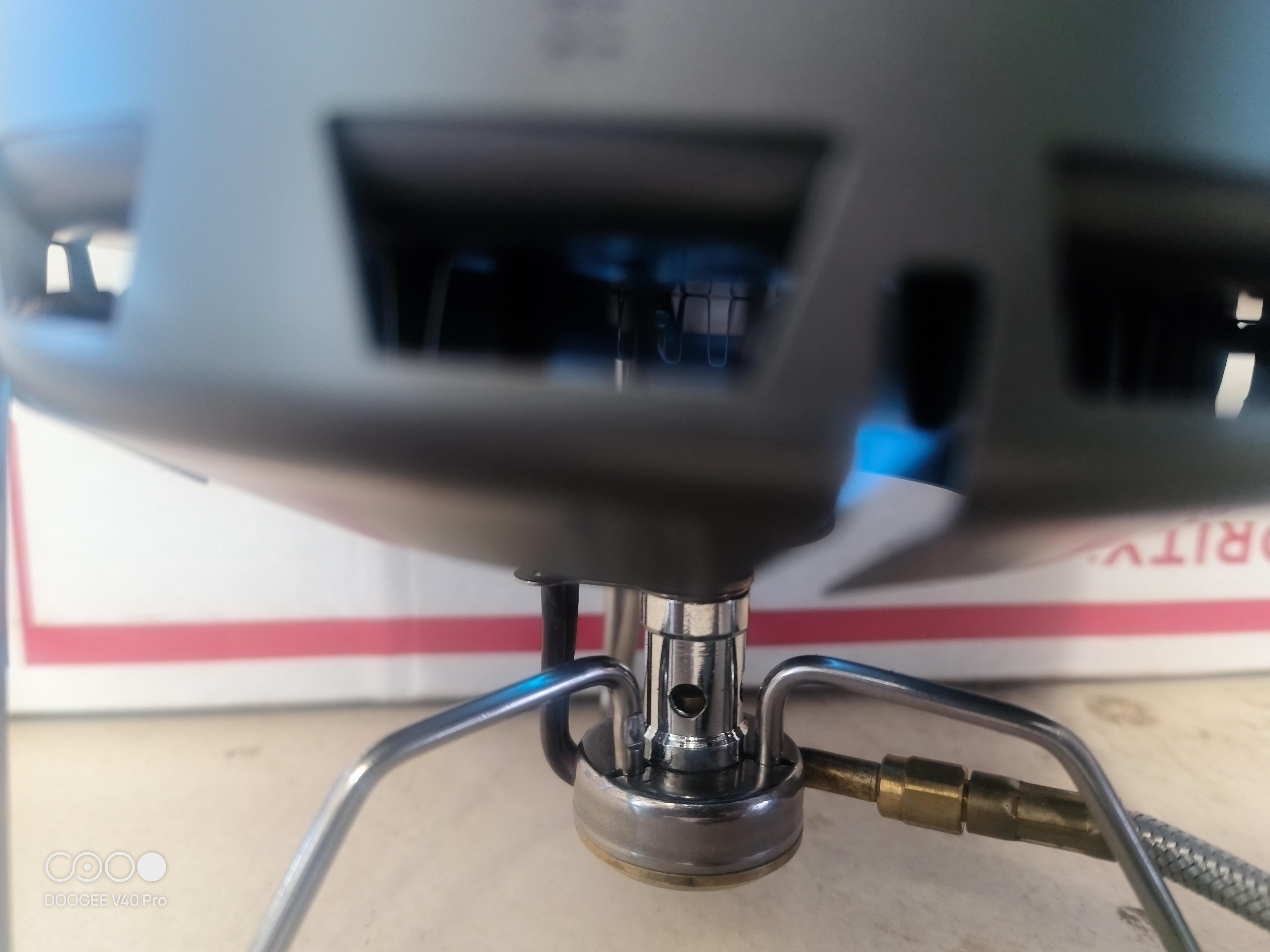
Sounds about right, 1 gram savings from 7 grams is about a 15% fuel savings. My numbers are a bit higher, but I use a 0.1 gram scale. The Kovea Spider has a nice, small burner head which helps in fuel efficiency. My 2 cents.
The spider has been a great stove. I’ve had it for many years. At times I wish it had a bigger burner head. I’ve been tempted to get a Soto, something maybe a bit more windproof, but the HX pot looks promising as a wind block.. Especially after tweaking the bottom.

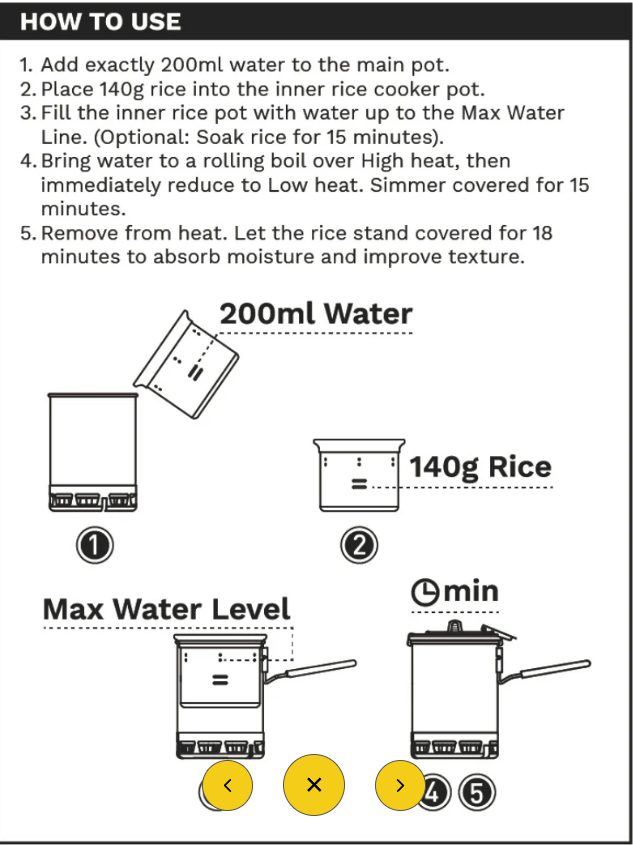
That is a glorified rice cooker that steams. Look, it has a PLASTIC lid. A pressure cooker has a metal lid that has to be turned, to hold under pressure. That basket insert has holes for steam – so the rice doesn’t burn, and well….that is a double boiler with steam vents.
Yeah, I am sure it cooks well. But who carries raw rice in the wilds? The amount of fuel needed is stupid crazy. And no, I am not going to waste money to buy one to review.
OK, I went and looked it up online, and yep, it is described as a “rice cooker” on their website.

“But who carries raw rice in the wilds? The amount of fuel needed is stupid crazy.”
People trapped on an island.
Where every 3 days, one of them is voted off.
If you lock the lid down, it should develop some pressure, just not what we think of as a pressure cooker. Unless you were raised on Instapots maybe. I saw their directions for rice. Too much trouble and too long for a small amount of rice. There are some cultures that do eat more rice and might turn up their nose to instant.
People trapped on an island.
Where every 3 days, one of them is voted off.
Does it involve a pigs head?
Well Sarah. I made a video about this as I cook raw rice while backpacking all of the time. I cooked 1/2 cup of rice using 1 cup of water and consumed just over 6 grams of fuel, so it can be done. My 2 cents.

Cracked Rice is even faster. Soak the rice for a few minutes, drain it and freeze it. Freezing will create microfractures and will allow the rice to cook much faster. A great way to cook raw rice while backpacking.

And yes, the Fire Maple Pressure Cooker just isn’t.
The area below the steamer basket should hold a small amount of pressure enabling a higher boiling point. A micro amount. Micro-pressure. I made the mistake in the title of eliminating the word “micro”. Vote me off. A boat comes right?
Did you know Minute Rice makes both Jasmine and Basmati instant rice? Yep!
I am mixed race – I am part Filipino….but man, the last time I cooked rice in the wilds I was 19 and backpacking with two overgrown Boy Scouts who convinced us all to build a village in the woods. Lol. I actually do dehydrate some specialty rices that I like. But….I prefer my rice with lots of garlic and stir fried. Yum.
The whole point of a pressure cooker is to raise the boiling boil of water. The rise in temperature increases the rection rate and therefore results in a shorter cooking time. Micro pressures are not going to make a significant impact on reducing the coverall cooking time. My 2 cents.
Cooking is basically a chemical reaction. From Google AI
The Arrhenius relationship describes how reaction rates increase with temperature, often summarized by the rule of thumb that rates double for every 10°C riseAgain, from Google AI
To raise the boiling point of water by 10°C (from 100°C to 110°C), the absolute pressure must be increased by approximately 0.42 atm (or about 42 kPa or 6.1 psi) above standard atmospheric pressure.
Again, from Google AI
To raise the boiling point of water by 10°C (from 100°C to 110°C), the absolute pressure must be increased by approximately 0.42 atm (or about 42 kPa or 6.1 psi) above standard atmospheric pressure.
Google AI
Yes, the Fire Maple micro pressure cooker (like the Petrel model) is a type of pressure cooker, specifically an ultralight, low-pressure system for camping that cooks food faster and fluffier (like rice) by creating a slightly pressurized environment, but it’s not a high-pressure stovetop or electric model, allowing for safer, quicker outdoor meals by increasing water’s boiling point.
Key characteristics:
Micro-Pressure Design: It uses a sealing ring and locking clasp to trap steam, increasing internal pressure slightly above normal, speeding up cooking.
They’re using Fire Maple for a reference. How well it works is up to discretion. If FM is going to stake their reputation on a $15 product, I don’t know.
The pressure cooker can’t develop pressure as it is vented on top. Well, at the most maybe fractional inches of water head (1 atm = 407 inches of static water head).
What the basket does is allow the rice to cook by transferring the phase change energy of the steam bay to water (latent heat of vaporization). The energy transferred to the rice is 2260 J/g of water (540 cal/g). This is a very efficient way of cooking rice, and it tends to make some rice fluffier. I use Basmati so it doesn’t really matter to me. Steaming is an efficient way to wet bake items as well. The trick is to keep the baking/steaming vessel from contacting the boiling water as that will behave like a heat sink and heat transfer will be conductive and not from the phase change energy.
Finally, it looks like a pure marketing claim. Did you notice that there is no data to back up their claims? No data, it means that their lips are moving but no words are coming out.
All in all, it’s not a bad item for $15, but in no way, shape, or form is it anywhere near a pressure cooker. BTW, it doesn’t look like it is any faster than boiling the rice, it’s probably a texture enhancement at best. Additionally, the basket insert reduce the total volume for cooking so you could be making a lot less rice via steaming than you could by just boiling it. My 2 cents.
A true pressure cooker can be plastic. I’ve used one for 30 years that’s designed for use in a microwave. It’s great for rice (12 minutes instead of 22 minutes on the stove top) in part because the microwave has a TIMER so if you forget it about, it’s perfectly cooked and slowly cooling down – not burning, but you could cook tough vegetables faster, too. It’s THICK. Like 1/2″ of dense plastic. It has locked lugs like a submarine hatch and plus a gasket in a channel between body and lid. A weight on a stem relieves over-pressure as it bobbles around on its stem, just like the classic large aluminum pressure cookers used for home canning.
As for why one might want it outdoors, 1950’s-1960’s era Himalayan and Andean expeditions come to mind. Even in Denver, water’s boiling point is 202F/94.4C and the instructions on cake mixes and Hamburger Helper tell you add XX additional minutes of cook time. No one cooks on Everest’s summit, but at 24,000 feet, water b.p. has dropped to 169F/76C. Using the aforementioned Arrhenius Equation, that 24C drop in temp would take 5.3 times longer. The pasta, beans or rice they brought or acquired locally wouldn’t take 20 minutes like at sea level but almost 2 hours – that’s a lot more fuel and time spent waiting for dinner.
With modern freeze-dried food, 170F water is fine – it doesn’t need to cook, just rehydrate. In some ways it’s better (if you wait until it boils), because you didn’t waste fuel getting it from 170F to 212F.
But there’s never a need for 100C water if you’re not cooking something. A thermometer that alerted you to 160F would provide adequately hot food and sterilization of any pathological critters at any elevation while saving fuel.
My water boils at around 200*F.
gemini says that either your elevation is 10,000 feet or 10,900 feet
Become a member to post in the forums.
 Brynje Mesh BaselayersBrynje baselayers use open mesh construction to move moisture away from the skin, create insulating air pockets, and help regulate body temperature across changing conditions and activity levels.
 © Beartooth Media Group Inc.
 Loading...