


Bought a brand new BRS 3000t for testing. Powered it up and yellow flames came shooting out of the stove mount. This brand new stove have a cracked O-ring. Fun times.

Topic
Become a member to post in the forums.
 .
.
Bought a brand new BRS 3000t for testing. Powered it up and yellow flames came shooting out of the stove mount. This brand new stove have a cracked O-ring. Fun times.

I had that happen with my MSR Dragonfly once when I went to test it on our wood porch before a trip. I think I ended up kicking it as hard as I could to get it off the porch and that put it out. But mine was older and the orings had undoubtedly dried out. A brand new stove should never do that!

@Jon
Do you have a replacement O-ring?
Cheers
Viton o-rings, if my memory serves me correctly. Roger, I assume you have plenty of your own. Does anyone know of a cheap and easy source for lower quantities?
Are these a universal size for all (most) canister stoves?

Last year we learned so much negative things about the BRS3000t from Ryan, Jerry and Hikin Jim I advise all new viewers to think twice, three times befor purchasing. I will not purchase again for sure. Ryan purchased 7 and all seven failed his bench testing.
Roger – the crazy thing is that the stove shipped with an extra O-Ring
Eric – McMaster Carr carries metric O-Rings,may Roger can verify the size. I measure 1.9 mm by 11.8 mm
Dan – This stove was not for personal use, but for testing. Yes, the BRS 3000t suffers from what is called “infant mortality”, but after the initial failures they seem to be robust. At that price point, they are very, very popular even though the Fire Maple 300T is a much higher quality at nearly the same price. The BRS 3000t is 1/4 the price of a PocketRocket Delux.

To remind people again; Viton O Rings that have been exposed to fire and/or high temperatures are extremely hazardous. One of the breakdown products is hydrofluoric acid, it’s extremely corrosive and the burns from a melted o ring are potentially very serious. If there is any doubt at all as to whether the o ring has been melted wear nitrile to remove the ring. Clean around the ring seat with paper towel and then dispose of the gloves and towel carefully.
Too many failures reported for the BRS, too large of a safety factor to take a chance on scalding ones self or a child. Hikin Jim reported one falling off edge of table. He was lucky his young daughter was not hurt. Ryan Jordon had 7 failures, Jerry Adams had his fail, multiple failure reports at Hikin Jim’s site.
Jerry’s failure

I forget who had that failure
I agree, too many failures, I won’t take that stove backpacking
Might be good for someone that wanted cheap entry just to see if they like canister stoves or a geeky person that just wanted to check it out (me)
Being “cheap” is a high price to pay for personnal injury.
Metal fatigue can happen at any moment with the BRS’s
I advise not purchasing. Stay safe!
I see that the BRS-3000T has a few detractors. Fair enough, although I wonder how many of the problem cases were genuine ones and how many were nasty copies (12 found on Amazon!). For the record, quite a few BPL members have bought the GENUINE BRS-3000T and been entirely happy with them. I have several.
Dan’s comment about metal fatigue would apply equally to most other small upright stove of that style. They all use titanium in those parts. Nothing different there. But I must add that I have not seen ANY reports with photos of actual metal fatigue.
It was not clear at the time that the ‘failure’ Jerry had reported was actually a failure. A bend or kink in the arms is the factory configuration, as far as I can see. I cannot see anything wrong in the photo above.
Yes, if you cremate the Viton material it may give off some nasties – but the OPERATIONAL temperature for Viton tops out at 250 C. Other O-ring materials are not that good; some are much worse. Anyhow, you should never get the base of your stove above 100 C: you could overheat the canister (big bang). I will add that Viton O-rings are what EVERY good stove manufacturer uses: they are not confined to just one brand. I recommend you do NOT use anything else.
The standard O-ring for an upright canister stove with a screw-thread is an Imperial one: BS-011
BS011 ID: 5/16″ (7.94 mm) OD: 7/16″ (11.11 mm) Thick: 0.070″ (1.78 mm)
Other type of stoves or canisters (Campingaz, Xtreme) use other sorts.
We get these campaigns against the BRS-3000T stove every now and then. Nothing new.
Cheers
I did not have that failure, but I remember someone reporting it
How can you tell the difference between a “genuine” and a “nasty copy”?
Try it. If it fails it must be a “nasty copy”.
Circular reasoning
I love everyone. If you like a BRS3000, great. If you like a heavy tent, great…

and not
 or
or 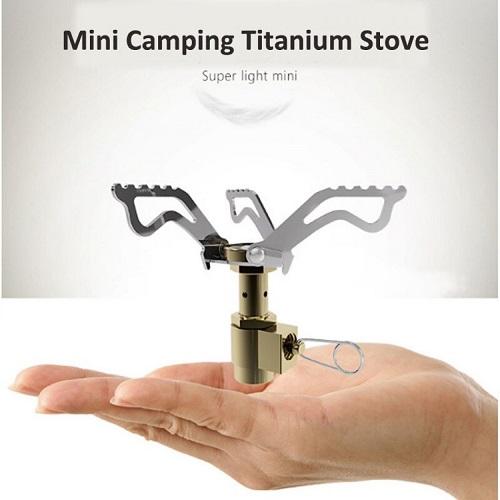 or
or 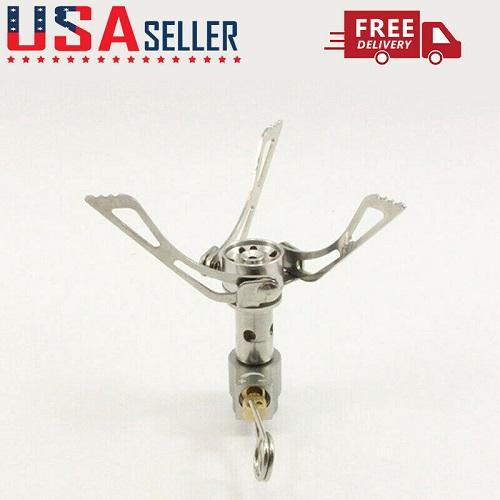
>> How can you tell the difference between a “genuine” and a “nasty copy”?
Yeah, that can be a problem. With about 12 different copies (all looking different) on Amazon and all described as BRS-3000T, it get tricky.

This is what mine looked like after I unpacked it.
Cheers
For those thinking of going the BRS 3000t route check out this first:
https://adventuresinstoving.blogspot.com/2017/02/the-brs-3000t-worlds-lightest-stove.html
This is like politics with two parties, people strongly believe in one party or the other, beyond all reason, I’m in the party that believes BRS3000s are pieces of junk, never camp with them
But mostly I just keep my mug shut, not important, stay out of contentious issue, don’t make personal attacks against opponents,…
Small grain of truth to the above attempt at humor : )
Jerry, all we look for is the “truth” Ryan Jordan said he purchased 7 and all 7 failed the bench tests….they melted.
Look what Hikin Jim says at the end of his BRS3000t review the “disclosure”part:
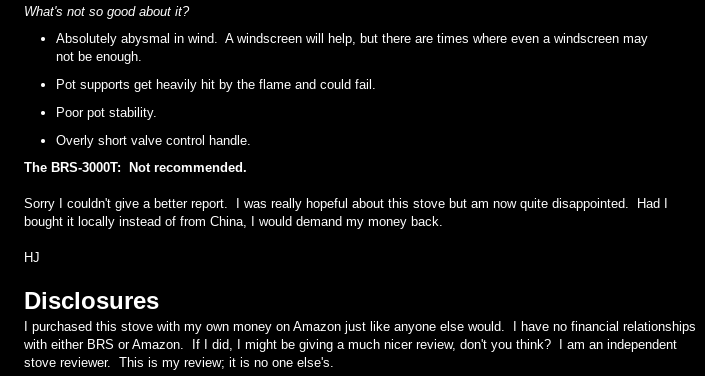
If Hikin Jim was able to get compensation in the form of an affiliated link, his review would have been much nicer.
You’re a member of my tribe, I support you whole heartedly :)
Wait, Dan. I thought that just 4 of Ryan’s 7 BRS-3000T stoves failed the bench test. Am I remembering wrong?
Gary is correct, my bad! It was 4 that melted. Ryan purchased 7. And yes, Roger explained that they did not melt. Ryan was wrong.
Jerry you made a post and said:
what I bought according to Amazon:
But mine is actually a little different:
See the thread at this link:
I wonder if you analyzed mine, it would be deemed a “clone”, but it actually works?
I have used mine a few times with no problem.
One thing that worries me just a bit is that a consequence of the BRS3000 being so light weight, is that it’s short. The distance from the flame to the valve is shorter. Therefore, the valve should be hotter than a normal stove. Also, the connection of the stove to the canister will be hotter.
Being hotter may cause reliability problems.
FYI – I saw this a while ago and bookmarked it (from Bushcraft USA). The BRS 300ot is a very short stove, apparently it was overheating the canister while on a simmer. It did not dawn on me that running the stove low and slow could cause a problem. I have no data either way, just something to keep in mind. My 2 cents.
If Hikin Jim was able to get compensation in the form of an affiliated link, his review would have been much nicer.
There you go again, disparaging someone you don’t know.
>> The distance from the flame to the valve is shorter. Therefore, the valve should be hotter than a normal stove.
Nice theory, but fortunately that is wrong in practice. To see why, you have to consider the heat flow in the stove.
The head gets hot – very hot.
Heat/energy flows from the head down the burner tube or column.
The heat reaches the air inlets and has to travel down the narrow sections between the holes (see photo above).
The continuous inflow of cold air through the air holes sucks the heat away from the narrow bits of metal between the holes.
Little heat gets past the air holes to warm the valve.
Sorry to be pedantic about this, but I spent many many months trying very hard to get heat past the air inlets when developing my stoves. Eventually, I realised that the air flow through the inlet holes was just too much, and that I had to have an external Heat Shunt going from the flames to the fuel inlet (in the region of the valve) if I wanted the fuel to be vaporised. Bear in mind that anything over 0 C is enough to vaporise the liquid gas.
Bottom line: the valve on an upright canister stove may well get warm, but it will not get too warm for safety. The length of the burner tube or column above the air holes does not affect this conclusion.
Btw, I revisited the thread pointed to by Dan. There is indeed a photo of a fracture in part of the mount for the pot supports. I had forgotten about that one. In hindsight, I cannot explain the fracture, but it does look like it happened when the mount was bent. Was this a manufacturing fault or a user fault? I don’t know. I would very definitely have requested a refund.
Moral: always check your gear carefully when you 1st buy it, and also when you return from a trip. Stuff happens.
Cheers
The Bushcraft link made me think a bit for an explanation.
It may be that with the stove turned right down, three things were going on:
* The nature of the flames changes at very low power: they cease to be ‘vigorous’ and instead become more like a candle flame.
* The head may have actually got hotter than normal because the flame was sitting right on the burner head rather than being up in the air above it. This could pump more heat down the burner column, not less.
* The air flow through the air inlet holes may have been so low that the cooling effect was minimal. It could actually have gone to almost zero as the flow out of the jet was so low it could not suck air in any more. The flames may have been getting their oxygen from the surrounding air above the burner head rather than from suction through the air inlet holes.
One needs to monitor one’s stove while it is burning – all the time. This applies to ANY fuel, not just gas.
Cheers
Become a member to post in the forums.
 New Ultralight GearSee the latest releases in ultralight cottage-brand gear from small makers.
 © Beartooth Media Group Inc.
 Loading...