Thanks all for the positive feedback! I’m an engineer by trade, and the years of writing nothing but soulless requirements documents and TPS reports led to some serious right-hemisphere atrophy… Writing trip reports are good exercises to combat that, I hope.
Jeff said:
I take it that your lung condition resolved when you got back home. At the risk of sounding like a scold, maybe you did a tad too much before acclimating and it resulted in your ailment–and your friend’s blisters, and even your wrecked shoes? But I understand your responsibilities and time constraints. Now that I’m old and wise I bow to reality and plan itineraries under these constraints that don’t result in epic exhaustion. But you were ready to go back two days later! Maybe find a way to take five days next time. Nothing wrong with enjoying yourself as much as the day hikers, after all.
Well, there’s a few sides to all that, I think.
First, for context, the lung thing hasn’t totally been resolved yet. A few days after I got back it was much better, but a short run the following weekend caused it to reappear, albeit in a significantly reduced degree. Still, some sense of responsibility to those around me led me to go see my doctor. He did an EKG and it came back slightly abnormal, so I went to see a cardiologist. The cardiologist did another EKG, and diagnosed me with pleurisy. Essentially, it’s inflammation of the tissues around your lungs (and heart). It’s typically viral or bacterial in nature, but it can be exacerbated by exercise. So, perhaps that’s what it was—with a child in daycare, I’m always somewhat of a petry dish—and maybe hiking at altitude just brought out the symptoms.
The cardiologist said it’s typically “self limiting”, and said that so long as I felt fine, go ahead and go hiking again in August, when my next trip was planned. There was little risk of catastraphe or long-term damage, so long as I was “smart about it”.
I took it easy for a week or so, and then started exercising again. No symptoms presented themselves until about five weeks after the first trip. This time, there was a fair amount of discomfort around my heart, but nothing in my lungs. It wasn’t directly following any significant exertion. It was also accompanied by a minor cold. This was two days before my next trip, so I cancelled that trip. A phone call to the cardiologist didn’t change anything—I had scheduled a doppler cardiogram for early September, and we’re sticking with that. Take ibuprofen for pain, and wait and see.
So, all that said, I think there are two issues here: there’s the lung stuff, and the foot stuff.
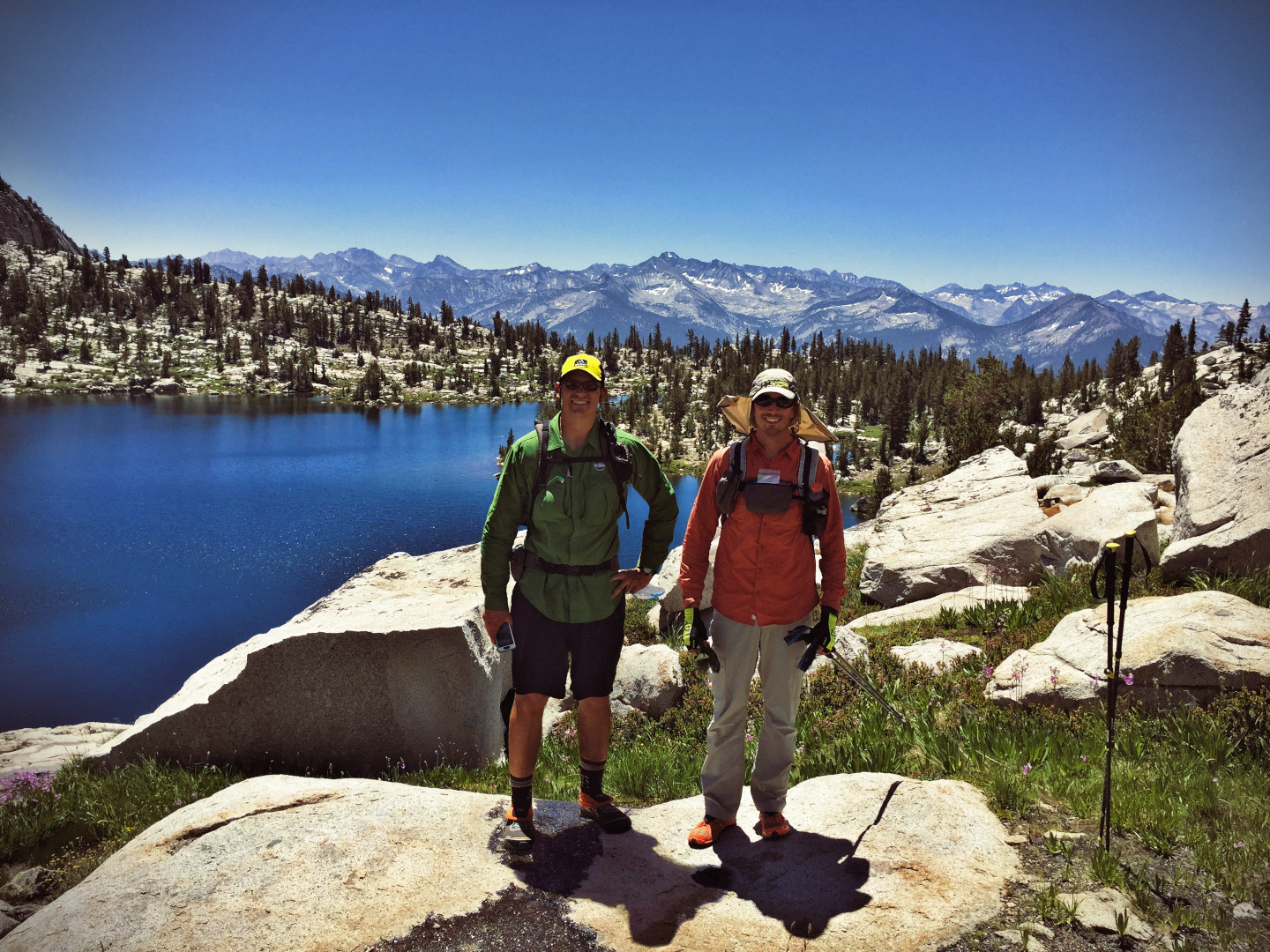
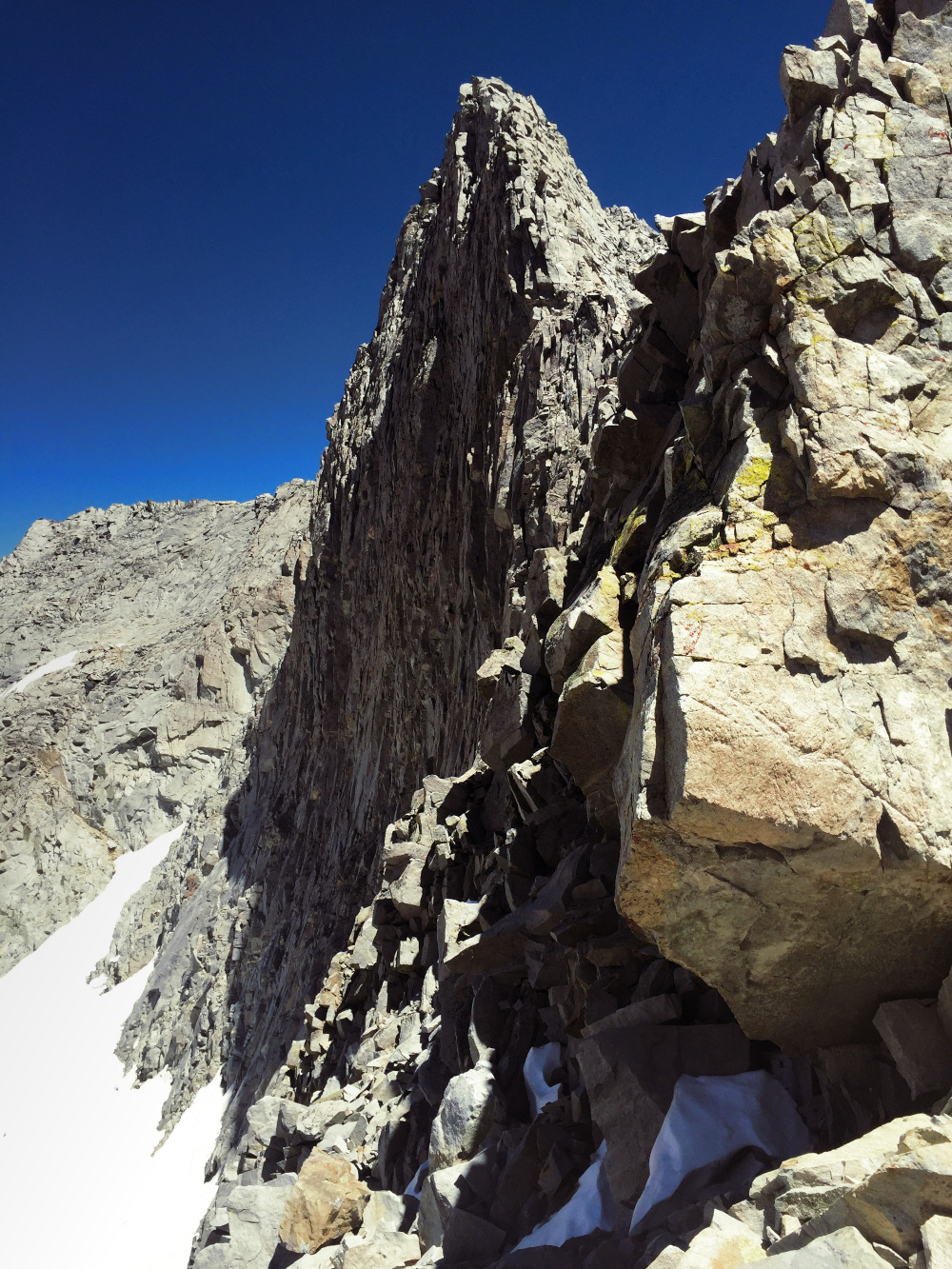
I blame the foot stuff on being outside of our comfort zone. We hadn’t done extensive off-trail travel before (heck, this was Andy’s third time backpacking), and our feet weren’t prepared for the extensive lateral forces and frictions that come with miles along pleasant (but tilted) granite slabs, and never-ever-quite-flat talus. It wasn’t a deal-braker, and there was a little pain, but so it goes—no worse than the blisters and footwear issues that many backpackers, hikers, runners, etc deal wth.
But the lung stuff is different. My initial guess on the lung stuff was exactly what you suggested—just too much. I was suspicious of the Diamox, because this was the first time I’d ever used Diamox, and it wasn’t the first time I did a hike of this aerobic nature (this was not an envelope-pushing trip for me in terms of distance or climbing). The slower pace was owed largely to having a companion. If I were alone, I’m sure I would’ve gone faster and farther (and worried a whole bunch more about the chest stuff when it would have undoubtedly appeared—I thought about doing this route solo, and am extremely pleased that I didn’t talk myself into it).
However, after all the follow-on described above, I suspect the lung stuff might not be owed completely and solely to exertion at altitude, and might be coupled with something underlying.
Still, our bodies are complex and dynamic, and mine isn’t getting any younger, either. I try not to be too arrogant about what my body *should* be able to do. Did I do too much? I did a lot, but I often do a lot. I might never know if it was too much. Maybe it was too much for that day. Or maybe I would’ve felt the same if I had sat on the couch all day, farting and eating potato chips. Hopefully it was a one-off thing, and hopefully there’s nothing significant that’s underlying.
We can always go slower, and we can always be more cautious about altitude. If I were to slow the trip down to five days, I’d undoubtedly add a handful of peaks to the itinerary or nearby areas to explore—I’m just not wired to sit still. At the end, that itinerary would end up being just as physically demanding. Should I learn how to sit still? Maybe. Definitely, if my lungs/heart demand it.
Ultimately I decided that the only thing I can do is to try to get out again, and see how it goes. So, right after I have the cardiogram and subsequent consult, I have another trip scheduled that’s of a similar nature to this one. A little bit lower in elevation; but not by much. I’ll be able to spend one night at 7,000 – 8,000 feet before starting, which should allow me to avoid using Diamox. I think the chances are reasonable that I’ll have to abort that one due to all this chest stuff, but I need something to be optimistic about.