My permit for an eleven day Nankoweap to North Kaibab Loop had a start date of September 23rd. On the 22nd I hiked about 4 miles from Point Imperial to the trailhead just outside the park, setting the stage for an early start on the 14 miles to the Colorado River.
On Day 2 I started around 7 am, and got to Nankoweap Creek at 2 pm. I was beat and dry, getting by on just 3 liters of water in 90°+ temperatures. But the fun was just starting, as I could see the Colorado on my way down, and it was a deep, muddy, brown. I had started after a late season storm that filled the river with literally tons per minute of silt. I pumped 4 liters of clear water from the creek and headed to the river and the bottom of the Nankoweap delta. Once there I dug two trenches in the sand to support my 1-gallon ziplocks that were to serve as "settling" buckets. I added alum, waited two hours, and began pumping. By my third liter I knew I was in trouble – the pump was already getting "stiff". (The pump was a PUR/Katadyne Hiker with a new cartridge.) I let two more gallons of water settle overnight and repeated the process in the morning to accumulate a total of 6 liters.

Well, there's a problem …

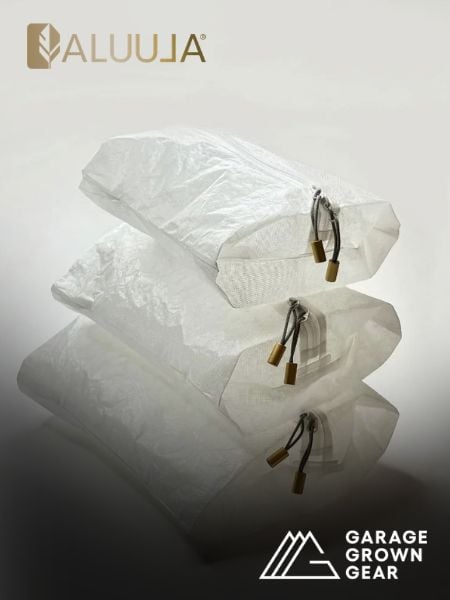
The "water plant".
On Day 3 I started my 4 mile (river miles) trek downstream to Kawgunt Canyon. It was brutal. Temperatures in the sun were around 100°. Stopping during the day to settle and pump water just didn't seem to make sense. Had there been a trail it might have worked, but route finding, picking my way through the cactus and over the boulders, in less than optimal light wasn't an option. It was hard enough in full light. It took me 6 hours. And most of the 6 liters of water. I immediately set up the "water plant", sipping the remaining half liter as I waited. Pumping was arduous. But at least it was going.
Day 4 was similar, starting off with 6 liters -12 pounds of water – route finding along the river for 5 miles, and then hitching a ride to below the Little Colorado River. The LCR was even browner than the Colorado.

The Little Colorado River, below the island.
It was obvious by the amount of debris and trash that a major event was underway. And that the water issue was now getting worse. I continued, a little past Palisade Creek, to a nice sand bench for camp. It had been only a 13 mile day, but I was beat and dry. Six liters over 10 hours in those temperatures was just not enough water. My urine was a deep golden brown, and my body was complaining. I had been ready for a tough trip, but the extra 10 pounds of water weight and the temperatures were killing me. As I was pumping it became clear that the filter could quit at any time.
I had planned on taking the Escalante Route to the Tonto, staying at Hance Creek, Grapevine, Lone Tree, Bright Angel, and then hiking out to the north rim. I could have settled water, purified with tablets, and toughed out drinking sludge for the two days it would have taken to reach the Hopefully clear water at Hance Creek. But what if it wasn't clear? I knew another major storm was due the next day which could blow out all three of those sources. And the flip side was that flows in Grapevine and Lone Tree would be so low that Only a pump could suck out the water – which I had experienced on a previous trip – and I no longer had faith in the pump. Then I considered that I had several major washes to negotiate, with flash flooding and rock fall significant concerns.
So I decided to bail out by hiking up the Tanner Trail. Seven miles, 4,700' of climbing, 12 pounds of water, and about 8 pounds of now "extra" food.
Day 5 was a short hike to Tanner. I set up the "water plant" hid out in the shade by the river where it was only 95°, read a little, and contemplated my fate.
Day 6 started in the dark, pumping the last of the water for the hike out. The handle on the pump snapped on the 6th liter.

The decision was affirmed. I made it to the rim in 7 hours. Ten minutes later the deluge began, and continued through the night. Reports of gully washers and falling rock drifted in the next day. A Phantom Ranch camper was evacuated after taking a serious hit while in her tent.
Lessons Learned –
A) Take 4 1-gallon bags to reduce the cycle time. Take a "sludge filter" to improve drinking murky water. Be mentally prepared to drink less than optimal water. Go in with enough physical conditioning to cope with the extra weight.
B) It's OK to bail out. I'm generally not one to shy away from adversity. I don't mind suffering. Type 3 Fun is fine. But in this case too many things seem to be stacking up. I think I made the right choice. Nankoweap is still there if I want to try again. And so am I.