


Not to start an argument, but to present the 'other' view…
You couldn't pay me to put that poison on my clothing or anything I would come in contact with.
Billy
Topic
Become a member to post in the forums.
Not to start an argument, but to present the 'other' view…
You couldn't pay me to put that poison on my clothing or anything I would come in contact with.
Billy
From looking at the manufacturer’s data sheets (click the names), there is a very slight difference between Sawyer brand permethrin and Martins brand permethrin.
Sawyers:
0.50% Permethrin
<1.00% Aromatic Petroleum Distillate, Xylene Range
> 98% inert ingredients
Martins 10% (with proper dilution, 1 ounce + 19 ounces water):
0.50% Permethrin
99.5% inert ingredients
The “inert ingredient” is water, perhaps with some wetting agents (detergent). Searching the chemical registration number for the aromatic petroleum distillate in Sawyers, it’s naphtha. A paint thinner solvent, also used in white gas fuel. I assume that the only reason to put a petroleum solvent in the spray is to make it adhere a bit better by breaking down any oils/dirt that may be on the fiber. Not having the petroleum solvent probably makes for a more environmentally friendly application, although I doubt it makes much difference with such a minute dilution.
If you were really picky about making the Martin’s solution exactly like Sawyers, you could add 1 tsp of lighter fluid or naptha paint thinner to the 20 ounces of solution. Personally, I think I’ll pass on the solvent. Because the cost of mix-my-own spray is so low, I can apply it liberally, literally soaking the fabric I’m spraying and letting it dry. I’m getting very thorough coverage. And, I retreat every spring.
Or, if you prefer factory treated clothing, Sierra Trading Post has a bunch of ExOfficio BugsAway permethrin treated items:
Sign up for their email, and you’ll get a stream of 35% or even 40% off discount codes. I bought three of the solid color Halo shirts for $42 each. They are awesome shirts, even without the factory permethrin. Oddly, I bought one of the checked Halo shirts and the Medium fit like an extra large. Supposedly the same shirt, but it was gigantic.
Here in the east, I find these long sleeve outdoor shirts too hot for summer hiking (I prefer tech t shirts), but they are perfect for camping and dressy enough to wear to a restaurant. Ideal for eating out on patio when you really don’t want to douse yourself in DEET. Great travel shirts.
This is actually probably the best bug jacket you can get (I bought one a couple weeks back and used it 4th of July weekend in Eastern Washington, didn't get bit).
Its permethrin treated, 70 wash treatment life, and it's ALL MESH.
The fact that it's all mesh makes it comfortable to wear even in hot weather (i wore it when it was 80-90F out, over a tank top, but mostly just by itself).
I was actually cooler sitting in direct sunlight wearing this vs going shirtless.
If you wait for the right coupon, you can get it pretty cheap (got mine for $36 and free shipping since i bought some other stuff too).
That would be a terrific product. A permethrin treated mesh hoody.
It actually feels just fine on the skin. It's a softer, more substantial mesh than the cheap bug mesh suits that are sold. Mine weighed under 8oz for a size small (which fit fairly loosely (I'm in between a small and medium, but usually go with smalls as they fit better) , which is perfect for this hoody.
"You couldn't pay me to put that poison on my clothing or anything I would come in contact with."
I tend to agree with this sentiment in most cases. Seems like there are so many potential diseases with ticks and insects now days that I think permethrin may actually be safer in the long run though.
Ryan

I've been deluding 10 percent permethrin to .5 percent for years and with the exception of failing eyesight, thinning hair, and wrinkling skin it's been all good. :)
It looks like permethrin is pretty benign to me.
I just spent a couple of minutes and read a fact sheet from 2009
http://npic.orst.edu/factsheets/Permtech.pdf
Basically it is harmless in the quantities that you would be exposed to. Some particularly stand out pieces of information included:
"Human case studies involving skin applications of permethrin indicated that about 0.5% of the applied dose was absorbed dermally."
"A study was conducted involving 196 women who had applied a single, full-body, dermal dose of 4% permethrin as a scabies treatment during their second or third trimesters of pregnancy. Researchers found no evidence that exposure to permethrin affected the outcome of the participants’ pregnancies."
"Permethrin is highly toxic to honeybees, fish, and aquatic invertebrates due to disruption of sodium channels."
"In general, mammals are less susceptible to permethrin compared to insects because their sodium channels are less sensitive to pyrethroids and recover more rapidly. Also, because of their larger body size and greater metabolic capabilities,
mammals are more likely to metabolize pyrethroids, such as permethrin, before they can affect the nervous system. Conversely, cats can be sensitive to products with high concentrations of permethrin, possibly due to insufficient glucoronide
conjugation capability, which hinders the metabolism of permethrin."
So basically Permethrin doesn't seem very dangerous for a clothing treatment.
In response to the worries expressed by one poster as to the risk during inhalation, the fact sheet lists the Inhalation LC50 as very low toxicity (Greater than 2.0 mg/L) and also says
"Because of permethrin’s low vapor pressure, inhalation exposures are more likely to result from aerosols, spray droplets, and dust, than from actual vapors"
So if you were still worried about the inhalation risk filling a tub with permethrin and soaking clothing should greatly reduce any inhalation as permethrin is not volatile.
I will continue to use it as a spray, although I will treat my clothing far away from cats…. the poor kitties have had enough testing done on them already.
Anthony
"It looks like permethrin is pretty benign to me."
Indeed. And so were Viox, Scotchguard, and leaded paints at one time… as well as thousands of other products we all thought were harmless and the 'experts' said were harmless…
the safest bet is to avoid chemicals…
that said, if you are in lime disease areas then maybe it is worth the risk…
though if the choice is lime disease or poison on my cloths, I think I would just not hike those areas…
b
No significant difference found in effectiveness and longevity between do-it-yourself treated clothing, and clothing treated at the factory. Both last about a year, regardless of number of washings.
— Rex
I am the type of person who avoids any sort of chemicals or drugs when I am sick or injured. I weal long sleeves and long pants in the summer to avoid having to use insect repellent or sunscreen. BUT…having seen the effects on friends and relatives who have suffered from Lyme I will do almost anything to avoid it. Given where I live and hike, my choice is exposure to ticks or stay out of the woods in summer. I bite the bullet and treat my clothing rather than risk Lyme or treating my skin. Lesser of evils.
I grabbed a couple at that price. I re-treat my backpacking clothing every spring for that season and you saved me a few bucks next year. Thanks!
Ok, I received my spray bottles and did several sets of clothes.
But…next time I'm switching to the concentrate and doing the soak method.
First off,…its much cheaper.
Second….I won't have to wear a mask.
Third…I am ensuring that ever fiber of the clothing is soaked with permethrin. With the spray bottle, unless I really spray a lot and use the whole bottle, I can't be certain that every part of the item is soaked enough with the insecticide. (granted, not every part needs 100%…but the soak method guarantees it).
Fourth….its faster. Its easy to dilute, then I can just throw in my clothes all at once, let them soak for hours if I wanted…then wring them out. With the spray…I had to handle each garment individually…spray spray spray spray..spray some more, turn it over….spray spray spray spray…etc.
So yeah, switching.
Way easier
Here is a link to a company that will dunk your clothes for you. I have had a friend do this and was very pleased with the results.
http://www.tickencounter.org/prevention/insect_shield_your_own_clothes
Rex, thanks for those links, very interesting. I've been wondering about how long my Insect Shield clothing stays effective. These links make me suspect they're no longer very effective. The advantage of treating with the sprays or soaking is that you can know when it's time to repeat (6 weeks or 6 washings). The study Rex links says that it's effective for at least one year and may be less effective the second year.
Walter:
My understanding is that it is UV exposure, more than anything, that ultimately kills the permethrin effectiveness. That study, showing a one-year time frame, was done with Forest Service personnel who were outdoors constantly. I would be surprised if Insect Shield clothing lost effectiveness in 12 months of occasional outdoor use. The testing of the same stuff on military uniforms generally showed that the clothing was worn out and thrown away before the permethrin was shot.
I'll just re-post the warning about cats and permethrin. It's toxic to them. Friend-of-a-friend's cat died from it. She did know.
Kelly
YEs, it is toxic to cats while it is unbound, liquid form. Once the treated clothing is dry and the permethrin is bound, it's no longer toxic (unless the cat eats the fabric or keeps licking it or something).
Become a member to post in the forums.
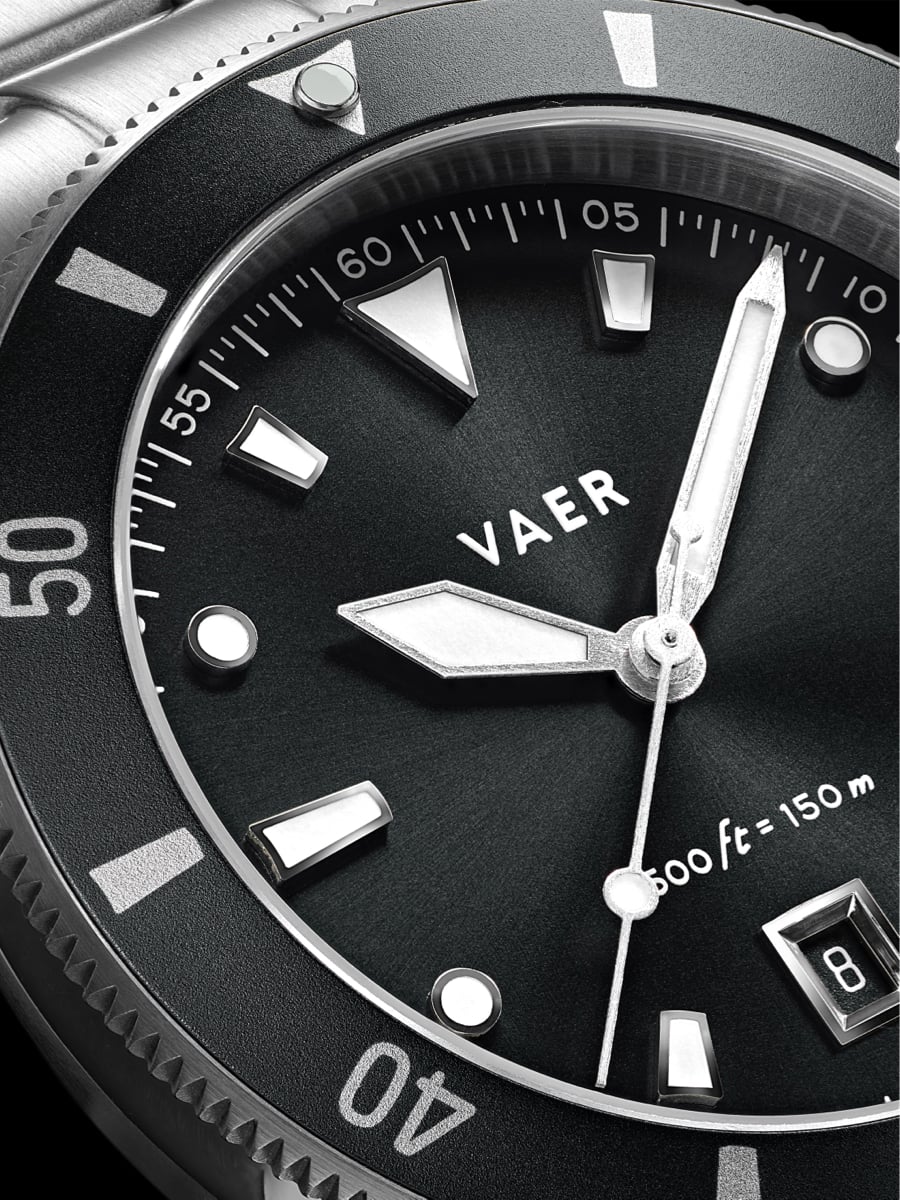 DS2 Meridian: Vintage Dive Style, Everyday ReliabilityInspired by the streamlined "skin diver" watches of the 1960s, the DS2 Meridian combines vintage proportions with the durability of a modern everyday tool watch. A reliable Japanese Miyota quartz movement delivers set-it-and-forget-it accuracy, while 150 meters of water resistance, a locking screwdown crown, sapphire crystal, and strong Super-LumiNova make it ocean-ready. Available in multiple case sizes and starting under $250, it's an approachable way to get classic dive-watch styling without sacrificing everyday practicality.
 © Beartooth Media Group Inc.
 Loading...