Max,
It is all about using the correct tool for the conditions.
FRAMELESS PACKS
I have done many, many trips with frameless packs; trips that are fairly strenuous and lengthy. My two favorite frameless packs are the old GG Spinnaker Murmur and the zPacks Zero. Both are great packs. But when the total pack weight gets around 12-15 lbs, I opt for a pack with a real frame. A well designed and constructed frame pack makes hiking much more enjoyable for me, especially when the total pack weight is over 20 lbs. Key point here is "well designed and constructed," something most manufacturers miss in their product offerings. At the end of the day my entire body feels much better when carrying a frame pack vs a frameless, even though the total pack weight is higher with a framed pack, given the same gear and consumables carried.
LIVING OUT OF YOUR PACK
Another consideration for choosing a pack is a non-quantifiable measurement, which I call "ease of living out of a pack." You cannot measure this. You just have to do a lot of trips and sometimes a pack just doesn't cut the grade.
Two packs that don't cut the grade for me in this measurement are the earlier ULA Circuit and the Gregory Whitney 95. Especially the Gregory. Gregory packs are over-engineered, so feature-laden that living out of them is inconvenient, and much heavier than they need to be. The Circuit is a popular pack, but day in and day out I just couldn't get organized with my gear and a standard 1 liter Platy will not stay in the water bottle pockets. Maybe they have fixed that deficiency.
McHALE PACKS
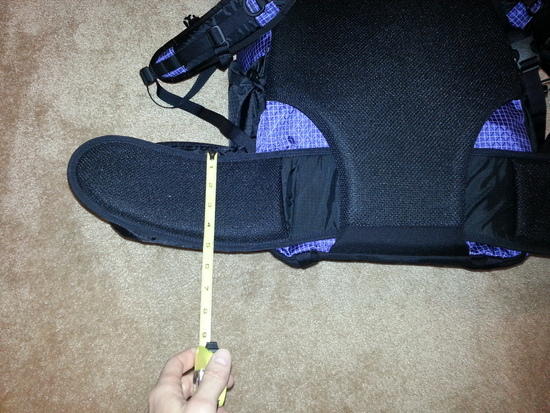
BTW, my McHale LBP 36 weighs a pound less than your Baltaro 65, has more capacity (79L), can carry heavier loads, and is a dream to live out of. It is constructed from full Dyneema and will out last any other brand available. My McHale bump has a little less capacity (49L) and is also a dream to carry and live out of. My number one criteria for a pack is how easy it is to use, and the McHales are stellar in this regard. I can hike 20+ miles with a "heavy" load and at the end of the day there is no soreness in the typical pressure points of hips and shoulders. Dan McHale is a master pack designer and his belts and by-pass harness design are pure genius. Unlike most pack designers, Dan takes an extended vacation each year and actually uses his products for both backpacking and climbing, something Dan has been doing for more years than most backpackers have lived. Many of his packs are designed to do the biggest mountains on earth and his lighter packs incorporate the same design elements as his Critical Mass and Sarc series packs.
Over the past 40+ plus years I have owned AND used many, many packs. Nothing is even close to a McHale. Do they cost a lot? Not really. Most BPL members could afford a small McHale (like a Bump) AND a larger one (like a LBP); because they have probably spent more money on all the different packs they have bought over the years.
Given what a McHale can carry, how well they carry, and how long they last; they really are light and inexpensive.
EXTERNAL FRAME PACKS – A VIABLE OPTION
To be honest with you, an external frame backpack is still a viable option for general backpacking. They excel in the "ease of living out of a pack" measurement, and are actually quite light. My Kelty D4 only weighs 3.6 lbs and my cavernous Kelty Serac, which is legendary for carrying big loads, weighs under 5 lbs.
Yes, this site is about lightweight backpacking, but if I want to go unsupported for 2 weeks I need over 20 lbs of food. My gear is lightweight but the total pack weight with food and water is not.
It all comes down to "hike your own hike."