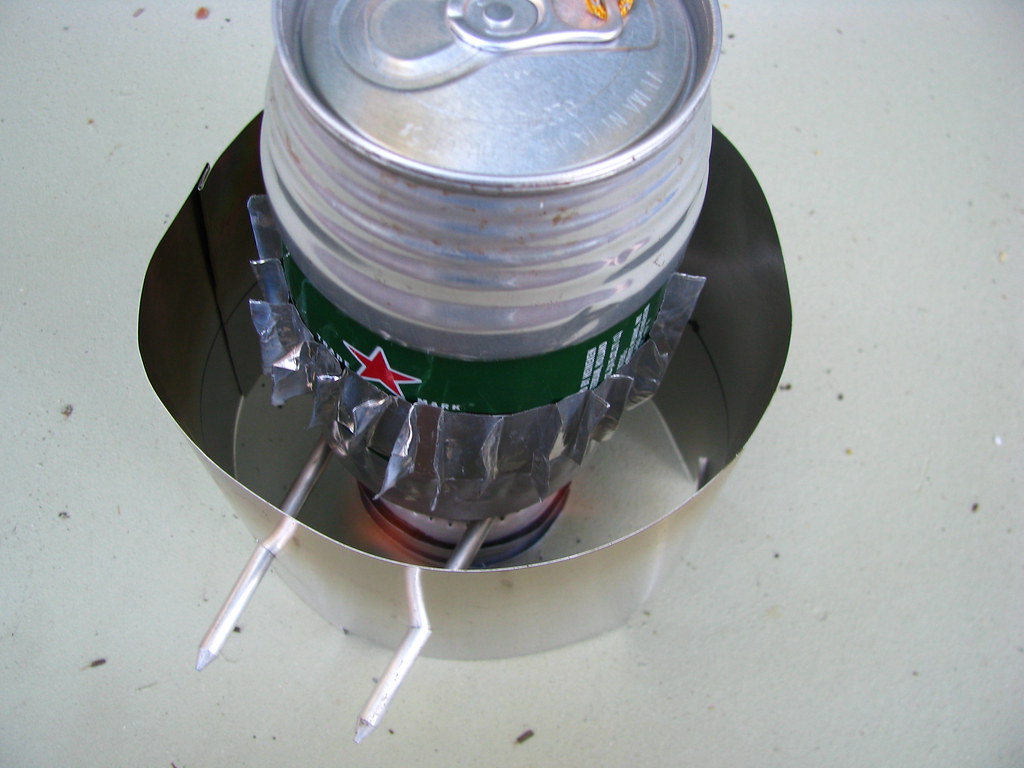
Nick: Your Heineken can fins with foil tape has several advantages to mine: Lighter, quicker to make and more packable. I'll give it a try – I also keep foil tape around.
Shroud + Potstand. If your can + fins are close to a 3" or 4" outside diameter, you could use a piece of 3" or 4" aluminum duct work with little tab to support the pot at the desired height above your stuff. That ductwork is cheap, light, and can be clipped together and unclipped.
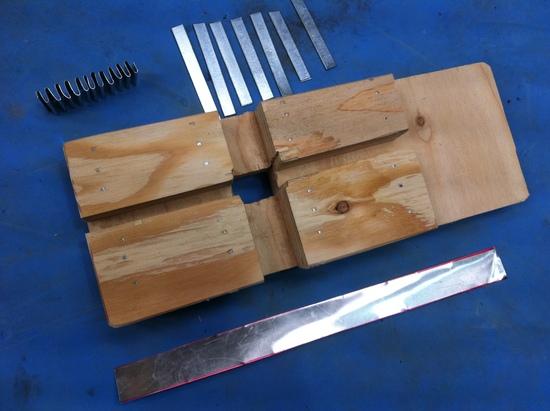
Eric: Yeah, a bigger spacer would give me more contact on the pot which is good. I'm debating about making some trapazoidal spacers from ash or oak so that my flat sides would mostly be formed as I work it through the jig.
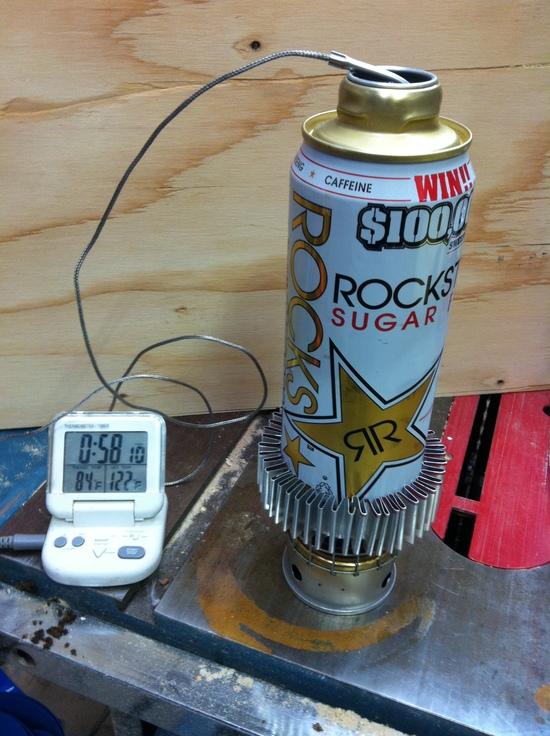
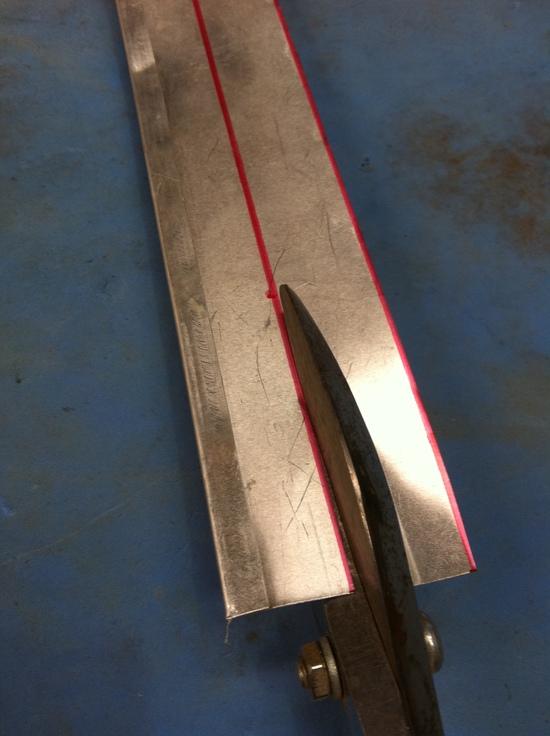
James: I'm keeping your annealing tricks in my back pocket for other projects. With all the bends in it, this corrugated flashing wrapped pretty easily around the can. I thought about gears, offset with a little more spacing, but didn't have anything of the right size that was strong enough. That Fiskar crimper is a cool idea. Benefit per weight, I should be using thinner aluminum – something between flashing and heavy-duty aluminum foil – maybe beer can thickness. That would add very little weight although I wonder how it takes a crimp – it seems less ductile than flashing.
Thanks everyone for the thoughts and encouragement. I have to be on top of my game before my wife will let me convert the pasta pot, but it's going to happen. With before & after boil times documented.
Editted to respond to Jon: Thanks for the benchmark. I wondered about that as I am new to alcohol stoves. I realize which stove I use is a HUGE variable but it's not one I want to get into just now. That was one I got for $4 on eBay – it has fiberglass inside as a wick. It's my only alcohol stove and for a super-light weekend or even a picnic, I might use it. But for a week or for snow camping, I'm going with my canister stoves. Partly, I wanted to test the JB Weld in a lower temp, lower heat-rate application first. Then I may start converting the old BPing pots to something more like Jet-boil's pots. And then when I think I know something, buy and modify a Ti pot with whatever combo of bottom fins, side fins, and shroud have emerged as most promising.
Stovetop tests I've done in the kitchen keep coming in around 30% efficient for fuel heat value getting into the water in pots without fins or tight windscreens. I think with the right combination of ideas, I could double that efficiency without adding much weight at all – consider how little weight the Jet-boil fins add to their pot. You save that much fuel before boiling your first liter of water suggesting to me that the sweet spot is actually thicker or longer fins, two banks of fins, and/or an integrated shroud to maximize fin effectiveness.