


"Not much! :^D"
Thanks, Miguel. Coming from you, I'll take that as a compliment. :0)
Topic
Become a member to post in the forums.
"Not much! :^D"
Thanks, Miguel. Coming from you, I'll take that as a compliment. :0)

Mostly eggs. I don't really seem to get tired of eggs. I often saute some onions and/or mushrooms, maybe some bell pepper, or sun-dried tomato, or spinach, or whatever veggie I have around–add a little ground beef or sausage, or no-nitrates bacon and a couple of eggs. Maybe a little fruit on the side. I have adjusted to drinking my coffee black. You could make coconut pancakes for a treat.
i will usually have some chicken tenders I made the night before with a bowl of fruit. Breakfast is the hardest meal but, I've noticed that when I do have the tenders for breakfast, i'm fuller, longer and have been taking my lunch later. With oatmeal or other carb loaded food, I would go get lunch at 11:30 on the dot, vs now at 1 or 1:30.
Have any of you tried monitoring your cholesterol levels, pre and mid-Paleo? This would require going to the doctor to do some blood workup, but I am curious as to how cholesterol levels would change when switching over to this type of diet.
Also, I seem to recall that dairy doesn't receive the Paleo seal of approval. Why is that? After all, cheese would be a great portable, shelf-stable source of protein and fat.
Kimberly, Coconut pancakes do sound lovely. I will need to Google a recipe, but if you have any tried and true recipes, I would be interested in trying them.
Chris, I just made the following coconut pancake recipe (That I found at: http://www.nourishingdays.com) yesterday and they were outstanding! The texture reminded me of buckwheat pancakes.
Ingredients:
4 eggs at room temp.
1 cup coconut (or raw cow's) milk
2 tsp vanilla extract
1 tbl honey, or pinch of stevia
1/2 cup coconut flour
1 tsp baking soda
1/2 tsp sea salt
coconut oil or butter for frying
Directions:
*Preheat griddle to medium or low heat.
*Beat eggs until frothy.(~2 min) Mix in milk, vanilla & honey.
*In a different bowl, combine coconut flour, baking soda & sea salt, whisking together.
*Stir the wet mixture into the dry mixture.
*Grease griddle w/coconut oil or butter.
*Ladle a few tablespoons of batter onto the griddle for each pancake, spreading it out slightly with the back of the spoon. The pancakes should be 2-3 inches in diameter & fairly thick.
*Cook for a few minutes on each side, until the tops dry out slightly & the bottoms start to brown. Flip & cook an additional 2-3 minutes.
*Serve hot w/ butter, coconut oil, honey, small amount of syrup, or mashed up fruit.
Remember cholesterol levels and ratios are affected by diet AND exercise. The cattle-herding Masai have an apparently terrible diet – cow milk and cattle blood – but great cardiac profiles and low rates of heart disease. Cause they're cattle herders and walk 20 miles a day.
There are a lot of lifestyle risks in today's world, but a lot of walking reduces most of them.
"I seem to recall that dairy doesn't receive the Paleo seal of approval."
We're descended from hunter-gatherers who sometimes managed to bring down one of these bad boys: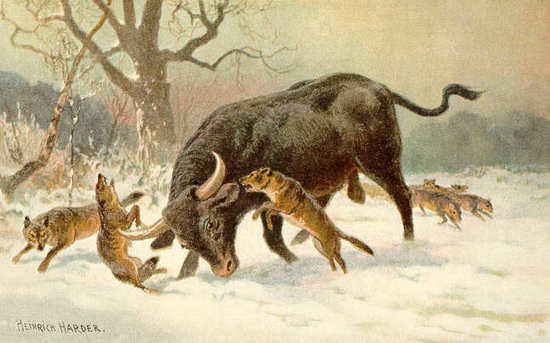
presumably using thrown spears, spear throwers, or bows and arrows.
I don't think that anyone who tried to milk one lived to procreate until we settled down and raised smaller, dumber, meeker cows.
Here are some abstracts regarding low carb diets and cardiovascular parameters. Note that these are not specific to paleo but rather to a more traditional Atkins-type diet. Additionally, in several studies, the participants did not receive guidance or supervision of their diets. One could speculate that even better results could be achieved in paleo adherents with their greater emphasis on healthier fats, but I couldn’t find any randomized, controlled studies that were specific to paleo.
edited to fix links
I’ve been on the paleo diet (more a Primal Blueprint version of it) since September.
Here I am at the beginning:
Here I am now:
I figure I’m halfway there.
My typical day at the moment:
Breakfast – bulletproof coffee
Lunch – Canned salmon, sardines or beef jerky, around 1 or 2pm
Dinner – Meat, veggies, sweet potato or other starchy root.
Treats – 85-91% chocolate, red wine
I try to get grass-fed and pastured animal products. Cooking fats used are duck fat, butter, ghee or coconut oil.
I take a core fitness class at lunch twice a week. Even though I have had no real food all morning, I am not hungry, weak or tired in the class. I feel strong, clear-headed, laser focused. My mood is way better too.
I have more energy and strength than I have ever felt before. On yesterday’s hike, I ran part of the way because I felt so good. I now no longer bring food on day hikes, except some nuts just in case. I just don’t need it.
I never want to eat the standard diet again. On Friday I accidentally ate something with bread in it and it tasted absolutely horrible. I only want real food now.
I’ve ordered some pemmican from US Wellness meats hoping I can tolerate it well enough for backpacking. I have so far used coconut products such as creamed coconut, which is a block of coconut that makes a pretty good curry even at home. Standards like sausage and cheese, nuts and beef jerky. I find I don’t need to eat nearly as much food anymore so my food bag is way lighter.
I've been reading yet another book on long-distance running and the ketogenic diet, "Slow Burn: Burn Fat Faster By Exercising Slower", by Stu Mittleman & Katherine Callan. Mittleman goes into great detail about the difference between sugar-burning metabolism (anaerobic metabolism) and fat-burning metabolism (aerobic metabolism).
One question I have for those who absolutely will not accept the merits of eating less carbohydrates, just a question of logic and sense.
Why would the body develop an energy source like the storing of fat, with such a huge surplus of calories compared to the sugar storing capacity, if it was merely to be an impedance to health and the only purpose was to lose it? What ecological advantage and practical imperative would that have? Doesn't it make more sense that the fat we store on our bodies so easily is meant to be used as daily, long-term energy, rather having to always rely on the short-lived and constant needing to be replenished carbohydrate external energy? To me it just makes complete sense. Just burning off body fat without putting to use its huge store of calories makes no sense. And that's what the ketogenic diet does, putting our body fat to use as the body's main source of energy, and only utilizing sugar (carbs) in unusual circumstances, like emergencies. It's logical, much more logical than the view that we ought to be constantly eating and constantly doing strenuous and unsustainable exertion in order to remain healthy. Animals certainly don't do that.
"Mittleman goes into great detail about the difference between sugar-burning metabolism (anaerobic metabolism) and fat-burning metabolism (aerobic metabolism)."
He is flat out wrong on this one, Miguel. Both are metabolized aerobically, glucose far more easily than fat because it is a simpler molecule and contains half of the O2 for its complete oxidation embedded in the molecule itself.
"Why would the body develop an energy source like the storing of fat, with such a huge surplus of calories compared to the sugar storing capacity, if it was merely to be an impedance to health and the only purpose was to lose it?"
It didn't. Fat is definitely a far more efficient way to store energy, critical in fact to any mobile organism. Only plants store their main energy supply as carbs, because they don't move around. But that is not the whole story. The 2 are designed to operate in tandem. See below.
"Doesn't it make more sense that the fat we store on our bodies so easily is meant to be used as daily, long-term energy, rather having to always rely on the short-lived and constant needing to be replenished carbohydrate external energy? To me it just makes complete sense…….. Just burning off body fat without putting to use its huge store of calories makes no sense. And that's what the ketogenic diet does, putting our body fat to use as the body's main source of energy, and only utilizing sugar (carbs) in unusual circumstances, like emergencies."
All of your statement makes sense except for that last part about only utilizing carbs in emergencies. The human body also evolved the ability to store ~1600-1800 calories of energy as glycogen in the muscles and, to a lesser extent, in the liver. This amount of energy is enough to run 18-20 miles using very little fat for energy, at which point the glycogen is exhausted and the body must rely on fat and protein for its energy if it is to continue moving. When this happens, the runner's pace will tail off dramatically. It occurs to most marathoners somewhere between 18 and 20 miles, and is called "hitting the wall". Evolutionarily speaking, this would imply that most situations humans encountered where they had to run at a pace too fast to be supported by fat metabolism were successfully resolved in 18-20 miles. I'm thinking hunting, being hunted, or combat here. Far from being emergencies, these situations were an everyday part of early human life. My point is that both systems were, and are, highly useful and normal components of human physiology. Carbs also support the oxidation of fat in the mitochondria under normal circumstances. There is a backup system called gluconeogenisis, but it is less efficient and will not support an extended period of high intensity activity nearly as well as glycogen does. Again, I am not dismissing the Paleo system, nor do I dispute the fact that our modern diet has badly distorted the carbohydrate based part of our metabolic system, with disastrous consequences for many. What I do say is that for most people, following a well designed dietary regimen and exercising adequately will allow our evolutionarily perfected carb/fat based metabolic system to function properly, and more efficiently than the Paleo system, which seems to me to be the true emergency system from an evolutionary standpoint. My 2 cents.
Carbs also support the oxidation of fat in the mitochondria under normal circumstances. There is a backup system called gluconeogenisis, but it is less efficient and will not support an extended period of high intensity activity nearly as well as glycogen does.
Hi Tom,
I noticed you mentioning this a few times, and wanted to comment on it as it implies that gluconeogenesis is the primary energy supplier when carbs are absent. (Not sure if this is what you were intending to say.)
Many textbooks focus on glucose metabolism in the TCA cycle and neglect or omit the lipid and amino acid oxidation paths which also converge on the TCA cycle. Part of this is historical; when first discovered the TCA cycle was considered a purely carbohydrate pathway. (The other part is likely just to avoid overwhelming undergrads.)
Also, I wouldn't consider gluconeogenesis a backup system; it's a continuously ongoing process for regulating blood glucose levels (its counterpart being glycogenolysis).
Ref: http://www.nature.com/scitable/topicpage/nutrient-utilization-in-humans-metabolism-pathways-14234029
Excellent post, Tom.
He is flat out wrong on this one, Miguel.
Ach, Tom, isn’t that rather harsh considering that the words above are mine, and only an interpretation of what Mittleman wrote? Take the information I wrote in context. If anyone was flat out wrong, it would be me, both in inadequately explaining what he wrote, and in my own incomplete understanding of the process. Keep in mind that, as I have frequently stated in my many posts on this topic, that I am still learning and have only a rudimentary understanding of all this. I post a lot because I am excited about what I am learning, but I am definitely not, and do not consider myself, an expert on any of this. You definitely have a lot more knowledge of the biochemistry than I do, and so what you explain helps me learn more and to change with new knowledge. I am perfectly willing to listen to what you have to say and to evaluate what I think I know, with my own experience and to alter my thinking if I think it properly challenges what I think I know. You obviously make the effort to understand all this, doing the hard work to learn about it. However, I will neither take seriously nor listen to anyone who hasn’t done their homework. My main point in being somewhat adamant about the whole paleo thing is that people take the time to read and listen to lectures and such about the subject, before judging it or condemning it. Reading about it and understanding it is not the same as accepting it. And I’ve more than done my homework. I still have a very long way to go.
(Read one of the biggest voices in the paleo movement, someone who is most definitely not a “purist” and is severely critical of anyone who mindlessly follows the dogma without critical analysis and common sense: Free the Animal. This article in particular might be of interest. It’s a good indicator of what the paleo community is like…)
I do understand that carbohydrates are absolutely necessary for one’s metabolism. Not only do I understand this through what I’ve read, but viscerally, in my dealing with diabetes everyday. I have to take two types of insulin… basal and bolus. Basal insulin is the same as the underlying insulin that is present constantly in all of our bodies, the insulin that allows carbohydrates to metabolize and which in turn also kick start the metabolism of fats. Bolus insulin is the insulin that I shoot before meals, when my blood sugar will spike with any carbs I ingest. For normal people it is equivalent to the reaction of the pancreas when carbs are ingested and insulin is released into the bloodstream to both process the carbs into glucose and fat, and to counter the toxic effects of too much sugar. Without carbs, fats cannot metabolize (and this, as you explained, also has to do with the processes of the liver). So if I gave the impression that I think all carbs should be eliminated, I definitely was not explaining myself very well.
It didn’t. Fat is definitely a far more efficient way to store energy, critical in fact to any mobile organism. Only plants store their main energy supply as carbs, because they don’t move around. But that is not the whole story. The 2 are designed to operate in tandem.
I think that’s exactly what I was attempting to say. I never said the carbohydrate burning system was not used. The explanation you give afterwards, is exactly what I’ve been trying to say all along, that for most of our activities, including most low to medium level hiking, the fat-burning system is far more efficient and far, far longer lasting (we have about 2,500 kcal of energy stored as sugar, but about 130,000 kcal of energy stored as fat). That 18 to 20 mile glycogen burnout you talk about is just that, a short term burst of energy that was not meant to be used most of the time.
I’m thinking hunting, being hunted, or combat here. Far from being emergencies, these situations were an everyday part of early human life.
On this I would very much have to disagree with you. I don’t know where American male ideas of early human or present-day wild animal life come from, but there is this romantic element of the macho male fighting off rabid bears and wolves. Sure, occasionally, but not an everyday, 24-hour-a-day occurrence. People (and animals) had/ have to constantly be on guard, yes, but if the emergencies happened as often as you suggest, children would never have grown up and things like trees and such things a very delicate butterflies and crane flies would never survive long enough to make it to adulthood. By and large the daily life of wild animals was/ is quiet and uneventful. It is not at all like a war zone. If any of you actually spend as much time in the wilds as this site represents, then you know this to be true. Even in bear country as wild as Andrew Skurka’s last big trip, he did not unendingly fight off bears and wolves. It explains why creatures such as platypuses and dolphins often die of stress from the overly loud noises humans make. In the same manner that constant stress even to our species today often causes many people to get very sick, so our bodies were not meant to be subjected to and did not develop in an environment of unending fight-or-flight stressors. Our use of the sugar mechanism was not meant to be turned on all the time… our bodies cannot handle that much constant adrenaline. The sugar mechanism, when used as the sole energy source, was only meant to be used for those fast 18 to 20 miles and only occasionally, because that was all that was necessary. We are not like hummingbirds, needing to burn sugar all the time. If we had needed to use such energy all the time, we would have developed it. Instead we developed an extremely efficient fat-burning mechanism. I don’t think, in the advice given to people who need to lose weight and in our understanding of what constitute health and even everyday fitness, we’re properly understanding and addressing the difference between these two systems.
That’s how I’m beginning to see it anyway.
Now here is the part I’m still trying to get my head around, and which both Stu Mittleman and Dr. Phil Maffetone (Mittleman has run more than 300,000 miles as a professional ultramarathoner and has worked with thousands of clients, as a coach, while Phil Maffetone is one of the most respected sports doctors in the world) spend more than half of each of their books explaining. If, as you say, I am wrong about my understanding of what they say, why does the body have two different types of muscles, one anaerobic, the other aerobic, and why do they work differently… either utilizing the stored fat, or utilizing the sugar in the blood? And why is there a measurable difference (using a carbon dioxide/ oxygen analyzer for a gas-exchange analysis… more informative about fat burning and sugar burning than a V02max test… it’s the test Mittlelman and Maffetone both use) in the amount of oxygen and carbon dioxide released in the breath, always corresponding to the intensity of the exercise and the type of food the subject predominantly eats? As two practitioners who definitely know the science behind their stuff and have had many years of experience working with this, I tend to favor what they say over what, forgive me if I come across as disrespectful, you might say, Tom. But I, personally, cannot argue any more deeply about the biochemistry; I simply don’t have the background or the knowledge. It could be that I completely misunderstood what they were writing.
Miguel,
Like you these discussions on Paleo and other "non-traditional" diets has caused me to do my homework. Here's my take:
1) Unfortunately there are fewer "universally accepted facts" than I would like. It's almost like there is 80% known and many take the last 20% and mold it to meet their personal bias.
2) There are likely huge difference between individuals and also what their objectives are. You are dealing with diabeties, others are trying to lose weight, some as trying to optimize food weight efficiency and some are looking to maximize athletic performance. These differences will cause folks to declare success in their little world (and often globalize the effects) without having broader understanding of the implications in others. A good example of this would be me extrapolating what I learned from my PCT diet on topics such as weight loss.
3) I tend to be somewhat skeptical on "extremist" on all sides especially if they use their own personal experience. I suspect that there are "freaks of nature" that are able to do things that mere mortals can't replicate. Mittelman may fall into this catagory, I frankly know little about him.
So, keep on updating us on your experience and learnings. Even those of us that may not directionally agree on the approach are learning a lot.
"I noticed you mentioning this a few times, and wanted to comment on it as it implies that gluconeogenesis is the primary energy supplier when carbs are absent. (Not sure if this is what you were intending to say.)"
Hi Jeremy,
Poor choice of words on my part, I guess. What I meant is that gluconeogenisis is a backup system for supplying glucose in the absence of adequate glucose from dietary sources. It is definitely not the major source of energy for the whole body under any circumstances that I could imagine, although it can support the metabolism of fat to some degree, albeit not very extensively or efficiently. This is one of my concerns with the Paleo diet for most people. I haven't gone back to a physiology textbook in over a year, but I did do a quick check on Wickipedia which supports my main premise that it is a backup system. According to the Wicki entry, gluconeogenisis occurs during conditions of fasting, starvation, low carb dieting, or high intensity exercise, all of which lead to carb exhaustion and a low blood sugar condition. It primarily supplies the brain, kidneys, erythrocytes,and testes, but any surplus blood glucose would also be available to muscle tissues after these demands have been satisfied, just like glucose from dietary sources. Gluconeogenisis is also a very energy intensive process, hence my comment that it is not very efficient. If you read down thru the first link, below, I think you will see what I am getting at. This is why I don't think the human body uses it as a first choice, when glucose from dietary sources is present in sufficient quantities to support the metabolic demands of any given situation.
http://themedicalbiochemistrypage.org/gluconeogenesis.php
Wicki entry
http://en.wikipedia.org/wiki/Gluconeogenesis
"Also, I wouldn't consider gluconeogenesis a backup system; it's a continuously ongoing process for regulating blood glucose levels (its counterpart being glycogenolysis)."
It may be an ongoing process at a low level or intermittently under normal circumstances but, given its relative inefficiency in terms of the energy required to support it, it is unlikely to be the primary source of blood glucose in the presence of adequate dietary carbohydrate intake. The Wicki entry, above, seems to bear this out.
Ach, Tom, isn't that rather harsh considering that the words above are mine, and only an interpretation of what Mittleman wrote?"
Hi Miguel,
My apologies. The words were not well chosen. I thought it was a direct quote from Mittleman and I thought he should have known better. either way, I could have said it a little more tactfully, to say the least. Seems I was having trouble with my wording in general yesterday. Again, my apologies.
As for the rest of your comments, I have run out of time for tonight. I will definitely get back to you tomorrow, hopefully with a better command of my language than has heretofore been the case.
He is flat out wrong on this one, Miguel. Both are metabolized aerobically, glucose far more easily than fat because it is a simpler molecule and contains half of the O2 for its complete oxidation embedded in the molecule itself. (Tom)
To expand on Tom's comment, Miguel, the TCA cycle itself operates aerobically, regardless of whether the inputs are coming from glucose or fat. However, before glucose enters the cycle it is first oxidized to pyruvate, and this produces a small amount of ATP.
When you are heavily exercising and run short of oxygen, pyruvate will instead be fermented to lactate, which is shuttled to the liver to be converted back to glucose. (This gives 2 ATP to the muscle at a cost of 4 ATP in the liver, an obviously unsustainable method.)
why does the body have two different types of muscles, one anaerobic, the other aerobic, and why do they work differently… either utilizing the stored fat, or utilizing the sugar in the blood? (Miguel)
Skeletal muscle is composed of a mix of muscle fiber types, each type being optimized for different types of work (e.g. slow, sustained movement vs. fast and strong). Which particular fibers within a muscle will fire at a given time depends on the desired speed and strength of a movement. An extremely crude analogy might be to a turbocharged Prius; it can use the electric motor for slow driving, fire up the engine for more speed, and spin up the turbo when even more power is needed.
From what I can tell, Maffetone's idea seems to be to build up aerobic capacity by moving around at a relatively slower pace based on a target heart rate. It sounds like his fat/sugar dichotomy is just his way of explaining that as your level of exertion rises, fat metabolism is overshadowed by increasingly larger amounts of carbohydrate metabolism. (The more you can increase your aerobic capacity, the less quickly you exhaust your glucose stores.)
"On this I would very much have to disagree with you. I don't know where American male ideas of early human or present-day wild animal life come from, but there is this romantic element of the macho male fighting off rabid bears and wolves. Sure, occasionally, but not an everyday, 24-hour-a-day occurrence. People (and animals) had/ have to constantly be on guard, yes, but if the emergencies happened as often as you suggest, children would never have grown up and things like trees and such things a very delicate butterflies and crane flies would never survive long enough to make it to adulthood. By and large the daily life of wild animals was/ is quiet and uneventful. It is not at all like a war zone."
I don't view their lives as a constant combat situation either, Miguel. But early humans definitely did a lot of hunting, and it is hypothesized that one reason Cro Magnons prevailed over the Neanderthals was their ability to run long distances to hunt down game. Some peoples in Ethiopia and the Kalahari still do. This is definitely a way of hunting that brings both the glucose and fat burning systems into play, as the hunts can go on for a day or more. Before agriculture developed, the only way for people to get enough calories to survive was by hunting and fishing for the most part. My take on this, from what I have read down thru the years is that hunting was pretty much a daily activity, and the fact that humans have developed a dual source energy supply system seems to support this. That it would also be useful in relatively rare situations where struggle/combat occurred is, IMO, secondary to its necessity for successful hunting. If not for hunting and occasional life or death struggles, why else would the system have developed in the first place? As far as sudden emergencies are concerned, ie a struggle that begins, unfolds intensely, and is over just as quickly, think ambush or chance confrontation, the muscles store enough ATP to supply instant energy anaerobically for about 5-6 seconds of work. Once that is exhausted, the creatine phosphate system will supply enough for another 30-40 seconds, again anaerobically. These are the true first line emergency systems that support fight and/or initial flight. Assuming a person survives that first violent encounter, he might well be looking to get the he!! out of Dodge as fast as he could, which is where the muscle glycogen would come into play, enabling him to go up to 20 miles at marathon pace, or perhaps 5-6 miles at a much faster pace that uses up the glycogen correspondingly faster.
"Our use of the sugar mechanism was not meant to be turned on all the time…"
It is, in fact, turned on all the time, just not always at a high level. The glucose/glycogen system is constantly supplying glucose to the brain, muscles, every tissue in the body, but not necessarily at high levels. Either as the sole substrate for energy under normal circumstances, as in the case, for example, of the brain, kidneys, testes, and erythrocytes, or to support the metabolism of fat in the muscles. The amount of energy it supplies varies with the intensity of the work being performed.
"I don't think, in the advice given to people who need to lose weight and in our understanding of what constitute health and even everyday fitness, we're properly understanding and addressing the difference between these two systems."
Weight loss is a relatively recent concern, and not a situation that our energy system has had enough time to evolve to deal with. It is a consequence of the unhealthy lifestyle we have developed beginning in the 20th century. I think the system is fairly well understood by physiologists and at least some doctors. As for the advice they give to those who need to lose weight, I simply cannot comment beyond my own personal experience. I do feel that it is not only a matter of inadequate or bad advice, but also of non compliance by those who receive the advice in many cases. There is only so much health care providers can do for a person. I am not talking here about those who suffer from the kind of diabetes you do. I simply do not know enough to even have an opinion. And, as I have stated before, I am not opposed to the Paleo diet for those who find it useful. In fact, I am quite interested to see how it works for those here at BPL who are following it. It is the reason why I started following this and other related threads. My only reason for posting is to describe the broader context within which I think the Paleo diet resides.
"Now here is the part I'm still trying to get my head around….If, as you say, I am wrong about my understanding of what they say, why does the body have two different types of muscles, one anaerobic, the other aerobic, and why do they work differently… either utilizing the stored fat, or utilizing the sugar in the blood?"
Both operate aerobically or anaerobically, depending on the intensity of the work and the ability of the cardio vascular system to deliver adequate O2 to support that intensity. And it is not an either/or situation but, rather, a varying ratio of fat to carbs burned up until the person exceeds his aerobic threshold. At that point, there is a short period where energy is derived from pyruvate anaerobically with lactic acid build up in the blood and muscles. When that capacity is exhausted, the intensity of the work will be forced down to an aerobic level.
"And why is there a measurable difference (using a carbon dioxide/ oxygen analyzer for a gas-exchange analysis… more informative about fat burning and sugar burning than a V02max test…"
They measure two different things, Miguel. A VO2 max test measures the ability of a person's cardio vascular system to deliver O2 to the working muscles. The Respiration Exchange Ratio test measures the ratio of fat to carbs burned at a given level of exercise. Apples and oranges. I, too, would be much more interested in the answers provided by an RER test, and have even considered getting one to determine the ratio of fat to carbs I burn at my typical hiking pace, in order to more intelligently plan my diet.
"always corresponding to the intensity of the exercise and the type of food the subject predominantly eats?"
I'm with you on the first part, but I'm not so sure that it directly relates to the type of food a person eats, as it only measures fat/carb ratios.
"As two practitioners who definitely know the science behind their stuff and have had many years of experience working with this, I tend to favor what they say over what, forgive me if I come across as disrespectful, you might say, Tom."
I don't take it personally at all, Miguel. I am really enjoying this discussion. However, by way of putting your comment about Mittelman and Maffetone in a slightly broader context, there are a lot of other very talented scientists out there as well.
I guess I just happen to have read them and not your guys. I don't think the basic way our energy system functions is in dispute by most scientists nor, it seems, by Maffetone and Mittelman. There is much more to be learned, as always, but the basics are pretty much agreed on. I have not read either of your guys, but from your posts I gather they admit that anyone on the Paleo diet will not be able to perform higher intensity exercise without using additional carbs, which is thoroughly mainstream. Please correct me if I am wrong on this one.
Hi Tom,
It may be an ongoing process at a low level or intermittently under normal circumstances but, given its relative inefficiency in terms of the energy required to support it, it is unlikely to be the primary source of blood glucose in the presence of adequate dietary carbohydrate intake.
Right, I wouldn't expect it too either. My point is more that glucose metabolism shouldn't necessarily be considered the body's "primary energy source", even though that's what tends to get taught first in school. If one starts from the assumption that it is, then gluconeogenesis indeed appears as a very inadequate backup system. If, on the other hand, one does not start from that assumption, things look quite different.
For example, if one starts with the assumption that lipid metabolism is the primary source of energy, glucose becomes the "emergency fuel" that comes significantly into play only in times of stress. Absent dietary carbohydrate, the brain's glucose requirement can be met by about ~10g rather than ~120g, an amount the liver can generate with negligible effort. The normal amount of glucose in the bloodstream is also quite low (~5g), and other glucose stores would be exhausted very quickly without fat to back them up.
A wandering tribe of hunters (doing low-level walking for several miles a day mixed with occasional bursts of activity, similar to what you described in your later post) should be expected to have excellent fitness by modern standards. Such "endurance training" results in reduced use of carbohydrate for a given level of exercise, and a higher aerobic capacity will also allow a greater amount of energy to come from fatty acid metabolism. (Fatty acids are preferentially metabolized over glucose.)
Additionally, glucose seems to be metabolically "dirty" in that it produces oxidative byproducts such as AGEs. This is particularly relevant for diabetics, as diabetes accelerates many age-related problems. Increases in lifespan in non-human species seen with caloric restriction appear to be specifically due to the reduction in glucose metabolism (as opposed to a general metabolic slowing).
That said, the science is still relatively young, and my own take on the matter is that identifying the most likely diet for "wild" humans gives a proper baseline against which other diets (and metabolic function) can be compared.
Hi Tom and Jeremy,
I was in the midst of composing a reply to both of you when I read this latest post by you, Jeremy. Suffice it to say I couldn't have put it better. You explained in 5 paragraphs what I've been trying to describe in monumentally long posts! LOL! :^)
Tom, what Jeremy just explained is what the whole paleo lifestyle (remember that exercise and the way you live everyday is very much an important part of the whole paleo thought process, not just the food) is all about. When I first started learning about paleo thinking I, too, started out with the traditional way of thinking… that which I had learned everywhere else before. I was very wary of paleo and low-carbohydrate diets (like the Atkins diet), because for the past 40 years we had all been extremely heavily indoctrinated to think of carbohydrates as the healthiest basis of all our diets. Even the American Heart Association and American Diabetes Association endorsed this. So who was I or these upstarts to challenge this?
If you think about it, Tom, even your scenario of hunting logically supports fat metabolism as the primary, day-in and day-out energy source. Hunting long distances could not have been maintained with constant all out effort; as you detailed, the high energy output could only have gone on for about 6 to 8 miles. Most of the "running" would have been in the realm of endurance athletes today (like Stu Mittleman, who has run across the breadth of the United States in one go), which stays at a relatively slow pace (Mittleman beats his opponents in being able to maintain a very low pace for very sustainable periods, and repeating that over and over again until he wears everyone else down) that utilizes the fat mechanism most of the time, and the glucose mechanism only when short bursts of energy are needed.
One of the most important aspects of the paleo and low carbohydrate diets is the initial physiological changeover that your body must go through before it can properly and efficiently metabolize fats instead of carbohydrates. When you have been sustaining yourself primarily on carbohydrates most of your life your body automatically utilizes the glucose in your blood, because it is immediately available. However, as many of you know who gorge on pizza and ice cream and bread, you get hungry soon afterwards, even if you have eaten a substantial amount. This is the glucose spike that has dropped after eating and due to the body detecting a drop in its energy source. Your brain signals hunger in order for it to maintain its energy source. And thereby marathon runners experience "the wall" and diabetics experience hypoglycemia. The fat metabolism never efficiently comes into play in this way of eating.
To get your body to move into utilizing fat as the primary energy source, you must lower your carbohydrates to maintenance level, just enough to perform the basal functions that require glucose to run. To make up the subsequent loss of amount of calories needed to engage in the daily exertion you need to up the amount of fats you eat. Eaten fat does not invoke the insulin response, and so you therefore do not get the bonk or the hunger that glucose causes. The changeover to fat metabolism can take anywhere from 1 week to a month, and is usually accompanied by a period of low energy and feeling sick, called the "low carb flu" or "low carb blues". Once the changeover takes place, subjects almost universally report a great sense of well-being and great energy. And a disappearance of hunger pangs. Piper reported several times in her thread about her experiment with ketogenic dieting, that she managed day-long hikes without eating any food during the walks. That's the fat metabolism kicking in and your body utilizing the immense store of energy that we naturally carry around. We are originally savannah hunter gatherers who had to walk long distances everyday to survive. And to me this reliance on fat, rather than glucose, to maintain ourselves everyday makes so much sense that I was shocked when I initially started understanding it, that we are not all aware of it. Fat is the long-term day-to-day energy source. Glucose is the short-term, emergency energy source.
As Jeremy pointed out, the research behind all this is relatively young and there is still a lot of ingrained resistance to anything challenging the established wisdom. But more and more scientists and doctors, after seeing the results and the new research, are beginning to question the basic understanding of nutritional health. Paleo is just one form of the research and thinking that are developing. There are a lot of other people also studying how the fat metabolism works who are also seeing big differences in the results of conventional wisdom and the results of this newer way of thinking.
I think a lot of people are just plain having a problem with the word "diet." Whereas many others are looking at Paleo as a lifestyle, trying to eat foods that occur naturally in the wild or trying to substitute it with something very, very close.
A Paleo diet is not low carb. You can eat all the carbs you want, as long as they are found in natural foods such as vegetables, tubers, etc. There is no calorie counting, no prescribed percentage of protein, fat or veggies. Some Paleo advocates recommend percentages, but there is no consensus. There is no agreed "right" balance. The Inuit ate very differently than the Cahuilla of Southern California. The only restriction is not to eat processed or refined foods.
I may be wrong, but seems I read somewhere that the body can convert protein and/or fat into carbs if the body needs it.
Many people who switch to a Paleo diet are not trying to lose weight, but to improve their health. And many people, like Miguel, have finally gotten their body chemistry under control when all the conventional wisdom failed them in the past. Let us not lose sight of that.
Good points Nick. I think Gary Taubes had a large influence on this, presenting carbohydrate as a neolithic culprit. These days Paleo seems to be more about avoiding grains/sugar/legumes, or at least sprouting/fermenting them first. It's a pretty big tent. The interesting questions to my mind are how these foods relate to various neolithic diseases; what are the specific pathways, etc. That's the real goal, and I think Taubes' greatest service was to point out the lack of good evidence behind existing dietary recommendations and assumptions.
I may be wrong, but seems I read somewhere that the body can convert protein and/or fat into carbs if the body needs it.
This is the gluconeogenesis mentioned in earlier posts. It's not particularly efficient, but works fine for its normal use in regulating blood sugar (normal blood glucose levels being fairly minimal) or to assist in recycling lactic acid back to glucose under heavy exertion. Note: you can convert glucose to fat, but you can't convert fat to glucose (with some small exceptions).
Thanks Nick! It is true, getting my diabetes under control (and completely without the help of my doctor, whose recommendations over the last 14 years only served to make my diabetes worse) is a revelation to me. I don't think most people understand that diabetics are not especially physiologically different from healthy folks… we aren't… the only difference is in our inability to use or make insulin. That's it. But that one difference makes all the difference. It literally destroys our entire system. All because of too much glucose in the blood. And the development of insulin resistance (Type 2 diabetics) must certainly be caused by the high ingestion of carbs that we in modern society do. The sudden explosion in obesity and diabetes around the world coincides almost exactly with the sudden huge availability of refined foods around the world. That I was able to get my blood sugars under control by eating less carbs and increasing my fat intake and shifting my metabolism to a fat-burning one I think is good evidence that carbs are the culprit. Restricting carbs is now becoming almost universal in western diabetes treatment (unfortunately the Japanese are always about 20 years behind in medical treatment). If you think of diabetics as the canaries in the nutrition mine, you get a sense of what is happening with people's health around the world, but most especially in the States, where obesity and diabetes are epidemics truly unbelievable in scale.
Just a note: Stu Mittleman and Phil Maffetone are not paleo advocates. They never mention the word in any of their writing. They both teach endurance training with a built in injury-free/ long-term maintainable techniques that emphasizes low-key exercise. This works both ways, in that a fat metabolized system offers the energy for long-distance, but must be kept low-key in order to work. At the same time, in order for the trainee to stay injury-free and avoid over training, low key exercise keeps the body from being overused and over-stressed. Low carb/ high fat eating helps to protect the body, especially because of fat's role in lowering inflammation, a big problem with overtraining.
I am reading Maffetone and Mittleman not for the paleo information, but for more knowledge about how to train while on a low-carb way of eating. Their methods fit well with the way my body works now that I have diabetes, especially emphasizing low key exertion so that the stress doesn't raise my blood sugar and adrenaline levels, both major problems for diabetics.
Become a member to post in the forums.
 New Gear with Aluula FabricsLighter, stronger, more abrasion-resistant, and highly water-resistant - explore ultralight backpacking gear made with ALUULA Graflyte fabrics. Engineered for exceptional strength, durability, and lightweight performance, ALUULA Graflyte helps reduce pack weight without sacrificing reliability, making it ideal for demanding backcountry adventures.
 © Beartooth Media Group Inc.
 Loading...