


"It seems like 3/4ths of the processed food we eat is basically flavored sugar."
Molasses isn't too bad.
I can hike a long way on peanut butter and molasses cookies.
–B.G.–
Topic
Become a member to post in the forums.
"It seems like 3/4ths of the processed food we eat is basically flavored sugar."
Molasses isn't too bad.
I can hike a long way on peanut butter and molasses cookies.
–B.G.–
Did not see the 60 minutes show but I have seen a video by him on YouTube called "sugar the bitter truth" that is worth watching. Warning, it's like an hour and a half and highly technical.
The bottom line is that the more refined the worse it is for you. I try to eat with the following rule… “if it had a mother or grew in the ground, then it’s usually better”.
HFCS is hidden in a lot of things. Bread and things like Stove-Top stuffing…. and it is used there to increase the margins. Capitalism at it’s best. It makes the product seem softer and fresher for longer. Disgusting when you think about it.
I eat a lot of beans and legumes for carb/protein. One of my favorite dinners is a poached egg on a bed of lentils, carrots, celery, fresh thyme, and red pepper flakes… drizzled with a little truffle infused olive oil. High protein, moderate carb and big on flavor. The lentils are in place of bread, rice or potatoes. Because of the lentils this wouldn’t qualify as Paleo (at least with my minimal understanding of the plan).
Here is a good article on the HFCS High fructose corn syrup: just another sugar?
You really have to be a label reader if you want to be healthy from a dietary perspective. In the UK and Canada HFCS is often labelled as glucose-fructose. The good thing is that it is almost always found in processed foods and can very easily be avoided completely.
Laurie,
Would you mind sharing your recipe for your poached egg and lentil meal? I would like it. And by the way I love your first book–A Fork In The Trail. I've used your recipes for a number of backpacking trips, especially with large groups. I've fed up to 16 men on a trip and they all love your food!

High fructose corn syrup has the same ratio of glucose and fructose as regular sugar (sucrose). The chemical bonds are slightly different, but the body quickly metabolizes into the same thing. Like the guy said in the 60 minutes piece, they're essentially the same.
The significant difference is HFCS costs less so they put it in everything.
Part of the reason it's so cheap is they subsidize corn. And the other thing they do with cheap corn is feed it to animals which make them poisonous to us also.
They should quit subsidizing corn, but that won't happen until we get a new crop of legislators.
Like when they tried to eliminate oil company subsidies even a few Democrats voted to keep these.

" don't think anyone can absolutely say how physically active our ancient ancestors were. But my studies on Native Americans indicate they were not out hunting or gathering everyday. A big kill or large harvest was not an on going struggle. They moved with the seasons to food sources and probably don't come close to the exertion of a marathoner in training/racking or a thru hiker. We can only speculate."
Mostly agree, but I would speculate that the activity patterns of Native Americans varied widely with the environment they inhabited. I'm thinking of peoples inhabiting the Pacific Northwest as opposed to Great Plains peoples, such as the Arapaho, Sioux, Pawnee, etc, especially before the introduction of the horse. The activity patterns of peoples inhabiting these very different environments had to be quite different. The PNW is lush and full of easily tapped food sources, and there is an old saying here that reflects that bounty: "A man would have to be a fool to starve here". I suspect it was not quite so easy for the Great Plains inhabitants.
Here's my paleo this weekend.

One of those US Wellness Pemmican bars (ingredients: beef tallow, dried beef, salt) has about 400 calories and after I eat one I am good to go all day. Prior to adopting this way of eating, a bowl of oatmeal or cereal might have even more calories depending on how much dried fruit and nuts I'd put in there. I'd be hungry in a couple of hours and out would come the energy bars or the cookies or lunch or I'd fight against my hunger because shouldn't backpacking help me lose a little weight? And then I'd get weak and tired. I ate one pemmican bar and then threw branches over the side of the trail for half the day. Never felt tired, never felt weak, never felt hungry.
If you don't want to go low carb you do not have to. You can still eat paleo foods. Just eat more fruit, roots and tubers. Your health will improve so much eating real food and avoiding grains and industrial vegetable oils. I had no idea that stuff was killing me because I never knew what it felt like to be totally, exuberantly healthy.
Jason wrote… "Laurie,
Would you mind sharing your recipe for your poached egg and lentil meal? I would like it. And by the way I love your first book–A Fork In The Trail. I've used your recipes for a number of backpacking trips, especially with large groups. I've fed up to 16 men on a trip and they all love your food!"
Thanks Jason… I'll post it in a separate thread. We often have it for base and car camping as well. In each book I have a "more elaborate meals" section and the Poached Eggs with Lentils are from the second book. Sometimes, if I am wanting this in the backcountry, I'll use something like Adventure Egg or OvaEasy… but it is much tastier with a poached egg.
"You really have to be a label reader if you want to be healthy from a dietary perspective."
A HUGE +1 Caveat emptor, in spades, and even then the individual entries in the label seldom add up to the total(s), particularly when it comes to carb/fiber.
Tom… and I've found some serious errors on labels too. Generally it isn't too bad but there has been the odd product where I am pretty sure the carb count on the label was way lower than it should have been by at least half.
Another thing, with me at least, is that I subtract the fibre from the carb but only if the fibre value is 3g or more. Why? Well with the fibre slowing the rise in glucose it reduces the total glycemic index a bit.
I do know one thing, being in my situation, I get a direct view of how my body reacts to food, exercise, hiking, stress, etc. by the number on the blood glucose meter which, in a sense, means it is less of a guessing game that others trying to balance everything.
"I've found some serious errors on labels too. Generally it isn't too bad but there has been the odd product where I am pretty sure the carb count on the label was way lower than it should have been by at least half."
I'm a bit of a calorie geek, because I operate on ~19 oz of food/day, and have to make every calorie count on longer trips. When they include fiber in the calorie count, it throws me off by more than I can afford to tolerate. So, now I analyze the label of everything I buy closely and find that the labels are inaccurate considerably more than 50% of the time. It's a time consuming process, but I feel it's worth it in my situation, especially with a BMI of 21.5 and no worries about the glycemic indices of food items I ingest. Or maybe I'm just being a neurotic old f@rt. ;0)
Tom… not sure if there are any differences in how US and Canadian labels are handled. From my understanding, calories are inclusive but on our labels it is broken down by grams as well as percentages.
"Tom… not sure if there are any differences in how US and Canadian labels are handled. From my understanding, calories are inclusive but on our labels it is broken down by grams as well as percentages."
Your nutrition facts label is indistinguishable from ours and, in the example you provide, as wildly inaccurate. The example gives 3/4 cup (175 grams) on the top line whereas, if you add up the grams by nutrient category, you will get 35.5. Go a step further and you will find that the total calorie count is not 160 but, rather, 154.5. One can only wonder how inserting a few grams of fiber under total carbs would have affected their calculations. :=(
I do know one thing, being in my situation, I get a direct view of how my body reacts to food, exercise, hiking, stress, etc. by the number on the blood glucose meter which, in a sense, means it is less of a guessing game that others trying to balance everything.
Laurie brings up a good point about diabetics being able to directly look at what is happening in the blood stream that I've tried to highlight in earlier posts. Most people never regularly check their blood sugar everyday and have no idea at all how the food they are eating is quantitatively and qualitatively affecting both their blood glucose and glycemic index levels. Most diabetics have a blood glucose meter that they use a number of times a day… Usually just before a meal, but some people more frequently before and after a main meal, and some people every time they eat or do exercise. With every blood test you can directly see how high or low your blood sugar is and how the foods you eat affect those blood sugar levels. You see, by direct measurement (though not as accurate as HbA1C measurements over the long term), that it is carbohydrates, not calories, that cause your blood sugars to rise, or, with a lack of carbs, to fall. This isn't just conjecture on my part. Laurie and I record these blood sugar measurements, and over time, if you also record the kinds of food you eat, you can see a direct correlation between carbs and weight gain and simultaneously the worsening or improvement of the diabetic conditions. Since gaining weight equals worsening of how the body handles, in conjunction with insulin, diabetic complications, and this surrounds the whole issue of carb intake, and this does not happen with fats (though there are other unrelated problems with certain kinds of fats), it is safe to assume that it is carbs that is behind the whole obesity and diabetes epidemics.
It would be very interesting and educational to have a number of non-diabetic people daily test their blood sugar levels to see who and how they react to, over time, the intake of carbs and fats (and proteins to a lesser extent), and how that correlates to their weight and sense of well-being. I'm willing to bet that those more prone to being overweight will have higher or more irregular blood sugar readings, and these people will have been eating correspondingly more carbs.
Miguel, et. all-
The proposal above sounds like something that might make a great article since it can be directly applied to both long and short-term nutrition on the trail. I'd encourage someone to submit a proposal if you're interested in doing the research anyway.
My husband, Bryan, tests his blood sugar from time to time. Sometimes I will get him to test with my spare meter for an entire day. We did this recently when I was doing my first 5K trail run. It gave me the insight I needed. We ate the same yet his blood sugar never really rose. However, after the run, his blood sugar was a little low just as mine was. Two hours after supper his blood sugar reading was 5.8 mmol/L and mine was 6.6 mmol/L. So not an overly significant difference. Dinner was a lean chicken breast, lentil salad, and green beans. Same measured portions. He drank water and I drank mineral water (I like the fizz). Within 3 hours after the meal my blood sugar was 4.8 mmol/L and his was 5.2 mmol/L. Once again, a moderate difference.
The reasons I wanted to use him as a guide was the fact that I no longer represent as a diabetic at all and I am not on medication. That said, my body is in a state of change with increasing running distances and intensity (I start hill training next week) and with bringing in other forms of intense exercise. Being able to compare a non-diabetic with the same lifestyle, diet and weight needed to be lost (just over 20-25 pounds each) was helpful. The only thing that would have been better was if he was a woman because hormones can play a role in blood glucose levels.
With this in mind I check my blood sugar when I wake up (I also check my heart rate and blood pressure to ensure I am not over-training). I test before each meal and 2 hours after each meal. I test before I run or workout. If I feel funny during my run or workout, I test. And I test before my bedtime snack. It amounts to between 8 and 10 tests a day (more when I am ill). It's a lot but it gives me control and yes, I micro-manage this. I feel, very strongly, that I was able to reverse Type 2 diabetes through proper balanced carbohydrate intake (as you can gather I don't believe in excluding dairy, whole grains, ancient grains such as quinoa and amaranth, and legumes from my diet because of fibre and nutrient content) and with having an active lifestyle.
I am currently working on building muscle and losing weight. I believe in a slower weight loss for many reasons and am averaging 4 pounds per month. There are benefits to that. One, it makes for permanent change. Two, it helps prevent issues with sudden and dramatic changes in how my natural insulin is working. Three, our diet is a way of eating that the whole family can adopt – meaning less work for me because one meal suits all. And lastly, it means that there are no issues with lack of skin elasticity. Having lost close to half my body weight in over 12 years… I've learned a thing or three about what type of eating works best for me. I've been heavy since age 5 and this is the only time I've had permanent, successful, long-term weight loss. In fact, yesterday was a bit of a milestone for me… the smallest height-weight proportion I have been in 29 years (age 14).
I think Paleo has it's place and while it isn't my cup of tea, I love the fact that it brings about discussions such as this. Really enjoyable to read and participate in this debate.
I vaguely remember Ryan saying he was doing a project that envolved measuring blood glucose levels while hiking
I came across this article this morning. Thought it might be relevant to the thread:
I have issues with articles, like the one posted that make blanket statements like this…
“Carbohydrates in general shouldn’t be feared, carbohydrates from toxic sources like grains, legumes and refined sugar should.”
Yes, I agree with the refined sugars but grains and legumes can be a healthy part of living and provide vital nutrients. Quinoa, amaranth, chickpeas and lentils can be incorporated into a healthy diet. They are often used by those with Celiac. Toxic is considerably misleading (although I will agree with the refined sugar part).
Are you all familiar with the Venus of Willendorf Statue? “Originally found in Willendorf, Austria, this statue of a woman represents the earth, its fertility and continuation of life, from the Prehistoric/Paleolithic era — a period when fertility and hunting were essential components of survival.”
When I think of paleo – this statue from the upper paleolithic is what comes to my mind. Perhaps this was the body type they revered? While one could argue that this is a fertility statue… you only have to look at the legs to see that, even if the womanly figure portrayed here was pregnant, her legs and back have the markings of someone morbidly obese. I would have fit well into paleo times as far as this type of body shape is concerned, before I lost over 170 pounds or so with eating a variety of foods including grains and legumes.
I think that Paleo eating might be good for short term but I challenge the long term effects of this type of eating plan. Sorry… but after my reading my opinion is that Paleo is the latest fad.
edited to repair broken link and add a few thoughts
Congratulations Laurie Ann, on your 29 year record.
I agree that a moderate and varied diet, centered on real and not processed foods, is the way to go. People can do a vegan subset of that, or a paleo subset, but I like to gown the middle … an omnivore’s moderate diet.
Laurie, two things.
First, considering that you recently stated that you don't know very much about paleo, and haven't read very much about it, I would think that your statement here is very much a blanket statement based on lack of knowledge of it. The author of the article was trying to soften the oft inflexible outlook that many paleo adherents have and if you read more of his articles you'll get a better understanding of where he is coming from. Remember he is addressing paleo adherents, not people like you who obviously don't put any stock in the whole way of thinking. That's your take, of course, and no one is pushing you to follow this. But for people who do want to follow it and feel it has something important to offer, this article is helpful for those having trouble with it. It's working for a lot of people. I've never followed any fad before, but this has made a big difference for me, and I really don't care what pigeon hole name people want to label it; as a method of controlling my health I'll take what works. Nothing before ever did. Certainly not what you are advocating… which is what I religiously followed for 30 years, with no improvements at all, especially after getting diabetes. Mind you, I was never overweight until I started taking insulin.
Second, there are a lot of cultures around the world that did not often have obesity, where from before recorded history being fat was considered a beautiful and unusual state to be in, namely because it was so hard to achieve and a sign of opulence. Paleolithic people were no different from us in intelligence or cultural tendencies like ceremonies and basic social structure, so it shouldn't be a surprise that they upheld certain people in their societies who were more powerful and wealthy. Those who could afford the luxury of getting fat probably often did indulge in it. Or maybe that woman on whom the statue might have been based was an anomaly, something so rare that, like often happened in Eastern cultures with children who were mentally handicapped, she was revered and worshipped as a god. Or maybe the statue was purely imaginative. Who knows?
I'm not sure what your point is about the statue. Is it concerning obesity and how paleo helps you lose weight? Some people who eat paleo do it to lose weight, but most adherents tend to do it long-term, long after the weight has been lost, to maintain a strong sense of health. Paleo is not just a way of eating… it also equally incorporates certain ways of exercising, a commitment to reducing stress, getting proper sleep, and even making sure to incorporate play. It works much like the components of UL backpacking… it's a system with each aspect of your lifestyle contributing to your health. One reason I like it is that it is comprehensive and doesn't just focus on food.
Without getting more involved and reading and participating in the books and online discussions of paleo, you wouldn't know that it is constantly evolving. Through proper scientific research older ideas are scrutinized and certain old beliefs are either confirmed or found to have problems. Many paleo discussions have centered around the different findings that adherents have had with such things as potatoes, quinoa, and milk, all things that in the early days or in the strict school of paleo were considered off limits, but which, through experimentation and experience have been shown to pose no problem. Remember, the reason paleo is called paleo is to try to emulate a period in human history during which our bodies reached the height of direct interaction with our surroundings, before agriculture allowed us to start becoming independent of the vagaries of that environment. The advantage of this is that this attempts to find a state in which, genetically, the environment shaped us to optimal physiological adaptation due to natural selection. No one is saying that agriculture wasn't a huge advantage to us, but ongoing archaeological research has found a lot of evidence of a great decline in our health ever since agriculture began wholesale. Take a look at the research going on at Jonzac, France, by Paleolithic anthropologists, Dr's. Mike Richards and Shannon McPherson of the Max Planck Institute for Evolutionary Anthropology, the studies of Gary J. Sawyer at the American Museum of Natural History, and the work of Leslie Aiello of the President Wenner-Gren Foundation for Anthropological Research… all of them, in the studying the remains of Paleolithic people and early Neolithic people have found generally optimal health in the former and many signs of deterioration in the latter. Dr. Aiello even states that Homo Erectus, just before our species, represented the highest point in human physiological development. They have all found that as agriculture progressed the variety in what we ate gradually decreased, until today our choices in food have been severely restricted to the few vegetables, grains, tubers, meats, dairy, and fish we eat today. Hell, even the variety of food Japanese ate when I was a child changed dramatically over the last 40 years as western eating habits took over Japan… and the sudden and heretofore completely alien to Japanese culture, obesity epidemic. Japanese ate rice before that, but never in large amounts, because it was for centuries a luxury (even when I was a boy in Japan few people could afford to regularly eat sushi). The Japanese diet consisted mainly of a huge variety of vegetables and fish, with rice as a small aside and much needed carbohydrate source. I almost never saw fat people in Japan when I was a boy; now they are everywhere (though there is debate about rice being a culprit grain in paleo. It doesn't seem to have the effects that wheat does).
My point being paleo is far more than just a simplistic "no carb/ lots of fat" trend diet. There is healthy debate going on and experimentation and involvement with many serious, peer-reviewed scientists. If grains were found to be optimal, that's what paleo adherents would eat, since the point is to seek the optimal diet for humans, not advocate certain dogma. That is what attracted me to this whole movement in the first place. .
“In a census record of 1873, nutritional information for the Hida Region (Gife Prefecture, Central Honsyu¯) shows that rice was the most important food, notwithstanding the general unsuitability of the area for the crop’s cultivation (Koyama et al. 1981: 548—51). The same data reveal a typical daily intake of nutriments for premodern Japanese people. The recorded population of this mountainous region was about 90,000, and these people are thought to have maintained the highest dependency in Japan on millet as a rice substitute. The average daily energy intake per capita was 1,850 kilocalories (kcal) (in 1980 it was 2,600 kcal), of which 55 percent was supplied by rice, which also supplied 39 percent of the protein.”
– The Cambridge World History of Food: Japan
It’s an interesting history. I did not know that a ban on the eating of most land animals helped build the love for seafood.
The average daily intake of calories in Japan throughout most of the periods before the 1800's was about 750 kcal for the average person. Close to starvation rations. The aristocracy ate about 1800 kcal. This (750 kcal) is also the projected amount of daily calories per person that the Tokyo government calculates, should Japan suddenly lose it's ability to import food and rely completely on domestic food production.
This information you can find at the Tokyo Edo Museum.
If you watch the movie "Seven Samurai" you will see the peasants arguing about and hoarding their rice. Rice was the coin that people used to barter their goods. It was very valuable and often represented all of a village's wealth. Most of the people ate millet or barley most of the time because they couldn't afford rice. With improvements during the 1800's (gradually quickening westernization… in the 1800's America forced Japan to open, against the will of the Japanese) the diet quickly began to change. But not until the mid-1970's did an affluent Japanese middle class begin to appear. The poor couldn't afford to buy much, and rice, which is still expensive even today (about $30 for 5 kg), was not something you could easily indulge in. It was a staple in the diet, yes, and everyone tried as much as possible to eat it, but still not something they indulged in as people do today. I know. I lived with a great number of lower income Japanese families as a boy and daily ate what they did. It was one, maybe two (small) bowls of rice, once in the morning and once in the evening, with "o-kazu" (variety of side dishes that constitute the main meal) to go along. Buying and eating fruit was a big deal. People would spend a big wad of cash on, say, a watermelon, which they could only afford maybe once or twice a summer.
is this ever an interesting thread.
Miguel, I’m really afraid that you are tipping the hand of a faddist. That is, you are making really outrageous claims and ones that can’t be challenged in a rational way … go to the Edo museum, watch a Kurosawa movie …
I have you one accessible online link. I can give you another:
You told us earlier that rice consumption had increased in Japan, right? That is not what this data shows. Rice consumption has fallen while consumption of meat and fish has increased.
Become a member to post in the forums.
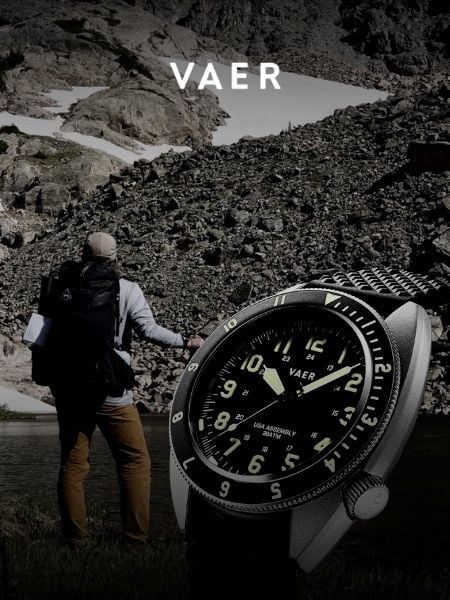 Vaer C4 Tactical Field SolarDurable timepiece for wilderness users - 20ATM (200m) water resistance, 120-click bezel, 316L SS casing, sapphire glass, solar-powered, Epson VS-42 Japanese movement, C3 Lume, USA assembly.
 © Beartooth Media Group Inc.
 Loading...