Topic

3D Printing; Any CAD Users On Here?

Viewing 13 posts - 1 through 13 (of 13 total)
John Papini BPL Member
PostedFeb 13, 2019 at 12:29 pm

I have access to a 3D printer for the next month or so and would like to print out a 1L Nalgene bottle using food grade PET1 Plastic (basically the thin plastic they use for Smartwater bottles) because I’m a Steripen user and want to carry a wide mouth bottle without the 4 oz penalty.

Does anybody with CAD/3D printing experience have any advice as to how to identify a good template/file? I’ve found a few online (https://www.tinkercad.com/things/f1X09sORZIz-nalgene-water-bottle;  https://www.thingiverse.com/thing:254937/comments) but some comments suggest that the threads don’t really work well to hold water.

Do I just need to print out examples until I find one that works, or is there a more logical/systematic way to determine a file’s quality? Is there a particular source for files/patterns that is known for being of a high quality or am I best to rely on Google?

Thanks,

PostedFeb 13, 2019 at 3:46 pm

I think that you will have a number of problems with your concept

  1. The side walls will probably not be watertight
  2. The part will not be that robust and will probably split at the cold welds (and they are all cold welds)
  3. The threads/seal of the cap will probably be poor

A water bottle is not a great application fro 3D printing. (I spent 8 years at 3D Systems as a Project/Program Manager for 3D printing).  My 2 cents.

PostedFeb 13, 2019 at 4:26 pm

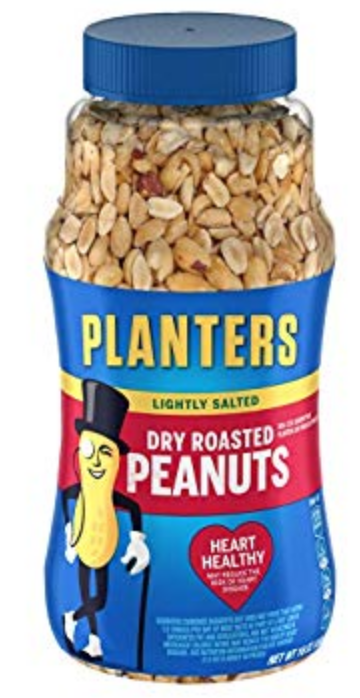
I haven’t used a steripen, but I’ve heard of people using modified gatorade bottle caps and inverting the bottle (https://backpackinglight.com/forums/topic/31851/), and don’t  some models have a tapered stopper design specifically for inverting narrow mouth bottles?   Seems way easier than trying to custom print a bottle.  An empty peanut butter jar could also work

Ben H. BPL Member
PostedFeb 13, 2019 at 4:47 pm

I whole heartily agree with Jon Fong’s assessment.  Also note that nothing 3-d printed is food safe even food grade plastic is used on a food grad machine.  The small cracks and crevices in a 3-D printed object are apparently really good at growing bacteria.  In terms of 3-d printing threads; I have 3-d printed a tinker cad project with fairly small threads and it worked well.  The type of printing you do is a more important factor.

PostedFeb 14, 2019 at 12:51 am

This or a Great Value (Walmart) knock-off-

Holds 28 liquid ounces, weighs 2 oz.  Fits well in side pockets.  But you will need to make a gasket. (Mine is from a sheet of 1mm silicone.)

PostedFeb 14, 2019 at 3:49 am

I see a lot of 3D printing as a solution waiting for a problem.
In other words, I have a toy but can’t figure out what to do with it.
Not that there is anything wrong with that.

John Papini BPL Member
PostedFeb 14, 2019 at 11:01 am

Thanks for all the replies. I’ve read the threads about other bottle options, but I thought it would be cool to have my own super UL Nalgene bottle that I 3D printed myself. Good to know that the technology’s not suited to the project!

PostedFeb 14, 2019 at 1:23 pm

The standard (clear) 32oz Nalgene bottles weigh 6.25 ounces.  The ones made with HDPE, which typically look milky white in color, weigh 3.75  ounces.

You could get a 16oz capacity HDPE wide mouth nalgene solely intended for Steripen use. Those are spec’ed at 2oz weight.

Or, you could get the flexible sided Nalgene Cantene.  The 32oz wide mouth model weighs 2.125oz according to the Nalgene website.

Even if your 3D Printing idea had worked, I doubt you’d be able to beat the weight of the Nalgene Cantene.


PostedFeb 14, 2019 at 4:15 pm

With respect to the OP, if you have a 3D printer to use, there are many other items that can be made for the UL market to try out.  There was a thread a while back about joining hiking sticks and such.  If you come up with a cool idea, I could gladly crank out a model for you.  My 2 cents

PostedFeb 28, 2019 at 3:16 am

Be careful reusing plastic bottles and jars. These things are designed to be used once. Of course I buy Smart Water bottles and reuse them (why else would anybody buy it?) I remember plastic bottles saying “No PCBs” and Epoxy being universally considered ‘Food Safe,’ But along came the concerns about  Bisphenoal-A BPA. Epoxy resin is 90% BPA….. I found a site that listed safe plastics and unsafe plastics. (I never found a water bottle that was made of a ‘safe’ plastic, including all the stuff called Nalgene).

We know where this is headed. Plastic that is ‘safe’ now probably won’t be in a couple of years. So I replaced all my bottles with Stainless Steel, but no one is going to hike with a 4 liter SS can. (I hike with one ss thermos coffee mug)  My bladder? I don’t know what it’s made out of. I guess I just close my eyes on that one– for now.  Re-use? I figure it’s reasonably safe so long as it’s kept in good shape and replaced when it gets beat up.  I also learned that you can cook in a Zip Lock freezer baggie. Sous Vide. Look it up.  [And I’ve set myself up to be set straight….thanks in advance. I can see it now: “all water bladders are made from a combination of salmonella and heroin…”]

Viewing 13 posts - 1 through 13 (of 13 total)
Loading...