Nick Gatel wrote…
"I don't think so. A moral code is comprised of abstract principles. Each individual must choose his/her own set of values, create a hierarchy of all the components sorted by importance, and then apply them consistently to his/her life.
If I invite you to my house, and I have to leave for a day, I may say, "Go ahead and help yourself to anything you want to eat or drink." Most rational people would understand that my intent is for you have enough to eat or drink while you are staying with me. If you decide to load your car with all my food and drinks, you have taken advantage of me. It is not a legal matter, it is a moral matter. You have taken advantage of me. Again, where do we draw the line as individuals? It has nothing to do with the surplus, economics, or the legal system. It is about what values the individual has and do they consistently apply them to their life.
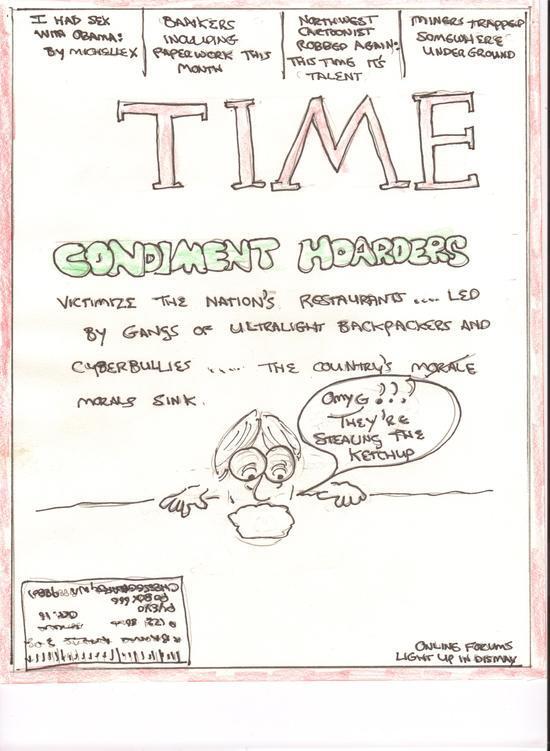
If someone needs condiments beyond what they will use with the food they purchase, I think they should go to a store and buy their own inventory. The businessman provides them with the intent that you will only to use what is needed on the food you purchased. To me this is crystal clear. If the businessman intended you to take more, he would post a sign that says, take all the stuff you want… no limit.
The ability to devise a moral code is probably the greatest intellectual power human beings have."
You've summed up the point I was trying to make, perfectly. Thank you. Glad to see that I am not the only one who thinks this way.

 I can too spell Scotland!