Topic

Laboratory Grade Ethanol

  • This topic is empty.
Viewing 25 posts - 26 through 50 (of 52 total)
Hikin’ Jim BPL Member
PostedJan 25, 2010 at 8:08 pm

Benjamin (Ben?),

Take a look at this article: Alcohol Fuels Part One

In particular, look at the first of the “Analysis of Results” sections. Hopefully, I’m not violating the rules with a a short quote: “when we look at actual weight of fuel required, we can clearly see that far more weight of methanol is required than ethanol” (to heat a given amount of water).

In other words, the higher the ethanol content, the less weight you have to pack on your back.

The “Conclusions” section of the article is also highly enlightening: “blending any other alcohol with ethanol is a waste of time.”

As to the amount of efficiency, etc, I’ll let you read the article.

HJ

Note to moderator: Feel free to to delete the quotes if they violate BPL rules.

EndoftheTrail BPL Member
PostedJan 25, 2010 at 8:52 pm

Jim,

'Ben' is fine. :)

I wonder if anyone has quantify the differences? Back to my two questions… how much less fuel and how much less time does it take to bring 1 pint of water to a rolling boil — using lab grade ethanol versus store-bought 50/50 SLX? Anyone done that math?

Roger Caffin BPL Member
PostedJan 25, 2010 at 8:56 pm

> CO/CO2 exposure have major risks in short term concentration,

Well, not so fast.

CO presents a major risk all right. it's odourless and people have died from that. That's why I carry on about it.

But CO2 does not pose a serious risk to a walker. Yes, if you were in a room full of CO2 you would die. However, the human body is quite sensitive to CO2, and as soon as the concentration gets much above ambient you will start to feel suffocated, and pretty soon you will be climbing the walls to get to fresh air. You would be rushing out of your tent into the storm, heedless. So in effect we don't need to worry about CO2.

Cheers

EndoftheTrail BPL Member
PostedJan 25, 2010 at 9:17 pm

Ah, thanks, Roger!

EDIT: And thanks to Jim as well for providing the initial link.

PostedJan 28, 2010 at 2:05 pm

Thanks for all the additional input, especially from the chemists out there. Chemistry is something that I know nothing about…

I'm really wanting to stay away from methanol…

What I've been trying to research is safest:

Absolute alcohol or 95% ethanol.

I'm not worried about my skin coming in contact with it but the fumes from inefficient burning. This would be provide us with the most exposure to the stuff. The MSDS's are specific about coming in contact with it or breathing it but most of our contact would be inhaling the fumes while burning it. The MSDS's aren't specific about this, unless I'm missing it.

It seems that Everclear, and the like, would be the safest but I can't readily obtain this.

So, my second post was a question as to which is safer from the burning fumes point of view:

Absolute alcohol which may contain benzene (again, wouldn't this show in the MSDS? I haven't seen it listed in the MSDS's I've looked at).

Or: 95% ethanol that, in many products, contains Methyl Isobutyl Ketone?

I've read the subsequent posts a couple of times and can also add this: The 95% mixture I purchased from carolina.com (that has Methyl Isobutyl Ketone) is advertised as fuel for alcohol stoves. Assuming that chemical suppliers have done their homework, MIK is not an issue when burned, at least when done so fairly efficiently. So, that leaves us with wondering about burning benzene…

I get the CO and CO2 thing. Just not knowing anything about chemistry, I wonder about the benzene, even in small ppm's, it appears quite toxic….

Thanks Javan for that link to Sunnyside, too..

Bob Gross BPL Member
PostedJan 28, 2010 at 2:16 pm

You are not going to be able to purchase absolute alcohol unless you are in a registered chem lab that has a valid purpose for it, so it is a moot point.
–B.G.–

Marc Penansky BPL Member
PostedJan 28, 2010 at 2:54 pm

I can't imagine that there is any supplier who adds benzene to their ethanol processing unit that ultimately makes a food grade product. It "could" be used as an extractive distillation solvent but due to its toxicity issues, I would be amazed if anyone used it (anymore). There are numerous alternatives without the toxicity concerns.

PostedJan 28, 2010 at 5:06 pm

The 190 proof Everclear is illegal for sale in CA. I think it's legal in AZ. Can anyone in AZ confirm this? If legal, how easy is it to find?

Marc Eldridge BPL Member
PostedJan 28, 2010 at 5:23 pm

I went to Bevmo and asked if they had Everclear. They had 150 but not 190.They said the only place they sell 190 is in AZ.I found this at Beltramos in Menlo Park. 192. Burns good.
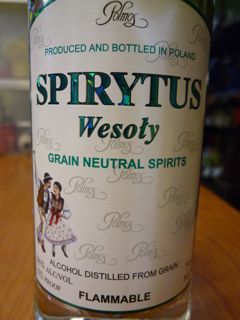
CASpirytus

PostedJan 28, 2010 at 5:30 pm

Pure lab grade ethanol has around 0.0002% benzene (or 200mg per litre) in it. More often these days, cyclohexane (benzene mixed with hydrogen) has largely supplanted benzene as the fractional distillation additive.

The USDA has set a maximum threshold for benzene in drinking water at 0.005mg per litre. So ethanol that is distilled with benzene has something like 40,000 times more benzene in it than the USDA max. I wouldn't risk my health by drinking it, but I don't know how bad the combustion products are at that level. Honestly, the difference in heat output you'd get between 95% ethanol and benzene distiled 99.9% ethanol is probably not worth the risks, or extra costs, even if you COULD get hold of the ultrapure stuff.

Dale Wambaugh BPL Member
PostedFeb 2, 2010 at 1:49 pm

I got my order from Carolina.com today. The bottle is labled:

Ethanol 84-86%
Isopropanol 4-6%
Methanol 4-6%
Water 5%

A little different mix than I expected, but still low on the methanol. I'll have to do some testing and report back.

PostedFeb 2, 2010 at 6:01 pm

When you are burning any of the products that have been listed in this thread in your alcohol stove you are using the product outside of it’s intended purpose. None of the listed products say “This stuff is fuel for alcohol stoves”. Not being a smart a$$ just stating a fact. In a case like this the first thing I look at is the section of the MSDS that references “decomposition products”. Some products that are completely safe to use as intended can produce very hazardous by-products when heated, mixed with other products, burned or otherwise used in a manner the manufacturer never intended or anticipated. If the decomposition product is carbon monoxide, just make sure you have some cross ventilation. I own air monitoring equipment for checking carbon monoxide (and a few other gasses) and a buddy of mine has a carbon dioxide monitor. You guys have about talked me into doing some testing in the vestibule of one of my tents. If you were under a tarp I suspect you would find none detectable. I only wish I had a larger selection of alcohol stoves to test. I have a Trangia and a homemade pop can stove I can test and everybody can send me one of their stoves to test. I won’t be able to ship all those stoves back. Sorry.
You know, I could set up a full blown test using an enclosed space and test various stoves with different fuels. Hummmmmm. Specific Gravity of Carbon Dioxide 1.5189 – Carbon Monoxide 0.9667. I even have equipment to do very precise measurements of air flow. Hummmmmm. Set up a spread sheet, do some graphs. Hummmmm. I could test for a whole host of gasses if you guys and gals would pop for some Drager tubes. I’m not buying any of those unless somebody is paying me cost plus 100%. I could even test solid fuel stoves. Mummmmmm. Have fun.

PostedFeb 2, 2010 at 6:09 pm

Roy,
Since you are new, and not a subscribing member, you probably didn’t notice a series of articles by Roger Caffin addressing this very subject.

So rest assured, it’s been covered.

PostedFeb 2, 2010 at 6:39 pm

Well p00p. Does this mean that everybody ISN’T going to send me their stoves and I’m not going to test everything? Man, that’s taking all the fun out of it for me.

PostedFeb 2, 2010 at 6:52 pm

Yeah, actually, almost every denatured alcohol I've bought in the USA says, and I'm quoting from a CROWN 1gal container: "Use in your marine alcohol stove or other wick-type alcohol stove as directed by manufacturer." Or something similar.

So I'd say, the assertion that we're using this stuff outside the "intended" use, is wrong.. Maybe yellow HEET doesn't say something like this, but no denatured that I've ever purchased, has excluded itself from this alignment.

Dale Wambaugh BPL Member
PostedFeb 2, 2010 at 8:09 pm

Re: using denatured alcohol as stove fuel

I went through the MSDS sheets for all the brands of marine alcohol stove fuel and got the same results as for the paint store varieties — upwards of 50% methanol and the other stuff.

I do have to agree that using HEET for stove fuel is not what the product is sold for.

PostedFeb 15, 2010 at 12:40 pm

Dale,

Until you mentioned it, I didn't look at the label on the bottle from Carolina… I was going by the info on the MSDS on the sheet. Interesting that the formula given on the label isn't mentioned on the site and isn't specifically spelled out on the MSDS.

As for the first post, the Ethanol 95% Denatured from Carolina is an option if you don't have access to Evergreen or Sunnyside…

Thanks Laura. You answered the question that I've been wondering about…

PostedMay 8, 2010 at 2:06 am

Here’s a product I haven’t seen mentioned…

Crown® NEXT™ Denatured Alcohol – $6.68 @ Lowes
Biodegradable and made from 95% natural and renewable resources

CONTAINS:
95-100% ETHANOL
0 -10% ISOPROPANOL
MSDS

Dale Wambaugh BPL Member
PostedMay 8, 2010 at 8:28 am

Great tip–I'm going to check that out. That manufacturer should be rewarded with our wallet vote, given that is it is using ingredients that are not skin-contact poisonous and from bio sources rather than petroleum cracking.

PostedMay 8, 2010 at 9:54 am

Looks like it's not in stock at Lowes any more. Make sure you call before you make any trips.

PostedMay 8, 2010 at 5:04 pm

"95-100% ETHANOL
0 -10% ISOPROPANOL"

Wait there's no way the Iso could be more than 5%. math

Sound like good stuff, though.

Viewing 25 posts - 26 through 50 (of 52 total)
Loading...