Topic

ULers Carrying an Extra 20-40 lbs – WHY?!

  • This topic is empty.
Viewing 25 posts - 76 through 100 (of 162 total)
PostedAug 17, 2009 at 3:46 pm

Thanks, Dean. I am a born skeptic so I always enjoy hearing alternative ideas. I don't doubt that there are whacko's with an agenda. I simply brought up thincs as evidence that there is movement against the established thought not as evidence of truth.

I am new to this topic of diet and health. I've not come to any hard fast conclusions but now I am not so sure science has either.

I do agree that overall calorie counts do matter. I didn't mean to stir that pot but I did interject in the middle of a conversation about that.

PostedAug 17, 2009 at 3:47 pm

"Calories in, calories out…"

Put another way:
calories in minus calories metabolized =calories stored, either as adipose tissue or muscle mass, organ tissue, etc.

The choice is really quite stark for all but the metabolically dysfunctional: Perform an amount of work equal to the calories you take in minus those required for thermogenic processes and tissue maintenance, or see the excess deposited as adipose tissue. As Dean said, it's not that complicated.

PostedAug 17, 2009 at 4:08 pm

Again showing macronutrient composition is irrelevant as long s you can stick to A diet plan long term:

Comparison of weight-loss diets with different compositions of fat, protein, and carbohydrates.

Department of Nutrition, Harvard School of Public Health, Boston, USA.

BACKGROUND: The possible advantage for weight loss of a diet that emphasizes protein, fat, or carbohydrates has not been established, and there are few studies that extend beyond 1 year. METHODS: We randomly assigned 811 overweight adults to one of four diets; the targeted percentages of energy derived from fat, protein, and carbohydrates in the four diets were 20 F, 15 P, and 65% C; 20F, 25P, and 55%C; 40F, 15P, and 45%C; and 40F, 25P, and 35F%. The diets consisted of similar foods and met guidelines for cardiovascular health. The participants were offered group and individual instructional sessions for 2 years. The primary outcome was the change in body weight after 2 years in two-by-two factorial comparisons of low fat versus high fat and average protein versus high protein and in the comparison of highest and lowest carbohydrate content. RESULTS: At 6 months, participants assigned to each diet had lost an average of 6 kg, which represented 7% of their initial weight; they began to regain weight after 12 months. By 2 years, weight loss remained similar in those who were assigned to a diet with 15% protein and those assigned to a diet with 25% protein (3.0 and 3.6 kg, respectively); in those assigned to a diet with 20% fat and those assigned to a diet with 40% fat (3.3 kg for both groups); and in those assigned to a diet with 65% carbohydrates and those assigned to a diet with 35% carbohydrates (2.9 and 3.4 kg, respectively) (P>0.20 for all comparisons). Among the 80% of participants who completed the trial, the average weight loss was 4 kg; 14 to 15% of the participants had a reduction of at least 10% of their initial body weight. Satiety, hunger, satisfaction with the diet, and attendance at group sessions were similar for all diets; attendance was strongly associated with weight loss (0.2 kg per session attended). The diets improved lipid-related risk factors and fasting insulin levels. CONCLUSIONS: Reduced-calorie diets result in clinically meaningful weight loss regardless of which macronutrients they emphasize

PostedAug 17, 2009 at 5:22 pm

A calorie is still a calorie!!
Metabolic Effects of Weight Loss on a Very-Low-Carbohydrate Diet Compared With an Isocaloric High-Carbohydrate Diet in Abdominally Obese Subjects
Objectives

This study was designed to compare the effects of an energy-reduced, isocaloric Very-Low-Carbohydrate, High-Fat (VLCHF) diet and a High-Carbohydrate, Low-Fat (HCLF) diet on weight loss and cardiovascular disease (CVD) risk outcomes.

Background

Despite the popularity of the VLCHF diet, no studies have compared the chronic effects of weight loss and metabolic change to a conventional HCLF diet under isocaloric conditions.

Methods

A total of 88 abdominally obese adults were randomly assigned to either an energy-restricted (6 to 7 MJ, 30% deficit), planned isocaloric VLCHF or HCLF diet for 24 weeks in an outpatient clinical trial. Body weight, blood pressure, fasting glucose, lipids, insulin, apolipoprotein B (apoB), and C-reactive protein (CRP) were measured at weeks 0 and 24.
Results

Weight loss was similar in both groups (VLCHF −11.9 kg, HCLF −10.1 kg). Blood pressure, CRP, fasting glucose, and insulin reduced similarly with weight loss in both diets. The VLCHF diet produced greater decreases in triacylglycerols and increases in high-density lipoprotein cholesterol. Low-density lipoprotein cholesterol (LDL-C) decreased in the HCLF diet but remained unchanged in the VLCHF diet. However, a high degree of individual variability for the LDL response in the VLCHF diet was observed, with 24% of individuals reporting an increase of at least 10%. The apoB levels remained unchanged in both diet groups.

Conclusions

Under isocaloric conditions, VLCHF and HCLF diets result in similar weight loss. Overall, although both diets had similar improvements for a number of metabolic risk markers, an HCLF diet had more favorable effects on the blood lipid profile. This suggests that the potential long-term effects of the VLCHF diet for CVD risk remain a concern and that blood lipid levels should be monitored.

Dean F. BPL Member
PostedAug 18, 2009 at 2:24 am

I apologize if I got my hackles up, Evan. I was in a bad mood. No excuse, of course, but perhaps a bit mitigating…

I'm a bit of a skeptic, too, but I guess I approach it from the other direction. As far as I am concerned, it is the guys with the far out new ideas that deserve my skepicism.

Certainly, the U.S. pharmaceutical industry is driven my the same clutching greed that infests the likes of Philip-Morris and ExxonMobil. There isn't much I would put past them. But a government/media/medical conspiracy is a bit hard to swalow, and that is what Thincs is contending.

ANYTIME ANYONE starts spouting off about "what the powers that be don't want you to know", I feel fully justified in meeting them with intense skepticism. It is their job to convince me, not the other way around. And I know enough science (and how to critically review a scientific paper) to know when someone is full of crud.

Uffe Ravnskov is full of crud.

That's why it gets so frustrating when someone comes along, makes a radical statement that flies contrary to all accepted scientific knowledge and sense, and justifies it by saying "No, no, you're wrong- I READ THIS BOOK."

Well, actually, that alone doesn't realy indicate that the book is wrong- there are many informative books out there. But when the book is an appeal to the masses by some nut who can't get through peer review and he's developed a persecution complex about it… well…

Incidentally, I went to the Thincs website and looked through it. In all the world, Thincs has only 81 members. And two of them are dead. Now THAT is a minority opinion!
In particular I read the page where Ravnskov posted the criticisms from the peer reviewers for the paper that he couldn't get published, and his responses to them. That is classic- just as on other fringe critic websites he posts little snippets of the criticisms. (It is impossible to make any conclusion about them without reading the whole critique.) Even then, most of his reponses are spurious.

And, even Uffe does NOT deny that statins reduce coronary mortality… He just keeps bleating that they don't reduce atherosclerosis.

I plan on reading the paper when I have time. (It is posted on the Thincs website.) More will follow.

PostedAug 18, 2009 at 4:23 am

The dietary guide lines that are mainstream "science" came from politicians and lobbyists not from the scientific community- they just had to accept them if they wanted gov funding. (See the McGovern report pushed through against the advice of the scientific community)
Thats the conspiracy in a nut shell. You either believe the politicians or look elsewhere.

and to set the record straight I (nor Tubes) ever said calories are immaterial just not the whole story. How do you loose fat when your insulin is high and causing your body to resist using fat stores? And there is a lot more than one book on the subject, hes not some lone consistory theorist his book is all about evidence and he welcomes you to peer review it Im sure. I just picked one of the better books on the subject.
If I just followed your advice I could go on an "all icecream diet" and loose weight as long I ate less than the recommended calorie intake for my hight/weight. But all that would happen is that I would loose a few pounds at first and start gaining weight back again on the same amount of calories provided that the calories aren't so low that I contiunue to loose weight by starvation. Sound familiar? Also there is nothing monotonous about a healthy diet full of good fats, protein,and vegetables. Your thinking of the low fat/low calorie diets promoted by the mainstream. Those are utterly unsatisfying and make you depressed.
Im not going to convince you and thats not my goal. If one person gets to hear the other side I did my job.

PostedAug 18, 2009 at 5:04 am

I tried that Ice cream diet once….The weight came off but the ice cream headaches were terrible! ;)

Edit:

Forgot to mention only have fruit flavoured ice cream, the others are bad for you!!

PostedAug 18, 2009 at 8:33 am

I didn't think Taubes book was very main stream or would appeal to the general public. It's not really a gripping or easy read and tended to be a bit repetitive.

I think it did a good job of pointing out the flaws of epidemiological studies. These types of studies appear to be the main basis on which health/diet recommendations are made. It can be wrong such as the case with hormone replacement therapy. I think what many critics would like to see are randomized controlled studies; maybe this has happened and they are ignored. I would enjoy reading a refutation of Taubes book.

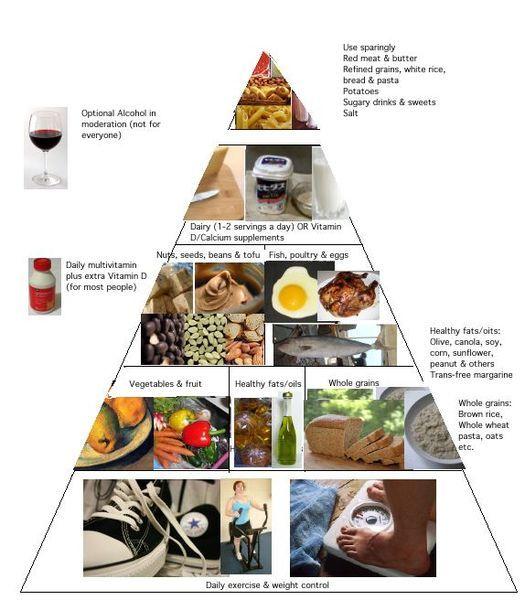
Ultimately, people should be getting dietary recommendations tailored to themselves from their doctor but we know that is not going to happen. Most people are aware of the food pyramid from a very early age so they just go off that. Or what ever fad they hear on the news 'Cheerios are good for your heart!' The news is horrible as they will report any study as long as it generates a good headline.

Dean F. BPL Member
PostedAug 18, 2009 at 9:51 am

>> The dietary guide lines that are mainstream "science" came from politicians and lobbyists […] That's the conspiracy

Yes, that is exactly the paranoid self-inflating position that Ravnshov keeps bleating about. And evidently he has convinced you. But it is wrong. The mainstream "science" came from mainstream "scientists." Certainly, government tends to meddle in things it shouldn't- witness the Bush administration's suppression of scientific research that it found inconvenient. But, for the love of all that is holy, WHY would the government (multiple opposed administrations) all want you to eat an unhealthy diet ?!?And, yes, the 'food pyramid' is produced by the USDA. (And I admit that it is far from perfect- for instance it certainly should distinguish between whole grians and refined grains.) But it is driven by research, not the other way around. It's just rather dated (1992), just as the 'four food group' model was very dated when it was replaced. IIRC Harvard published a version of the pyramid that's a bit more up to date on current nutritional understanding.

EDIT—
Yeah, here it is. It seems to jive more closely with what you propose. Enjoy.

harvard health pyramid

>> If I just followed your advice I could go on an "all icecream diet" and loose weight as long I ate less than the recommended calorie intake for my h[e]ight/weight.

Actually, if you followed my advice you could go on an all ice-cream diet as long as you took in less calories than you *burned*- because the Harrison Benedict formula is only a very rough estimate of caloric needs, and also your metabolism will slow on a calorie-deficient diet so you'd have to adjust things a bit as you went along. (And I admit it can be hard to figure out exactly how much you are burning, especially as your metabolism adjusts itself during starvation or vigorous exercise, etc.) But, yes, you would lose weight. It really isn't that complex. First law of thermodynamics, again… :o)

Law #1: You can't win.
Law #2: You can't break even.
Law #3: You can't get out of the game.

In truth that's NOT my advice, obviously. But it WOULD work, as long as calories in is less than calories used. It isn't that confusing. Honest. Obviously there are other dietary concerns beyond a raw calorie count (as I have said several times), so the all ice-cream diet is just a thought experiment wheres your low-GI diet is quite certainly a very healthy one.

And, I'll turn that around on you: Your position is that if I eat a diet of 4000 calories of fructose a day (GI=20%) I will gain much less weight than if I eat 4000 calories of glucose a day (GI=100%).

That is simply wrong.

>> and to set the record straight I [n]ever said calories are immaterial just not the whole story.

But you DID say that the 'type' of calories is MORE important than the total calories- which is absurd. (It's that "more important" part that raises my hackles.) Does the 'type' of calories have an effect? Yes, I'm sure it does have some small effect, via the mechanism you mentioned. But the effect pales in comparison to the net caloric balance. And even futile cycles, technically, still fit in as part of 'calories burned', don't they? They result in waste heat.

Sorry.

And, don't forget that the glycemic index was first designed to help diabetics control their blood sugar and reduce A1C. That is what it was designed to be good at- but in truth it's really not particularly good at even that. As I mentioned, reducing calories, losing weight, and basic carb counting have been shown to work better. However, the glycemic index is easier for most laymen to understand and more importantly to COMPLY with, which is why it is so helpful.
Someone thought up the whole "let's pretend it is really important in weight loss too" thing later. It DOES result in a generally very healthy diet, but it isn't magic weight loss beyond reducing calories per se.

>> Also there is nothing monotonous about a healthy diet full of good fats, protein,and vegetables.

Well I would agree- for a motivated person such as yourself. Absolutely. My comment about the 'monotony' of the diet was, I will admit, poorly stated, since it was based upon more of a population perspective than an individual one. (Which is how I think of such things, for obvious reasons.) A motivated person can certainly produce an interesting low-GI diet, particularly if shopping in specialty stores or organic food markets. But most average Americans, certainly, are either unable or not motivated enough to do that. So trying to produce a low-GI diet out of a typical city grocery store WOULD be pretty monotonous.

The 'monotony' factor in Adkins and low-GI diets wasn't my idea, by the way. It was a conclusion of a few studies (albeit a speculative one, based upon patient surveys, so, yes, take it with a grain of salt).

>> If one person gets to hear the other side I did my job.

Hey, I've said several times that the diet you propose is an EXCELLENT one. But the biggest reason you lost the weight was probably due to the low-calorie nature of your diet, not it's GI (unless you are a diabetic or something like that).

>> And there is a lot more than one book on the subject

Indeed. Yet it is still a laughably small number compared to the scientic and medical books (and more importantly, peer-reviewed researh) about caloric balance. Just as with all the odd fad diets, once something catches on in the public consciousness all sorts of people jump on the bandwagon and write a book about it to make a buck.
And THAT is a heck of a lot less of a strech than a government cospiracy to trick you into eating more Frosted Flakes.

>> I think it did a good job of pointing out the flaws of epidemiological studies.

NO study is perfect. There are just varying ratios of good and bad. (And Ravnshov's was so bad he couldn't get it published…)

>> I think what many critics would like to see are randomized controlled studies; maybe this has happened and they are ignored. I would enjoy reading a refutation of Taubes book.

The RCTs have been done, brother. (I think Lynn mentioned a few.) Taube just doesn't mention them because they refute him. I suspect that no one is going to waste time refuting Taube's book point-for-point. Thats what fringe critics want- it gives them legitimacy, and a pulpit as they respond, even if what they say is patently absurd to people who are up enough on the science to see through their flim-flam. They don't care about convincing the scientific community, anyway- they know it sees them for what they are. Rather, they are trying to snooker the public, for whatever reason.
A few nuts who want attention (and to make a buck) is a lot more believable than the Frosted Flakes Conspiracy (FFC).

In the interests of full disclosure: For an exception, look up the history of H. pylori and peptic ulcers. But then THOSE researchers DID produce extraordinary proof!

>> Ultimately, people should be getting dietary recommendations tailored to themselves from their doctor but we know that is not going to happen.

+1, brother. Not when the HMOs are forcing primary care providers to see a dozen patients an hour. They just dn't have the time for long counseling sessions. AND the HMOs won't pay for a counseling session with a nutritionist except under pathetically rare circumstances.
Thus, to a very large extent I'll also +1 the position stated a while ago that patients nowadays have to educate themselves on their healthcare needs. Just be careful of your sources.

Wow. What a manifesto! I'll shut up now, if only to avoid The Carbon Flame War Take Two.

Believe what you want to believe.

PostedAug 18, 2009 at 10:28 am

Some of this 'the types of calories matter' reminds me of the studies about diet soda which is reported to make you fatter. They're wrong in that simply consuming the soda makes you fat but correct in that it can trigger a feeling of hunger. That in turn might cause someone to give in and eat more.

So, I do think that the types of calories you are eating are important as far as how it makes you feel; does it make you satiated? Will it make you hungrier? A good diet might not require counting calories if it makes your body properly communicate to your brain that it's needs are being met. This works pretty well for hydration but that is probably much simpler than dietary needs. I think our bodies do communicate, in the form of cravings, for nutrients like salt.

I am currently not counting calories and I have lost weight. I don't feel hunger and I snack when I do. I may count them this next week to see what I am consuming out of curiosity. I've found it easier to simply restrict the types of food I eat rather than strictly counting calories which I find tedious.

PostedAug 18, 2009 at 10:44 am

As far as Taubes book I can understand why someone would not feel that the effort of refuting it is worth their time. But he did create a book that was easy enough for the lay person to understand and it is fairly convincing in doing so. Maybe if this minority opinion gathers more momentum someone will write an equivalent book with the opposing opinion.

I don't think I am a complete idiot but it would be nice to see a layout of some of the RCTs in support of the lipid hypothesis, why they are sound studies, in terms that I might be able to understand. Maybe this isn't possible so I will just have to trust what the government tells me.

I think specifically I am interested in saturated fat since I consume a lot of it.

Rick Dreher BPL Member
PostedAug 18, 2009 at 12:10 pm

Hi Dean,

Very interesting info-thanks for all the followup. I'll add this resource to the conspiracy files because it's just so…comic/tragic. We're a society that's largely forgotten how to eat.

http://thisiswhyyourefat.com/

(Not that I don't fantasize about some of this stuff after about five days out.)

Cheers,

Rick

p.s. Has Covert Bailey fallen out of favor? I always found his stuff sensible, straightforward and easy to follow.

PostedAug 18, 2009 at 12:12 pm

And, I'll turn that around on you: Your position is that if I "eat a diet of 4000 calories of fructose a day (GI=20%) I will gain much less weight than if I eat 4000 calories of glucose a day (GI=100%).

That is simply wrong."

You are right – that would be VERY wrong! Im saying that low GI is just one of the aspects of a good diet not the only one. Lots of low GI foods like soy, corn syrup, polyunsaturated fats ect. are harmful to you and should not be eaten. Thats not even considering the artificial chemical additives in highly processed foods where GI doesn't even apply.
The foods in my diet are simple:
-most carbs from veggies with occasional whole wheat grains
-plenty of fats olive oil, coconut oil, butter, and what ever is in the meat.
-meats fish, chiken, red and dairy
-snack on seeds,nuts fruit
No polyunsaturated fats, no soy (unless its fermented like it originally was in Asia), no sugar and artificial sweeteners. ( use stevia or honey if you must)no refined flour.
It gets more involved but I don't want to go there!
As you can see I disagree with Harvards pyramid in some ways as they (almost predictably) promote soy and polyunsaturated fats and discourage red meat and dairy (yes,politics again).

Of coarse nutrition is more/as important than simple weight loss and my diet is as much about that as anything. I can understand having an issue with my statement that what you eat is the "biggest" factor- I will be willing to down grade that to it being as/or almost as important. But in a practical sense of everyday diet I still would say that what you are choosing to eat is more important than if you are counting the calories -something I cant imagine doing every day the rest of my life.
We will have to respectfully disagree on whether to believe the politicians and the interest they represent or science is behind current mainstream diet recommendations.

PostedAug 18, 2009 at 1:24 pm

I would also add that to a certain extent, the type of calories IS important for FATloss, but only to ensure good health, and preferential loss of fat rather than muscle or bone due to dietary deficiencies. Beyond that, a calorie is clearly a calorie (except for small thermic effects). This is why Weight Watchers works if you stick with it, even if you choose high GI or other junk food.

The USDA food pyramid recommendations WERE partly over-ridden by non-science advisors. The main reason for this was not so much a conspiracy, as it was the government fear of making recommendations too strict and unappealing. For instance, they feared that if they stipulated only whole grains and 10 fresh, in season and locally grown fruits and veggies (which was the recommendation based on science), that it would be too much for the average American to cope with, and they would completely ignore the recommendations. So it became 5+ of any old thing that was once a fruit or veggie (canned fruit in heavy syrup, potato chips and ketchup anyone???), and anything that was once a grain (bring on the pizza and pasta baby).

PostedAug 18, 2009 at 4:02 pm

"No polyunsaturated fats, no soy"

Brian,

Why are polyunsaturated fats and soy harmful?

Nuts and seeds contain polyunsaturated fats, as do oily fish, e.g. salmon, sardines, etc, avocados, olives, even pork. Seems like it's pretty hard to avoid.

PostedAug 18, 2009 at 5:48 pm

I wasn’t familiar with Taubes before I saw him mentioned in this thread, so I when looking for the criticism that Evan was interested in and found a lecture on Wikipedia he did for the UC Berkley School of Public Health (link)

From what this layman could figure out, Taubes, in this lecture, is just refuting the calorie is a calorie is a calorie hypothesis. Taubes and Adkins are pretty much in the same camp. His hypothesis (And he concedes that he might be wrong in the lecture and is begging for a study) is that carbs trigger insulin in the blood which then causes fat cells to store energy and without the carbohydrates triggering the insulin, your fat cells won’t store energy as fat. His main point is that over indulgence in carbs is what makes your body store fat. He cites a lot of studies, but I’m just a layman and have no idea what relevant information he could be leaving out. Dean could easily provide more legitimate confirmation/criticism.

PostedAug 18, 2009 at 6:37 pm

"His hypothesis …..is that carbs trigger insulin in the blood which then causes fat cells to store energy and without the carbohydrates triggering the insulin, your fat cells won't store energy as fat. His main point is that over indulgence in carbs is what makes your body store fat."

He got that last part right "Over indulgence…is what makes your body store fat. Insulin is a hero of a hormone when used correctly to shuttle glucose from your blood stream to your muscles and brain where they help build strong minds and bodies. But IF you eat too many calories (including carbs) you will store those ecxess calories as fat. It's pretty simple. As for the studies, I've already mentioned a couple of the many peer-reviewed science studies that show that a calorie is a calorie when it comes to weight loss. On an anecdotal level, I have dieted to very low bodyfat levels while retaining most of my muscle on a 45% carb, 45% protein and 10% fat diet, on 1800-2000 calories a day. Previous to that, I was a complete vegan for 20 years, eating a very high carb diet yet remaining fit and slim. Anything is possible in a fatloss diet if you just eat less than you burn.

Brian's assertion that you can't to burn fat while insulin is high (I presume he means when blood glucose is high???) is missing the point. If you are on a calorie restricted diet and eating nothing BUT carbs, you are still going to have many hours each day when your blood glucose and insulin levels are not elevated. This is when you burn the fat. For instance, on the above diet that I followed many times, I would exercise first thing in the morning on an empty stomach when glucose and insulin were low. I would burn fat like crazy in these sessions. Then I would eat a high carb/high protein breakfast and refill my glycogen depleted muscles (NOT my fat stores as I didn't eat enough to overflow into them). Carb meals reduced through the day until my last meal was protein and fibrous vegetables only (no starches), thus ensuring I wasn't storing fat while I slept. It's not rocket science and I don't know why folks try to make it (seem) complicated. I think a lot of it is due to boredom (gotta try new things/new fads), or books and websites which distort evidence to make a buck or cause a stir.

Charles Grier BPL Member
PostedAug 18, 2009 at 7:12 pm

"I think a lot of it is due to boredom (gotta try new things/new fads), or books and websites which distort evidence to make a buck or cause a stir."

I think it is that but also I think a lot of folks are looking for a magic bullet that will allow weight loss while still allowing them to eat all they want of anything they fancy.

PostedAug 18, 2009 at 7:48 pm

"I think it is that but also I think a lot of folks are looking for a magic bullet that will allow weight loss while still allowing them to eat all they want of anything they fancy."

If I was gonna wish for a magic bullet, it would be something to stop me craving things I know aren't good for me, or craving good foods in excess….I have yet to find any 'diet' or other approach to fatloss/maintenance that does this.

PostedAug 18, 2009 at 8:09 pm

Why are polyunsaturated fats and soy harmful?

nothings wrong with polyunsaturated fats in the amounts found in some foods- but they can become trans fats when heated and corn soy and rapeseed are not oils from pressings but from chemical processing. So its not a good idea to add those fats to the diet since its easy to get too much. The larger problem is people replacing most to all saturated and mono-saturated fats with trans fats, polyunsaturated and hydrogenated fats.
As for soy, well soy has a lot of political baggage but here is a place to start:
http://www.westonaprice.org/mythstruths/mtsoy.html

PostedAug 18, 2009 at 8:33 pm

"It's not rocket science and I don't know why folks try to make it (seem) complicated."

Im trying to keep it simple but just saying -eat old fashioned whole foods, plenty of veggies avoid the new fangled oils and sweeteners and such- will drag you into a world of science and politics.

Dean F. BPL Member
PostedAug 18, 2009 at 11:46 pm

>> So, I do think that the types of calories you are eating are important as far as how it makes you feel

Hmm. I don't know. But it doesn't sound unreasonable, if not taken to an extreme. Because no matter what you are eating, if you are very calorically deficient (i.e. starving) your hunger response WILL activate.

>> I don't think I am a complete idiot

I'm sorry- I hope you don't think I was calling you an idiot. I patently was NOT trying to call you an idiot. I do acknowledge, however, that my writing style is rather- er- informal. And it is SO hard to transmit subtle tones via this medium. So I apologize if you were feeling set-upon. I "respectfully disagree."

>> I think our bodies do communicate, in the form of cravings, for nutrients like salt.

Absolutely. Well established.

>> Maybe this isn't possible so I will just have to trust what the government tells me.

Oh, don't EVER do that, brother! I'm a firm beleiver in keeping an eye on politicians!

>> Im saying that low GI is just one of the aspects of a good diet not the only one.

Hmm. Maybe I was dramatically misunderstanding you, then. Certainly a low-GI diet is highly likely to be a healthy one. (Bearing in mind that it does imply some odd stuff that you must take with a grain of salt. Most fruit, for instance, are high-GI.) I thought you were strongly supporting the contention that 'type' of calories is more important than total calories. If I'm wrong then, heck, I guess I look like a boob now. Not the first time. :o)

>> […] discourage red meat and dairy (yes,politics again).

I don't think that's political. The dairy industry has a pretty motivated lobby. But, whatever. It's a pointless argument on my part, I guess.

>> But in a practical sense of everyday diet I still would say that what you are choosing to eat is more important than if you are counting the calories

+1. I thought I had made it clear that I agree with this. But if you want to lose weight, you should continue to eat healthly while reducing calories…
Several people had mentioned that it would be nice to sit down with a doctor and get personalized diet advice. Well, disregarding any specific medical concerns and specific nutritional advice, if you ask about losing weight almost any doctor will tell you to Eat Less and Exercise. I.e.- they are telling you to reduce calories in, and increase calories burned.

>> I would also add that to a certain extent, the type of calories IS important for FATloss, but only to ensure good health, and preferential loss of fat rather than muscle or bone due to dietary deficiencies.

Ha! Yes! Thank you, Lynn. That rather better explains one of the points I was alluding to when I was saying that 'type' of calorie IS important, but not so important for weight loss. Lord knows I am not very eloquent, so thanks for the back-up, there. WHILE REDUCING CALORIES it is important to continue proper nutrition, so as to limit loss of lean body mass. It is particularly important to continue adequate protein intake.

>> Perhaps we can retitle this thread "The Nutrition Flame War"

Well, that is what I was fearing. I REALLY don't want to get dragged into another discussion like that. But I guess I have only myself to blame, since I am incapable of backing down when confronted with something that I believe is so egregious.

>> http://www.westonaprice.org/mythstruths/mtsoy.html

Oh, boy… Well, I will exercise my newly found restraint and refrain from any comment beyond this:

http://www.quackwatch.org/01QuackeryRelatedTopics/holisticdent.html

Like any food, soy isn't perfect, and lord knows other wingnuts make some outrageous claims about it, but come on! Certainly I won't defend the western diet, but Price is (was) another fringe wingnut variant who has very convincing critics. Google it. Through random chance and sheer volume he may hit upon valid dietary principles on occasion but he is, at his core, a quack.
And, if it is any indication, the primary founder of the foundation is an English major. (Doesn't automatically mean she's wrong, but does hint that she may be just another wingut.) The other is a member of Thincs, so THAT argument has come full circle…

Perhaps we should just put those two in a room with the Vegans and Taube and Ravnshov (Adkins is dead) and the Paleo diet and Raw Food and Instinctive Eating and all the other conflicting fringe dietary people, throw in a single dull machete, then lock the door and see who emerges alive. Now THAT would be great reality TV! :o)

Should we include the Diet of Worms? How about Japan's legislature?

PostedAug 19, 2009 at 11:45 am

Weston A. Price's work "Nutrition and Physical Degeneration"
was written in 1939. Ya some of his theorys are going to be shown to be a little out there no different than any one.
He has historical importance is in the idea of eating a whole food diet free of sugar and highly processed foods.
Even today the idea of eating traditional whole foods is controversial simply because that means eating meat and dairy and abstaining from sugar.
There is no way to deny that most of our ancestors ate high meat or dairy diets and where perfectly healthy. Oh, but I forgot they had a short "average" life span and low infant mortality rate so they weren't healthy?
How would our life span be without modern medicine?
How long would our diabetic and obese children live without modern medicine? How many people reading this would even be alive today without modern medicine?
My point being that average life span and infant mortality rates say nothing about the health of their diet.
– eat real food.

Charles Grier BPL Member
PostedAug 19, 2009 at 12:48 pm

"My point being that average life span and infant mortality rates say nothing about the health of their diet."

Did you really mean to say this? There is literature dating back to the 1700's showing connections and correlations between diet and life span. In the past, much of the high infant mortality was related to diet; that of the infant or that of the mother. Diet influences immune function and other factors related to disease resistance as well as energy levels and the ability to "fight" a disease once it is established.

This whole discussion is coming to be like the debate over creation "science". On one side are those who know what they are talking about: on the other side are those who believe what they are talking about.

Viewing 25 posts - 76 through 100 (of 162 total)
Loading...