


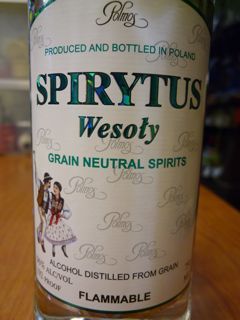
clik on the pic
Topic
Become a member to post in the forums.
.
clik on the pic
Wow. 192 proof.
I wouldn't know whether to drink it, burn it, or worship it.
–B.G.–
I made a thread comparing commonly discussed fuels like HEET, Green DA and SLX DA but here's the cliff notes.
Klean Strip appears to add "something" to their product to make them scented, contributing to the smell during combustion. To me it's not really bad at all when used outdoors where there's tons of fresh air but indoors like in a well ventilated kitchen, it almost smells like propane at close range, but much lighter. I'm guessing they did this so you don't accidentally drink it.
HEET (Yellow) seems like the most clean smelling fuel during combustion, I'm guessing that they haven't added any ingredient to add to its scent, since it's use was designed to go into your fuel tank or fuel can. It's nearly all methanol (MSDS shows 99%) and although I keep reading that the only danger is from ingesting it, that's not entirely true. Methanol is readily and quickly absorbed through your skin, much faster and easier than with ethanol making it a very dangerous and toxic choice if you have repeated contact with it. I would advise that you avoid all physical contact with this much methanol than with denatured alcohol blends.
Everyone should technically limit and/or avoid all skin contact with DA or methanol but I theorize that occasional contact with DA is less harmful than with 99% methanol. If you need more info on whatever fuel you intend on using, especially a brand or type you haven't used before, always look at the MSDS to see what's in it before you start using it.
Jim
Honolulu, Hawaii
87 feet above sea level
I forgot to add, my choice is SLX over the Green DA. Green burns with a yellow/orange flame and it does leave sooty black deposits. It does appear to burn hotter as I recorded a faster boiling time than with SLX.
In order to counter Green DA's sootiness, I now blend it with HEET (yellow) to essentially create SLX. A 1:1 ratio should be enough as it burns much cleaner this way.
I tend to need to buy fuel at my destination and yellow bottle Heet comes in a nice 12 oz. size and is readily available most places I go. It also has a nice long thin neck for easy mess-less pouring. I find the original container fine for carrying it in so no need to fly with fuel bottles. The fact that it is 99% methanol does not worry me, it never touches my skin so I don't consider it a big deal.
I actually bicycle tour way more than I backpack and as a result need to buy fuel frequently and in small quantities on the road. I also fly to almost all of my trip's starting points so buying larger quantities at home is not typically an option for me.
If your needs differ from mine, you may not find Heet as convenient, but it seems like it is far and away the best answer for me.
One tip for using Heet… Don't lose the paper disk in the cap. It tends to fall out and if left out the bottle is likely to leak. As an added precaution, I carry it in an upright position.
Green [denatured alcohol] … does appear to burn hotter as I recorded a faster boiling time than with SLX.
Ah, interesting. I was wondering about that since ethanol has more heat content per gram than methanol.
I wonder if there’s another way to decrease the sootiness without adding so much methanol. Have you tried just plain water? The advantage of water is that you can just carry the ethanol and then add the water at your camp site. Maybe a 95/5 ethanol/water mix? or 90/10?
That's a great thought Jim, I think you're on the right track. I haven't tried plain water and not sure as to how much to start with, perhaps I need to pull out my medicine dropper and try it out. My dropper measures down to 1ml and for some reason I think that's too much in a stove so I may try a few drops at first.
James,
I’m very interested in what you find out. I’m basing my (somewhat) educated guess that water will sort things out on the experiences people in other countries have relayed to me. In other countries, there is a particular type of denatured alcohol available called meths (what is meths?) or metho. This particular type of denatured alcohol has a higher ethanol content than the denatured alcohol available in the US. It’s a fairly common practice to add a dash of water to reduce the amount of soot produced.
Jim,
I believe you're right, I'm new to how alcohol and water relates to how it burns in an alc stove but I'm happy that with your's and other guy's suggestions, you guys steered me into the direction to try it out.
=====
Test #1: 20ml Green DA to 1ml of distilled water (5% water mix)
Test Method: Measured 20 ml of fuel in a Pyrex graduated cylinder and used a medicine dropper with 1ml increments to measure out the water. Water was added into the graduated cylinder and swished around to ensure it mixed. The new fuel mixture was poured into the Evernew Ti Stove and lit. An Evernew 600ml Ti pot was placed on top (not to measure boiling times) but rather to check on soot deposits left behind.
Results:
– not much different from using pure Green DA
– yellow/orange flames present during full bloom riding up the sides of the pot
– left behind light sooty deposits on the stove's upper piece but heavier on the underside of the pot
– the deposits would not easily wipe off and needed to be scrubbed off with a "green" pad and detergent
=====
Test #2: 20ml Green DA to 5ml of distilled water (25% water mix)
Test Method: Same as above except with 5ml of distilled water added to the mix.
Results:
– significantly different
– yellow/orange flames significantly reduced, none riding up on the sides of the pot
– purple color flames more abundant where it used to be yellow/orange
– no visible sooty deposits left on the top of the stove stand
– underside of pot had a "rainbow patterned" discoloration and had a definite coating of "something" however it wasn't black sooty carbon. It's like the underside area got darker and it too also had to be lightly scrubbed in order to remove it.
– there were a couple of drops of fuel (or water) left in the stove after flame was out, however this quickly evaporated due to residual heat
*NOTE: When using HEET (yellow) or SLX, the underside of my pot may show very slight "splashes" of discoloration, kind of like water spotting patterned but nothing major.
=====
Test #3: 20ml Green DA to 6.5ml + 1 drop of distilled water to approximate 6.66ml of water (~33% water mix)
Test Method: Same as above except with 6.5ml + 1 drop of distilled water added to the mix.
Results:
– similar to the above but with perhaps 4-5 drops more of leftover unburned "something" (probably water) which also quickly evaporated after flame was out.
– no sooty deposits on the upper stove stand, no visible discoloration
– underside of pot was darkened and slightly discolored with a rainbow-hue with what appears to be 2 hot spots, however with less of a coating than what was present after Test #2. No sooty deposits however.
**NOTE: Most of the dark area under the pot was easily wiped off with just a drop of alcohol and a paper towel. The blue hue remains as I believe that's the titanium changing color from the heat.
=====
Summary:
I'm not concluding anything as I don't believe in conjecture but I have some better ideas now that I might want to follow up on later (like using non-titanium pots) and ty it again using a stainless kettle and see how it might change the results.
Theory #1: Titanium has a tendency to discolor with a blue color once it reaches a certain temperature, and I believe the blue discoloration is a sign that the Green DA is indeed burning hotter. When I used only HEET (yellow), the bottom of my pan would not turn blue anywhere. Using SLX has a tendency to create small spotting of blue in random areas on my pot but leaves no coating and as such I believe it's cleaner for this specific application as it leaves less of a mess to clean up.
Theory #2: Water seems to be an excellent additive to control how Green DA burns, at 5% water mix it doesn't do much however at 25% mix the carbon sooting is eliminated. Whatever post combustion deposits left behind might vary based on the type of stove used and the material of the pot used.
Theory #3: Using Green DA to its full potential to boil water may lie more on the material and design of the pot being heated. For example I used a Japanese kettle to conduct my HEET vs SLX vs Green DA test, however the bottom has a very thick copper plate. From my understanding between copper vs aluminum, copper is a better heat conductor which I've seen in the past (used as a heatsink) where it seems to absorb heat faster than aluminum, however copper appears to want to retain the heat rather than give it away, whereas aluminum appeared to be more resistant at absorbing heat however it was much faster at getting rid of it.
If I used a typical "camp pot" or a pot of simpler design where the bottom was much thinner, I think I would've seen more significant results. Again I'd have to redo these tests and challenge my theories.
James,
VERY interesting results. I'd also be interested to know how burn times and boil times are affected. If you can lengthen the burn and boil times, separate but related times, you might really be on to something. You carry less fuel with the higher ethanol "green" DA, add a little water when you hit your camp site, and then cook. That would be pretty sweet if you could do more with less.
HJ
Greg…I see that sunnyside actually has ethyl acetate in it…something I used in entomology to kill insects. Kleen strip green also has this ingredient so I avoid both. I find the SLX has some of the lower percentages of additivies (if MSDS are to be trusted) as I don't really have any issues with burning either methyl or ethyl alcohol.
Jim,
I'll try to setup a better test to showcase boil and burn times using DA with varying ratios of water. I need to get my vid recorder back as my phone doesn't do a good job.
I'm seriously considering getting my hands on a different type of stove other than my Evernew and restest everything. If you saw the Evernew or used it before, it's excellent for bringing water to a boil really fast, it burns very hot and uses fuel quickly. As such it's not the best choice to use if you want to slow cook something or simmer. The design of this stove is all about making as much heat as quickly as possible so I'm thinking the use of 90% or higher ethanol is having an amplifying effect. It might still prove to be a very good fuel source but perhaps not in the Evernew's case (or a stove based on similar design principles).
So I'm left wondering what would happen if I used a stove design which is best used for simmering rather than boil water really fast.
1. Would I still run into sooting issues as I did the Evernew?
2. Is it possible that there are stove designs that can use Green DA without dilution producing no soot deposits?
3. How would it perform with a stove using a fiberglass/carbon-felt wick design?
4. What kind of pot would perform best, one with a narrow-base taller height or wider base with a shallower height?
It's easy for me to say that the Green DA is bad stuff due what I found during a few tests however l'm not entirely convinced that it is, it could be an indication that the stove itself is wrong for this type of fuel.
For example, I'm sure a lot of you are familiar with working on car engines. Racers at the drag strip sometimes use special fuel blends in order to make the kind of power they need and sometimes that involves alteration of the engine in order to make it work.
So it's possible that my Evernew stove isn't ideally designed to use a very high ethanol content fuel to work properly. If thermal feedback is indeed the root cause of my problems then perhaps using a stove that's more resistant to that issue might be better than to alter the fuel formulation with water…
Hi, James,
Good points. So, if you do additional tests with another type of stove, I for one would be very interested to hear about the results.
I can’t give you input on all of your questions, but generally for #4, a wide, kind of squat pot is going to work best. You’d have the least amount of flame spillage up the sides of the pot.
Green denatured alcohol has more heat content, but doesn’t burn quite as cleanly.
Here’s the classic photo (below). I’m running on yellow HEET (methanol) on the left and green denatured on the right.
Left hand side: Nice blue flames.
Right hand side: Yellow flames, flames that wind up putting soot on my pot. :(
I’ve been trying to get a stove that can burn green denatured alcohol cleanly. I’ve got a couple that do a good job of burning cleanly (back row, 2nd and 3rd from the left).
The problem is that they’re hard to light and are super slow. In fact so slow that after 20 minutes I cancelled the test because they hadn’t brought 500ml of water to a boil.
The two stoves in the front row (1st on left and 2nd on left) burn fairly cleanly but still produce some soot. They can boil 500 ml of 7C water in about 12 minutes on 15ml of green denatured alcohol with a total burn time of 15 minutes, BUT they still have some soot.
Has anybody got anything burning green DA cleanly with a boil time for 500ml around 10 minutes (give or take)?
I use pure methanol. I don't understand why everyone is so afraid of it. It is cheap and burns clean. Its toxicity is only a problem if ingested or adsorbed. So don't drink it or pour it all over yourself! You can't say the same for many of the denaturing agents used in combination with ethanol in denatured alcohols, or about iso alcohol. And it is very cheap in huge quantities.
And guess what the treatment is if you accidentally ingest methanol? Drink real booze. Seriously, the ethanol will out-compete the methanol in your system and force it to not be absorbed.
I did have an accident with a big can of it once while pouring into smaller containers. Got a lot on my arm. Had a couple shots of scotch after just as a precaution, but felt no ill effects.
Nothing wrong with methanol, Bradley. It’s just that high ethanol content alcohol blends contain a lot more potential heat then methanol.
I’ve got a bit of a write up of the relative heat content on my blog: What’s the Best Alcohol for Stove Fuel?
The problem is that the high ethanol content blends produce soot when burning. Methanol will burn without soot, but you have to carry more of it to get the same amount of heating. My interest is in finding a way to burn high ethanol content blends without soot. I know that adding water will do it, but that’s a PITA. I’d rather find a stove that burns it cleanly as is.
I wrote a follow up blog post for those who may be interested a comparison of methanol vs. ethanol as a stove fuel: Is Ethanol Worth It?
HJ
Adventures in Stoving
After reading this thread I got the MSDS for Diggers Methylated spirits a common brand of metho sold around Australia. It seems pretty good by US standards.
INGREDIENTS
Ethyl alcohol 95.8-99.8%
Water 4.2-0.2%
Denaturant <0.1%
Denaturants may be one or more of the following: Methyl isobutyl ketone, fluorescein, diethyl phthalate, tertiary butyl alcohol, brucine sulphate or denatonium benzoate.
"brucine sulphate"
That sounds like nasty stuff.
–B.G.–
Mark,
That’s excellent stuff by US standards. I believe fluorescein causes the metho to appear purple in color.
Hi Jim,
This is a great thread. It is very interesting and informative. Having this kind of information is extremely helpful in choosing the correct fuel for your alcohol stove prior to hitting the trail.
In actual practice depending on where you live and where you intend to hike one might encounter difficulty in finding his or her fuel of choice. Small Country Town USA Hardware/Grocery might not have Heet, SLX or Klean Strip Green and more than likely won't have Everclear on the shelf. A hiker filling up his fuel bottle before heading out or topping off at a resupply point may have to "settle" for what is available.
Depending upon wholesale cost and retail pricing what is on the shelf of any particular country store could be some pretty nasty stuff as our standards go. For this reason we should be reminded that;
1.) Avoid cooking inside of your shelter
2.) Use your stove in a well ventilated area
3.) As much as possible avoid contact with your fuel
4.) Don't store your fuel bottle inside of your cookpot, mug or kettle
5.) Handle your fuel carefully to avoid spills
All the information on what is the most efficient and least toxic alcohol fuel is well appreciated. Even though a hiker could be forced to settle for what is available, we can make a more informed choice of what fuel we use if Small Country Town USA Hardware/Grocery does in fact stock more than one brand or type of alcohol fuel.
FWIW I wonder if the only difference between Everclear and White Lightnin' is the liquor tax and/or the ingredients in the White Lightnin' ?
A proper air fuel ratio and the cleanest burning least toxic fuel available in a fairly simple stove may provide the best all around performance.
Party On,
Newton
Newton,
Great post and reminder for all members!
I hear you on the toxicity. Stores in NY don't carry Everclear or similar. Some state law that limits drinking alcohol to around 75% or so. Working at Cornell, it was easy to get some reagent grade ethanol from lab suppliers, though.
Having to carry large bottles around is a problem. On hikes/paddles, it was often "only" possible to get WG in quarts, or, IsoPropanol. (Unless you were willing to travel 20-30 miles.) On many trails you often settled for what the "…Small Country Town USA Hardware/Grocery does in fact stock…" More out of necessity, I found that using an alcohol stove for through hiking one of the longer trails was not possible without carrying all the fuel you needed at the start.
My initial experiments concentrated on making isopronol burn cleanly. While tiny stoves with wicks will do that, not enough heat was generated to be worth it and there was always a bit of soot. The brasslite stoves CAN burn WG. But, the soot means loss of efficiency. Later I concentrated on burning WG, since I could ALWAYS find WG. I could never to get a clean, highly efficient burn in an open stove, though.
Anyway, settling for what they have is also an excersize in planning. Else, you end up burning highly toxic stuff in open burners designed for something different. To take a specific type of burner for a week or two, then be unable to get more fuel, can ruin a hike. Even my old SVEA doesn't really care for auto gas. At least for now and the next 5 years, in the ADK's I bring WG, because I can carry an extra pound in fuel, and that is all I am sure of. (Actually, a 12 fluid oz bottle of fuel and it's weight weigh about 9-1/4oz.)
Yellow HEET, canisters, ethanol and SLX are all "iffy" at best. The simplest WG stove I know of is the old SVEA 123. Usually a 12oz pop bottle and the stove will last me about 10-14 days. (At 2-2.5 quarts water per day, bacon and eggs, trout or some type of real cooking every other day.) No, a SVEA is not a UL stove. Fuel is ALWAYS available, even if it is auto gas.
On line, you can often get anything, but, that doesn't help on the trail.
Hi, John/Newton,
I think you’ve got some good points there about fuel alcohol storage. Recently, I wrote a similar post on my blog: Methanol/Denatured Alcohol — Safe Handling.
I think my post is pretty similar to what you’re saying except that I frequently do store my fuel in my cook pot. I store my alcohol in a tight bottle inside a Ziploc, but if there were a spill, I figure the cook pot isn’t absorbent. I can wipe it out pretty easily. Alcohol cleans up pretty easily, and the minute traces that might remain aren’t going to be a problem.
I suppose if one were really worried about a trace of alcohol in a pot, one could put the pot on the stove with no food or water in it for a few seconds. That ought to boil off any traces of alcohol.
James Marco wrote: > Stores in NY don’t carry Everclear or similar. Some state law that limits drinking alcohol to around 75% or so.
Yeah, same here although we can get 190 proof if we go across the state line. If a friend is headed that way, sometimes I’ll assign them a “mission”.
James Marco wrote: > On hikes/paddles, it was often “only” possible to get WG in quarts, or, IsoPropanol. (Unless you were willing to travel 20-30 miles.) On many trails you often settled for what the “…Small Country Town USA Hardware/Grocery does in fact stock…” More out of necessity, I found that using an alcohol stove for through hiking one of the longer trails was not possible without carrying all the fuel you needed at the start.
My initial experiments concentrated on making isopronol burn cleanly. While tiny stoves with wicks will do that, not enough heat was generated to be worth it and there was always a bit of soot. The brasslite stoves CAN burn WG. But, the soot means loss of efficiency. Later I concentrated on burning WG, since I could ALWAYS find WG. I could never to get a clean, highly efficient burn in an open stove, though.
Anyway, settling for what they have is also an excersize in planning. Else, you end up burning highly toxic stuff in open burners designed for something different. To take a specific type of burner for a week or two, then be unable to get more fuel, can ruin a hike.
Ah. This explains a lot in terms of how/why you came up with your Mercury stove (posted elsewhere on BPL).
James Marco wrote: > At least for now and the next 5 years, in the ADK’s I bring WG… Yellow HEET, canisters, ethanol and SLX are all “iffy” at best. The simplest WG stove I know of is the old SVEA 123… No, a SVEA is not a UL stove, [but] fuel is ALWAYS available, even if it is auto gas.
That’s actually one of the best arguments I’ve ever heard for using a white gasoline type stove: availability.
Well, that and the fact that a Svea 123 has a really high “cool factor.”
Become a member to post in the forums.
 New Gear with ALUULA Graflyte FabricsLighter, stronger, more abrasion-resistant, and highly water-resistant - explore ultralight backpacking gear made with ALUULA Graflyte fabrics. Engineered for exceptional strength, durability, and lightweight performance, ALUULA Graflyte helps reduce pack weight without sacrificing reliability, making it ideal for demanding backcountry adventures.
 © Beartooth Media Group Inc.
 Loading...