Topic

winter sleep system

  • This topic is empty.
Viewing 25 posts - 26 through 50 (of 65 total)
PostedSep 28, 2008 at 1:55 pm

I can't speak for anyone else, but as a relatively expierenced winter camper (not like Mike of course, he's a pro) I am well aware of my own limitations, and if I'm not, my wife usually reminds me.

If I were to try the snowcave route, I'd probably dig one on a day trip (haven't used one before)to see what kind of effort it would require,and how it would work in my home range before I threw away my tent.

So, I'm just thinking of Mike's statement as one possible suggestion.

Robert, ever use a flooless sehlter in wet snow? That's what I'm starting to lean towards.

Roger Caffin BPL Member
PostedSep 28, 2008 at 2:11 pm

> “Snow caves are best suited to locations where climbers can burrow into a snow-covered hillside…. The weight of a collapsed snow-cave roof could cause serious injury to people underneath.”

Indeed. It may be OK where the snow is well-compacted and the weather is stable. But here in Australia snow caves slump after a few days, and the weather is anything but stable! A big hazard not mentioned so far is when you get 2' of snow over night, and this blocks up the door and the breathing hole, and can block air flow through the snow.

We lost four snowboarders this way not too many years ago. They were in a snow cave, there was a big dump, and their cave got covered. When they were found in the Spring it was found that their white gas stove was in operating position and empty of fuel. It is suspected they died of carbon monoxide poisoning.

Cheers

Mark Verber BPL Member
PostedSep 28, 2008 at 2:40 pm

A quick observation… Mike didn't same dig a snow cave. He said "snow shelter". In his book he listed a number of snow shelters include Quinzhees, dugloo / igloos, dog houses, and snow caves. Each shelter has trade-offs. Most don't have the same risks as a snow cave.

Being lazy, moving fast, and tending to run warm, I tent to do a shaped tarp over a ditch… or sometimes have used a 4-season free standing or tunnel tent. When doing the ditch / tarp thing I have used used bivy and done just ground cloth… most recently I have go sans bivy.

That said, there are a few times I have done a snow structure. I found when there was enough snow, and I had enough time and energy (it can be a lot of work to build a cool snow shelter) that I have really enjoyed the warmth of a snow shelter.

–Mark

PostedSep 28, 2008 at 2:55 pm

Joshua: "Robert, ever use a flooless sehlter in wet snow? That's what I'm starting to lean towards." Since I'm not an expert, I don't want to presume to give advice. But I do know that a number of trips led by certified guides, such as the "Winter Sierra High Route" (as opposed to the summer version) use floorless pyramids. They usually build up a short snow "fort" and put the pyramid on top of that. Per person, it is very light for a moderately large group.

PostedSep 29, 2008 at 9:26 am

In response to the posting above titled:
DANGEROUS NONSENSE FROM BPL STAFF?

Okay – here's where I'm coming from on this…

I have taught winter backcountry skills since 1995. And I teach glacier mountaineering in alaska in the summers, another winter environment. I've illustrated a detailed instructional book on backcountry skiing and camping. I've built a LOT of snow shelters, and they are extremely safe.

Plus, digging in the snow is just plain fun!

= = = = = =

1) "The weight of a collapsed snow-cave roof could cause serious injury to people underneath.”

As pointed out in another posting, I never said snow cave, these are hard work to construct. I will also add that I have NEVER seen any evidence of any snow cave collapsing. Snow is extremely sound construction material.

We (my students and myself) build shelters from the cold soft powdery snow in the northern rockies. In the morning, before we leave, we stand on top just to get an idea of their strength. I've had ten people stand on a Quinzee (a simple shelter) and it held up fine. We jumped a little, and it eventually failed. This is a fun test.

= = = = = =

2) "snow trip guided by AMGA or IFMGA certified guides uses tents or tarps, they don’t dig new snow caves every night"

True enough, a moving trip won't normally build snow shelters. But, they do use flys and tarps. In my previous posting I state: "A simple tarp is fast too. THere are tricks to setting that up with a pretty tight (snug) fit"

= = = = = =

3) The effort to build a snow shelter is a lot more than a tent, for sure. But, a well built snow shelter is MUCH warmer than a tent. I stand by this statement. Snow is an amazing insulator, nylon is not.

= = = = = =

4) The dense winter snow of the cascades is an excellent building material. Very stable.

= = = = = =

5) In the winter I do NOT use a bivy or a ground-cloth. I use two pads, a full length yellow evazote foam (directly on the snow), and a 3/4 length inflatable pad. I bring plenty of stuff sacks, and I arrange these around the torso part of my pad, and this provides a lot of protection for my sleeping bag.

= = = = = =

6) If it snows two feet over night, you need to get up and deal! I have cleared out the door on a snow shelter plenty of times. It's not that bad. But, if it snows two feet on a tent, that's a lot more serious. I've spent 6 days stuck on an alaskan glacier and it snowed pretty much the entire time. Twice a night, We took turns getting all our gore-tex on and digging out the tent. This was a miserable hour long buncha hard work. If we had NOT done this, the tent would have been squashed.

On this same trip – My small team built an igloo big enough for 7 people to stand up and hang out (and play yattzee). We dubbed it the LOVE-loo. It was SWEEEET!

= = = = = =

7) Snow has a lot of air in it, making it quite permeable to oxygen. It would take a long time to suffocate from no O2, there is plenty of air coming thru the door. If the door gets blocked up, you dig it out.

= = = = = =

8) I do NOT cook in my snow shelter.

= = = = = =

9) My students are, for the most part, brand new to winter camping. The highlight of their experience is sleeping in the snow shelter, they are beautiful and fun.

= = = = = =

10) Another quote:
"I think Mike Clelland’s advice is dangerous nonsense for people who have never been snow camping before."

Is winter camping dangerous? Well, sure – it has it's risks, but people are smart. THis is a forum for LIGHTWEIGHT skills and ideas. I feel strongly that the winter environment can be safely enjoyed without the extraneous gear that "traditional" camping would dictate.

= = = = = =

11) And – I'm all for testing the limits of a light weight sleep system. The original posting from Joshua was a query about: "…a pair of patagonia micropuff pants… my DAS parka … my REI nooksack sleeping bag (optimistically rated to 35 degrees) to winter use."

Would this sleep-system work in the winter in the cascades? Sure it would. Would Joshua get cold? Maybe, but I don't think it would be dangerous. Would a well constructed snow shelter be warmer than a tent? Defiantly!

PostedSep 29, 2008 at 9:48 am

Re: “If it snows two feet over night, you need to get up and deal!… It would take a long time to suffocate from no O2, there is plenty of air coming thru the door. If the door gets blocked up, you dig it out…Is winter camping dangerous? Well, sure – it has it's risks, but people are smart.” The point is, you told rank beginners to leave their tent at home and rely solely on a snow shovel. In my non-expert opinion, that is irresponsible. If I was your supervisor I would bounce your butt out the door faster than you can blink an eye. “Is winter camping dangerous? Well, sure – it has it's risks, but people are smart.” All beginners are IGNORANT, by definition. Since people are smart, you would apparently put a .375 H&H magnum in the hands of a rank beginner and tell him to shoot a cape buffalo. Since people are smart, you would apparently put a rank beginner on the face the Eigerwand and tell him to finish on up to the top. Since people are smart, you would apparently put a rank beginner behind the wheel of an Indy car and tell him to win the Indianapolis 500. P.S. why don’t you respond to Roger Caffin’s post?

PostedSep 29, 2008 at 9:53 am

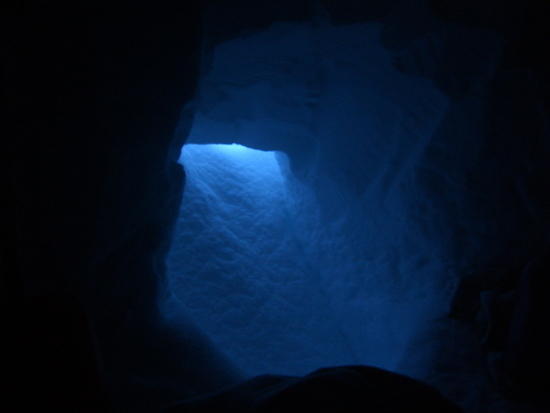
Here's a photo of a blocked in door on a snow shelter. This picture was taken in the morning, at 10,000 feet in the Tetons in January of this year.

snow shelter door in the morning

We needed the shovel to dig ourselves out, it wasn't too bad. But if we were in a tent, there was enough snow (and wind) to potentially break poles and tear nylon.

Sleeping in the snow shelter was pleasant, warm and quiet. A tent would have been cold, loud and nerve-wracking.

.

PostedSep 29, 2008 at 10:08 am

Previous posting from
Roger Caffin:

“Snow caves are best suited to locations where climbers can burrow into a snow-covered hillside…. The weight of a collapsed snow-cave roof could cause serious injury to people underneath.”

Indeed. It may be OK where the snow is well-compacted and the weather is stable. But here in Australia snow caves slump after a few days, and the weather is anything but stable! A big hazard not mentioned so far is when you get 2' of snow over night, and this blocks up the door and the breathing hole, and can block air flow through the snow.

We lost four snowboarders this way not too many years ago. They were in a snow cave, there was a big dump, and their cave got covered. When they were found in the Spring it was found that their white gas stove was in operating position and empty of fuel. It is suspected they died of carbon monoxide poisoning.

MY REPLY:
=========

1) All Snow shelters will sag in time, BUT if constructed well, they will NOT collapse.

2) Two feet of snow overnight is more of a hazard on a tent than on a snow shelter. I know, I have experienced both – plenty of times.

3) Carbon monoxide is a NON-issue. I do not cook in a snow shelter. I will (when the weather is bad) build an indoor snow kitchen separate from the sleeping area, this has a tall door and plenty of ventilation.

PostedSep 29, 2008 at 10:31 am

ROBERT wrote:

"you told rank beginners to leave their tent at home and rely solely on a snow shovel. In my non-expert opinion, that is irresponsible."

My reply:

======

I was replying to Joshua and his posting.

Here's what Joshua wrote:

"I have a fair amount of winter experience, in some pretty deep cold, so I know the tricks for getting the maximum amount of warmth out of what you've got with you.

That being said, I haven't been out overnight in the winter in a while, and I will probably have to relearn some things."

Joshua's comments make me think that he would really enjoy the challenge of leaving the tent behind and building a snow shelter. He didn't seem at all like a "rank beginner"

I also included a text that I worked on. I played the role of shameless self promoter and included a link to amazon.com.

The book I was pushing has a tidy chapter with very detailed illustrations on constructing a wide variety of snow shelters. This book carefully explains a lot of tricks for a well built structure, and the hazards during construction (mostly getting wet). There is also text and illustrations on setting up tarps.

The book does address snow caves. But – in this forum, I never advocated this inefficient form of construction.

I'll add – – – Over the years, I have had a lot of heartfelt thank-you's (in letters and in person) from winter campers (and often rank beginners) who left their tent behind. They used this book to make their own snow-shelter. They had fun, and learned a new skill.

PostedSep 29, 2008 at 11:00 am

Mike, I just want to say that, although I don't have the gear for snow camping yet, that when I do, I'm going to get your book and learn about snow shelters. It seems like a really awesome way to camp!

I don't really see where you are coming from Robert. I think it's great that you are concerned for beginners. It's true that people with influence should be careful not to influence beginners like myself to get into troublesome situations. Still though, Mike shouldn't have to prefeace his statements with a warning or anything. He said ditch a tent and use a snow shelter. So? I mean I'm a rank beginner and Mike's statement certainly makes me wish I could go out with nothing but a shovel! The fact is though, that I know I wouldn't want to just set out on a trip planning on staying alive by building shelters. I've never practiced them. I have no faith in my ability to build one etc… I take what Mike said as sparking the thought that "Hey, I should LEARN how to do this."

What kind of person says "Oh, this person has been building shelters so I can to cause he told me to ditch a tent and do it. I'm gonna ditch my tent without any other thought regarding my own skill level." The type of person that would be irresponsible enough to do that has some major issues. Staying safe outdoors is often times about being humble and admiting that even though you saw Survivorman do something, doesn't mean you can to.

Rick Dreher BPL Member
PostedSep 29, 2008 at 11:34 am

At the risk of pedantry, the threat is from CO2 buildup rather than O2 depletion (setting aside stove use).

Snow caves are a LOT of work, and selecting an incompatible site is always a possibility ("Hey, a boulder!") but IMHO the skill should be taught to all wintertime backcountry travelers, regardless of whether they purposefully intend to sleep in one. Is there a more useful life-preserving skill?

Jonathan Ryan BPL Member
PostedSep 29, 2008 at 12:03 pm

Thanks for the great suggestions Mike. I always find your posts informative and entertaining at the same time.

John S. BPL Member
PostedSep 29, 2008 at 2:32 pm

Heck, I wish I could go on one of Mike's snow shelter trips. In the right conditions (group with experienced leader, no storm in forecast, not too far from trailhead, good safety plan), there is nothing wrong with it.

An inexperienced solo snowshoer should never try that though obviously.

PostedSep 29, 2008 at 2:40 pm

Wow, that was a lot of hullabaloo about the idea of a snowshelter.

I don't know if this was anyone’s implication, but I feel the need to reiterate, I am not a rank beginner, and have no plans on cooking in a snow cave.

At the risk of continuing some more thread drift, I don't think Mike has suggested anything that is dangerous or irresponsible. We are all familiar with the arguments that traditional backpackers make about our unpreparedness, what with our small packs and tarps and the like, and of course we respond that we develop the skills we need to make up for the gear. Mike is right, people, especially on this site, are smart. I am not about to go off half cocked with only a shovel and a tinder kit, and I doubt anyone else is either.

I'll probably build a couple of shelters on day trips this winter, then maybe try an overnight with a tarp and bivy for backup, digging a snowshelter

Chris Townsend BPL Member
PostedSep 29, 2008 at 4:17 pm

Snow shelters are great! The last two winters I have lived in igloos during ski tours in Yellowstone (the last one described on Backpacking Light here: http://www.backpackinglight.com/cgi-bin/backpackinglight/townsend_winter_in_yellowstone.html.

On those tours we used IceBox tools to build igloos and we didn't carry tents. For many years before those trips I led ski tours in Norway and Sweden on which I taught snow shelter building. On two occasions weather and avalanche danger meant we didn't reach the lodges we were heading for and we built snow shelters for the night. Temperatures fell to -25 C and we really needed those shelters. I think snow shelter building is an essential skill for winter travel in snowy terrain. I'd rather have a snow shovel than a sleeping bag! Indeed, on day trips that's what I carry.

I also regularly cook in snow shelters. We did all our cooking in the igloos in Yellowstone, often running the stoves for hours at a time to melt snow and provide warmth. With adequate ventilation (a small hole in the roof and an open door) and a stove with low carbon emission (we used canister stoves) I think this is perfectly safe.

Of course snow shelter building has to be learnt but then so does tent camping in snow. And in stormy weather a snow shelter is far more secure and comfortable than a tent.

Because snow shelters take several hours to build I don't use them if I am moving on every day. Then I do take a tent. But because snow shelters are so much better than a tent I prefer to plan on staying two or more nights at each site so it is worth building one.

Roger Caffin BPL Member
PostedSep 29, 2008 at 5:41 pm

Hi Mike

Good photo.
Your snow is a lot colder and drier than ours. And deeper too. Sigh.

Cheers

Tony Wong BPL Member
PostedSep 29, 2008 at 6:12 pm

In Feb of this year, I went on a trip with the Sierra Club to learn how to snow camp.

In the class room portion of the class they said that a tent was the coldest shelter because the temperature inside was only a few degrees warmer than the temperatures outside.

To my surprise, they stated that a snow trench with a tarp over it was the warmest shelter with a possible temperature inside of 40 degrees. The small, confined area would trap more heat and hence stay warmer.

A snow cave/igloo was listed as the next warmest at 35 degrees, more comfortable with more interior space, but at the expense of being a little colder.

Being a complete Noob/newbie at this, I found that it took me 1.5 hours to dig my snow trench/shelter and the instructors were able to construct theirs in as few as 45 minutes. (note: many of the instructors had tents…Golite Hex 3 being one of them).

Granted the daytime temps for us in Yosemite were 50 degrees in the daytime and in the low 30’s at night.

I slept in my trench with a 15 degree down bag (marmot helium eq), MLD Bivy, Prolite 4 pad and blue foam pad. Clothing was light thermas top and bottom, thermawarp jacket, windshirt, syntetic booties….by 2 am I was way too hot and basically stripped down to my thermals and opened up my bag & bivy to vent heat.

Here are some photos that I posted in the Photography section…there are a lot of photos, but there are some photos of what my “poorly” constructed shelter looked like.

http://www.backpackinglight.com/cgi-bin/backpackinglight/forums/thread_display.html?forum_thread_id=14449

Great thread….

-Tony

Rod Lawlor BPL Member
PostedSep 29, 2008 at 9:09 pm

Mike,

First off, Thanks very much for the book. I have both the Backcountry Ski Book and Lighten Up. I've learnt a heap, but my two kids (7&9) both love them also. Your illustrations drag them in, which I thought was kind of cool, but then I realised that they were reading the text and learning from it too. Now they're making suggestions and critiquing the gear and techniques we use when bushwalking. It makes it a whole lot easier when they explain to my wife that this is a really cool way to do something, rather than one of Dad's hare brained ideas!

I'm looking for some clarification of you comment about using stuff sacks around your torso when sleeping? Are these on the ground as a moisture barrier, or wrapped around you? Empty or full?

Thanks, Rod

Tad Englund BPL Member
PostedSep 29, 2008 at 9:34 pm

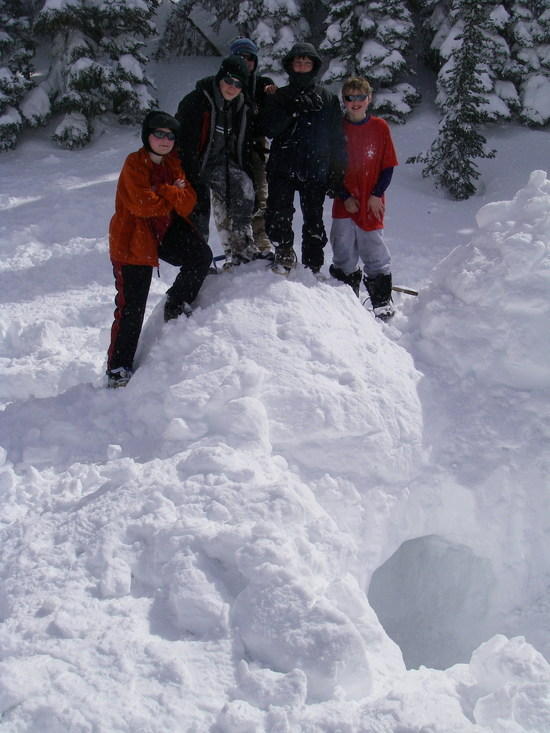
Robert, Robert, Robert (hopefully said like my grandma), ease up a bit on Mike. Mike is right, I've taken 12 year old Scouts on Mt. Rainier each winter for over 16 years and we have never taken a tent. Over the years I've seen all sorts of weather, yes even 2 feet of snow over night. I take them up to show them how to make igloo's and to give them the experience of building and sleeping in them. I can get a igloo made with 4 scouts faster then their 4 dads and another leader can build theirs (they don't need as much space or comfort).
They are beginners and in some of the storms we've been through I'm glad we didn't have tents, we might have never found some of the boys with all the snow, their tent would have definitly collapsed. None of them own a 4 season tent anyway- igloo 08 Notice the boys are standing on top of the igloo! The mound next to them was my connecting igloo.
Of course anyone attempting snow structures so have someone experienced helping- its common sense. I think that is what Mike was implying. Andrew, go on a day outing/s and practice, you will learn the skills necessary, then enjoy you adventures without the need of a tent. Or go ahead and bring the tent if the weather looks good and you don't feel like getting wet. But be careful the weather is tricky- I'd much rather sleep in a igloo then a tent on Rainier in the winter any day. The picture on my avatar is from last years trip!
Sorry for the drift (no pun intended)

PostedSep 30, 2008 at 7:43 am

REPLY to ROD:
============

A few things. First I know a lot of folks who take ground sheets, and a lot who don't.

Second, I like stuff sacks in the winter. If you need to dig thru your back-pack, you can pull stuff out and set it on the snow easily.

And the snow is frozen, so it is surpizingly "dry" so it's not that much of an issue with gear. If stuff gets snow on it, you just brush it off.

I have found that the ground sheet provides no insulation, but it does help a little with keeping items a little dryer when you set them next to you (changing layers, socks, etc). I also like my sleeping bag to stay off the snow, like my elbows.

Here's what I do.

I arrange my empty stuff sacks around my torso. I lay them out flat next to my pad. The long skinny sleeping pad stuff sack goes on one side. And I'll arrange a few smaller ones on the other side. Now, I've created a mini-ground sheet right where I need it, next to my torso as I sleep.

Now, the stuff sacks are multi-use, performing TWO functions.

ALSO – I don't like a bivy sack in the winter, although I have used them. I find they create some condensation on the inside, usually as frost. I suspect they are a little warmer.

AND – THe BEST thing I have found for a little extra warmth was an old super thin sumer sleeping bag, I had a seamstress cut it off at about my belly-button. She also added an elastic string and cord-lock. Now, I have a tidy HALF-BAG or "Elephant's foot" and this is a nice addition to the system. I find it's my legs and feet that get cold during the night.

.

PostedSep 30, 2008 at 12:27 pm

Re: “Robert, Robert, Robert (hopefully said like my grandma), ease up a bit on Mike.” I agree that I was hard on him, and I know he’s a nice guy, but I’m worried about the many, many people who read this website who hike during 3 seasons but stay indoors during winters. Mr. Beginner, who doesn’t know a cornice from iced corn, happily uses his brand new snow shovel to dig a hole into a snowy hillside “with a cute little curl way up there at the top.” He read a suggestion from a member of the BPL Staff to take only a snow shovel into the snowy woods and leave all tents at home. “Oh, good,” he says, “I can’t afford a winter tent, but I can afford a snow shovel.” Mr. Beginner doesn’t realize that the cornice is being held up by a continuous column of snow from ground to top. As he digs away the last little bit of that snow column, the cornice falls on him, the six tons of snow and ice making a huge “WHUMP!” What does Mr. Clelland say? “…you need to get up and deal!” Let me dump six tons of snow and ice on him, the see how he deals with that. The point is not that snow shelters aren’t fun and useful, they are, but rank beginners read this site. Joshua is obviously able to carefully and safely learn snow shelter use, but not only are some readers of this site ignorant, some are incredibly, unbelievably stupid, and if sent out into the snowy wilderness with only a shovel, not all of them are coming back alive.

Tad Englund BPL Member
PostedSep 30, 2008 at 2:21 pm

Robert, your points are well taken- But…. I don't think this forum would be around very long if everyone, especially staff, had to write a disclaimer for everything we write, just in case some unknown newbie/beginner might read what was written, misunderstand it, even though it not meant for them.
How boring it would be if we had to explain every possible scenario that might be misunderstood! I think that is why Mike wrote his book-
I really don't want to ready a whole chapter on every topic that people post. Everything in life doesn't and shouldn't have to be explained. As my Grandma use to say- "its a wicked and slothful servant that must be commanded in all things" hopefully we don't have anyone like that on this site. If so, direct them to the local library.

PostedSep 30, 2008 at 3:16 pm

"…not only are some readers of this site ignorant, some are incredibly, unbelievably stupid…"

Hear Hear for the incredibly, UNBELIEVABLY stupid in our midst!!! Seeing as it might be necessary to tailor discussion to their needs, wouldn't it also be fair to give the poor saps a discounted membership rate?

PostedOct 3, 2008 at 7:25 am

Just so y'all know, Mike Martin (an editor here at BPL) and I are talking about doing an instructional article this winter.

A tidy feature showing snow shelter construction with lotsa photos and cartoons. There are plenty of simple tricks that really help streamline the construction process. But – we gotta wait 'til winter…

We'll keep you posted.

Viewing 25 posts - 26 through 50 (of 65 total)
Loading...