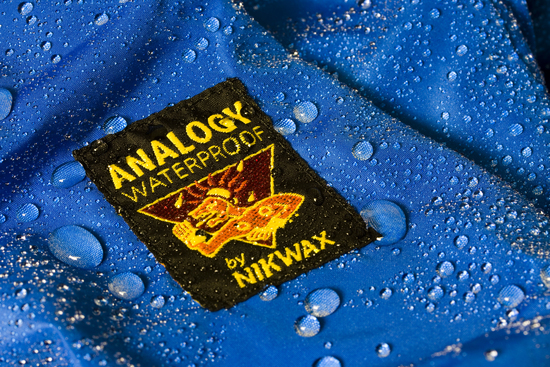
One of the complaints of some of the users of Paramo (British) and Paramo like WPB clothing, is that when the DWR of the outer shell and/or the mid layer, "Pump liner-directional fleece", wears out, the Paramo jacket etc becomes less effective in keeping the user dry. Some users have reported becoming overly wet with an older Paramo jacket or on a longer trip. Since Paramo uses Nikwax, which is one of the least durable DWR treatments, then it's possible that this can happen even on a single, longer trip. Does this mean that Paramo and similar systems should be completely discarded? No the potential advantages of incredible breathablity (up to 20 to 25 CFM) is too important, and as the saying goes, there's more than one way to skin a cat. An acceptable replacement for a Pump liner/directional fleece is one of those military, expedition or heavy weight polypropylene baselayers. This is a one sided fleeced fabric that is smooth on the outside and fleeced/brushed on the inside. Reverse it and have the fleeced part on the outside to replicate the pump liner/directional fleece that Paramo uses. Polypropylene is significantly more hydrophobic than polyester (which official Paramo pump liners is made of). It doesn't require a DWR and is more or less permanently quite hydrophobic. For the outer shell, use an EPIC or EPIC like treated windjacket. This is a truly **durable** water resistant treatment, that needs only to be rinsed with clean water and dried to be "refreshed". Theoretically, such a system when well rinsed periodically, could last years without ever needing a DWR treatment. The only problems with the above fix, is that those military tops don't ever seem to come with hoods, which would be necessary if you want to use the hood of your windjacket in conjunction for head protection. Lately, i lean to using a WPB wide brimmed hat anyways. It allows me to vent my neck area more. The other problem is the infamous polypropylene stink factor. To mitigate this, i recommend a Merinio-synthetic or more ideally, an Alpaca-synthetic blend baselayer. It should cut down a bit on the stink of the PP midlayer. For those who aren't aware of Paramo WPB clothing systems–it's most appropriate for cooler wet weather vs warm wet weather, since it involves a mid layer, insulative piece. The beauty though of having using a separated shell and mid layer, is a much greater flexibility. If it's not raining or not too cold, you don't need the windjacket, or if it's coolish, but very windy, put the midlayer away and just use the windjacket. During cooler to colder, wet weather, most people bring some kind of mid layer anyways (though some rely solely on a Cap 4 hoody baselayer+windjacket for active insulation), so theoretically, you can count only the windjacket as your technical WPB clothing weight. If you're thinking of experimenting with such a system, use a windjacket with at least 300 mm HH/water resistance, and at least 20 CFM (according to military testing/research that Richard Nisley shared recently, which logically should apply well to such systems).
Topic
Solution/Fix to a Paramo type WPB systems?
Become a member to post in the forums.
- This topic has 53 replies, 16 voices, and was last updated 10 years, 10 months ago by .
The solution is thin fleece under a very breathable windshirt with good DWR ; ).
Interesting topic Justin. I have been using Paramo for 3 years for brutal cold Michigan winters and absolutely love it.
How important is a "pump fleece" vs a regular fleece? Since we're discussing pick-your-own-fleece, what are ideal types?
The pump fleece is the key to the system Paul, look it up on Paramo.co.uk
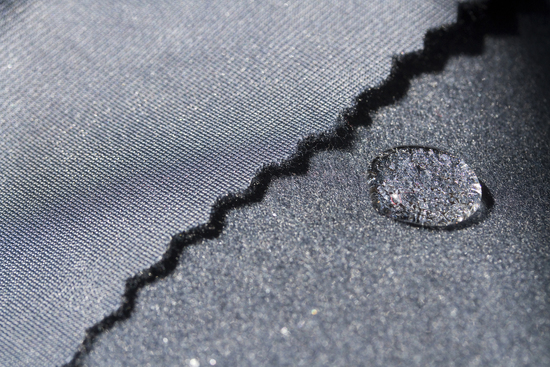
Thank you for chiming in Stephen. What's very interesting to me, is all the people that use it in places like Scotland, where it's very wet, windy and cool often, but not usually very cold and dry. So despite lack of American interest, or the occasional British (or other Euro) naysayers–it probably has some definite potential if applied and used well. Chris Townsend speaks very highly of it, and he is a true outdoorsman with a lot of experience. "How important is a "pump fleece" vs a regular fleece? Since we're discussing pick-your-own-fleece, what are ideal types?" Hi Paul, in some ways this is easy to answer and in other ways difficult. After trying to research Paramo a lot, and how and why it works, and being frustrated by the lack of specificity, i broke down, paid Cioch in Scotland to make me an "official" Paramo pump liner directional fleece to use in conjunction with a windjacket of choice. According to Paramo literature, you need a "directional" fleece, which is just a fancy way of saying, one side of the fleece/layer has small fibers and the other side has larger yarns. In the case of my pump liner from Cioch, all it is is a all polyester microfiber fabric about the same weight as 100 wt fleece, but very slightly thinner because only one side is brushed to produce a short pile. The short pile/fur goes on the outside and the smooth, non brushed side on the inside. Then according to Paramo literature, this mid layer piece is treated with a wash in DWR to enhance it's water shedding properties. Now, how necessary is the directional part or the DWR part? I don't know for certain in either case. But in some cases, if it ain't broke, why fix it? Suitable substitutes: Pretty much any synthetic fabric of similar thickness, with one side smoothly woven (larger fiber bundles/yarns that aren't broken up) and the other side etiher brushed or fleeced with a fuzzy side (fiber bundles that are broken up into their smaller, separated fiber base/origins) should provide a similar reverse capillary effect. Some of the first wicking baselayers relied on a similar principle, with bi-component fabric, where one side had larger fibers and the other had smaller fibers. It's a similar, but reversed idea with the Paramo Pump liner. Again, i don't know how necessary the DWR or directional part is in reality. I haven't done much testing at all with regular fleeces or mid layers. What's probably more important overall though, is a an outer shell that has enough HH AND CFM in balance, with a good and truly durableWR treatment. On another thread, i intuitively hypothesized that you would want at least 300 mm HH and no more than 25 CFM for an outer shell for such a system. Richard Nisley replied and said that military testing/research indicated very similar in a similar, but not exactly same, application. Thankfully, some companies that cater to military specs and demand, make EPIC and EPIC like treated windjackets with those and/or similar specs. However, the downside is that they use heavier materials–70D nylons and up. However, according to Nisley, 2012 and earlier Houdini's appear to be treated with an EPIC type process for a truly durable, near permanent DWR. However, ime, before i heard of or even thought of the above specs, i experienced problems (too much water ingress especially at the shoulders) with using the Houdini in combo with my Cioch pumpliner just in moderate and relatively brief rain (i always first test around home, before taking gear backpacking). My solution to this, was to add some extra silicone to the Houdini on the hood, shoulders, and the top part of the arms, which did help noticeably with the problem.
Hi Justin, I know a lot of Paramo users in the Uk and Ireland and they love it. For when it's pouring rain I do prefer a hardshell but for below 25F or so Paramo cannot be beaten. When its around freezing I normally drag out my Neoshell setup.
I'm trying to dial it in for use in that crappy, 32.5 to 50 degree F with cold rain range that i've found traditional WPB hardshells too clammy-wet/non breathable for (and which is very common weather and temps for where i live and hike at in the fall and winter). But i run warm though, so 50 degrees is the upper limit. But i don't use a Paramo jacket like i assume that you use. I use a thinner and separated windjacket and fleece combo, which may be a bit cooler and/or more breathable than some of the Paramo jackets? There are several variables that i don't know about, which could be important. Like, the outer shell fabric that Paramo or Furtech uses, what are the average HH and CFM levels? What's the thickness of the fabric? Equivalent to 30D, 40D, 70D nylons? It's possible that they don't have the ideal balance. It's possible that increased breathablity and thinness of the fabric, could make it a bit more comfortable for temps near or even slightly above 50 degrees. Even if their outer shell was say 10 CFM, it still would be worlds more breathable than eVent or even Neoshell, but what if you used a 25 CFM wind-jacket? As an aside, a Paramo pump liner or similar fabric, will be a bit less insulating than a 100 wt fleece, because it's slightly thinner though very similar weight (my men's in between medium and large equivalent size, Cioch pump liner weighs about 8 oz, which is similar to many regular fleeces of around that same size).
If your looking for a windshirt with a hood made from EPIC get the Wild Things Windshirt WT 1.0. It comes in Multicam or coyote in color. They have windpants also. $109.
I am trying to help out with this also and have a Westcomb Crest Hoody I will be trying out in lieu of the Epic. The Crest Hoody has a CFM of 18 and a theoretical hydrostatic head of 500-800 according to the company. My htought is that for the 'fleece' layer to use something that has a capillary action and is a bit 'puffy' rather than tightly woven.
that's what the military termed their "windshirt" layer as part of their overall Protective Combat Uniform. I have one of the Patagonia level 4 windshirts (at one point you could scoop these up pretty cheap-sadly no longer)- the cut is almost exactly like the Houdini, the denier is heavier. It breathes similar to my 2012 Houdini, the HH is more robust (the HH on my old Houdini is actually pretty decent-holds up pretty well to light/intermittent rain), but I have no way of quantifying it (maybe Richard N has already???). This is the shell that I use elk hunting- lots of up and down (high exertion), lots of different weather conditions and also extended periods of static use (glassing). While heavier, it's also more durable- which is handy when hunting in rough country. I use this with a Merino 1 base layer (60/40 merino/capilene) and in cooler conditions with a R1 as a mid-layer- I've looked at the R2 with it's longer fleece nap (Thermal Pro) as a possible alternative- theoretically should offer more outward wicking???? I've also thought about simply turning the R1 inside out, as there is more fiber length on the inner side????
@Mike. I did a little bit of research into this and it seems that the Wild Things and the ORC are the only two that use an Epic or Epic similar treatment and the rest of the Level 4 stuff out there uses a DWR but they are also for Special Operation Forces (SOF) and not just a PCU. I have an R2 and will be trying this out along with my Crest Hoody soon to get a better idea. My Crest Hoody should be similar to what you have at a Level 4. I know I don't overheat while wearing the R2 and the Crest Hoody below 50F but outside now is prime time to try somethings out what with it actually going to be raining for the first time in about 4 weeks here. I know I feel comfortable and dry just wearing the R2 if it is misting out. Is there other things I can be testing out?
"If your looking for a windshirt with a hood made from EPIC get the Wild Things Windshirt WT 1.0. It comes in Multicam or coyote in color. They have windpants also. $109." Thank you for the suggestion Christopher. Yes, the Wild Things Windshirt has very nice specs for this purpose. If i was looking for a windjacket, i'd be tempted to get it though it's a bit outside my budget. Btw, what i meant earlier about hoods is that those military polypropylene fleeced on one side baselayers don't ever seem to have hoods. If you wanted to replicate a Paramo type system using the PP baselayer as the pump liner, you would need to have a hood to go along with the hood of the windjacket, because the windjacket fabric won't be enough by itself to keep your head from getting wet. An alternative option is to use a WPB hat instead of using hoods. However, a hat can be problematical in very windy weather unless designed very well, and even then…
Justin, You should contact Paramo and have a chat with them.
Perhaps. Considering that when reading their literature, i often got the sense they were being deliberately vague (as to protect against replication), i'm not sure they would appreciate my detail oriented probing.
Still worth chatting with them about how it works, just tell them you are kicking tyres.
Justin- fwiw I came across a thread that Richard N described the Patagonia military "Houdini" as using a Epic like fabric (encapsulated)- in my use it appears the HH is higher than the "civilian" version of the Houdini (of which I own two) Mike
Hi Mike, yes, i think i've seen those threads as well. The general concept also came up when i wondered out loud what the ideal CFM and mm HH levels for an outer shell for a Paramo like system. I guesstimated a range of 300 to 400 mm HH and CFM 20 to 25. Richard replied that was very similar to what the military concluded. About 3/4 down on this thread: http://www.backpackinglight.com/cgi-bin/backpackinglight/forums/thread_display.html?forum_thread_id=107471&skip_to_post=904122#904122 Relevant quotes: Richard N. "The Special Forces system is similar to the Paramo/Buffalo/Furtech system with the exception that the Special Forces use Epic based windshirts/softshells…" Richard N. "ArcturusBear1, Your definition of the ideal is the same as the current L4 specification. The current L4 specification states: Air permeability = 25 CFM max Hydrostatic Head = 300 mm min I tested all of the L4 windshirts available 2 years ago. The best performing was the Multicam Wild Things WT 1.0: Air permeability = 25.51 – 29.8 (2 different specimens tested) Hydrostatic Head = 422 mm H2O (2 different specimens tested)" Since the Patagonia windjacket you were talking about is a military contracted one, it's most likely spec'ed to the above, so likely to have minimum 300 mm HH. Which is almost twice that of the Houdini at around an average of about 141 mm HH. So likely your subjective perception is quite correct, the military Patagonia windjacket has a significantly higher HH level.
I should have grabbed a couple when they were reasonably priced at first :) now I just have to try my Cap 4 inside out and see if the capillary action increases- looking at the fabric, it clearly has a longer nap (albeit gridded) on the interior side
I have also been doing a bit of research with this the last few days as Just In Time and I have been talking about this since his original idea. I did talk to Paramo a few weeks ago and they were sending me out a sample but it still might be a few weeks before it gets here. P: As you will know, the Analogy fabric comprises 2 layers, the outer windproof fabric which deflects wind and rain, a dense microfibre, and the inner 'Pump Liner' which is unique in moving moisture away from the wearer, it is soft and the fabric construction has long and short fibres to achieve this water movement. The fleecy side is generally hidden as it is stitched to the outer fabric and faces away from the wearer, but I have included an image of the Pump Liner too. Me: Thank you. The images do help greatly. I am guessing that from the image showing the two sides of the pump liner that the inner part is the one with the smotther face and the part glued to the outer is the one with the more 'hair'-like elements, correct? P: Yes, I think you have got it the right way round!! The fleecy (hairy) side of the Pump Liner is hidden from view in a jacket, the smooth side can be seen and sits next to your baselayer. There is no glueing, no laminates, no membrane, no taped seams in our jacket! The whole jacket is stitched and the whole is treated with Nikwax aftercare products after it has been made to ensure it provides directional waterproofing.
I also contacted Patagonia about their military windshirts because one was up for sale on eBay. After much checking the customer service person told me that they just used a DWR and not an encapsulation. The things they created were not for SOF but just regular PCU which does not require encapsulation.
^ good info!
how much does it weigh? for a garment or per square yard? I wonder if you wear something like a windshirt outside, and a fleece garment inside. Maybe a base layer too. And get the same performance in wet weather edit: oh, that was the point in the first place, didn't read entire thread : )
jerry- I think you would get some of the benefits (and maybe most) depending on what you chose for a windshirt- as mentioned above ideally you want decent HH, which most windshirts don't offer, but also decent breathability (cfm) which many windshirts don't offer either- it's the combination of the two that is critical imo same goes for the mid-layer (or base layer depending on weather)- it needs good capillary action (long nap on the outer, short inner) to get this- obviously this would vary greatly depending on what fleece garment was chosen but yes, in principle this is what that Paramo "system" is- a windshirt, a base layer and a fleece mid-layer, just a little more "refined"???? a system like this won't be uber lightweight, but reasonably lightweight mike
maybe when you have the two layers, you don't need a high HH. the rain drops hit the fabric, produce enough pressure to go through the fabric, but the water stays in the fabric or outer part of the fleece. Then body heat evaporates it.
like I have lightweight gaiters – 1.1 ounce DWR nylon. Not a super good DWR. and Merino socks underneath the gaiters sometimes get wet, but the socks never get wet
Become a member to post in the forums.