Topic

Actual fire hazard of wood burning stoves

  • This topic is empty.
Viewing 25 posts - 26 through 50 (of 50 total)
PostedApr 21, 2015 at 6:13 am

This is what happened on these stove threads last year…

Frankly, I'd like to know what is ACTUALLY the safest fuel/stove combo to use, not what the regulations say is OK. Yes, no flame at all would the best, I get that.

but for those of us who really, really value that hot cuppa joe in the morning, or a warm belly of chili on a cold night…which is ACTUALLY the safest stove option?????

—-

The starlyte has a wick inside – you can fill it with 2 oz of fuel and literally hang it upside down and nothing comes out. You can burn it, blow it out when your water is finished, and it keeps the remaining fuel in the stove. It's a pretty cool set up.

When I sent this description to the various national parks/forests along the JMT corridor last year asking for clarification of their regulations, I received nothing but encouragement using this stove with the very stable pot-inside-a-cone. As a matter of fact, one of the entities actually said "that's exactly what we're looking for."

but again – i'd really like people's opinions on which is the SAFEST stove/fuel combo, not which is allowed.

I have no problem bringing my canister stove set up if I have to either….i prefer this alcohol one, but it doesn't matter enough to me.

Bob Moulder BPL Member
PostedApr 21, 2015 at 6:57 am

+1 Starlyte

One would have to do something super idiotic to mess up with that stove… the most obvious mistake being squirting fuel into it while there is still a flame.

Beyond that, it would require some serious, "Jackass"-worthy creativity.

Marko Botsaris BPL Member
PostedApr 21, 2015 at 7:12 am

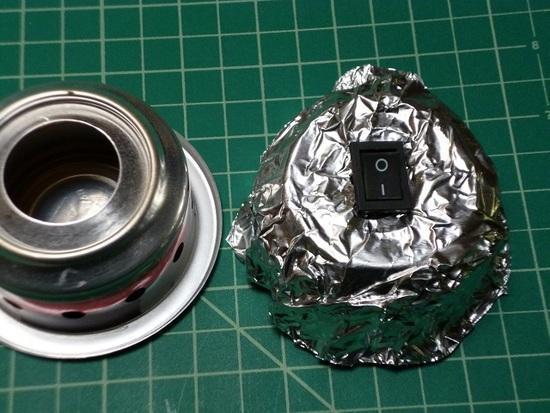
This is my solution to conform to the regulations – posted on here a year ago. My (patent pending) snuffer with a shut off switch:

snuffer

This years model features (at Bob Gross's suggestion last year) the improvement of switching to a shut off valve, like the ones on gas stoves – heaven forbid we should confuse people with something they haven't seen before. This CLEARLY now conforms to the regs, both functionally, and now TECHNICALLY. And now equally safe to the safest other alternatives if you use an alcohol stove with a carbon sponge wick to protect from spillage.

But seriously, beyond this I don't think there is a "safest" setup in reality – as long as there is fire coming out of one end its going to ultimately be the accessory between your ears that is crucial.

Ken Thompson BPL Member
PostedApr 21, 2015 at 7:21 am

+2 Starlyte

Last big fire on the Lost Coast Trail was from an overzealous Whisperlight user. You can put out alcohol with water. Try that with white gas. No priming flare. Would have to try pretty hard to upset the cone setup. Certainly safer than an upright canister stove.

PostedApr 21, 2015 at 7:25 am

Marko, i certainly hope you'll be putting that up on Kickstarter. I know I'd be an enthusiastic contributor!

Marko Botsaris BPL Member
PostedApr 21, 2015 at 7:35 am

Ken, yes!

Since it is the Yahoos that usually do the most damage, there is actually something to be said for the simpler alcohol stoves and esbit for "frame of mind". I think fancy (and expensive) equipment often lulls a certain type of idiot's mind into an attitude that the technology will "take care of itself". My personal favorite example was the notorious "proof" that jetboils are unsafe. The guy (he even said this in is blog post) set the jetboil on full throttle to boil a pot of water (I think with some kind of viscous soup or something), and then went off and attended to some "camp chores". When he looked back at it "only" 4 or 5 minutes later the whole thing was on fire. The idiot had melted his Al heat exchanger.

Marko Botsaris BPL Member
PostedApr 21, 2015 at 7:56 am

Theo, there is another thing that may be useful (or at least edifying) to know, depending on your location. Since no one has mentioned it yet I will. Leaving aside the true fire hazard regulations in place at lower elevation, the perma ban on wood fires near and above the treeline (usually considered to be at or above about 10,500 feet) in most heavily traveled areas in the Sierra actually doesn't have anything to do with the fire hazard. This is about not collecting dead wood, which in a sensitive area like the rocky and barren alpine one above treeline, is an important ecological resource. Over time, even in the lower areas, removal of all the dead wood near the trail will physically change the ecosystem, so that the area near the trail will no longer have the same mix of plants because the (limited) soil has changed, both in quantity and composition. Such a change could be, I imaging, seen as a "scar" near the trail from the air. You have to remember when using wood that you are taking something from the enviroment – just because you view it as "junk" doesn't mean it is insignificant to the things live in those areas. It is an ideal, yes, but a lot of us feel pristine wilderness should be just that first, and only secondarily a playground for us.

So no arguments about safety are applicable – or at least definitive – above the tree line in places that have bans there, as fire safety is not the actual reason for those bans. If you plan to cook there you will need a method other than wood fires. Fortunately there are cooking systems like the caldera cone that can be used for multiple type of fuel, where applicable.

Lori P BPL Member
PostedApr 21, 2015 at 8:41 am

Yosemite: no fires above 9600 feet
SEKI: no fires above 10,000 feet. No fires in Redwood Canyon, along the Lakes Trail, in Granite Basin, in Hamilton Lakes Basin, at Pinto Lake, in Mineral King Vally above the ranger station, Summit Lake Basin, or the Dillonwood area. No fires above 10,400 in the Kern River Drainage east of the divide. No fires above 10,000 in Nine Lakes, Big Arroyo, or within 1/4 mile of the lockers at Lower Crabtree Meadow.
No fires above 10,000 in Sierra National Forest, with some regions having specific restrictions imposed due to overuse and special considerations.

No fires below 6000 feet anywhere in the state, except for fire pits in campgrounds. The biggest, baddest fire in Yosemite was started by a guy camping and hunting at 4000 feet.

You'll notice correlations in how trampled and overused areas are and how many restrictions there are. Also, the alpine is a fragile biome – the plants/animals there are more sensitive to our presence overall, and this is reflected in group size restrictions in place for off trail travel.

Within the parks the rule is to never harvest living wood and never build a new fire ring. I reported a guy with a wood stove at Pear Lake – the level of traffic in that area, and the scarcity of trees, would mean devastation for the area if everyone went up there and built fires. There was no dead wood around so the guy was ripping branches off the tiny pine trees around his campsite.

The parks are actually the last ones to ban fires. On the coast, it's not just fires that get banned – by May/June in the Ventana Wilderness, smoking, any machinery that sparks, stoves, fires, are all going to be verboten, just like last year. I don't think Yosemite ever imposed restrictions. SEKI always has more restrictions because so much of it is either sequoias or alpine.

The actual fire hazard is not the stove, but the user. Plenty of people misuse and abuse them. I witnessed a Snow Peak Giga becoming a fireball while the guy held the canister – thank goodness he was pointing it away from himself and the people sitting next to him when he hit the piezo – he was fooling with it while screwing the stove on the canister. The stove was not sealed to the canister and flames blossomed from around the O ring, well below the valve control, which was also wide open. We were stupid-lucky it didn't end up melting all the nylon clothing we were wearing to our skin, and that he somehow got it to shut down. (As you can guess he is now excluded from my trips, for a variety of reasons. Gray matter deficit paired with out-of-control ego does not impress me as safe.)

I for one am happy to be a good example to the stupid idiots, and I no longer "mind my own business" when I see an idiot feeding a fire that is already 10 feet tall and kissing the low branches of a dead pine. I take pictures and name names on the way home. At least once rangers have hurried right out to address one of these bozos. They have no right to burn down my favorite campsites, or yours.

Marko Botsaris BPL Member
PostedApr 21, 2015 at 12:04 pm

9600 in Yosemite? Probably I just got the 10,500 stuck in my head from somewhere else. I think the lower the better. About a decade ago I was up near Vogelsang late and some dudes (who looked like the were under-dressed for the end of September) decided to build a giant Yule-Log-Wikker-Man-Virgin-Scarifice-sized fire about 10 feet before the sign saying "no wood fires beyond this point" – also about 10 feet from the trail. It only take a few folks like this to make up for a ton of of people using little or no wood in the area. There was a guy last summer building a fire out of green wood in the GC of the Toulumne. In addition to gagging on all the smoke where I was camping the smell of green wood burning make feel slight irrational panic – I think our brains may be hardwired to feel this particular smell means "danger – forest fire".

It is going to be a real powder keg here this summer. I was on a trip up to Oregon up Hy 5 a few weeks ago and I noticed that basically everywhere now the grass is %100 straw colored. This seem to me to be about 2 months early for a "normal year". Yikes!
Of course about about 2 minutes after we crossed the border into Oregon (or so it seemed) it was rainy, overcast and green with snow on the mountaintops.

Bob Gross BPL Member
PostedApr 21, 2015 at 1:37 pm

" 9600 in Yosemite? "

Yes, it has been that for a long time. Other parks place the line at 10,400 feet or something similar. The actual elevation for a park is chosen to represent the timberline, and obviously the farther you get from the Equator, the lower the timberline is.

–B.G.–

John Taylor BPL Member
PostedApr 21, 2015 at 4:09 pm

If we are talking absolute safest stove then I'd have to say the Svea 123 comes pretty close in my mind. Screw up the filling and priming process and it likely won't light. Good news is reliability in spades. Bad news is weighs a ton.

All kidding aside, there are excellent points about user vs the tool. However, accidents do happen, and not all accidents are caused by carelessness. Bottom line is liquid fuel stoves carry fuel and ignition source to additional fuel, as well as providing a priming action. This occurs to a much higher degree than observed with solid fuel sources. Stove stability, stove pot combinations, and basic operability are factors in addition to fuel source.

James Marco BPL Member
PostedApr 21, 2015 at 5:35 pm

Yeah, The SVEA 123r is my go to stove. Not really that heavy at ~17-17.5 oz (another 2.5oz for the cup.) Others go between 12-18oz. But the Svea also has a very high efficiency. I typically get about 3L/oz of fuel or .30-.35oz/liter (best was .23, worst was .49)

Anyway, I never had any problems using this stove along any trail that allowed stoves.
It is clean burning, rugged, and reliable as hell.

Solid fuels are great for overnights. Then I start getting soot/brown gunk all over my pack, hands, and gear, besides the stink. Even when I don't cook fish, I cook fish. I don't use wood stoves because of the soot. But this is all personal preferences.

Most cones will accept either, esbit or alcohol. Some will also allow wood. All allow good efficiency.

Theo Diekmann BPL Member
PostedApr 21, 2015 at 9:37 pm

"Frankly, I'd like to know what is ACTUALLY the safest fuel/stove combo to use, not what the regulations say is OK. Yes, no flame at all would the best, I get that."

+1 on that. I wasn't trying to be the smartass bashing officials with this thread. Although my initial post mentioned regulations, I was rather interested in the general safety – also b/c most of my hiking happens outside the US.


@Marko
: Thanks for bringing the "biosystem"-argument, I honestly hadn't thought about that before.

All in all, I recently pulled the trigger on a jetboil for this year's summer trip. And as much as I love the thought of a wood-stove (saving some fuel-weight and adding some boyscout fun to the rather relaxed trips I do with my girlfriend), I'm not confident I know enough to use it in a responsible way, so I'm not getting one until this has changed. In the meantime, I'll probably be using my caldera cone (although I hate the packed size) but I'll give Esbit another try b/c of the few but still alarming mishaps with alcohol reported in that thread. The jetboil will come along whenever a trip's duration happens to fit one of the canister sizes…

Keep on the good discussion, I find it super interesting and educating!

Theron Rohr BPL Member
PostedApr 21, 2015 at 10:30 pm

"Frankly, I'd like to know what is ACTUALLY the safest fuel/stove combo to use"

I think a pretty good argument could be made that good old fashioned gelled alcohol/Sterno or the newer diethylene glycol with wick variation might be the all-around safest stoves. Are they still widely allowed under the new rules?

PostedApr 21, 2015 at 10:52 pm

Sterni is a chaffing fuel ment to warm food not boil water. In most stove setups it will never bring water to a boil .Even in the best thermally effiient stoves it will take twice as long as esbit or alcohol..

Another thing about gel fuels in general is the fact they are semi liquid and sticky. If you should happen to knock over your stove ,you might just fling mulitiple globs of flaming alky napalm into the surrounding folliage . Solid fuel tablets are actually safer.

If Sterno was ALL I had access to and I could use it in a very efficent windproof stove setup, then it would be barely acceptable,but it would not be very weight/btu efficient compared to liquid alcohol or solid tabs. Been there, done that.

Justin Baker BPL Member
PostedApr 21, 2015 at 11:09 pm

The safest cooking method is esbit, no contest there.

A small twig fire, imo, is safer than alcohol. Wood is a solid fuel, you can't spill it like alcohol and it's very easy to put out by stomping.
Just be mindful of dry grass. Flying sparks can't ignite conifer needles, they can ignite dry grass. And dry grass goes up in an instant. Conifer needles burn very slowly. You can clear a large fire area by intentionally igniting duff and watching it slowly burn outwards, then stomping it out. That method is actually safer because if you kick away duff you get big tinder bundles at the edge of the clearing. The issue is when you don't extinguishing a fire properly and leave the area.

David Thomas BPL Member
PostedApr 21, 2015 at 11:13 pm

+1

Due to limited fuel options and a faulty butane adaptor (from horizontal canisters to vertical-BP-style), I got stuck using Sterno on Kauai. At sea level. At 70F. And it couldn't boil water in a fairly wide pot.

With three of them under the same pot, it slowly got to boiling.

PostedApr 22, 2015 at 8:05 am

As backpacking fuel,Sterno,in a word sucks.

Its weight to energy ratio is worse than liquid alcohol. Unless you have a very thermally efficient stive setup as in an orgional Caldera cone etc, you dont have a prayer of getting water to actually boil within in your lifetime.

Sterno is a chaffing fuel made to WARM food not cook it. You can dri bake with it fine, but unless you want to wait a half hour for your coffee and oatmeal look elsewhere ;)

Another thing about gel fuel is its really no safer than anything else if the stove gets knocked over. Its semi liquid and sticky. Basically alcohol based napalm. Not ecactly something you want to fling flaming into dry foliage. Solid tablets are safe by comparision.

PostedApr 22, 2015 at 8:16 am

David,

Sterno is about 70% alcohol. It burns slowly in the can due to the limited airflow. If you design a stove to burn Sterno, you can boil 2 cups in about 10 minutes. The trick is to design a chimney based stove where the air enters at the very bottom of the stove.

I do agree that Solid fuels are safer, gelled alcohols are a close second.

My 2 cents

Randy Nelson BPL Member
PostedApr 22, 2015 at 8:25 am

"The safest cooking method is esbit, no contest there."

While I agree that esbit is very safe, I can't see how it's any safer than a non-spill alky stove like the Starlyte. What would make esbit safer?

I do use esbit now and then but my preferred setup for longer trips is the Caldera Cone Ti-Tri. I take enough Everclear for half of the meals and use wood whenever practical. If it's raining, really windy or I'm above tree line, I'll use the Starlyte. Otherwise I burn twigs. And if I don't use the Everclear for fuel, it gets mixed in with Gatorade for a nightcap. Works well for me.

PostedApr 22, 2015 at 8:59 am

Accidental spillage is one of the concerns about using alcohol in dry environments. With a non-spill stove, you still need to get fuel into the stove itself. IMO, this is the main reason solid fuels are fundamentally safer than a liquid fuel.

George F BPL Member
PostedApr 22, 2015 at 9:14 am

Spillage when filling a stove is only a problem if you light it where you fill it. Move it before you light it and problem solved. And the Starlyte is so easy to put out it might as well have an off switch. A quick pat with my hand and out it goes with out even feeling the heat.

Marko Botsaris BPL Member
PostedApr 22, 2015 at 10:20 am

So Theo, I think most of us got that you wanted to know the "actual" best – this naturally just segways into why the hell can't we then use the "best". But as you can see by now with all the excellent information – there IS NO "BEST". They all involve fire. They are all safe and all very unsafe, depending on the knowledge and carefulness of the user, and the environment you are in. So the truly correct answer to your question does in fact look like what you see above – a lot of information and scenarios to be digested and used at your discretion. The most important rule is that any system will be potentially dangerous both to you and the enviroment, and that you ideally should know how the system you are using can be dangerous, take appropriate precautions and know the enviroment you are in, and most importantly pay attention the whole time the fire is lit. That is the "best" way.

Personally I have my system down to lighting my Jetboil and totally focusing on it while motionless the whole time while the water boils (about 90 seconds) then turning it off. I find I have a harder time doing anything Inspector Clouseau or the Three Stooges would do that way.

Since you said you are gong with a jetboil then the things you need to know to be safe are (1) you probably shouldn't do anything but boil water in it. It is of course ok to rehydrate and eat out of it, just don't cook anything in it – NOT what it was optimized for. (2) It will boil water super fast. Just stay and watch it and turn it off as soon as it boils, (3) of course follow the basic rules – valve closed before you (fully) screw on the gas can, and reverse the order taking off the can.

Gary Dunckel BPL Member
PostedApr 22, 2015 at 10:44 am

I'd never been impressed with the performance of Sterno either. Then, Jon's post had me re-thinking things. I gave it a go again just now, and results were quite different from what I had seen 2 years ago.

I found an old crappy cat can with 2 rows of 16 .25" holes. I used my Firelite 550 pot and a home made cone clone with a titanium base plate. The pot bottom was about 1.0" above the lip of the can's rim. I used 2 cups of 50* F tap water on a calm 50* F day.

For the first test, I quirted 16 grams of Sterno into the cat can from a Coghlan's tube. This was sitting around for over 2 years, relegated to starting car campfires or starting my chiminea. The fuel burned for 10 minutes, but it didn't quite bring the water to a boil. Almost, but not quite.

The second test was a different story. I ended up squirting 17 grams of Sterno into the can, as it's hard to be perfect with a glob of gel coming out of a Gerry tube (as we used to call them). This time I got a surprise. The water boiled at 8:00 minutes, with flame-out again coming at 10:00. The speed of this boil was faster than I get with Esbit (usually 9-10 minutes), but 1-2 minutes slower than when I do SLX in a special cat can setup.

I don't know why the second boil was so much more efficient than the first. I let everything cool down to ambient temperature for > 10 minutes before doing the second test. All I can think of is that the tube was stored for a long time in a vertical position, with the cap at the bottom. Maybe there had been some separation, where the first squirt had less methanol in it? I really can't say.

But what I CAN say is that I think Jon is right, in that Sterno can be a player if used with the right stove configuration.

PostedApr 22, 2015 at 4:41 pm

" But as you can see by now with all the excellent information – there IS NO "BEST". They all involve fire. They are all safe and all very unsafe, depending on the knowledge and carefulness of the user, and the environment you are in. So the truly correct answer to your question does in fact look like what you see above – a lot of information and scenarios to be digested and used at your discretion. The most important rule is that any system will be potentially dangerous both to you and the enviroment, and that you ideally should know how the system you are using can be dangerous, take appropriate precautions and know the enviroment you are in, and most importantly pay attention the whole time the fire is lit. That is the "best" way."

Well said. I would only add that sometimes the best way involves knowing when not to light the fire at all. In the conditions that are likely to prevail in the Sierra this year, there may well be a combination of time and place when it is unsafe to light any fire. Therefore, you might consider making one or two of your meals no cook, in the event you encounter such conditions.

Viewing 25 posts - 26 through 50 (of 50 total)
Loading...