


I've read that mixing seam seal with mineral oil or white gas(?) makes it easier to apply.
Your thoughts and/or mix ration?
Topic
Become a member to post in the forums.
I've read that mixing seam seal with mineral oil or white gas(?) makes it easier to apply.
Your thoughts and/or mix ration?
Mineral spirits, not mineral oil.
3-5:1 for regular seam sealer. Mineral spirits (GOOD grade, not eco-friendly) and 100% pure silicone calk.
10:1 for treating floors, 20-50:1 for re-sealing tents and tarps. Depends on the damage, stretching, and other fabric damage can be bad. Some of the newer silnylon only lasts a couple years and a very thin coat is suitable. Make sure you wash it with a mild, unscented detergent first.
White gas is better for cold weather applications. It evaporates quicker. Mineral spirits is better for warm weather applications. You need to paint quicly and evenly with no sticking between coats. The silicone will dry with some moisture in the air. So, after it starts setting (4-6 hours after application) in can get rained on with no problems.
Too heavy of a coat and/or contaminants can cause peeling. You are better off with two thin coats than one thick coat.

what do you mean when you say "seam seal"?
there's McNett Seam Grip which is urethane for non silicone fabrics. Dilute with toluene?
and McNett Sil Net. That you could dilute with mineral spirits. For silicone fabrics. Or use silicone caulk. Or the stuff intended for sealing auto windows that's more fluid and probably doesn't have to be diluted. I don't know that you need to dilute Sil Net either – more fluid than silicone caulk?
I mix Shoe Goo with Industrial Maintenance Coating Thinner. I'd use Toluene, but it's not available in California. Then I apply it with a brush.
Just be careful what you mix it in and do it all outdoors, preferably on a breezy day. That stuff is serious. I stupidly used a plastic cup the first time I tried, and it melted straight through.
I think Shoe Goo is a slightly thicker version of urethane sealant, compared to McNett Seam Grip
(Or, maybe the Shoe Goo I've seen was old)
The last seam sealing job I did was a couple years ago on my Trailstar and it has held up fabulously. Below is an excerpt from the post on my blog.

Most silicone-based seam sealers are thick and messy to work with. A lot of people dilute them with mineral spirits (1 part sealer with 2 parts spirits) and brush it on, something I have done in the past. I have always been concerned that thinning the silicone will negatively impact the sealing ability of the silicone, especially over time. However, I have never had a problem. I was intrigued by the success a lot of people have had using Permatex Flowable Silicone Windshield and Glass Sealer, so I bought a 1.5 ounce tube.
The tube comes with an applicator nozzle. I cut the nozzle at the second smallest line, which was just smaller than the seam width. The silicone flowed easily and started to seep into the thread seam holes. Using my finger tip dampened with water, it was easy to smooth the silicone for a professional looking job. Clean your finger tip frequently with a paper towel. The 1.5 ounce tube was enough to seal all five of the seams, but not enough to seal the tie-outs. I used the McNett Sil Net to complete the tie outs sewing. If I were to it over, I would not use the Permatex applicator, the tube had to be held too far away from the seam – instead I would punch a small hole in the top of the tube allowing the palm of my hand to rest on the tarp as I moved the tube from the top of the shelter and moved down along the seam. It took about 15 minutes to seal the Trailstar.
Jerry, you're right. But I find that Seam Grip is still a little too thick to properly penetrate seams without globbing it on. I figure if I'm going to have to thin it anyway, I might as well get Shoe Goo. The extra thickness plus ability to be thinned makes it more versatile. That, and it's cheaper.
For SilNylon, I use pure silicone caulk thinned 1 part by weight with three parts by weight of odorless mineral spirits. I usually mix about an ounce of caulk at one time since it's a one shot batch. I try to organize things so that I can use as much sealant at one time as possible. The open tubes of silicone set up pretty quickly whether you use them or not. I have a tube of flowable silicone windshield sealant that I got at the auto parts store, but haven't used any yet. The flowable stuff is at least twice the cost of the regular silicone, so I don't see much advantage to it other than convenience. I use quite a bit of Shoe Goo (on shoes), but have never tried to thin it.
The solvents that are commonly available in the stores around here include:
Acetone
Lacquer Thinner (probably Xylene and Toluene)
Xylene (Xylol)
Naptha (probably the same as lighter fluid)
Mineral Spirits
Does anyone have an opinion on the applicability of these solvents to the various glues and sealers?
Seams can be difficult. A too thick layer will simply cover them without penetrating into the threads. Too thin and it doesn't completely waterproof the threads. I use a cheap-o foam brush for the application. Each piece of seam actually gets covered/wiped, pressing the mix into the threads, at least twice. Many tents/tarps are sold unsealed so this is a common task. Even the foam brushes can hold too much mix, so, you get runs. You should avoid them, but it doesn't really matter; it doesn't hurt anything.
I also find NcNett a little too thick, and Permatex is also slightly thick. Really only the threads/holes need to be covered. On older tarps thread holes are sometimes pulled and opened destroying the silicone film in these areas. The thicker mixes work well for repairs caused by this type of mechanical damage (heavy winds, tree branches, etc.) A small patch can be adhered to the tarp by using a 2:1 mix. This is better for larger 1/8"-1/4" holes (often caused by sparks from a campfire, punctures, and animal claws.)
A full 24-48 hours (sometimes up to 72 hours depending on your area) may be required for the mix to cure. If you live in a dry area, maybe longer. After 2-4 hours, it should no longer be sticky to the touch, but it is not fully cured. It can still stick to other silicone (fabric, seams, sealer, etc.) Generally, moisture from the air is used to cure it. But, even a rainstorm or two will not bother it after the initial set. Some people use unscented talc before storing it, it avoids contact between mix/silicone so you can wrap it up and store it, thus avoiding the sticking of uncured mix.
"The flowable stuff is at least twice the cost of the regular silicone, so I don't see much advantage to it other than convenience. "
Squawking about spending 5 dollars on a shelter that cost hundreds seems silly. Tube of caulk, mineral spirits, time seems more expensive unless you happen to have that stuff laying around and. I used less than half a tube to do my Solomid XL so I don't see cost as a deciding factor at all. It also has zero odor. Did my shelter in the living room.
This stuff is the bestest ever for thinning, completely odorless available at Michaels' craft stores:
Urethane sealer for non silicone fabric – McNett Seam Grip or Shoe Goo – use Toluene. I think this is nasty stuff that should be done in ventilated area. Lacquer thinner might work – check label to see that it contains toluene. I think it won't work otherwise.
Silicone sealer for silicone fabric – mineral spirits – don't get the environmentally friendly stuff, doesn't work. There's a low odor version that does work. The mineral spirits should not be a milky, watery liquid – won't work. Has to be clear petroleum product. You can use white gas but it tends to explode. Probably other petroleum products.

What James said in his first post. Save a salsa jar or something similar, add silicone and mineral spirits, shake vigorously for a minute, apply with foam brush.
"I'd use Toluene, but it's not available in California. "
You can buy it as "Goof Off."
A few comments to add. If you can get a small polypropylene beaker, it will work well to hold the mix and is not affected by the solvent. Likewise polyethylene is also not affected, and I save an empty heet bottle when I am going to seam seal, add the silicone then the mineral spirits then shake for a while. The silicone does not dissolve but forms more of a suspension. I also use an acid brush with the bristles cut short then stipple the mix into the threads on the seams. The finished job looks neat and holds up well.
Yes, Clifford is correct. The silicone/mineral spirits mix is actually only an emulsion. The mineral spirits does not actually dilute the caulk, it just breaks it down into small pieces. I have left a 1/4 qt out for a week and it does set, regardless of the amount of mineral spirits. It turns into a goo or gel depending on the ratio.
Yes, it does require a lot of mixing. A bottle is recommended or at least 5 minutes of stirring. Anyway, there are a lot of ways to do it. Have fun!
Nick's suggestion of Permatex Flowable Silicone Windshield and Glass Sealer works great no mixing and doesn't smell, do a forum search and you will find a lot of people use it and are happy with the results, I am.
Here is my video showing how you can mix silicone with Mineral Turpentine in about two minutes with just a tuna can and a stick .
https://www.youtube.com/watch?v=0tCyT9p8Uys
When I do it not on camera it is in fact faster than that.
However feel free to make it much more complicated if you get a kick out of it…
It has been my experience that Lacquer thinner is generally a mixture of Xylene and Toluene. More Toluene makes a hotter, faster evaporating thinner. More Xylene makes a colder, slower evaporating thinner. Xylene is still a lot hotter than mineral spirits. I believe that most things that will thin with Toluene will also thin with Xylene, so I need to try to thin some Shoe Goo with Xylene. I've got some dry bags to seal, so this may be a good time to try this. My mixing vessel of choice is an empty cat food can and a cheap foam paintbrush for a mixer and applicator. All of these solvents are potentially nasty and should only be used outdoors with plenty of ventilation and well away from fire or flame.
Remember that urethane sealer will stick to itself even after drying a few days. And doesn't release from itself. It'll pull off one side of the fabric and make a huge mess.
Rub some powdery stuff on the surface – drywall compound, talc, clay soil,…
I hope that folk remember the difference between urethane and silicone sealing as well as what to use to dilute which.
"Remember that urethane sealer will stick to itself even after drying a few days. And doesn't release from itself. It'll pull off one side of the fabric and make a huge mess.
Rub some powdery stuff on the surface – drywall compound, talc, clay soil,…"
That is an important point.
I made several dry bags from heavy coated nylon oxford cloth. I will be sealing the seams and need to be certain that the fabric doesn't stick to itself
I diluted some Shoe Goo with Xylene and sealed the seams on some heavy coated nylon oxford cloth dry bags and it appeared to work fine. The solvent that I used was actually labeled "Xylol", but should be the same thing as "Xylene". I had a quart can that I got from a home store. The Shoe Goo that I used was from a tube that had been open for some time and was quite thick. I squeezed some into a tin can and weighed it. It was my intention to dilute it about 3:1 with Xylene, but I ended up about 3.5:1. I then started to stir the glob of Shoe Goo in the Xylene with a small foam paint brush. The Shoe Goo did not want to easily dissolve and required much stirring and I noticed that the Xylene was affecting the foam, but not too seriously. I never got the entire glob dissolved, but the Xylene started to thicken, so I painted the seams with the mixture. It was runny enough and I think that it penetrated the thread, but I need to let it dry thoroughly to find out. The mixture did not seem to damage the cloth, thread or coating on the cloth. The foam brush worked fine, but the tip was not as sharp as it had been. I don't think that the tip would have been damaged if I hadn't used it to stir the mixture. Because of the difficulty dissolving the Shoe Goo, I think that a better way to mix it would be to use an empty glass baby food jar with a metal cap. I think that an occasional shake would be enough.
I got a pack of 20 or so horsehair craft brushes with metal handles from Harbor Freight for a few bucks. They work well and aren't affected by solvents like foam brushes are.
I don't think that Shoe Goo is Urethane. I think that it is Synthetic Rubber, possibly Styrene Butadiene rubber. They are not very forthcoming with information as to the composition. I needed to make some roof repairs and I got some tubes of Sashco "Through the Roof" sealant. I had used this stuff around fourteen years ago when I replaced the roof, but hadn't used any since. When I opened a tube, I found that this sealant appeared and smelled exactly like Shoe Goo. Is it the same thing? I don't know and can't really say, but it behaves the same way. It is available in a tube grade and a brushable grade and the MSDS says that it contains Toluene and VM&P Naptha. It's crystal clear when applied, but may yellow with age. The company literature says that it is a synthetic rubber, but not what kind. It's supposed to stick to just about anything. It's worth trying on something that I use, but don't depend on for complete waterproofing. I sealed the seams with thinned out Shoe Goo on some dry bags that I had made and it seems to be holding up. Through the Roof has held up for fourteen years on my roof flashing. If it sticks, retains its elasticity and fills the stitch holes, it's worth a try. It may not stick to silicone coated fabrics, and the manufacturer says that it is incompatible with silicone for that reason (it doesn't stick).
Become a member to post in the forums.
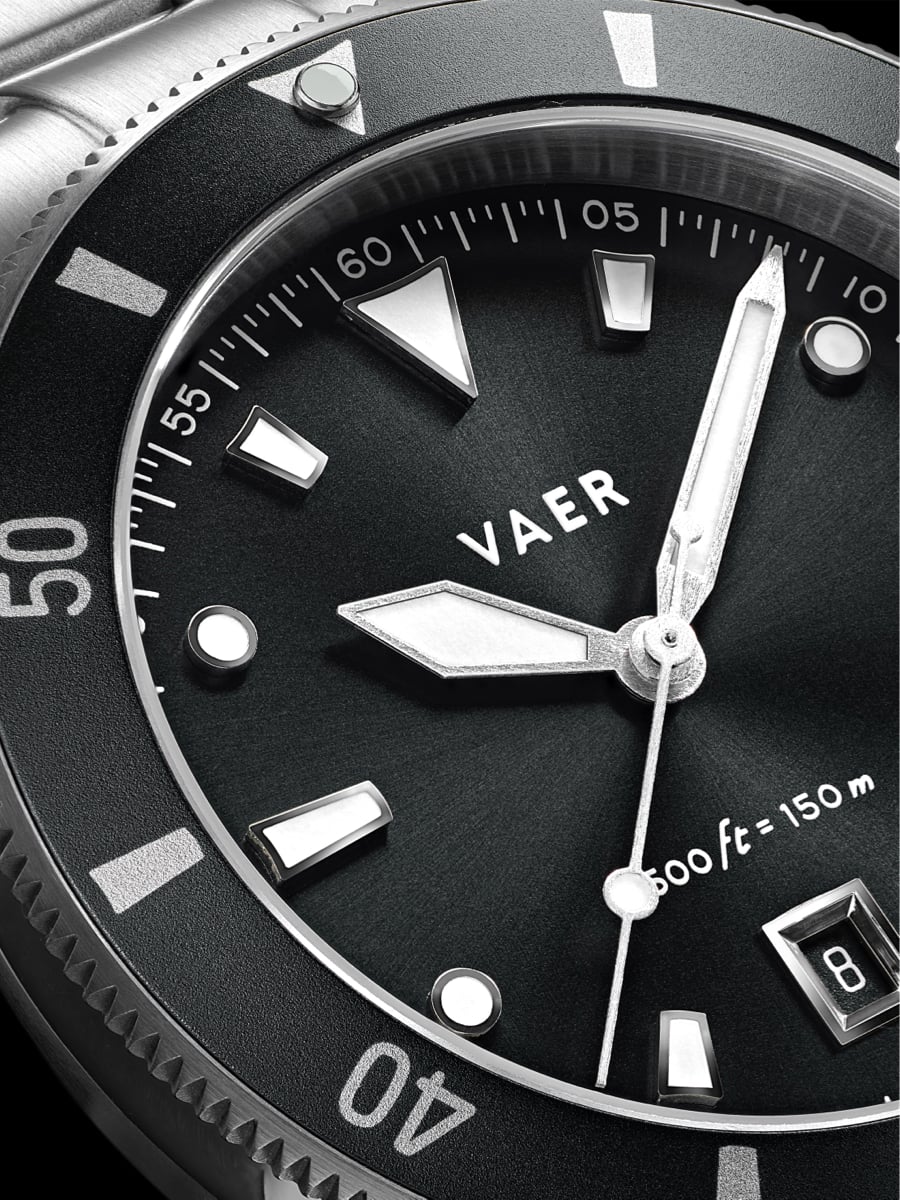 DS2 Meridian: Vintage Dive Style, Everyday ReliabilityInspired by the streamlined "skin diver" watches of the 1960s, the DS2 Meridian combines vintage proportions with the durability of a modern everyday tool watch. A reliable Japanese Miyota quartz movement delivers set-it-and-forget-it accuracy, while 150 meters of water resistance, a locking screwdown crown, sapphire crystal, and strong Super-LumiNova make it ocean-ready. Available in multiple case sizes and starting under $250, it's an approachable way to get classic dive-watch styling without sacrificing everyday practicality.
 © Beartooth Media Group Inc.
 Loading...