Topic

Softshell as Windshirt substitute

  • This topic is empty.
Viewing 25 posts - 1 through 25 (of 60 total)
Trill Daddy BPL Member
PostedMar 18, 2015 at 9:57 pm

Good folks at BPL, I thought you'd be able to assist me in helping understand the importance of a windshirt.

Historically, I haven't used one for two reasons:

1) durability

2) necessity

I like to use my gear for multiple purposes, mainly hiking, backpacking and (inbounds/sidecountry) skiing. Because I live in the Rockies, I can get away with not having to ski in a WP/B piece. For that reason, I have been skiing in various softshells over the past decade.

I currently have a Black Diamond BDV. It is stretch woven- and I really like it for climbing/approach and hiking ridges as it is super abrasion resistant and pretty damn weather resistant. It's a pretty simple design- a pullover that also packs into its single chest pocket. The cuffs are awesome, as is the fit. It breathes well, but almost too well. But when you're active, it's ideal. I also like the the Nanosphere (it still looks brand new).

My issue is that it weighs just over 15 oz.

I have an ultralight rain shell ( Alpine Houdini) that I was considering using as both a windshirt and rainshell to save weight. But I am somewhat concerned about it's durability.

I was considering just backpacking in the BDV and using the Alpine Houdini as an emergency shell. Thoughts?

More importantly, how useful is a windshirt in my gear closet?

PostedMar 18, 2015 at 10:07 pm

Wind shirts breathe infinitely better than a rain shell. But the only one's I found look goofy so I don't use one : )

I use my rainshell all the time though as wind barrier. Good for summits, and lunch breaks. in less than 20 mph winds though probably going to make you to damp while moving.

"emergency" layer might be generous. If you're already hiking in a softshell, you might want something more substantial for your anti-hypothermia emergency layer.

PostedMar 18, 2015 at 10:14 pm

Well it sounds like you have a system that you're pretty happy with. If you find yourself hiking in the softshell most of the time, then its weight could be worthwhile.

There are a few benefits of a windshirt over a softshell. First and most obviously, it's dramatically lighter. Most windshirts weigh between 2-4 oz. Outside of wintertime I rarely wear a shell while hiking except during early mornings, so the windshirt stays in my pack most of the time. Having something light and effective is very nice.

Second, a windshirt is less warm. That can be an advantage or a disadvantage, but overall I favor a layering approach. A fleece jacket (9 oz) plus a windshirt (3 oz) provides much of the same moisture-transport and shell performance of a softshell, but it's modular. A windshirt is perfect for those temps that are too cold and/or windy for no shell, but too warm for a fleece or softshell.

Dale Wambaugh BPL Member
PostedMar 18, 2015 at 11:04 pm

Durability is an issue, but not much more than any light shirt. Ineed, think "shirt" rather than "jacket."

Windhirts work in an UL layering system because they are very light and breathable (or should be). You could use a fine weave button down shirt must the same way, but most weigh 2-3 times more than the typical windshirt and won't block wind as well.

So what does a windshirt do?

Most of all, it blocks cold air from convecting heat from my body, while allowing moisture to escape.

If I am too cool with just my base layer, out comes the windshirt. I might be okay climbing steep switchbacks, but too cold on the downhill, level ground and exposed traverses where the windshirt comes into play Or those days with cold wind and short fits of rain where a rain shell is to sweaty and fleece is too porous.

It provides the sealing layer in a deconstructed jacket when used with a fleecy mid layer. Thst makes a very versatile system where base layer, mid-layer and windshirt can all be worn together and still used with a rain shell.

It can also provide protection from sun, insects and light precipitation too.

And a windshirt is not a substitute for a rain shell. If it is breathable, it will wet out and leave you as a shivering mass of hypothermic Jello.

Softshells are far too heavy for the warmth provided and lack versatility.

Richard May BPL Member
PostedMar 19, 2015 at 3:56 am

Many good ones above.

When I stop after intense activity, like climbing a mountain, I'll put one on under the down jacket. The wind shirt slows moisture transfer and keeps the down dry.

PostedMar 19, 2015 at 4:19 am

Think of what the function is of a softshell ? Chance is that is (almost) the same as what you hope to get from a windshirt. I e.g. see no difference in how I use them. OK, I use my windshirt more and more often in situations where I used my Powershield or stretch woven before but only because I can get the same level of comfort in the windshirt as in the two others. If I can't reach that level in the windshirt, I gladly return to the set-up with the stretch woven (as my Powershield jacket was my first venture in to that realm and is seldom used anymore).
Yes, windshirts are generally lighter but what's the use as it's not as comfortable as e.g. your BDV ?
As I dare to say: weight is A factor for me, not THE factor.

PostedMar 19, 2015 at 4:51 am

Being a fan of wind-shirts I can only agree with the pros and cons already mentioned. I might add one; all the wind-shirts I have used have proven to be bug proof.

Since the question posed seemed to indicate both winter and summer use I might add that I have found that you can use the same baselayer and the same shell all year round, providing your shell, like mine, consists of both windshirt and lightweight rain jacket. The only difference is of course the insulating layer, which needs to be thicker in winter.

A windshirt with hood and an extra thin fleece sweater on top of my usual baselayer is usually enough to keep me warm while skiing with a pack or a rulk on most occassions, when it is not too cold nor too windy. If it stars snowing I add my rain jacket, which is also necessary if high winds and sleet combine.

However, in winter I find it more practical to use a Paramo smock. It is windproof, not perhaps quite as waterproof as 'Mex-Tex' in a serious down-pour, but certainly enough for sleet and snow in winter. It breathes as well or better than any windshirt and the extra thin fleece sweater is sort of built into it. It is in fact a very breathable softshell that is waterproof and as such too warm and not flexible enough for three season use but ideal for winter. The downside with Paramo is weight and lack of stylishness, although they have made improvements in later years

Mike M BPL Member
PostedMar 19, 2015 at 6:11 am

my Houdini is going on 5 years old and is worn an average of 4-5 times a week (trail running consumes most of the use, but it's been on numerous backpacking trips as well- not saying it's bombproof, but plenty durable if your not punching your way through briars

also look at BD's Alpine Start- also a stretch Schoeller material, might be a good compromise on what you have now and a UL windshirt (the Alpine Start weighs 8 oz)- it's definitely sturdier and the HH is pretty impressive for a windshirt (500-ish, also Nanosphere)

Trill Daddy BPL Member
PostedMar 19, 2015 at 9:38 am

I tried on the Alpine Start in XL- too narrow in the shoulders, but baggy in the mid section. Different cut than my BDV in XL.

The neck is right? And the front is cut low, pressing on my Adams Apple.

The Squamish fit perfext in size Large, the hood is superior to the BD, IMO.

Perhaps I'm a bit too broad-shouldered for the alpine start.

Dale Wambaugh BPL Member
PostedMar 19, 2015 at 10:11 am

Softshells fail in an UL layering system due to weight, lack of insulating performance due to weight, and lack of versatility.

A typic softshell weighs as much as a thick down puffy, but doesn't insulate any more than a 100w fleece and a windshirt, maybe even less.

A sofshell isn't any more breathable than a windshirt, usually less.

A softshell is water resistant, but not water proof. A rain shell and light fleecy layer would deliver more performance for the weight.

So a softshell is heavy, not very breathable, not very warm, and not waterproof. I liken a softshell to a water resistant denim jacket.

Where do softshell jackets succeed?

They are more abrasion resistant and mske sense if you will be hugging rock faces.

They are okay for single purpose actvites where you know the conditions for the day, like downhill skiing.

They are great for running errands around town, commuting, and car travel. I have used one successfully for travel in moderate weather.

They look great and highly marketable.

The irony is that **light** soft shell pants are fantastic for shoulder season hiking (cool, damp weather). But I dont change pants layers like I do tops, so at no time would I be hauling the pants in my pack while wearing another pants layer. The abrasion resistance, water resistance, warmth and stretch of light softshell pants work for me.

PostedMar 19, 2015 at 10:33 am

"Softshells fail in an UL layering system due to weight, …"

If that is your main goal.

"A typic softshell weighs as much as a thick down puffy, but doesn't insulate any more than a 100w fleece and a windshirt, maybe even less."

I see that any softshell, windshirt, … has not insulation as it's main goal. Sure, it can aid in that, but that's it.

"A sofshell isn't any more breathable than a windshirt, usually less. "

Can you give a reference as that isn't my experience ?

Dale Wambaugh BPL Member
PostedMar 19, 2015 at 11:00 am

Weight in a layering system isnt a goal in UL hiking? Clothing systems rank with pack, shelter and sleep systems for weight, msking me refer to the Big 4 rathercthan the Big.

Likewise, people have more trouble getting their heads around clothing systems because of preconceived notions, romantic attachments to a certain clothing item, FASHION, and ignorance of the laws of physics.

None of the half dozen soft shells I have owned were as breathable as my 2011 Houdini, or even the less breathable windshells I owned by Sporthill, Craft, Montane, Brooks, etc.

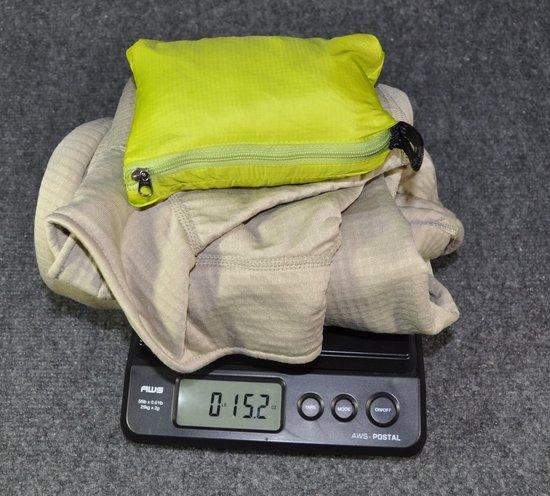
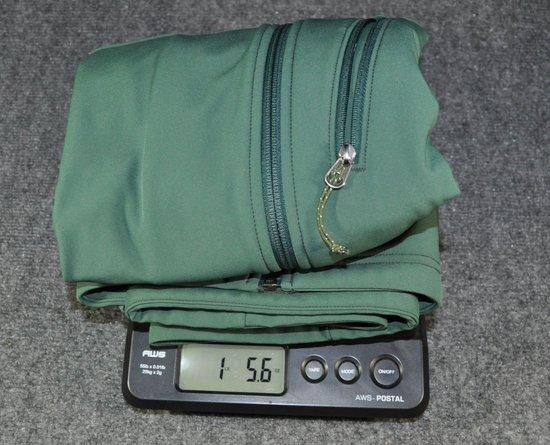
My REI Neo softshell weighs 21oz. It is no more breathable and less waterproof than my 10.4oz Sporthill Climate jacket. If I add a 100w fleece, R1, or Power Stretch top to the windshell, I have more performance and far more versatility for the same weight. Substitute my 4oz Houdini and the weight drops 6oz while the breathability increases. The softshell works in a narrower range of temperature and activity levels an weighs more; why would I want it in my pack?

Brett Peugh BPL Member
PostedMar 19, 2015 at 11:14 am

I am using a Westcomb Crest hoody. It is around 6-7oz for an XXL but it works like a wind jacket and softshell

PostedMar 19, 2015 at 11:21 am

Sure, weight is A factor in a lightweight or ultra-lightweight layering system. But there are (probably) also other factors (specific to eachone) and it's my take that you search for the optimum of all these factors and factorcombinations together. And yes, that can mean that your choice doesn't score the best for a factor like e.g. weight.

David Chenault BPL Member
PostedMar 19, 2015 at 11:26 am

Dale, your conception of softshell is antiquaited.

Trilly; I agree that BD needs to get their sizing house in order. There's a lack of consistency across the line which makes informed purchasing difficult.

Dale Wambaugh BPL Member
PostedMar 19, 2015 at 11:30 am

"Dale, your conception of softshell is antiquaited."

Pray tell me why, Sir!

And please define your concept of "softshell."

PostedMar 19, 2015 at 12:11 pm

I think OP was asking about windshirt vs rainshell not softshell.

Durability on rain shells is going to be better because they're always going to be your outer layer. Windshirt durability is going to vary heavily based on the brand and style. But I'd expect most are going to be fine for trail use (you specified backpacking rather than climbing). As long as you're not bushwacking thru a mangroove forest hehe.

Trill Daddy BPL Member
PostedMar 19, 2015 at 12:58 pm

My issue is this entire UL vs LW debate. My shell (skiing, backpacking and everything in between) has been a 19oz Theta SV. It's been fantastic, except it gets warm really fast and is kind of bulky- mostly because of the materials face fabric (150 denier) and color (dark gray).

My sleeping bag is nearly 3 lbs, and it's a 15 degrees. My tent is 4lbs. My pack is also ~ 4lbs.

I am mostly a member of this forum to learn about LIGHTWEIGHT AND DURABLE gear/principles to backpacking and the outdoors.

I figure if I am wearing the BDV hoody most of the time, I can use the Alpine Houdini as an emergency shell when the rain gets intense.

Dale Wambaugh BPL Member
PostedMar 19, 2015 at 1:11 pm

Durability is an issue with UL gear in general. With use on trails vs bushwacking or climbing and just reasonable care, durabilty is not a problem.

If you are looking for lightweight and durable gear, you have opposing needs. You can certainly choose the more durable UL options, but you will always pay the price in weight. No free lunch!

UL hiking doesn't have the demands of military gear, logging, construction, trail maintenance, climbing or bushwacking. You're outdoors, but for other purposes. Indeed, you can hike your own hike and spread your bread with whatever you like, but if you want to play in the UL sandbox, durability gives way to lighter weight.

Link . BPL Member
PostedMar 19, 2015 at 1:31 pm

Maybe you have read this thread already, but Richard Nisley takes a scientific approach and tests clothing and gives the results of his tests and lets you know what works. Here is what he posted
I created this chart to graphically demonstrate why I believe a lightweight hoody and a windshirt is the optimal clothing combination for most backpacking or hiking…. The best clothing combinations for backpacking or hiking?

PostedMar 19, 2015 at 2:00 pm

Sacrificing durability for much weight gain, I'm afraid that's not very inviting for a lot of people. Specifically if it takes you a while to save the money to buy the gear you want.

Dale Wambaugh BPL Member
PostedMar 19, 2015 at 2:28 pm

"Sacrificing durability for much weight gain, I'm afraid that's not very inviting for a lot of people. Specifically if it takes you a while to save the money to buy the gear you want."

It is a choice, but pretty clear cut. With windshirts or any shell, if you want tough, it won't be as light. In this case, you can wear a softshell anyway you like, but a softshell is not a windshirt, nor is it mean to be.

A guy asked me what my base weight is. I replied, "whatever I want to be." And that is the crux of UL kits: you make your choices and accept the compromises, but it is a conscious decision based on the facts and not based on emotion, bad logic or pseudo-science.

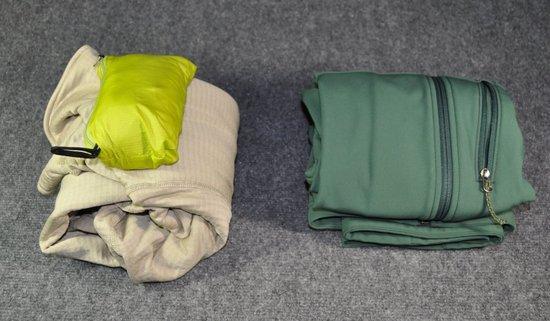
XL Houdini plus medium military ECWCS Power Dry 1/2 zip top and REI Neo shoft shell jacket. The Power Dry top is not compressed, which it can be when packed. The softshell can be compressed a bit.

Layering schemes

Weight is just one issue. Which one would you like to get soaked and attempt to dry in the field? Which one would you care to sleep in? Which has alternative layering schemes and which is the warmest and most breathable?
Layering schemes

Layering schemes

Trill Daddy BPL Member
PostedMar 19, 2015 at 2:48 pm

I don't think neo shell to be a soft shell. It has a WP/B laminate.

My BDV a hoody breathes better than my 2010 Houdini.

PostedMar 19, 2015 at 3:05 pm

"I don't think neo shell to be a soft shell. It has a WP/B laminate. "

I understand your confusion. For me, Neoshell can't be also. But as there's no single definitiom of what a softshell is or isn't, you can name something a softshell whenever you want.
Now, because of the wide choice of linings and face fabrics, some choose to name a piece with Neoshell a rainshell and others opt to name it a softshell. But what mathers to me is what it can or can't do, not how they call it or how they categorise it.

Viewing 25 posts - 1 through 25 (of 60 total)
Loading...