


Introduction
On the leading edge of the last bomb cyclone storm cycle that hit the Rockies and Midwest this spring (April 2019), I was hoping to get in a quick 24-hour trip up in the high country of Wyoming’s Snowy Range.
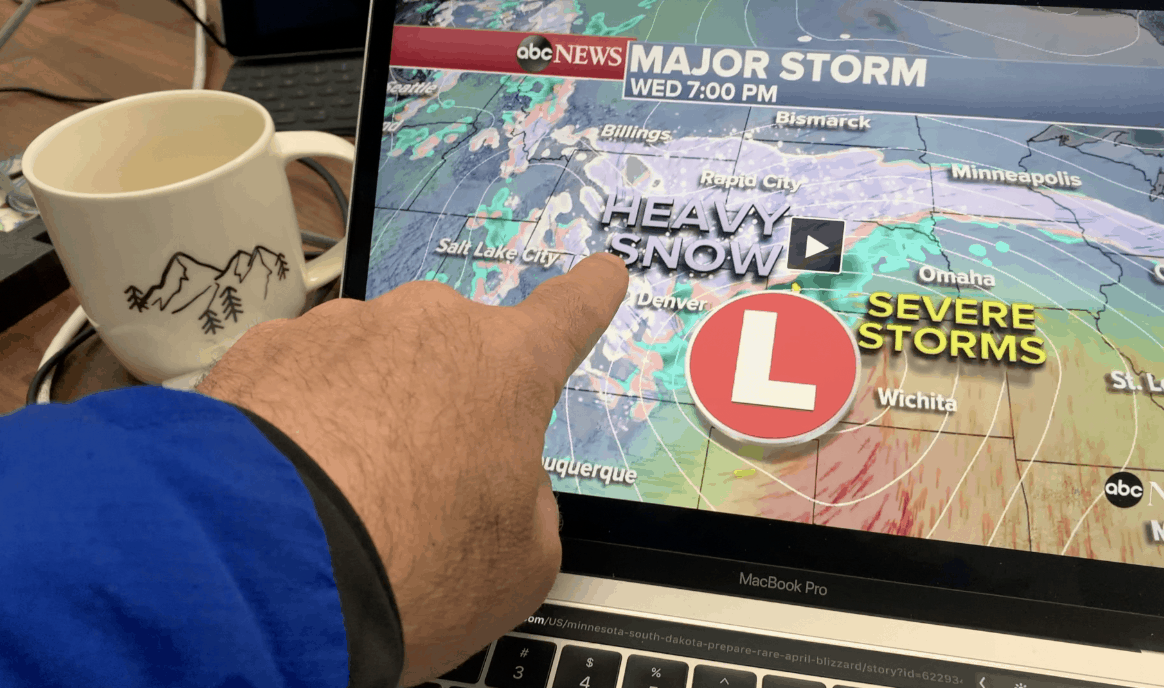
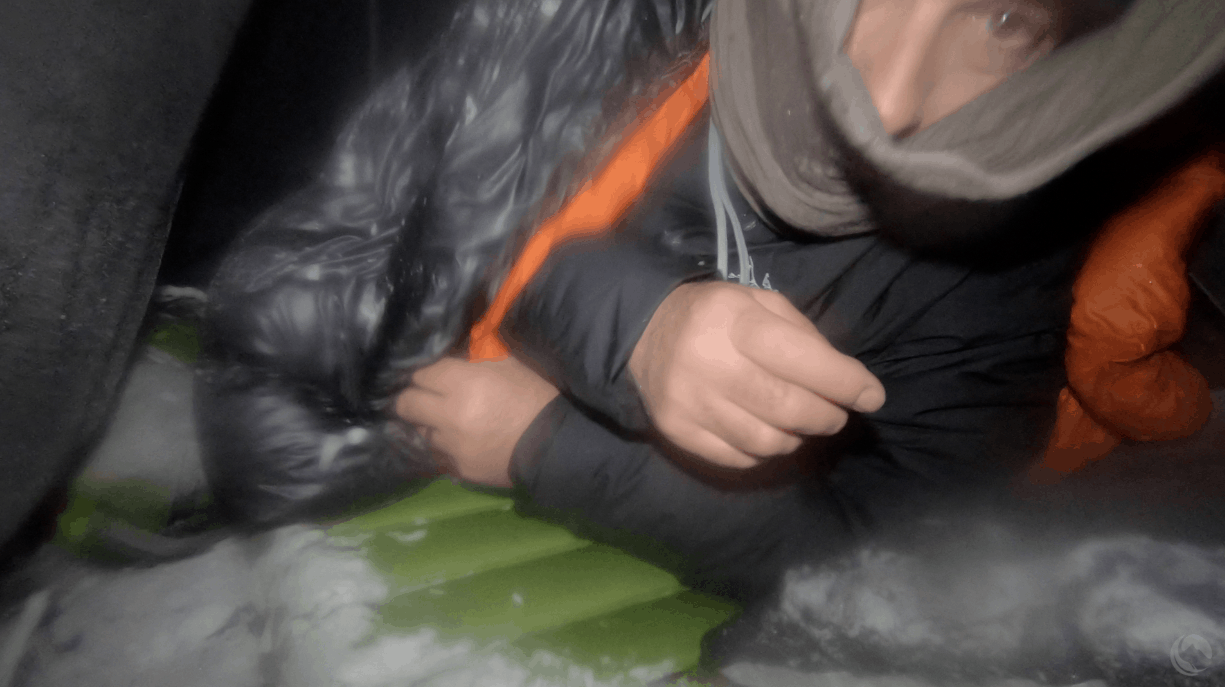
Apparently, the pressure bars compressed a little bit more than what was predicted, and I faced some breezy conditions that were a little more than what my ultralight shelter system could handle, so I retreated in the middle of the night.
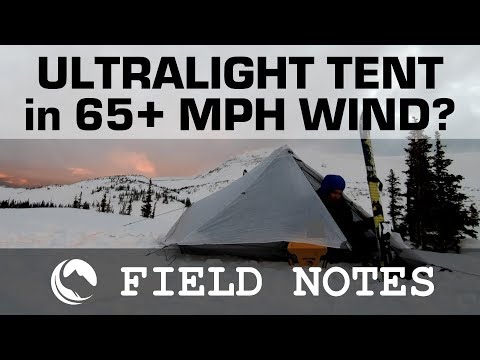
Enjoy the video:
Summary Notes
Route:
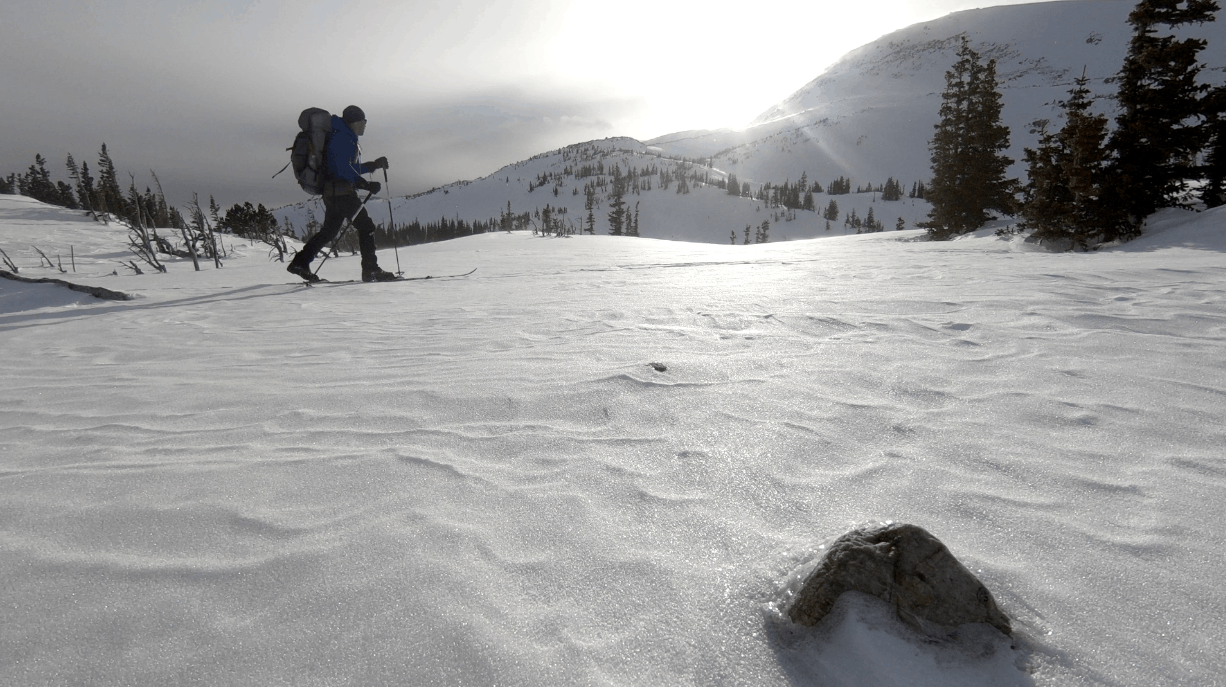
- My route followed snowmobile trails across summer roads for a couple of hours, and then up into the untracked backcountry via spruce forest, subalpine fir, traversing high benches in cliffy terrain, and finally into a glacial cirque at 10,800 feet. I arrived in camp a little more than an hour before sunset.
- My route back down to the trailhead was a little different. Since I was navigating in a blizzard in the dark, I opted for a longer but safer route through less steep terrain, intersected a summer road bed, and then used a summer road network to weave my way back to my original approach route.
Weather:
- Temperatures ranged from about 23 F to 41 F during the trip, with wind chills near 0 F.
- Winds increased from 10-15 mph (gusting to 20+ mph) at the beginning of the trip to 40-50 mph (gusting to 65+ mph) by the time I decided to bail.
- Skies were partly cloudy, with periods of bright sunshine, on the hike in. During the night, I couldn’t see any stars, and the weather devolved into whiteout conditions. I assumed it was a result of a snowstorm, but after reviewing satellite image history upon my return, the night skies were actually totally clear. The source of the whiteout was 100% a result of windblown snow – a ground blizzard.
 Instrumentation:
- I recorded weather data (temp, humidity, etc.) using two Kestrel Drop D3FW devices (one inside the tent, one outside – although from watching the video you’ll see that the conditions weren’t so different between the two!).
- I recorded wind speeds using a Kestrel 5500 mounted on a rotating weather vane that was affixed to the top of a 24 in (60 cm) tall sapling stump with an Ultrapod Mini.
- I was able to monitor weather data from all devices from inside the tent, using Kestrel apps and a Bluetooth connection to my smartphone.
 Gear Notes:
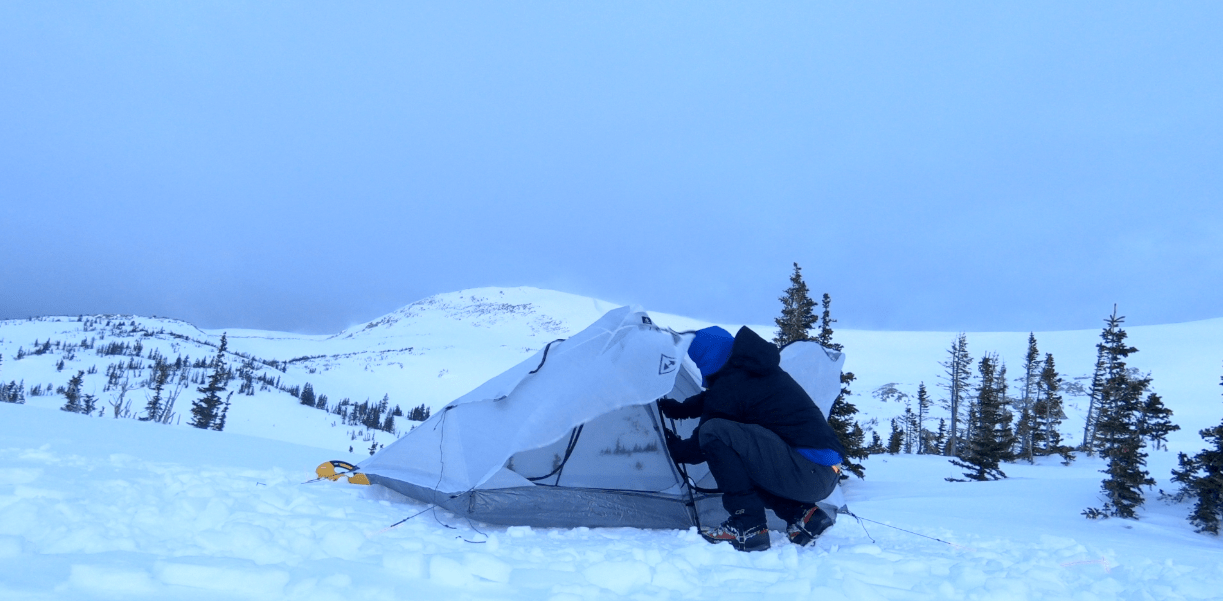
- Shelter: I used the Hyperlite Mountain Gear Dirigo 2 tent on this trip. Admittedly, this isn’t the type of conditions the tent is designed for. In fact, these conditions would be problematic for any three-season shelter. However, I was able to gather some pretty good data and experience with the shelter that should add value to my forthcoming review of the Dirigo.
- Stakes: buried sticks as deadmen, cut using the Suluk 46 Uki Buck Saw (4.5 oz!).
- Guylines: stock HMG guylines attached to 1mm Dyneema cord. I experienced two failures of the cord in two separate wind gusts, which broke the cord. On another guyline, the thin Dyneema cord tore through a stock HMG guyline (the 1mm Dyneema was attached to the HMG guyline with a sheet bend with an extra bight).
- Sleeping pad: A Nemo Astro Lite (insulated) – large size. This is the comfiest mattress I own but it doesn’t have sufficient insulation for sleeping directly on snow at subfreezing temperatures. I should have added a thin foam pad. It’s not as warm as my NeoAir XTherm, but far more comfortable.
- Sleeping Quilt: I used the REI Magma Trail Quilt 30 and wore all of my clothes to bed. The quilt performed like a champ and kept me warm and dry enough, even with wind and spindrift blowing through my shelter.
- Buff: My merino Buff was a critical piece of equipment during the night. I wore it as a face tunnel to keep spindrift out while I was trying to sleep. I would have rather had something like the new Timmermade Waterbear Hood.
- Insulating Clothing (in addition to a thin wool hat, light gloves, ski gloves, ski socks, trekking pants and a merino hoody): lightweight long underwear bottoms, an active insulation hoody, and an Apex-insulated jacket.
- Shell Clothing: the most comfortable WPB jacket I’ve ever owned (I size up one size so I can layer it over my puffy jackets), and some ultralight WPB pants.
- Ski Gear: leather insulated Nordic BC NNN boots, nordic backcountry skis with a wax/waxless base and full metal edges, manual Nordic BC NNN bindings, and lightweight kicker skins.
 Lessons Learned:
- I mostly felt pretty calm during the whole experience. I suppose I attribute that to having experienced these conditions before, having gear (except for the shelter system) that was matched to the conditions, and knowing that even if I retreated in the middle of the night in a storm, I could simply go slow, make decisions carefully, and I’d get out safely.
- I’m very appreciative for a high enough level of fitness that provides me with a lot of reserves to manage adversity when needed, without facing the anxiety that comes with being too fatigued or sore to have bailout options.
- Stormy conditions can manifest themselves at high elevations long before a weather reporter down in town starts to experience them.
Disclosure
- Affiliate links: Some (but not all) of the links in this review may be “affiliate” links, which means if you click on a link to one of our affiliate partners (usually a retailer site), and subsequently make a purchase with that retailer, we receive a small commission. This helps us fund our editorial projects, podcasts, instructional webinars, and more, and we appreciate it a lot! Thank you for supporting Backpacking Light!


Discussion
Become a member to post in the forums.
Ryan makes it pretty clear that he intentionally chose the exposed ridge, knowing that a storm was moving through, to test the Dirigo at its limits. Pretty sound reasoning for an experienced backcountry traveler. The storm ended up being a bit wilder than expected, which has certainly happened to most (all?) of us at one time or another.
Thanks @petersonallen, “Regarding the grommets…
Ryan answered the question in his review and seems to feel that it was due to being on snow, which allowed the poles to push through the grommets. Max Neale’s experience was also on snow so probably a similar reason.
which allowed the poles to push through the grommets.
That is purely and simply BAD (as in incompetent) design if it happened. The pole feet and the grommets should be carefully matched.
Cheers
Sorry, bad grammar: allowed the poles to push the grommets through (the material).
BTW, the poles = trekking poles, not a dedicated set for the tent.
allowed the poles to push the grommets through (the material).
That is just pathetic. I would be demanding a refund as ‘not fit for purpose’.
Cheers
That’s one perspective. Another is that this tents purpose isn’t camping on deep snow.
Or put something under the pole to stop it sinking into the snow. Or when on snow don’t use the grommets, whose purpose seems to be to stop the pole tips sliding sideways (On rock or similar)
I get amused reading the YouTube replies for this video. Over half of them basically scold Ryan for setting up the tent on such an exposed spot. They just can’t seem to grasp that he is a highly seasoned alpinist/backpacker who knows very well not to pitch a tent in such a place, but did so just to put the Dirigo to the ultimate wind test. It’s gotten now to where Ryan responds to all the replies about how foolish he was by saying “please see pinned comment for context” lol
Also, at the end of the video we see Ryan on skis with headlamp on. He says he’s going to head back to the truck and hunker down for the night, but how do we know his cameraman (woman) isn’t nearby with a couple of OR Alpine bivies? I wouldn’t want to go down a mountain at night in gale force winds.
For those of you that indicated that your tent cordage slips in strong winds through Lineloc 3s, Lawson Equipment has now come up with a 2.5 mm Glowire cord that can solve the slippage problem.
https://lawsonequipment.com/Cordage/Reflective-Glowire-p1024.html
From the email I just received from Lawson Equipment:
Specs:

Diameter: 2.5mm (3/32").  Weight is 1.6 grams per foot.   Average Break Strength is 350lbs. & the best part is it's 35% More reflective the 2mm Glowire due to the wider reflective strands.
Surely the long-awaited solution is for some cottage industry to commission Lineloc 1’s, which ideally work with say (1–3) mm diameter cordage. Maybe make them snap-on/snap-off as well (to tape loops)…
Lineloc V with Loop
Close enough.
Thanks, I wasn’t aware of that adjuster.
Those LineLocs are not, ime, all that reliable on string. I use ClamCleats CL266 on my winter tent guys. They did not budge overnight in our 100 kph storm written up in https://backpackinglight.com/when_things_go_wrong/
They work thus, very easily.
They are made in the UK here:
https://www.clamcleat.com/products/line-lok-cleats/mini-line-lok.html
Cheers
Lineloc 3 – after tensioning any size guyline (I use 2.7) I’ve grown accustomed to making a quick “slippery half-hitch” up against the lineloc. Stops slippage, takes half a second. I do it now out of habit even with properly sized line, in case of super winds from da north… I can post a pic if the mental picture isn’t too clear
Would like to try the new Lawson wire!
Roger – yes, the Cam Cleats are popular here in the UK and are well worth considering.
Pros:
Cons:
https://www.youtube.com/watch?v=OI2Mg5BQ_mo
Hi Geoff
Two-handed – yeah, but I have two hands when I am pitching my tent.
Tangles: I ALWAYS have the ClamCleat at the tent end of the guy rope (2nd version in photo above) for that very reason. That does mean my guys are ‘doubles’ – which is better in a storm.
Shortening: yeah, maybe a limit there, but then I never change the distance of the stake from the tent by very much, so it is not a problem at all for me.
I like them.
Cheers
Roger
I agree – they are my choice as well. Reliability trumps all in a bad-weather shelter, and I’m confident that they won’t slip.
But I was trying to present a balanced view of the pros and cons for people who haven’t used them.
I mainly use the single line rig, but to prevent tangles you just move the cleat to the end of the line before storing, which takes no time at all.
For me the only real reason to prefer the LineLoc would be if you can’t live with the max 50% shortening. But like you, that’s no a problem for me with my setup.
The cam cleats, which small version I use on some of my tents with thin cord, are a little unsatisfactory in aesthetic terms – not just appearance, but in terms of functional aesthetics, though I like the glow-in-the-dark. They look like they should be mounted on a surface, not free floating.
I wouldn’t secure a Lineloc 3 with a half hitch. If you need to strike your tent in a hurry and the wind is strong, the half hitch may be under considerable tension, and difficult to release, especially with thin cordage. I have had that happen when the Linelocs had been slipping in fairly extreme conditions as the tent failed, and I had half-hitched them to secure them. Never again.
Clamcleats vs Linkoc3s depends on the tent and the use of the guyline IME.
For guylines that are tensioning the fly sheet but not from the perimeter, they work well.
For guylines that are tensioning the fly sheet from the perimeter, the lack of ability to shorten them completely is a problem.
For guylines that are tensioning the apex of trekking poles, I find it useful to use one hand to pull the trekking pole and increase tension, so I prefer Linkoc3s, though Clamcleats can work.
I would not use ClamCleats near the ground: wrong device. To tension the pole sleeve over the poles down to ground level I use bungee cord and a cordlock. You would think it would slip, but it never has.
Cheers
Hey Robert
Yeah im sure that must’ve sucked, especially with thin line. What kind of tent was it?
I only use 2.7mm reflective pro line from MLD in lineloc3. To be clear I use a “slippery” half hitch not a regular half hitch. There is a little tail to pull to release it quickly. I used this during the polar vortex last winter, the tent was shaking pretty violently all night, and got 18” of snow that I had to periodically whap off the walls… Maybe because the line is the right size and didn’t slip much anyway but the slippery hitch loosened up like usual in the morning. I wouldn’t use a half hitch either… if that is indeed what you did during that crazy storm
I am not sure it matters either way.
There is enough flex in a tent that I can unhitch the guy rope from the stake without touching the adjuster, even if it is jammed or knotted. In fact, I usually pitch the tent by moving the stake to the right position before I stick it in the ground, and don’t make any adjustment.
On the other hand, I could not have undone the adjuster or undone a half hitch after that storm anyhow, because the guys were encased in solid ice to at least a thumb thickness. No kidding! I could unhitch from the stake because the stake was buried and not iced up.
Cheers
I think if the line is already slipping under very blustery coastal conditions and high wind, even a slippery hitch will get jammed up, but I might be wrong. It was many years ago, and the tent failure was from apex seams disintegrating on a then Cuben tarp tent, and I have much earlier described this in other threads, so will let sleeping dogs lie.
apex seams disintegrating on a then Cuben tarp tent
Ouch! Sounds terminal!
Cheers
It was, but don’t want to reawaken that horrible experience. Though I concede the guy line selection was my fault. They only started slipping when conditions got extreme.
Become a member to post in the forums.