



Introduction
In 2020, I worked as a backpacking guide for teens and young adults. During our dusty, summer expeditions through the Utah desert, many female clients, both new and experienced in backcountry travel, came to me for help regarding vaginal irritation and infection. Despite this being a common issue, sufferers always felt embarrassed and alone in their predicament. Additionally, girls who experienced discomfort related to feminine hygiene often expressed an aversion to backpacking by the end of the trip, stating that they never wanted to do it again.
The additional hygiene requirements associated with vaginal health can be a serious deterrent for women, girls, and genderqueer folks looking to participate in backcountry sports. In this article, I aim to provide strategies for preventing vaginal infection in the backcountry and to dispel the stigma around the discussion of intimate hygiene in backpacking and thru-hiking.
Vaginal Infections and the Microbiome
People with vaginas are at a higher risk of contracting infections including urinary tract infections (UTIs), yeast infections, and bacterial vaginosis (BV). This risk increases in the backcountry due to a disruption in hygiene habits.
Contracting one of these infections at home is usually easy to deal with, but what happens if you’re in the backcountry with limited access to medical care? At best, a vaginal infection could mean a premature end to your outdoor adventure. At worst, an untreated UTI could result in a kidney infection. A kidney infection can lead to a life-threatening case of sepsis in as little as twelve hours (Dumain, 2023). In the long term, a chronic, untreated kidney infection can cause permanent kidney damage in a matter of months (NIH, 2017). When it comes to preventing complications, treating UTIs promptly is imperative. (University of Pennsylvania, 2022; Porat et al., 2023; National Kidney Foundation; Doganis et al., 2007).
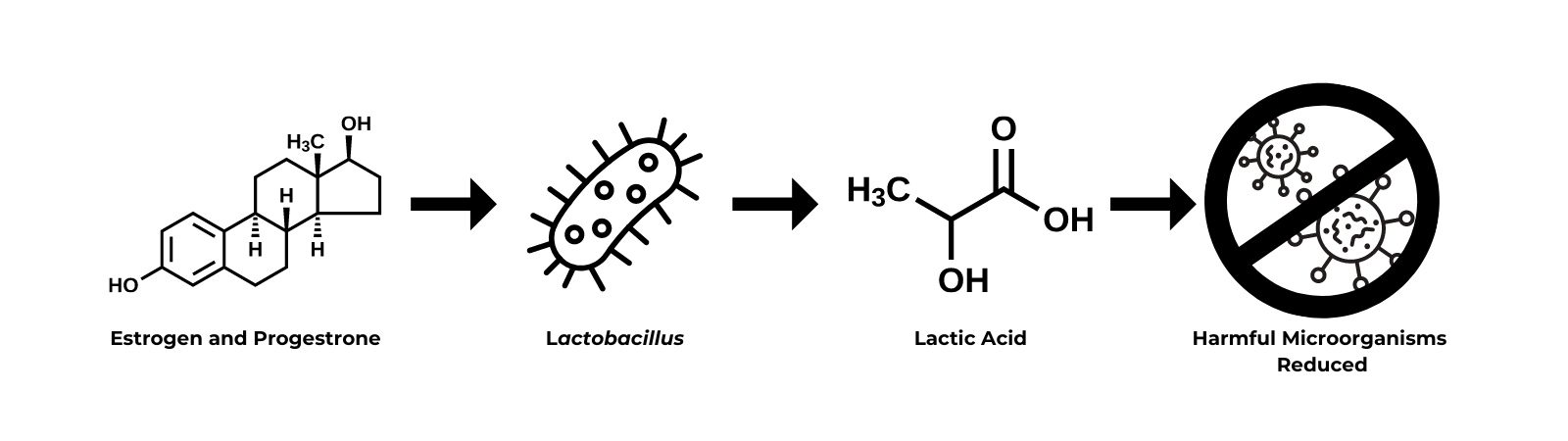
UTIs, Yeast Infections, and BV all result from an upset in the delicate balance of the vaginal microbiome.
Lots of factors can upset the balance of the vaginal microbiome and many of them are associated with hiking and backpacking. Changes to hygiene patterns, increased moisture, and dietary changes can all lead to changes in the composition of the vaginal microbiome (Noormohammadi et al., 2022).
Hormonal changes associated with menstruation and aging can also cause an upset to the balance of this delicate system. After menopause, decreased estrogen and progesterone levels result in a decrease in the presence of Lactobacillus. Fewer Lactobacilli create a more basic vaginal climate, which promotes colonization by harmful microorganisms that cause infections (Kim & Park, 2017). Estrogen levels rise and fall throughout the menstrual cycle. These monthly hormone fluctuations have also led to yeast infections, UTIs, and BV in some people (Reed & Carr, 2018).
So, what does all of this mean for women and genderqueer folks in the backcountry? If you struggle with vaginal infections while backpacking and thru-hiking, you’re not alone. If vaginal infections in the backcountry have suddenly become a problem for you due to the onset of menstruation or menopause, this is also perfectly normal. Now that we understand the cause of these conditions, let’s discuss ways to prevent them.
Member Exclusive
A Premium or Unlimited Membership* is required to view the rest of this article.
* A Basic Membership is required to view Member Q&A events


Discussion
Become a member to post in the forums.
Companion forum thread to: Feminine Hygiene: Avoiding Infections
Sarah Ortiz discusses research based strategies for avoiding urinary tract infections, yeast infections, and bacterial vaginosis in the backcountry.
Thank you for this article, Sarah. Huge amount of work went into it, and is a topic not talked about much!
Ive found being selective with underwear and pee wipes really important for me.
One of my friends has a lot of problems with urinary infections and vaginal irritation when hiking- I will send a link to her too.
Cheers
Great work Sarah! This is something I get asked about quite often and it’s nice to have a well-written authoritative source to point people to.
My personal strategy is to use hypoallergenic wipes (Cottonelle are inexpensive and come in small, convenient, ‘travel’ packs) every time I pee and to have a ‘Buff’ bath (sponge bath with a Buff that is easy to wash and dry) every day or so when I change into sleep layers.
You can also use individually wrapped, light, panty liners changed every 6 hours or so to keep things cleaner, dryer, and fresher on short trips or paddling adventures where weight and space are less of an issue. This makes washing underwear easier and faster.
This was very helpful, thank you!
Great article! Thank you!
I find it essential to wear wicking, quick-drying underwear during the day but also to let my privates air overnight in merino base layer bottoms; a loose synthetic base layer doesn’t breathe enough to keep me, as a side-sleeper, feeling healthy…. I give wipes a pre-trip rinse at home and let them air dry, then add a squirt of water in the field. It takes mere minutes to prep enough for weeks of hiking…. After having an allergic reaction to anti-microbials in bike short chamois, I will never wear anti-microbial underwear! And half of a 100% cotton bandana makes a perfect pee rag, which I trust sunlight to sanitize, no chemical treatment needed.
This is an excellent article that addresses an often-overlooked topic critical to women’s health in the outdoors.
Would it be possible to translate portions of the article into Chinese and share them within a Chinese-speaking community? I will clearly credit the original source.
Become a member to post in the forums.