

Executive Summary
In this case study, I describe the process I went through after sustaining a nasal fracture during a fall in the backcountry. I share my first-hand triage sequence, my reasoning for deciding not to evacuate, and how I monitored my condition overnight. This account combines field notes, medical logic, and self-reflection, illustrating how structured thinking under stress can prevent panic and facilitate rational decision-making.
- Patient: Ryan Jordan (author)
- Incident Date & Time: September 19, 2025 @ 3:40 PM US MDT
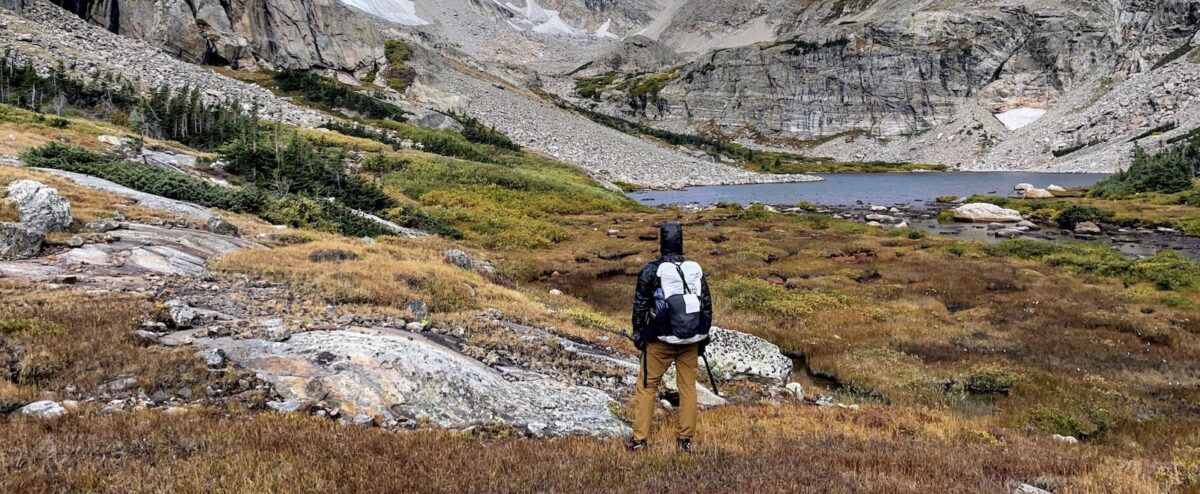
- Location: High alpine lake, 11,300 ft ASL, Colorado Rocky Mountains
- Conditions: Fair weather, late afternoon, dry talus terrain
- Companion: Hiking with one partner
Timeline of Events
| Time (local) | Event |
|---|---|
| 3:40 PM | Fall and facial impact. Immediate heavy bleeding from the nose and throat. Remained conscious and oriented. |
| 3:41 PM | Moved to a safe, seated position. Leaned forward to maintain airway, applied direct pressure to nostrils. Initiated box breathing to manage stress. |
| 3:45 PM | Conducted rapid primary survey (ABCs). Bleeding reduced after 15 minutes. No other injuries detected. |
| 4:00 PM | Secondary survey completed. Used phone camera and self-palpation to comprehensively assess face, skull, and cervical spine. No signs of concussion or neck injury. |
| 4:10 PM | Performed inspection of nasal cavity with phone light. No septal hematoma observed. Bleeding slowed to steady seepage. |
| 5:00 PM | Pain minimal, swelling localized to nasal bridge and left side; inflammation and redness declining, indicating that most of the trauma was related to temporal blood accumulation in soft tissues. Decided to remain at the scene and camp. |
| 6:00 pm –12:00 am | More accurate and careful evaluation of septal hemotoma with cotton swabs, flashlight, and cell phone camera confirmed negative. Hourly reassessments. Gauze changed every 2 hours. Bleeding and pulse gradually stabilized. Swelling and redness decreasing. |
| 12:00 AM | Removed gauze, confirmed clot formation and airway patency. Slept intermittently from 8 pm to 12 am due to mouth breathing. |
| Next morning | Swelling present but decreasing. No active bleeding or neurological symptoms. Hiked out as planned. |
Scene and Mechanism of Injury
Mechanism of Injury: Contributing Factors
The fall occurred on what I considered easy terrain – flat, blocky talus interspersed with tundra patches. The rocks were stable, dry, and uniform, so I wasn’t moving with the same caution I’d apply on a slope.
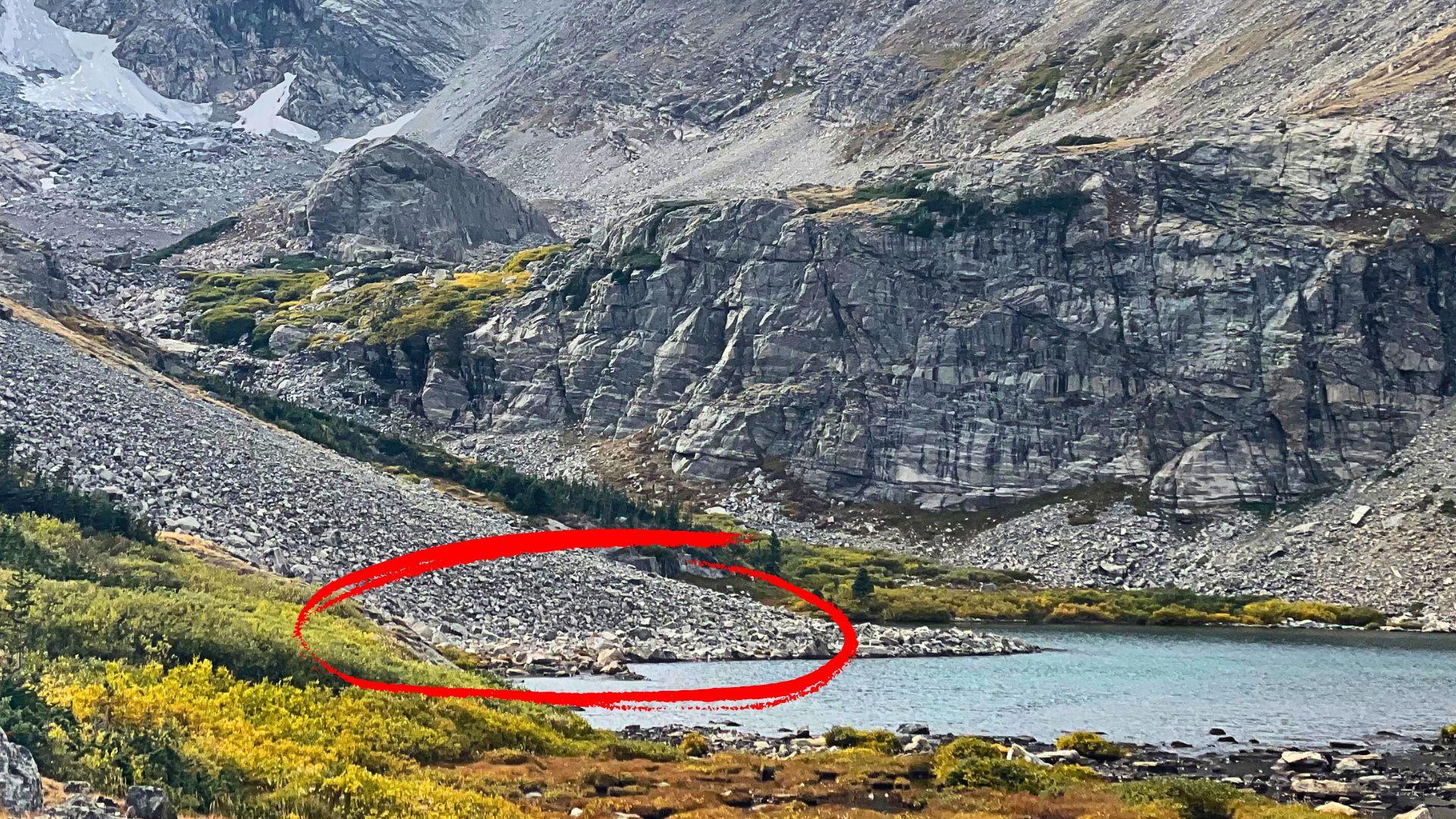
As I stepped up onto a refrigerator-sized boulder, both trekking pole baskets caught simultaneously on the lip of the rock. My wrists were still looped into the straps (we were traveling across variable terrain and transitioning frequently from poled- to non-poled use), which meant I had no chance to release the poles or break my fall with my hands.
Member Exclusive
A Premium or Unlimited Membership* is required to view the rest of this article.
* A Basic Membership is required to view Member Q&A events


Discussion
Become a member to post in the forums.
Companion forum thread to: A Case Study in Backcountry Emergency Triage and Decision-Making: Fall-Induced Facial Trauma
Ryan Jordan details a fall-induced facial injury, the triage process, decision not to evacuate, and critical self-care lessons.
Did you need the box breathing? Was it helpful? I use breathing frequently when I hike – for log crossings (which I loathe), sketchy exposed trails, and walking under a lightning storm. I don’t think to do it when I injure myself, but I probably should.
Rocks are the worst. Hope it heals well.
It’s healing well, but blowing my nose isn’t back to normal due to tissue damage; the body needs to rebuild the nasal lining, which was disrupted by the trauma. No more tenderness; the cartilage seems to have fully healed. I feel like I’m at 95% at this point, 5 weeks post-injury.
As for the box breathing, did I need to do it?
I see this as one tool, something to pull out of the toolbox when needed. Within seconds of the fall, my heart rate went through the roof, I started sweating, and I started panicking. I knew this as the early signs of shock. And just the muscle memory of having felt that before triggered me to do a breathing exercise to try to calm down. So, pinch my nose to halt the bleeding, close my eyes, and breathe for a few minutes. The goal was to give me some clarity and figure out what to do next. This time it worked out ok, and reversed my anxiety. I’ve done this a few other times with wilderness injuries (successfully), and admittedly, I’ve never had a wilderness injury serious enough to send me into severe shock.
I was bitten by a feral kitten about 30 years ago. The little rascal pierced its fang right down to the bone on the tip of my finger, and I went into pretty severe shock right away and fainted – I guess I feared the inevitable rabies shots that were coming! Anyway, shock is a real deal and has a huge impact on your ability to self-manage an injury, so doing whatever it takes to interrupt it before you engage your mind into problem-solving mode is probably a good investment.
Sorry to hear of your accident and glad you are on the mend.
After an accident, anxiety, panic symptoms and vagal reactions should not be confused with true shock which is a life-threatening manifestation of circulatory failure.
https://www.ncbi.nlm.nih.gov/books/NBK531492/
I’m not a doctor, but I think that’s called vasovagal syncope, and it’s not the same as what is colloquially called “going into shock”, where you raise someone’s legs etc.
I had a friend in college that fainted when she was frightened – like if you snuck up behind her and said “boo.” And I had another friend who had a dog with the same condition.
Psychological shock. Fight, flight, freeze, or faint.
Like those goats I’ve heard about.
Like a health care executive in the oval office.
Ryan – Interesting write up! Do you have a WFA, WFR, or WEMT? It’s obvious by your use of the Patient Assessment System that you have wilderness medicine training and I assume that NOLS is practically your neighbor and you got your WM training through them.
I just got my WFA through SOLO but I’m considering “upgrading to WFR in May. SOLO is willing to give me “credit” (time and $$) toward the WFR if I take it within 12 months.
The list of 1st aid materials used suggests you carry slightly more than a minimalist first aid kit. Care to share what your standard FAK is for trips into the mountains? Mine is, admittedly, often decent with meds but very light on gauze, hydrostatic dressing, etc.
Wilderness Medicine training doesn’t come up here much. Our discussions are very often gear centric. I’d be interested in hearing from others of times they had medical training and were grateful to have it when an incident occurred and they needed to rely on it. Or alternately, times people experienced an incident in a wilderness environment and wished they had more medical training (WFA, WAFA, WFR).
Interesting and enlightening writeup. I had a similar (not nearly as bad) fall while traversing the Great Smoky Mountains along the AT a couple weeks ago. At the end of my 2nd 32 mile day, on an “easy” section of trail, only 2 miles from the trailhead, I tripped on loose rock covered by leaves. I believe cognitive fatigue combined with darkness contributed to the fall. Although “graceful”, my face slid across the ground when I rolled, splitting my face along the side of the eyebrow. It was dark, and I was solo. My wife was waiting for me at the trailhead two miles down the trail. I thought I was fine until I touched my now wet with blood face. I immediately applied pressure and used my shirt as a compress. I used my phone and headlamp to inspect the damage (easier said than done in the dark). I also garmin messaged my wife (also carrying a messenger) that I had fallen and was assessing. I felt better with a comms path established. Repeated use of Excedrin during the day made clotting slower than I would have liked. I eventually regained my composure, taped everything up, and completed the walk to the trailhead. This was the 1st time I’ve experienced a medical issue while hiking. Having my med kit accessible in my hip pocket helped a lot.
Most of my more serious injuries have been mountain bike related, not hiking related. I do a lot more single track riding than I do backpacking. It’s just hard to get out and do a lot of backpacking from SE Michigan. That being said, mountain biking has the potential to really mess up a rider. Broken wrists, clavicles, and fractured ribs are probably the most common serious injuries, but I’ve seen a rider being loaded onto a stokes basket to get carried out after a bad crash.
I just happened to have an incident of my own about 4 weeks ago. I was coming down a narrow trail that was open to 2-way traffic as it was a connector trail between loops in two different State / County parks. Slightly downhill, I was probably going too fast, when 2 riders came around a bend. I figured I better move over so that we could all pass. My handle bar caught a thin sampling, which turned the bars sideways and I went over the bars face first, landing with my torso on the bars. It totally knocked the wind out of me and it took me a few minutes to recover.
Here’s a link to a shirtless photo of me showing the aftermath across my torso:
https://photos.app.goo.gl/b8G142KvjWuNK9zA7
I don’t think I fractured any ribs but I most likely bruised several. It was uncomfortable to roll over in bed for about a week, and certain movements at the gym were uncomfortable for considerably longer.
I learned a valuable lesson about shock or shack adjacency, that there’s no self recognition while going through it.
All my life I’ve engaged in high impact or high risk activities, whether sport motorcycling for 30+ years with some racetrack time or high impact sports. I’ve had more than my fair share of injuries and my response was always first “you idiot” followed by an almost clinical “lets get on with it”. No drama or panic.
Which is why I was really surprised one day after a mishap on a fall motorcycle ride in the country. My bike went into a deep tank slapper, I went temporarily blind, then momentarily passed out while in the midst of a high side. This is a pretty accurate recreation except mine was precluded by violent bar shaking tank slapper and then I landed on my scapula after being launched many yards.
My reaction was same as past history “you idiot… get on with it”. Why wouldn’t it be? I saw my bike off the side of the road in a culvert next to the forest and when I reached down to pick it up by the handle bars, my left arm wouldn’t even budge. Brain sent signal, arm did nothing.
I had absolutely no idea that I had even injured the arm. It was a very remote stretch of road and I was lucky to quickly hitch a ride to a diner 15 miles away. When I got there, I couldn’t locate my wallet and assumed the guardian angel that took me there and had since left stole it and so I asked the proprietor to call the police. Just batshit nuts.
Of course, the wallet was in the tail pack like always. Some things in my mind weren’t working normally but everything seemed normal. I was doing all the right things in my mind: slowing things down, taking the correct steps to assess the situation, had zero fear or panic. But it didn’t matter. My mind went into ‘auto mode’ and decided the reaction for me and I had no control over the details.
In the end I had a 4″ crack down my scapula and no use of the left arm for about 6 months. 18 years later its still a major factor in my backpack choice.
A lesson I took here for backcountry travel is that if suffering some significant trauma, look for signs that your decision making or perception don’t make sense. Once confirmed, second guess ALL your major decisions.
It also points to the criticality of having a fellow traveler if engaging in a high risk route. Self-reliance is great but you may not even know your mind is scrambled.
precluded-> preludedNot RJ, but I do carry a more substantial FAK than many. I built it around things I could not quickly and easily reproduce in the backcountry while hiking. There is very little redundancy in my gear so I try to bring lightweight options which can prevent me from having to destroy one piece of gear to manufacture a subpar version.
Meds:
Supplies
Foot/skin care
Gear Repair, etc
As you can see, my main priority is controlling blood loss and covering burns. I cook over a fire regularly, and I frequently travel through active hunting areas, accidents happen. I have heard many stories from other hikers of irresponsible shooting in some of these places. I used to carry quick clot impregnated gauze pads, an Israeli bandage, and a vented chest seal, but have thinned them out for the most part. Sometimes I will reintroduce one or another if it is the height of general gun and I am going somewhere hunters are likely to be very active. It is not uncommon to see people hunting with dogs, from vehicles, in stands and blinds, and on foot all in the same day here.
Edit to add – This BPL thread by Patrick Craddock is very informative and hits on wound care a lot. Irrigation, tetanus vaccination, foreign body removal is highlighted as very important. I have not added a 10mL syringe to my kit, but I do consider it. I think in a situation where I had significant debris, I would consider melting/poking a small hole in a water bottle lid and spraying water through it, or, I would use the ziplock method described in the thread.
Someone on oregonhikers.org said they had a heart attack while hiking. They chewed one regular aspirin. Maybe that saved their life.
I’ve now been taking a few aspirin with me. Adult size 325 mg. Not the ones with a coating to delay absorption.
You should probably dial 911 first and tell them that you’re going to chew an aspirin. Or satellite message. Don’t take medical advice from random people on the internet : ) You wouldn’t want to take an aspirin if you had a bleeding stroke.
Become a member to post in the forums.