


Trust Disclosures (Beta)

- Backpacking Light purchased all products featured in this review unless otherwise noted. Black Diamond, Biolite, Fenix, and Nitecore occasionally provide complimentary samples (including lighting and other types of products) to Backpacking Light, but Backpacking Light has no obligation to review or mention them in any editorial coverage.
- This review was produced with complete editorial independence and without any involvement from any brand featured in this review.
- This article contains affiliate links to product brands featured in this review, as well as other online merchants.
View the GearTrust audit report for this article.
Backpacking Light does not accept financial compensation for product placements in editorial coverage, including reviews. Learn more about Backpacking Light Trust Standards.
Introduction
Diverse backcountry environments, weather conditions, and activity use cases highlight the need to carefully consider lighting for navigation and campsite ops at night. This report examines modern backcountry lighting solutions, including the technology, design, and specialized features available in today’s market.
Lighting technology has evolved rapidly to deliver more efficient, powerful, and versatile options. Battery advancements now support longer burn times, brighter beams, and more versatile recharging options. We also delve into housing and lens designs, which have become increasingly refined for durability, impact resistance, and more precision in beam shaping.
In this guide, you’ll find detailed insights on specific lighting models, including a breakdown of their most unique benefits, limitations, and ideal user profiles.
For the first version of this report, the focus will be on headlamps. Future updates will incorporate handheld flashlights.
LEARN MORE ABOUT LIGHTING DESIGN, TECHNOLOGY, AND USE CASES: See our Flashlights & Headlamps: Technology, Design, and Performance Masterclass.

Updates & Corrections Log
- 2025/05/14 11:00 AM MDT – Original Report Published.
Have feedback, a correction, or a fairness concern? Please see our editorial corrections policy.
Recommended Products
Two products are recognized for their exceptional performance-to-weight ratio and manufacturing quality based on LightBench testing, long-term field testing, and engineering and design analysis. Read the full report for more details, and how they fit into the overall market.
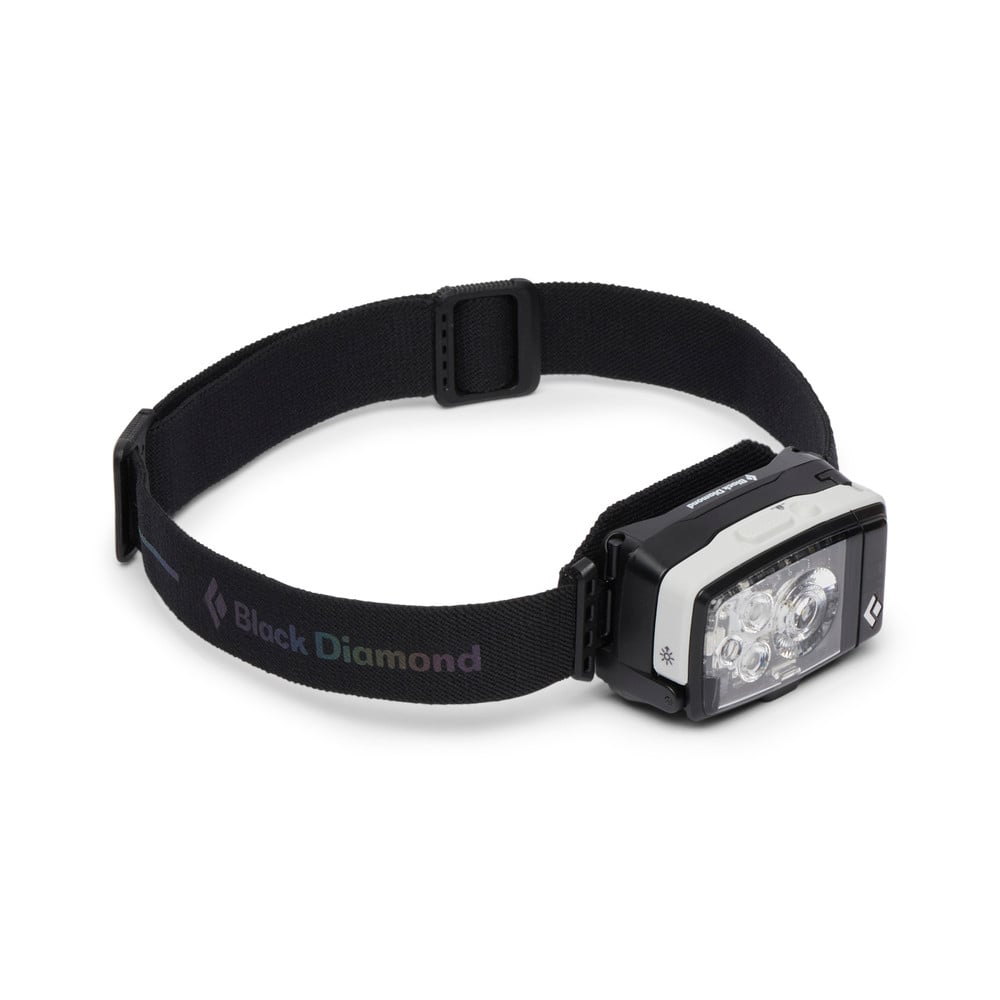
An extreme-conditions headlamp with some unique features, including a 2200 mAh battery that remains stable against the headband because the lamp housing is a separately-pivoting unit. Burst mode provides 1100 lumens for 10 seconds, then turns off automatically. More than 4 hours of light in high (600 lumens) mode. Waterproof and submersible (IP67). 3.8 oz (108 g).
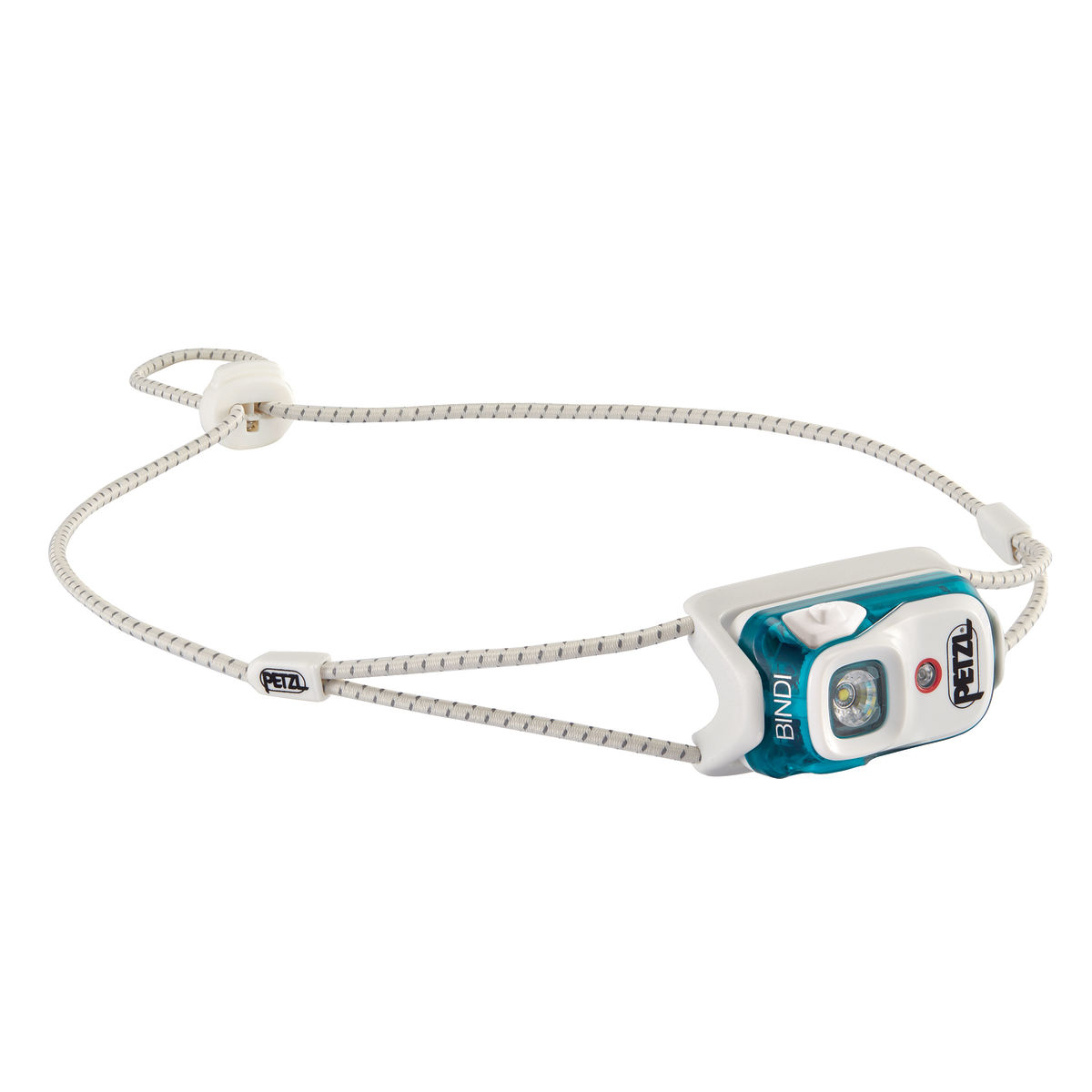
One of the lightest rechargeable headlamps available. On its highest setting, it throws a 200 lumen beam up to 36 m for 2 hours. On its low setting, battery life extends to 50 hours with a 6 m, 6 lumen beam. Includes both white and red LED lighting.
Featured Products
The following products are featured in this report, with LightBench test results:
- Abusvex B0CX4F8HFS
- Biolite Dash 450
- Biolite Headlamp 325
- Biolite 800 Pro
- Black Diamond Deploy 325
- Black Diamond Distance LT 1100
- Black Diamond Sprint 225
- Black Diamond Storm 500-R
- Coast FL13R
- Coast FL1R
- Cosoos Mini
- Fenix HM50Rv2
- Flextail Tiny Helio 600Z
- LEDLenser NEO1R
- Montbell Compact ML
- Nitecore NU 20 Classic
- Nitecore NU 25 UL
- Petzl Bindi
- Petzl eLite
- Photon Freedom Micro
- Princeton Tec Byte
- Silva SMINI Fly
- Silva Terra Scout X
- Thrunite TH20 Pro CW
- Zebralight H54FcN
Acknowledgments
Isaac Simons contributed product research to this report.
Market Analysis
Backcountry Lighting Use Cases
Backpackers use lights for night hiking, task lighting, area lighting, and beacon lighting.
Lighting needs for night hiking on trails differ from those for off-trail navigation.
Member Exclusive
A Premium or Unlimited Membership* is required to view the rest of this article.
* A Basic Membership is required to view Member Q&A events


Discussion
Become a member to post in the forums.
Companion forum thread to: Backcountry Lighting Technology and Products: State of the Market Report and Gear Guide
Comprehensive guide to backcountry lighting technology and products. Learn about headlamps, lumens, battery types, and the best models for hiking and camping.
Note that all switch locks are not effective. I had BD headlamp that had single button. Pressing and holding the button for five seconds or so locked the light off. Unfortunately, pressing and holding it for five seconds or so unlocked the light. This happened several times while the light was in my pack. I had to get a plastic soap dish to carry it safely in my pack. My current BD headlamp has two buttons which you must press and hold at the same time to lock and unlock the light. So far that has worked.
Thanks for this.
I like the light bench number for aquick comparison and a measure of overall lighting ability. What helps me set correct expectations (and selection) are graphs of output level vs time at each intensity level the light supports. This is super useful because I typically use my light on 3-4 levels over the course of the trip.
One things which I have found very helpful are rechargeable headlamps which will run from external power. If every rechargeable supports this it not worth calling out. But if not all of the recharables do passthru, it would be an attribute worth noting.
The nu25ul supports this. I find the buttons non intuitive though. It’s too bright red light is toned down to the same level as the nu20 classic by covering one red led with electrical tape.
For winter night time snowshoeing I use the nu25ul, it has a nice flood. The nu20 classic has too tight a spot beam but it’s easy interface and rational red light make it my go to for camp use if I don’t expect to night hike
For deep cold use in the Adirondacks where ultra long battery life is a safety feature, I picked up a Fenix hm62-t. 4.4 oz but about 1 to 1.5 oz lighter than lights of a similar capability, due to it’s magnesium body. 150 lumens for 11 hours, but any LIo battery run time will be much less when temps dip below -10c so this reserve is a big factor for safety if stuck in the cold. I also love that it takes cr123a Lithium batteries, which have the best cold resistance. That’s a pretty unique feature and made it an easy decision over the swift rl2, for this specialized use
If you are going to use your headlamp in avalanche terrain, I suggest testing it with everyone’s avalanche transceivers. You want to make sure the electronics in the headlamp do not interfere with the avalanche transceiver. There have been a few headlamp “recalls” for interference. Black Diamond used to test for interference, I do not know if they still do. Does anybody know which companies currently test their headlamps for avalanche transceiver compatibility?
excellent article. The human eye sees movement and has better depth perception in the same range as natural light. This means that there has to be some yellow in the light. That’s the reason hunters prefer sunglasses with a yellow tint. You do not need as much light if it is in the 4000 to 5000K range. Beyond this the light has to be significantly brighter for the same effect on your vision. Car manufacturers choose about 4700K for their lights for this reason. MD,MPH
I use the Petzl Bindi as my headlamp and the Nitecore Tube as my backup light. The Tube weighs about the same as Photon Freedom but it has a rechargeable battery. I find this much easier to deal with versus the coin batteries. It also puts out more light.
Be nice to see an update to the Bindi, its now nearly 8 years old? The Petzl single button interface (that is now a couple of decades old across a plethora of models…) still beats anything I’ve tried from Black Diamond, Nitecore, or Fenix. Some of those interfaces are an absolute pain in the butt (Fenix OMG…current NU25 jeebus) and over-complication just for the sake of it.
Bring on USB-C and a miniscule performance improvement (can’t be hard with newer Lithium chemistries) to it and I’m sold.
I feel fortunate to still have a CR123 Zebralight headlight (H32w). CR123 batteries are 1550mAh, the tint is wonderful, runtime/weight is better than most lights, 6 brightness levels to choose from quickly, and it doesn’t stick very far off my head in usage. If I really need a rechargable headlight, they make 16340 batteries that recharge by USB-C. But the CR123 batteries are also used in my steripen.
Nitecore HA11 might be an interesting one to put through these tests. It sounds like its reasonably popular amongst trail runners as it steps down to and then holds a reasonable light. Plus the price and weight are quite reasonable. Replaceable battery can also be a plus.
Looked into the HA11 last winter and found some test results here taken with 2400mAh NiMh, not nitecores recommended 1100mAh rechargeable (in the field) LiI
2.2oz with battery
The spot is a bit tight, but it looks solid
“Rechargeable, replaceable batteries are useful for lighting use cases requiring several hours of continuous use that demands battery swapping to avoid recharge delays.”
This right here. To not have this as a top priority is a serious mis-prioritization IMO.
You go into the night, knowing that you can rely on your headlamp, and….whoops, battery was low from the last trip. Now what? Wait 30min for it to recharge from your power bank? Much better to have hot swappable cells like 18650 headlamps.
Yup. In my search, Fenix HM62-T hit the sweet spot of lowest weight, longest battery life, strong enough beam and low enough red/white brightness for reading maps. Its magnesium body lowers weight vs the competition. Large headband adjuster dial that are mitts friendly. Its my go to in the winter.
Batteries lose capacity in cold and the 18650 has enough reserve to survive that and still go all night long in winter. You only need to carry an extra battery if using the really high brightness modes and are at risk of all night hiking.
In the past I also used swappable 18650 for winter trips that needed long running bright light (Zebralight H600). The other approach is to use a headlamp which can be powered by USB a carry a power bank inside your coat with a cable powering the headlamp.
[edited for tone]
I considered that but I think uncorded 18650 has some distinct advantages
I find corded headphones in summer fussy, needing to run the cords through garments. In winter with mitts on I appreciate not having to deal with cords and taking gloves off that in reallly cold temps could be an issue.
I also do a lot of bushwacking and cords get caught on branches.
There are also technical advantages to not charging on the go in winter. It stresses LiI batteries to charge them below freezing. The charging battery should also be kept above freezing (in a cozy in a bum pack would work but fussy).
18650 properly sized for capacity (you can get them with huge capacity these days) will go all night and IMO is a much more practical solution
If I’m skinning at 5am, I have a good rechargeable headlamp with lots of features. But for 3-season backpacking, I typically just carry a headlamp for light occasional use and a potential emergency, not heavy nighttime hiking. So for me, nothing was quite as convenient, light, and compact as a retractable-cord coin-battery headlamp. Obviously, everyone else hated them and they are all gone. ☹️
Dan: the Nitecore Tube v2 with a clip attached (like Philip did here) might fill your gap. I love mine for your use case, posted some run time figures there. I use it early spring before bugs are out and sometimes in the fall. Bug season I like having a red light but if you don’t care about that, you could run it 3 season.
Thanks for that link, David, I missed your response until now.
For winter nights in my tent I prefer my CANDOIL oil lantern in a converted candle lantern. The oil can with wick is cleverly designed to substitute for the candle and burns far longer than a candle. I provides light for reading and a bit of warmth for the Moment DW solo tent. Winter nights are long and my lantern lasts as long as I need it.
Hi Eric
Nostalgia, nostalgia … Yes, they are attractive.
Photo?
Li AA single and single white LED: 52 g (1.83 oz), MYOG
No press-button, for reasons others have mention. Micro-slide switch, does not get ‘bumped’.
Cheers
The Petzl Swift LT is a trail running lamp, 380 lumens, 3 lighting levels, even wide beam, red light, off lock, USB-C charging. All for 43 grams. Hardly more than a Bindi but for me clicks all the boxes.
That LT is nice, huge 800mAh battery. Nitecore also updated their NU25Ul to an MCT with multicolor leds, slightly larger 700mAh battery. I like that it has spot and flood vs just flood of the Petzl but if the Nitecore buttons are still a mess, the Petzl looks like an easy go to. Headlamp tech is progressing quickly.
Yep, it’s a nice headlamp, but I prefer to avoid the big strap/cord. The old e+lite with retractable cord was absolutely perfect for me, I can just toss it in a waistbelt pocket. I’m still using mine – and long may it last!
As a caver, I absolutely do not understand the “Ultralight” obsession with headlamps. It’s a life-safety critical piece of gear in caving, and I would imagine it is nearly as critical for back-country use, especially when things go south.
An easy trail on a clear, moonlit night is one thing. Getting caught in the dark, in a storm, in rocky territory is another.
I am of the very strong opinion to ignore the weight of the headlamp, and instead, look for something robust, with a removable/swapable battery. In my case, that was a Fenix HM61R-V2, which uses an 18650 battery. It’s round body offers the advantage to be able to point the light “up”. Handy for when you need to crawl, and your head is pointing down, but you need to look in front of you. This might sound silly for hiking, but try it sometime. In steep terrain, it may make lighting the path up/ahead of you easier.
Also of note – models with a removable battery, often have a thread-on cap for the battery compartment. Usually, loosening the cap just a 1/2-turn, is enough to prevent them from coming on accidentally, draining the battery prematurely.
My spare headlamp is a Fenix HM23r, single-AA battery, that gets worn like a necklace. I would consider it lightweight, but it’s also IP68 rated, has decent battery life, but most important, it’s always at-hand, and I never have to look for it, or worry about it coming on by accident in my pack…
Haha, I will remember this the next time I’m caving. :-)
Become a member to post in the forums.