


Trust Disclosures (Beta)

- Backpacking Light purchased all products featured in this review unless otherwise noted. Black Diamond, Biolite, Fenix, and Nitecore occasionally provide complimentary samples (including lighting and other types of products) to Backpacking Light, but Backpacking Light has no obligation to review or mention them in any editorial coverage.
- This review was produced with complete editorial independence and without any involvement from any brand featured in this review.
- This article contains affiliate links to product brands featured in this review, as well as other online merchants.
View the GearTrust audit report for this article.
Backpacking Light does not accept financial compensation for product placements in editorial coverage, including reviews. Learn more about Backpacking Light Trust Standards.
Introduction
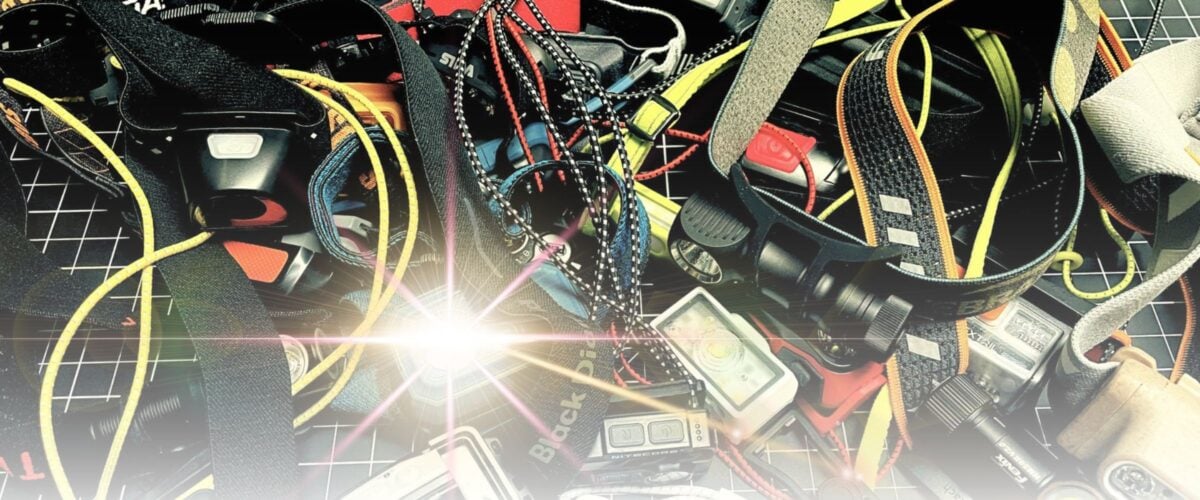
Diverse backcountry environments, weather conditions, and activity use cases highlight the need to carefully consider lighting for navigation and campsite ops at night. This report examines modern backcountry lighting solutions, including the technology, design, and specialized features available in today’s market.
Lighting technology has evolved rapidly to deliver more efficient, powerful, and versatile options. Battery advancements now support longer burn times, brighter beams, and more versatile recharging options. We also delve into housing and lens designs, which have become increasingly refined for durability, impact resistance, and more precision in beam shaping.
In this guide, you’ll find detailed insights on specific lighting models, including a breakdown of their most unique benefits, limitations, and ideal user profiles.
For the first version of this report, the focus will be on headlamps. Future updates will incorporate handheld flashlights.
LEARN MORE ABOUT LIGHTING DESIGN, TECHNOLOGY, AND USE CASES: See our Flashlights & Headlamps: Technology, Design, and Performance Masterclass.

Updates & Corrections Log
- 2025/05/14 11:00 AM MDT – Original Report Published.
Have feedback, a correction, or a fairness concern? Please see our editorial corrections policy.
Recommended Products
Two products are recognized for their exceptional performance-to-weight ratio and manufacturing quality based on LightBench testing, long-term field testing, and engineering and design analysis. Read the full report for more details, and how they fit into the overall market.
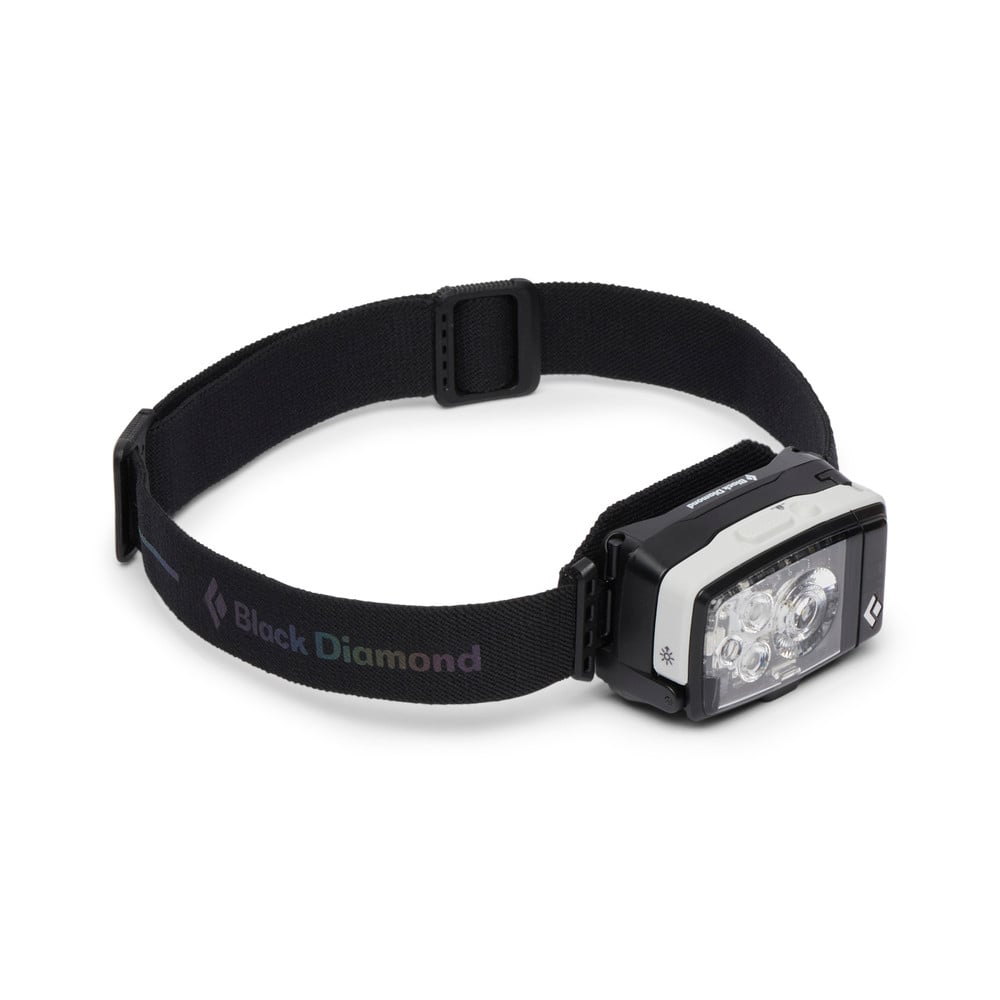
An extreme-conditions headlamp with some unique features, including a 2200 mAh battery that remains stable against the headband because the lamp housing is a separately-pivoting unit. Burst mode provides 1100 lumens for 10 seconds, then turns off automatically. More than 4 hours of light in high (600 lumens) mode. Waterproof and submersible (IP67). 3.8 oz (108 g).
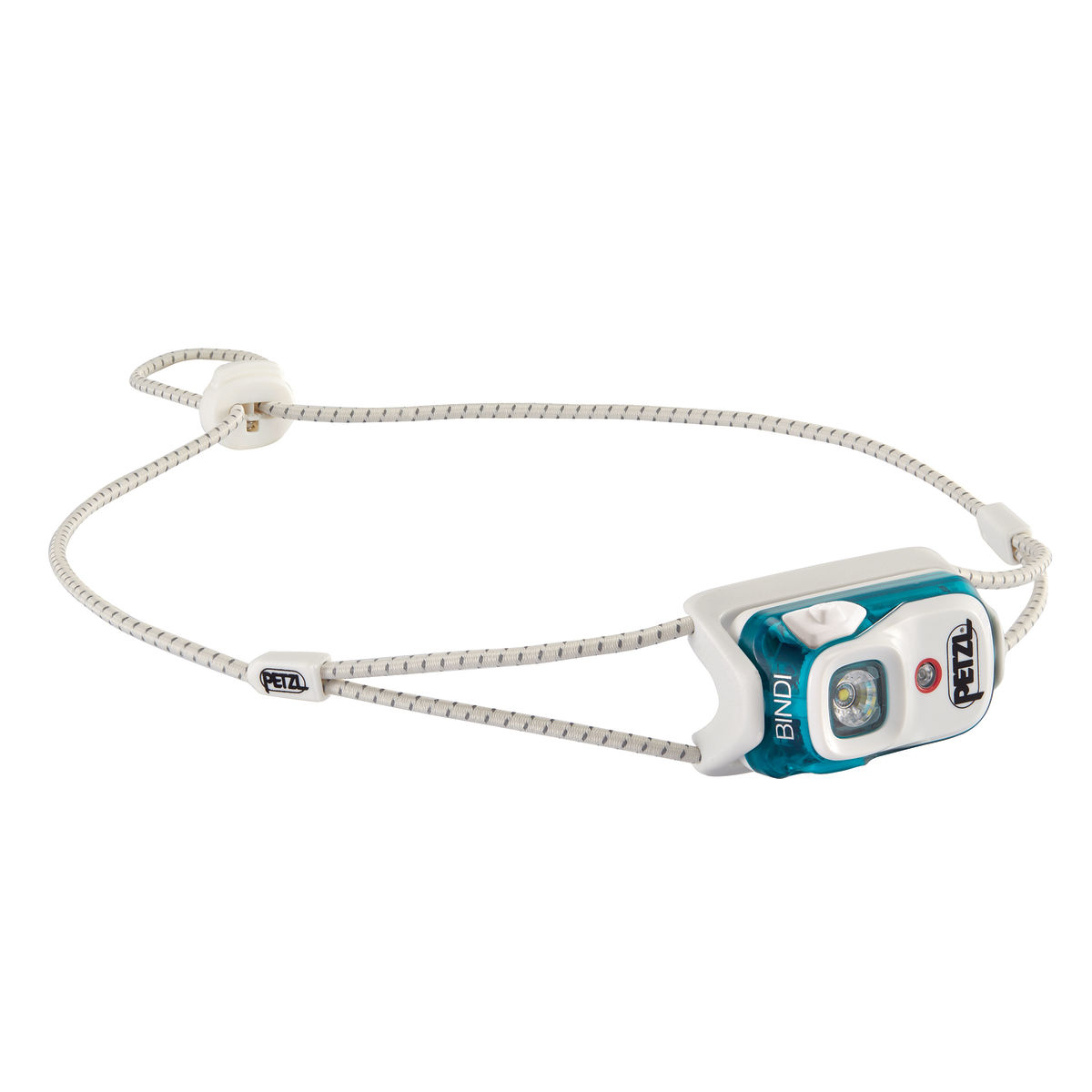
One of the lightest rechargeable headlamps available. On its highest setting, it throws a 200 lumen beam up to 36 m for 2 hours. On its low setting, battery life extends to 50 hours with a 6 m, 6 lumen beam. Includes both white and red LED lighting.
Featured Products
The following products are featured in this report, with LightBench test results:
- Abusvex B0CX4F8HFS
- Biolite Dash 450
- Biolite Headlamp 325
- Biolite 800 Pro
- Black Diamond Deploy 325
- Black Diamond Distance LT 1100
- Black Diamond Sprint 225
- Black Diamond Storm 500-R
- Coast FL13R
- Coast FL1R
- Cosoos Mini
- Fenix HM50Rv2
- Flextail Tiny Helio 600Z
- LEDLenser NEO1R
- Montbell Compact ML
- Nitecore NU 20 Classic
- Nitecore NU 25 UL
- Petzl Bindi
- Petzl eLite
- Photon Freedom Micro
- Princeton Tec Byte
- Silva SMINI Fly
- Silva Terra Scout X
- Thrunite TH20 Pro CW
- Zebralight H54FcN
Acknowledgments
Isaac Simons contributed product research to this report.
Market Analysis
Backcountry Lighting Use Cases
Backpackers use lights for night hiking, task lighting, area lighting, and beacon lighting.
Lighting needs for night hiking on trails differ from those for off-trail navigation.
Member Exclusive
A Premium or Unlimited Membership* is required to view the rest of this article.
* A Basic Membership is required to view Member Q&A events


Discussion
Become a member to post in the forums.
I would imagine it is nearly as critical for back-country use, especially when things go south…
Well, maybe not.
When things go south in the night – – – I am most likely in my (tunnel) tent, on my mat, under my quilt – – and fast asleep.
Yes, I used to go caving, a long time ago. Totally different sport from UL walking. Comparisons are not relevant.
Cheers
Follow up to my comment last year mentioning the Nitecore HA11. I bought one, and the nitecore NL1411R 14500 size rechargeable battery to go with it.
The specs are great on paper. The build quality is perfectly adequate, simple but effective.
The button interface is simpler than say the NU25 (non MCT model) that I bought at the start of last year and found annoying. Not quite Petzl simple, but closer.
The price is rather cheap, seemingly a bargain. But I realised why after a few night time walks and jogs… Nitecore spent precisely zero on developing the lens for this. Its the junkiest beam pattern I’ve ever had in a headtorch. Seriously, the only thing worse I’ve ever used was a AAAA everready pen torch (that had an exposed, tiny, incandescent globe half sticking out of the tip) I had for a couple of years as a young Scout, that I only needed to use for camp tasks and didn’t mind at all as it was tiny and quaint (and far lighter than what everyone else had at the time). Its such a spot beam, and a weird one at that, and bad enough that my eyes are immediately strained in the dark on turning it on and I much prefer to just turn it off and run in the dark on night vision alone.
Such a shame, as everything else about this is excellent. Maybe in the future Nitecore will put a bit more effort into the lens for an update. Having the single AA option is great for those of us who like to travel off the beaten track a bit in more developing places. Just peace of mind that I can find a cheap AA battery somewhere to throw in if I am unable to charge the 14500 for a while. It’s probably the format of battery in a headtorch that is most likely to be able to find supply for, anywhere in the world.
Fast asleep in your tent is considered, “things going south [bad]?”
I’m envisioning something having gone wrong, and having to navigate some kind of exposed, or unfriendly terrain, because you DIDN’T yet make it to camp, and inside your tent.
That’s when a solid headlamp will make a difference, vs. a crummy one. For mulling around camp, sure, use a crappy flashlight pen if you want. That scenario is pretty low consequence.
What’s interesting, is that whatever the outdoor sport is, headlamps are one of the things that people complain about being fussy, or inferior, quite often.
I looked, and the Fenix HM61R-V2 light that I’ve used, weighs in at 5.36oz / 152 grams. It has been fantastically durable, and has some really nice features. Retail is 90 USD. 72 USD on Expertvoice. Fenix has other models I’d consider as well, with smaller batteries, but many of the same nice features, for less money, and less weight.
A quick comparison of that HM61 to some of the popular NightCore models – It seems like the NU25/27 are in the 2oz. ballpark.
This isn’t about advocating for one brand over the other. But moreso, that I can’t imagine ranking the importance of a couple ounces, above more important attributes, on an important piece of gear.
@JAshley73, everyone has their own priorities about what is “important.” You keep saying “I don’t understand the ultralight obsession with headlamps” and “I can’t imagine ranking a couple of ounces above more important attributes …”
Do you really not understand, or is this just a more acceptable way of saying that the other forum members are foolish and inexperienced, and that you know better? I think this is the attitude that BPL is trying to get away from.
If you really don’t understand, I’ll try to explain. Every item is important in some way, and almost every item can be better if you add weight to it. However, this forum is full of people who are extremely experienced, they know the conditions that they are facing, they are aware of the things that can go wrong, and many of them choose to use lightweight headlamps because they believe that they are FIT-FOR-PURPOSE. Period. The argument that “a heavier XXX is better” can be used across-the-board; it carries no weight.
Most of us would admit to taking along a luxury item or two, or packing some of our fears, but I think we try to be self-aware about it. If you want to pack your fears about being lost in a dark, wet place, that’s totally fine. But it’s extremely patronizing to make continued posts essentially calling people stupid for thinking that a sub 2 oz headlamp is sufficient for typical 3-season backpacking.
I don’t think people are stupid. That certainly wouldn’t be fair to say.
I guess I find weight in headlamps to seem silly – to me. (Yeah, I know, opinions are like, well, you know…) ;) I do find it a little bit humorous though, that low-weight headlamps are quite often complained about. That’s not unique to backpacking, or ultralight really. I’ve used both [models] of mine in many non-caving scenarios. I’ve never, not once, thought to myself, “Gee, I wish this headlamp was lighter weight.”
Maybe being new to ‘lightweight backpacking,’ and coming from other activities, I guess I see things differently, from farther out…
From what I’ve seen, read, and listened to – including a lot of BPL content – it seems like a lot of folks are unsatisfied with many of their “lightweight” headlamps. I guess objectively, I’d say that weight isn’t as important as other factors – because people are usually complaining about non-weight related attributes – like fussy controls, poor life, inconvenient re-charges, unsupportive headbands, and so on…
I guess what I am saying though, is that people may be more satisfied with their headlamps, by placing less emphasis on weight, and more emphasis on actually using the headlamp – controls, battery/recharging, etc. Again, we’re talking about 3-4 oz difference in weight between a single-18650 powered headlamp, and the smallest of ‘lightweight’ headlamps. If you compare a single-16340, or single-AA powered model, the difference can be 1 oz. or less. The difference in capability, ergonomics, recharging, etc, is often huge though.
Related – I kid you not, last weekend I was at a talk/clinic, about hiking Colorado 14’ers. An older guy asks the presenter, “How heavy is your headlamp…” I chuckled and thought to myself, “who cares…”
Perhaps the more important question should be, “how GOOD is your/my headlamp.”
Nothing personal, I promise…
I am surprised the Aurora A5 (G4) was not included in the comparison as it seems to be gaining popularity with EDC and ULers alike. It is technically a flashlight with a hat-clip so I understand it doesn’t really fit in with the rest listed. I like the lantern function for camp chores and the beam is enough to get around on trails after dark without issue. I still find myself preferring my old NU20 for most trips as I like to sleep with my light around my neck, but it is definitely an interesting option and I’m curious to see how it technically stacks up to the others listed here.
+1 for the Rovyvon. Even thought it’s not as bright, I like the 5000K version because it doesn’t wash out the colors.
Become a member to post in the forums.