


Introduction
In contrast to the early days (1995-2005) of the modern ultralight backpacking movement, today we have access to myriad lightweight gear options. As a result, our closets are stuffed, our pocketbooks are lighter, and our decisions about what new gear to buy (or not) or what gear from our closet we take on a particular trip are more involved.
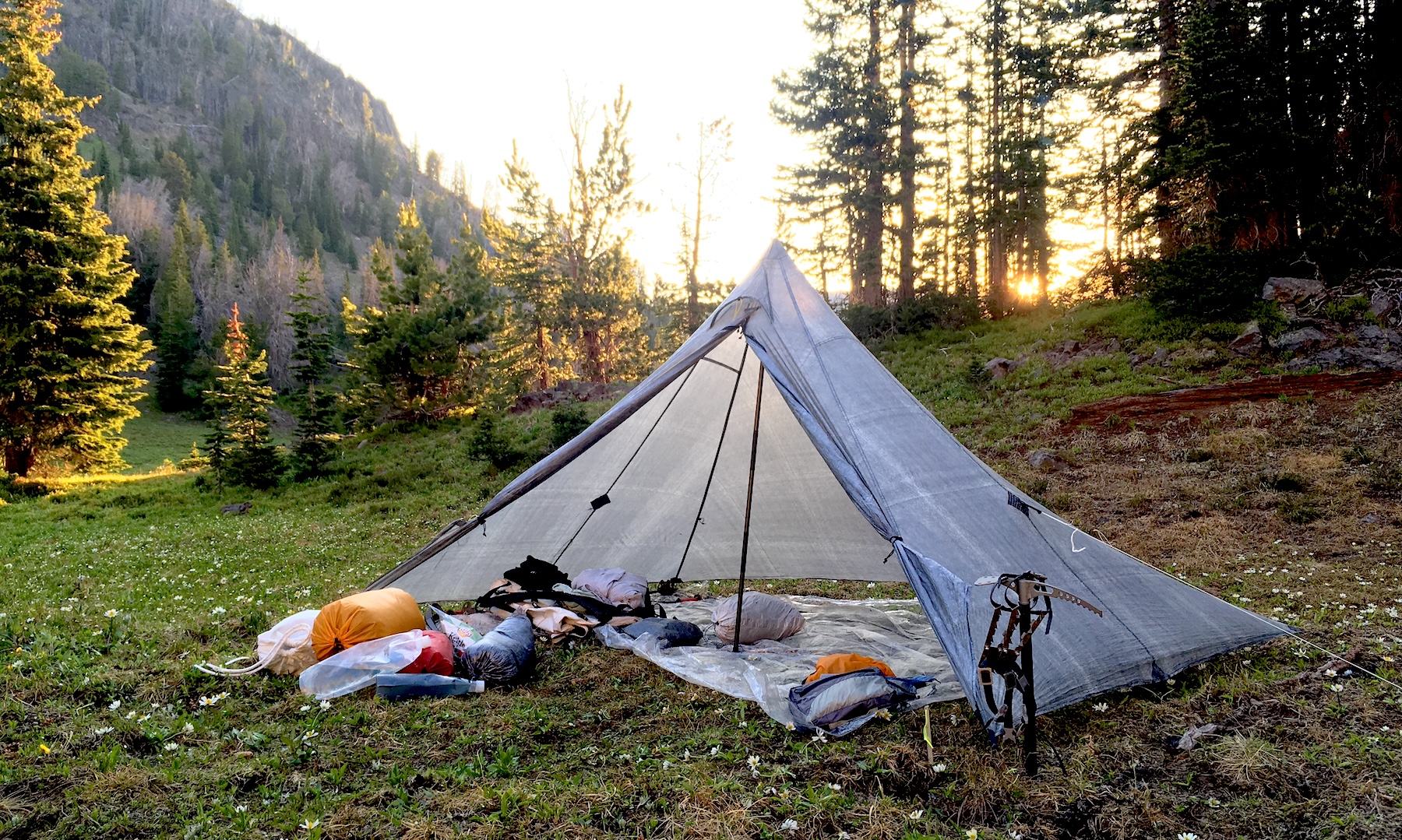
Reducing the time and energy required to shop for new gear, or choose gear for a trip has become an interesting area of study for me over the past several years. I like to think about these decision-making frameworks philosophically, and then figure out how to put them into practical action. So, in this article, I’ll walk you through the process of how I think about shopping for and choosing gear, and how I use that framework to make decisions about what gear to keep and what gear needs to go.
Product Context
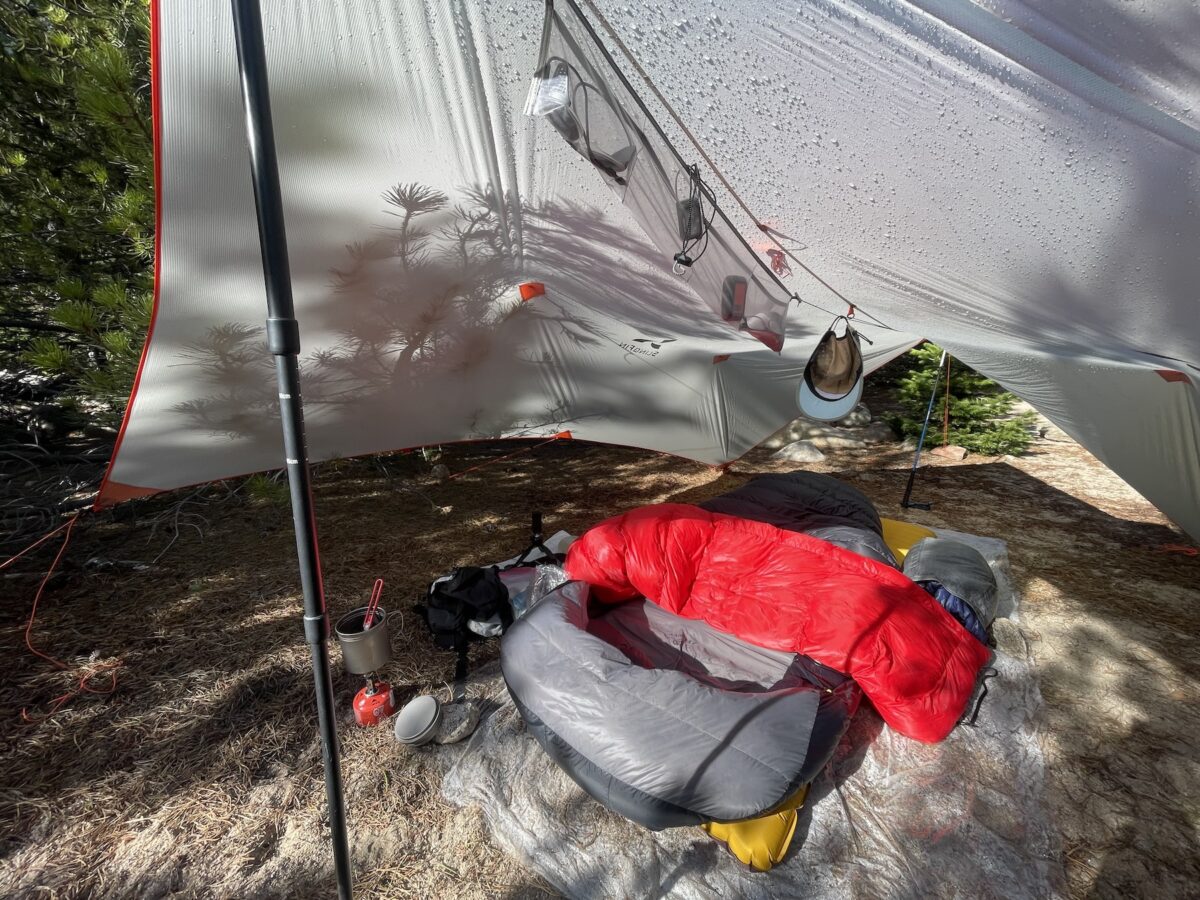
This article is not a gear review, but I discuss the performance attributes of five tarp shelters that I have used extensively over the past few years:
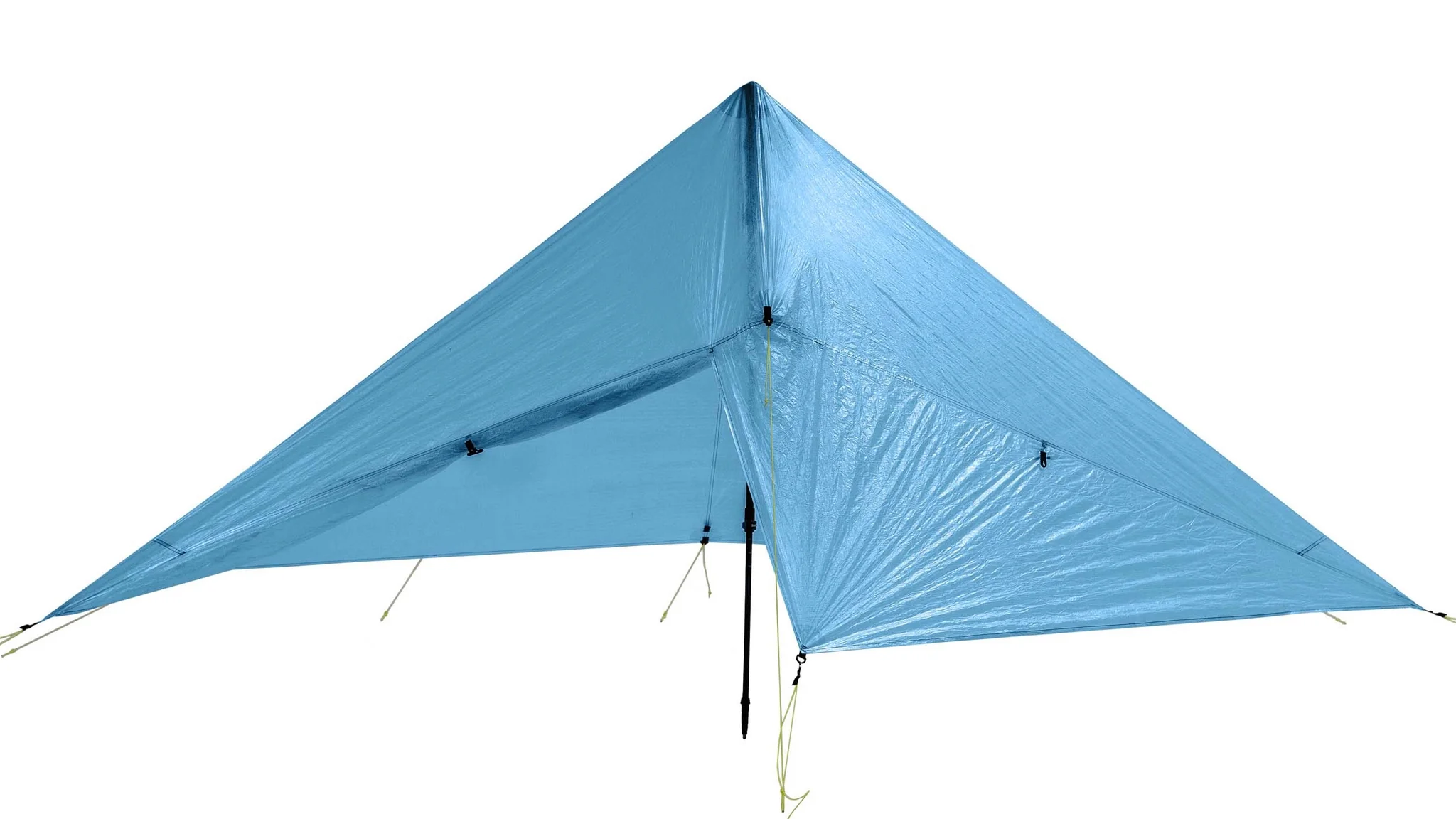
The Zpacks Hexamid Pocket Tarp addresses minimalist shelter and emergency coverage needs by using bio-based Dyneema Composite Fabric (.55 or .75 oz/sqyd) in a 5.5 oz single-pole, six-to-ten-stake hexagonal tarp with overlapping storm doors, LineLoc V–tensioned 1.3 mm guylines, optional .75 oz/sqyd DCF bathtub groundsheet with cord-hooks, and 3" diameter×6" packed dimensions.
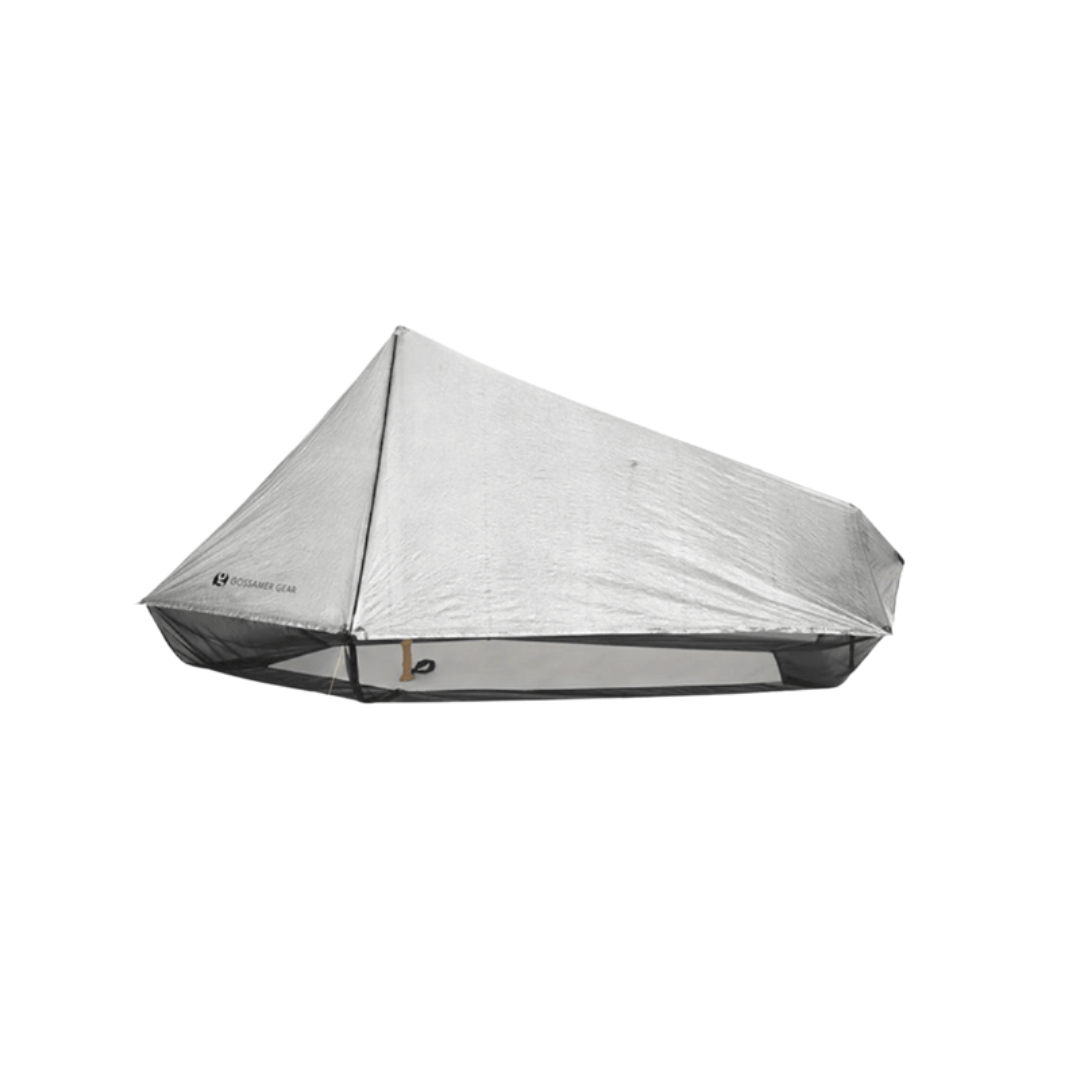
The Gossamer Gear DCF Whisper is an ultralight, floorless, side-entry shelter that weighs about 10 ounces. For its weight, it provides a high level of livability (interior floor space and livable volume), as well as full-perimeter insect netting that can be combined with an overlapping ground cloth for full bug protection.
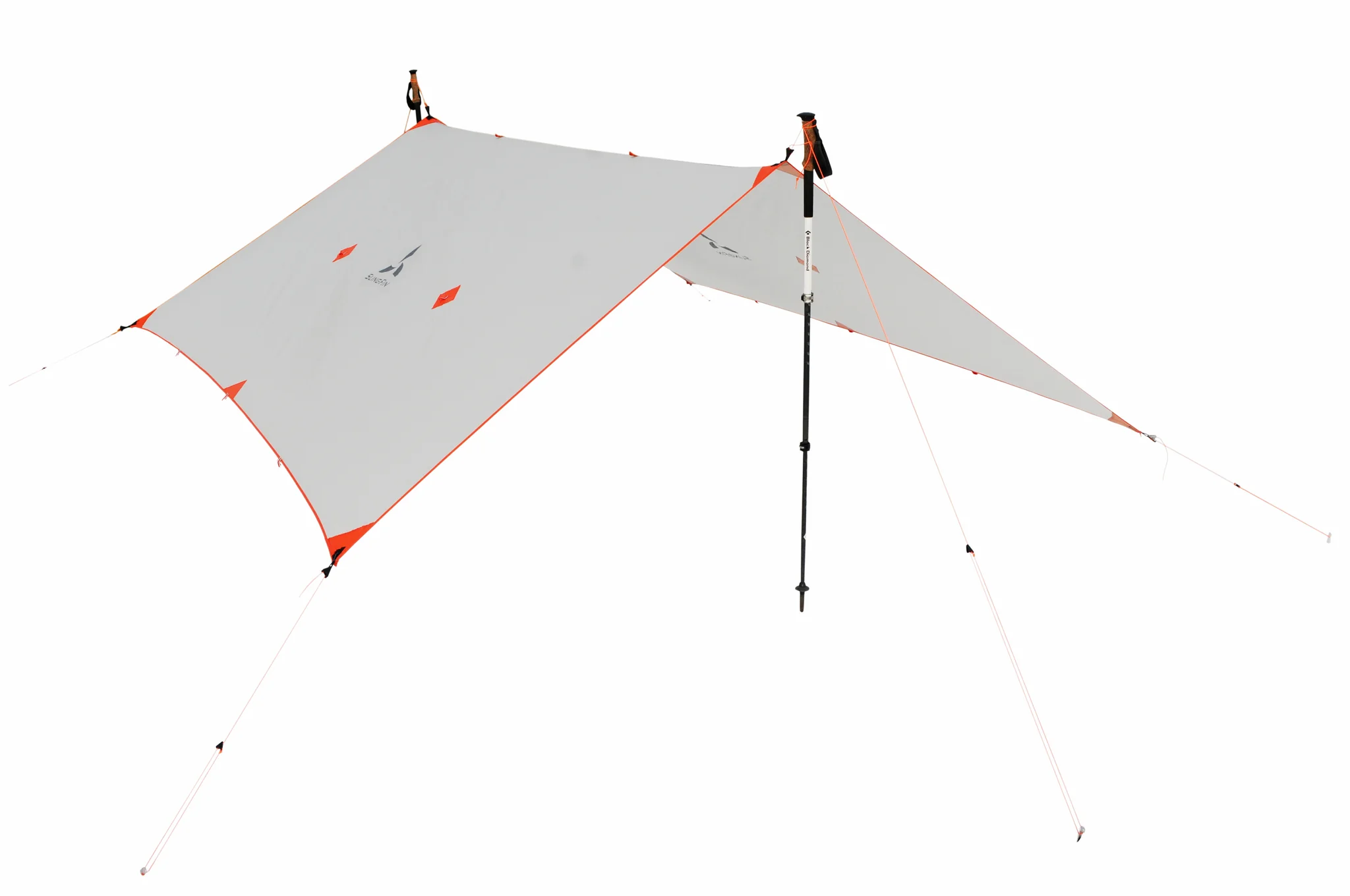
The SlingFin NFT is a 9.5' x 10' flat tarp made from ultralight yet highly tear-resistant 10D Nylon 66 ripstop sil/sil fabric, which offers superior tensile strength and long-term UV resistance compared to standard nylons, silpoly, and DCF. Subtle catenary curves along the long edges ensure a taut A-frame pitch, while the flat ridgeline allows for versatile configurations. Weight: 12.3 oz (349g). Packed size: 4" x 4" x 9".
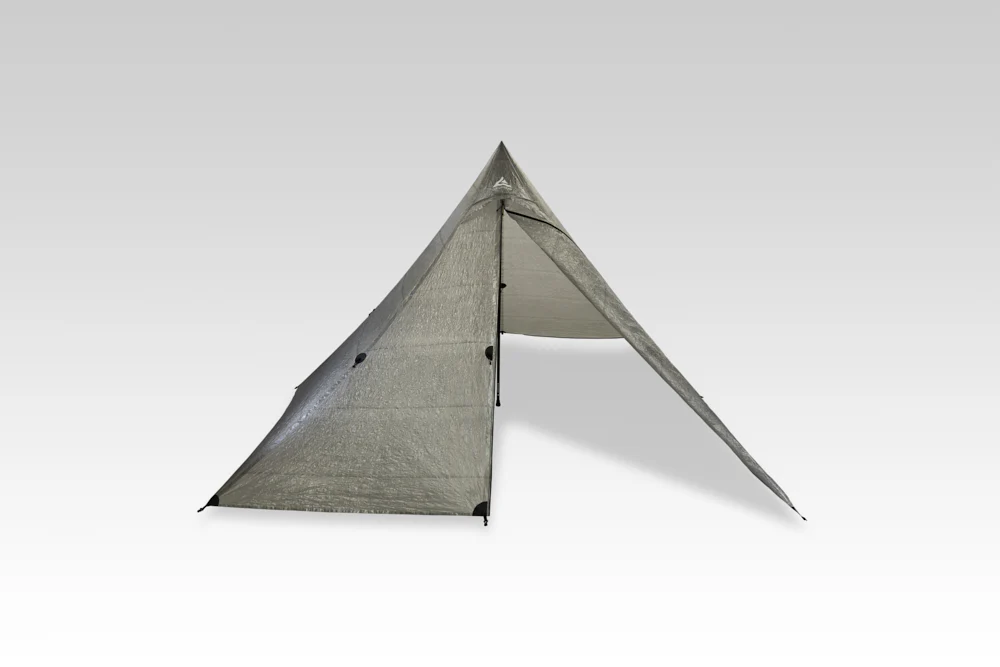
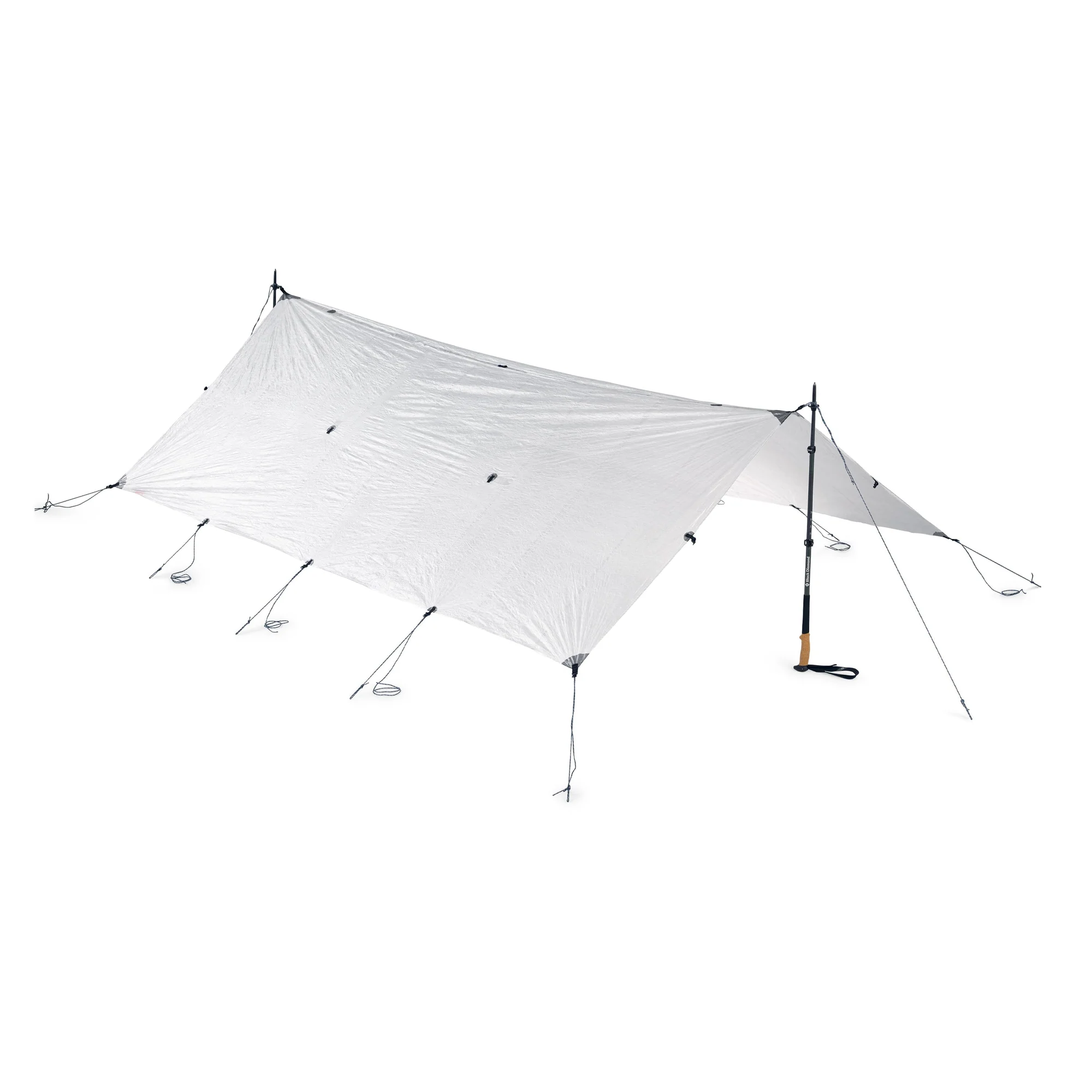
Weighing approximately 9.0 oz (255 g) for the 8'6" square size, the Hyperlite Mountain Gear Flat Tarp is designed for versatile pitching configurations. Catenary ridgelines are beginner-friendly, while flat tarps provide more versatility for experienced users. The tarp features fully bonded, stitchless ridgeline seams and 16 perimeter tie-outs reinforced with line locks, allowing for a taut and customizable setup. Additional tie-outs are positioned at the center and at one-third intervals along the interior body, providing numerous options for securing the tarp in various configurations. Two sewn-in D-rings under the ridgeline facilitate the attachment of inner nests or bivy systems.
Weight: 9.0 oz (255 g) for the 8'6" x 8'6" tarp; 10.9 oz (309 g) for the 8' x 10' tarp.
Materials: Canopy - 0.8 oz/yd² (26 g/m²) DCF8 Dyneema Composite Fabric.
Dimensions: 8'6" x 8'6" (2.59 x 2.59 m) or 8' x 10' (2.44 x 3.05 m)
This category (floorless tarps and shelters) is used here to illustrate the framework I use to make decisions about what gear to take on a particular trip, which gear to dispose of when my closet gets too full, and to give some insight into how I shop for gear.
The five key attributes of backpacking gear
I’ve discussed several decision-making frameworks for choosing backpacking gear in the past. Most recently, I talked about benefits vs. features vs. design attributes in the context of selecting a shelter. We’ll talk about shelters again in this article, this time focusing on the subcategory of tarp shelters.
In this article, I’ll present options for gear based on five key attributes of backpacking gear:
- Weight
- Cost
- Durability
- Versatility
- Performance (Comfort)
I’ve chosen these attributes because they are widely applicable to virtually all categories of gear. In addition, I’ve chosen them because I’m always trying to optimize at least one of these attributes for each piece of gear I buy.
Member Exclusive
A Premium or Unlimited Membership* is required to view the rest of this article.
* A Basic Membership is required to view Member Q&A events


Discussion
Become a member to post in the forums.
Companion forum thread to: Backpacking gear attributes: the relationships between weight, cost, durability, versatility, and performance
Ryan discusses the relationships between weight, cost, durability, versatility, and performance in ultralight backpacking gear.
So, I have mixed feelings about an article like this. Yes, it is a great way to optimize gear selection for specific trips. That being said, it assumes that the reader has several tents/tarps to select from. The logical extension is to assume that the reader has multiple packs, cooking systems, sleeping pads and other support paraphenalia to go on these trips.
For whatever reason, I own one backpack, one tent and one pad (and a butt ton of cooking gear). Over the years, I have optimized my gear for a vast majority of the trips that I go on in order to reduce weight. While a Tarp may work in 30% of the trips that I take, I don’t think that I would every purchase one. Maybe I am just cheap or that I have other things that require investments. It is a good article, it just does not apply to my style of backpacking. My 2 cents.
Jon – I suppose I would reply by saying that you’ve executed much of the strategy discussed in the article to dial in the kit that you want for the use cases you need it for…!
I hope also that the information here can be used to help people shop for and buy more versatile gear, and perhaps less gear, that covers wider ranges of use cases for them.
This a great article. It is a nice combination of geeky-ness combined with functional, practical application. The radar charts are an excellent, easy to understand visual. I just sent the article to a friend that always over-emphasises low price and is never happy with his purchase (& within a year he buys another low price shelter spending more in the longer-run). I now own two shelters: 1) Tarp – For 40 years, I have used various tarp versions – currently a DCF trekking pole, 2-person, light weight tarp (for all those years, I just used a headnet at night in Colo Rockies for buggy conditions, which has gotten worse thru the years); 2) Tent – the other shelter more recently added is a DCF 1-P light-weigh, trekking pole tent for buggy conditions. While both shelters have their function, of the two, I prefer the tarp. These two shelters cover everything for me but full-on winter conditions. And, yes, I have already drawn my radar charts for both of my shelters. Thanks Ryan for your analysis. Dave
I’m definitely going to try to recreate these graphs with own gear, it looks like a fun exercise for shelters anyway. Any trip I take in 3 seasons it seems like my pack is the same size plus or minus 10% capacity. Bags and pads are temperature dependent. I do have a few overlapping shelter options though. Duomid full perimeter tarp, X-Mid, and the Dipole. Since I really like the Dipole I’ll will use that for bugs or more inclement conditions when I’ll spend more time in the tent. I like the duomid because it is: 1 pole, easy pitch, storm worthy, it’s 2ish ounce lighter, and I got it at a good deal, but the XMid is solid in all of those categories too, it can be used as a more livable full perimeter tarp, and with the mesh inner it can be a loaner as well.
I can relate to the comment about buying used or on sale items and being slightly disappointed. For me it’s mainly been the pack. I realize now I just need one I really like and will use every time. I am never “fast packing” and if I do want to cover miles it going to be summer when gear is lightest anyways. I’m going with an SWD fully decked out that can handle BV450 horizontal (90% of my trips, BV475/500 vertical for the other 10%).
Once my gear closet inventory is set I’m mapping out what to use and when based on season, temps, conditions, and not worry about weight. Hoping that alleviates some packing anxiety! Every thing I’ve purchased is sufficiently light so I’m going to just bring items based on what I expect to encounter to be safe and comfortable. The pack out weight is what it is at that point.
Since I tend to go mostly alone I always try to keep a big 4 set to offer a friend (or two) who only has some (or none) of the necessary gear, which is the main reason I’ve had a hard time parting with certain items of mine. “I got this as a great price and it can use be used as a loaner…”
The other issue I have is keeping some specific gear for the 1x a year I go with my daughters or wife. Good thing I’ve been able to find close out sales on pads, packs, and Magma bags for that otherwise I would feel really bad about that stuff collecting dust 360 days a year!
@Jon: I think the system is supposed to be used either for selection from your own gear, or for choosing which to purchase. The system works the same.
I had not seen this article yet, but could have really used it in my recent purchase of a free standing car camping/winter/canoe camping? tent.
For shelters this works great.
I don’t see how to apply this to clothing though, since it’s all in the combinations.
Become a member to post in the forums.