


Introduction
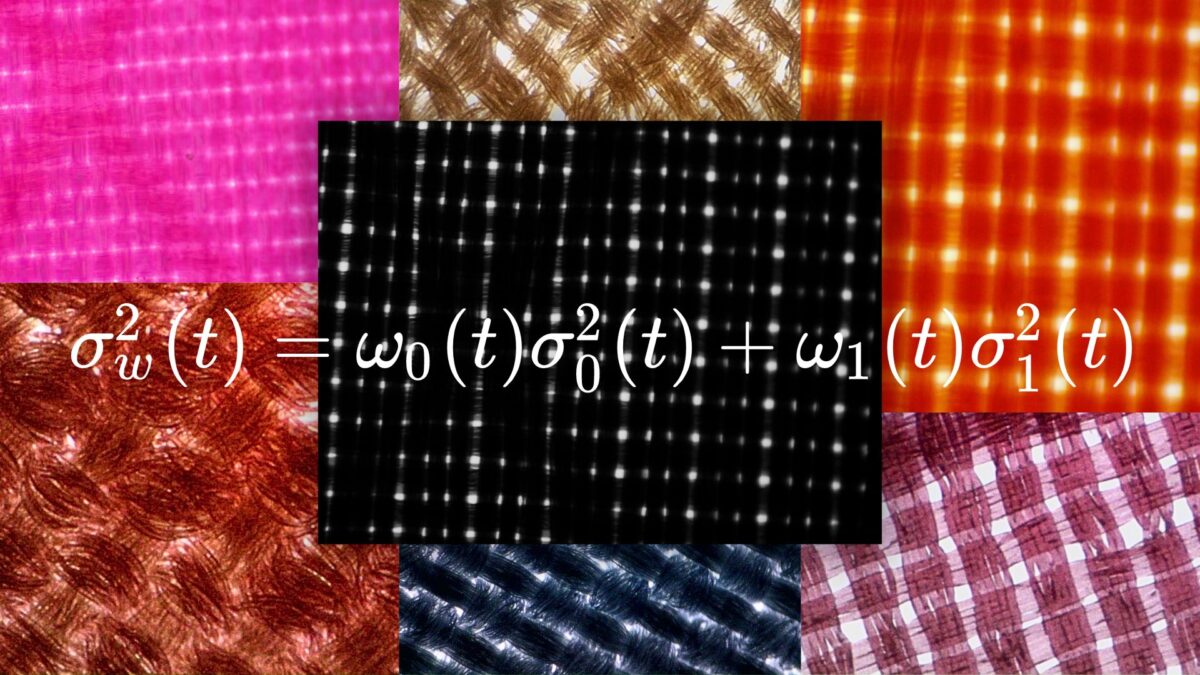
Wind shirts (which can include jackets, pullovers, and hoodies) are thin, lightweight, and compact garments made with non-waterproof, breathable, woven nylon or polyester fabrics. The air permeability rate of such fabrics may have some impact on the perception of user comfort while wearing wind shirts. The purpose of this report is to investigate the relationship between air permeability, fabric porosity, weave type, and yarn structure via photomicrography and image analysis. This is not an exhaustive research study, but rather, an exploration of some of the fabric design attributes that have an impact on air permeability rates.
The air permeability rate (APR) of a fabric is one measure of the fabric’s ability to allow airflow through it in response to differences in air pressure across the fabric face. APR is most commonly measured using the procedure described in ASTM D737, which creates a fixed air pressure across the fabric face and then measures the flow rate of air passing through it.
In contrast, the moisture vapor transmission rate (MVTR) generally defines a fabric’s ability to allow for the diffusion of moisture vapor molecules through it in response to differences in moisture vapor pressure between the inside and outside faces. MVTR is most commonly measured using one of the procedures described in JIS L-1099, which measures the evaporation of moisture through the fabric in the absence of an air pressure gradient.
The general term breathability is the fabric attribute describing excess heat and moisture leaving a user’s clothing system while active. Both MVTR and APR can affect the overall breathability of a fabric, and in some cases, are correlated. High levels of breathability are generally desirable for windshirts, which are designed to be worn in stormy weather when the high water resistance of a rain jacket is not needed. In addition, windshirts are usually made with fabrics having higher APR than fabrics used in rain jackets, allowing for better overall user comfort during high levels of physical exertion.
“The term ‘comfort’ is a nebulous one, which defies definition, but the sensation of comfort is easily recognized by the person experiencing it.” – K. Slater, Comfort Properties of Textiles (1977)
Table of contents
Products featured in this report
- Ripstop by the Roll HyperD Fabrics
- Pertex Quantum Air Fabrics
- Mountain Hardwear Kor Airshell Hoody
- Patagonia Airshed Pro Hooded Pullover
- Katabatic Gear Crest Windshell
- Black Diamond Alpine Start Hoody
- Arc’teryx Squamish Hoody
- Arc’teryx Norvan Windshell Hoody
- Rab Vital Hoody
Updates
- May 11, 2024 – A photomicrograph of the 2020 Kor Preshell Hoody was incorrectly labeled as a 2023 Kor Airshell Hoody. This has been corrected in both the image caption and the text.
Member Exclusive
A Premium or Unlimited Membership* is required to view the rest of this article.
* A Basic Membership is required to view Member Q&A events


Discussion
Become a member to post in the forums.
Companion forum thread to: What Properties Influence the Air Permeability of Wind Shirt Fabrics?
The purpose of this report is to investigate the relationship between air permeability, fabric porosity, weave type, and yarn structure via photomicrography and image analysis. This is not an exhaustive research study, but rather, an exploration of some of the fabric design attributes that have an impact on air permeability rates.
I’m having trouble reconciling this:
The porosity ratio of calendered vs. uncalendered fabric is approximately 22X, and the APR ratio is approximately 158X, suggesting a positive correlation between porosity and APR.
with this:
The chart looks like it shows negative correlation between porosity and APR. What am I getting wrong?
Well, that’s because there was an error in the table – sorry about that! The APR measurements for calendered vs. uncalendered were accidentally transposed. The table has been corrected now.
This is heavy going, but interesting nonetheless! After three readings I am now understanding it…..I think.
Do you know if the Kor Airshell 2023 and Kor Airshell 2024 are constructed from the same model of Quantum Air, or are they made using a different version/model? I ask this because this is were garment manufactures (as opposed to fabric manufacturers) potentially let the end user down. In the Mountain Hardware marketing guff about these garments I’m sure (I don’t actually know) they likely just call the fabric of both the 2023 and 2024 versions “Quantum Air” so the end user would assume they are the same fabric. Obviously most users will not care, and might not even notice, but to the discerning user this is a big deal. Why the change? Cost? Improved performance? We will never know…
In my experience, another downside of crimped yarns in wind shirt fabrics is increased APR over time. I have an older Squamish that I still wear, but even after one year of use, it’s APR increased by over 100% (Mr. Seeber kindly tested it for me a while back.) I have not had other wind shirts tested like this, but I’ve owned a couple other wind shirts with crimped yarns and they also increased in permeability over time – this was quite evident by doing the Darth Vader test.
Enlightened Equipment’s fabric is an interesting demonstration of this article’s note that different calendering techniques produce different results.
Enlightened Equipment appear to use a single fabric in 7, 10, and 20D weights. It looks calendered (shiny) and they use it for most of their products, including down. The fabric tested in their Copperfield windshirt is only moderately air permeable (4.7 cfm for 10D and 7 cfm for 7D), which also is consistent with calendering.
However, the measured MVTR was very high: 3520 g/m2/24hrs for 10D and 3760 for 7D. This is a clear outlier from the trend that MVTR often (but not always) correlates with air permeability as Stephen Seeber discussed in one of his articles.
In contrast, HyperD 1.0 osy (20D) tested at an impressive 3813 MVTR and 38 CFM when uncalendered, while the calendered version of the same fabric tested at a rather low 1368 MVTR and <1 CFM.
TLDR: There is a huge change in HyperD’s MVTR and CFM when calendered, while EE’s apparently-calendered fabric retains very high MVTR.
Become a member to post in the forums.