


Introduction
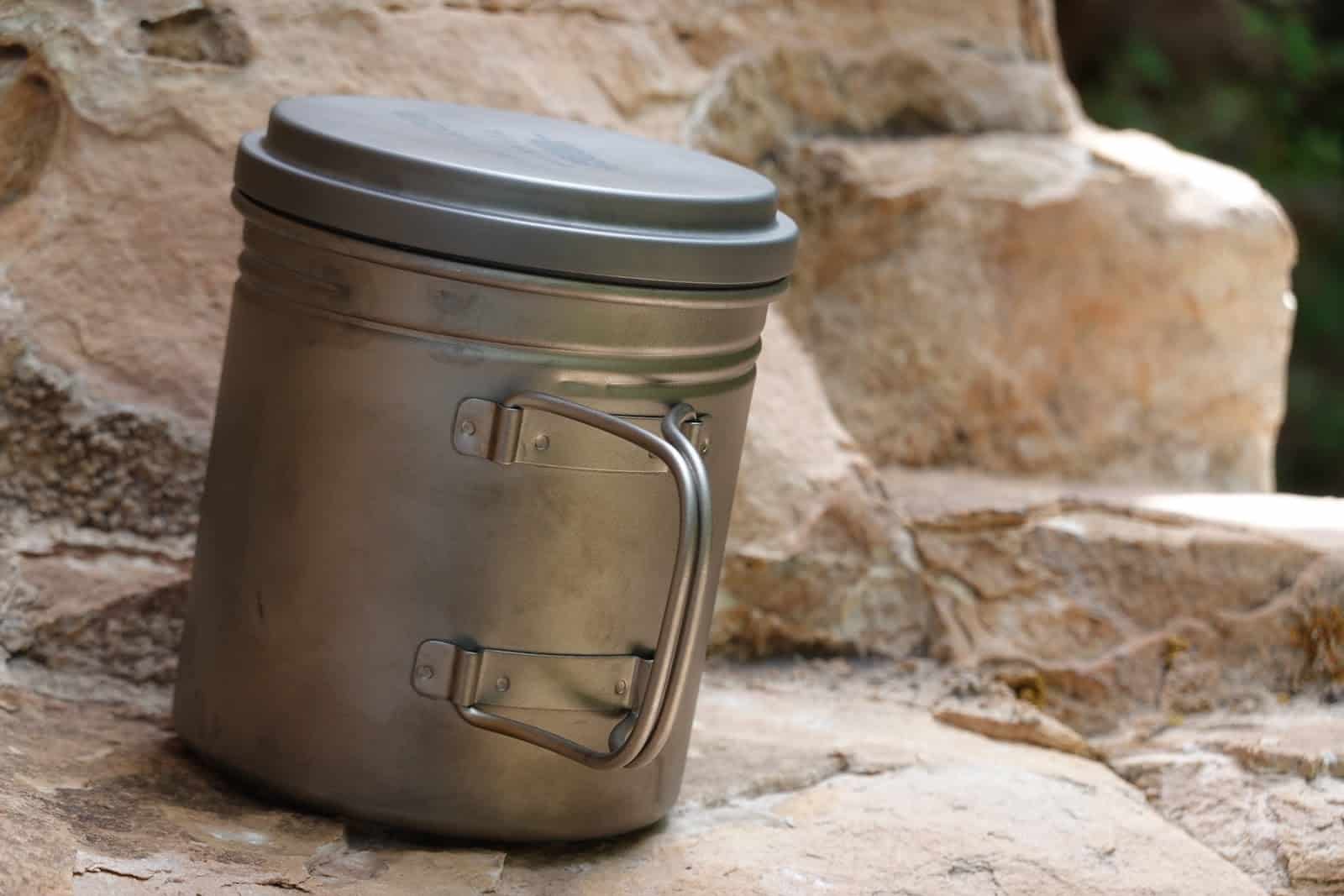
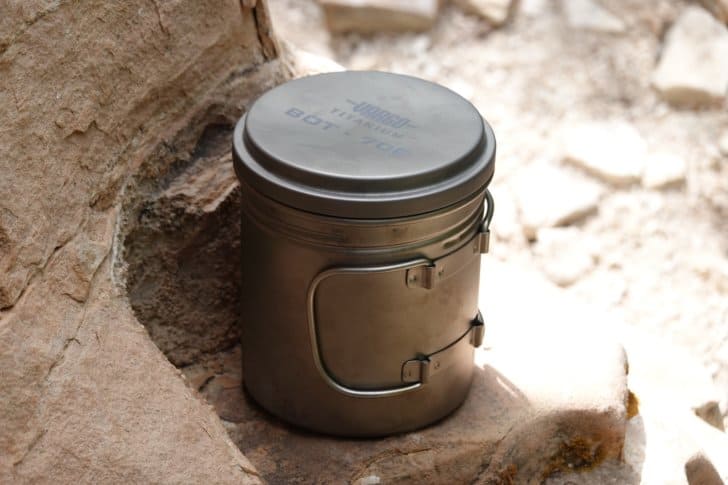
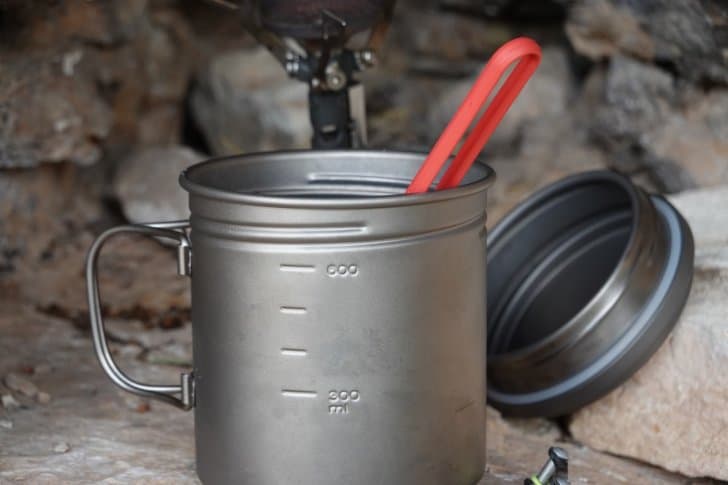
The Vargo Titanium Bot 700 is a 0.7-liter (24 fl. oz) cooking pot with a watertight, screw-top lid. The Bot 700 is made of titanium and the lid contains a silicone gasket. I measured the weight of the pot (including the lid) to be 4.83 oz (137 g).
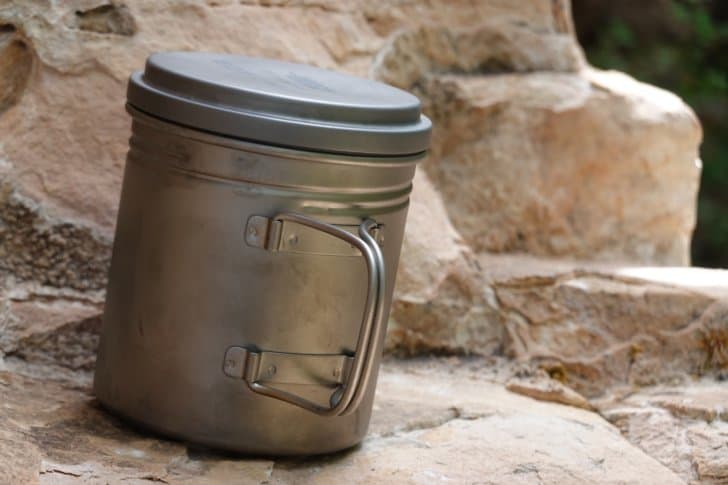
The Vargo Bot 700 has a reputation for being useful for cold-soaking dehydrated (or freeze-dried) food but is a very expensive option compared to an empty peanut butter jar, which is an excellent cold-soaking pot. The Bot 700, however, can be used for stove-top cooking as well – a plastic jar cannot.
There are some other metal cold-soak options from DIYers that have been made commercially-available by cottage manufacturers like Stormin’s, which are both lighter and cheaper. I picked one up off the used gear market last year and found that pot to be too fragile – it deformed easily when stored in my pack and accordingly lost its leak-proof seal in short order. Also, I never felt good about using an enameled aluminum jar designed for dry food storage for cooking.
Highlights
- weight of pot: 3.27 oz (93 g)
- weight of lid: 1.56 oz (44 g)
- capacity: 700 ml (24 fl. oz.)
- size: 4.1 in (105 mm) dia x 4.8 in (122 mm) height
- foldaway titanium wire grab handles
- screw-top lid with silicone gasket for a watertight seal
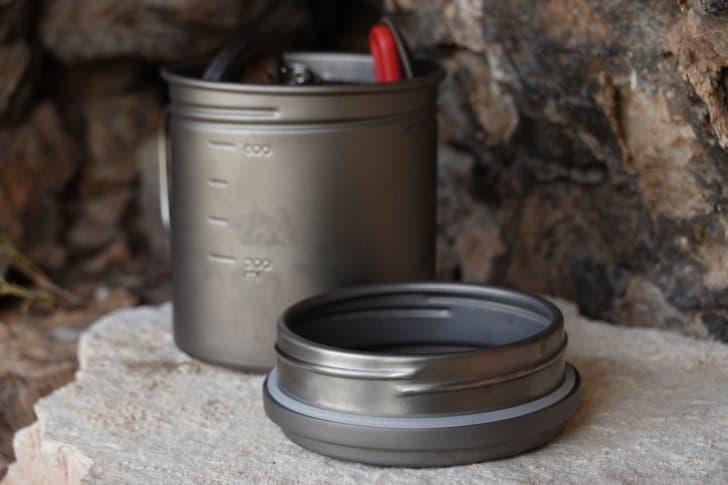
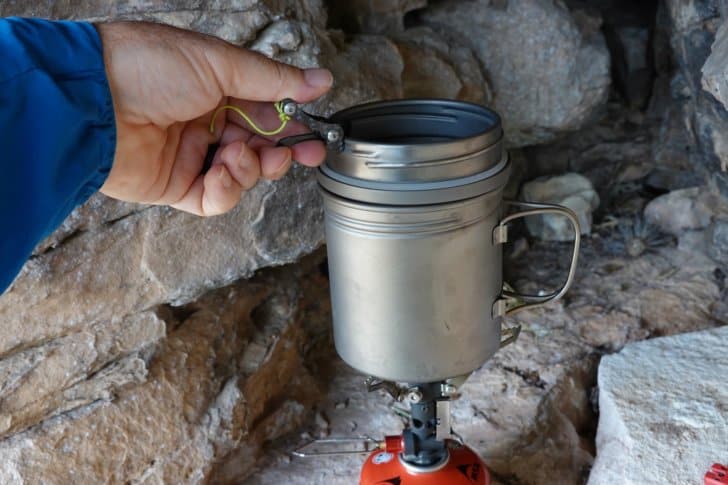
- the lid is deep enough to be used for cooking or drinking/eating small volumes of food or beverages
- MSRP $99.95
First Impressions
- The lid has a capacity for 8.5 fl. oz. (250 ml), and can be used for other purposes in addition to being a lid for the pot. First, you could use it to warm soup or tea when it’s in its inverted position during cooking. Second, you could use it as a mug/bowl for drinking. Third, with a small pot grabber, it could even be used as a miniature fry pan. Its practical capacity is closer to 6 fl. oz. (175 ml), which is obviously pretty small.
- The gasketed, screw-top lid works to contain any liquid I tried in it, including oily liquids, liquids with alcohol (it might make a great margarita shaker), and hot or cold foods. I had an older version of the Bot that wasn’t gasketed and it leaked like a sieve. This one (so far) seems much better, but only time will tell, I suppose.
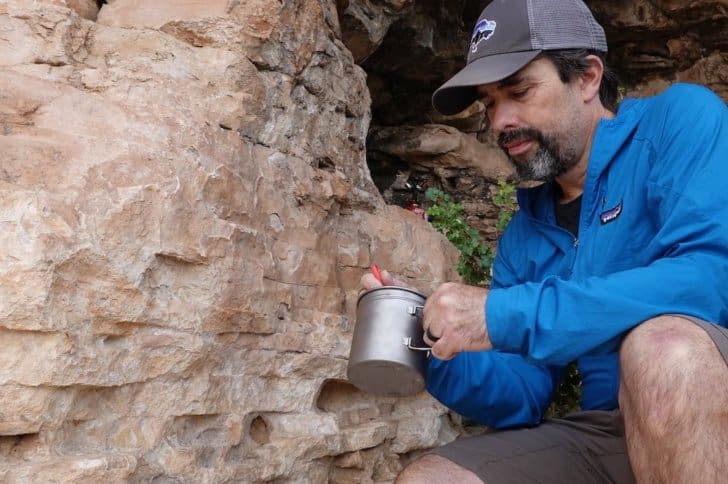
- I’ve been using it for pre-soaking dehydrated and freeze-dried meals. My normal routine has been to cold soak my food for an hour or two, add a little more water, then heat it up when I get to camp and am ready for dinner. Unlike the screw-top plastic containers revered by most cold-soakers, the Bot 700 gives me the flexibility to cook and use with a stove as well.
- The Vargo Bot 700 holds my MSR Pocket Rocket Deluxe, MSR Folding Spoon, Suluk46 Miksa carbon pot grabber (sometimes I bring it, other times I don’t), and a small (110 g net) fuel canister.
- It’s nice to have a cookpot with a secure lid that doesn’t require its own stow bag.
- I like having an extra 700 ml of water storage capacity if needed on the trail during a dry stretch.
I recently posted this IGTV Video showing how I have been using the Vargo Bot 700 in my mealtime routines this summer:
View this post on Instagram
Limitations
- Titanium gets hot, especially the lid. Use a bandana or pot grabber to lift the inverted lid off the pot when cooking. And watch your mouth when sipping hot tea, it takes a few minutes for the rim of the lid (or pot) to cool down enough to drink.
- Don’t cook with the lid screwed on – only use the lid in its inverted position while cooking so as not to pressurize the pot contents and create an explosion hazard.
- It’s a $100 jar, and the price tag makes it a specialty item. If you’re cold soaking and not cooking and need cheap, stick with your peanut butter jar. It does everything you need without being able to use it with a stove.
Photos


Where to Buy
- Find the Vargo Bot 700 on sale using our Gear Finder
- or Buy Now from this preferred merchant
DISCLOSURE (Updated April 9, 2024)
- Product mentions in this article are made by the author with no compensation in return. In addition, Backpacking Light does not accept compensation or donated/discounted products in exchange for product mentions or placements in editorial coverage.
- Some (but not all) of the links in this review may be affiliate links. If you click on one of these links and visit one of our affiliate partners (usually a retailer site), and subsequently place an order with that retailer, we receive a commission on your entire order, which varies between 3% and 15% of the purchase price. Affiliate commissions represent less than 15% of Backpacking Light's gross revenue. More than 70% of our revenue comes from Membership Fees. So if you'd really like to support our work, don't buy gear you don't need - support our consumer advocacy work and become a Member instead.
- Learn more about affiliate commissions, influencer marketing, and our consumer advocacy work by reading our article Stop wasting money on gear.


Discussion
Become a member to post in the forums.
Those small hand warmers are iron fillings, salt, water and sawdust. Add oxygen and the iron fillings rust, releasing heat over 4-6 hours.
That long time frame is great for a day of skiing, but kind of long for meal prep. Perhaps more finely ground iron would react faster, but then it wouldn’t be the same off-the-shelf, mass-produced item.
Self-heating MRE’s are water + magnesium and bits of salt and iron. The spec is to heat 8 ounces of food by 100F in 20 minutes so that seems about right for our application
The quick-acting, reusable hand warmers in which a liquid solution changes to a solid are pretty heavy for the heat you get from it.
MRE flameless heaters, $1.25 each on Amazon.
But they generate hydrogen gas, so don’t transport by air.
David,
Ryan stated that he was heating his cold soaked meals for 60 sec over a flame. This is why I thought that the hand warmer may have potential. If he activated the hand warmer and then prepared his cold soaked food, he MIGHT be able to get his meal slightly warm before eating. Worth a shot.
I don’t see backpacker Ryan having the patience to wait 20 min. for his food to attain a 100F. Most backpackers want their meals fast fast fast……coffee even faster.
SInce he is cold soaking as well, it is multiplexed time. My 2 cents.
Do you use the same amount of water when you cold soak a meal that the meal calls for, or do you add extra? Or do you not cold soak freeze-dried/dehydrated meals?
Jon,
Whatever you posted under your comments is missing. Thank you
Become a member to post in the forums.