REI’s 2026 Holiday Sale runs November 13–23, with deals on tents, sleeping bags, backpacks, clothing and footwear. Highlights include 25% off selected REI Co-op clothing and gear, 25% off Smartwool clothing and socks (excluding Smartloft), and 25% off Jetboil stoves and accessories (excluding fuel).
Members can use code HOLIDAY2026 for 20% off one eligible full-price item and an extra 20% off one eligible online REI Outlet item. Exclusions apply.
Related: See our Gear Guide to Small, Startup, and Cottage Brands Here »
Introduction
Trust Disclosures
- REI occasionally provides complimentary product samples to Backpacking Light, but Backpacking Light has no obligation to review or mention them in any editorial coverage.
- This gear guide was produced with complete editorial independence and without any involvement from REI or any other brand.
- This article contains affiliate links to REI and other online merchants.
Backpacking Light does not accept financial compensation for product placements in editorial coverage, including reviews. Learn more about Backpacking Light Trust Standards.
This REI Gear Guide contains an updated collection of hiking and backpacking products available at REI Co-Op that are recommended by Backpacking Light.
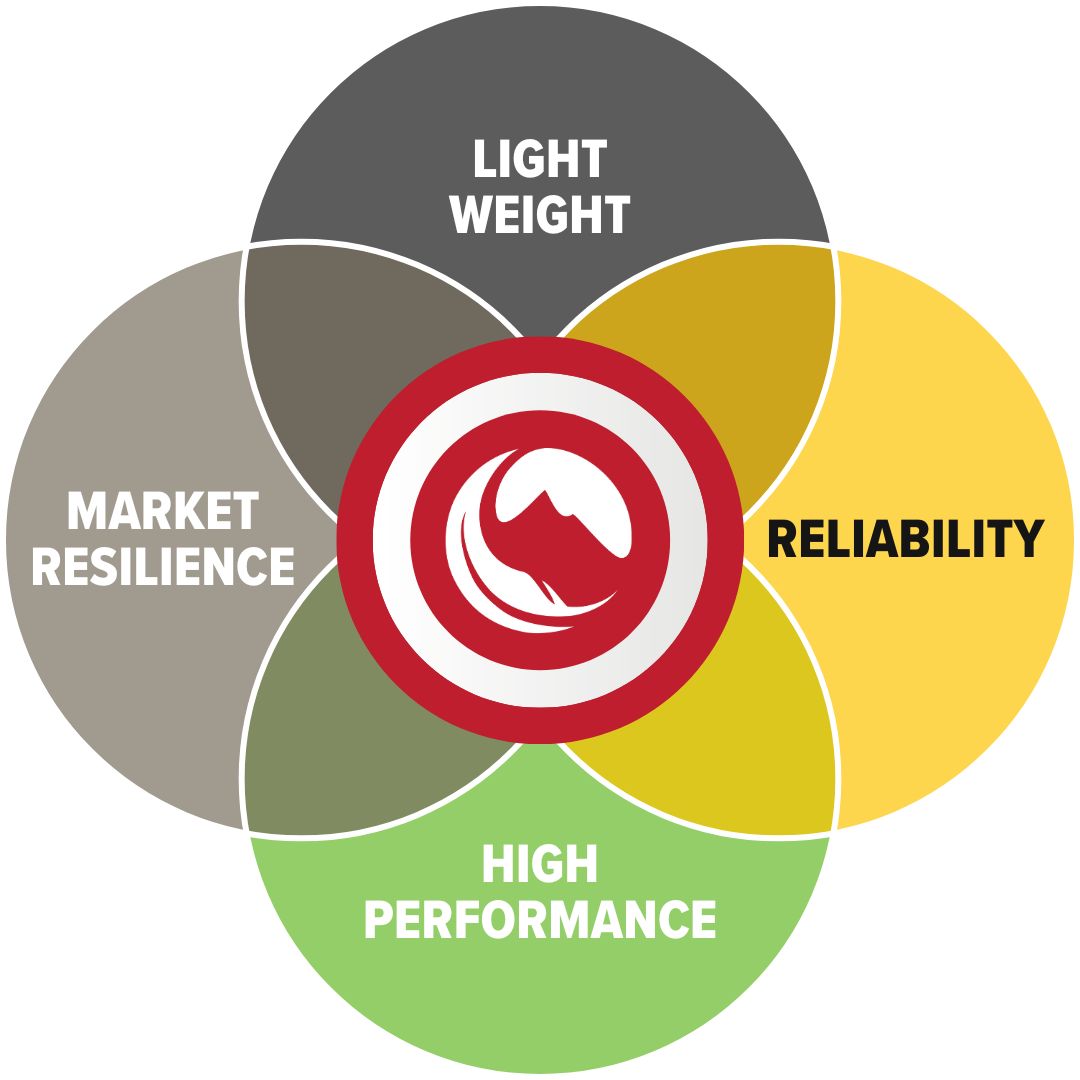
The primary purpose of this gear guide is to provide REI Members with a highly-focused list of products that meet the following criteria:
- High Performance – The product is representative of the most performant products available among its market peers in the same weight range.
- Light Weight – The product is representative of the lightest products available among its market peers in the same performance/functionality class.
- Reliability – The product is not characterized by systemic functional flaws as a result of unsound design principles or defects in material or manufacturing quality.
- Market Resilience – The product has an established market presence with a positive reputation among users. These two factors generally place the product among the top 10% of products in its category in terms of retailer sales volumes and low return rates.
Disclaimers
- All products appearing in this gear guide have been used, tested, and inspected by Backpacking Light as part of its product review or guided wilderness trekking programs.
- This gear guide contains affiliate links. However – buyer be aware – just because REI sells some gear that is lightweight and performant does not mean that the lightest or most performant gear available in a category is available at REI! In many categories, lighter and more performant options are available from cottage manufacturers and other retailers. For example, check out Garage Grown Gear, Feathered Friends, Hyperlite Mountain Gear, Tarptent, Durston Gear, and others in our Gear Brands database and in our Cottage Gear Guide.
- We do not recommend all products for all situations. We leave it up to the user to identify the strengths and limitations of a particular product in a specific use case scenario.
Updates & Corrections Log
- Updates and corrections to this gear guide are usually made twice yearly (spring and fall).
Have feedback, a correction, or a fairness concern? Please see our editorial corrections policy.
Membership, Gift Cards, and Passes
An REI Membership, Gift Card, or public lands access pass makes a great gift for your trail partner.
Recommended Membership, Gift Cards, and Passes
| Product | Photo | Recommendation reason |
|---|---|---|
| REI Membership |  | Get REI member rewards and benefits. |
| REI Gift Card | 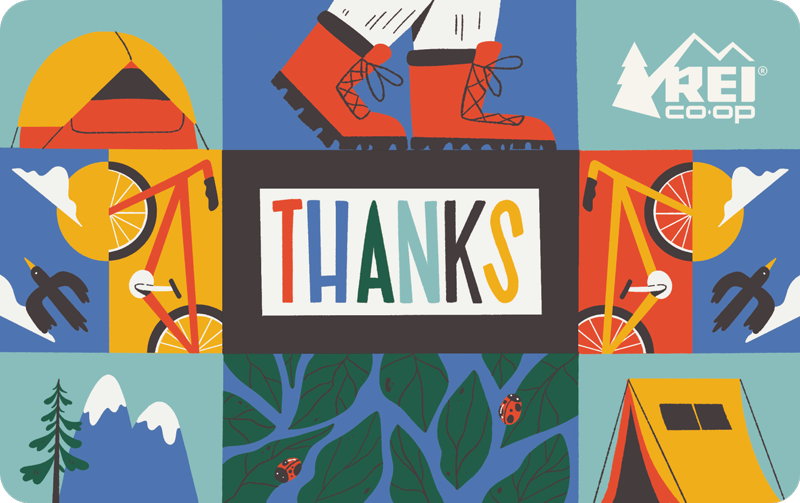 | Give the gift of gear from REI. |
| US National Parks - Annual Pass | 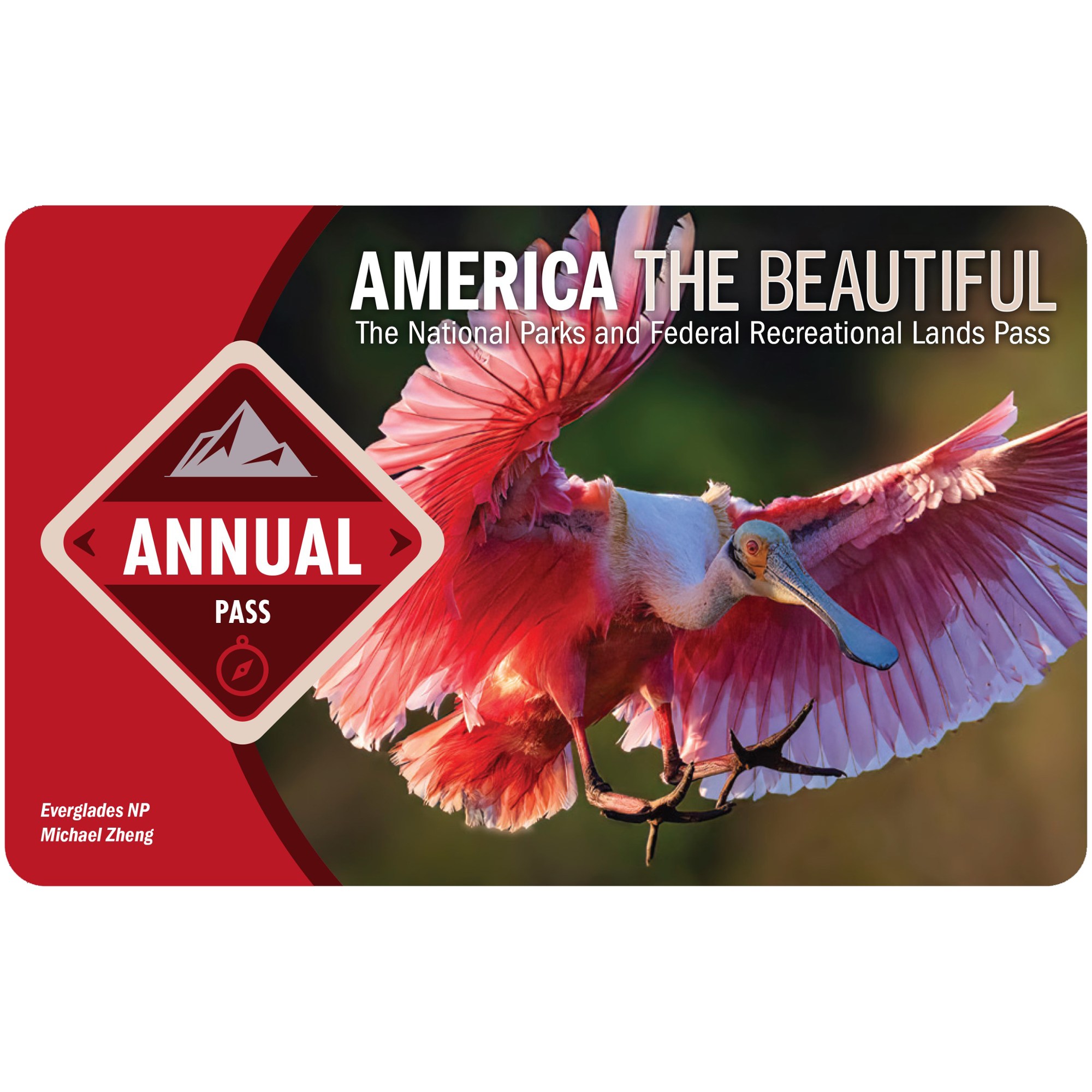 | Access federal public lands. |
REI membership provides member-only sales and coupons, plus an annual Co-op Member Reward that is typically 10% on eligible full-price purchases. Sale items and other excluded purchases do not earn the reward.
An REI gift card lets a hiking partner choose the gear and fit they need. Physical and electronic versions are available.
The America the Beautiful annual pass covers entrance and standard day-use fees. It works at participating federal recreation sites, including national parks, and can cover several fee areas on one trip. Reservations and backcountry permits remain separate. The correct pass depends on residency and eligibility.

Headlamps, Flashlights, & Lanterns
Headlamps are the most useful lighting tool for backpacking because they keep both hands free for hiking, cooking, pitching shelter, and managing gear in the dark. Flashlights provide more focused handheld light and work well as backups or for quick camp tasks. Lanterns are useful for group camps, basecamps, and shared cooking areas, but they usually add weight and are less necessary for minimalist trips.
Decision Guidance
Choose a lighting system based on trip length, remoteness, and how much nighttime travel you expect. A reliable headlamp with good low-output performance, weather resistance, and enough battery life is the best primary choice for most backpackers.
Keychain lights are best used as backup or convenience lights for finding gear, reading a map briefly, or handling short camp tasks. Long-runtime lights are useful for thru-hiking, winter trips, expeditions, group leadership, and emergency kits where power conservation matters more than maximum brightness. Very bright lights are specialized tools for route-finding, signaling, searching, river crossings, or moving through complex terrain at night, but they usually trade brightness for shorter runtime, more heat, and higher battery demand.
Recommended Headlamps, Flashlights, & Lanterns
| Product | Photo | Recommendation reason |
|---|---|---|
| Petzl Swift LT | 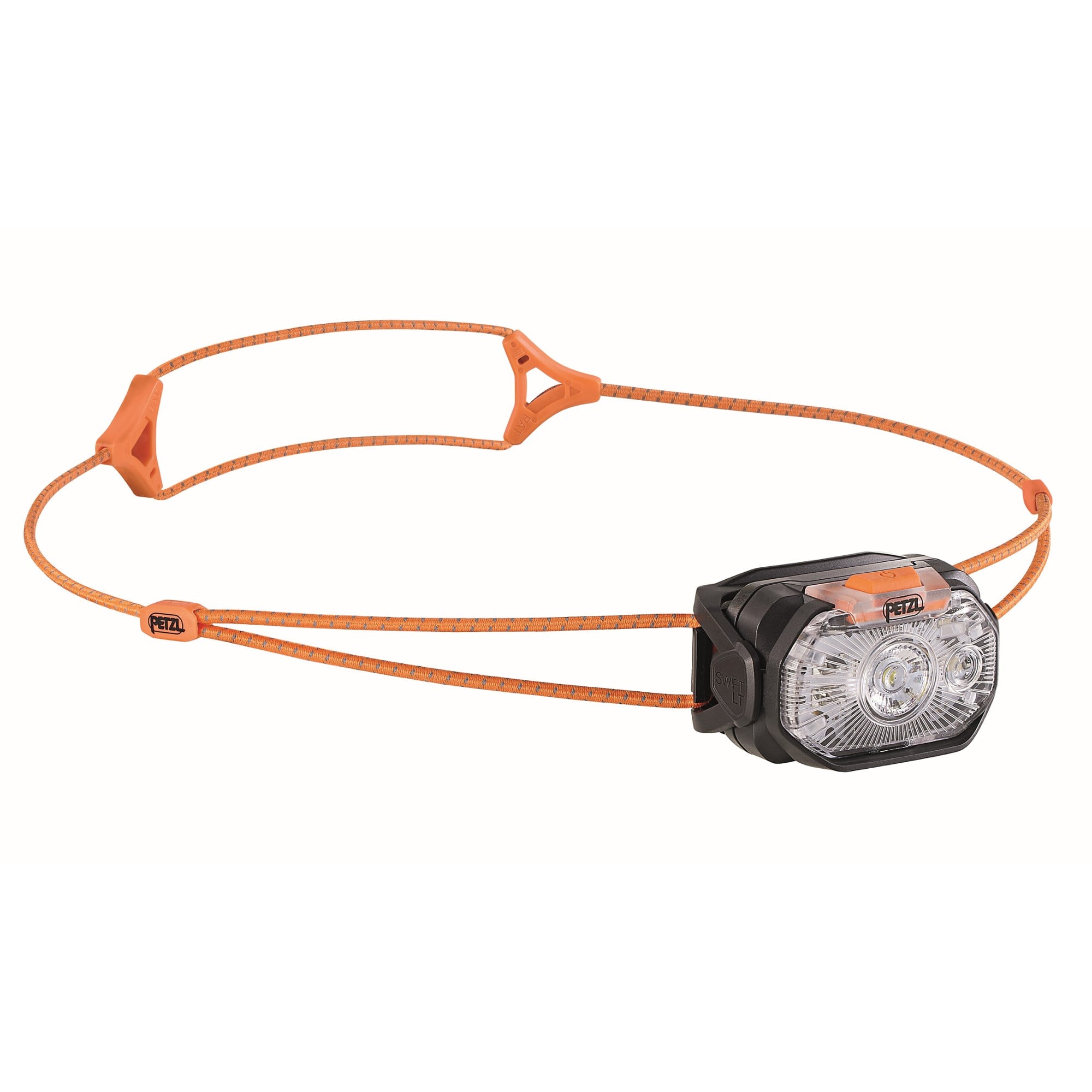 | Ultralight rechargeable headlamp. |
| Black Diamond Distance LT 1100 Headlamp | 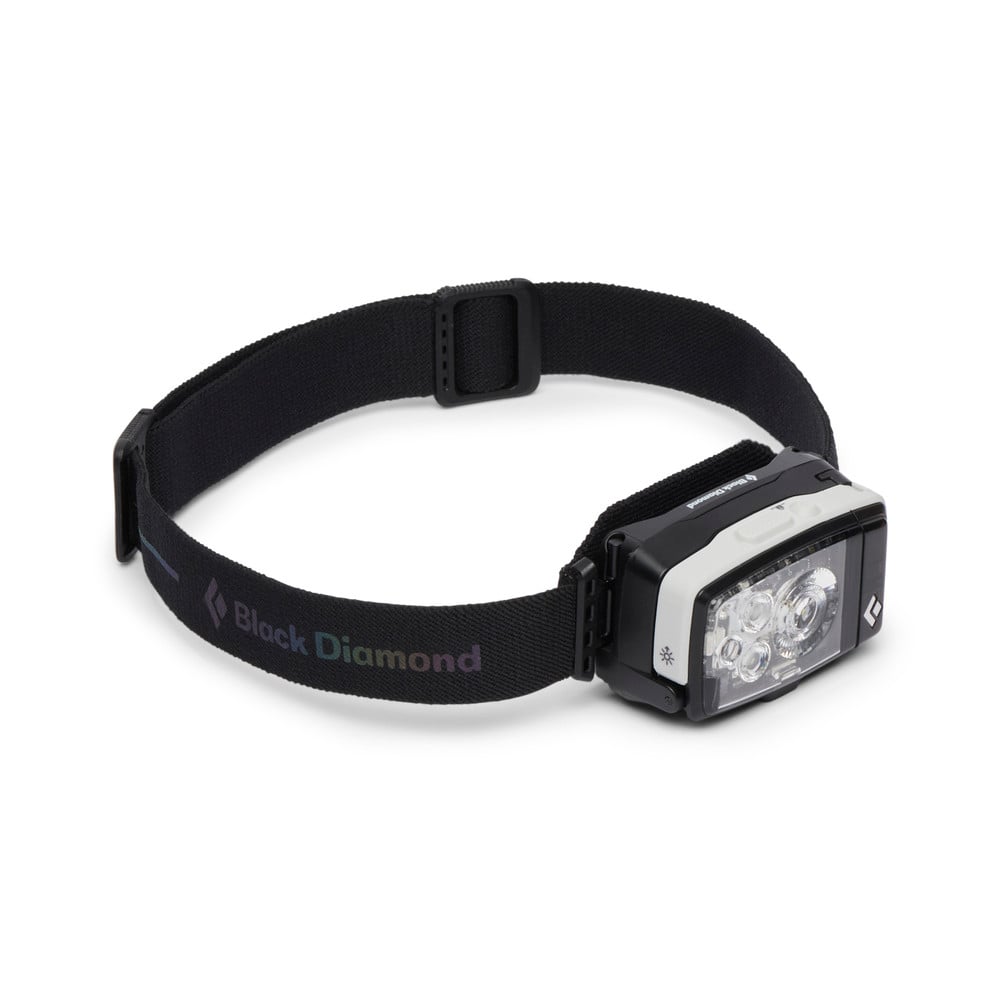 | High brightness for nighttime travel. |
| Black Diamond Storm+ Headlamp |  | Long battery life. |
| Coast G22R | 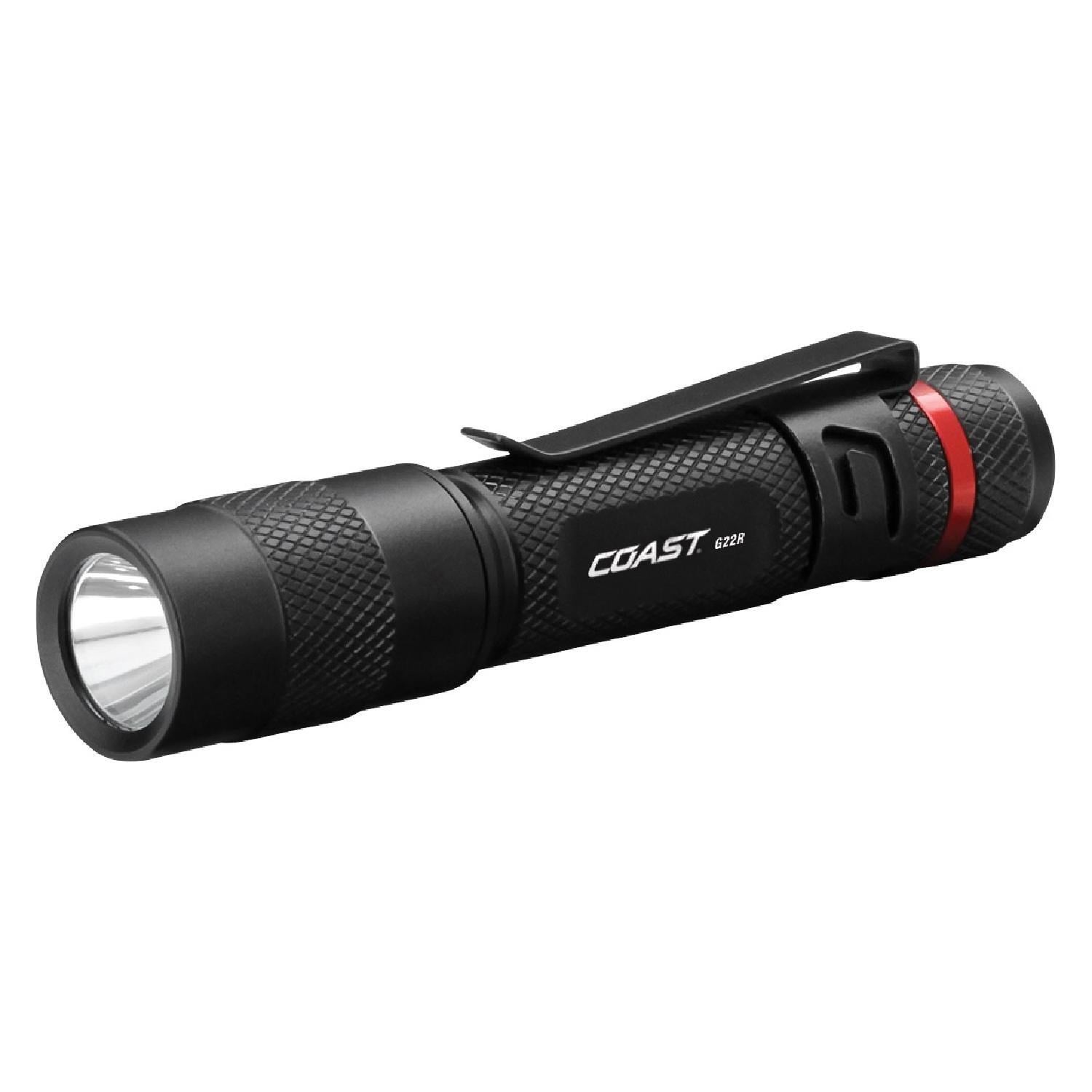 | Keychain, pocket, or backup light. |
| Black Diamond Moji R+ Lantern | 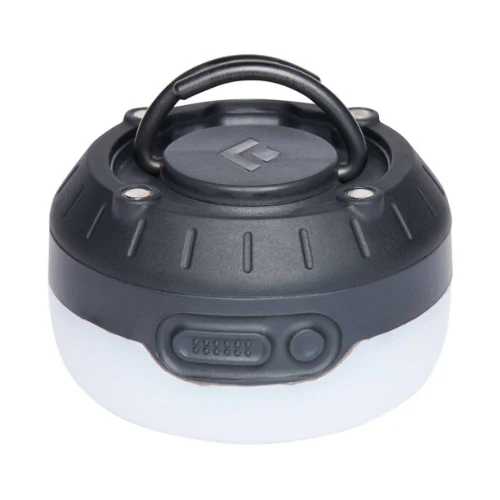 | For lighting the inside of a tent. |
At 43 grams, the Swift LT combines a wide, uniform beam with three regulated white-light levels. Maximum output is 380 lumens. It charges through USB-C and includes red-light and strobe modes in a compact headlamp for camp tasks and trail travel.
The Distance LT 1100 has a lamp assembly that pivots independently of the battery housing. Adjusting the beam does not shift the battery against your head. High mode has a maximum output of 600 lumens and a runtime of 4.25 hours; the 1,100-lumen boost dims after 10 seconds. It weighs 3.8 ounces and has an IP67 housing.
The Storm+ combines long runtime at useful hiking brightness with operation while charging and controls that are easy to use with gloves. Two large buttons operate its spot and flood beams. Its 2,200 mAh battery charges through USB-C, and maximum output is 750 lumens. It weighs 4.02 ounces with the battery, has an IP67 housing, and includes a lock against accidental activation.
The G22R accepts either its USB-C rechargeable battery or an AAA alkaline battery. Its 150-lumen spot beam, aluminum body, and pocket clip make a compact pocket or backup light for short camp tasks.
We recommend the Moji R+ for lighting the inside of a tent. Its frosted globe spreads the light evenly, and dimming lets you set the brightness for reading or a shared shelter. It has a 200-lumen maximum, double-hook suspension, and a 1,500 mAh battery. It charges through Micro-USB.
Satellite Messaging
Satellite messengers allow backpackers to send location updates, basic text messages, and emergency SOS signals when cellular service is unavailable. They are most useful for remote trips, solo travel, off-trail routes, winter travel, international trips, and itineraries where delayed check-ins could trigger unnecessary concern or rescue response.
Decision Guidance
Choose a satellite messenger based on communication needs, coverage, battery life, subscription cost, and ease of use under stress. Basic one-way or preset-message devices can be adequate for simple check-ins, while two-way messaging is more useful for changing plans, coordinating pickups, receiving weather updates, or managing non-emergency problems in the field. For high-consequence trips, prioritize reliable SOS activation, clear status indicators, weather resistance, and enough battery capacity to remain functional for the full trip.
Recommended Satellite Messaging
| Product | Photo | Recommendation reason |
|---|---|---|
| Garmin inReach Mini 3 Plus |  | Premium satellite messaging with a touchscreen and voice recording. |
| Garmin inReach Messenger PLUS | 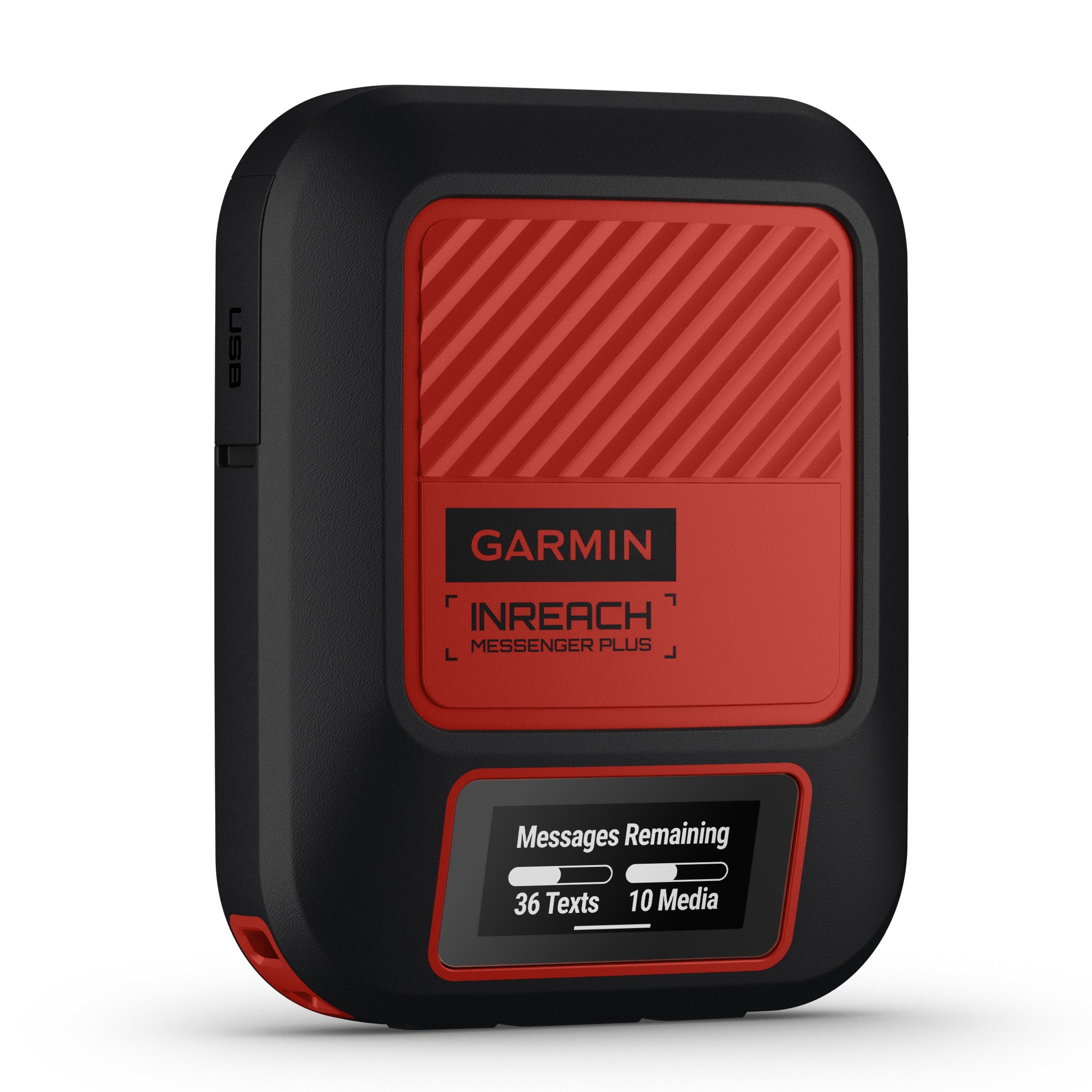 | Long battery life, with photo and voice messaging. |
| Zoleo Satellite Communicator |  | Satellite messaging with a dedicated number, long app messages, and medical assistance. |
The inReach Mini 3 Plus combines satellite communication with navigation on the device itself. Its color touchscreen supports text composition, photo viewing, and transcripts of incoming voice messages. It also supports photo and voice messaging, tracking, and interactive SOS over Iridium.
The inReach Messenger Plus combines long battery life with satellite photo and voice messaging. Battery life is up to 600 hours in low-power messaging mode or 110 hours in performance messaging mode. Both figures assume a full sky view and a text message or location sent every 10 minutes. We have found its multimedia messaging reliable in field use. It also supports reverse charging and works with Garmin Messenger for communication and Garmin Explore for navigation.
- can transmit photos and voice memos
- reverse-charging capability
- integrates with both Garmin Messenger (messaging) and Garmin Explore (navigation) smartphone apps
Zoleo’s service package combines a dedicated SMS number and email address, app-to-app messages of up to 900 characters, and non-emergency medical assistance through Global Rescue. Its testing options let you check service operation before a trip, including a test exchange with Medical Assist. Affordability adds to its appeal. Full messaging requires a paired smartphone.
ABC/GPS/Physiology Watches
ABC, GPS, and fitness watches can provide altitude, barometric pressure, compass bearing, route tracking, heart rate, pace, distance, and other trip data from the wrist. They are most useful for navigation support, monitoring weather trends, tracking effort, logging routes, and managing pace on long hikes, mountain routes, or training-focused trips.
Decision Guidance
Choose a watch based on the information you actually use in the field. ABC watches are useful for altitude, barometric trend, and compass functions without full GPS battery demands. GPS watches add route tracking, navigation prompts, and distance data, but require more frequent charging. Fitness watches are best for hikers who care about training metrics, recovery, pace, and heart rate, but they should not replace a map, compass, dedicated GPS, or smartphone navigation system on higher-consequence trips.
Recommended ABC/GPS/Physiology Watches
| Product | Photo | Recommendation reason |
|---|---|---|
| Garmin Fenix 9 Pro |  | Premium GPS watch with detailed maps and a high-resolution display. |
| COROS APEX 4 | 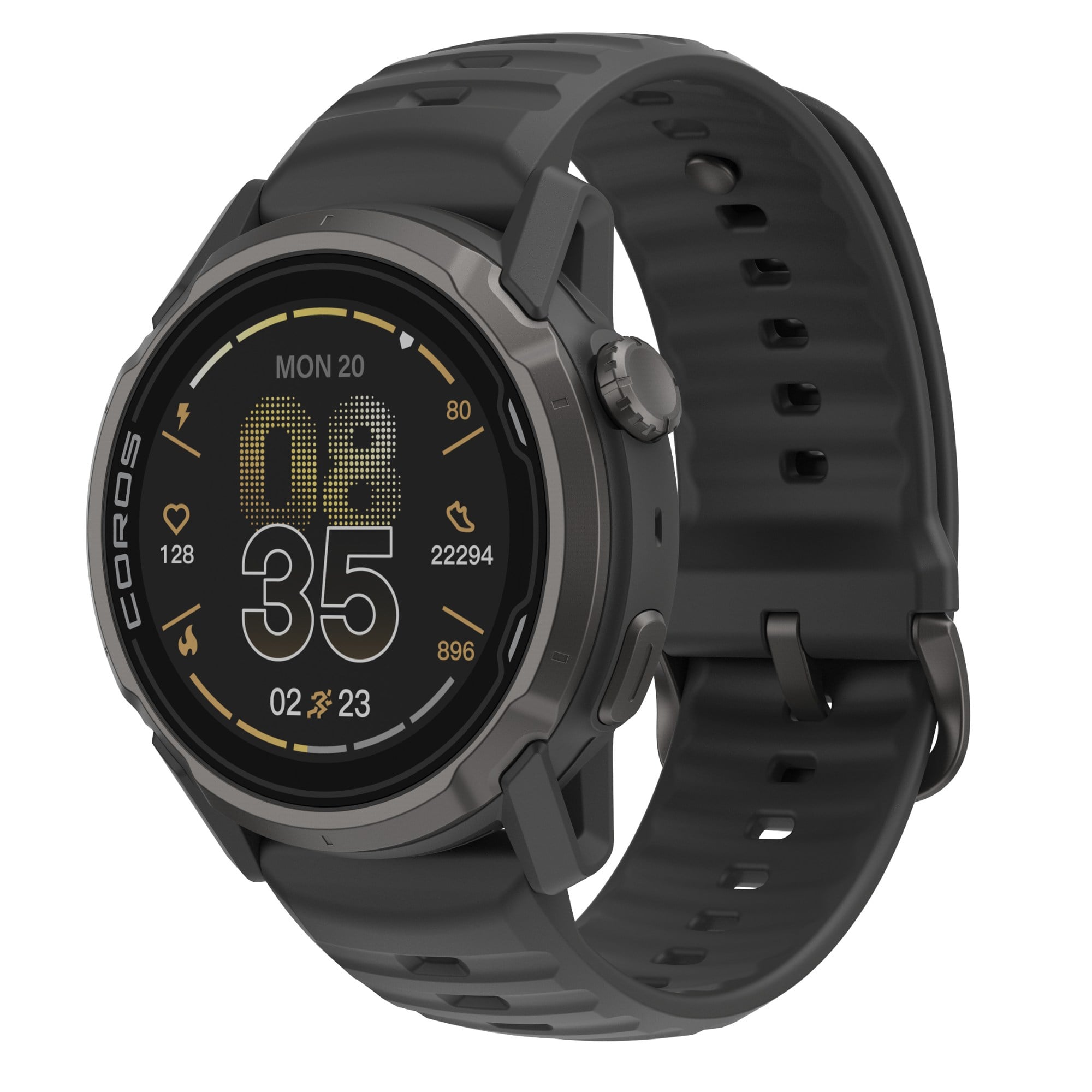 | Affordable GPS watch with mapping. |
The Fenix 9 Pro’s high-resolution AMOLED display presents detailed maps and trail data on the wrist. The 51 mm model has a 1.5-inch, 466 × 466-pixel screen; the 47 mm model has a 1.4-inch, 454 × 454-pixel screen. Both pair the display with a sapphire lens.
The APEX 4 combines downloadable landscape and topographic maps, trail and street names, and turn-by-turn navigation at an accessible price: $429 for the 42 mm model and $479 for the 46 mm model. Battery life in Endurance All Systems mode is 41 and 65 hours, respectively. Both have an always-on Memory-in-Pixel touchscreen, sapphire glass, and a titanium bezel. With silicone bands, the 42 mm model weighs 56 grams and the 46 mm model weighs 64 grams.
Chargers & Accessories
Portable battery chargers extend the usable life of phones, headlamps, satellite messengers, GPS devices, cameras, and other electronics on backpacking trips. They are most useful for multi-day trips, cold-weather travel, smartphone-based navigation, photography, satellite messaging, and trips where recharging opportunities are limited.
Decision Guidance
Choose a battery charger based on total energy needs, trip length, device mix, charging speed, weight, and weather resistance. Smaller power banks are adequate for short trips or emergency phone top-offs. Larger-capacity chargers are better for thru-hiking, winter trips, camera use, heavy navigation, or multiple devices. Prioritize reliable output, appropriate cable compatibility, cold-weather performance, and enough capacity to finish the trip with a margin, rather than carrying excess battery weight for unlikely use cases.
Recommended Chargers & Accessories
| Product | Photo | Recommendation reason |
|---|---|---|
| Anker MagGo Ultra-Slim Power Bank (5000 mAh) | 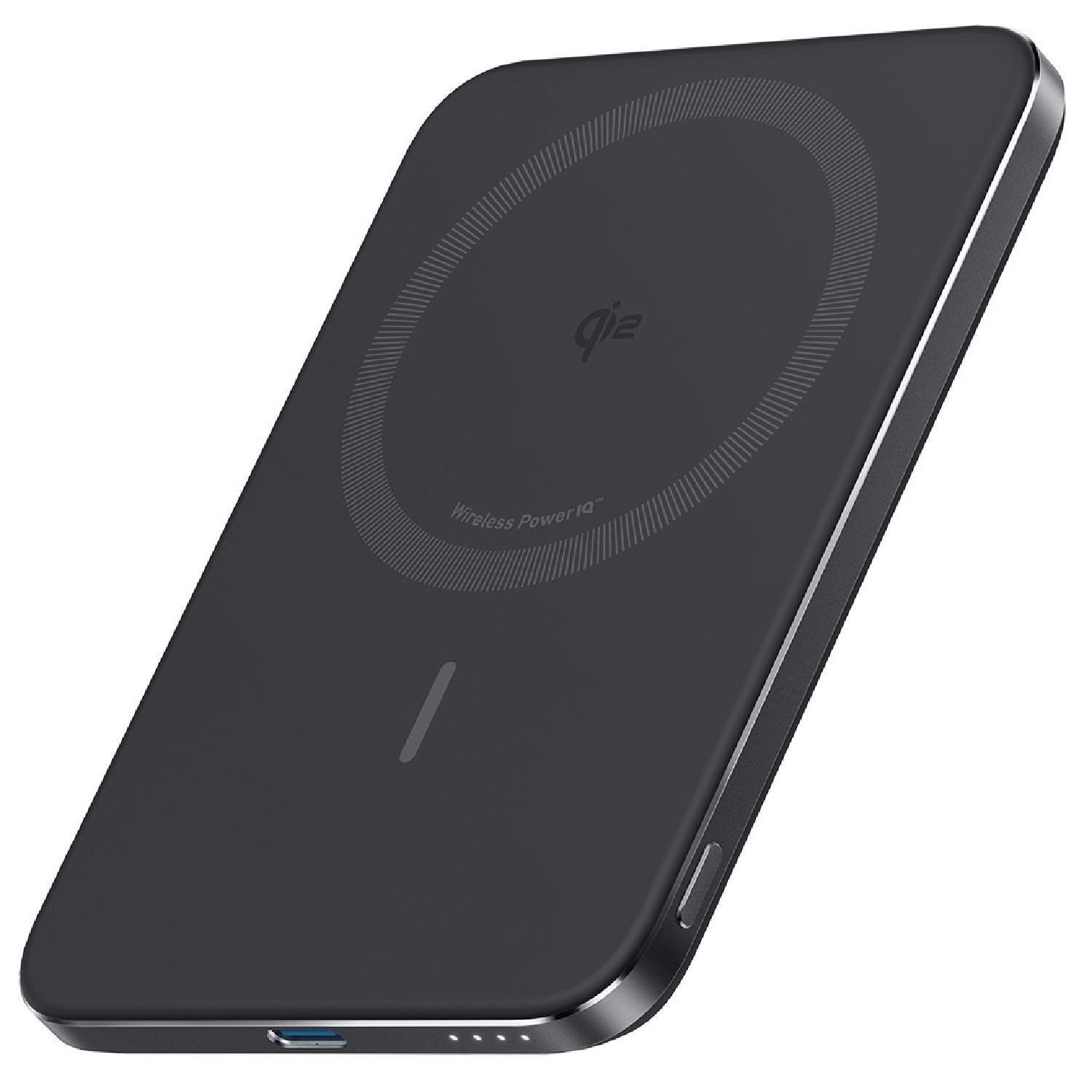 | Ultralight magnetic power bank for cable-free charging of compatible phones. |
| Anker Zolo 20K Power Bank | 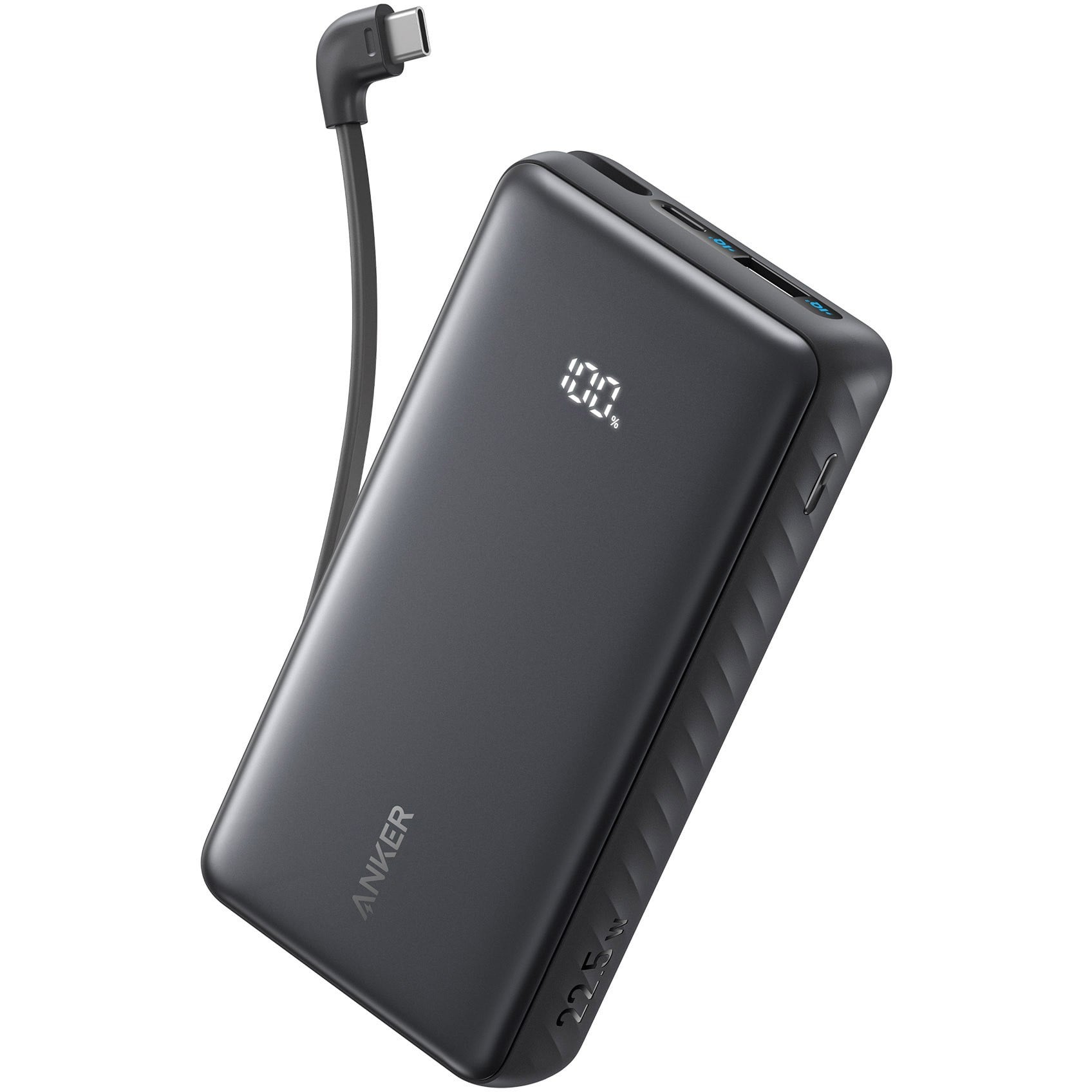 | High-capacity power bank for longer trips. |
The MagGo Ultra-Slim combines a 5,000 mAh capacity with a 3.7-ounce weight and magnetic wireless charging for compatible phones. USB-C output provides a wired option.
The Zolo 20K provides a 20,000 mAh reserve for longer trips and substantial electronics use. A built-in 7-inch USB-C cable stays with the bank. It weighs 13.8 ounces.
Shelters

Backpacking shelters range from fully enclosed hub-and-pole tents to minimalist tarps, bivy sacks, hammocks, and four-season pyramid shelters. The best choices balance weight, weather protection, livable space, setup complexity, and adaptability to terrain and season. Our recommendations emphasize performance in adverse weather, efficient space-to-weight ratios, fabric behavior in wet conditions, structural design efficiency, and practical setup in real-world backcountry environments.
Decision Guidance
Choose a shelter based on expected weather, campsite terrain, bug pressure, group size, and how much exposure risk you are willing to manage.
Hub-and-pole tents are the most familiar option for backpackers who want enclosed protection, easier setup, and good interior livability. Side-entry tents usually provide easier access and better vestibule usability, while front-entry tents can save weight and pack size but often feel less livable. Hammocks are useful in forested environments where flat ground is limited, but they require trees, suspension management, insulation below the body, and a tarp for weather protection.
Four-season pyramid shelters are strong choices for snow, wind, and exposed terrain because they offer excellent structural efficiency and weather resistance for their weight. Lightweight tarps provide modular, low-weight protection for experienced users who are comfortable with site selection, pitching technique, and exposure management. Bivy sacks are best for minimalist shelter systems, emergency protection, alpine-style camps, or pairing with tarps when bug, splash, or wind protection is needed.
Recommended Shelters
| Product | Photo | Recommendation reason |
|---|---|---|
| Nemo Hornet Osmo Elite |  | Lightweight, compact tent with comfortable solo space in the 2P. |
| Big Agnes Copper Spur UL | 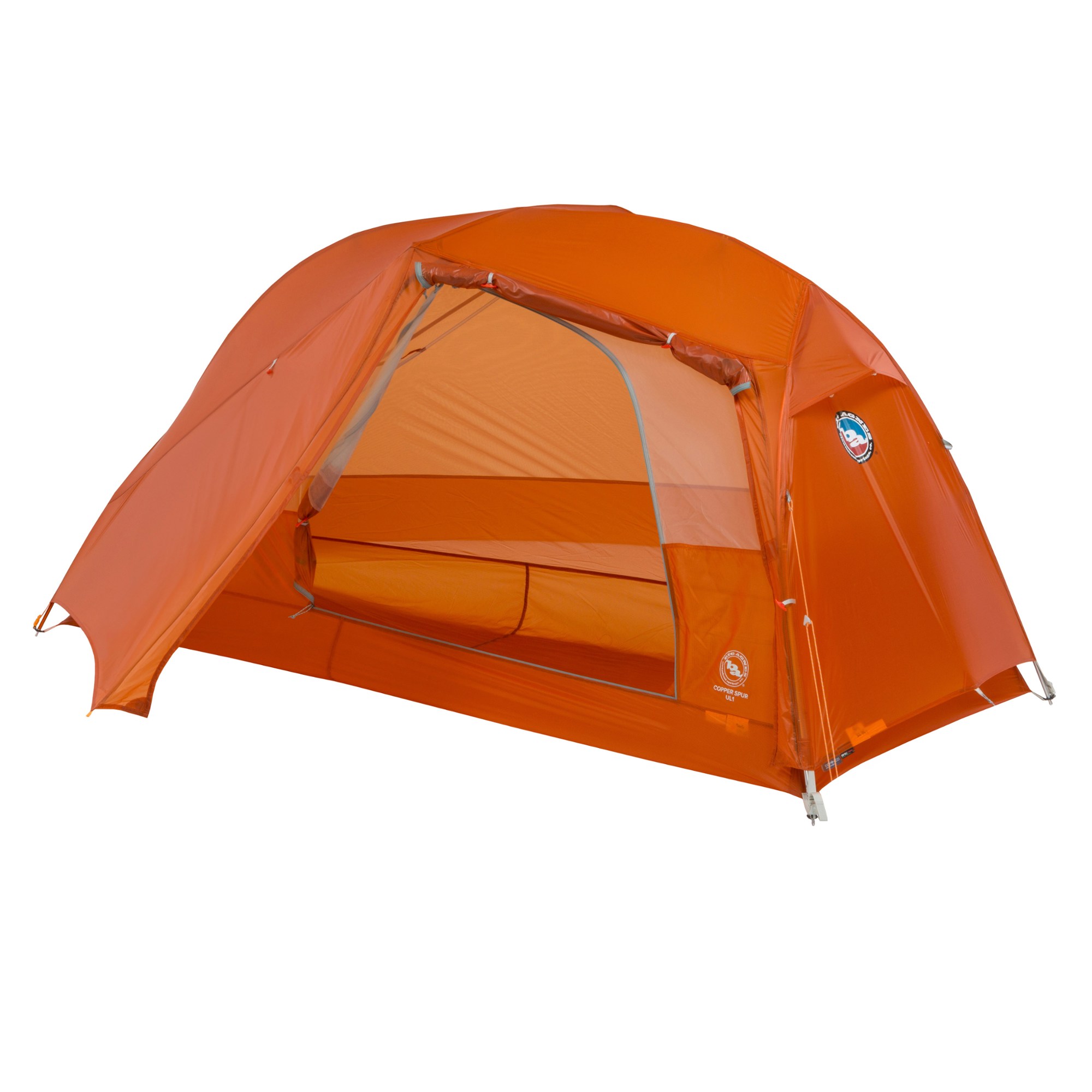 | Roomy hub-and-pole tent with good interior livability. |
| Mountain Hardwear Nimbus UL | 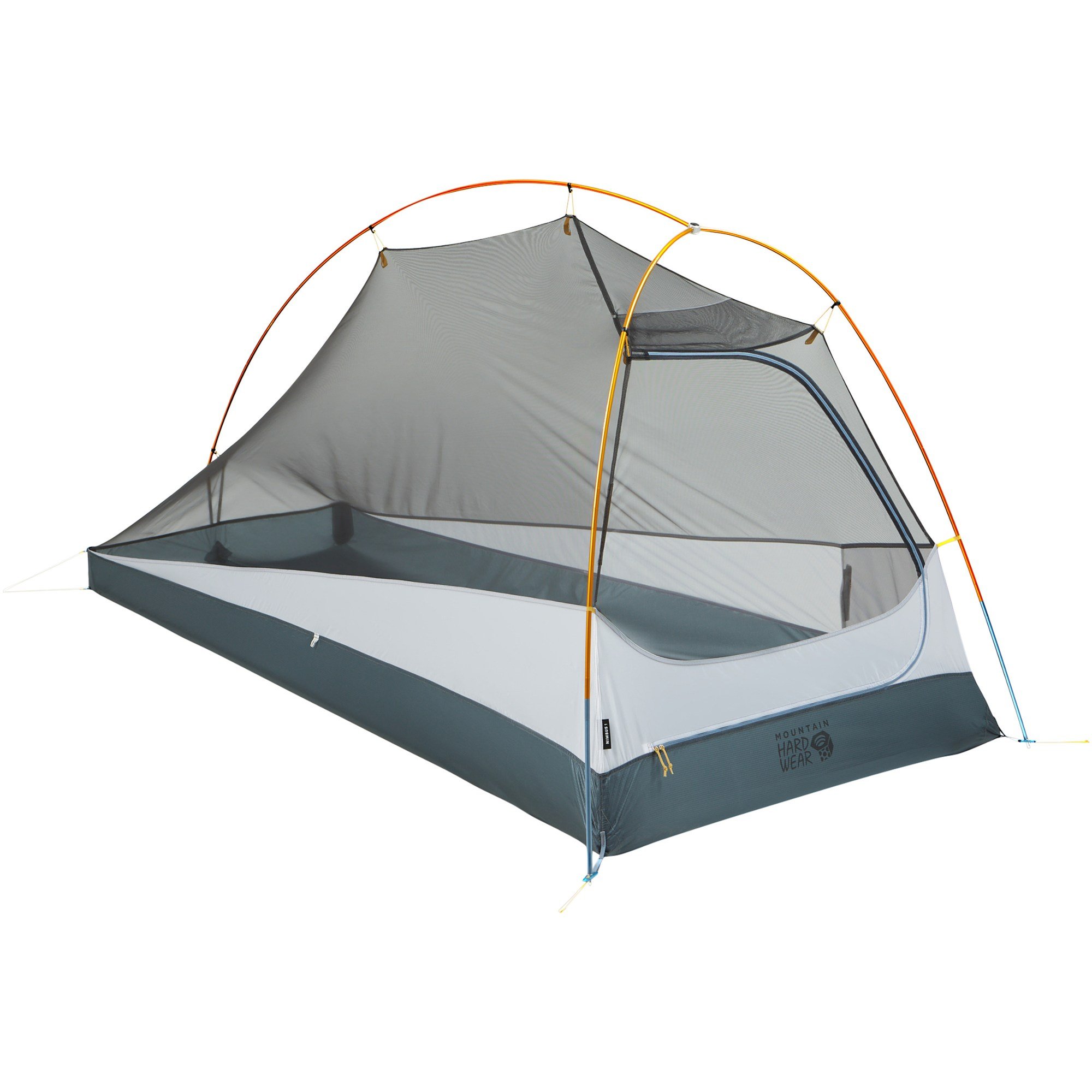 | Lightweight front-entry tent. |
| Nemo Dagger OSMO | 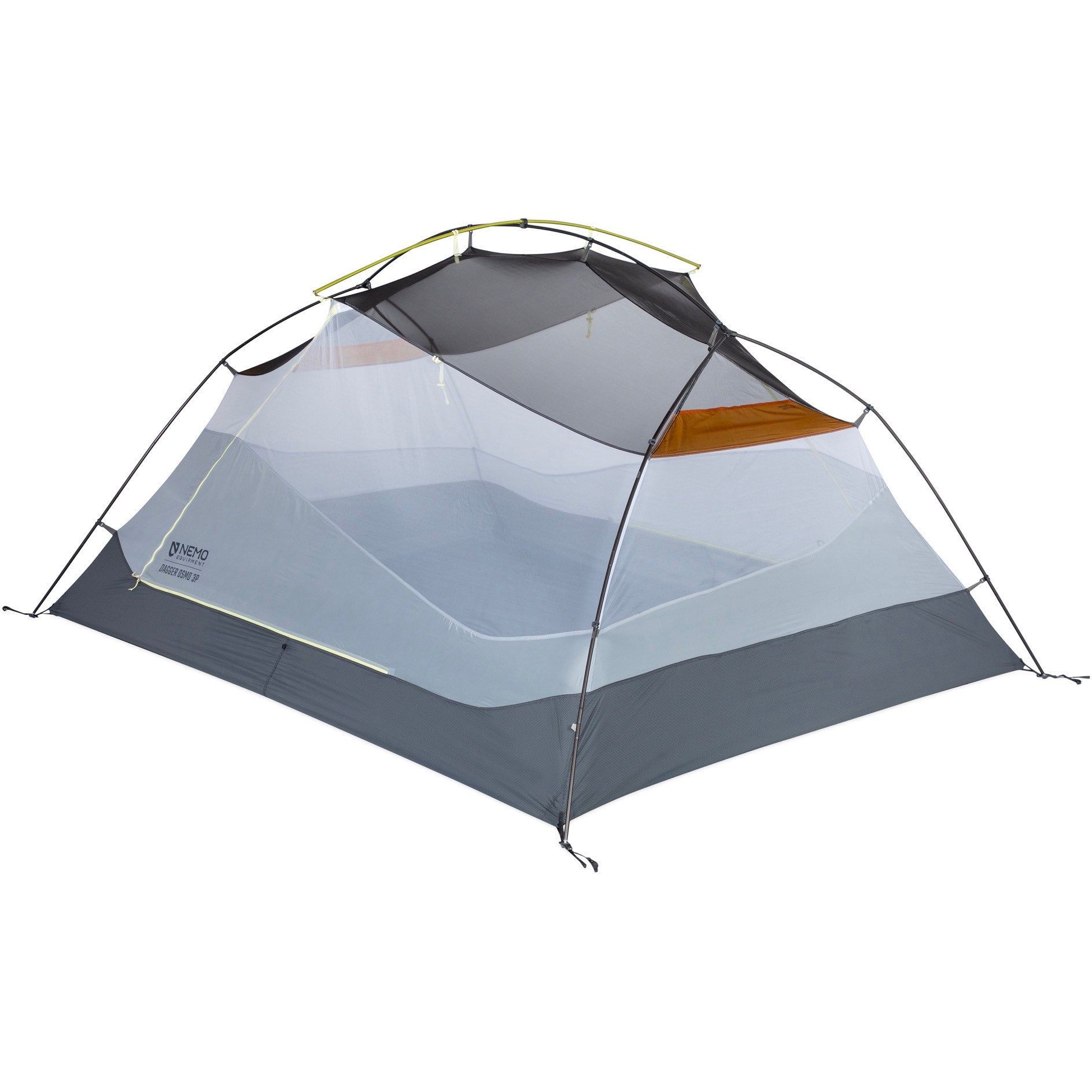 | Spacious hub-and-pole tent with strong storm resistance. |
| Kammok Mantis | 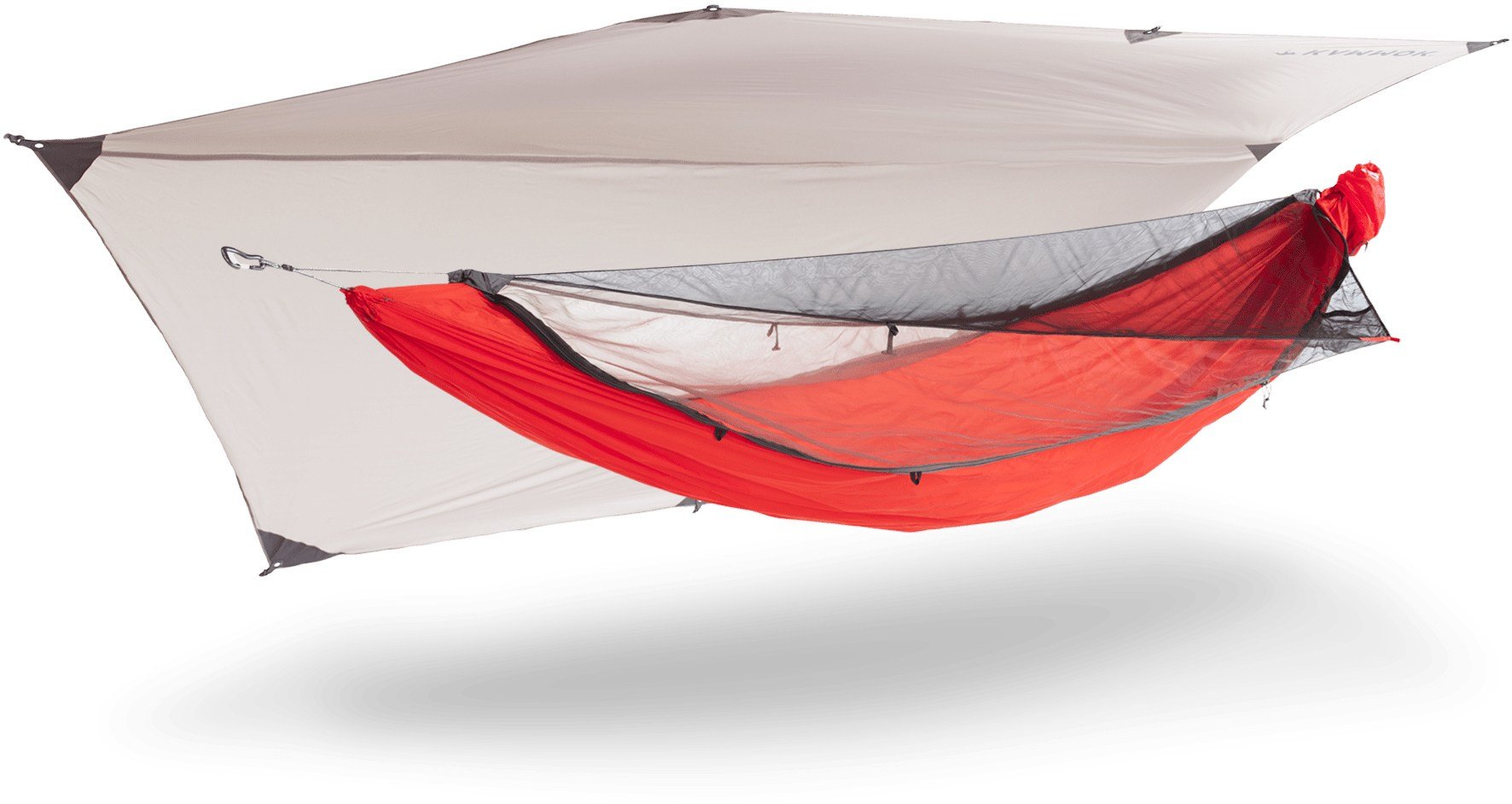 | Complete hammock shelter kit with straightforward setup. |
| MSR Front Range Shelter | 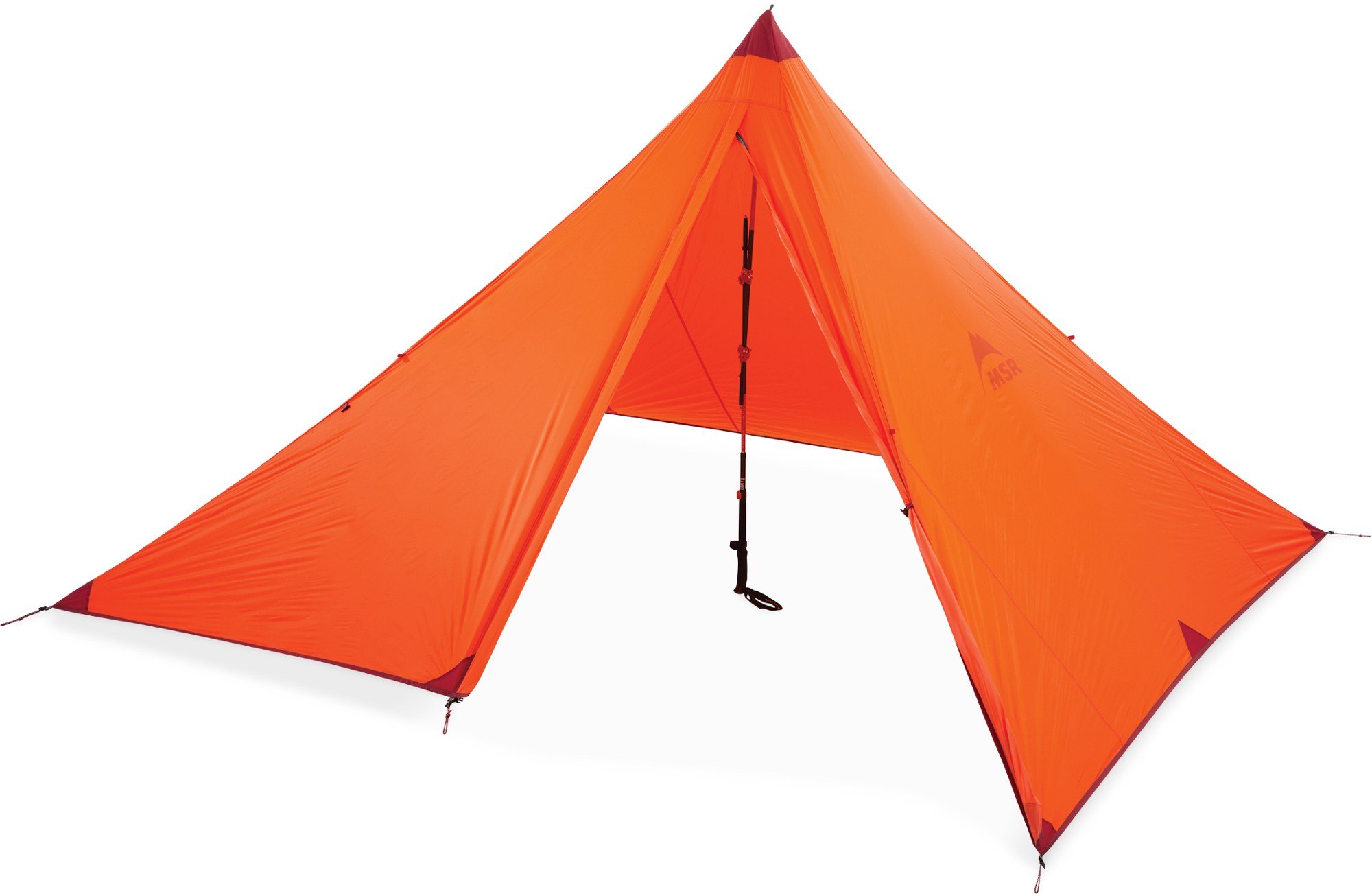 | Four-season pyramid shelter. |
| Kammok Kuhli UL | 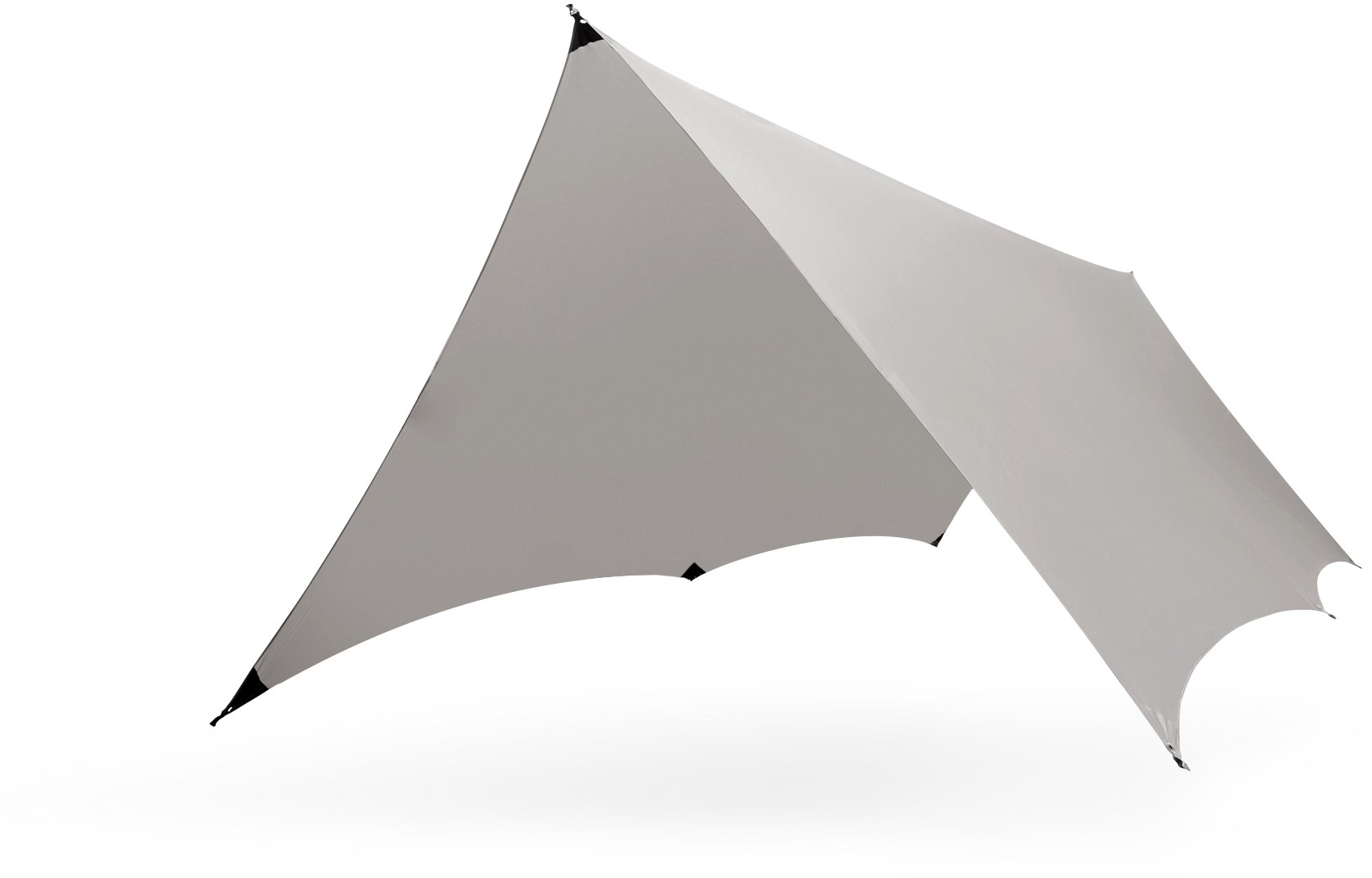 | Lightweight tarp for hammock or ground camping. |
| REI Co-op Flash Air Tarp | 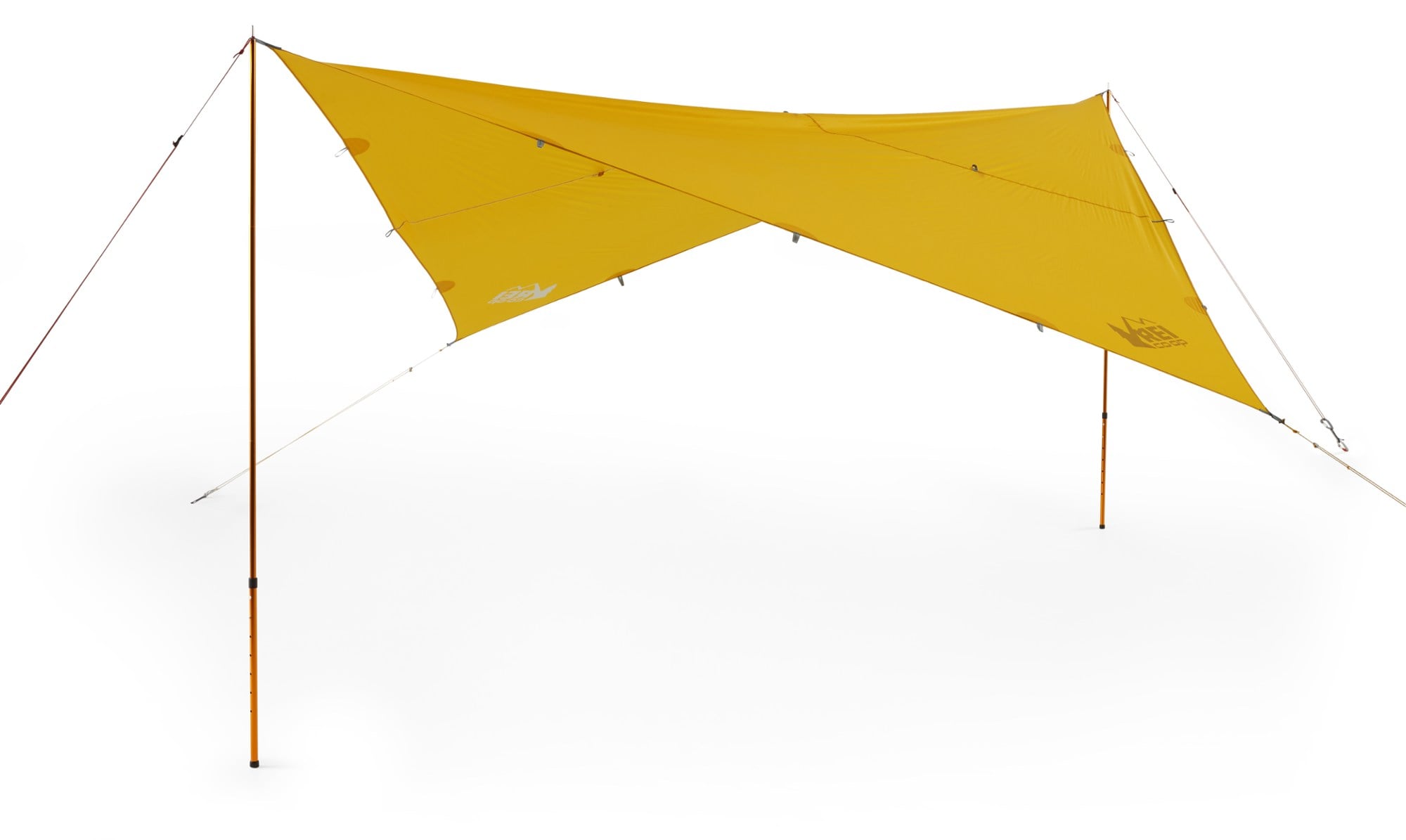 | Ultralight tarp for solo or two-person use. |
| Big Agnes Three Wire Hooped Bivy | 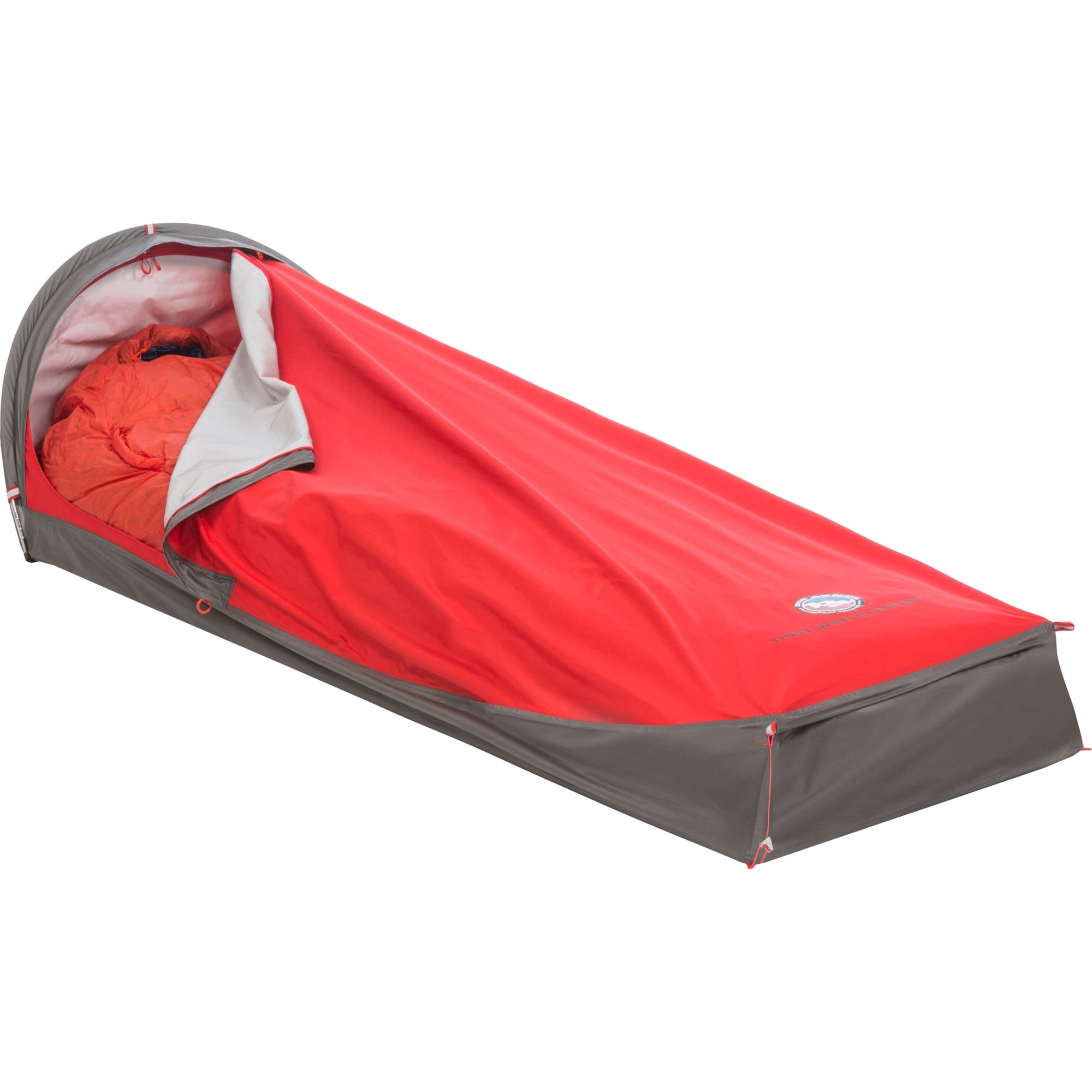 | Feature-rich bivy with easy entry and good ventilation. |
| SOL Escape Lite Bivvy | 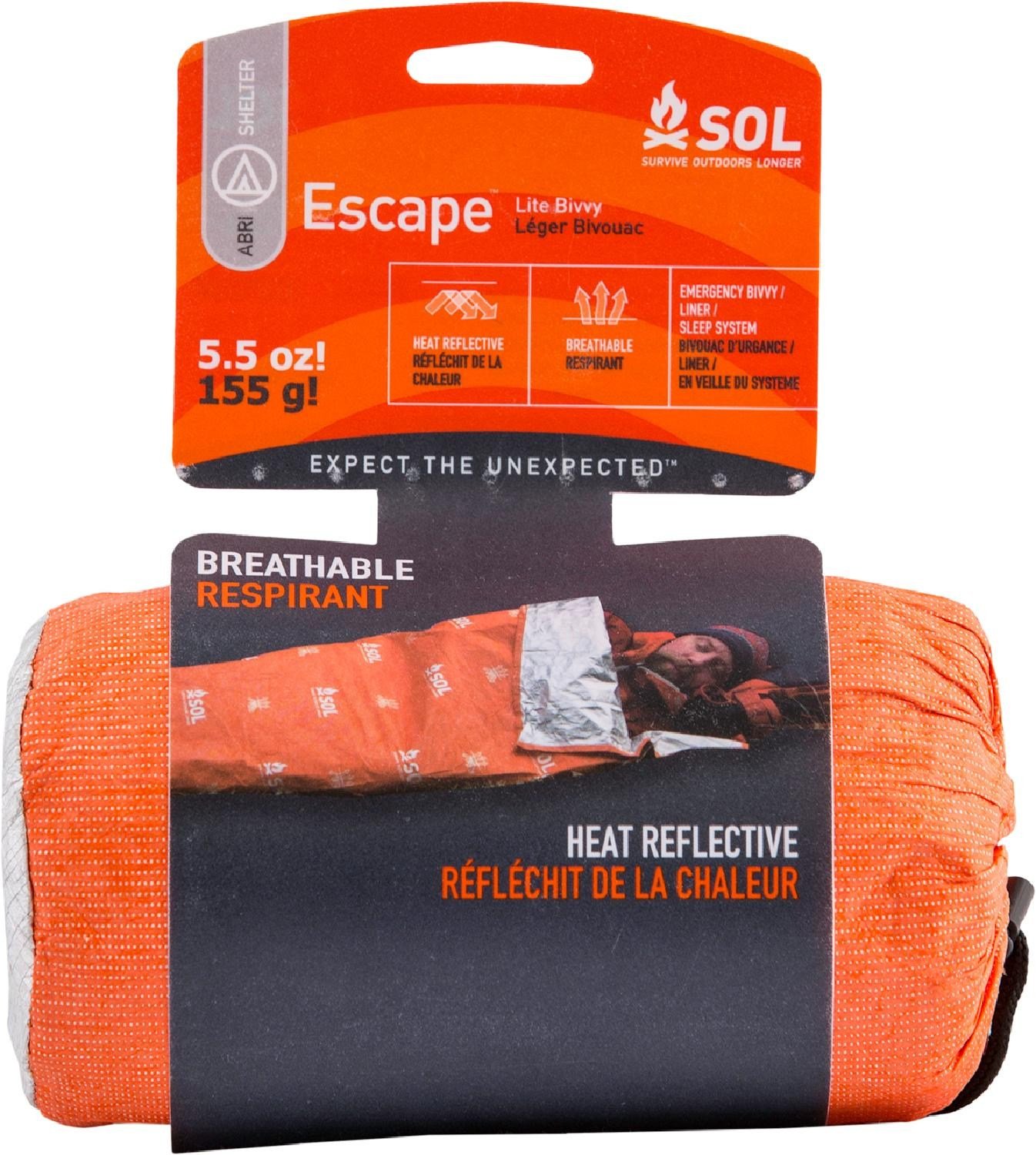 | Ultralight, breathable bivy for tarp camping and emergencies. |
The Hornet Elite OSMO combines low weight and a compact packed size with a double-wall, semi-freestanding design. The 2P provides comfortable space for one person and gear, though it is a tight fit for two adults. Its Flybar clip increases headroom without an additional pole. Careful staking and extra guylines are important in exposed or wet conditions.
We recommend the Copper Spur UL for interior living space. Its dual-hub pole structure and eyebrow pole create steep walls and usable headroom. Those walls also expose substantial area to wind. Secure all additional guylines when wind is expected.
The Nimbus UL is a lightweight front-entry tent that packs compactly. Its hub-and-pole structure provides an enclosed shelter without trekking poles. Wind stability is limited, so it is best suited to sheltered campsites.
We recommend the Dagger for generous living space and storm resistance against wind and snow loading when fully guyed. OSMO fabric limits water absorption and stretch, helping the fly hold its shape in wet conditions.
The Mantis UL includes the hammock, removable bug net, rainfly, tree straps, stakes, and lines in one kit, eliminating the need to select separate shelter components. In our testing, the knotless attachments and integrated line tensioners made setup straightforward, and the tree straps held without slipping. Sleeping insulation is separate.
The Front Range combines low weight, affordability, and a pyramid structure suited to four-season use, including snow. We find its interior roomy for two people and gear, but tight at the four-person capacity.
The Kuhli UL provides lightweight coverage for hammock or ground camping. Its catenary-cut edges produce a taut A-frame pitch with little guyline adjustment.
The Flash Air Tarp provides a 114-by-114-inch square canopy with edge and centerline attachment points for varied pitches. The seams are taped. At 1 pound 4 ounces, it is our adaptable tarp recommendation for solo or two-person use.
The Three Wire Hooped Bivy is our recommendation for easy entry, supported headroom, and ventilation in an enclosed bivy. A hoop holds fabric off the upper body, while dual door windows and two roof vents allow airflow adjustment. It has a waterproof-breathable upper and dedicated floor, and weighs 1 pound 6 ounces.
The Escape Lite is our 5.5-ounce breathable bivy for supplemental shelter and occasional use. We recommend its nonwoven construction for day-hiking contingencies, beneath tarps during storms, and inside single-wall tents when condensation threatens sleeping gear.
Sleeping Bags
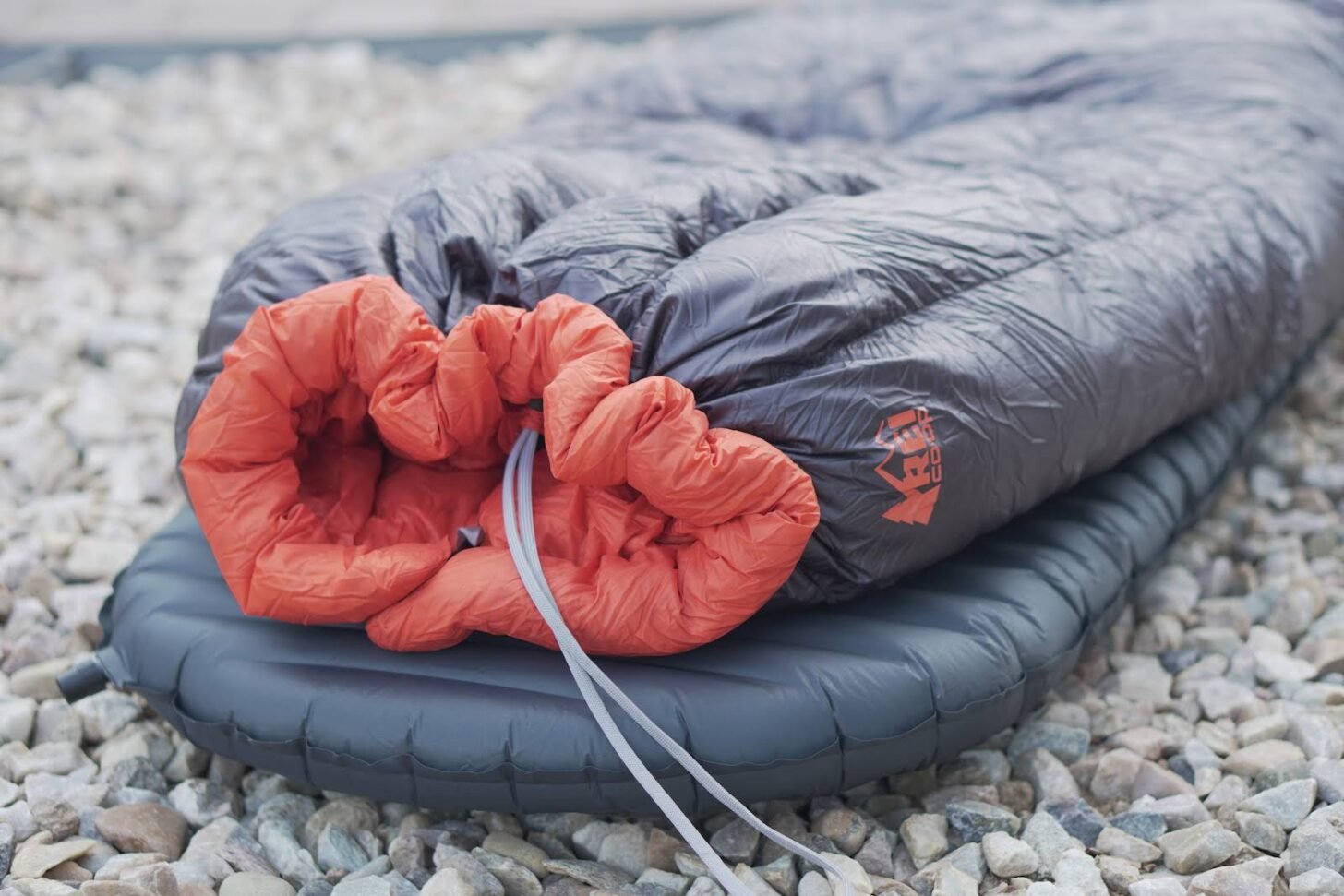
Sleeping bags and quilts provide the primary insulation system for overnight backpacking. Options range from fully enclosed mummy bags to hoodless quilts, hybrid designs, synthetic bags, down bags, summer-weight systems, and cold-weather sleep systems. Our recommendations emphasize the warmth-to-weight ratio, temperature-rating reliability, draft control, moisture management, packability, fit, construction quality, and performance under realistic backcountry conditions.
Decision Guidance
Choose a sleeping bag or quilt based on expected low temperatures, sleep style, shelter type, moisture exposure, and how much weight or simplicity you are willing to trade for warmth and security.
Mummy bags provide the most integrated warmth because they combine a hood, zipper, draft collar, and an enclosed footbox into a single system. They are the safer choice for colder conditions, exposed camps, restless sleepers, and users who want fewer variables to manage at night.
Quilts save weight and pack smaller by eliminating the underside insulation that gets compressed beneath the body, but they require a reliable sleeping pad and better draft management. They work best for experienced users, warmer conditions, hammock systems, and backpackers who value freedom of movement.
Down insulation offers the best warmth-to-weight ratio and compressibility, making it the preferred choice for most dry or cold backpacking conditions. Synthetic insulation is bulkier and heavier for the same warmth, but it retains more insulating value when damp and may be preferable for prolonged wet conditions, humid climates, or users who want lower cost and simpler care.
For cold-weather use, pay close attention to fit, pad insulation, hood design, neck sealing, and draft control. A warm bag or quilt will underperform if paired with an inadequate sleeping pad, worn with damp clothing, or used in a shelter system that allows convective heat loss.
Recommended Sleeping Bags
| Product | Photo | Recommendation reason |
|---|---|---|
| REI Magma Trail Quilt | 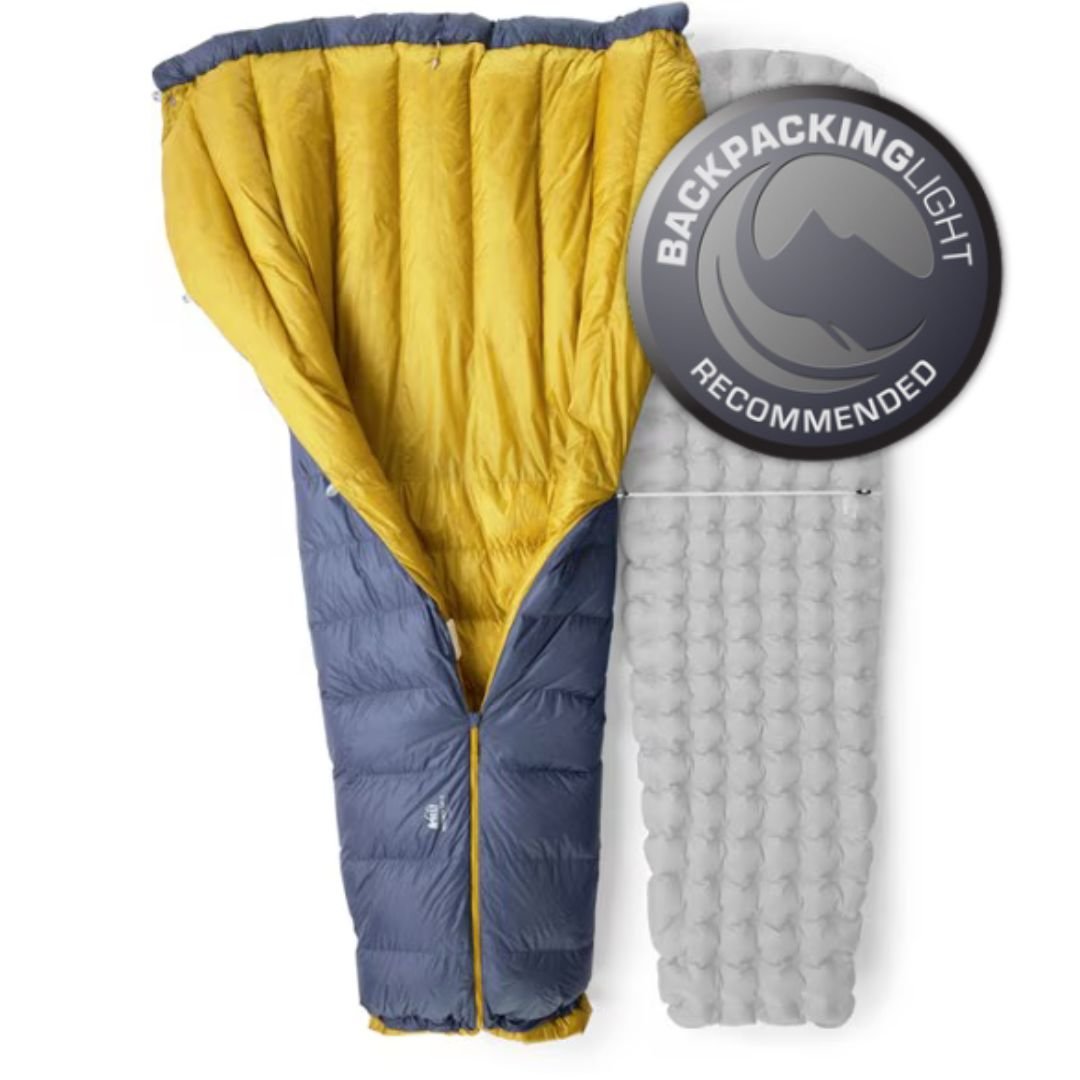 | Lightweight, affordable quilt. |
| Nemo Pulse Quilt | 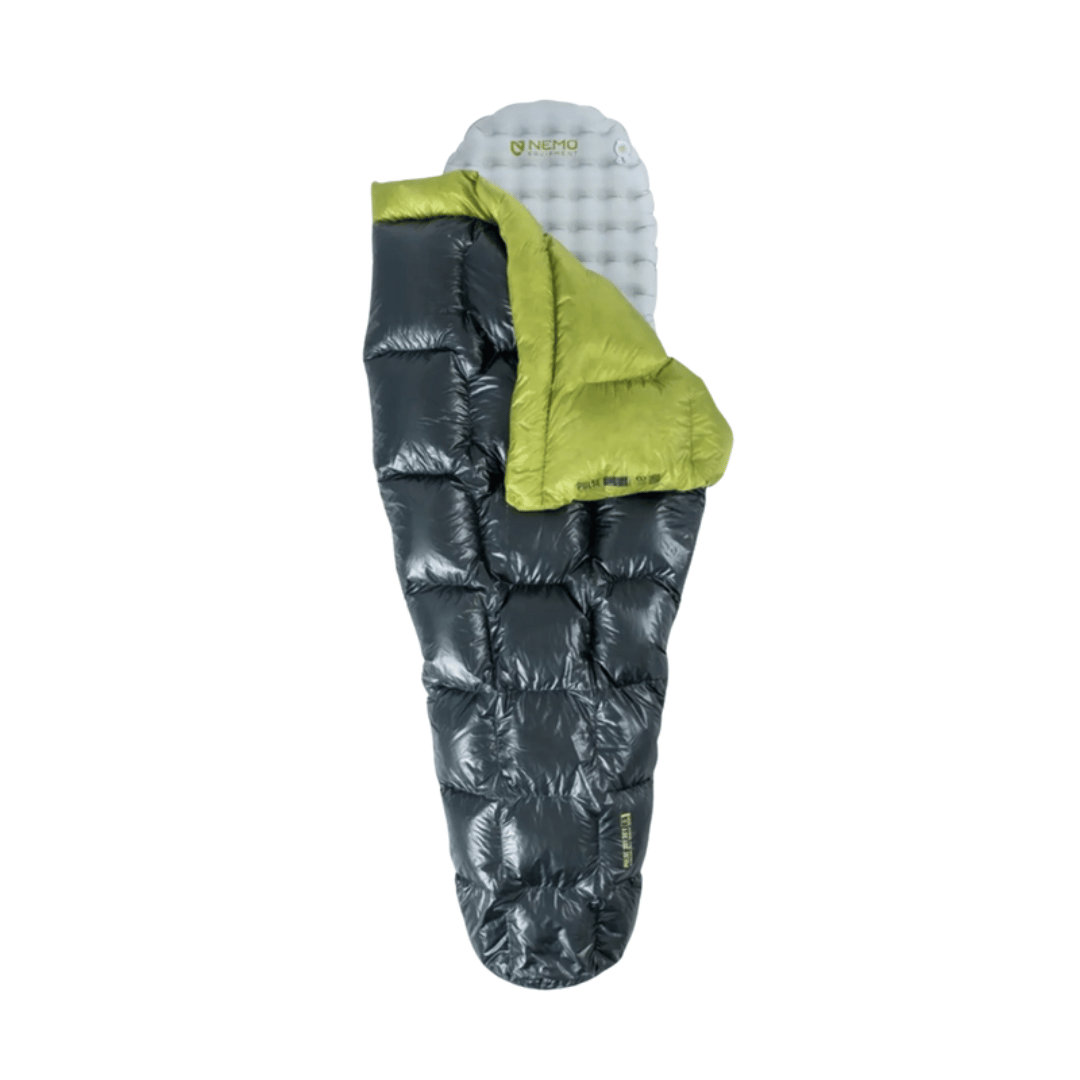 | Ultralight quilt with high warmth-to-weight performance and well-controlled down migration. |
| Western Mountaineering Alpinlite Sleeping Bag |  | High down-fill-to-weight ratio. |
The Magma Trail Quilt’s generous girth has been its most useful feature in our field use. Side sleeping did not produce the shoulder and hip compression that can create cold spots. An effective pad attachment system and insulated draft collar help control drafts. Wide sizing and a zipper-and-drawcord footbox add adjustment. We recommend it for that sleeping room, low weight, and affordability, especially on sale.
In our quilt assessment, the Pulse combined a high warmth index with baffles that worked well at limiting down migration. Ultralight fabrics and 1,000-fill-power down account for its warmth for the weight. Small interconnected compartments allow manual redistribution. A cord-based pad attachment system helps hold the quilt’s edges in place.
See it at REI, Garage Grown Gear, and Nemo.
The Alpinlite puts a high proportion of its weight into down fill. Lightweight fabrics, an insulated zipper guard, and a draft collar support that insulation without excessive added weight. We consider it a dependable three-season sleeping bag with an accurate temperature rating and effective draft control.
Sleeping Pads

Sleeping pads provide insulation, cushioning, and ground protection, and they directly affect sleep quality and warmth. Backpacking pads range from ultralight air pads to closed-cell foam pads, insulated winter pads, short pads, wide pads, and multi-pad systems. Our recommendations emphasize warmth-to-weight ratio, comfort, durability, packed size, inflation simplicity, field repairability, and performance across different temperatures and terrain.
Decision Guidance
Choose a sleeping pad based on expected overnight temperatures, sleep comfort needs, durability risk, surface conditions, and how much weight or bulk you are willing to carry.
Air pads offer the best comfort and packed size for most backpackers, but they can puncture and should be paired with a repair kit. Closed-cell foam pads are durable, inexpensive, and useful as sit pads, frame sheets, or backup insulation, but they are bulkier and less comfortable. Insulated pads are important for cold-weather trips, snow camping, and shoulder-season use where ground heat loss becomes significant. Short pads reduce weight but require the use of a pack or spare clothing under the legs. Wide or thick pads improve comfort for side sleepers and restless sleepers, but they add weight and may not fit well in narrow shelters.
For snow camping or very cold ground, a two-pad system is often more reliable than a single air pad. Pairing an insulated inflatable pad with a thin closed-cell foam pad increases total insulation, adds puncture protection, and provides a backup if the air pad fails. A thin closed-cell foam pad can also be useful on slick tent floors, where it helps reduce pad slippage and keeps an inflatable pad from sliding around during the night.
Recommended Sleeping Pads
| Product | Photo | Recommendation reason |
|---|---|---|
| Therm-a-Rest NeoAir XLite NXT |  | Popular pad with a very high warmth-to-weight ratio; some crinkling noise. |
| Sea to Summit Ether Light XR/XR-Pro ASC Insulated Air Sleeping Pads | 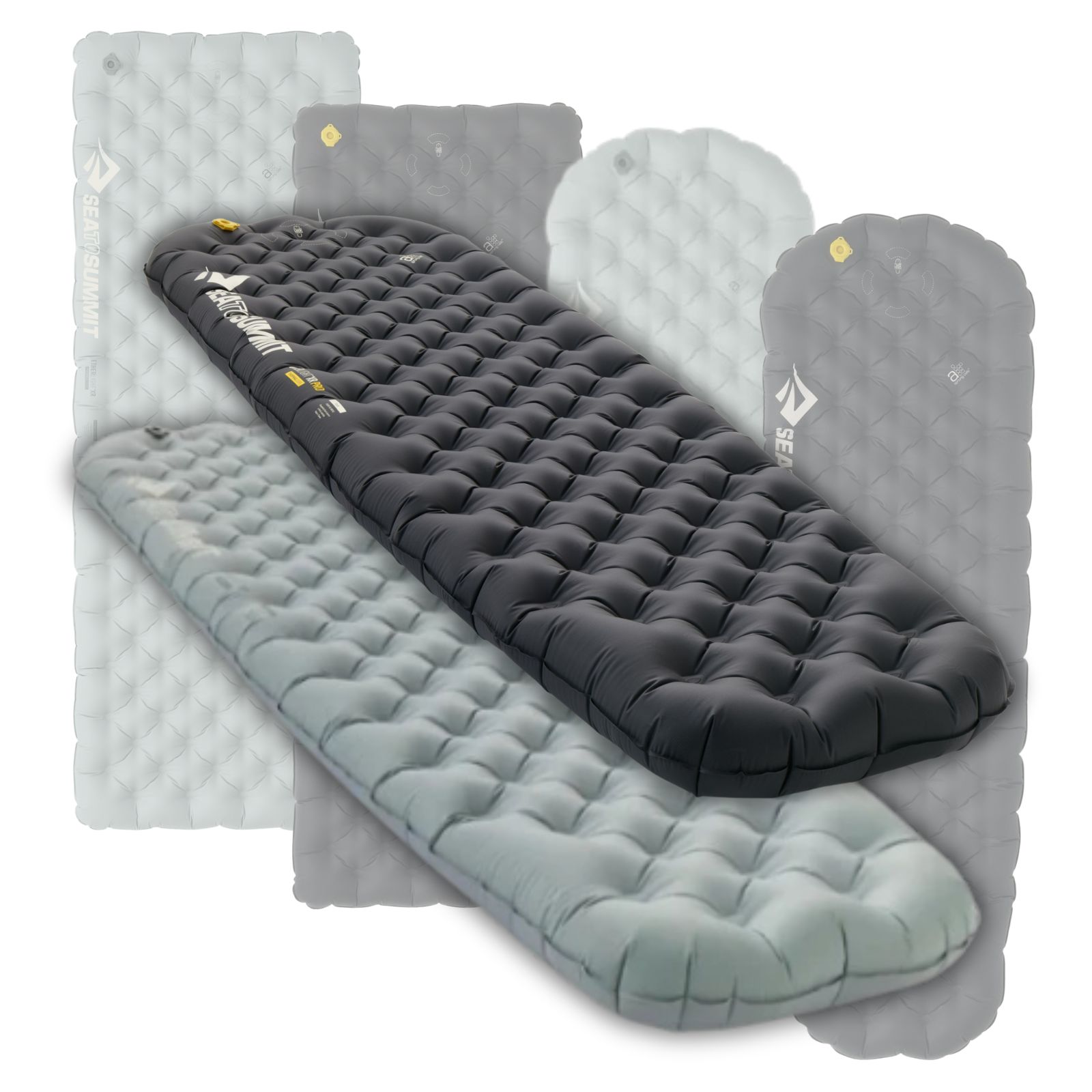 | Stable pad with a slightly wider regular-width platform and a high warmth-to-weight ratio. |
| Nemo Tensor Elite Sleeping Pad | 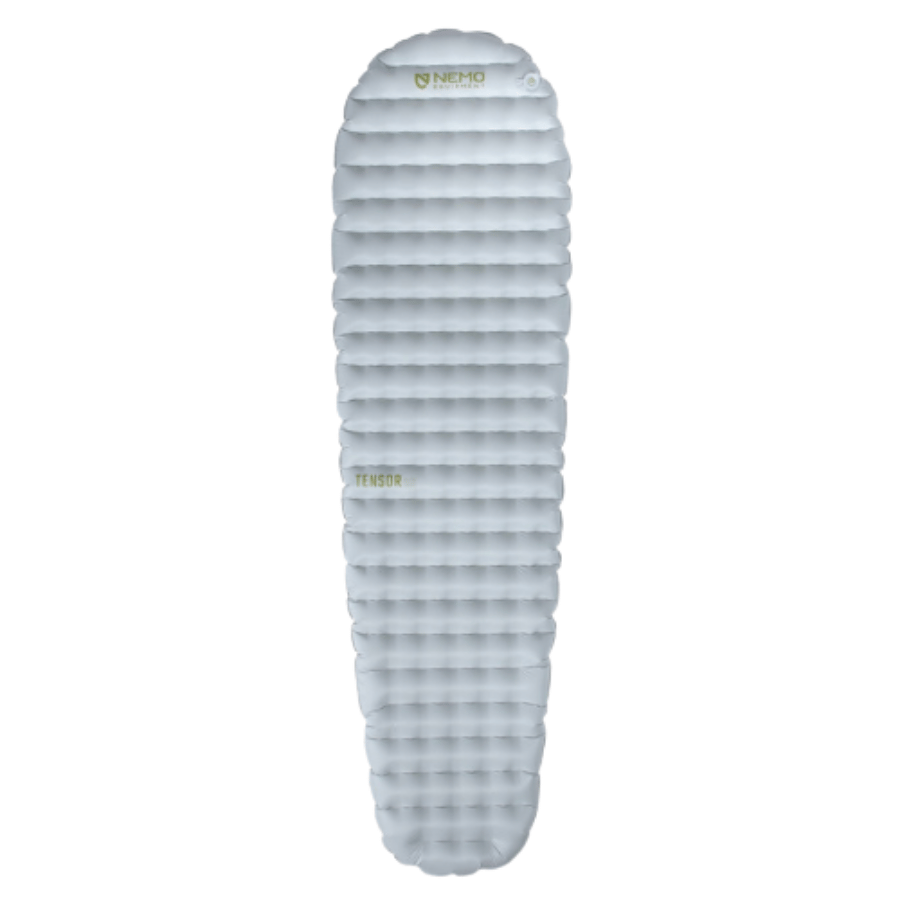 | Lightest inflatable pad. |
| Nemo Tensor Extreme Conditions Ultralight Insulated Sleeping Pad |  | Warmest, most stable pads for cold temperatures. |
| Therm-a-Rest NeoAir Xtherm NXT | 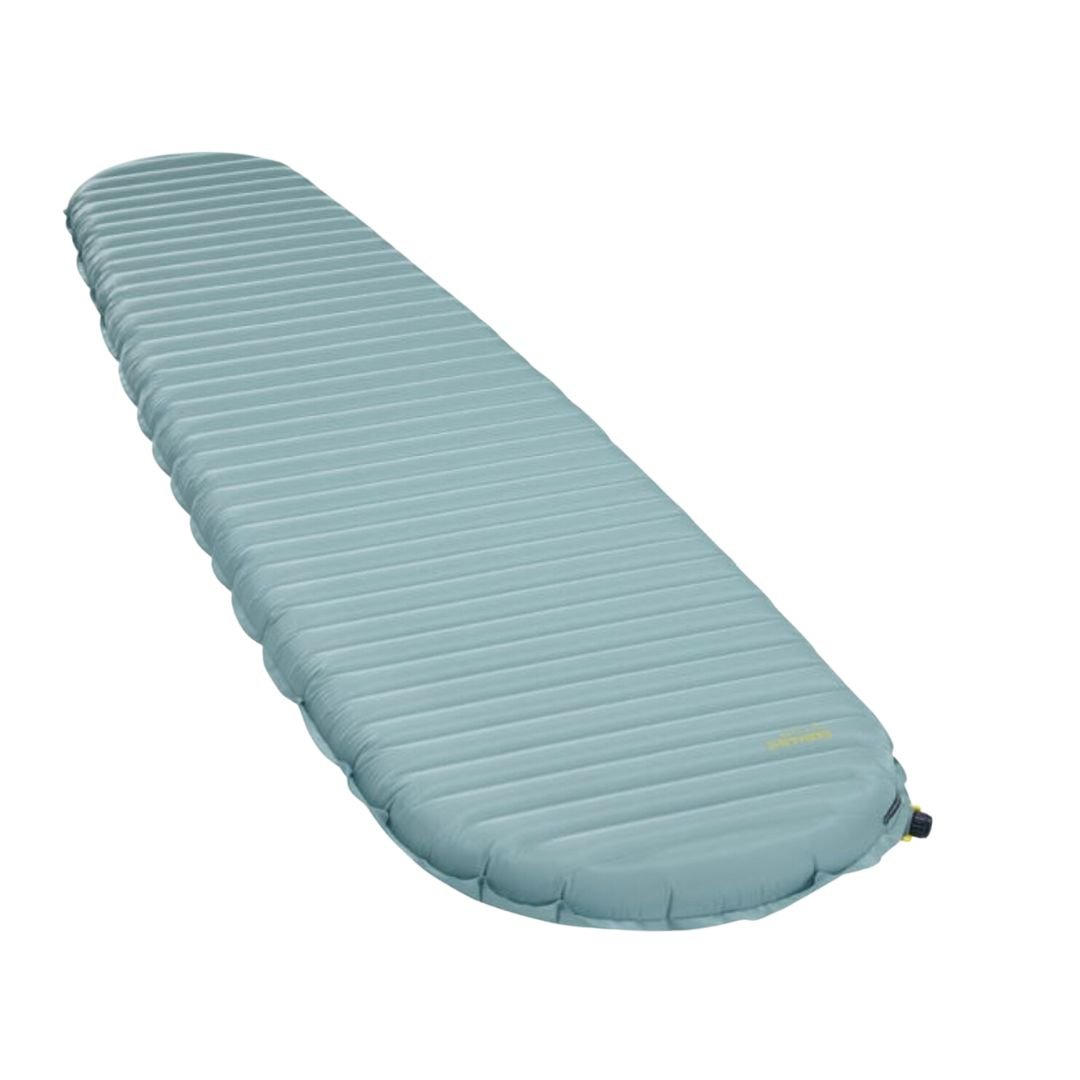 | Lightest winter pad among these recommendations. |
| Nemo Switchback Sleeping Pad | 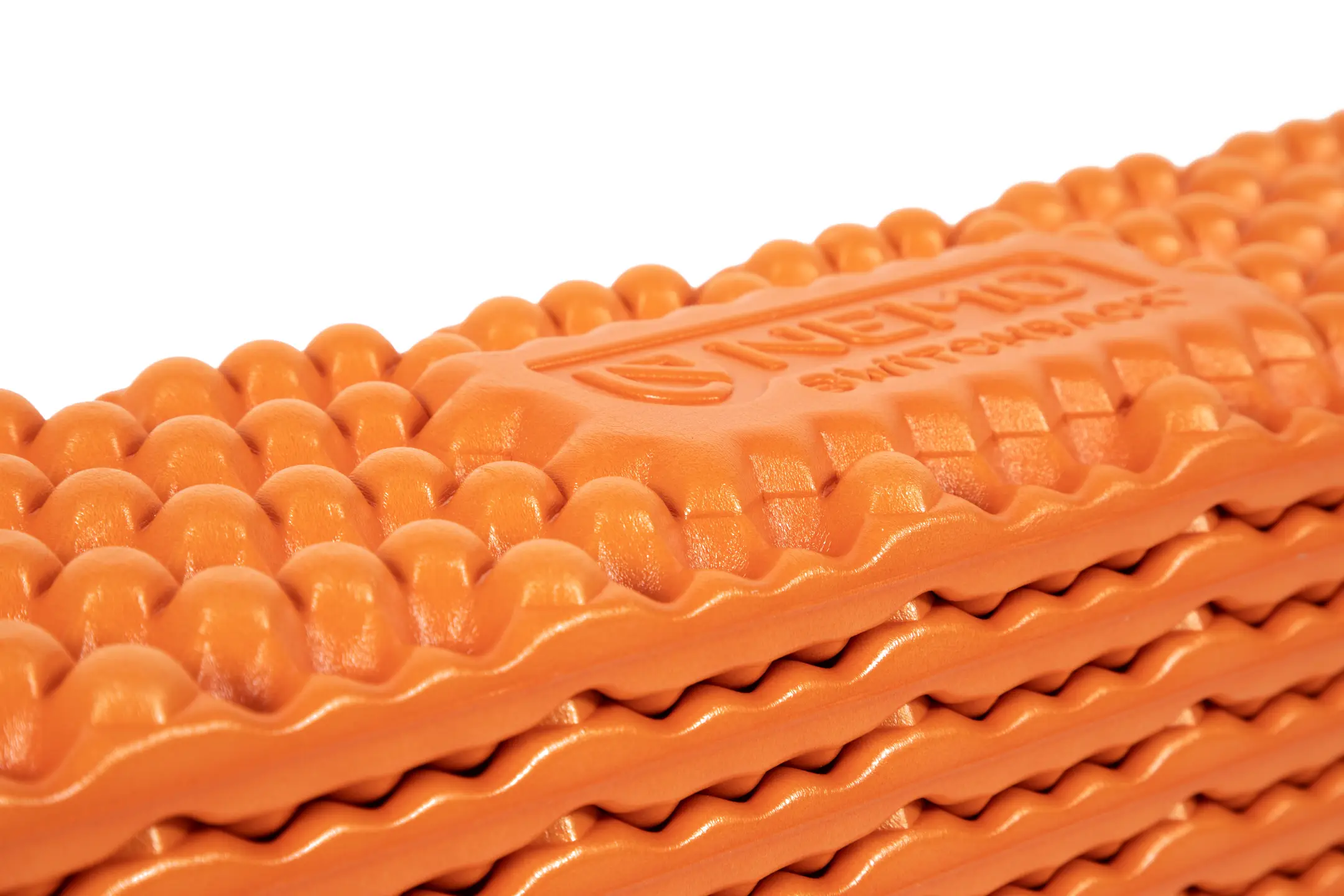 | Compact folding foam pad with extra thickness, without a noticeable comfort gain. |
| Thermarest NeoLoft Sleeping Pad | 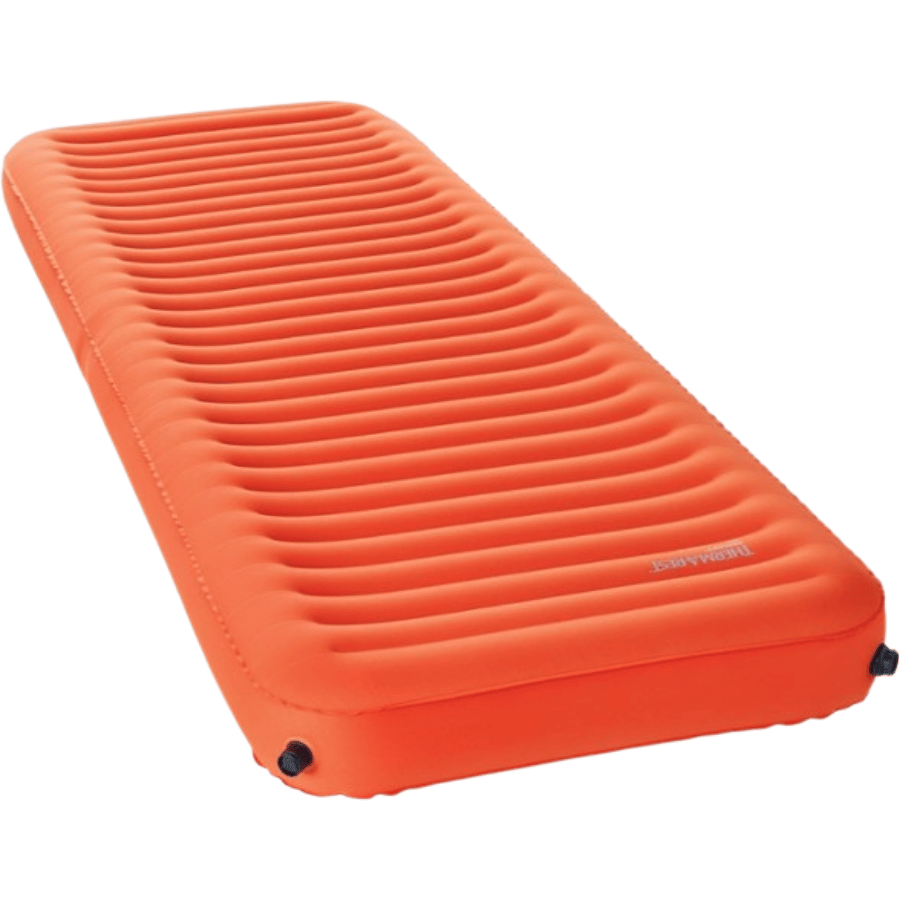 | Deep cushioning and soft stretch-knit fabric, with some bounce. |
The XLite NXT provides high warmth for its weight, with an R-value of 4.5 and a 3-inch-thick sleeping surface. Its reflective insulation and internal baffles retain heat in a compact package. It has horizontal baffles, and changing positions can produce crinkling noise.
We find the Ether Light XR and XR Pro stable when changing sleeping positions. Their approximately 22-inch regular width works particularly well inside a bivy sack: there is room to move without crowding the shelter. Air Sprung Cells compress locally beneath the shoulders and hips to conform to the body. The XR combines an R-value of 4.1 with a Regular weight of 470 grams.
The Tensor Elite combines ultralight weight with the quiet, stable sleeping surface we value in the Tensor design. The Regular Mummy has a minimum weight of 8.5 ounces and an R-value of 2.4. We recommend it for mild conditions that do not require substantial cold-ground insulation.
The Tensor Extreme Conditions combines substantial insulation with a quiet, stable sleeping surface. Four reflective layers give it an R-value of 8.5. Our market analysis supports its high combined comfort and warmth for the weight. We have found it warm enough for three-season camping on snow and, with a thin closed-cell foam pad, for midwinter camping in the Colorado and Wyoming Rockies.
We recommend the XTherm NXT for winter warmth at low weight. It has an R-value of 7.3 and weighs 20 ounces in the regular-wide mummy size, with a compact packed size. The horizontal baffles and crinkling noise remain the comfort tradeoffs.
See it at REI and Garage Grown Gear.
A rectangular NXT MAX version is also available from REI and Thermarest.
- high R-value to weight ratio
- crinkly noise is loud when moving around on pad
The Switchback uses dual-density foam and a nesting hexagonal pattern to fold compactly. It is a little thicker than competing folding foam pads, but we have not noticed a material increase in comfort in actual use.
The NeoLoft combines 4.6 inches of cushioning with soft stretch-knit fabric for backpackers who prioritize sleeping comfort. The regular-wide version weighs 30 ounces. In our field use, softer inflation allowed more bounce, while firmer inflation improved support at the expense of pressure relief.
Backpacks
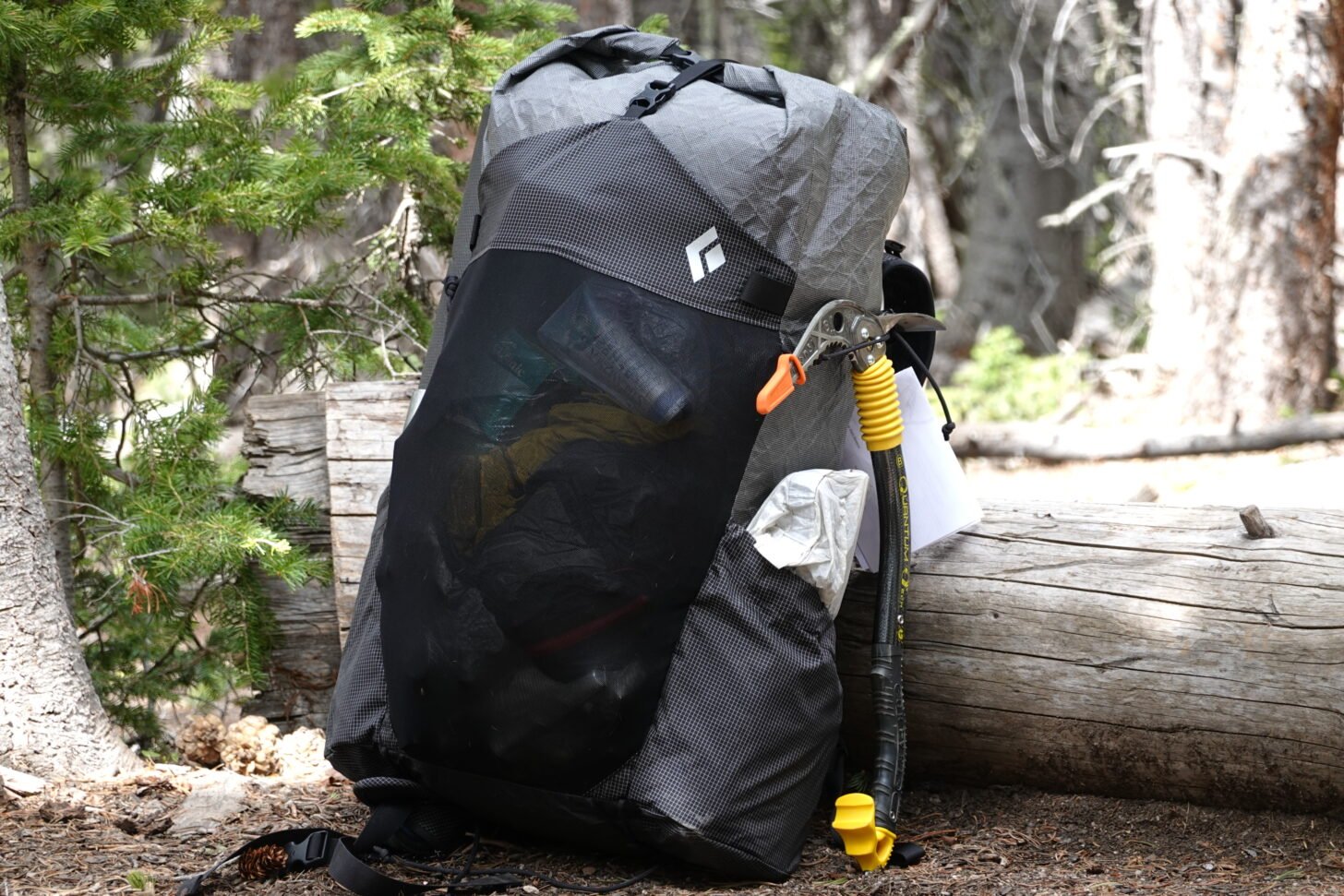
This selection represents backpacks that offer a strategic balance between weight, structural integrity, and functional design, suitable for long-distance trekking or lightweight backpacking. Selection criteria prioritized pack weight relative to load-carrying capacity, suspension efficiency, pocket architecture, fabric durability, and modularity for variable gear configurations. Packs with roll-top closures, streamlined pocket layouts, and external attachment options were favored for their adaptability and efficiency in the field. Consideration was also given to harness comfort, load transfer, and ventilation features that enhance all-day carry performance under typical backpacking loads. The products included span a range of use cases, from minimalist ultralight packs to more supportive designs intended for extended trips or higher-volume kits.
Recommended Backpacks
| Product | Photo | Recommendation reason |
|---|---|---|
| Hyperlite Mountain Gear Southwest Backpack | 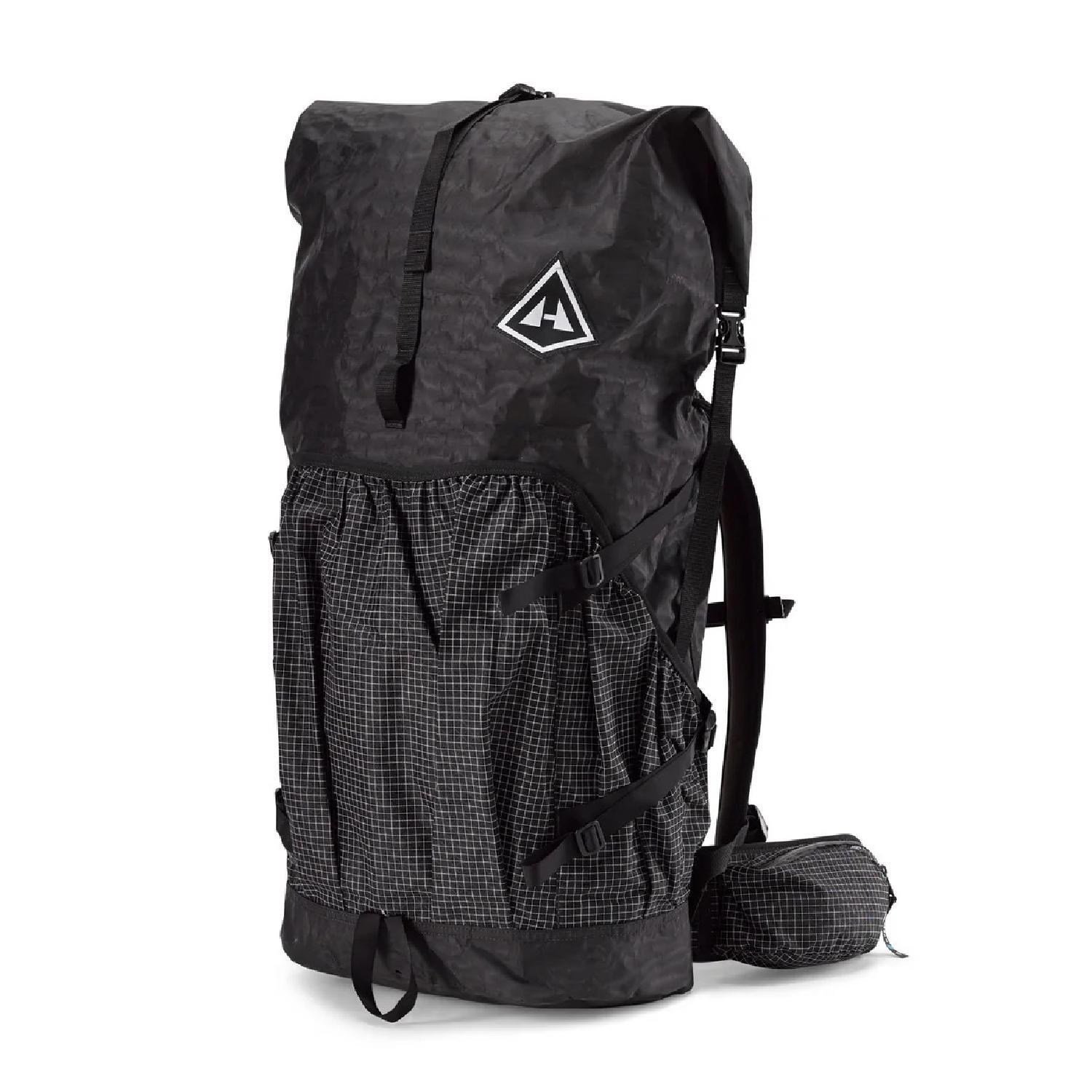 | Simple, functional, durable pack made with waterproof fabric. |
| REI Co-op Flash Air Backpack |  | Lightweight backpack with good value. |
| Osprey Exos/Eja | 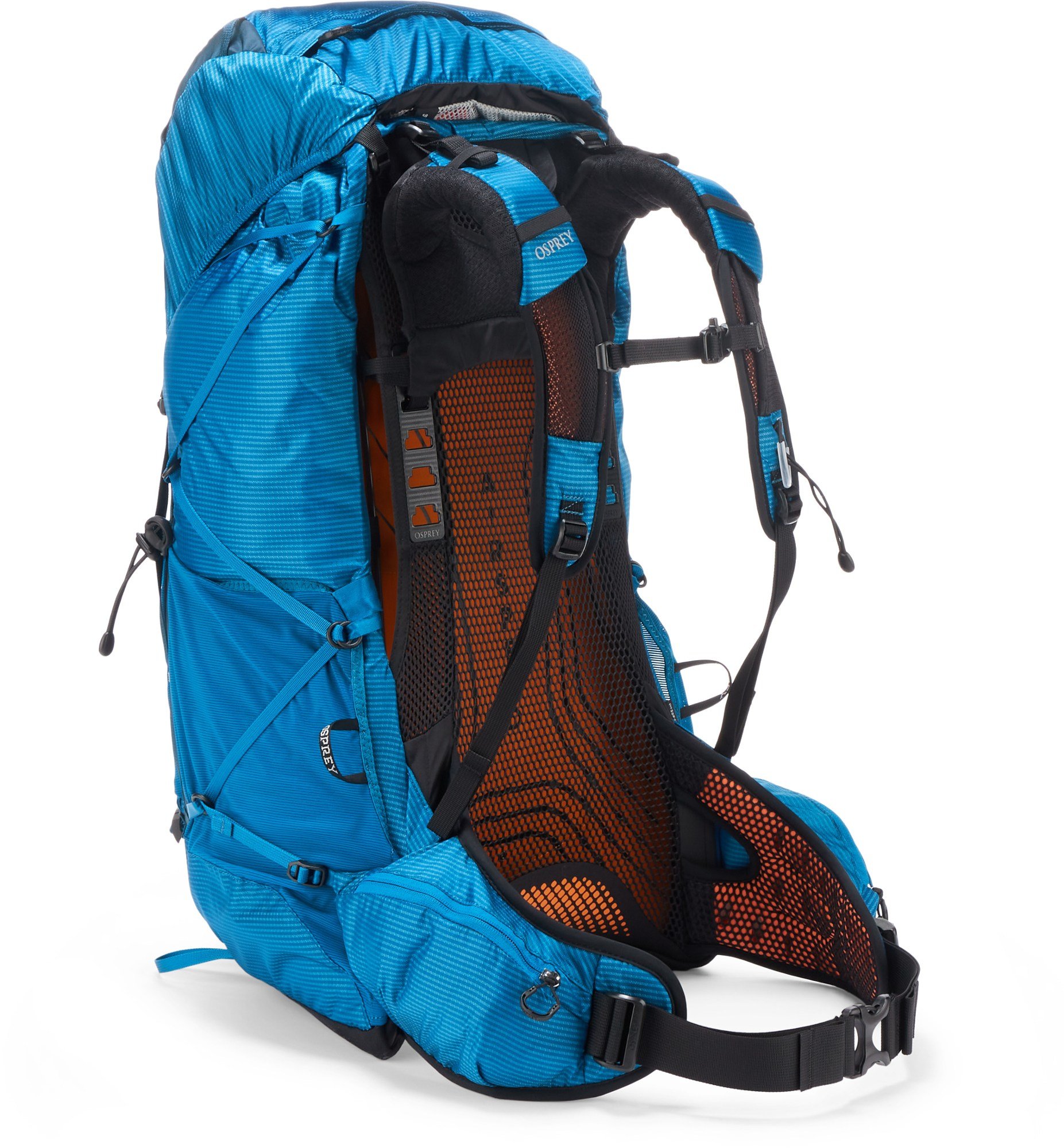 | Load-carrying comfort and ventilation for warm-weather hiking. |
We recommend the Southwest for its simple storage layout and durability during sustained use. Its updated UHMWPE face fabric accompanies an internal frame, hipbelt pockets, roll-top closure, Y-strap, and ice-axe loop. The fabric is waterproof; seams and closures also affect complete-pack weather protection. Sizes include 40L, 55L, and 70L.
The Flash Air 50 offers good value in a lightweight framed backpack. Its roll-top closure, large front pocket, side pockets, and hipbelt and shoulder pockets provide a practical layout for long-distance hiking. A padded harness and spring-steel frame support loads up to 25 pounds. The men’s medium weighs 1 pound 14 ounces.
We recommend the standard Exos and Eja for load stability and harness comfort. Padding and back ventilation support long days under a pack, with a top lid for accessible storage. Exos is the men’s model and Eja the women’s. The Exos 48 is also available.
Chairs

This selection includes seating options that provide a functional balance between comfort, portability, and packed efficiency for backcountry use. Evaluation criteria focused on total weight, packed size, deployment speed, seating ergonomics, and stability on uneven terrain. Products were selected to represent a range of use cases – from minimalist stools and frame-based chairs for trail breaks and relaxed camp lounging, to reclining models offering adjustable positioning, and sit-pad-style chairs optimized for confined spaces like tents or snow shelters. Durability of frame materials, ease of assembly, and comfort during extended use were also considered to ensure suitability for multi-day backpacking trips where rest and recovery matter.
Recommended Chairs
| Product | Photo | Recommendation reason |
|---|---|---|
| REI Flexlite Air Stool | 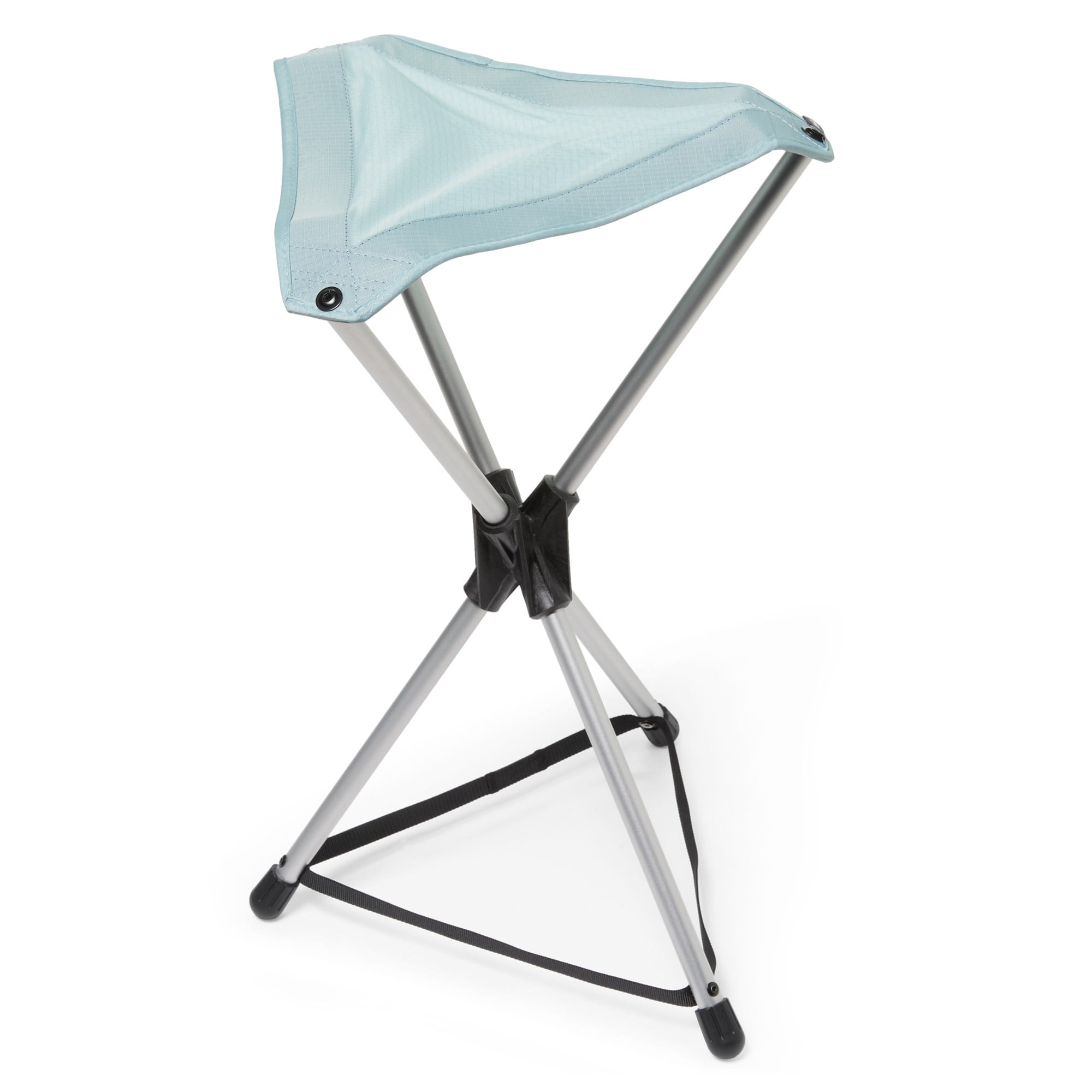 | Lightweight, minimalist, compact stool for quick trail breaks. |
| REI Flexlite Air Chair | 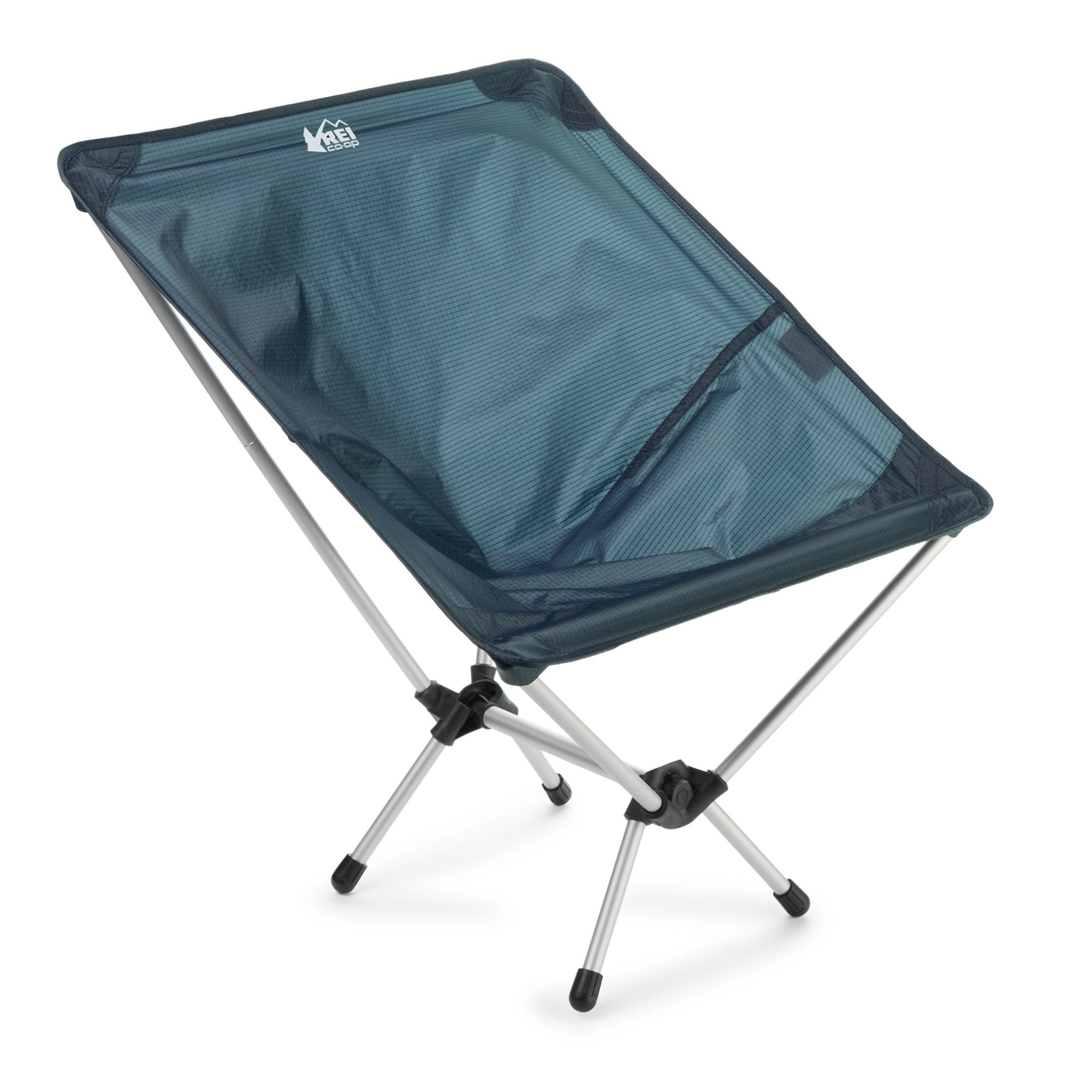 | Most comfortable and versatile for most users; relaxed back angle. |
| Helinox Chair Zero LT | 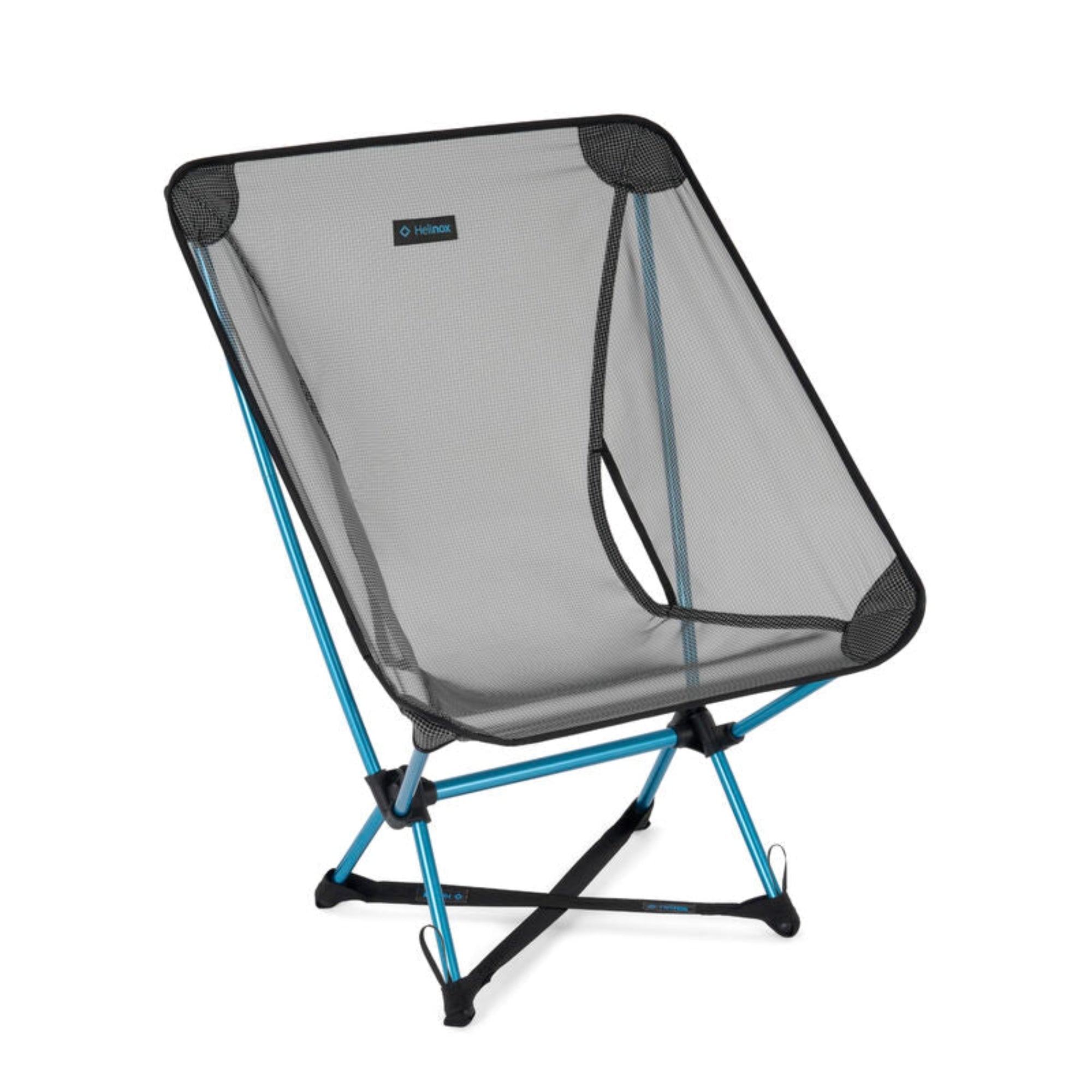 | For users who prefer a more upright sitting position. |
| NEMO Moonlite Elite Reclining Backpacking Chair | 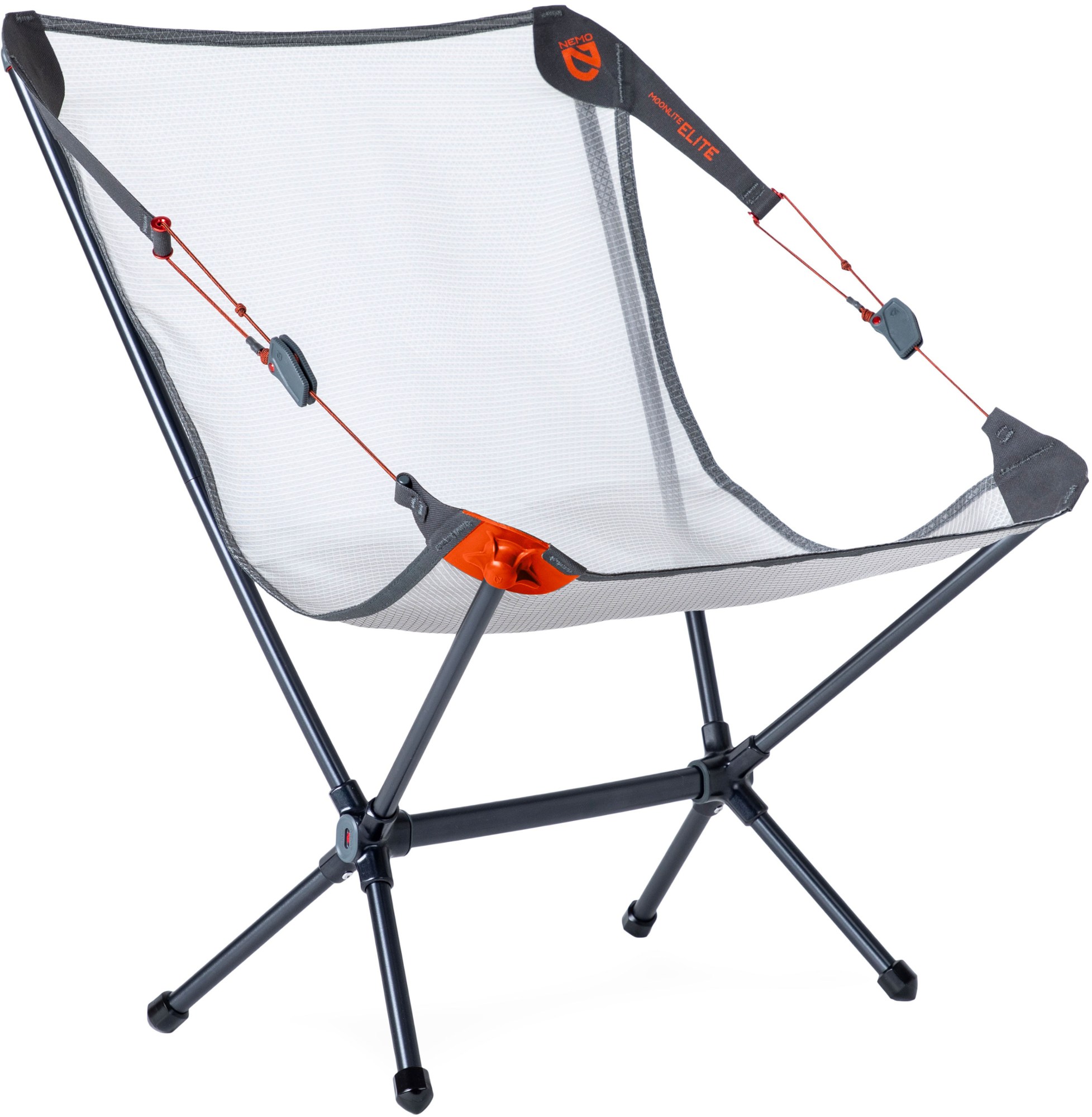 | Adjustable recline for users who want different seating positions. |
| Crazy Creek Hex 2.0 | 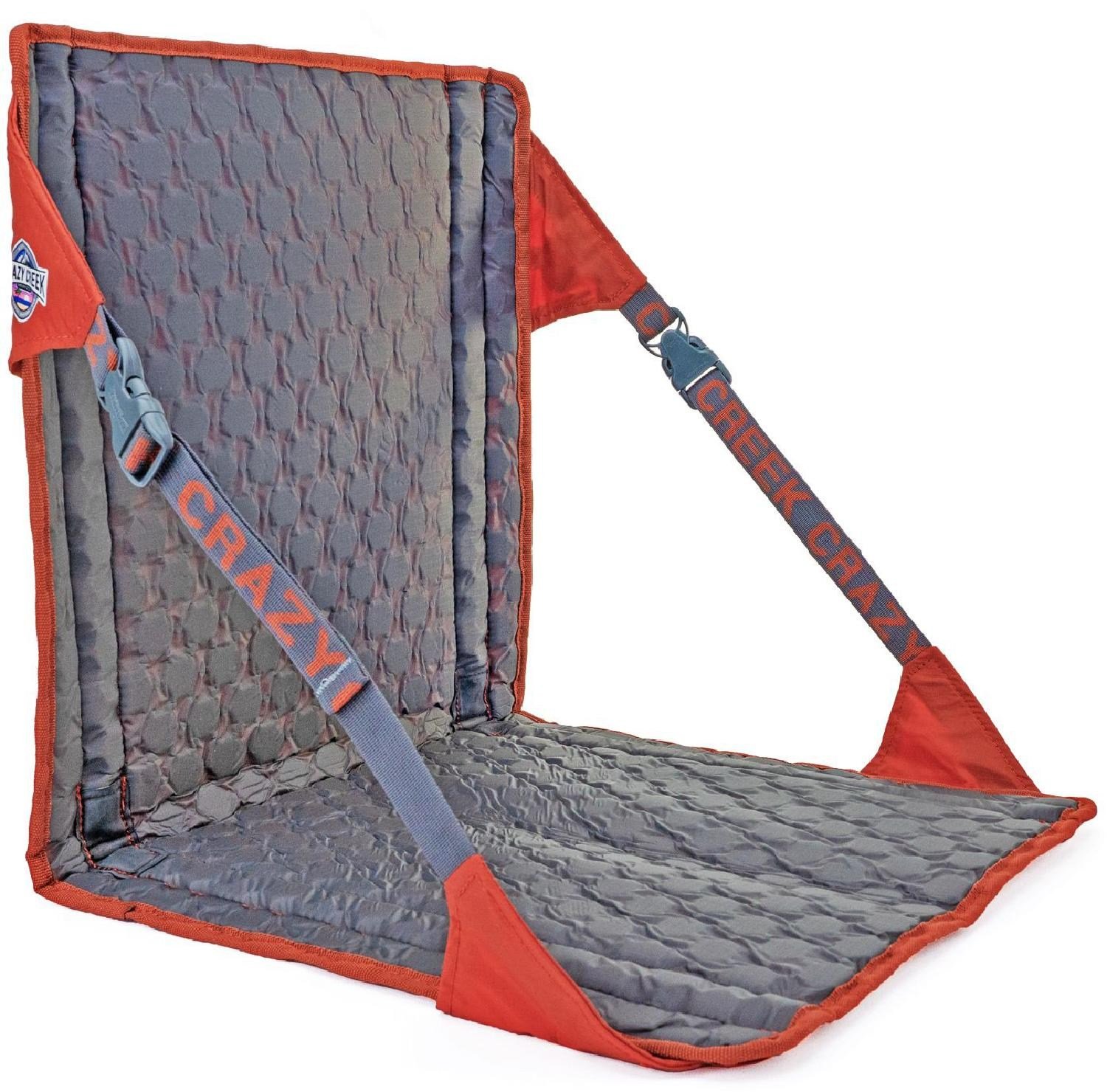 | Best choice for sitting inside a tent, especially in winter. |
The Flexlite Air Stool weighs 11.5 ounces and is fast to deploy and stow during short trail breaks. It packs to 3.75 × 13 inches.
We find the Flexlite Air’s deep seat comfortable for extended sitting with the feet near the chair. It cradles the hips in a relaxed position. That seating geometry, combined with low weight, supports our recommendation for comfort and versatility.
The Chair Zero LT is our recommendation for an upright sitting position. At 17 ounces, it combines a suspended seat with a DAC aluminum frame and an X-strap stabilizer. It has a 265-pound load capacity.
The Moonlite Elite provides adjustable recline in a light, compact camp chair. We recommend it for changing posture between eating, reading, and resting. The backrest angle can be adjusted while seated.
The Hex 2.0 is our preferred seat inside a tent, especially during winter storms. Its low profile fits beneath limited headroom, and the broad padded base avoids narrow pressure points against the shelter floor. We find it stable on packed snow and comfortable for reading during long stays in a shelter. It is durable and quick to deploy.
Footwear

This collection focuses on footwear for lightweight and ultralight backpacking on maintained trails, in rugged terrain, and during moderate off-trail travel. Models were selected for their balance of low weight, reliable traction, underfoot protection, durability, fit, moisture management, and demonstrated multi-season performance.
The selection spans trail runners, structured fast-hiking shoes, and approach-style shoes. Each model represents a different trade-off among cushioning, drop height, ground feel, torsional stiffness, upper durability, drying efficiency, and outsole performance. Priority was given to shoes that maintain stability under a loaded backpack, offer secure traction on loose or wet surfaces, and provide enough protection for long days without moving into traditional boot territory.
The goal is to give backpackers practical options for different terrain and foot needs, from high-mileage trail hiking to rougher, rockier environments where durability, precision, and protection matter more.
Decision Guide: Choosing Backpacking Shoes
Backpacking shoe choice starts with terrain, mileage, load, and foot shape – not category labels. Trail runners are often the best choice for maintained trails and high-mileage days, but they are not always the best choice for sharp rock, heavy loads, talus, slabs, or sustained off-trail travel.
For thru-hiking (e.g., 20-30 mi/day on maintained trails), start with trail runners. They offer the best balance of low weight, walking efficiency, fast drying, and all-day comfort.
For long-distance hiking where durability matters more, consider more structured trail runners or so-called “fast-hiking” shoes. These usually provide firmer midsoles, more protective uppers, and better underfoot protection than softer thru-hiking shoes.
For off-trail talus, granite, slabs, and scrambling, approach shoes are usually the better starting point. They offer better edging, stickier rubber, rand protection, and more precise foot placement on rock.
For heavy loads, sharp rock, ankle instability, or low shoe-turnover tolerance, look at light hikers or approach/hiking hybrids. These shoes add structure, torsional rigidity, and durability compared to most trail runners.
For wide feet, foot swelling, or thru-hiker-style comfort, prioritize Altra or Topo models. Their roomier forefoot shapes are better suited to long days, repeated high-mileage use, and feet that expand during a trip.
For edging, scrambling, and precise foot placement, start with La Sportiva or Scarpa approach models. These are better suited to technical terrain where rock security and lateral precision matter more than plush cushioning.
Recommended Footwear
| Product | Photo | Recommendation reason |
|---|---|---|
| Altra Lone Peak | 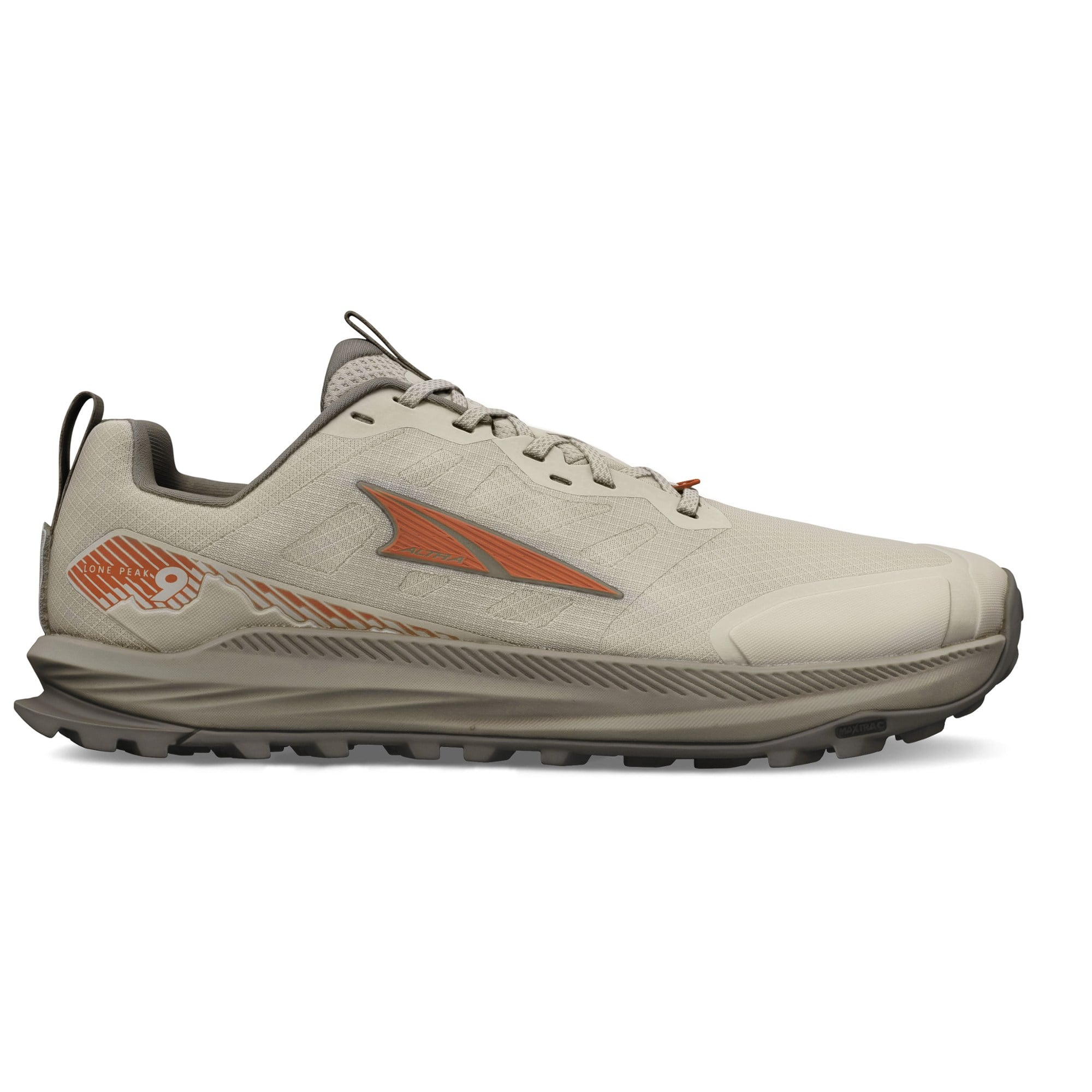 | Versatile, zero-drop trail shoe with a wide forefoot and moderate cushioning; proven for thru-hiking. |
| Topo Athletic Ultraventure | 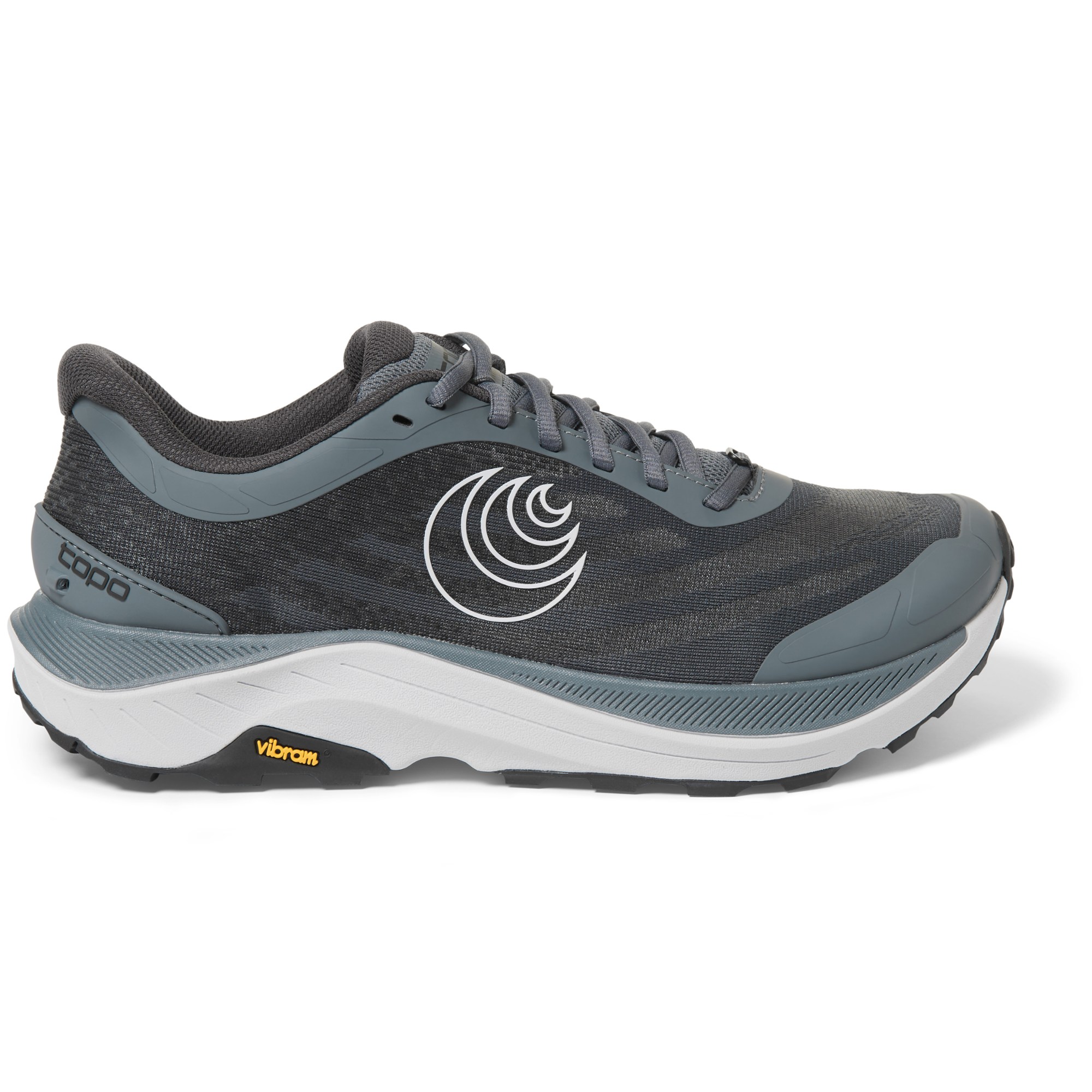 | Versatile, low-drop trail shoe with a roomy forefoot and moderate cushioning; proven for thru-hiking. |
| Hoka Speedgoat | 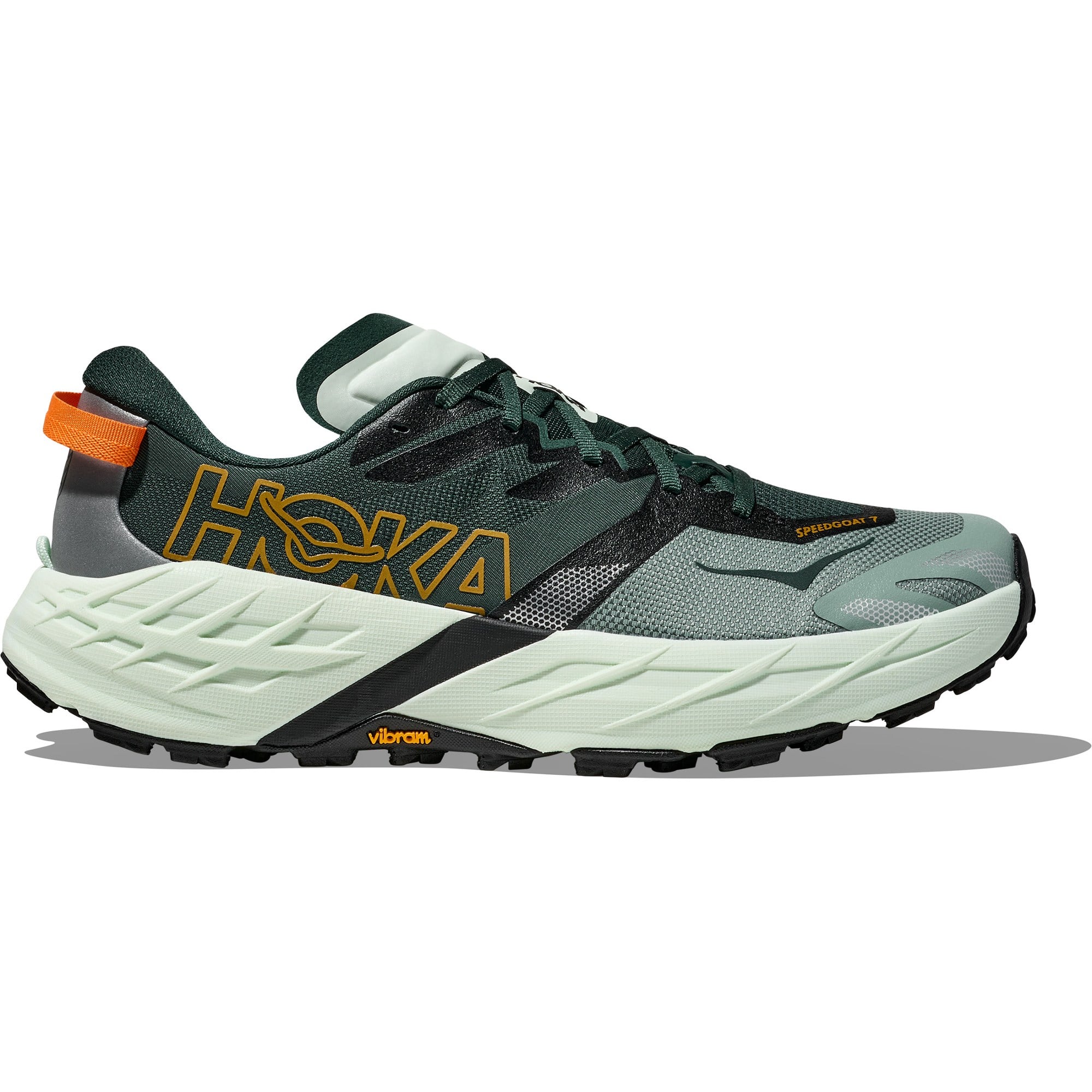 | Versatile, low-drop trail shoe with generous cushioning and strong traction; proven for thru-hiking. |
| Brooks Cascadia | 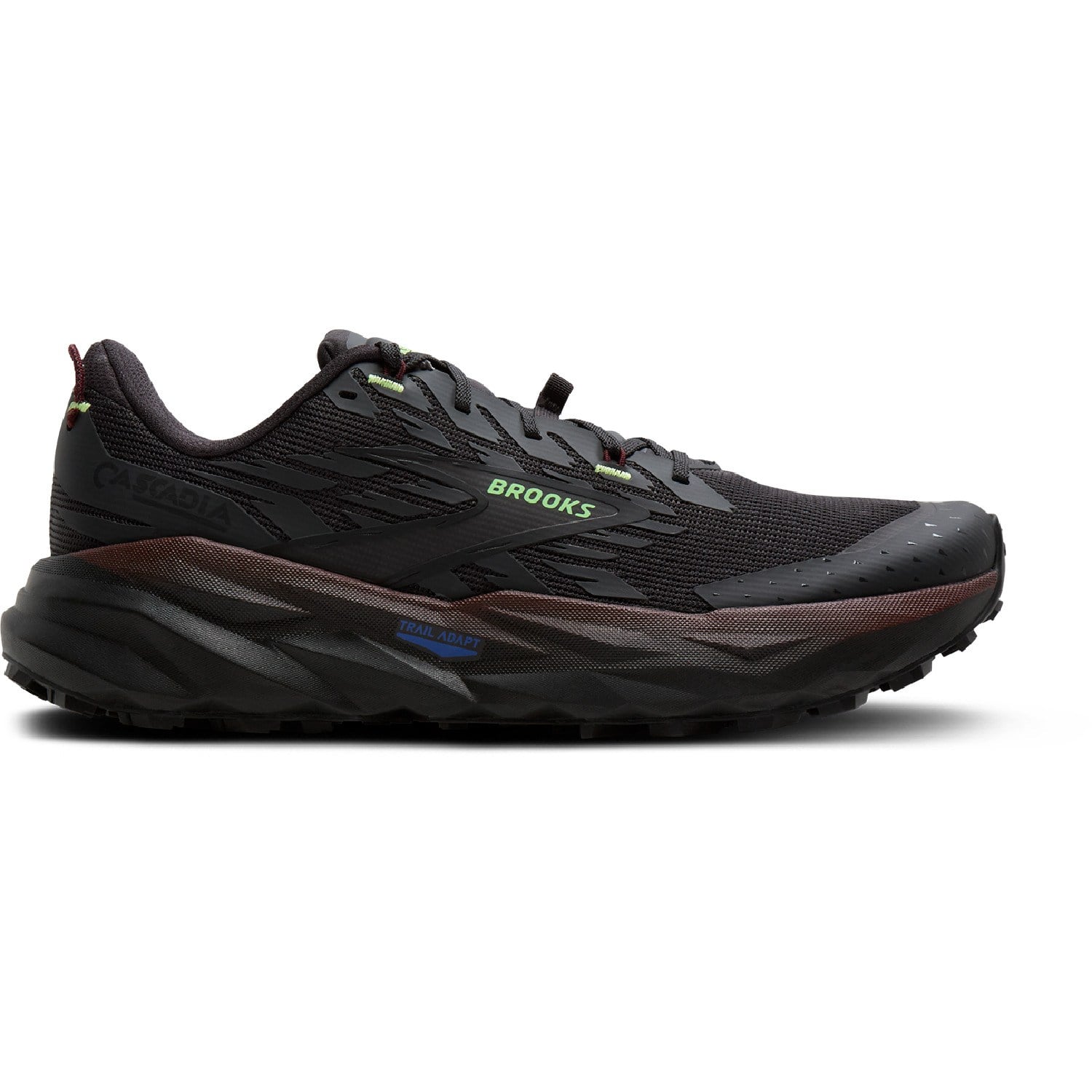 | Durable, low-drop, structured trail shoe for long-distance comfort. |
| Danner Trail 2650 | 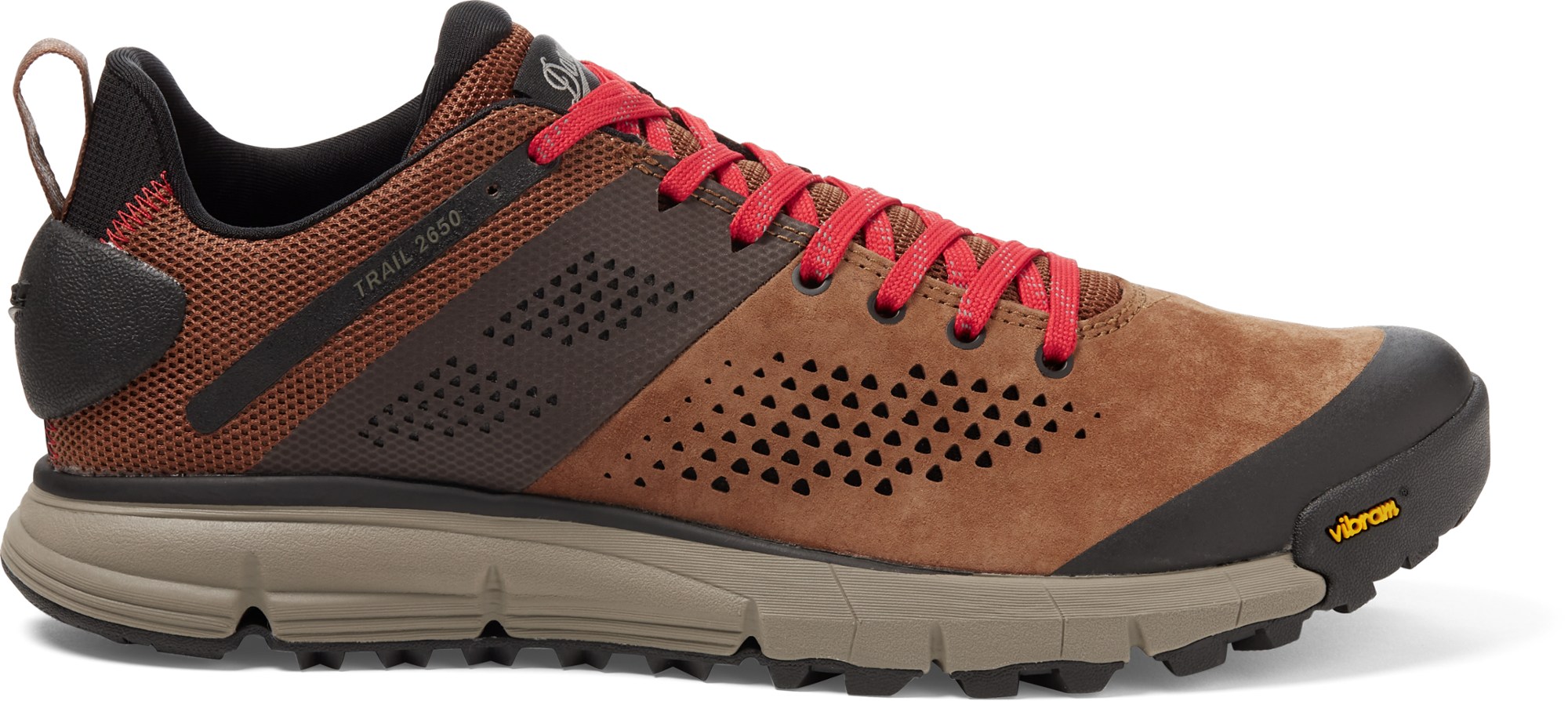 | Durable, structured hiking shoe with an 8 mm drop for long-distance comfort. |
| La Sportiva Bushido | 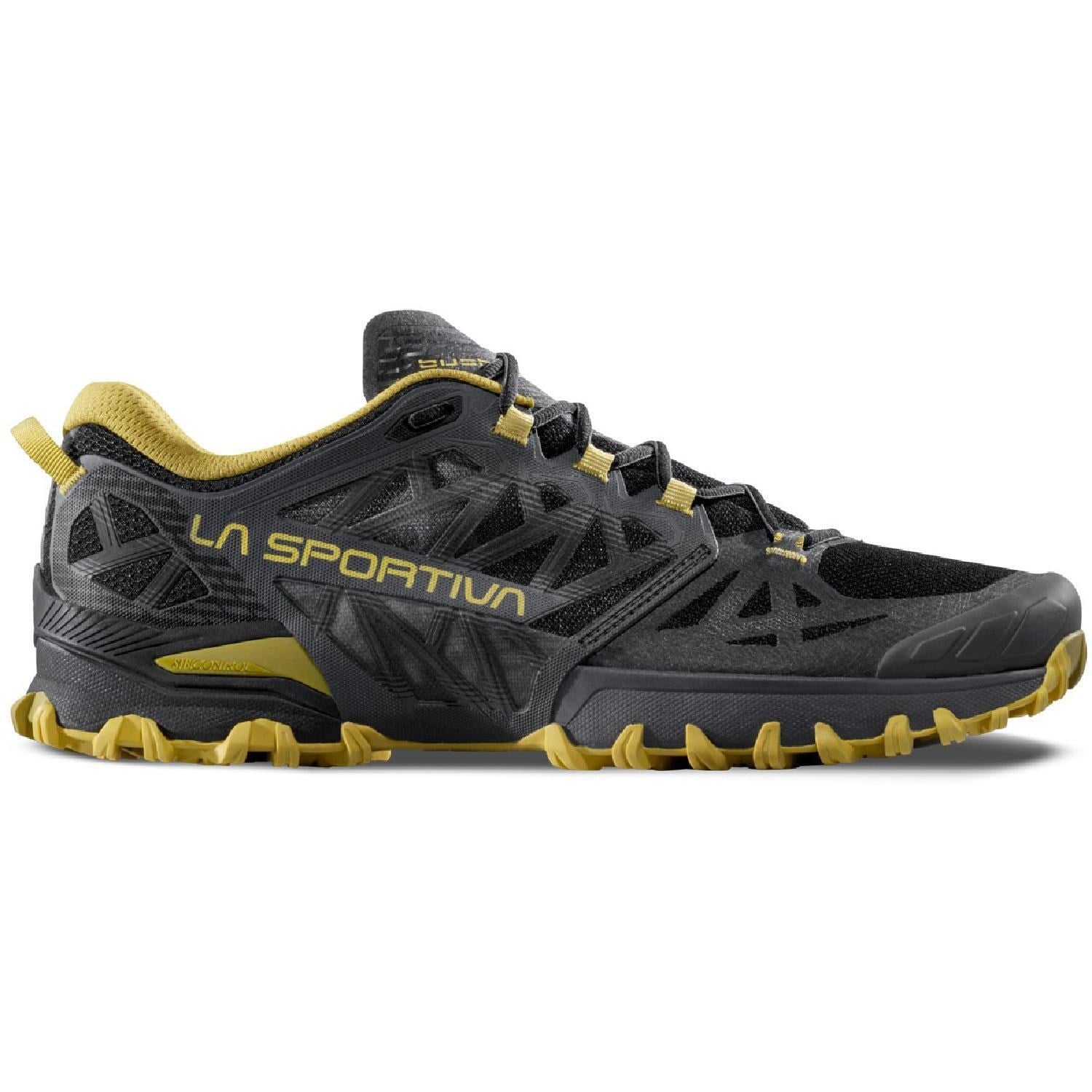 | Rugged shoe with an aggressive sole for technical, off-trail terrain. |
| Scarpa Ribelle Cross | 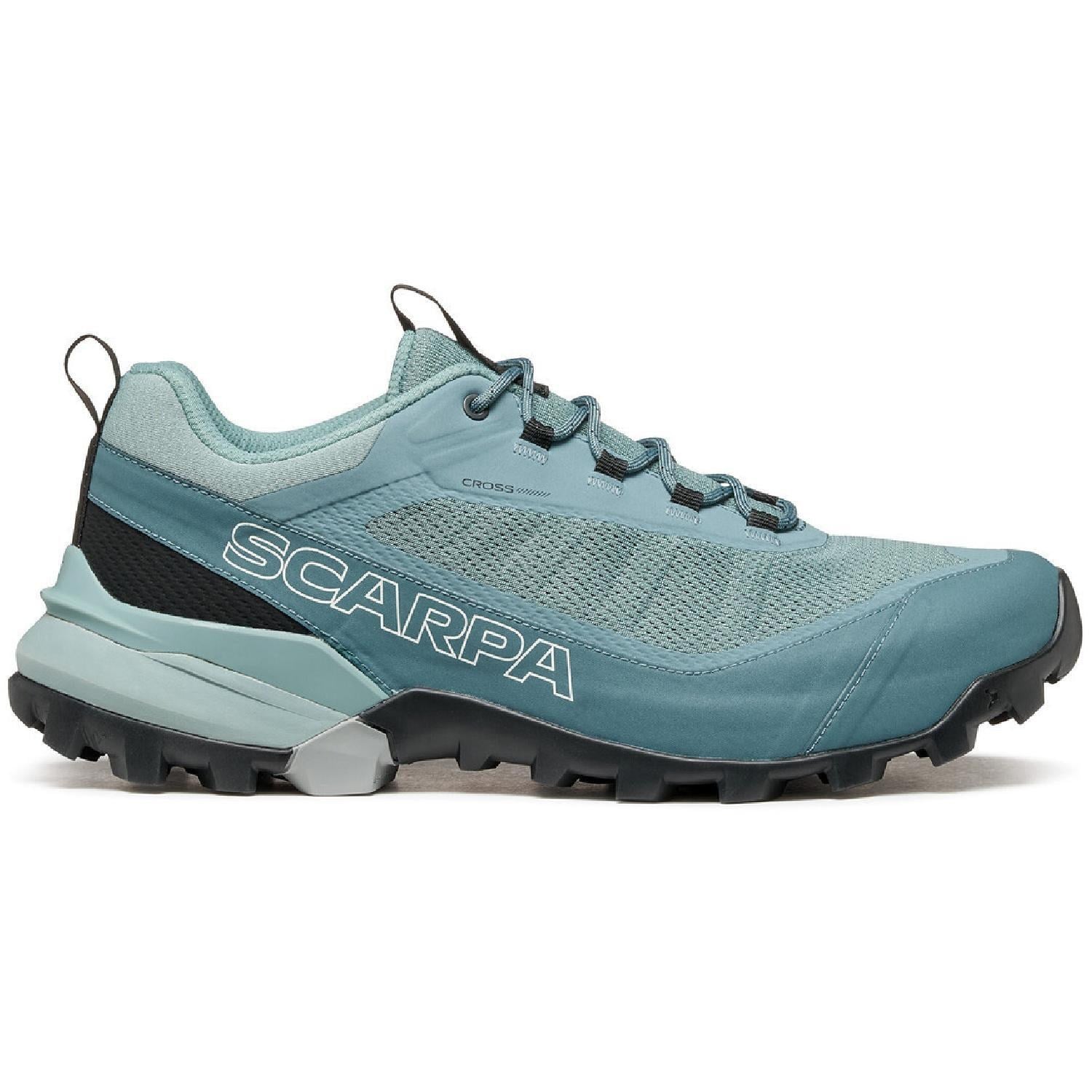 | Foot protection, support, and outsole grip for rough terrain. |
| Salomon Speedcross | 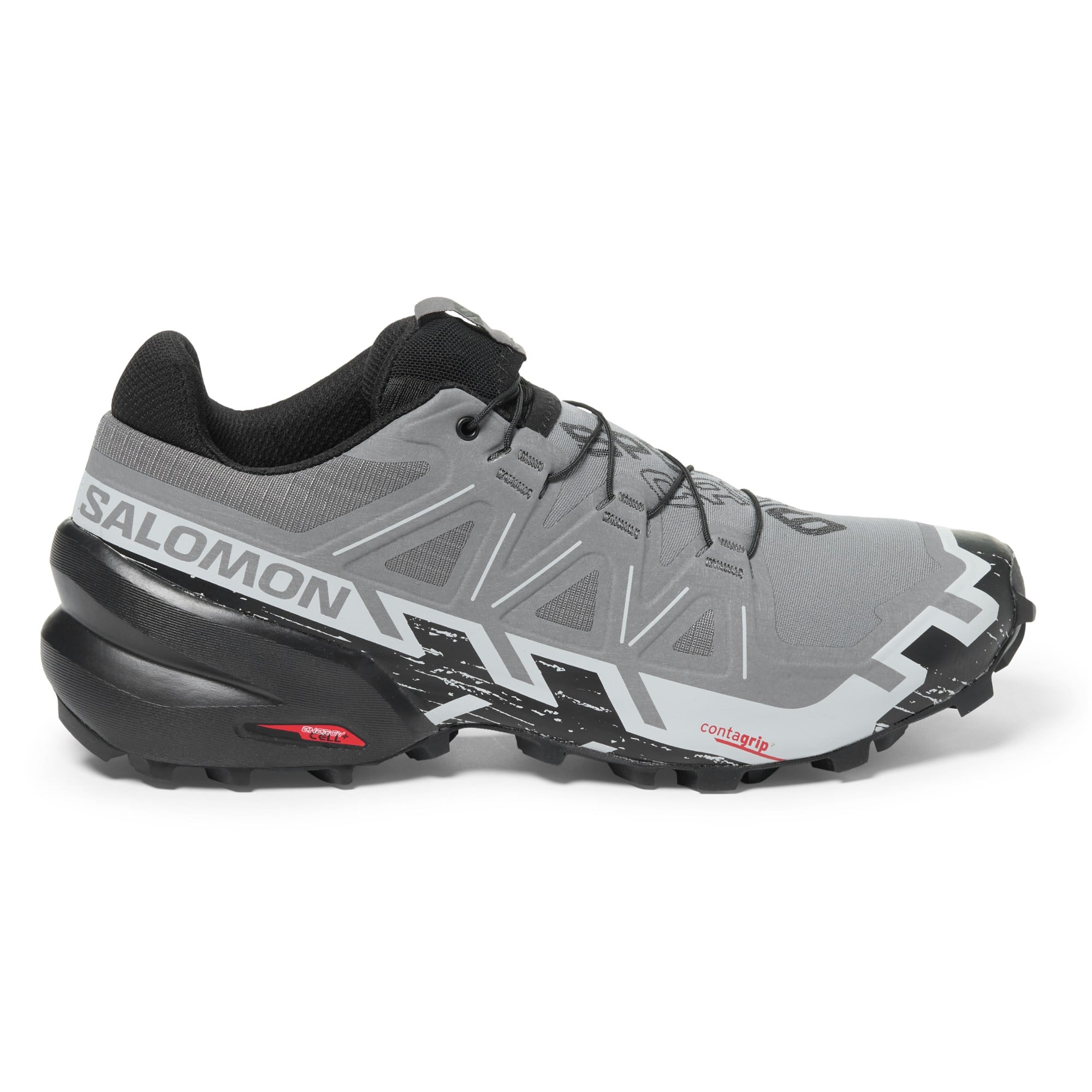 | Rugged shoe with aggressive traction for soft, muddy off-trail terrain. |
| La Sportiva TX4 Evo ST | 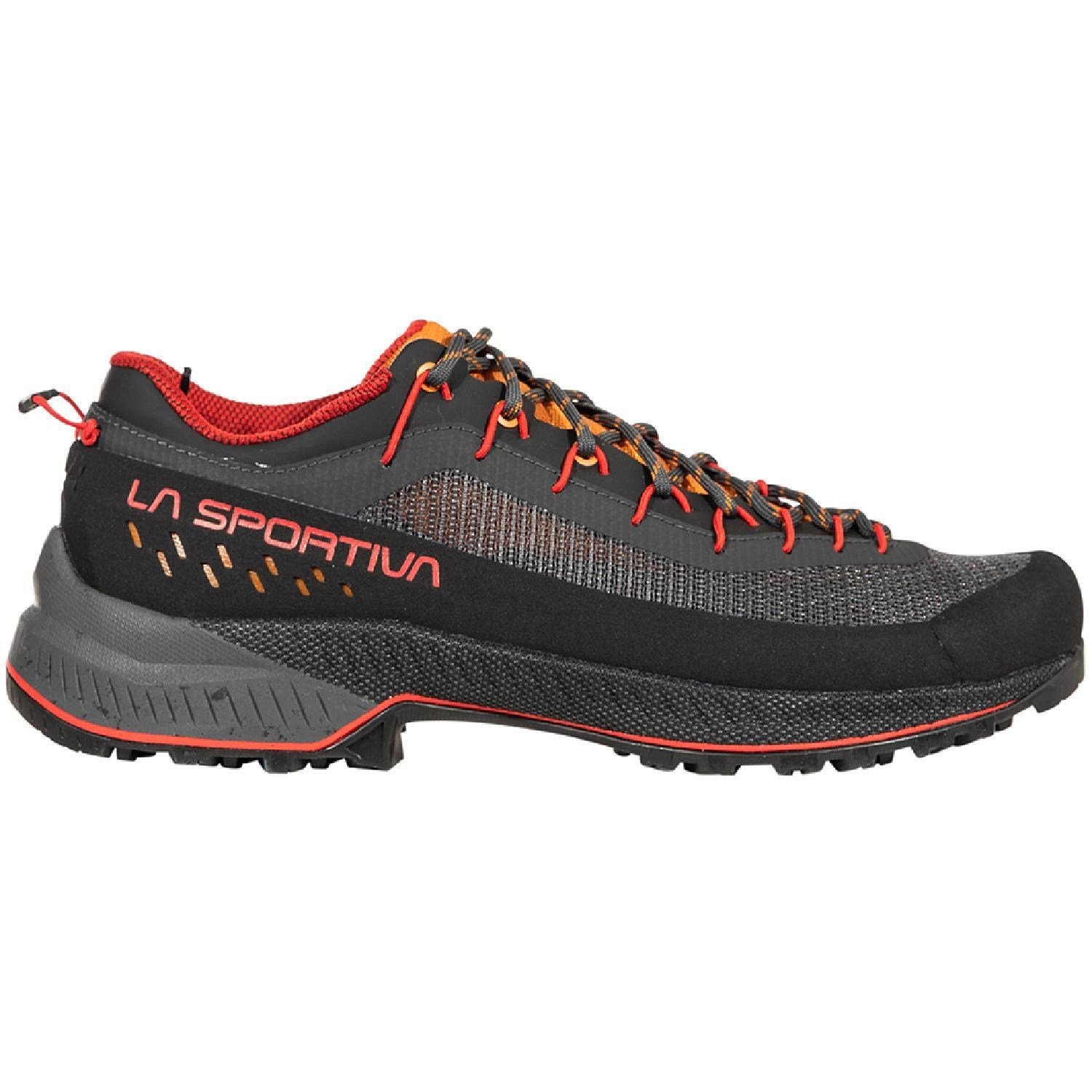 | Approach shoe for steep scrambling with comfort for distance hiking. |
| Scarpa Rapid LT | 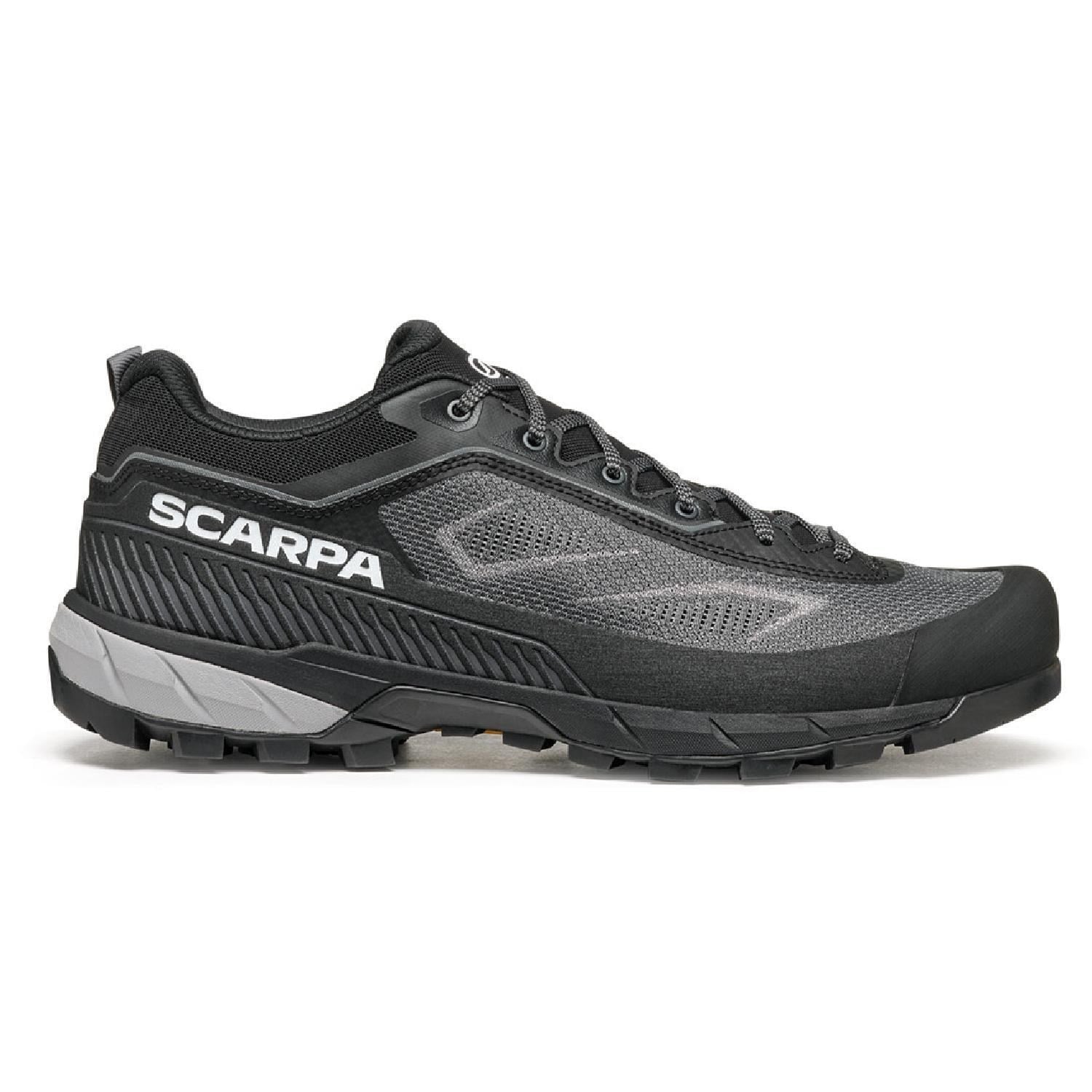 | Approach shoe for steep scrambling with comfort for distance hiking. |
The Lone Peak is a proven long-distance trail shoe in our community. Its zero drop, wide toe box, moderate cushioning, and moderate stiffness create a light, flexible shoe for maintained trails. We do not recommend it for steep off-trail travel.
The Ultraventure pairs low drop and moderate cushioning with a roomy forefoot. Our footwear assessment found the cushioning useful for long days and distances, but noted limited rock protection and a loose midfoot fit.
The Speedgoat is our generously cushioned trail-shoe recommendation for long-distance hiking. A low drop and Vibram Megagrip outsole with pronounced lugs combine cushioning with strong traction.
We recommend the Cascadia for structured support, durability, and long-distance comfort. Its articulated rock shield, toe protection, and cushioned midsole provide protection under a backpacking load. The current model has a 6 mm drop.
The Trail 2650 is a proven backpacking shoe that we recommend for durable uppers and soles, wet traction, and long-distance comfort. Its external heel counter adds rearfoot stability, and the shoe has an 8 mm drop.
The Bushido has delivered particularly strong wet-rock traction in our testing. We recommend it for rocky trails and technical off-trail travel. Moderately firm cushioning and low drop preserve sensitivity for precise foot placement, while moderate stiffness protects the foot under a backpacking load.
The Ribelle Cross 2 combines foot protection and support for rough terrain with a lugged Presa HIK-06 SuperGum outsole. A full perimeter rand protects the upper from abrasion, while TPU overlays reinforce the mesh upper. A TPU frame provides rearfoot stability and torsion control, and pronounced outsole lugs provide grip on uneven ground.
We recommend the Speedcross for soft, muddy off-trail terrain. Its deep Mud Contagrip lugs grip yielding ground, while the SensiFit upper and single-pull lacing hold the foot through changes in direction. The shoe has a 10 mm drop.
The TX4 Evo ST balances secure footing on talus, scree, and scrambling terrain with cushioning and width for long trail miles. The ST’s mesh panels allow airflow while a full rand protects the upper.
The Rapid LT is our approach-shoe recommendation for routes that combine long approaches with scrambling. A toe climbing zone and heel braking geometry provide technical control, while the two-density EVA midsole supplies cushioning and support for walking. Mesh panels and a full rand combine airflow with upper protection.
Traction, Snow, and Mountaineering Gear
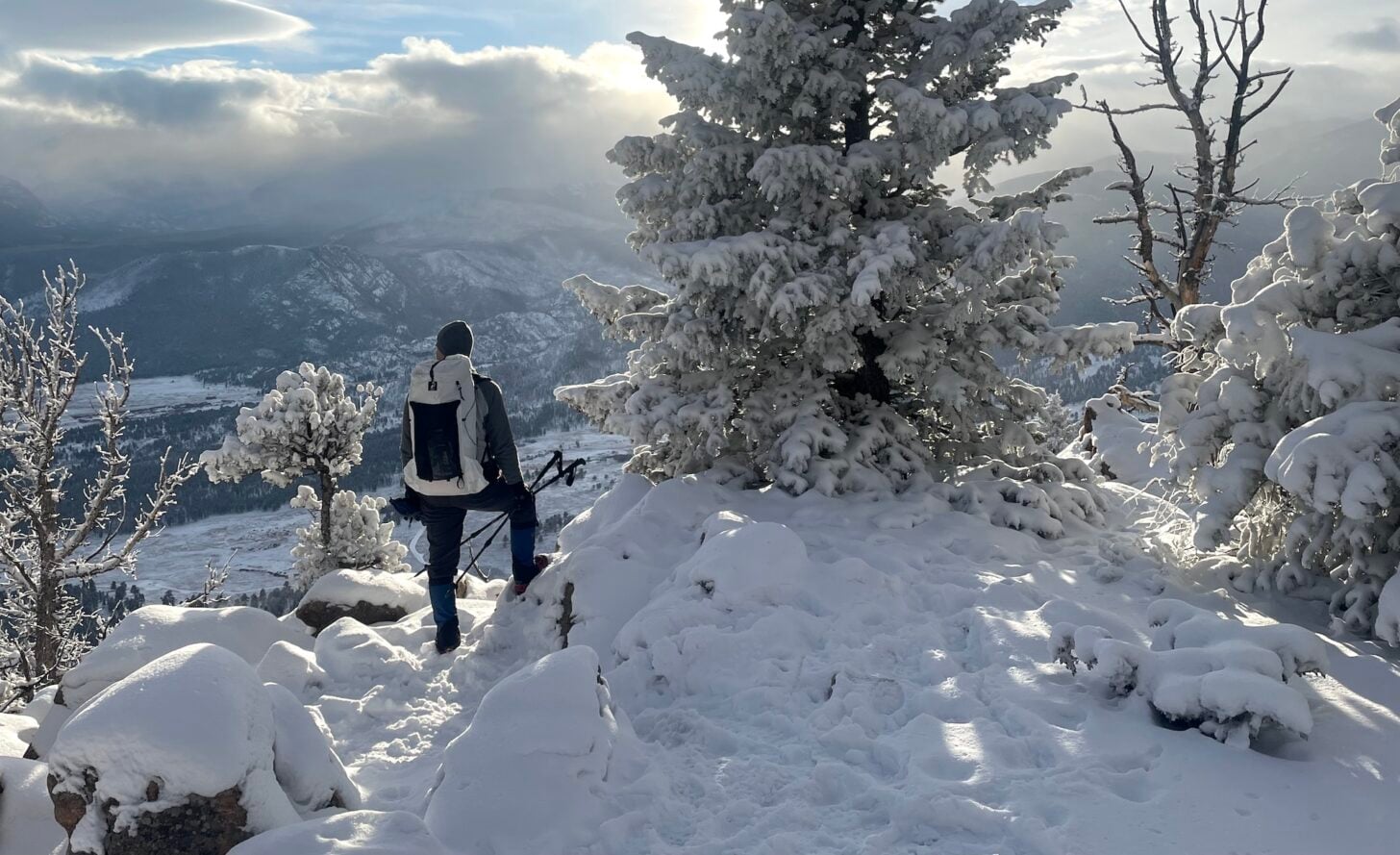
Traction and snow management tools constitute a critical component of winter and alpine safety systems, directly influencing both risk exposure and movement efficiency in complex terrain. Traction spikes provide point-loading at the foot/snow interface that substantially increases friction on packed trails and low to moderate angle slopes, thereby reducing the likelihood of slip-and-fall incidents where full crampons would be excessive or impractical. Snowshoes increase surface area to reduce postholing and lower energetic cost of travel, which in turn preserves cognitive and physical reserves for route finding and hazard assessment in cold environments. In steeper or more consequential terrain, an ice axe functions as both a mobility aid and a self-arrest tool, offering the capacity to manage slips before they escalate into uncontrolled falls. Shovels serve not only for constructing shelters and platforms but also as essential instruments for avalanche rescue, rapid snowpack assessment, and managing campsite microtopography to reduce exposure to wind and spindrift.
Recommended Traction, Snow, and Mountaineering Gear
| Product | Photo | Recommendation reason |
|---|---|---|
| Kahtoola Microspikes | 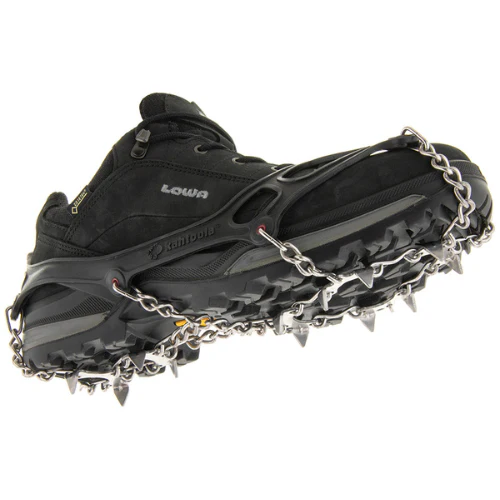 | Versatile, aggressive traction spikes. |
| Kahtoola Microspikes Ghost | 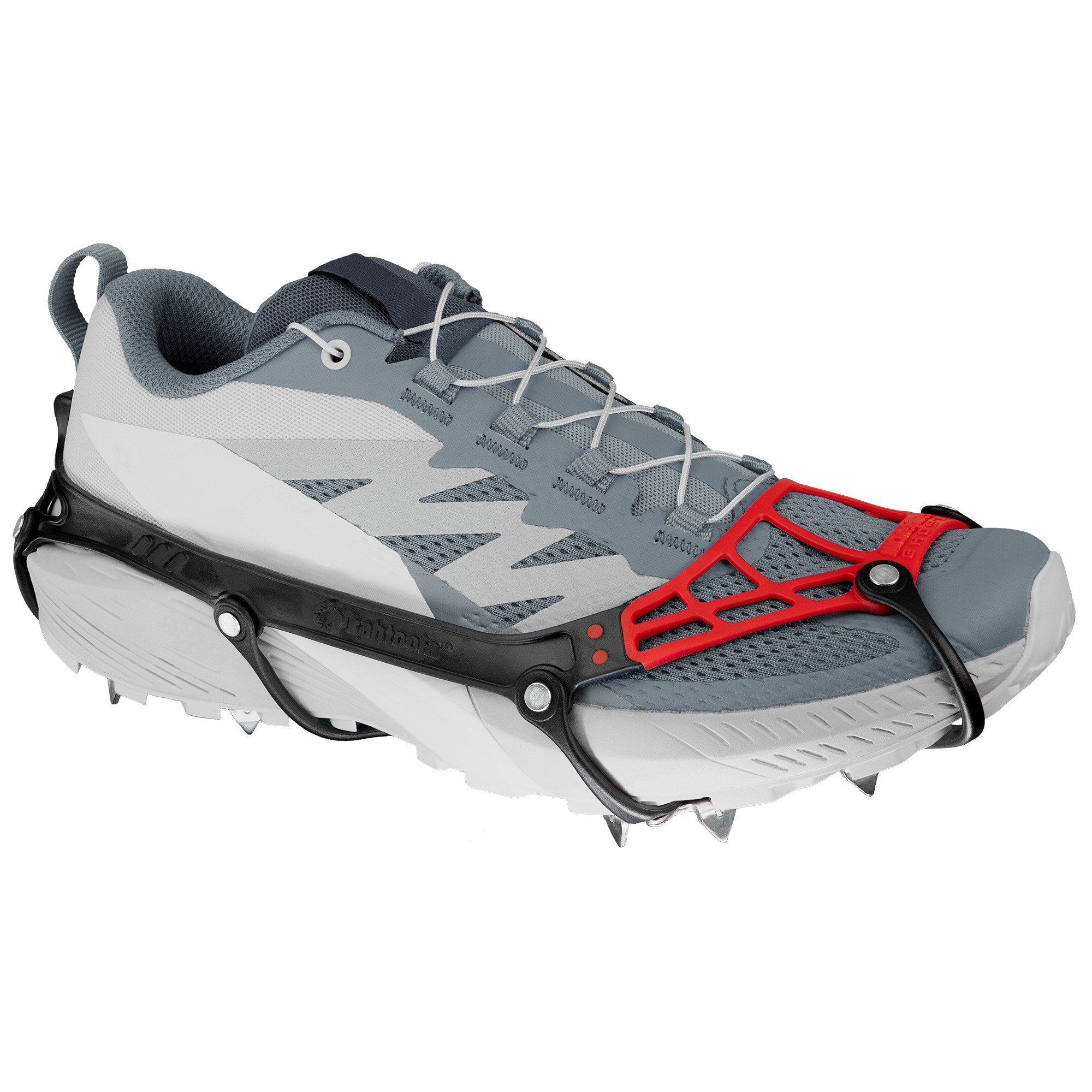 | Ultralight traction spikes for variable conditions. |
| MSR Lightning Ascent Snowshoes | 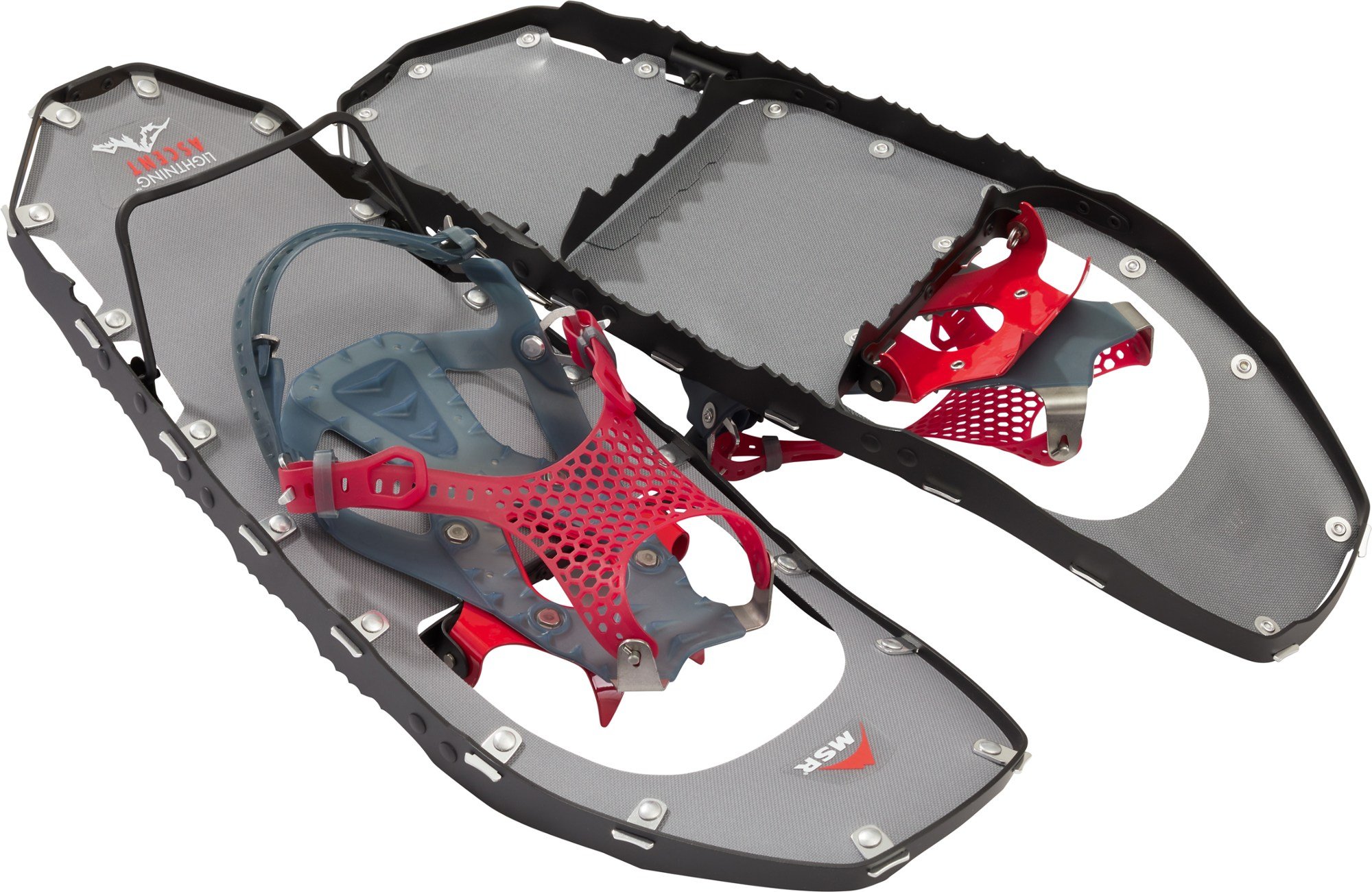 | Snowshoes with aggressive traction for steep slopes and variable snow. |
| Camp Corsa Ice Axe | 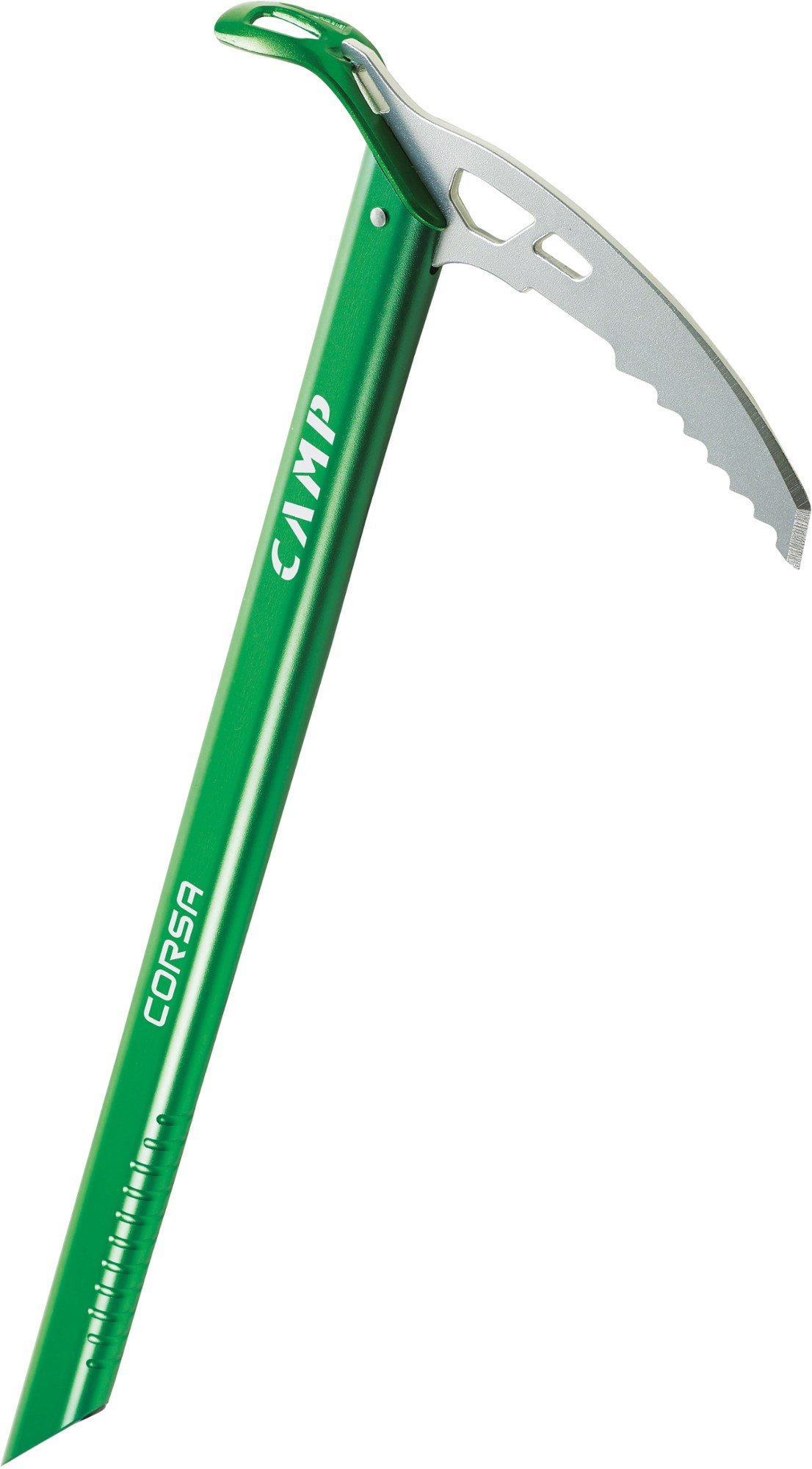 | Ultralight ice axe for self-arrest on snow. |
Our traction review documents thousands of miles in MICROspikes on mixed rock, snow, and ice without a chain failure. That record supports our recommendation for durable, aggressive trail traction. Twelve spikes and a broad forefoot pattern work with flexible footwear, and the harness remains usable in subzero temperatures.
MICROspikes Ghost uses an underfoot polymer matrix instead of a chain structure, retaining twelve steel spikes per foot in a light, compact package. We recommend it for fastpacking and thru-hiking, including routes with changing snow and ice conditions. The harness is quick to put on and take off.
We recommend the Lightning Ascent for steep slopes and variable snow. Its perimeter frame provides grip, heel lifters support sustained climbing, and Paragon bindings spread contact across the footwear.
The Corsa is our ultralight ice-axe recommendation for snow travel and self-arrest. Aluminum construction reduces the weight carried between snow crossings. It is not a general-purpose technical climbing tool.
Apparel
After surveying more than 500 pieces of apparel (rain jackets, insulating jackets, base layers, trekking clothes, and accessories) at REI over the past year, very little stands out. That’s because the outdoor apparel market has become so blurred that it’s hard to separate technically engineered apparel from commodified fashion.

Recommended Apparel
| Product | Photo | Recommendation reason |
|---|---|---|
| Arc'teryx Beta SL Rain Jacket |  | High-performance rain shell with durable fabrics and generous ventilation. |
| Outdoor Research Helium UL Rain Jacket | 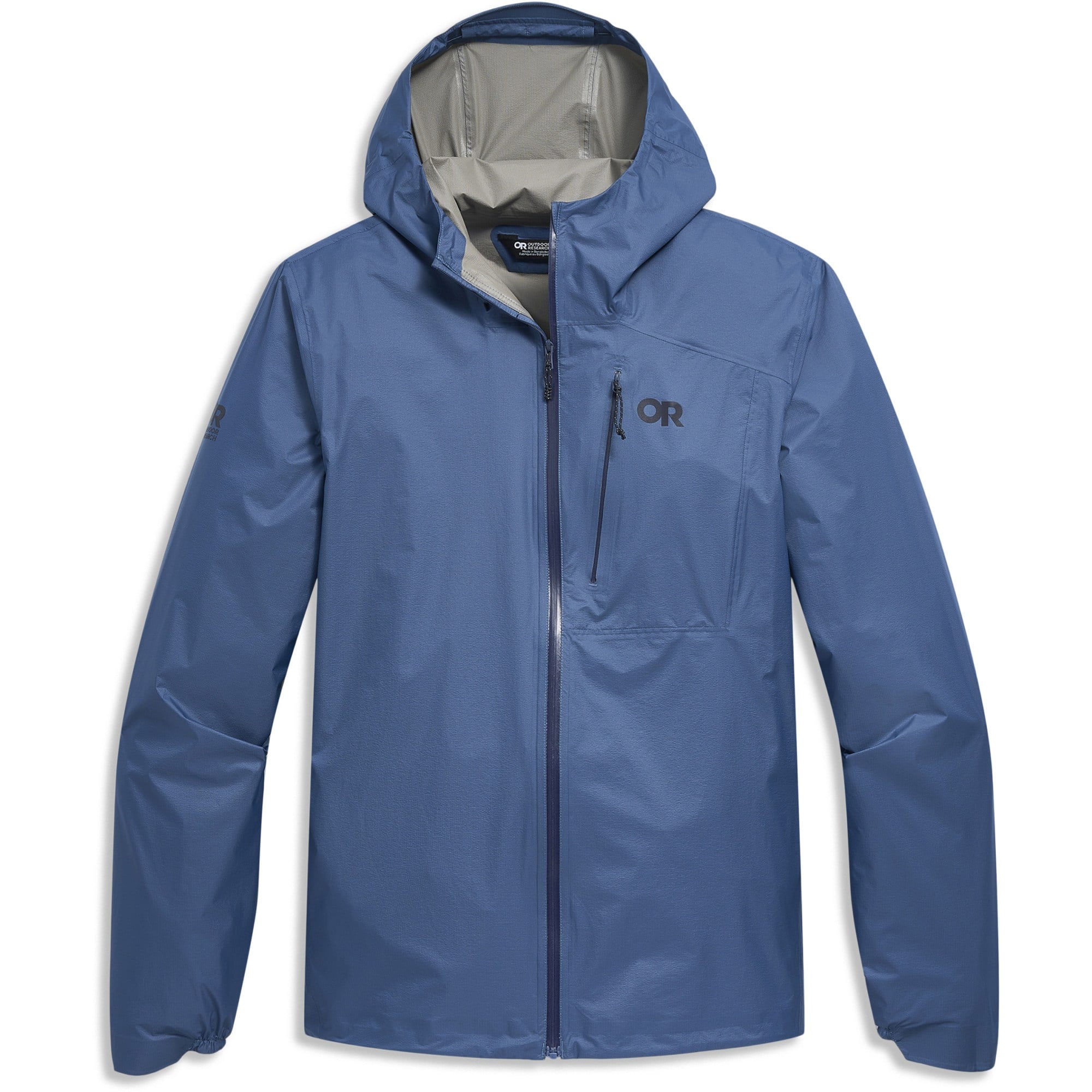 | Ultralight rain jacket. |
| Black Diamond Deploy Hoody (Women's) | 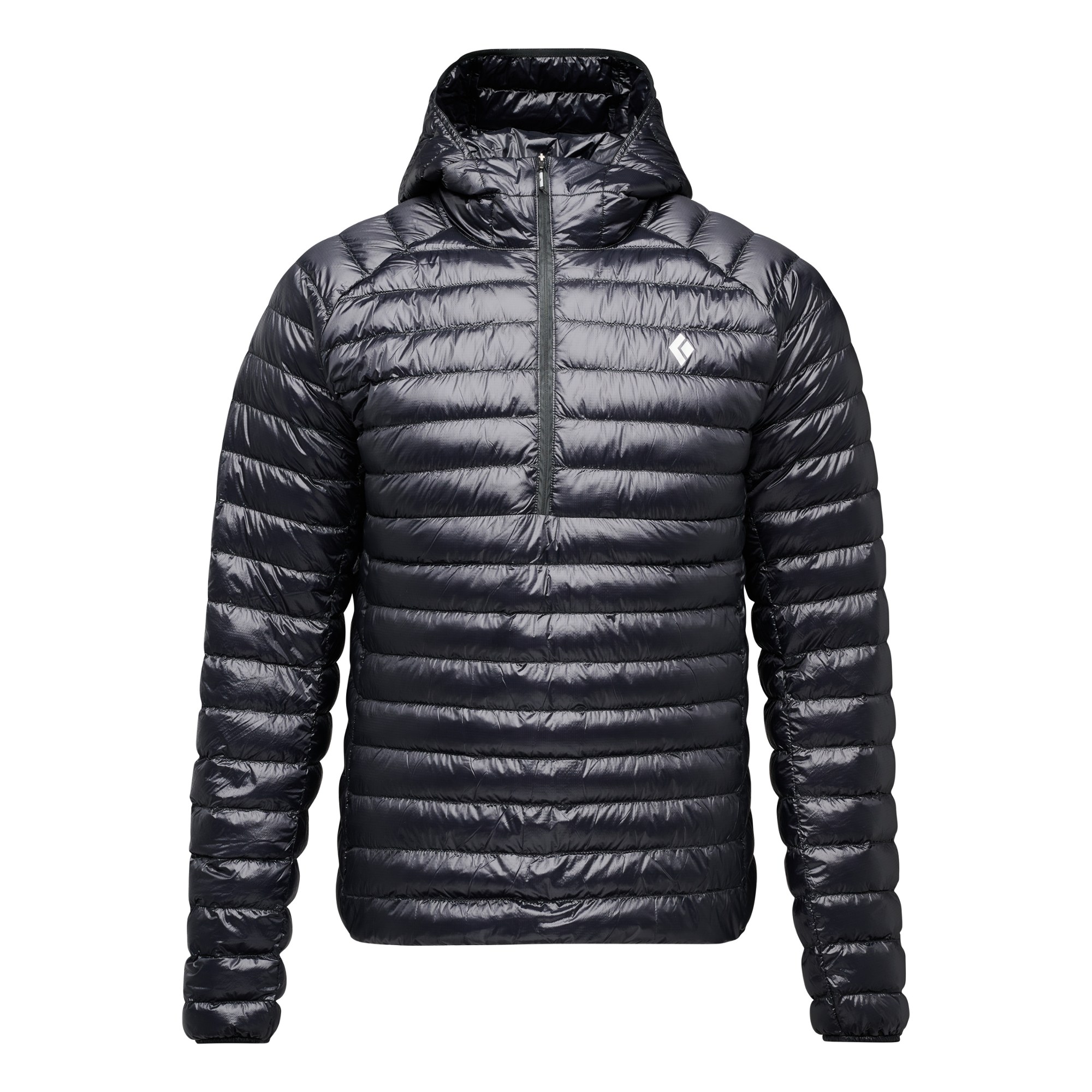 | Ultralight insulating jacket. |
| REI 650 Down Jacket | 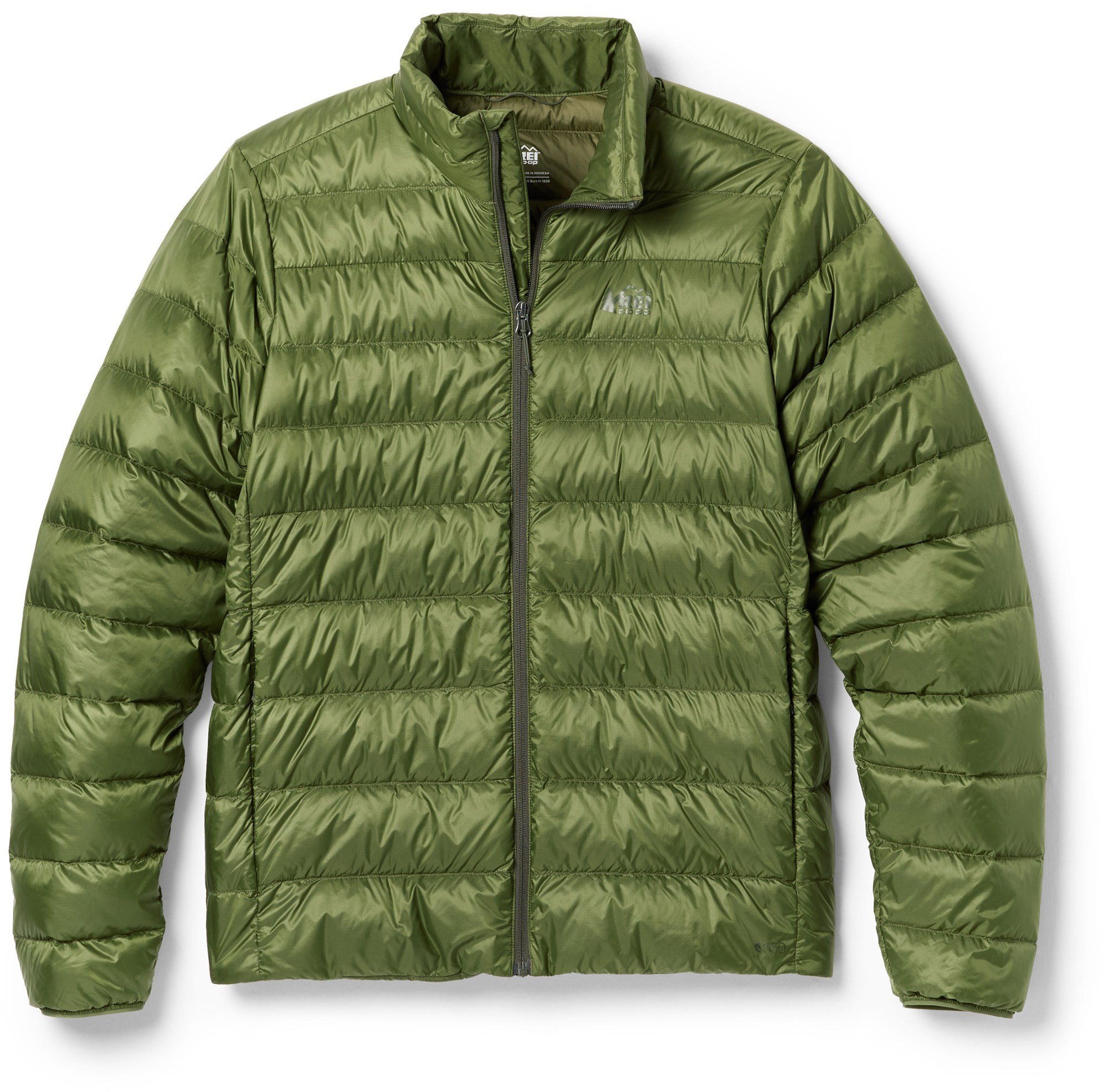 | Affordable insulating jacket. |
| Patagonia Nano-Air Ultralight Hoody | 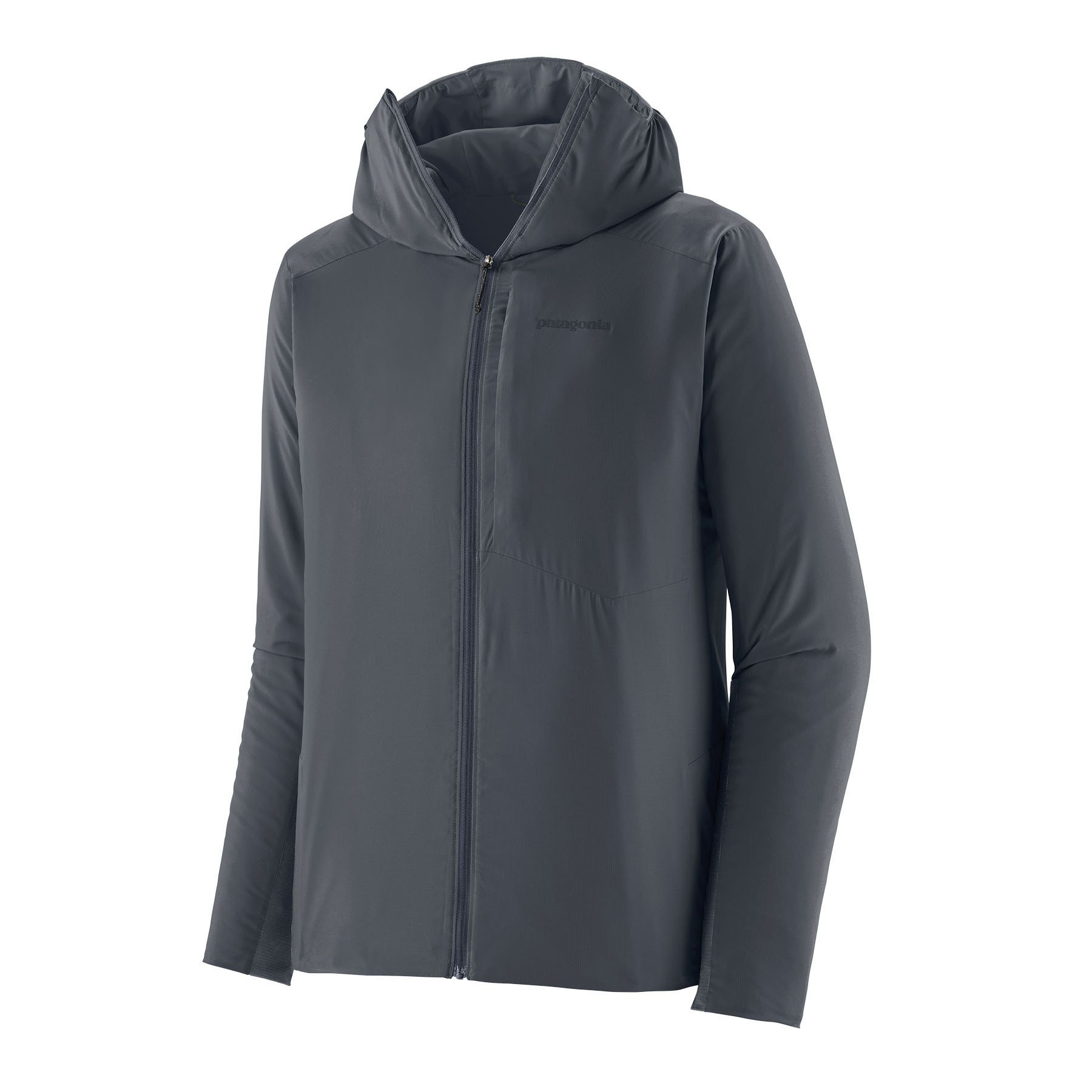 | Ultralight active insulation with high air permeability. |
| Outdoor Research Flurry Sensor Gloves | 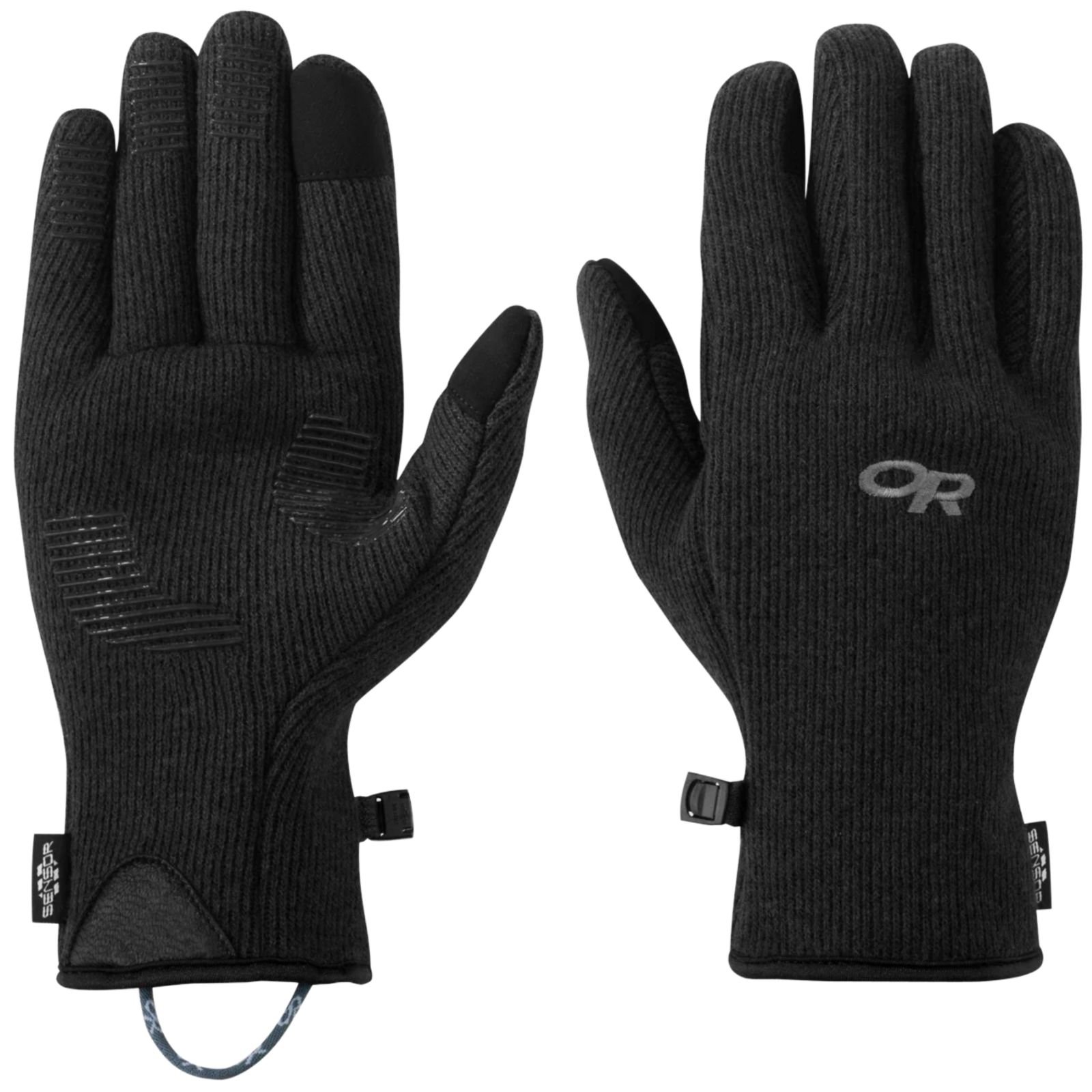 | Warm wool-blend gloves. |
| REI Co-op Minimalist GTX Mittens | 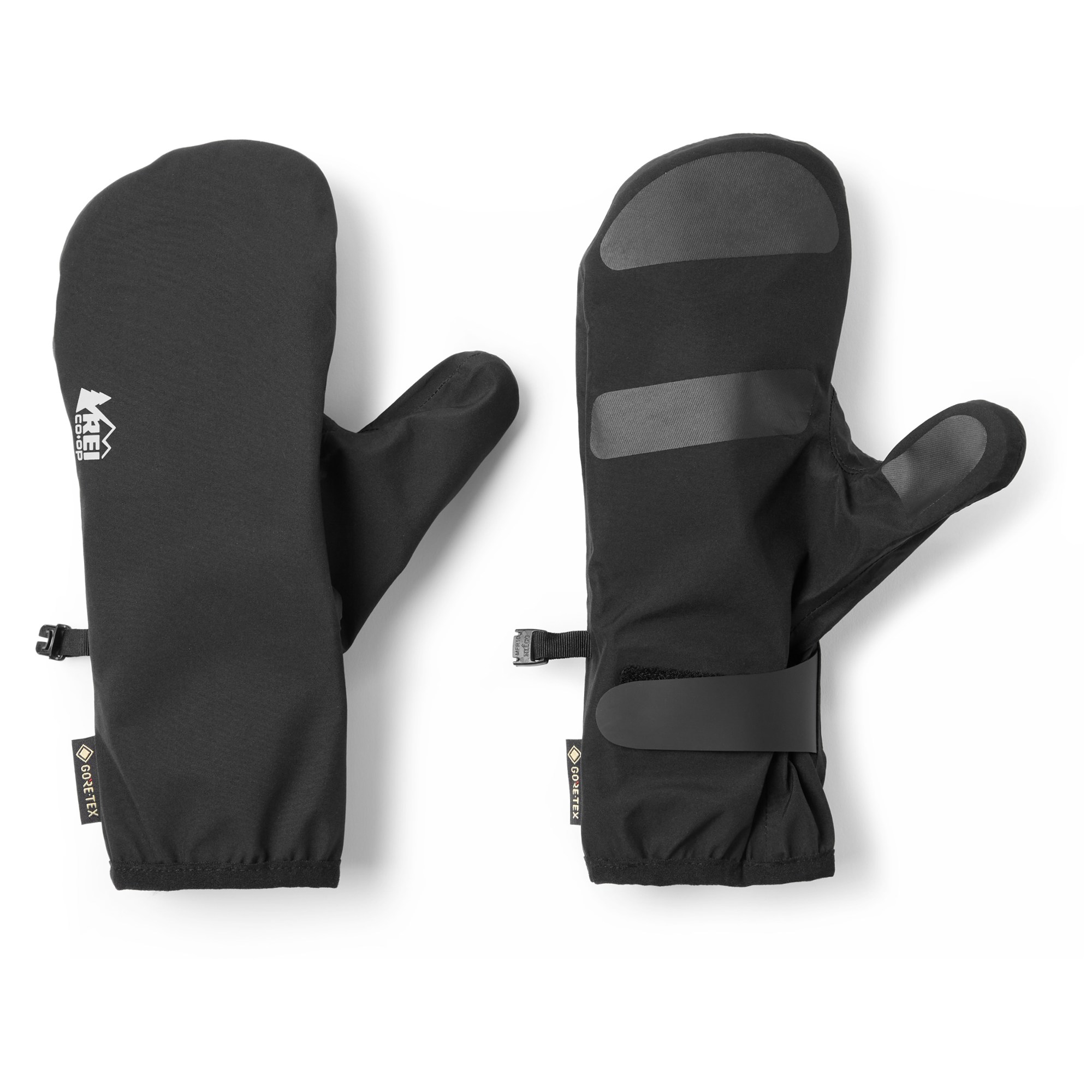 | Ultralight waterproof shell mitts. |
| Black Diamond Waterproof Overmitts | 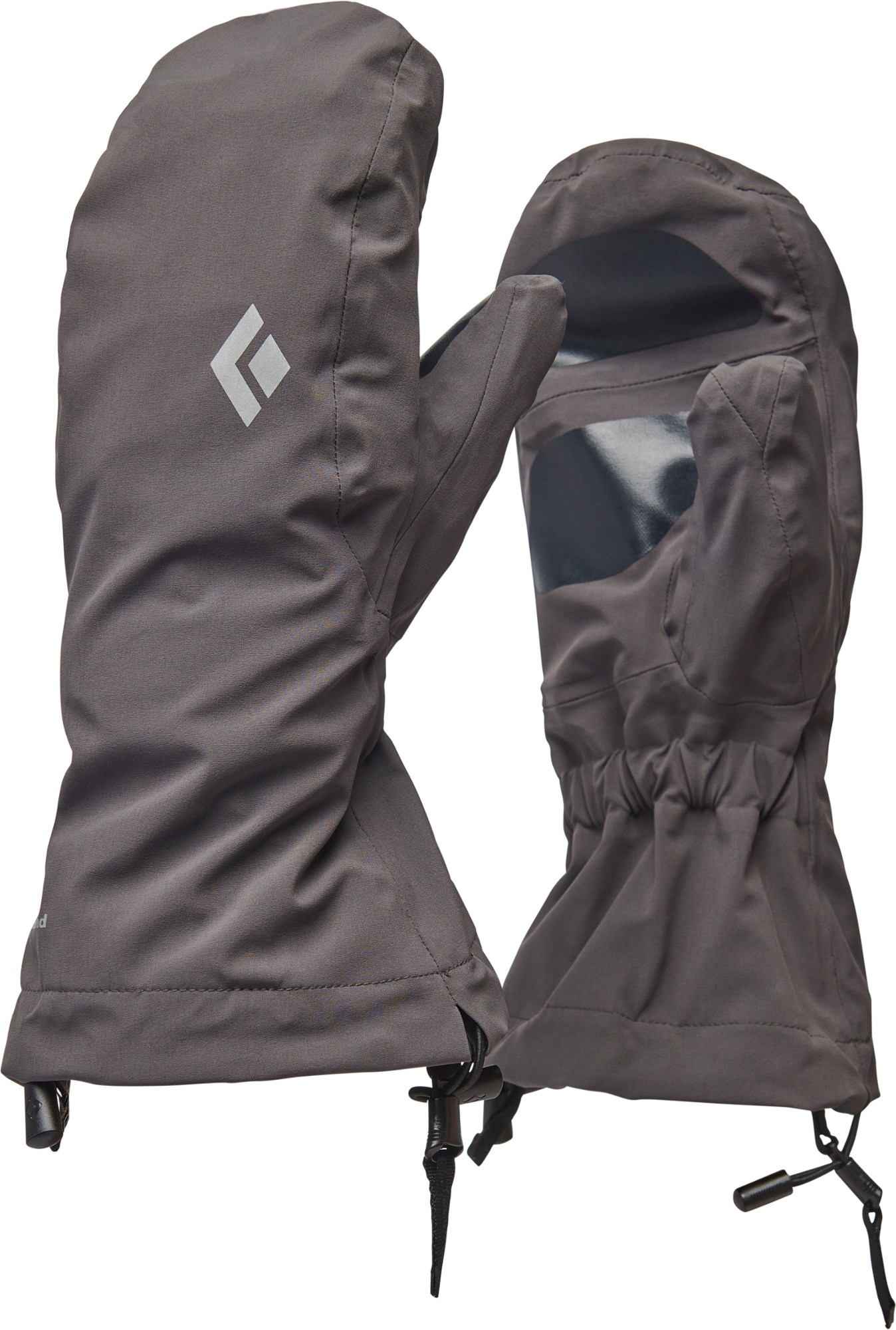 | Winter shell mitts for layering over insulated gloves. |
| Smartwool Merino Beanie | 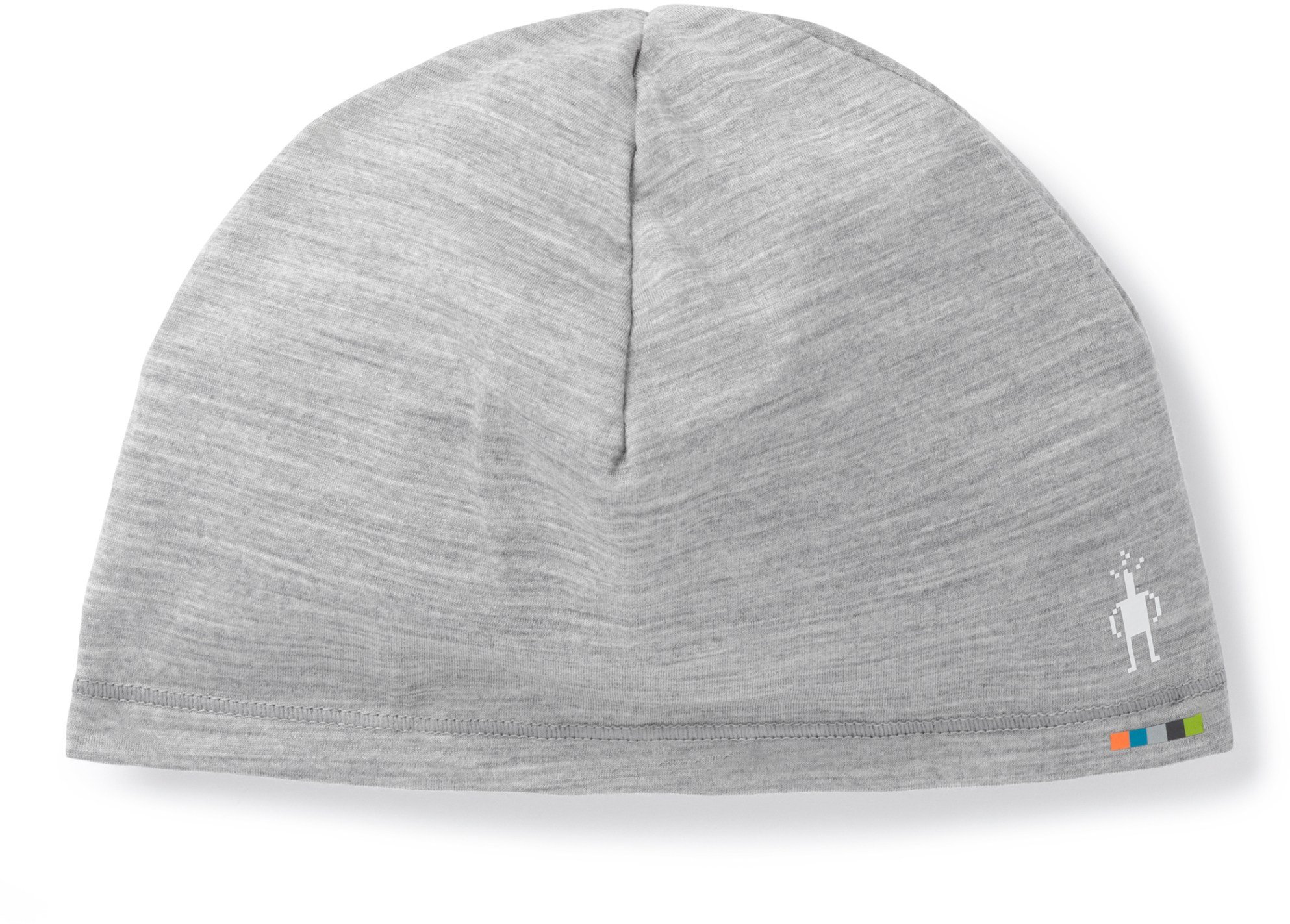 | Lightweight wool beanie. |
| Outdoor Research Activeice Sun Gloves | 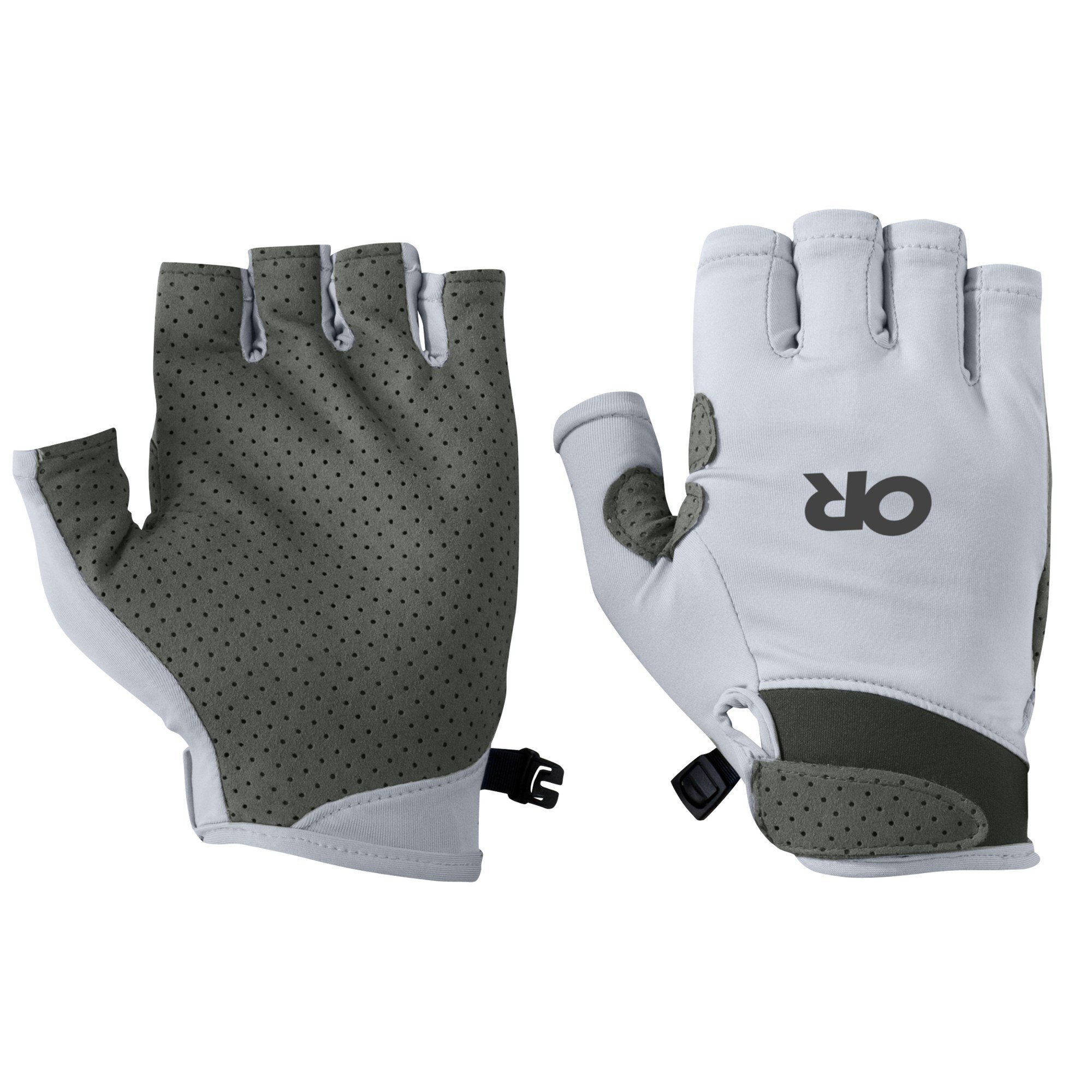 | Sun gloves with a full-grip palm. |
| Buff Neck Gaiter | 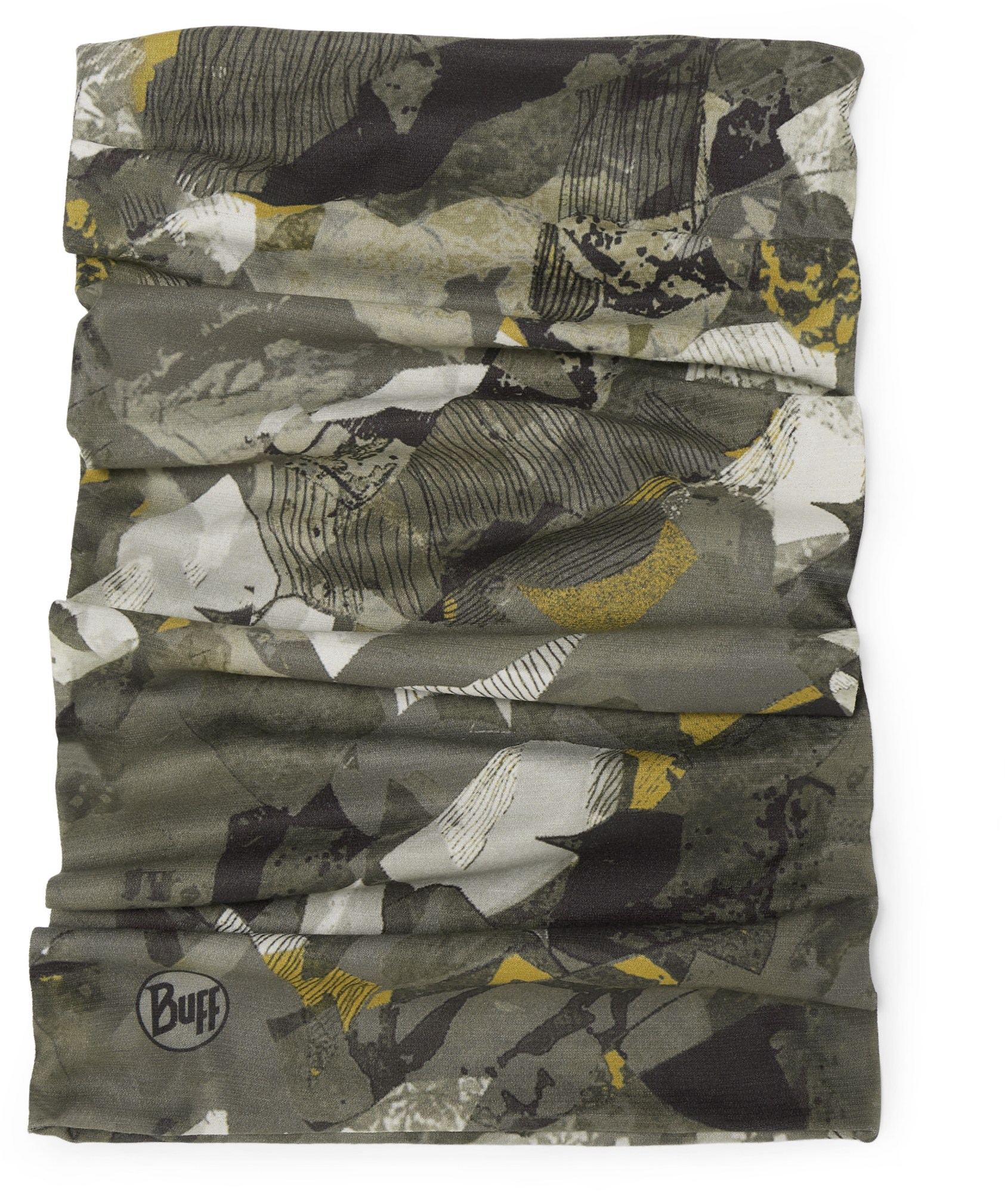 | Ultralight, fast-drying neck gaiter for sun and insect coverage. |
The Beta SL retains a full rain-shell feature set at low weight: a generous fit, extensive ventilation, and durable 40-denier-or-heavier fabrics. We recommend it for repeated use in sustained weather.
The Helium UL is our choice when a rain jacket will spend most of the trip in the pack. Its sub-8-ounce design retains waterproof zippers, a usable hood, and an articulated fit with room for layers. Breathability is moderate.
The Deploy Hoody uses minimalist construction and ultralight fabrics to provide a small amount of down warmth at low carried weight. We recommend it for mild conditions and layering. Its low loft limits warmth while resting.
The REI 650 Down Jacket earns our recommendation on price, warmth, and weight. At less than 11 ounces, it provides useful camp insulation without excessive bulk under a rain shell. We consider it a strong value for readers who want affordable down warmth.
The Nano-Air Ultralight combines high air permeability with modest insulation at 8.8 ounces. It provides active insulation over a light base layer or beneath a rain jacket.
The Flurry Sensor combines a wool-blend outer with a soft polyester fleece lining and silicone grip patches on the palms and fingers. Touchscreen-compatible patches on the thumbs and index fingers allow brief device use without removing the gloves.
The Minimalist GTX Mittens provide waterproof-breathable coverage over liner gloves at 1.4 ounces per pair in size large. Fully taped seams provide weather protection in a light, compact shell. The cuffs extend just past the wrist, making sleeve overlap a practical constraint.
We recommend these overmitts for winter layering because their long drawcord gauntlets close the sleeve gap in snow. An articulated cut leaves room for insulating gloves, while a textured palm provides grip. The waterproof, windproof shell is non-insulated and weighs 3.3 ounces per pair.
The Smartwool beanie offers two insulation weights: an ultralight 150 gsm simple beanie at 1.1 ounces and a rolled-cuff 250 gsm thermal beanie at 2.1 ounces. We recommend the simple wool construction for a light hat, with the cuffed version adding adjustable coverage around the ears.
We recommend the ActiveIce Chroma Sun Gloves for their combination of UPF 50+ coverage on the backs of the hands and a perforated synthetic-suede palm. That palm provides grip and wear protection for pole use. The fingerless cut preserves dexterity for small gear.
The Buff earns its place through several uses at low weight: neck gaiter, hat, balaclava, face covering for cold-weather sleep, or small towel and washcloth. It dries quickly and provides skin coverage against sun and insects.
Stoves and Cooking

This selection focuses on cooking systems that optimize performance, efficiency, and portability for backpacking. Canister stoves were evaluated based on criteria such as boil time, fuel efficiency, wind resistance, temperature regulation, and ignition reliability. Both upright and integrated systems are represented to reflect trade-offs between modular flexibility and all-in-one performance in inclement conditions. Cookware was selected based on weight, versatility, cook kit nesting, and material durability – particularly in titanium models that offer minimal weight without compromising function.
Recommended Stoves and Cooking
| Product | Photo | Recommendation reason |
|---|---|---|
| MSR Pocket Rocket Deluxe | 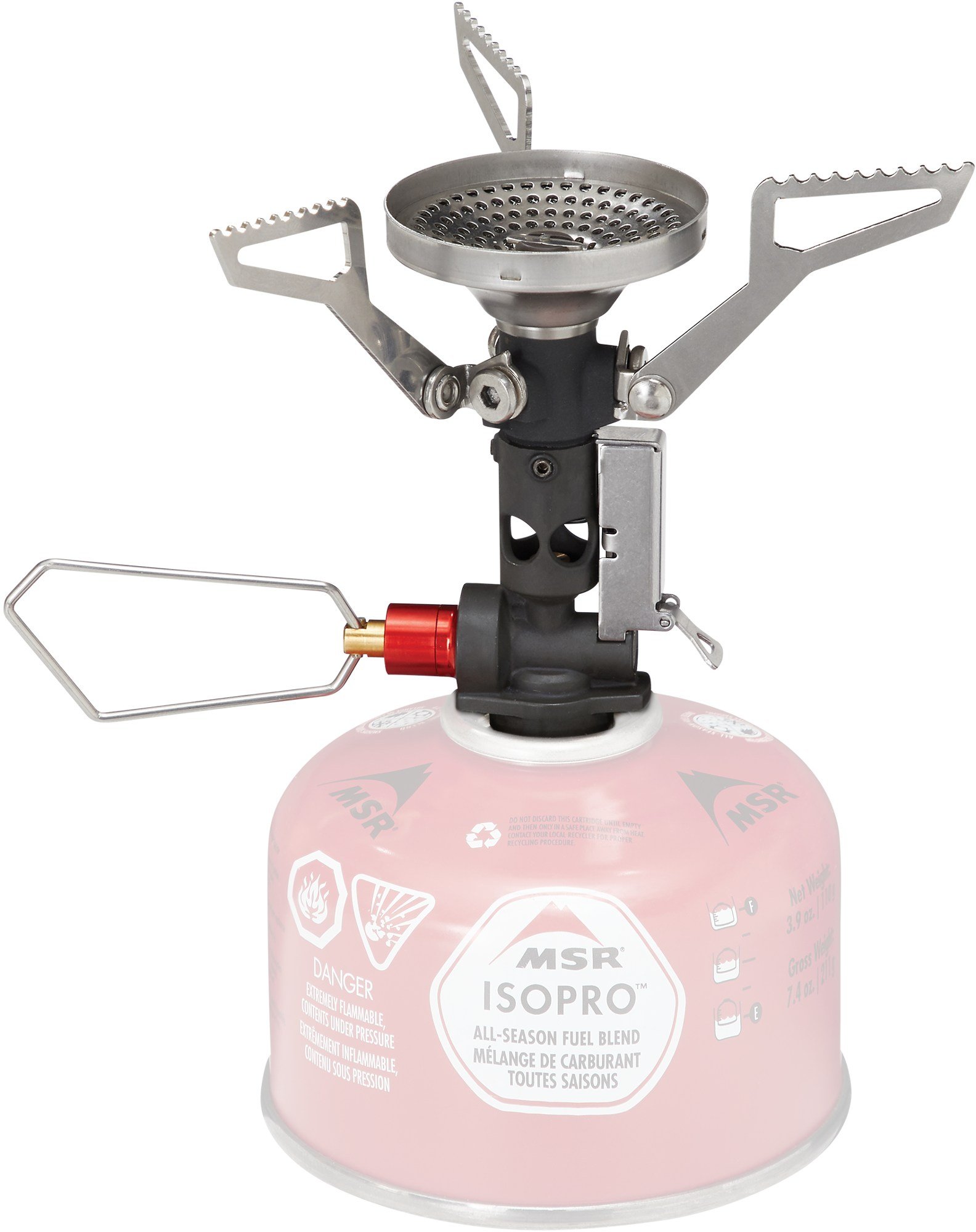 | Our top-performing upright canister stove in published StoveBench testing. |
| Soto Windmaster | 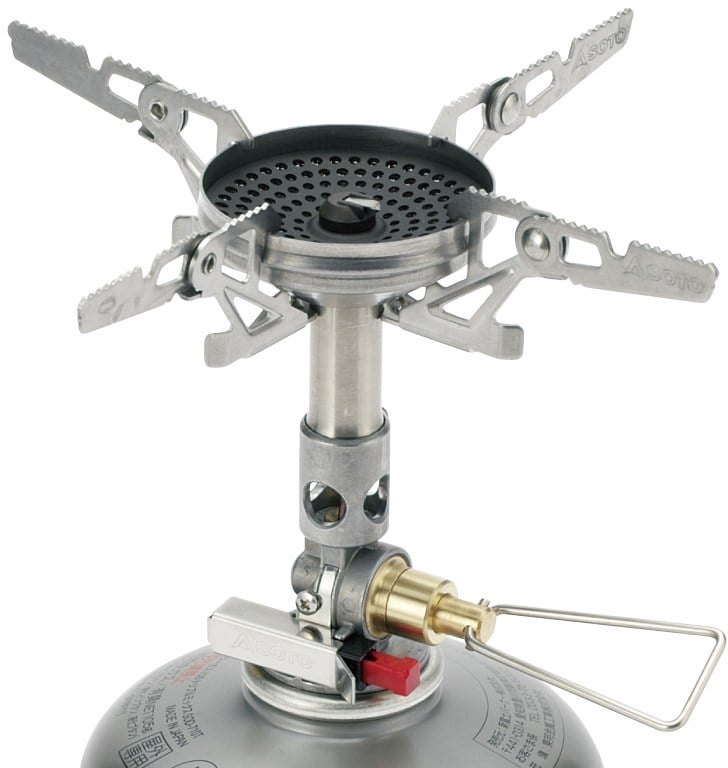 | One of our highest-performing upright canister stoves in inclement conditions. |
| MSR Windburner |  | Highest-performing integrated canister stove in our StoveBench tests. |
| TOAKS Titanium 750ml Pot | 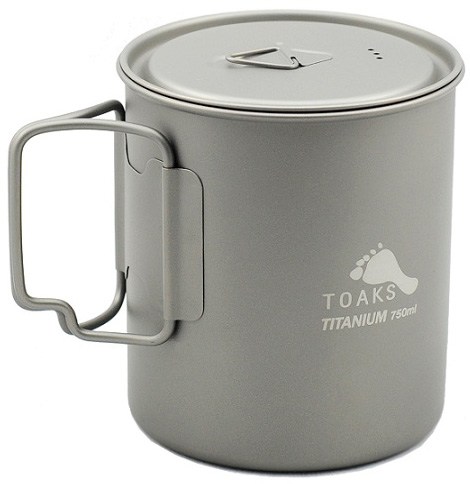 | Affordable, ultralight titanium pot. |
The PocketRocket Deluxe earned a score of 93/100 and a Highly Recommended rating in our upright-canister-stove review. Its dish-shaped burner and pressure regulator performed well in wind and cold, and its pot supports held cookware securely during testing. The piezo igniter also survived our durability tests. It weighs 2.9 ounces.
The WindMaster earned 87/100 and a Highly Recommended rating in our upright-canister-stove review. Our StoveBench tests support its performance in inclement conditions, especially wind. The recessed burner helps shelter the flame, and the removable 4Flex support held pots securely in our assessment.
Our StoveBench testing supports the WindBurner’s boiling speed, fuel efficiency, and resilience in inclement weather, especially wind. We recommend the integrated burner-and-heat-exchanger-pot system for consistent water heating in exposed conditions.
The TOAKS 750 is our affordable, ultralight solo titanium pot recommendation. Thin-walled construction keeps weight to 3.6 ounces. A 110-gram fuel canister and a compact stove can nest inside, making a small complete cook kit.
Food Storage

This selection includes food storage systems that meet recognized standards for bear resistance while addressing the weight and volume constraints of backcountry travel. Products were evaluated based on their compliance with regulatory certifications (e.g., IGBC), mechanical resistance to wildlife intrusion, ease of use in the field, and storage efficiency. Hard-sided canisters offer consistent performance in high-risk areas due to their rigid structure and universal approval in most protected zones. Soft-sided alternatives provide weight and volume savings for regions where they are permitted. All included products reflect a balance between protection, usability, and packability, supporting both backcountry safety and Leave No Trace principles.
Recommended Food Storage
| Product | Photo | Recommendation reason |
|---|---|---|
| BearVault Food Canisters | 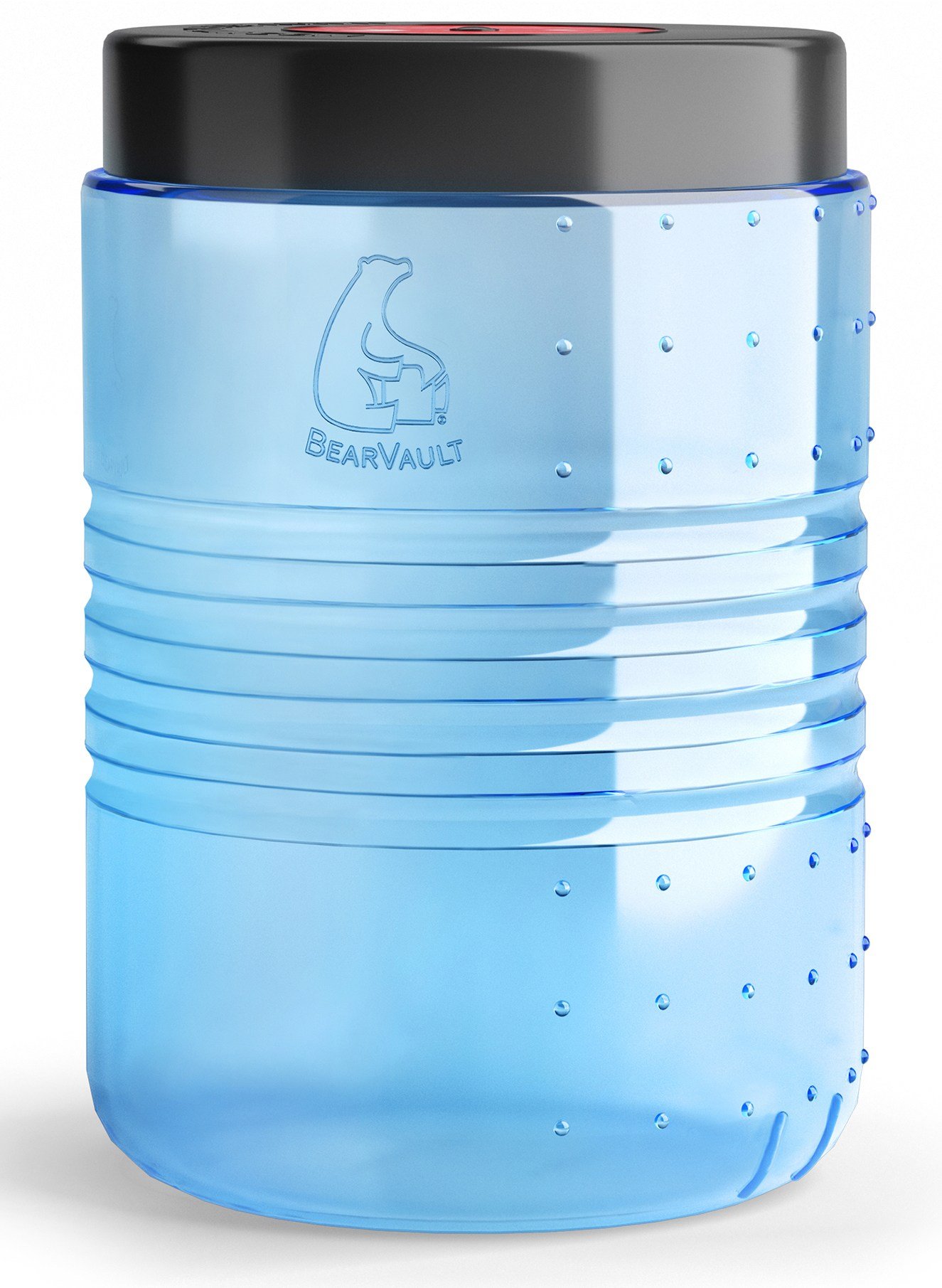 | Reliable, secure, easy-to-use, transparent bear-resistant canisters. |
| Ursack |  | Lighter and more compact than bear canisters. |
We recommend BearVault canisters for secure food storage and easy access. They have transparent walls, a wide opening, and a lid that needs no separate tool. Several capacities fit different food loads. Our canister report discusses past breaches in the Adirondacks; confirm current local acceptance for the specific model and route.
See the BV ONE.
The Ursack provides bear-resistant food storage with low weight and a soft shape that packs compactly. We recommend it where the land manager accepts the specific model and its securing instructions can be followed. Certification alone does not establish acceptance for an itinerary.
Hydration & Water Treatment
Recommended Hydration & Water Treatment
| Product | Photo | Recommendation reason |
|---|---|---|
| Aquamira | 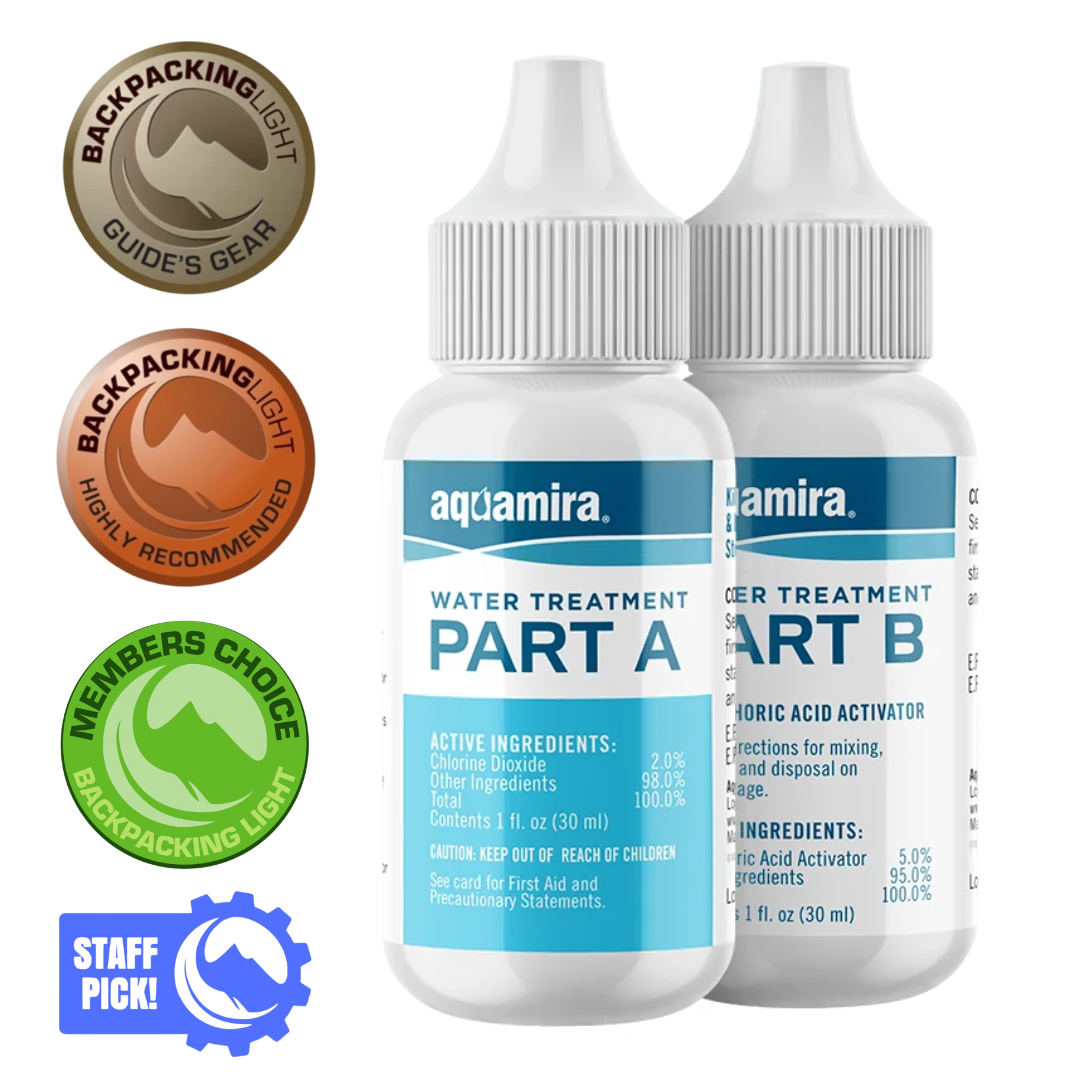 | Low-weight chemical treatment with convenient premixing and repackaging. |
| Aquatabs |  | Simple, lightweight, effective chemical treatment to supplement filtration of livestock-impacted water. |
| Sawyer Squeeze + CNOC Filtration Systems | 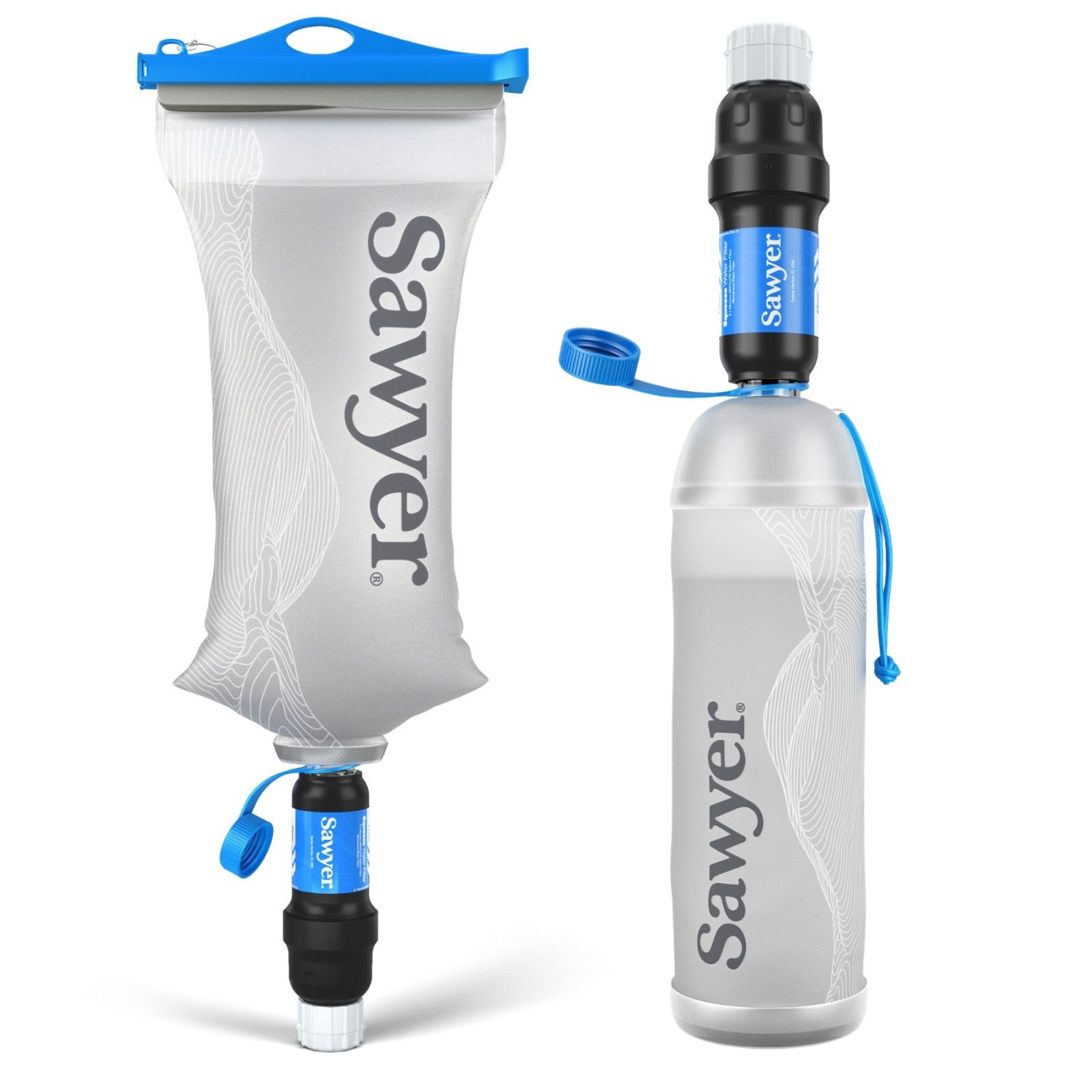 | Squeeze filtration with CNOC containers for easier filling and handling. |
| Katadyn BeFree Water Filtration System 1.0L | 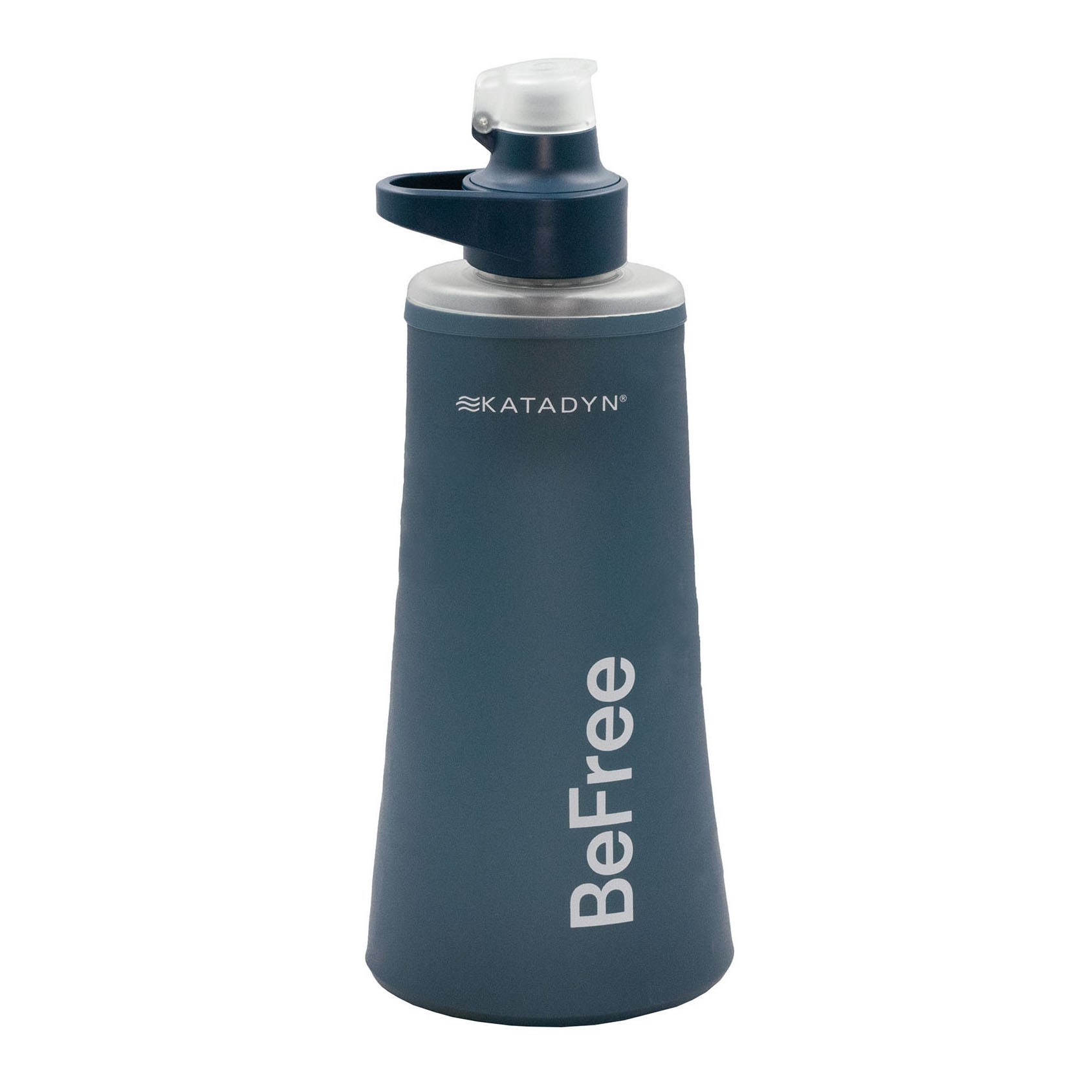 | Reliable squeeze filter with an integrated soft flask. |
| HydraPak Seeker Collapsible Water Containers |  | BeFree-compatible collapsible water containers. |
| Platypus 1L SoftBottle | 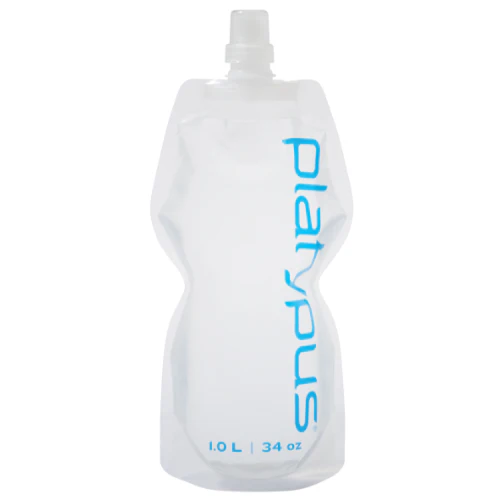 | Lightest bottle available; a gold standard in ultralight backpacking. |
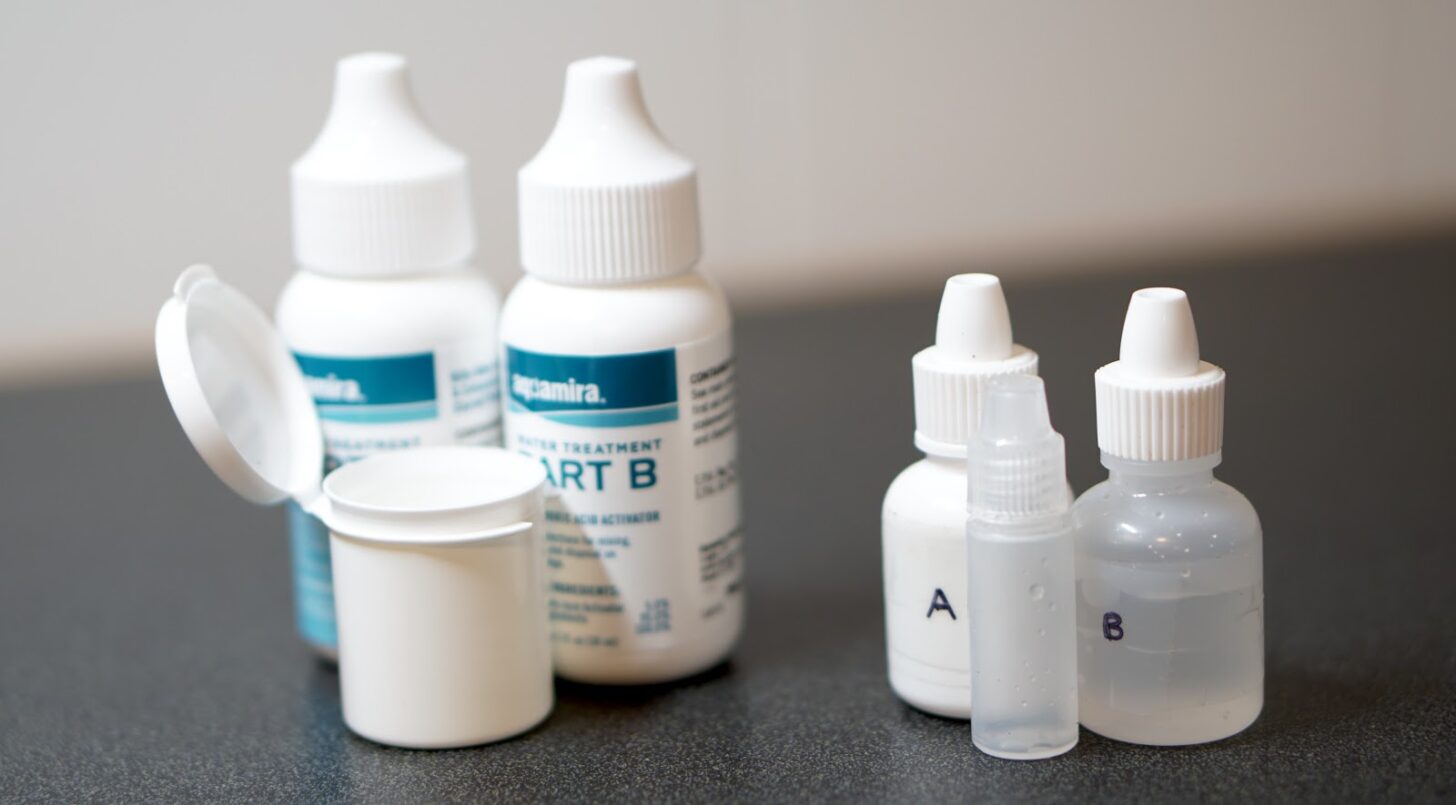
Aquamira can be repackaged in opaque polyethylene dropper bottles to carry only the amount needed for a trip, reducing weight and bulk. Premixing the two components reduces handling at water stops. The chlorine-dioxide treatment also improves the taste and odor of unpleasant water.
We recommend Aquatabs as a simple, lightweight supplement to filtration for water affected by livestock. The tablets release chlorine disinfectant in measured doses without handling a liquid concentrate. Filtration still needs to remove chlorine-resistant protozoa. Match tablet strength to water volume and follow the dose and contact-time instructions.
The Sawyer Squeeze pairs with CNOC containers for easier filling and handling. The 2-liter bladder opens wide for collecting water and cleaning, and works for squeeze or gravity filtration. The 1-liter bottle stands upright when full and collapses for packing. Both use the same Sawyer Squeeze filter.
The BeFree combines fast-flowing squeeze filtration with an integrated, collapsible 1-liter flask. Its 0.1-micron hollow-fiber membrane removes bacteria and protozoa, but not viruses.
The Seeker combines collapsible water storage with a 42 mm threaded opening for the BeFree system. We recommend it for that filter compatibility and low empty bulk.
The SoftBottle provides low-weight water storage with little bulk when empty. It remains a staple in our kits for additional capacity on dry stretches and for carrying water in camp. It is compatible with the Platypus QuickDraw filter.
Consumer Advocacy
Backpacking Light provides access to trusted expertise so you can enjoy the backcountry with confidence. Please consider supporting our work as consumer advocates by becoming a member.