

Episode 133 | Human Waste Management
Episode Summary
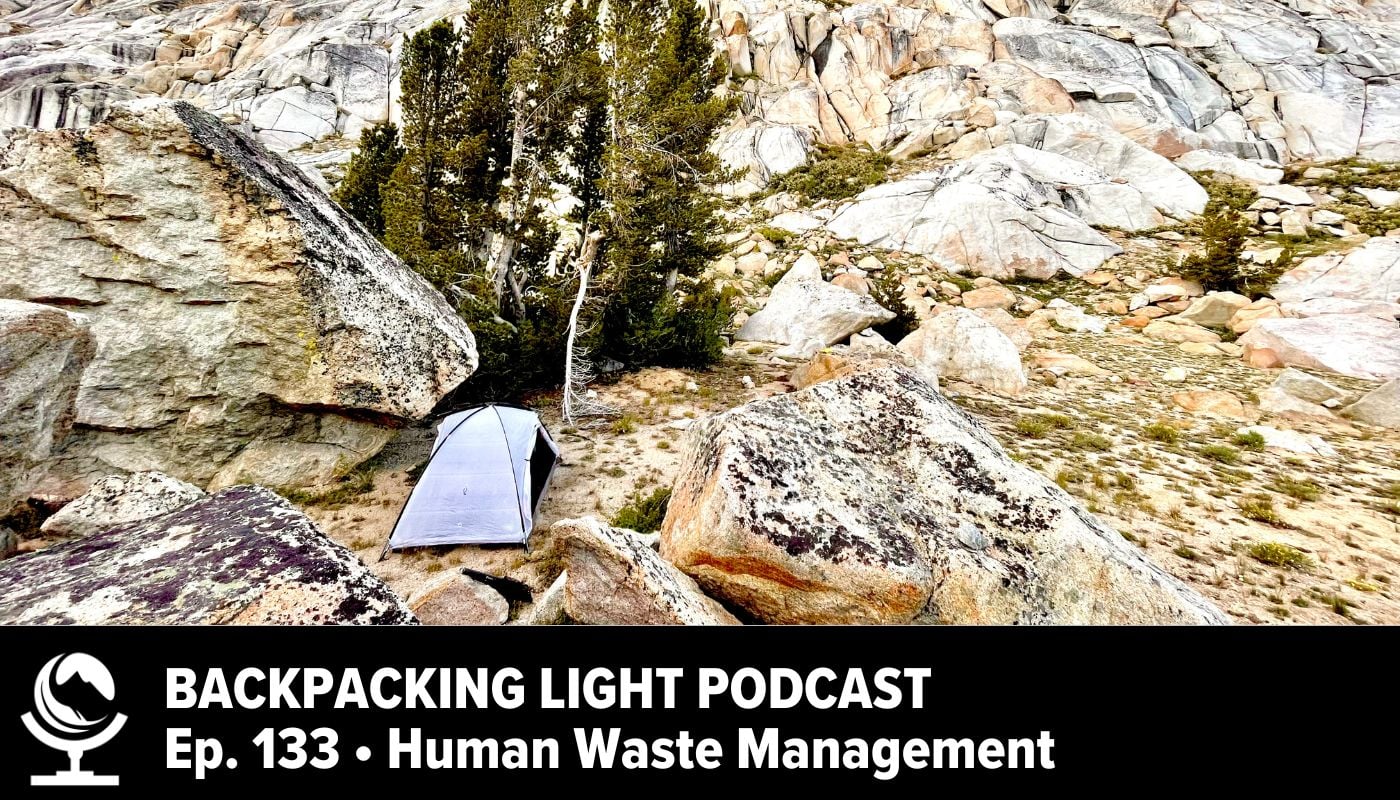
In this episode, Ryan Jordan examines why traditional cathole practices often fail in alpine, desert, and high-use environments. Drawing on scientific research, policy gaps, and evolving Leave No Trace ethics, he explains why pack-out systems are trending towards a new standard for modern backpacking. Listeners will gain practical guidance for field practices, insight into shifting wilderness norms, and new perspectives on the future of backcountry waste management.
Listen Now
together with Garage Grown Gear

Today’s episode of the Backpacking Light Podcast is sponsored by Garage Grown Gear, your hub for all things ultralight. Garage Grown Gear is dedicated to supporting the growth of small, startup, and cottage brands.
Show Notes:
Episode Outline: Reassessing Backcountry Sanitation
Introduction
- Episode focus: Why human waste management in the backcountry is becoming more problematic – and how we can adapt.
The Problem
- Traditional reliance on catholes and their ecological limitations.
- Fragile soils (alpine, desert) and decomposition challenges.
- Rising backcountry visitation and lower exposure to Leave No Trace education.
- Shift from “trusting wilderness to absorb impacts” to toward “personal accountability.”
The Science
- Soil Microbiology & Decomposition Capacity: Where catholes work (temperate forests, rainforests) vs. where they fail (alpine, desert).
- Hydrology & Contamination Pathways: How water transports pathogens from catholes to streams/lakes.
- Pathogen Persistence: Evidence that fecal pathogens remain viable for months to years in fragile soils.
- Decomposition Timeframes: Field evidence showing catholes often persist for years in alpine and desert environments.
Gaps in Policy & Education
- Agency messaging: Over-reliance on cathole guidance.
- Leave No Trace: Updated position exists but not filtering down effectively.
- Regulatory inconsistency: Patchwork of rules across different wilderness areas.
- Enforcement & modeling: Lack of demonstration and reinforcement of pack-out systems.
- Cultural inertia: Catholes as a symbolic, long-standing practice.
The Ethical Shift
- Catholes as a legacy ethic of “trusting wilderness.”
- Pack-out as a new ethic of responsibility and stewardship.
- Reflects broader conservation debates: wilderness as resilient vs. wilderness as fragile with thresholds.
The Practice: What Backpackers Can Do
- Reframe your default: Pack-out first, catholes only where soils can support decomposition.
- Focus on containment (durable, leak-proof systems), not treatment.
- Separate waste streams: Always pack out toilet paper.
- Use absorbents sparingly for odor and liquid control.
- Model behavior: Demonstrate pack-out systems to normalize practice.
- Reframe pack-out as stewardship, not burden.
The Future of Wilderness Management
- Policy convergence: Toward national expectations of pack-out.
- Technological innovation: Next-gen ultralight, odor-controlled waste systems.
- Cultural norms: Pack-out becoming as normalized as bear canisters.
- Redefining wilderness ethics: From reliance to responsibility, preserving wild places for future generations.
Links, Mentions, and Related Content
- Dispatches: Reassessing Backcountry Sanitation: Packing Out Human Waste
- Gear: See Leave No Trace and Gear and Supplies at Garage Grown Gear
- Online Course: Water Treatment and Backcountry Hygiene
Featured Brands and Products
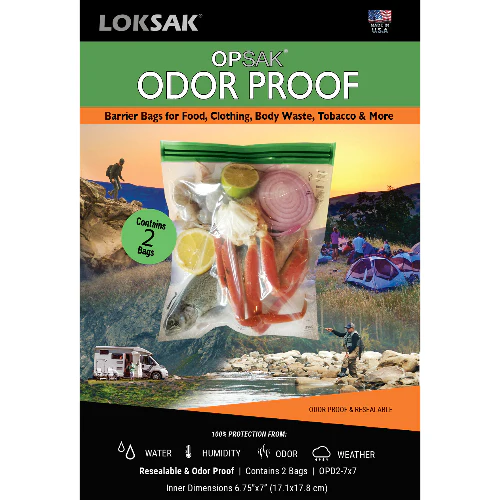
LOKSAK OPSAK Odor-Proof Bags are resealable storage bags designed to contain odors and prevent air and micro-organism transfer. Made from FDA and NSF-approved food-safe materials, they are reusable, recyclable, and available in multiple sizes. Manufactured in the USA.
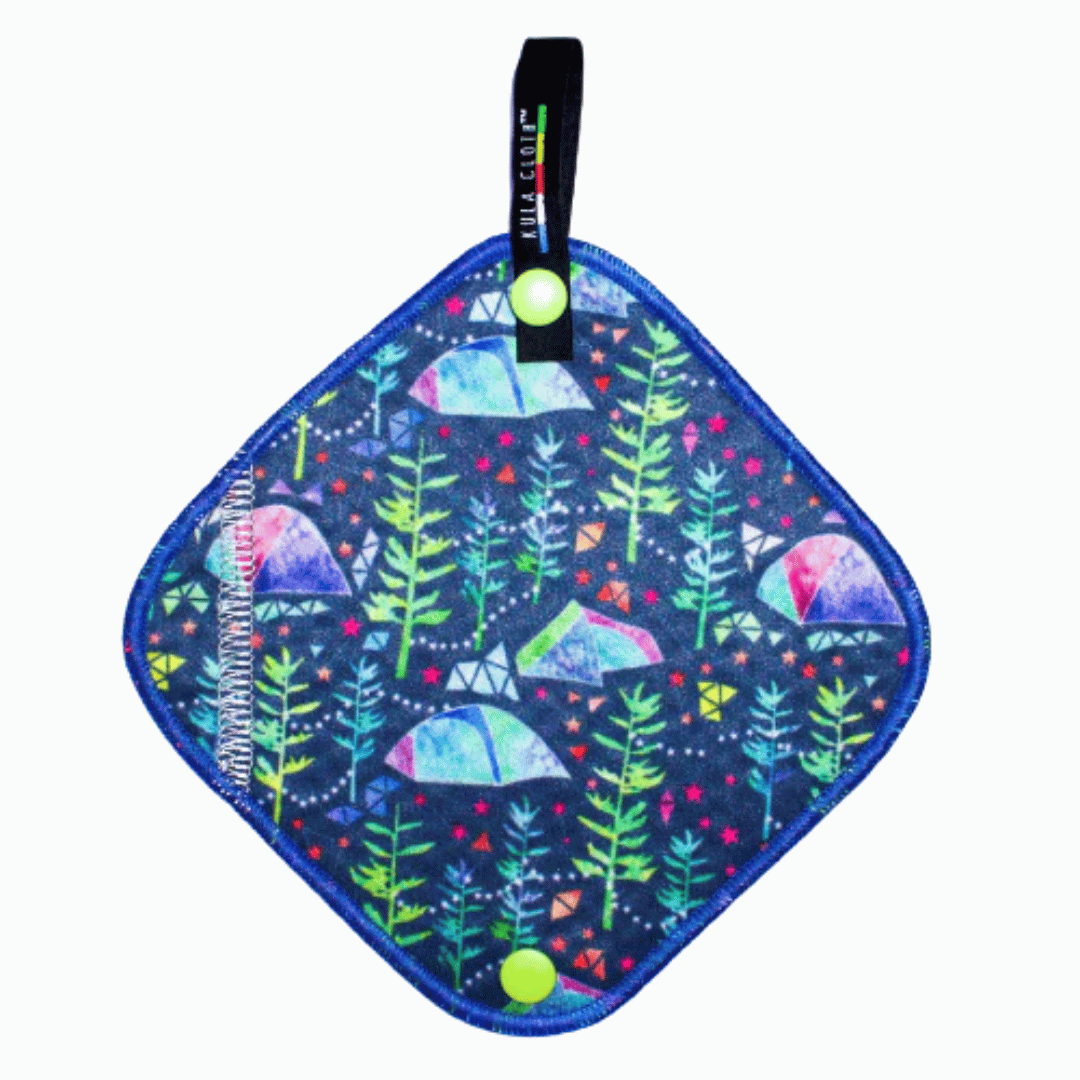
The Kula Cloth (0.5 ounces / 14 g) is an antimicrobial, reusable pee cloth featuring a highly absorbent, silver-infused fabric on one side and a waterproof, non-permeable layer on the other to prevent leaks. It includes a snap closure for easy attachment to your pack and a stealth-mode fold for discreet storage.

A four-hole bidet for more wash power. Available in versions for soda and CNOC bottles.
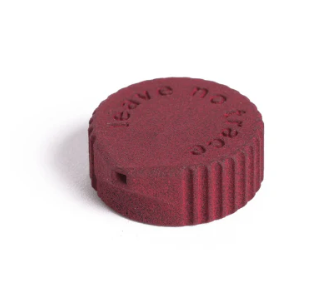
Transform your standard water bottle into a hygienic bidet with this ultralight (4 g) threaded cap attachment—perfect for long-distance hikers who practice Leave No Trace.

Explore the collection of ultralight backpacking trowels—durable, compact, and designed for Leave No Trace practices. From titanium to high-strength composites, find the perfect tool to keep your pack light and the backcountry clean.
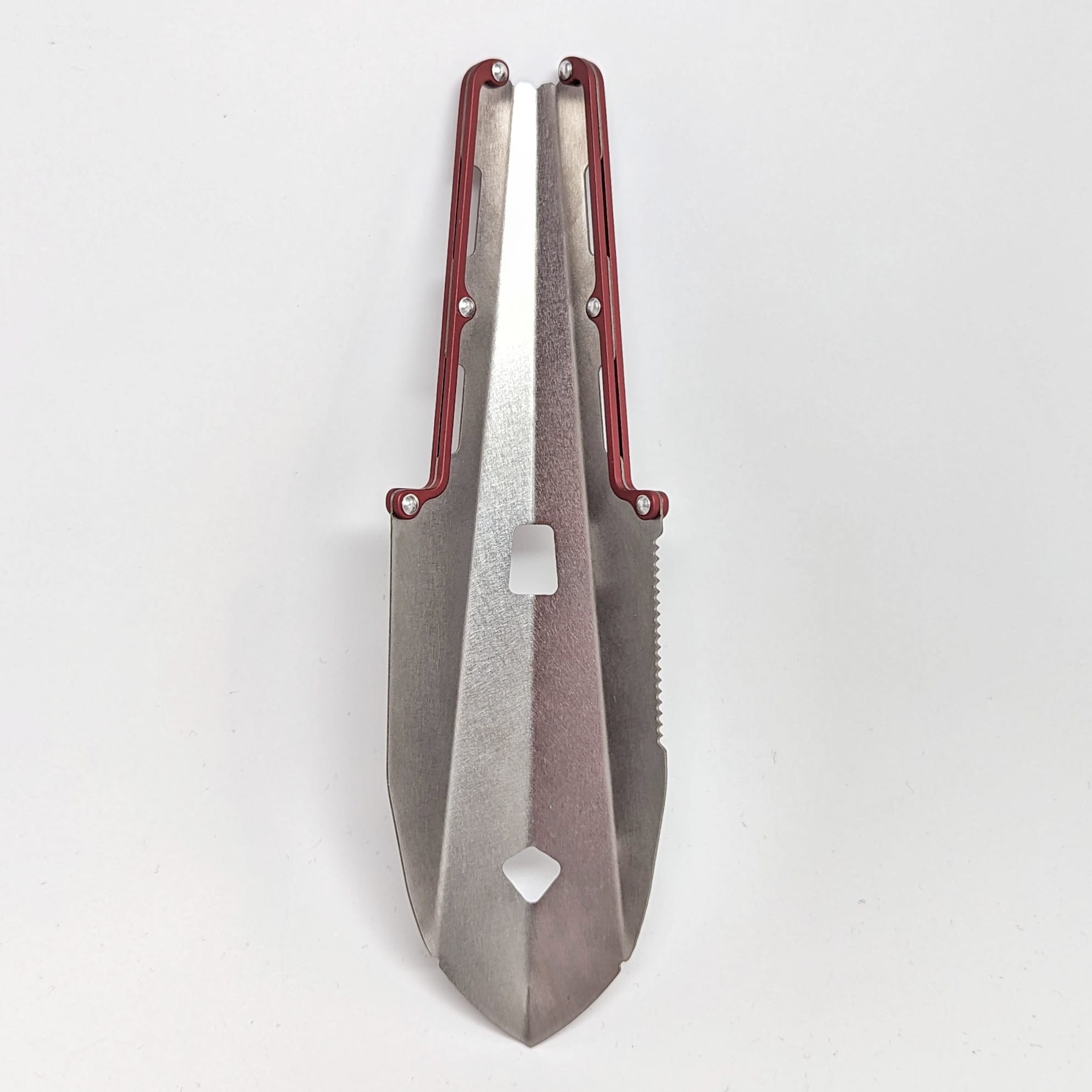
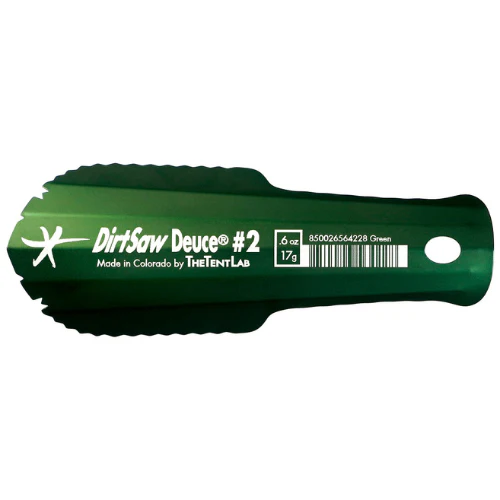
One of the most popular trowels on the market, now with an updated design with more aggressive sawing edges for side-to-side digging. Very effective root-cutting notches. Reversible, so you can use the narrow end for particularly stubborn soils.

The BoglerCo Ultralight Backpacking Trowel is a compact digging tool weighing approximately 0.48 ounces (13.5 grams). Constructed from high-strength aluminum alloy, it features serrated edges for cutting through roots and a UV-resistant ABS plastic end cap for enhanced comfort during use. Handmade in the USA, it comes with a lifetime warranty.
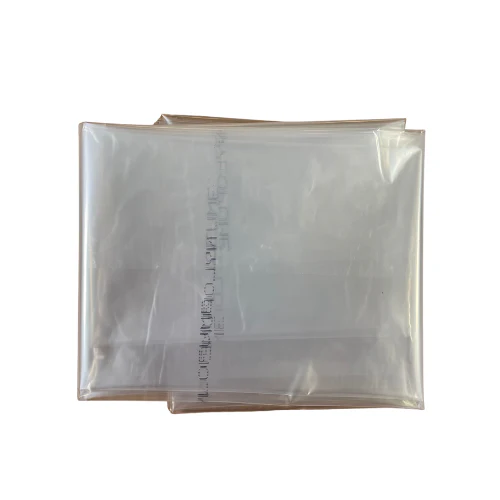
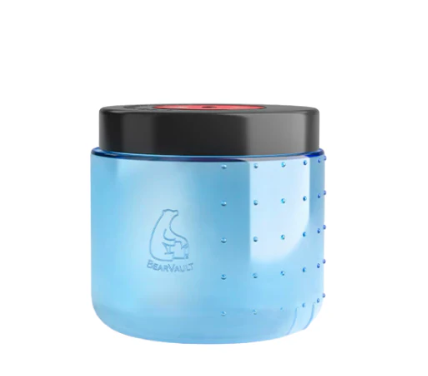

A certified bear-resistant, ultralight soft-sided bag made from UHMWP fabric—offering a compact, durable alternative to bulky canisters.
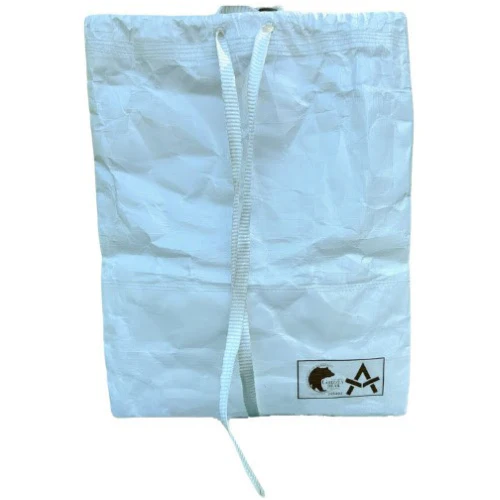
Backpacking with confidence is challenging when food isn't securely stored from wildlife. Hanging food is time-consuming and can be complicated. Carrying a bear canister is heavy and bulky. The Ultralight Food Locker by Adotec offers peace of mind with its certified bear-resistant design, keeping your food safe and secure.
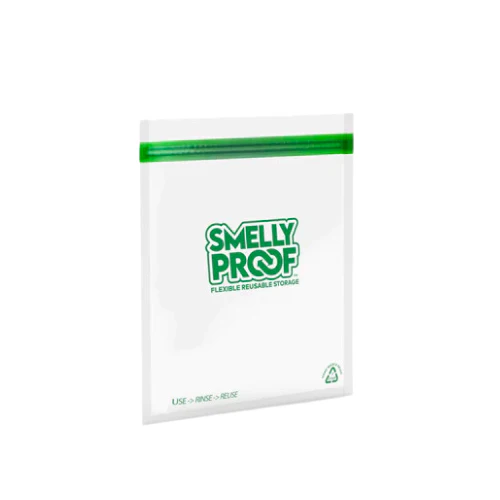
Reusable, light, odor-resistant bags. We recommend these for food garbage and food waste, and packing out your toilet paper.
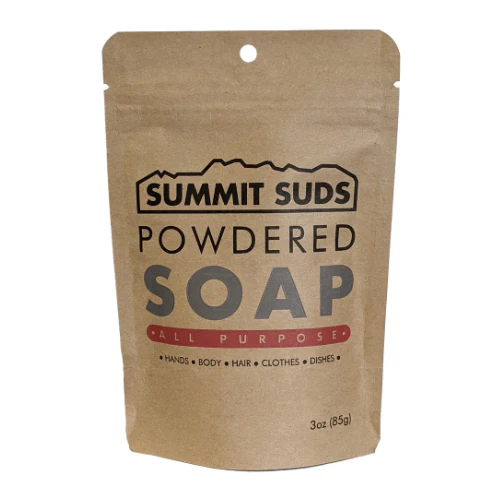
The ultralight soap option. Use only what you need, no mess no fuss. For personal hygiene, dishwashing, and more. Plant-based ingredients. pH neutral.
What’s New at Backpacking Light?
- Masterclass: Leave No Trace and Ultralight Backpacking: Revisiting Best Practices Based on Advances in Recreation Ecology Science –
September 17, 2025 @ 12pm, MDTRescheduled: November 24, 2025 @ 12 PM MDT - Event: ALDHA-West Gathering – September 26-28, 2025, Calwood Education and Retreat Center, Jamestown, CO
- New: Dispatches
- Find information about all of our upcoming Member Q&A’s, Webinars, Live Courses, other live events, and more on our Events Calendar Page.


Discussion
Become a member to post in the forums.
Companion forum thread to: Episode 133 | Human Waste Management
In episode 133 of the Backpacking Light podcast, we challenge traditional cathole practices, advocating for pack-out systems in alpine, desert, and high-use areas based on science and LNT ethics.
Ryan, thank you for this. All of my backpacking is in bio-rich areas of the US South almost always below tree line. But many of the places are getting more traffic, and I am wanting to get out West for a different scene. One item I have seen is from PACT Outdoors, specifically the mycelium tabs. I’m hesitant to use something that may bring a natural item into a habitat where it may not be native. I do wonder if the added benefit of jumpstarting the decomposition is outweighed by introduction of a new fungi to the environment. I’m far from a scientist and really can’t “do my own research” with any expectation that it will be bulletproof. Has anyone had experience with these, specifically in bior-ich areas?
I don’t use the PACT tablets for primarily the same reason. Not being a scientist, I err on the side of caution.
Great podcast. Thank you for the advocacy. I feel woke. In other words, I learned something useful.
No easy answers here. I am not inclined to worry about introducing new organisms into a specific environment. Each has evolved in its own specific environment with its own complement of companion organisms, soil type, Ph level, temperature, rainfall, etc, and is unlikely to be able to establish itself in a totally new environment. The possibility of introducing new chemicals, e.g. birth control pills, OTC drugs, RX drugs, micro plastics, etc, is however, a matter of concern I had not previously considered. Tough choices ahead as increasing number of humans venture farther and farther into the backcountry.
The Colorado trail is ~500 miles with ~500 thru hikers and takes ~35+ days to complete. If each hiker digs 34 catholes. 34 CH x 500/500= 34 catholes per mile of trail per year, if it were spread out and there were only thru hikers. IDK. What’s grosser? Meeting someone on trail with a well contained bag of poop or walking through it? Digging into it. Sleeping over it. No thanks.
When I first saw the subject matter, I thought, “This is going to be a snoozer.” But then it completely changed my mind. It made me think deeply about a topic I never would have considered before. Ryan, keep pushing into these weird corners. It’s compellingly interesting.
Ditto! The recent weather-forecast podcast was enlightening and a great all around nerd-out. Please keep those coming!
I was fascinated by Ryan’s effort thesis earlier this summer (beyond just calories) but that one requires a thoughtful protracted deep dive to digest, better done when the world is covered in slush
Ryan: thanks for the leadership on this issue, plus sharing your system in the linked Dispatch–makes it seem more feasible!
Question on your linked Sept 7 Dispatch: you quote “extensive reduction in fecal indicator bacteria was observed in only the arid and alpine environments” (Ells & Monz, 2011). Isn’t extensive reduction a good thing? What am I missing here? Thanks!
https://pubmed.ncbi.nlm.nih.gov/21168261/
Become a member to post in the forums.